Full-Body EMS
Full-Body EMS scored 7.3 / 10 (💪 Strong recommend) on the BioHarmony scale as a Exercise protocol (resistance training with whole-body electromyostimulation).
Full-body EMS uses a suit of electrodes to contract major muscle groups for 20 minutes once or twice weekly; meta-analyses support muscle and strength gains, while the 2023 Kemmler guideline makes progressive loading and supervision the safety hinge.
What is Full-Body EMS?
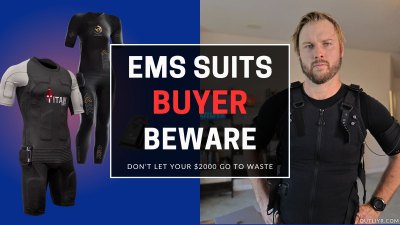
Full-body EMS, usually called whole-body electromyostimulation or WB-EMS, is a training method where a wired or wireless suit sends synchronized electrical impulses through electrode pads over the major muscle groups while you perform light movements. The intervention is best understood as compressed resistance training: the suit contracts chest, back, core, glutes, legs, and arms in 4-second-on / 4-second-off cycles while the user squats, hinges, presses, or braces. The standard research protocol is 20 minutes once or twice weekly, commonly around 85 Hz and 350 microsecond pulse width, with intensity gradually progressed over the first several sessions.
The evidence base is real but narrower than the marketing. Kemmler 2021 supports improved muscle mass and strength in non-athletic adults, while Rodrigues-Santana 2023 found a smaller independent effect across body composition and strength outcomes. The clearest clinical-use cases are sarcopenic or frail older adults, deconditioned adults, chronic nonspecific low back pain, and people who need a strength stimulus when gym access is not realistic. Yang 2022 supports sarcopenic-obesity outcomes, and Konrad 2025 supports low-frequency WB-EMS for chronic nonspecific low back pain.
The safety hinge is dosing discipline. Kemmler 2023 exists because WB-EMS can create unusually high muscle damage when protocol-naive users start too hard. The FDA also regulates electronic muscle stimulators as devices and explicitly separates legitimate muscle-function claims from unsupported weight-loss, girth-reduction, and "rock hard abs" claims. In practice, WB-EMS earns its score as a supervised, time-efficient strength adjunct. It does not earn it as a shortcut around progressive training, protein, steps, aerobic work, or recovery.
Terminology
- EMS: Electromyostimulation, the delivery of controlled electrical impulses to muscle through surface electrodes to produce involuntary contraction.
- WB-EMS: Whole-body electromyostimulation, a suit-based EMS protocol that stimulates most major muscle groups at the same time.
- NMES: Neuromuscular electrical stimulation, the broader clinical category for targeted muscle activation and rehabilitation stimulation.
- Hz: Hertz, or cycles per second. WB-EMS protocols commonly use 85 Hz in the Kemmler-style strength protocol.
- Pulse width: Duration of each electrical pulse. The common WB-EMS research standard is 350 microseconds.
- Duty cycle: Work-to-rest timing. A 50% duty cycle commonly means 4 seconds on and 4 seconds off.
- Type II fibers: Fast-twitch fibers involved in strength and power. WB-EMS can recruit them without the same voluntary effort required by heavy lifting.
- Motor unit recruitment: Activation of motor neurons and the muscle fibers they control. EMS bypasses part of normal voluntary recruitment sequencing.
- CK: Creatine kinase, a blood marker that rises when muscle is damaged. Large first-session CK spikes are why Kemmler 2023 emphasizes gradual loading.
- Rhabdomyolysis: Severe muscle breakdown that can stress the kidneys. In WB-EMS, case concern clusters around first-session maximum intensity and poor screening.
- RPE: Rating of perceived exertion, a subjective intensity scale. Rehab-style WB-EMS often uses lower RPE than fitness-style sessions.
- miha bodytec: A studio-grade WB-EMS device brand used in many European research and commercial settings.
- BIA: Bioelectrical impedance analysis, a body-composition method used by InBody devices and Nick's 3-month N=1 EMS check.
- FDA Class II: Device risk category used for many powered muscle stimulators; FDA classification pages define cleared device types and claim boundaries.
How do you take Full-Body EMS?
Dosing & Protocols
Dosing information is summarized from published research and community reports. This is not a prescribing guide. Consult a healthcare provider before starting any protocol.
View 3 routes and 5 protocols
Routes & Forms
| Route | Form | Clinical Range | Community Range |
|---|---|---|---|
| Studio whole-body EMS suit | Supervised studio session with 8-10 electrode pairs covering chest, back, abs, glutes, quads, hamstrings, biceps, and triceps | 85 Hz, 350 microsecond pulse width, 50% duty cycle, 20 min per session, 1-2x/week | Same protocol; some studios use 6-second contractions instead of 4-second contractions |
| Home whole-body EMS suit | Studio-grade suit paired with tablet or phone app; user self-administers | Same frequency and pulse-width family as studio protocols, but self-regulated intensity | Most home users run lower intensity than supervised studio users because nobody is coaching tolerance upward |
| Targeted EMS / NMES | Wired or wireless unit with electrode pads applied to specific muscle groups | Varied protocols by muscle group; often 50-120 Hz depending on strength, recovery, or endurance target | Athletes use targeted devices for rehab, localized activation, soreness management, or stabilizer recruitment |
Protocols
Classic Kemmler whole-body protocol Clinical
- Dose
- 85 Hz, 350 microsecond pulse width, 50% duty cycle, 20 min
- Frequency
- 1-2x/week
- Duration
- Ongoing
Use the 2023 international guideline: trainer supervision, screening, hydration, progressive 4-10 session loading, and at least 72 hours after the first session.
Travel minimum-effective-dose Anecdotal
- Dose
- 20 min at roughly 70-80% individual tolerance after adaptation
- Frequency
- 1x/week while traveling
- Duration
- Trip length or travel-heavy block
For travelers with no gym access. This is Nick's practical use case: EMS-vs-nothing, not EMS-vs-a-perfect gym program.
Rehab / neuromuscular re-education Mixed
- Dose
- Lower intensity, roughly RPE 4-5, focused on post-injury stabilizers and accessory muscle recruitment
- Frequency
- 1-2x/week
- Duration
- 6-12 week rehab block
Best treated as an adjunct to clinician-guided rehab. The goal is restoring activation patterns before returning to voluntary loading.
Lean-mass preservation during calorie deficit Clinical
- Dose
- Classic 85 Hz protocol at adapted tolerance
- Frequency
- 1-2x/week
- Duration
- Length of calorie deficit, commonly 8-16 weeks
Use when the alternative is no resistance training during travel or dieting. Combine with sufficient protein and progressive conventional lifting when available.
Progressive new-user ramp Clinical
- Dose
- Start around 50% tolerance, then advance gradually across sessions toward training intensity
- Frequency
- 1x/week at first; minimum 72-hour post-first-session gap
- Duration
- 4-10 sessions before maintenance intensity
Skipping this ramp is where the rhabdomyolysis case cluster comes from. Hydrate, avoid maximal intensity, and avoid stacking with hard lifting until adapted.
Use-Case Specific Dosing
| Use Case | Dose | Notes |
|---|---|---|
How this score is calculated →
What are the benefits of Full-Body EMS?
Upside contribution: 2.64
| Dimension | Weight | Band | Visual | Weighted |
|---|---|---|---|---|
| Efficacy | 25% | Strong | 0.950 | |
| Breadth | 15% | Strong | 0.585 | |
| Evidence | 25% | Strong | 0.925 | |
| Speed | 10% | Moderate | 0.300 | |
| Durability | 10% | Moderate | 0.340 | |
| Bioindividuality | 15% | Strong | 0.540 | |
| Total | 3.640 | |||
| Baseline offset (constant) | −1.000 | |||
| Effective upside contribution | 2.640 |
Dimensions are shown as a band rather than a decimal because repeat scoring of the same evidence moves a single dimension by up to 1 point. Hover or long-press a band to see the value it was scored at.
Upside Rationale
Efficacy. Whole-body EMS earns real efficacy credit when the comparator is undertraining, deconditioning, sarcopenia, or chronic back pain rather than an already-optimized gym program. Full-body EMS shows favorable but moderate effects across muscle mass, body fat, strength, and power, with Rodrigues-Santana 2023 pooling 26 controlled studies and Kemmler 2021 reporting larger non-athletic gains that group dominance tempers. Yang 2022 supports sarcopenic-obesity body composition and function, and Konrad 2025 supports pain and function in chronic nonspecific low back pain. The athletic edge is the weak spot: Puttner 2026 found no significant added jump, sprint, or agility benefit in trained athletes, so whole-body EMS is a remediation and preservation tool more than a performance amplifier.
Breadth of Benefits. Whole-body EMS touches more use cases than a typical single device because muscle behaves as a cross-system organ. Full-body EMS draws its best-supported benefits across muscle mass, strength, sarcopenic obesity, chronic nonspecific low back pain, low-joint-stress training, and lean-mass preservation when normal lifting is unavailable. Secondary signals include metabolic-syndrome score, physical function in older adults, rehabilitation activation, and adherence for time-constrained users. Beier 2024 mapped a broad non-athletic evidence base, while Le 2024 found the strongest musculoskeletal support for chronic low back pain and sarcopenia. The boundary matters as much as the breadth: whole-body EMS does not reliably move VO2max, individual lipid or insulin markers, direct fat loss, or elite athletic output.
Evidence Quality. Whole-body EMS now clears the "interesting but preliminary" tier on volume, with enough RCT and meta-analytic weight plus consistent practitioner results to read as a credible modality rather than a fringe one. Full-body EMS rests on Rodrigues-Santana 2023, a 26-study meta-analysis that found smaller effects than the Kemmler-centered literature, supported by the evidence-mapping and safety context in Beier 2024, Reinhardt 2025, and Kemmler 2025. The remaining gap is independent confirmation: no dedicated Cochrane review or major US sports-medicine society efficacy endorsement was found, and the 2023 international position statement is application and safety guidance, not independent adjudication. That keeps whole-body EMS just below a mature-therapy score while above the preliminary penalty.
Speed of Onset. Whole-body EMS works on a training timeline, not a stimulant timeline, so the honest expectation is weeks to months rather than a same-day shift. Full-body EMS makes new users feel soreness, fatigue, and contraction intensity immediately, but objective strength usually needs 6 to 8 weeks, hypertrophy often needs 12 to 16 weeks, and sarcopenia or body-composition endpoints may need 16 to 26 weeks. Chronic low back pain can improve within several weeks in the Konrad 2025 evidence stream, yet that still requires repeated sessions. The 20-minute weekly dose hides this adaptation curve, and users who quit after one month mostly live through the side-effect window without reaching the body-composition or strength payoff that the modality actually delivers.
Durability. Whole-body EMS produces gains that should fade like any training gains if the stimulus stops, but the modality earns durability credit because it builds genuine muscular adaptation rather than a transient pharmacologic effect. Full-body EMS is especially useful for preserving lean mass during travel or dieting, when the alternative is losing ground. The honest limit is a thin post-cessation literature: the exact detraining curve is not well studied, so the best read is that strength, muscle mass, and pain-related function can persist for weeks to months if the user transitions into conventional loading. EMS-only gains are not permanent without ongoing training, which keeps whole-body EMS in the durable-but-conditional band rather than the permanent-change band.
Bioindividuality Upside. Whole-body EMS has a clear responder profile, so the value depends heavily on who is using it. Full-body EMS pays off most for frail and sarcopenic older adults, deconditioned adults, chronic low back pain sufferers, frequent travelers, people in calorie deficits, and rehab users with poor voluntary activation. Bloeckl 2022 supports feasibility and safety in frail older people under supervision, and Yang 2022 supports sarcopenic-obesity relevance. The weak responders are already-trained lifters with healthy joints, consistent gym access, and no adherence problem; for them whole-body EMS is a travel tool or accessory, not a better base program. Matching the intervention to the right baseline is the difference between a strong result and a wasted spend.
What are the risks & downsides of Full-Body EMS?
Downside contribution: 0.81 (safety risks weighted extra)
| Dimension | Weight | Band | Visual | Weighted |
|---|---|---|---|---|
| Safety | 30% | Low | 0.480 | |
| Side effects | 15% | Low | 0.270 | |
| Cost premium | 5% | Moderate | 0.165 | |
| Effort | 5% | Low | 0.080 | |
| Opportunity | 5% | Low | 0.115 | |
| Dependency | 15% | Low | 0.225 | |
| Reversibility | 25% | Negligible | 0.300 | |
| Total | 1.635 | |||
| Harm subtotal × 1.4 | 1.785 | |||
| Opportunity subtotal × 1.0 | 0.360 | |||
| Combined downside | 2.145 | |||
| Baseline offset (constant) | −1.340 | |||
| Effective downside penalty | 0.805 |
Dimensions are shown as a band rather than a decimal because repeat scoring of the same evidence moves a single dimension by up to 1 point. Hover or long-press a band to see the value it was scored at.
Cost premium: premium over the cheapest legitimate route, not price.
Downside Rationale
Safety Risk. Whole-body EMS has a benign intrinsic safety profile when it is ramped correctly under supervision, which is the baseline this assessment scores. The serious creatine-kinase spikes and exertional rhabdomyolysis cases that get cited against full-body EMS cluster at first-session or maximal-intensity overload, which is a dosing error rather than a property of correct use; the suit recruits far more muscle at once than voluntary training, so starting light and progressing gradually is the whole safeguard. That is why Kemmler 2023 mandates trainer qualification, contraindication screening, beginner preparation, a 4 to 10 session ramp, regeneration periods, and hydration, after which the CK response normalizes. The shocks, burns, and skin irritation on the FDA's electronic muscle stimulator page are an extrinsic supply-chain hazard tied to cheap knockoff suits, not an intrinsic risk of correctly dosed whole-body EMS. Used as intended, whole-body EMS actually carries a lower injury risk than conventional strength training, so ramp slowly under supervision and the practical danger is low.
Side Effect Profile. Whole-body EMS has a mild, front-loaded side-effect pattern that adapts away rather than accumulates, which is why it sits near the low end of this dimension. Full-body EMS commonly causes transient delayed-onset muscle soreness and a mild creatine-kinase rise in the first few sessions, plus minor skin irritation or electrode marks and some discomfort when pads are placed poorly. These are self-limiting: after the 4 to 10 session adaptation ramp the body adjusts and most users settle into ordinary training soreness with no distinct side-effect burden. FDA Import Alert 89-01 reinforces that powered muscle stimulators with inappropriate claims and inadequate directions are a regulatory concern, which points the rare troubling effects toward low-quality equipment rather than the correctly dosed, supervised modality itself.
Financial Cost. Whole-body EMS is not cheap, and the cost is a real friction rather than a rounding error. Full-body EMS studio sessions commonly run $30 to $80 each, or roughly $130 to $325 per month at one or two sessions weekly, while a studio-grade home suit can cost about $2,000 to $5,000 upfront. Frequent users can amortize a home suit against studio fees within one to two years, which softens the long-run math for committed users. The dimension stays moderate-to-high because legitimate hardware, instruction, and safety controls cost genuine money, and the bargain devices that undercut the price are exactly the ones outside the evidence-backed, safety-screened category that the rest of this assessment relies on.
Time / Effort Burden. Whole-body EMS is unusually light on time, which is its single strongest downside dimension. Full-body EMS runs as a 20-minute session once or twice weekly, plus setup and travel for studio users, and with a home suit it becomes one of the lowest-clock-time credible strength stimuli available. The effort is not zero: sessions are uncomfortable, demand hydration and recovery, and should never be treated as passive lounging, especially during the early adaptation window. But measured against two to four full gym sessions per week, the weekly time burden of whole-body EMS is very low, which is precisely why it appeals to time-constrained users who would otherwise skip strength work entirely.
Opportunity Cost. Whole-body EMS has low opportunity cost for the people who would otherwise do nothing, and higher opportunity cost for the people who would otherwise train well. Full-body EMS is a smart use of time for travelers, frail older adults, and chronic pain users, but a poor substitute when a healthy lifter swaps it in for heavy compound training, aerobic conditioning, mobility, or sport practice. NICE HTG549 is a useful authority signal: electrical stimulation can suit selected weakened-muscle contexts, but when ordinary exercise is possible the evidence is less convincing as a replacement. The practical read is that whole-body EMS stacks best as an adjunct or backstop, not as the centerpiece that displaces proven training.
Dependency / Withdrawal. Whole-body EMS has no pharmacologic dependency, tolerance spiral, withdrawal syndrome, or receptor downregulation, so stopping simply removes a training stimulus. Full-body EMS earns only a slight dependency score for programming reliance: rehab users can become temporarily dependent on involuntary activation unless they deliberately transition back into voluntary strength work, which is a coaching issue rather than addiction. For travelers, the dependency is purely practical, since the suit can become the minimum effective dose that keeps a training habit alive on the road. None of these patterns resemble chemical dependence, so whole-body EMS sits near the floor on this dimension, with the residual score reflecting habit and rehab structure rather than any biological hook.
Reversibility. Whole-body EMS is fully reversible when applied properly, which keeps it at the safest end of this dimension. Stop the sessions and the body drifts back toward whatever baseline the user's remaining activity, protein intake, and training support, with no implant, surgery, lasting hormonal shift, or permanent tissue alteration involved. Full-body EMS keeps even its worst overload scenario, excessive muscle damage from a too-aggressive first session, within the reversible range when it is recognized promptly and treated with standard care, and correct ramping avoids that path entirely. The reversibility score stays at the floor because the modality leaves no persistent exposure once a user discontinues it.
Is Full-Body EMS worth it?
Full-Body EMS is a 7.0–7.5/10 fit for people considering geriatric, body composition, strength power, chronic pain, with the strongest case in the populations already represented by the evidence rather than broad wellness use. Kemmler 2023 and Kemmler 2021 give the report its main anchors. The benefits are context-dependent and the evidence still leaves responder, dose, and long-term questions open. Full-Body EMS makes the most sense when the target is concrete, such as a lab marker, symptom pattern, training limitation, or recovery bottleneck. It makes less sense as a background habit taken on faith. In practice, treat Full-Body EMS as a tracked experiment: define the outcome first, watch for tradeoffs, and let the response decide whether it earns a place.
✅ Best for: Frequent travelers and remote workers who need a full-body strength dose without gym access. Sarcopenic or frail older adults who need low-joint-load muscle stimulation under supervision. Chronic nonspecific low back pain sufferers who have plateaued on basic back-strengthening programs, especially when using low-frequency WB-EMS as an adjunct. Athletes using WB-EMS for neuromuscular re-education, stabilizer activation, or post-injury rehab, not direct sprint or jump gains. People preserving lean mass during a calorie deficit. Sedentary adults who genuinely will not commit to a gym schedule but will do a coached 20-minute weekly protocol.
❌ Avoid if: You have a pacemaker, ICD, uncontrolled cardiac arrhythmia, severe arteriosclerosis, epilepsy or seizure-prone neurological disorder, severe bleeding disorder, active infection, abdominal hernia, recent surgery, or are pregnant. Avoid unsupervised maximum-intensity first sessions, cheap knockoff suits, and studios that skip contraindication screening or progressive loading. Athletes seeking direct jump, sprint, or agility gains should note the null Puttner 2026 findings. Healthy adults who already lift consistently, have good joints, and enjoy training should treat WB-EMS as a travel or rehab adjunct, not an upgrade over progressive heavy lifting. WADA does not appear to ban EMS itself, but athletes still need to check any adjunct substances against the WADA list.
What is Full-Body EMS best for?
The overall BioHarmony score reflects the intervention's primary evidence profile. These subratings are independent assessments per use case.
Geriatric / Aging Population: 7.5/10
Score: 7.5/10Kemmler-group RCTs and the Yang 2022 sarcopenic-obesity meta-analysis support lean-mass and physical-function gains in older adults, while Bloeckl 2022 supports feasibility and safety in frail older people under supervision. That makes Full-Body EMS more defensible when geriatric is a real bottleneck and less compelling when basics already cover the same ground.
Body Composition / Fat Loss: 7.0/10
Score: 7.0/10Rodrigues-Santana 2023 found favorable body-composition effects across controlled WB-EMS trials, and Guretzki 2024 found a small favorable metabolic-syndrome score signal. The effect is training-like, not a direct fat-loss shortcut. That makes Full-Body EMS more defensible when body composition is a real bottleneck and less compelling when basics already cover the same ground.
Strength / Power: 6.5/10
Score: 6.5/10Kemmler 2021 and Rodrigues-Santana 2023 support strength gains in adults, but Puttner 2026 found no significant added jump, sprint, or agility benefit in trained athletes. That makes Full-Body EMS more defensible when strength power is a real bottleneck and less compelling when basics already cover the same ground.
Chronic Pain Management: 6.0/10
Score: 6.0/10Konrad 2025 supports a favorable chronic nonspecific low back pain signal, with pain and function improvements in pooled WB-EMS studies. Best fit is supervised low-frequency WB-EMS as an adjunct to back-care programming. That makes Full-Body EMS more defensible when chronic pain is a real bottleneck and less compelling when basics already cover the same ground. The practical test is narrow: define the chronic pain marker, run a time-bound trial, and stop if the signal is absent or side effects appear.
Muscle Growth / Hypertrophy: 6.0/10
Score: 6.0/10WB-EMS recruits high-threshold motor units through involuntary contraction. Kemmler 2021 and Rodrigues-Santana 2023 support muscle-mass gains, but effect size depends heavily on population, protocol, and whether the comparator is active training or no training. That makes Full-Body EMS more defensible when muscle growth is a real bottleneck and less compelling when basics already cover the same ground.
Injury Recovery: 5.5/10
Score: 5.5/10Low-impact contraction gives WB-EMS a useful rehab niche, especially when pain inhibition limits voluntary activation. Kemmler 2023 frames safe commercial application, while NICE guidance supports electrical stimulation only in specific weakened-muscle medical contexts rather than broad athletic recovery claims. That makes Full-Body EMS more defensible when injury recovery is a real bottleneck and less compelling when basics already cover the same ground.
Metabolic Health: 5.0/10
Score: 5.0/10The signal is conditional. Guretzki 2024 found a small favorable metabolic-syndrome score effect, but individual lipids, insulin markers, and inflammatory biomarkers are not reliably moved. The likely pathway is muscle mass and adherence, not direct metabolic remodeling. That makes Full-Body EMS more defensible when metabolic health is a real bottleneck and less compelling when basics already cover the same ground.
Recovery / Repair: 5.0/10
Score: 5.0/10Low-intensity electrical stimulation can improve local contraction and blood flow, but WB-EMS is primarily a training stimulus, not a passive recovery tool. Evidence is stronger for strength and chronic pain than for regeneration endpoints, a gap noted in Reinhardt 2025. That makes Full-Body EMS more defensible when recovery repair is a real bottleneck and less compelling when basics already cover the same ground.
Healthspan: 5.0/10
Score: 5.0/10Muscle mass and strength are central healthspan variables, and WB-EMS can preserve or improve them when conventional training is inaccessible. The score stays moderate because long-term hard outcomes and post-cessation durability remain understudied. That makes Full-Body EMS more defensible when healthspan is a real bottleneck and less compelling when basics already cover the same ground. The practical test is narrow: define the healthspan marker, run a time-bound trial, and stop if the signal is absent or side effects appear.
| Use Case | Score | Summary |
|---|---|---|
| ○ Mood / Emotional Regulation | 4.5 | Mood benefit is inferred from resistance-training effects, effortful movement, and self-efficacy. WB-EMS-specific mood RCTs are thin, so this remains indirect despite plausible exercise-mediated endorphin and confidence effects. |
| ○ Energy / Fatigue | 4.5 | Better muscle function can translate to better daily energy, especially in deconditioned users. Evidence is indirect from strength and function outcomes rather than EMS-specific fatigue trials, so the score remains moderate. |
| ○ Bone / Joint Health | 4.0 | WB-EMS creates muscular loading with lower external joint load, which helps users who cannot tolerate heavy lifting. Direct bone-density evidence is weaker than conventional resistance training, so this is supportive but not a primary bone intervention. |
| ○ Endurance / Cardio | 4.0 | Sessions create acute cardiovascular and ventilatory demand, but WB-EMS does not reliably improve VO2max. It should not replace Zone 2, intervals, or sport-specific conditioning for cardiorespiratory development. |
| ○ Flexibility / Mobility | 3.5 | Full-range movement during EMS may improve functional mobility in deconditioned users, but the electrical stimulus is not a flexibility intervention. Mobility change depends more on exercise selection than the suit itself. |
| ○ Anti-Inflammatory | 3.5 | Muscle contraction releases myokines that can support lower inflammatory tone, but WB-EMS trials do not consistently improve inflammatory biomarkers. The score reflects indirect exercise physiology rather than direct anti-inflammatory evidence. |
| ○ Cardiovascular | 3.5 | Acute sessions increase cardiovascular work, and improved muscle mass may support vascular health. The evidence is not strong enough to position WB-EMS as a cardiovascular treatment or replacement for aerobic training. |
| ○ Hormonal / Endocrine | 3.5 | High-intensity contractions can acutely influence anabolic hormones, similar to resistance training. Durable testosterone, growth-hormone, or endocrine changes from WB-EMS have not been proven as a major clinical effect. |
| ○ Blood Sugar / Glycemic Control | 3.5 | Contracting muscle increases glucose uptake, and more muscle mass can support insulin sensitivity. Direct WB-EMS blood-sugar data remain limited, with Guretzki 2024 showing only a small composite metabolic signal. |
| ○ Acute Pain Relief | 3.5 | Electrical stimulation can gate pain acutely in targeted TENS-like settings, but WB-EMS is not mainly an acute analgesic protocol. For pain, stronger support is in chronic nonspecific low back pain rather than immediate pain relief. |
| ○ Longevity / Lifespan | 3.5 | Muscle preservation tracks with longevity, but WB-EMS has no lifespan or mortality trials. This is a muscle-maintenance proxy score, strongest when EMS helps someone train who otherwise would not. |
| ○ Neuroplasticity | 3.0 | Novel motor patterns and involuntary recruitment may challenge cortical control, especially in rehab. Direct neuroplasticity endpoints are sparse, so WB-EMS should be framed as motor re-education support, not a brain-training technology. |
| ○ Cognition / Focus | 3.0 | Resistance training can improve executive function through exercise-mediated pathways, but EMS-specific cognitive trials are lacking. Any focus benefit is likely indirect through improved training adherence, mood, and metabolic health. |
| ○ Stress / Resilience | 3.0 | Physical training builds stress tolerance, and WB-EMS can provide a structured weekly strain dose. It does not teach breathing, appraisal, or nervous-system regulation, so direct stress-resilience evidence is limited. |
| ○ VO2 Max | 3.0 | WB-EMS has high perceived intensity but does not reliably deliver the sustained aerobic workload needed to raise VO2max. It should complement, not replace, aerobic conditioning. |
| ○ Depression | 3.0 | Resistance training has antidepressant evidence, but EMS-specific depression data are not established. Use WB-EMS as an exercise adherence workaround, not as a primary depression intervention. |
| ○ Mitochondrial | 3.0 | High-intensity contractions can stimulate mitochondrial biogenesis, but WB-EMS evidence is stronger for strength than mitochondrial biomarkers. Aerobic training, intervals, and Zone 2 remain better-supported mitochondrial protocols. |
Frequently Asked Questions
How does whole-body EMS training actually work?
Whole-body EMS works by sending synchronized electrical impulses through suit electrodes to contract major muscle groups while you perform light movements. The standard clinical protocol uses about 85 Hz, 350 microsecond pulse width, and 4-second-on / 4-second-off cycles, as summarized in the Kemmler 2023 guideline. The suit recruits muscles involuntarily, including stabilizers and high-threshold fibers that are hard to activate when pain, fatigue, or low training skill limits voluntary effort.
What is the standard EMS training protocol?
The standard WB-EMS protocol is 20 minutes once or twice weekly after a progressive ramp. Kemmler 2023 recommends screening, trainer supervision, careful preparation of beginners, and adequate recovery between sessions. New users should start well below maximum intensity and progress across 4-10 sessions. More frequent high-intensity sessions do not guarantee better results and may raise recovery and rhabdomyolysis risk.
Is EMS training safe or does it cause rhabdomyolysis?
WB-EMS is safest when supervised and progressively loaded; severe muscle breakdown risk clusters around first-session maximum intensity in unadapted users. The Kemmler 2023 guideline exists largely because WB-EMS has unusually high muscle-damage potential when misapplied. The FDA EMS page also notes shocks, burns, bruising, skin irritation, pain, and interference with implanted devices from some EMS products.
Can EMS help with rehab or neuromuscular re-education?
EMS can help rehab when the goal is supervised muscle activation, but the claim should stay narrow. NICE supports electrical stimulation for muscle weakness in selected chronic respiratory, heart failure, and kidney disease contexts, while noting it should not replace formal exercise when exercise is possible. For athletic rehab, WB-EMS can recruit guarded stabilizers after injury, but it should sit inside clinician-guided return-to-training work, not replace progressive voluntary loading.
Can EMS replace strength training when I'm traveling?
For frequent travelers, WB-EMS can be a credible minimum effective strength dose when the real alternative is no training. A 20-minute home-suit session once weekly will not beat a well-designed gym program, but it can preserve a strength stimulus during travel blocks. This is where the modality scores best: EMS-vs-nothing, not EMS-vs-consistent progressive heavy lifting.
What did Nick's 3-month EMS experiment show on InBody?
Nick's 3-month N=1 showed zero lean tissue loss on InBody BIA while using EMS as his sole strength modality. That is anecdotal, not a clinical trial, but it aligns with the body-composition direction in Rodrigues-Santana 2023 and the sarcopenic-obesity findings summarized in Yang 2022. The practical takeaway is lean preservation during constraints, not universal superiority over lifting.
Should I buy a home EMS suit or go to a studio?
Start with a studio if you are new, high-risk, or unsure how hard the stimulation should feel. Studios add the safety layer: screening, trainer feedback, intensity control, and progressive ramp enforcement. Home suits can make sense after you know the protocol and travel enough to justify the cost. Cheap knockoff suits are a different risk category because validated output, instructions, and safety controls may be weaker.
Who should not use EMS training?
Avoid WB-EMS if you have a pacemaker, ICD, uncontrolled arrhythmia, severe arteriosclerosis, epilepsy or seizure-prone neurological disorder, pregnancy, active infection, severe bleeding disorder, abdominal hernia, or recent surgery. The FDA specifically flags interference with implanted devices, and NICE notes pacemakers and defibrillators as contraindication concerns for electrical stimulation. When in doubt, use a clinician-supervised targeted protocol or skip it.
What could change Full-Body EMS's score?
BioHarmony scores are living assessments. New research, regulatory changes, or personal context can shift the score up or down. These are the most likely scenarios that would change this intervention's rating.
| Scenario | Dimensions changed | New score |
|---|---|---|
| Independent multi-center RCT replicates Kemmler-magnitude effects for muscle and strength | Evidence 3.4 to 4.2; Efficacy 3.8 to 4.2 | 7.6 / 10 💪 Strong recommend |
| Cochrane review publishes and rates WB-EMS evidence low-to-moderate quality with high risk of bias | Evidence 3.4 to 2.5 | 6.9 / 10 👍 Worth trying |
| First well-documented death or permanent disability occurs in a properly supervised protocol-compliant session | Safety 2.0 to 4.5 | 5.8 / 10 👍 Worth trying |
| Long-term detraining study shows gains persist 6+ months after stopping | Durability 3.5 to 4.0 | 7.4 / 10 💪 Strong recommend |
| RCT specifically validates neuromuscular re-education and post-injury rehab use in athletes | Efficacy 3.8 to 4.0; Bioindividuality 3.6 to 4.0 | 7.4 / 10 💪 Strong recommend |
| Independent meta-analysis confirms strong lean-mass preservation during calorie deficit | Efficacy 3.8 to 4.1; Evidence 3.4 to 3.7 | 7.4 / 10 💪 Strong recommend |
Key Evidence Sources
- Kemmler et al. 2023 - Position statement and updated international guideline for safe and effective whole-body electromyostimulation training, Frontiers in Physiology. International consensus guideline emphasizing supervision, trainer qualification, contraindication screening, beginner preparation, and recovery periods.
- Kemmler et al. 2021 - Efficacy of WB-EMS on body composition and muscle strength in non-athletic adults: systematic review and meta-analysis, Frontiers in Physiology. Corrected v0.x citation: PMID 33716787 resolves to Kemmler 2021, not Kemmler 2023.
- Rodrigues-Santana et al. 2023 - Effects of whole-body muscle stimulation on body composition and strength parameters: PRISMA systematic review and meta-analysis, Medicine. Corrected v0.x citation: PMID 36827042 resolves to Rodrigues-Santana 2023.
- Yang et al. 2022 - Effects of WB-EMS and protein supplementation in sarcopenic obesity: meta-analysis of RCTs, Experimental Gerontology. Corrected v0.x citation: PMID 35798137 resolves to Yang 2022.
- Bloeckl et al. 2022 - Feasibility and safety of WB-EMS in frail older people: pilot trial, Frontiers in Physiology. Frail older-person safety and feasibility signal under supervised conditions.
- Beier et al. 2024 - Non-athletic cohorts enrolled in longitudinal WB-EMS trials: evidence map, Sensors. 86 eligible longitudinal studies/projects and 87 cohorts; broad non-athletic evidence map.
- Le et al. 2024 - Effectiveness and safety of WB-EMS on musculoskeletal diseases in middle-aged and older adults: systematic review, German Journal of Sports Medicine. High evidence for nonspecific chronic low back pain and sarcopenia, moderate evidence for knee osteoarthritis.
- Guretzki et al. 2024 - Effects of WB-EMS on metabolic syndrome in adults at moderate-to-high cardiometabolic risk: systematic review and meta-analysis, Sensors. Five controlled trials; small favorable metabolic-syndrome score effect.
- Konrad et al. 2025 - Low-frequency WB-EMS for nonspecific chronic back pain: systematic review and meta-analysis, Cureus. Corrected v0.x citation: PMID 40842754 resolves to Konrad 2025, not Yang 2022.
- Kemmler et al. 2025 - Safety, adherence and attractiveness of WB-EMS in non-athletic cohorts: systematic review, Studia Sportiva. Safety and adherence context in non-athletic cohorts.
- Reinhardt et al. 2025 - Outcomes addressed by WB-EMS trials in sportspeople and athletes: evidence map, Sports. Evidence map of 34 research projects and 39 studies in exercising cohorts.
- Puttner et al. 2026 - Effects of WB-EMS on jumping, sprinting and agility performance in sportspeople and athletes: systematic review and meta-analysis, Journal of Functional Morphology and Kinesiology. No significant added effect for jump, sprint, or agility in trained populations.
- FDA - Electronic Muscle Stimulators consumer device page. FDA regulates EMS devices, warns about shocks, burns, bruising, skin irritation, pain, implanted-device interference, and unsupported weight-loss claims.
- FDA - Powered muscle stimulator product classification, IPF. Class II powered muscle stimulator device classification and 510(k) context.
- FDA - Powered muscle stimulator for muscle conditioning product classification, NGX. Conditioning-use classification, distinguishing non-medical muscle conditioning from rehab claims.
- NICE 2020 - Electrical stimulation to improve muscle strength in chronic respiratory conditions, chronic heart failure and chronic kidney disease, HTG549. Authority signal applies to selected chronic disease muscle-weakness contexts, not broad commercial WB-EMS fitness claims.
- NICE 2020 - HTG549 recommendations. No major safety concerns in the defined indication; inadequate efficacy for people able to exercise, so use only in research in that subgroup.
- WADA - The Prohibited List. EMS itself was not identified as a prohibited method in the WADA prohibited-list framework; adjunct substances remain separately governed.
What does the evidence say about Full-Body EMS?
Evidence on this intervention is summarized across three complementary streams: contemporary clinical research, pre-RCT-era pharmacology and observational use, and the traditional medical systems that documented it first. Convergence across streams signals higher confidence; divergence is surfaced honestly.
Modern Clinical Research
Confidence: Medium
Citations: Kemmler 2021, Rodrigues-Santana 2023, Kemmler 2023, Yang 2022, Bloeckl 2022, Beier 2024, Le 2024, Guretzki 2024, Konrad 2025, Puttner 2026
Pre-RCT-Era Pharmacology and Use
Confidence: Limited
Citations: Kemmler 2023 guideline
Traditional Medicine Systems
Confidence: Low
Holistic Evidence for Full-Body EMS
The three lenses converge on one narrow point: externally guided muscle activation can change function when the dose is appropriate. Modern evidence defines the useful zone: supervised 20-minute sessions, progressive loading, and best-fit users who cannot or will not perform enough conventional resistance training. Historical rehab use supports muscle re-education, while the traditional lens is weak because WB-EMS requires modern electrical hardware. Honest synthesis: WB-EMS is a time-efficient adjunct, not a universal exercise replacement.
What to Track If You Try This
These are the data points that matter most while running a 30-day Experiment with this intervention.
How to read this section
- Pre
- Test or score before starting the protocol. Anchors a baseline.
- During
- Track while running the protocol so you can see if anything is changing.
- Post
- Re-test after a full cycle to confirm the change held.
- Up
- The marker should rise. For most positive outcomes, that is a good sign.
- Down
- The marker should fall. For most positive outcomes, that is a good sign.
- Stable
- The marker should hold steady. Big swings in either direction are a yellow flag.
- Watch
- Direction depends on dose, timing, and your baseline. Pay close attention to the trend.
- N/A
- No expected direction. The entry is there to anchor a baseline reading.
- Primary
- The Pulse dimension most likely to shift. Track this first.
- Secondary
- Also relevant, but a smaller or less consistent shift. Track if Primary is unclear.
Bloodwork to Order
Open These Markers In Your Dashboard
- Creatine Kinase Baseline (pre-protocol) During | Expected Watch
- Lactate During | Expected Watch
- hs-CRP Post | Expected Down
- Creatinine During | Expected Stable
- eGFR During | Expected Stable
Pulse Dimensions to Watch
- Body During | Expected Up | Primary
- Energy During | Expected Up | Secondary
- Drive During | Expected Up | Secondary
Subjective Signals (Daily Voice Card)
- Muscle Soreness Scale 1-5 | During | Expected Watch
- Training Output Scale 1-5 | During | Expected Up
- Post-Session Fatigue Scale 1-5 | During | Expected Watch
Red Flags: Stop and Consult
- Dark urine after session
- Severe muscle pain or weakness
- Chest pain or implanted device interference
Other interventions for Geriatric
📊 How BioHarmony scoring works
BioHarmony translates a weighted expected-value calculation into a reader-facing 0–10 score. Tier bands: Skip 0–2.9, Caution 3.0–4.4, Neutral 4.5–5.7, Worth Trying 5.8–6.9, Strong Recommend 7.0–8.7, Top-tier 8.8–10.0.
Harm-type downsides (safety risk, side effects, reversibility, dependency) carry a 1.4× precautionary multiplier. Harm weighs more than benefit. Opportunity-type downsides (financial cost, time/effort, opportunity cost) are subtracted at face value.
Use case subratings are independent assessments of how well the intervention addresses specific health goals. They are not components of the overall score. Each subrating reflects the scorer's judgment based on use-case-specific evidence, safety, and effect sizes.
Every dimension is evaluated on a 1–5 scale, and the baseline (1) is subtracted before weighting. A perfect intervention with zero downsides contributes zero penalty rather than a residual floor, so top-tier scores are actually reachable.
EV = Upside − Downside
EV = 2.640 − 0.805 = 1.835
Formula v2.0 maps EV = 0 to score 5.0. Above neutral, EV = +4.00 reaches 10.0; below neutral, EV = −5.36 reaches 0.0. Both sides use the full 5-point half-scale.
Score = 5 + (1.835 / 4.00) × 5 = 7.3 / 10