
With Regan Archibald, Episode 118
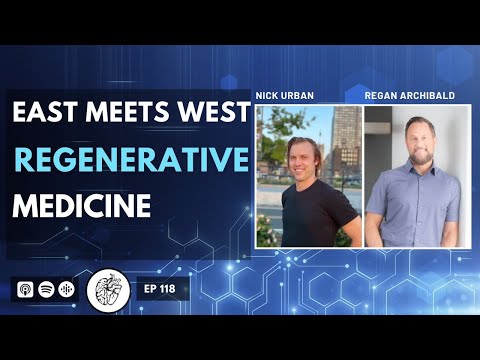




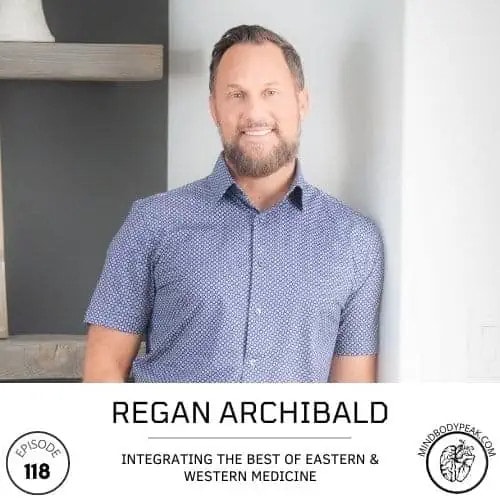
Regan Archibald, LAc, founder of East West Health, pairs peptides such as IGF-1 and MOTS-c with Eastern herbs, matches peptides to each decade of life and starts every plan with a functional blood panel led by homocysteine, liver enzymes, A1C, iron and testosterone.
Highlights
- Nursing home medications: When a pharmacist took 300 nursing home residents off all their medications, 96% stayed off them and about half left assisted living. [02:37]
- IGF-1 and cognition: The body holds about 600 times more IGF-1 than insulin, and IGF-1 opens the BDNF pathway linked to sharper thinking. [14:37]
- LDL cholesterol decrease: In one study, 90 days of 5-amino-1MQ lowered LDL cholesterol by about 26%. [17:00]
- Homocysteine above six: Homocysteine above 6 can signal a breached blood-brain barrier, a concern for dementia risk after age 80. [31:05]
- Cancer screening: The Grail blood test can flag cancer about four years before it would otherwise show up. [27:20]
Episode Chapters
- [00:00] Intro
- [02:37] Why your last decade can be your healthiest
- [04:00] Daily non-negotiables and yearly challenges
- [09:17] Acupuncture and Eastern herbal medicine
- [10:07] Stacking cordyceps with MOTS-c
- [14:37] He Shou Wu, IGF-1 and 5-amino-1MQ
- [20:32] Functional blood panels and optimal ranges
- [27:20] Cancer screening, carotid scans and full-body imaging
- [30:30] The top five blood markers on a budget
- [41:00] Stem cell rejuvenation and the SphenoCath
- [45:42] Brain peptides and the three G’s for vagal tone
- [50:11] RG3, ABP-7 and ARA 290
- [55:00] Peptides for every decade of life
Why Peptides and Eastern Medicine Belong in One Plan
Archibald studied Eastern and Western medicine side by side in Hawaii, then opened East West Health about 20 years ago to combine acupuncture and herbs with peptides and regenerative medicine.
His core view is that the last decade of life can be the healthiest one, and that too many medications often stand in the way. He builds every plan on labs first and treatments second.
This one is for anyone weighing a first peptide, people who want more from a blood panel than a normal result and listeners curious how acupuncture and Chinese herbs fit modern longevity work.
Which Peptides Fit Each Decade of Life?
Archibald matches peptides to the job of each decade: recovery and energy in your 20s, cognition and muscle in your 30s, hormones and immunity in your 40s, the gut in your 50s and muscle loss in your 60s.
In the 20s he favors cycles of IGF-1 plus thymosin beta-4 for recovery. The 30s add nootropic peptides for focus and growth hormone releasing peptides such as sermorelin and tesamorelin to build muscle.
In the 40s kisspeptin and gonadorelin support the body’s own testosterone. The 50s bring BPC-157, LL-37 and KPV for gut repair, and the 60s add a blend called Sarcotropin aimed at sarcopenia.
Mitochondrial peptides such as MOTS-c, 5-amino-1MQ and SS-31 cycle in at every age.
What to do: Run blood work before any peptide, work with a clinician who knows peptides and buy only from a reputable source.
Start putting muscle mass on in your 30s because this is the decade to build it.
– Regan Archibald
Related: Therapeutic Testosterone and Peptides with Jay Campbell
How Do Eastern Herbs Stack With Peptides?
Archibald pairs Chinese herbs with peptides that act on the same pathway, so each one amplifies the other.
Cordyceps supports mitochondrial energy, and he stacks it with MOTS-c. Astragalus and NAD sometimes join that stack.
For the next phase of health he pairs He Shou Wu with IGF-1 for cognition. Acupuncture runs alongside the herbs, using fine needles at specific points to balance the nervous system.
What to do: If you already take a mitochondrial herb such as cordyceps, ask a peptide-literate clinician whether a matching peptide belongs beside it before adding one on your own.
And by using something like Cordyceps, it’s a way to extend longevity.
– Regan Archibald
How to Choose Blood Tests on a Tight Budget
Archibald’s budget panel is five markers: homocysteine, the liver enzymes ALT and AST, hemoglobin A1C, iron with ferritin and testosterone.
Homocysteine also shows how well you use folate and B12. A raised AST points toward sarcopenia and weaker hormone processing in the liver.
He reads A1C with caution, since blood sugar highs and crashes can average out to a normal number. Iron drives energy and liver detox, and for women he adds estradiol and progesterone.
He judges every result against optimal ranges rather than the broad population averages most labs print, and he checks sex hormone binding globulin beside testosterone.
What to do: Order those five markers first and read them against optimal ranges with a practitioner who knows functional blood chemistry.
So just do those small markers and you’ll be way farther ahead.
– Regan Archibald
The Archibald Peptide Protocol
Seven steps in the order Archibald works with clients.
- Test first: run a functional panel built on the five budget markers before any peptide.
- Read optimal ranges: compare results to optimal ranges rather than population averages.
- Match the decade: choose peptides by decade of life.
- Stack with herbs: pair peptides with herbs on the same pathway.
- Retest and track patterns: judge changes over months, ideally with the same practitioner.
- Avoid black-market peptides: buy from a reputable source and work with an expert.
- Avoid copying advanced stacks: large multi-peptide stacks need clinical supervision.
Source: Archibald’s integrative peptide method, East West Health
Key Terms Quick Reference
- [10:07] Cordyceps: Cordyceps is an adaptogenic mushroom that works on the AMPK pathway tied to mitochondrial energy production.
- [11:01] MOTS-c peptide: MOTS-c peptide is a mitochondrial-derived signal that the body also releases when heat shock proteins switch on, as in a sauna.
- [14:37] He Shou Wu herb: He Shou Wu herb is a Chinese tonic whose name refers to an old man’s gray hair turning dark again.
- [18:53] IGF-1 LR3 peptide: IGF-1 LR3 peptide is a modified form of IGF-1 that stays active about 15 minutes longer than the natural hormone and saturates more receptors.
- [41:00] Stem cell rejuvenation: Stem cell rejuvenation is the use of umbilical cord mesenchymal stem cells to restore the signaling that declines as stem cell numbers fall with age.
- [43:23] SphenoCath device: SphenoCath device is a catheter that delivers a mist to the back of the sinuses so stem cells can reach the brain without an injection.
- [37:03] Sex hormone binding globulin: Sex hormone binding globulin is a protein that binds testosterone and rises with regular stress, which lowers the share free to act.
Products, Tools, & Resources Mentioned
*Outliyr independently evaluates all recommendations. We may get a small commission if you buy through our links (at no cost to you). Thanks for your support!*
Peptide Mastery Course: Archibald’s peptide education program covering protocols, dosing and integration with Eastern medicine.
LVLUP Health: Peptide supplier recommended for quality and purity testing.
Limitless Life Nootropics: Source for research peptides and nootropic compounds.
5-Amino-1MQ: The NNMT-blocking molecule Archibald stacks with IGF-1 for fat loss and athletic output.
Semax Nasal Spray: The focus peptide Archibald reaches for during tight deadlines.
Selank Nasal Spray: The calming peptide he prefers in the afternoon or evening.
The Peptide Blueprint: Archibald’s guide to achieving optimal health and performance through peptide protocols.
Outlive: The Science and Art of Longevity by Peter Attia: Referenced by Archibald when discussing the health decline in the last decade of life.
Are Your Prescriptions Killing You? by Armon B. Neel Jr.: Exposes the dangers of over-medicating elderly populations.
The Creative Act: A Way of Being by Rick Rubin: One of Archibald’s favorite books on creativity and consciousness.
The Rise of Superman by Steven Kotler: Insights into human evolution, flow states, and peak performance.
Tao Te Ching by Lao Tzu: The foundational Taoist text that informs Archibald’s Eastern medicine philosophy.
Mitochondria and The Future of Medicine: The key to understanding disease, chronic illness, aging and life itself.
Harnessing the Nine Hallmarks of Aging: A guide to living your healthiest life by understanding the biological mechanisms of aging.
The Inner Athlete by Dan Millman: Realizing your fullest potential through inner work.
Sapiens: A Brief History of Humankind by Yuval Noah Harari: Referenced in the conversation about human evolution and health.
Top Online Peptide Companies: Comprehensive guide to sourcing quality peptides.
Best Peptides for Hair, Muscle Growth, Fat Loss, Energy & Athletic Performance: Full peptide reference guide.
Biohacks to Optimize Mitochondrial Health: Supplements, diet, and lifestyle strategies for mitochondrial function.
Lao Tzu: Ancient Chinese philosopher and author of the Tao Te Ching, whose work informs Archibald’s integrative approach.
Frequently Asked Questions
Should you work out before a blood test?
Archibald says no. A hard workout the evening before can skew liver enzymes, kidney markers and hormones, and he once saw a client’s labs look like kidney failure for that reason.
What is ARA 290?
Archibald describes ARA 290 as an endurance peptide that works on the EPO pathway. It is in phase three FDA trials for sarcoidosis, and he uses it for small nerve fiber neuropathy.
When does Archibald choose Semax over Selank?
Archibald uses Semax for focus, memory and tight deadlines. He saves Selank for the afternoon or evening for people who are wound up, since it raises GABA and a little oxytocin.
What are the three G’s for vagal tone?
Archibald’s three G’s are gagging with a toothbrush, gasping through cold exposure and gripping with dumbbells, dead hangs or a Kegel squeeze. He uses them to improve vagal tone, which he links to gut and brain inflammation.
About Regan Archibald
Archibald is a licensed acupuncturist and peptide specialist who started East West Health and Integrated Pain Specialists. He blends acupuncture, regenerative medicine and functional medicine through a medically managed peptide program at the clinic.
He grew up on a cattle ranch and got into health through school sports. Today he runs the Health Accelerator Course for more than 1,000 weekly members, hosts the Never Stop Healing podcast and has written eight books, including The Peptide Blueprint.
He belongs to the International Peptide Society. Away from the clinic he rides the Wasatch mountains and spends time with his wife Jessica and their three kids.
Related Episodes & Articles
- Episode 113: Therapeutic Testosterone & Peptides for Optimal Health (Jay Campbell)
- Episode 106: Bioregulator Peptide Science, Benefits & Uses (Phil Micans)
- Episode 82: Reverse Your Bioage Protocol (Ryan Smith)
- Episode 87: Traditional Chinese Medicine Wisdom (Chloe Weber)
- Episode 35: Traditional Chinese Medicine for Beginners
- Article: Best Therapeutic Peptides
- Article: Best Online Peptide Companies
Music by Alexander Tomashevsky
Full Episode Transcript
Nick Urban [00:00:05]:
Hello everyone and welcome to episode number 118 of Mind Body Peak Performance with your host, Nick Urban. Thanks for tuning in today. Today we’re talking with a man whose work I have followed for a while.
That’s because he’s one of the few people that’s actually combining the ancestral wisdom with the cutting edge peptides nootropics bioregulators and overall regenerative medicine. Regan Archibald is one of the world’s leading peptide experts.
He also serves as a regenerative therapy and peptide consultant at his award winning clinic he founded in 2004, which is called East West Health and he created the Peptide Mastery course. Regan is a member of the International Peptide Society and the author of eight books, including the recently released book called The Peptide Blueprint.
In my chat with Regan, we talk a lot more about peptides and some of the adjacent fields.
Nick Urban [00:01:09]:
There was so much to cover in the limited time we had together, but I wanted to bring some novel information I haven’t heard elsewhere, including some peptides that I have not heard discussed elsewhere.
We also talk about the importance of diagnostics, the most important blood labs to get even if you have a very limited budget and a whole lot more, no matter your level of mastery over health and wellness topics. There is something in this conversation for everyone.
If you’re interested in checking out his work, the links to all of his socials, his books, his course will all be in the description below. You can find the show notes and all of that@mindbodypeak.com. The number 1118. If you find this information helpful, go ahead and share it with a friend, a family member, a loved one that you think could benefit from this information.
Thanks for tuning in.
Nick Urban [00:02:06]:
Now sit back, relax and enjoy this conversation with Regan Archibald. Regan. Welcome to MINDBODY peak performance.
Regan Archibald [00:02:16]:
Nice to be here Nick.
Nick Urban [00:02:17]:
It is an honor to host you and today we are going to talk about all kinds of things that are all in your wheelhouse, including stem cells, functional testing, peptides and a whole lot more. Let’s start off with a controversial idea or a stat or fact you have that relates to your line of work.
Regan Archibald [00:02:37]:
I think probably a controversial idea is I believe that the next decade can be your healthiest decade and actually your last decade could be your best decade.
If you read Peter ATIA’s book Outlive, he talks about this cliff that people go off at the end of life and so the last ten years essentially people are in the waiting room just hoping the grim reaper takes them sooner rather than later. And I think it’s inhumane. Most people, if you’ve read the book, are my prescriptions killing me.
It’s very obvious that we are probably sedating our elderly population and over medicating them. And what he did is he went into a nursing home, this pharmacist, and he took 300 people in the nursing home and took them off all their medications, and 96% of them stayed off all their medications.
The other 4% needed to be on because their blood pressure went up too high or other reasons. But he also found that about 50% of them were able to leave assisted living and go back out on their own.
Regan Archibald [00:03:44]:
I think maybe something controversial is that we use way too many medications in our polypharmacy laden society.
Nick Urban [00:03:52]:
Well, so far today, what have you done? What have been your non negotiables for your health, your performance and your Bioharmony?
Regan Archibald [00:04:00]:
Yeah, that’s a great question, because every year I have this fortunate experience of having a birthday as long as I make it around the sun, another rotation. And so for the last maybe seven years, I’ve had different experiments that I’ve taken on and challenged myself to do over the course of a year.
So one year I did, like, ice baths every day for a year, and I found that that was an incredible upgrade to my health and my nervous system. And so I’ve just kept that in my protocol. Last year, my year long challenge was 25 enjoyable miles per week. So I live in the mountains in Park City, and I just love mountain biking, snowboarding, all those things.
And so I said, holy cow. Well, maybe I could just have 25 of those miles.
Regan Archibald [00:04:53]:
Not only will I get my zone two cardio in, but I’m also going to make it enjoyable. So most weeks I put in about 30, 35 miles, because there’s some miles that are just not fun, but that’s another thing. But those are some non negotiables. The other ones I have is I exercise twice a day. I wake up and exercise.
The sun drizing, ideally outside, and then as the sun’s setting, I like to go for a mountain bike ride, walk the dogs, walk with my wife. So that was a challenge I did years ago, about eight years ago, and has stuck with me. And then I go to bed at 930 and wake up at 530.
Regan Archibald [00:05:30]:
I’m just pretty boring at night and everybody knows it’s like party at Regan’s House. Please leave by nine.
Nick Urban [00:05:42]:
Well, tell me a little bit about your background. How did you get where you are? We were talking offline a minute ago about the different things that have been your fascinations and specialties, and there are a lot of them, and I’ve not come across anyone that has the same mashup of skills that you do.
Regan Archibald [00:05:59]:
Yeah, well, I grew up on a cattle ranch, Nick, and so growing up I wanted to be anything but a farmer. And in order to get out of feeding the cattle early in the morning or after school, just constantly working, I had to make the football team, basketball team, track team. I really got into optimizing my health at a young age.
I read this book called Inner Athlete by Dan Millman at the age of 13, and it taught me the power of visualization. I also learned about certain supplements and then I would go study it. One of my first forays into natural medicine is I gave the entire basketball team 5 grams of vitamin C or 8 grams excuse me. I gave them a mega dose and they all ended up with diarrhea.
So we lost the game.
Regan Archibald [00:06:50]:
But it was a good learning opportunity for me. And then I had an uncle who was a medical doctor. So I initially started out just studying conventional medicine and I thought that was the route I wanted to take. But I ended up getting hashimoto’s and it was misdiagnosed by five doctors at the U. And so I said, Well, I’m going to try someone else.
So I went to a naturopathic doctor who was also trained in Eastern medicine. And I got such great results because he was the one that first of all, diagnosed me properly. So he ran the right labs and then we were able to reclaim my health.
Regan Archibald [00:07:27]:
So I started feeling better. I was starting to gain weight. I couldn’t sleep at night, but I was chronically tired in the day and my brain fog was horrible. But after working with this doctor, I said, man, I want to study integrated medicine. I want both Eastern and Western philosophy in my toolkit.
So I ended up going to a school in Hawaii and studied at a school founded by Earl Bach and the inventor of the Pacemaker. But I also studied Eastern medicine there and it was a phenomenal marriage between the two modalities. And then I set up East West Health.
Regan Archibald [00:08:04]:
I founded that clinic about 20 years ago and worked with a neurologist for the first seven years. And then I’ve hired doctors ever since then and it’s just been our core philosophy. It’s been incredibly successful because I’ve always couched things in this concept that I want to make sure that everything is going to benefit people’s future.
It’s not where I’m going to do a treatment and then find out that the medication got pulled or something crazy like that. And so we use a lot of these ancient therapies that were discovered 2500 years ago. And then we’re also combining it with cool things like peptides and regenerative medicine and perinatal tissue allographs and alpha two macroglobulins.
All these treatments that really get just outsized returns as far as results go. But I think we get such great results because we do use some of that ancient wisdom.
Nick Urban [00:09:01]:
Yeah, there’s a lot of different things that you’re doing, obviously. Can you rattle off a couple from the east and a couple from the west? That way if people are interested in diving deeper on some of these topics, maybe they’ve never heard of them. And we don’t have 12 hours today, unfortunately, to do a master class on every single one of them.
Regan Archibald [00:09:17]:
Yeah, so Eastern therapy is like one of my favorites is acupuncture. And acupuncture is the insertion of fine needles in these very specific points that activate the nervous system. So you get this nice physiological response where the body can harmonize its sympathetic and parasympathetic nervous system.
You get these nice energetic frequencies, so you get better vibration throughout the body. You get an enhancement of blood circulation and healing and some great relaxation. The other one we do is one of my doctors of acupuncture, Dr. Galt. She does a lot of body work and so like tuina and Tzu type therapies, and then we do a lot of Chinese herbs.
Regan Archibald [00:10:07]:
So we use Eastern herbal medicine. And it’s really powerful because when you stack those with peptides, because peptides, you’d put that as more on the western side. But really once we start breaking down all the individual components of the herbal medicine, you’ll see that an herb. One of my favorites is Cordyceps.
And Cordyceps is a powerful adaptogen, but it works on the AMPK pathway, which is a bypass for your ATP production, or the adenosine triphosphate, which is the energy generation from the mitochondria of the cells. And by using something like Cordyceps, it’s a way to extend longevity. It’s a great way to bolster your white blood cell intelligence.
So we look at that, we say, well, the peptide that you can stack to get a very similar response is MOT C.
Regan Archibald [00:11:01]:
And MOT SC is more phenotypically expressed in the Japanese population who seem to live the longest. MOT C is also activated when heat shot proteins are activated. So when you’re doing your sauna and you’re just sweating your face off, you can think, well, I’m just activating this cool peptide in my body called MOT C.
And so sometimes we’ll stack like MOT C with cordyceps and astragalus and we’ll just amplify the benefits. Maybe we’ll throw in some NAD and that’s a really good mitochondrial optimizer. There’s other therapies we can go into, but the other way that we stack it is if you think of stem cells. So if you think of why does our body lose the ability to heal? And Nick, you’re young.
How old are you?
Nick Urban [00:11:51]:
I’m 28.
Regan Archibald [00:11:52]:
Yeah, you’re 28 and you’re a beast. You look like Thor, like you could just put down the hammer. But what got you into how did you even learn about peptides or Eastern medicine? I mean, what fascinates you as a 28 year old that you’ll probably keep with you for the next 1020 years of your life?
Nick Urban [00:12:12]:
That was actually on my list of questions to ask you like a peptides for the different decades. What do you recommend for someone to look into in their twenty s? Thirty s, forty S, fifty s, and so on? For me, I got interested in all this back in high school when I saw diet as something that I need to optimize for my physical performance.
And then after that I looked at supplements and I was really interested in the research behind them. I started playing around with essential amino acids and creatine and then I was just always looking for the next frontier. And at some point along my journey I learned about Ayurveda and traditional Chinese medicine.
And I looked into those and saw they were more prevention focused and they had answers to things that a lot of western medicine, allopathic medicine doesn’t have answers to yet. And I figured if they were doing this thousands of years ago and it’s still practiced today, there’s probably a reason. And that got me into adaptogens and other herbs.
Nick Urban [00:13:09]:
And then eventually when I was looking into bioregulatory medicine or like bringing the body into balance, I came across peptides somehow. And I actually recently finished that exact stack. I didn’t know that that was a common stack, but it’s combining cordyceps with MOT C. And I did that for mitochondrial health and energy and I did notice a pretty big difference.
Regan Archibald [00:13:32]:
Jeez. And by the way, we did not pre stage this either. So well done, buddy. I’m impressed. So if you look and this is I’m going to bring back to your original question, like, which name off some modalities from the east and the west, but I think it might be more interesting if you said, here’s where I want my health to go.
And then I can just give you some ideas. But where do you want to go now? You’ve got your mitochondria. You feel they’re more expressed.
Regan Archibald [00:13:57]:
I’m sure you went through some great mitophagy and now only the best mitochondria remain. But where do you want to go from here?
Nick Urban [00:14:05]:
Yeah, so the other aspect that I’m very interested in is cognitive health and performance. And so on the nootropic side, I’ve been playing around that and in your handbook I saw that you’ve mentioned a bunch of different longevity and cognition, molecules and peptides and therapeutics and found that interesting.
But for me it’s more of like ensuring that I maintain good health as I age or maximizing my health, span the quality of those years, and then also performing and showing up in my best every single day.
Regan Archibald [00:14:37]:
Yeah, I love it. So there’s a great herb called Hershaw wu and Hershaw wu, it stands for old man’s gray hair gone dark. So it’s a really powerful peptide for graying hair. So if you think about using that one in your next phase, you could stack that with like IGF one for the cognition.
So IGF One is a really powerful peptide because what it does is it unlocks the pathway for BDNF. And so IGF One, it’s the workhorse for growth hormone, you have 600 times more IGF one in your body than you do insulin.
And so if you can keep IGF One levels adequate, you also balance blood sugar because I could see in the next ten years, if you just started eating a bunch of sugar and crap, guarantee it’s not going to end well. But IGF one is a peptide that’s really amazing for enhancing cognition.
Regan Archibald [00:15:36]:
The other thing it does is when I was, let’s see, about 38, so about seven years ago, I learned how to wake surf. It was right when I was coming out. My brother bought this big boat and it flips this huge wake, but I’d never done it before. And it was right when I was using IGF One is what was one of the stacks. I was on five amino.
One MQ and IGF one. And the crazy thing is, my proprioception just felt like I was 18 again. I used to be a high school running back, so I had really good agility, really good speed, and I just suddenly I was like after about a week of being on it, I was like, holy cow, I can move like a beast now.
Regan Archibald [00:16:15]:
And I felt like super just amazing and still does that. But I jumped on the wake surf and I picked it up, literally. It took me zero tries. I just did it on the first try. And I don’t think I would have been able to without that little upgrade that I did with the IGF One and the five amino one MQ. So those are a couple of stacks as you want.
I’d imagine you’re pretty athletic and you’re active. When you put the IGF One, not only do you get the benefits of better sleep, better recovery, more muscle mass, better insulin sensitivity in the body, but when you stack it with five amino one MQ, that turns off the pathway that allows you to store fat, that NNMT pathway.
Regan Archibald [00:17:00]:
So five amino one MQ is an interesting molecule because if you have high cholesterol, there’s one study that found people who used it for 90 days had like a 26% decrease in LDL cholesterol. They also found that people who used it had a greater ability for an improvement in their vertical. They had greater contractility of their muscles.
So it’s a really cool molecule that was discovered in 2017 out of the University of San Antonio, Texas. But when you stack that kind of that athletic enhancing and fat burning peptide with any growth hormone socraticog, or any, like IGF One, and make sure with IGF One, you use the LR Three, the long releasing formula.
But yeah, what you find is when you stack those, your body just feels incredible. You just feel like you’re younger. And I felt like I was 20 years younger.
Regan Archibald [00:17:57]:
And so with you, if you’re 20 years, you don’t want to feel 20 years younger because that would be you as an eight year old, and you’d be like asking for mom and stuff.
Nick Urban [00:18:07]:
That’s interesting. I’ve actually looked into five amino, one MQ, and I interviewed Ryan Smith on the podcast and he mentioned his own experiences with it and the insane vertical increase, vertical jump increase he got from his cycle of it. And it is pretty expensive, but it seems to have so many downstream benefits.
It’s definitely going to go into one of my upcoming stacks and then for the IGF One, LR three, what I’ve always thought about it is that the LR Three part, the part that makes it last a lot longer in the body as I understand it IGF One doesn’t typically last that long in the body. Are there any harms or downsides?
Because whenever we deviate from the way things work normally in the body I feel like there’s a greater propensity for side effects.
Regan Archibald [00:18:53]:
Yeah, I think you’re right. It lasts about IGF One has, it maybe lasts 30 minutes if you’re lucky. All peptides, they get metabolized so fast and especially with growth hormone. Is that the way that the body works? Is it’s a negative feedback loop? Right.
And so one of the risks of putting hormones in your body is like using growth hormone for example, that communication pattern turns off the negative feedback loop for too long.
And so when you use like testamerellin infomerlin, Stromarellin, MK, six, seven, seven, or IGF One, you have this tiny little window where you’re going to have somatostatin that goes to sleep because somatostatin is the inhibitory molecule that turns off growth hormone.
And so you’ll have this little spike but then after about 30 minutes somatostatin catches wind like hey Nick’s got too much growth hormone. He’s having too much fun.
Regan Archibald [00:19:55]:
And so then it shuts it down. So the LR Three just keeps it open for about maybe 15 minutes longer and it saturates more of the receptors. Yes. It’s not following the molecular biomimicry pathways quite as much but I haven’t seen any negative outcomes from it. But before you ever use peptides get your blood work ran.
Work with someone who’s an expert in this. Do not buy your peptides on the black market because you might just grow a third testicle. And if that’s not what you want then get it from a reputable source.
Nick Urban [00:20:32]:
Absolutely. So let’s talk about lab testing then. I know you are a big proponent of it and what do you do when you’re working with a patient to get their baseline? Whether it’s blood or it’s genetics or it’s wearable data, how do you go about getting a snapshot of their current state?
Regan Archibald [00:20:51]:
Very first thing we do is we just send them to local lab corps. It’s very easy. Or we can send a phlebotomist to your house but you can go to our website and easily just purchase a blood lab. Call the office and we’ll send you in and we’ll do a comprehensive panel. Usually they’re anywhere from 82 to over 100 markers.
Most doctors appointments when you go for your annual physical it’s like 20 markers and it’s very basic. And the big problem with that is you get the markers around you’re all excited and then you get a call from your doctor if you’re lucky. Or usually it’s a nurse or someone else well, everything looks normal.
Regan Archibald [00:21:27]:
And you’re like, Well, I still feel like crap. And it’s not normal because this is not normally how I feel. And so when we run the labs, what we do is we take the parameters that are based on a scientific advisory panel that’s looking at when the body’s outside of optimal ranges.
Because what lab core ranges do or any of the other blood labs is the ranges are way too broad. And so they’re basically just taking averages of the American population every year and saying, well, so the average mel, their testosterone is 335, and the average low is 264, and the average high is 916. We’re going to leave it at that.
And so you have these really broad ranges that are not relevant for those of us who want to optimize our health. If you’re just looking to get a diagnosis and have a major you want to get diagnosed with a major disease and get on medications, those tests work great.
Regan Archibald [00:22:25]:
But when you’re really looking to optimize, the functional blood chemistry panels that we run are just incredibly useful because then we can see what your kidney function looks like. We can look at your liver, your heart, all those things.
I just read one of my clients reports who’s got kidney failure, and we’ve been working with him and working with his nephrologist, and he’s one of the few patients that’s taking it proactively. And he was just told by his nephrologist that he no longer has kidney failure. This is after a year of being on peptides and doing some exosomes and stem cells.
So there’s amazing things that can happen. But when I first started with him, he’s like, well, isn’t my diagnosis from my doctor enough? And I said, well, no, I don’t care about your diagnosis. I want to see what your health looks like.
Regan Archibald [00:23:13]:
So let’s run the right labs, and then we’re going to put a health protocol together for you. I’m going to let your specialist focus on the disease. And he’s like, oh, okay. I never thought of it that way.
Nick Urban [00:23:22]:
Yeah, that makes so much sense. And when you’re going about these evaluations, how do you weigh the qualitative? Because you’ll see certain things on labs, and you may or may not see other things, and a patient might come in complaining about a condition or feeling a certain way, and their labs might come back normal.
And it may be because the wrong things are measured or maybe because there’s a lag time or for some other reason. So how do you go about integrating both the qualitative subjective, their experience and the hard numbers?
Regan Archibald [00:23:52]:
I think the best way is learning to listen to the patients. And it may sound weird, but intuition is really important because I can look at a lab value and I’ll be like, well, your hemoglobin a one C, it’s 5.6. It’s not technically in that prediabetic range, but then we’ll look at like, Cpeptide and I’m like, that’s 3.1.
And then I’ll go look at a couple of other markers. I’m like, You’ve got some insulin sensitivity. Your LDH is really high, for example. And so just looking at all the markers and even if those markers are optimized, which I’ve never seen, actually we have one.
One of my health coaches, Jenny, one time ran her blood work and it was perfect, but other than that, we’ve never seen it.
Regan Archibald [00:24:39]:
But usually it’s just looking at the patterns because you can start to see where things are trending, and especially if I can look at things historically, people who’ve worked with me for 20 years, it’s so much easier for me to just know exactly what they need versus someone coming in brand new.
I mean, I’m really good at figuring it out and I have a really amazing team. Our medical team is phenomenal, but it’s still like understanding that there’s a biological input and that input may create one outcome for you and may create a different outcome from somebody else and a different one from somebody else.
And so having the right diagnosis up Iron and then making sure that the biological inputs are leading them to the result that they’re after is what we shine at. But it always is a bit of a guessing game.
Nick, there is some intuition involved in the diagnostic process and if there’s no intuition coming, then it’s like, well, let’s run your stool test, let’s look at metabolomics, let’s do a crowded artery scan. Let’s just rule out everything. Because one of our mantras is no death by neglect.
Regan Archibald [00:25:49]:
We’re not just going to say everything looks fine and send you on your way. We’re going to just keep testing until we figure it out.
Nick Urban [00:25:55]:
And that’s assuming there is something, a complaint that the patient has. If I feel great and my tests come back perfect, I’m the second person in your history that comes back with a clean test. Completely clean. Then you wouldn’t keep testing it’s. Only if I had a complaint. Then you’d continue.
Regan Archibald [00:26:11]:
Yeah, well, we would say, all right, we’re just going to hope that biology, because we have this headwind always there, the universe is trying to recycle us one way or another. And so if we can get rid of that recycling process and just keep optimizing, then we’ll do that.
But that’s where a mutual friend, Ryan Smith, who you mentioned earlier, his true age, that his diagnostic test is really powerful because then we can say everything looks good here. So we’ve cleaned up all the messes. Now let’s start looking at the methylation patterns on the DNA and let’s see if we can actually start reversing your biological age.
And that’s where things get really fun.
Nick Urban [00:26:52]:
Yeah, there is a lot there. And I’ve done his tests pretty cool. And they have several other tests that they’ve released and some that they’re working on. It’s a really exciting space and the industry of health optimization and longevity and the hallmarks of aging is constantly innovating.
So you mentioned blood testing, you mentioned potential stool testing, metabolomics, some methylation like biological age testing. Anything else?
Regan Archibald [00:27:20]:
We do the gallery test. So the Grail, it’s a cancer screening that can show any kind of polymorphisms in the body long before it would show up if you didn’t have cancer. It’s about four years earlier. We do a really cool test. It’s the intima media thickness in the crowded artery.
So it’s an ultrasound, and we can let people know what their age is of their blood vessels. And we can look at the plaque. We can see is it heterogeneous plaque, which is relatively safe, or is it soft plaque that can break off and cause an aneurysm, or is it hard plaque? And so those are a couple of the other testing that we do.
Regan Archibald [00:28:01]:
And then we work directly with a company called Advanced Longevity, and they run the full body scan. We send clients in for full body Cat scan imaging. We do brain MRI, MRAs. We also do ultrasound on the thyroid. We do a calcium score. So there’s very enhanced tests that we do.
And usually what is unique about us, Nick, is we provide longevity retreats. So we host longevity retreats with collaborative partners.
Regan Archibald [00:28:32]:
People have Masterminds or people who have their executive team that they want to upgrade their health. And they come out, we run all these tests on them, and then when they’re all in there together, they’re all looking at their blood labs. And I’m explaining what the blood labs mean.
We have our fitness team talking about different cardiovascular tests. I created a tool called Fitness 50 at age 100. And so they’ll take them through some of those eleven code diagnostic tools. So they’ll have people doing dead hangs in our gym, and it’s actually really fun. I created that tool for Dan Sullivan.
Regan Archibald [00:29:08]:
He’s got a goal to live to be 156. And so I’ve been a client of his for about a decade, and I’ve been able to work with him in Babs. But Dan Sullivan came up to me about a year ago and said, all right, he’s 79 now. And he says, when I’m 100, what benchmarks do I need to be doing that a health 50 year old could be doing?
And so I just started researching it and I said, all right, here’s the eleven core benchmarks that they’re diagnostic by nature, but if you can do these, just these eleven things, you’re going to be able to arrive at 100 in really good condition. And so we have three categories. We have fit, fitter, and fittest.
And so based on how you score, you get a shirt that can tell you how you graded on that. So it’s actually a really fun thing.
Nick Urban [00:29:55]:
I love that. That reminds me of Dr. Peter Tia’s Centenarian Olympics concept, where if you’re reverse. Engineering where you want to be at age, say, 100, what do you have to be doing today, given the natural progression or I guess regression of health over time? Yes.
Regan Archibald [00:30:11]:
Standing up from the toilet, walking down the stress, picking up grocery, I mean, all those basics. And that’s what the Fit 50 at age 100 is about. Yeah, when I read Peter Tia’s new book Outlive, I’m like, he’s copying me. But no, he’s way smarter than me. But I was glad that we lined up on so many concepts.
Nick Urban [00:30:30]:
Well, Regan, I think you’re going to hate this question because most people who are doing something comprehensive don’t like to simplify it. But I know from my own personal experience when I’m running blood labs, they can get expensive fairly quickly. They can be more complicated to interpret the more different biomarkers you’re testing for.
If you had to simplify your entire suite of blood tests down to say, like, your top five biomarkers to test that way, making it much more accessible to your layperson who doesn’t have the funds or resources to get these tests run and then to interpret them themselves, what would you say your top five are?
Regan Archibald [00:31:05]:
So homocysteine is a marker that most doctors don’t even run the cardiologists. I have a couple of cardiologists who have trained on implementing peptides in their office because they’ve seen such amazing results with our clients, and then they say, hey, can you teach me? And so it’s like, no problem.
But homocysteine run that marker because what it shows is the amount of oxidative stress in the body. But more importantly, it also shows how well you’re using B vitamins like Folate and B twelve.
And then it also shows if you’ve got a breach in your blood brain barrier, because so many people, the blood brain barrier will get suspended if your homocysteine levels are above six. And so the research is showing that everyone who listens to this podcast, we all want to live way beyond 80.
80 is like, we’re going to get there like, smoking fast and easy, but it’s after 80 is when Alzheimer’s and dementia gets us. And so if your blood brain barrier is breached and your homocysteine levels are high, then you want to make sure you’re discovering what’s causing that, what the triggers are.
Regan Archibald [00:32:08]:
And so that would be number one. Number two is I like to see the liver enzymes, Alt and AST. And this is important, and I’m just going to group those into one. But Alt and AST are really important because they actually give us a really good understanding as far as how well your liver is functioning, how well your protein metabolism is.
Because if your AST is elevated, then we know you’re heading into sarcopenia. So you’re going to be putting on more fat, less muscle. And we also know that your liver is not going to be able to process hormones effectively. The third marker that I would run would probably be hemoglobin A one C.
Regan Archibald [00:32:52]:
And I hesitate on that one because hemoglobin A one C can look perfect because it can be too high and then too low, and people can have blood sugar highs, and blood sugar crashes and it ends up being even. But at least it gives me a snapshot of insulin because there’s a great book by Benjamin Bickman called Why We Get Sick.
He’s a Utah professor here, and he just completely creates a compelling argument as to why insulin resistance is at the root cause of almost every chronic disease. And after reading that book, if you’re not convinced, then I don’t know what else would convince you. But I think that’s a really important thing to look at.
The other one is we want to look at your body’s overall iron levels and ferretin. I know that’s two again, but if you look at energy production, your iron levels are what create the energy in the body. And if you think about what triggers your cytochrome P 450 gene to start the detoxification process in your liver, it’s iron.
Regan Archibald [00:33:56]:
If you think about what transports oxygen and what the oxygen gets a ride on is it’s iron. It’s that heme in the body, in the blood. And the blood is what? Nourishes, everything. And so if your iron is not being utilized properly, you’re going to be in an energy crisis.
And then that leads to autoimmunity, it leads to chronic inflammation, it leads to cardiovascular disease, arterial sclerosis. I mean, it’s a big deal. And so probably number five for men would be testosterone. I think it’s just such a critical marker.
Regan Archibald [00:34:32]:
I’ve seen dudes, I had one of my clients, he came to see me because he was just, like, burned out. And he got referred by another entrepreneur, and he was in his late forty s, and he put on like, 50 pounds, and he’s gone through a divorce, the whole bit. He just sold his business and he literally got a $32 million wire transfer as we’re talking.
And I said, that’s got to be amazing. You must be so happy. I mean, this is what so many entrepreneurs work for this single day where you get the big paycheck and all the work is worth it. And he looks at me and he says, I don’t even care. It’s fine.
Regan Archibald [00:35:09]:
I don’t even care. I am so burned out. My health is so far gone. Not even worth it. Like, in that moment, it wasn’t even worth it to him. It’s been about a year and a half, and he’s all healthy. And he’s actually sent me the bill for his tailor, and he’s spending just to get his clothes refitted and refitted because he keeps losing weight. He’s like, this is great.
Regan Archibald [00:35:28]:
This is the best money I’ve ever spent. But now he’s got his juice back and he started a new business and got a new girlfriend. But man, the trauma that we put ourselves in. But when I ran his testosterone, it’s in the he had no motivation.
So the dudes that I work with, if their testosterone is not optimized, and we’ve run testosterone in people in their teens and it’s not optimized, then you’re not going to feel that sense of reward. And so then you’re always looking for your phone, for your TikTok or your instagram to give you that dopamine feed because you don’t have adequate levels of testosterone.
And then looking at, like, estradiol and progesterone for women is so critical. Even testosterone for women, I’m sorry, I’m going way over five, but with women, it’s more complex because females have more testosterone in their body than they do estrogen.
Regan Archibald [00:36:20]:
And so sometimes just increasing the testosterone in females, it prevents osteopenia, osteoporosis. It helps with muscle mass because testosterone is a hormone that allows us to hold on to muscle mass. So I think those are really critical. So hopefully that gives you like a tiny little snapshot. So just do those small markers and you’ll be way farther ahead.
Nick Urban [00:36:41]:
One thing I’m curious about is you mentioned the total testosterone being about 100. And I know that total testosterone is the one I see and hear most commonly referenced. But from my understanding, what matters more is the bioavailable or free testosterone. Why is it that most people talk about the total testosterone instead?
Regan Archibald [00:37:03]:
I think it’s because it’s the most dramatic number, and usually your bioavailable and your free testosterone go along pretty nicely with total. But you’re right, those need to be looked at. But total is just the easiest to talk about because people look at their total number and they’re like, I’m 700. Okay, good. That’s in the optimal range.
But if you say your total testosterone is 400, but your free testosterone is great, you’re at like 30%. And it’s like, wait, what about my total? So I just said because that’s what most people want to focus on. The real number that you want to look at too, I’m sure you found in your research, is a sex hormone binding globulin.
Regan Archibald [00:37:47]:
Because that can just like an Uber driver that won’t let you off. You’re like, hey, drop me off at the Cowboys game. And it’s like, no, we’re just going to pick up a bunch of people and we’re keeping you guys in the bus. But that’s the one you want to look at. You can see estradiol in men as well. We see estradiol come up.
And so that’s another one that we’re constantly looking at.
Nick Urban [00:38:10]:
Yeah. Last time I measured my testosterone, I was about 900 nanograms per deciliter. But then my sex hormone binding globulin was a bit high, and I started looking into why it’s high, and there’s surprising lack of information and there’s a bunch of generic suggestions that don’t really apply to me.
And then I realized it’s probably because for a while, I was severely restricting my carbohydrate intake and that combined with a really intense exercise routine doesn’t necessarily play well.
And there’s other things too, but it’s interesting to see that can be struggle for a lot of people who are doing a lot of things right and they’re trying to tack on too much, too much in their allostatic stress load bucket.
Regan Archibald [00:38:49]:
That’s a good point, and I think a lot of people don’t realize that just by putting stress on your body on a regular basis, your sex hormone binding globulins, they will rise. They’ll go up even if you’re not doing the chemicals, because it’s the easy thing.
It’s like, well, stop drinking things out of plastic, don’t put your cell phone by your balls, all those things. But yeah, there’s a lot more nuance that go into it even if you’ve worked out. And you get your blood work drawn after you work out. That can skew your liver enzymes. That can skew your hormones too.
Nick Urban [00:39:19]:
Yes, I know. The first couple of times I had my blood work done in my childhood, they were freaked out because I had high creatine kinase and they didn’t think to ask me if I had worked out previously if I had had any strenuous workouts. And they were worried about me having some kind of muscle breakdown or heart problem.
And I stopped for my next test for two days and I came in and levels were perfectly fine.
Regan Archibald [00:39:43]:
There it is. So don’t work out before your labs. They’ll be skewed even if the day before your labs I was just meeting with a client of Mind, former Major League Baseball player, and he did a super hard workout and then he went and got his blood labs around the next morning. I’m like, did you work out before this? And he’s like, no, I didn’t.
I’m like, Are you sure? How was your workout the day before and what time? And it was like in the evening he worked out and it was like 45 minutes of cardio and then he hit the weights and he’s obese, so it threw off his kidneys. I was like, yeah, this looks like you’re going into kidney failure.
But if I hadn’t worked with him for a while, then anyway, so, yeah, there’s all these little nuances that can mess with your blood labs. And so, once again, this is why it’s important to work with somebody who understands the functional blood chemistry aspect of it.
Regan Archibald [00:40:30]:
And they’re looking at the Holistic picture instead of if you brought that to a nephrologist or a doctor, they’d say, well, you’re heading towards kidney failure. And then there’s all these interventions that would be unnecessary and actually more harmful than helpful cells.
Nick Urban [00:40:45]:
Let’s talk a bit about your regenerative medicine background. I know that you have been very into stem cells and how would you explain that to the layperson? Because we haven’t talked much about them on this show. And is that something that you still.
Regan Archibald [00:41:00]:
Practice so stem cell therapy, we consider us, what we do is stem cell rejuvenation. So if you think of your stem cells, you’ve got this resident population of these stem cells that just need to be called into action.
And every minute that you’re sitting here, you’ve got these new stem cells that are regenerating your small intestine and your stomach and your bones and your liver. But as we age, the stem cell population starts to decline in our body. And so what I’ve looked at for the last 13 years is I’ve said, how can we stop that process from occurring?
And one of the nine hallmarks of aging is stem cell exhaustion. As I looked into it, I said, well, there’s these amazing properties in umbilical cord tissue, and those umbilical cord tissue is a great way where you can foster this nice outgrowth of new stem cells in your so stem cells in the umbilical cord. Typically they’re considered mesenchymal stem cells.
And really what they’re doing is Arnold Kaplan renamed them the medicinal signaling cells because they’re just sending out signals.
Regan Archibald [00:42:11]:
And these signals can be through vesicles, extracellular vesicles like exosomes, or they can be through peptides. In every vial, there’s about 40 to 50 million mesenchymal stem cells post thaw, and then there’s about 260 peptides.
When you get the stem cell rejuvenation, you’re getting 261 massive peptides that just upgrade the DNA in your cells and they help everything communicate better. And that’s been one of the fastest ways that we’ve been able to really turn back the clock in the clients that we work with. I mean, I’ve done stem cell therapy 37 times. I do it at least twice a year.
I do it for my brain. We use this nasal mist.
Regan Archibald [00:42:57]:
It’s not an injection, but it’s a nasal mist through the spinopalentine ganglion. I use that once a year and then I do IVs maybe once or twice a year, and then I’m kind of an adrenaline junkie and so always got some kind of injury that I’m treating and that seems to be just phenomenal.
Nick Urban [00:43:16]:
Wow. So you can actually get stem cells to the brain intranasally with a nasal mist of some kind?
Regan Archibald [00:43:23]:
Yeah, it’s a device called the spinocast. So it was way in the back of your sinuses and you just missed a half a CC and a half a CC then for most of us. When I first had mine, I’ve had several concussions racing dirt bikes and football and all kinds of stuff. And so I had pretty severe Add.
This was about ten years ago, and this conversation would have felt like a biohacking bronco for you, Nick. It may already, but it would have been a lot worse. But finally I was at a stem cell conference and that’s where I learned the way that they’re treating, like, Alzheimer’s and dementia, things like that.
They were using a device called a spinocap to get stem cells through the blood, brain barrier because historically you’d have to use a drug called manitol to suspend the blood brain barrier because the stem cells are too thick and too big to get through.
Regan Archibald [00:44:19]:
So I went back to the clinic and I grabbed one of my nurse practitioners. I’m like, all right, Devin, we’re going to do this treatment. He’s like, what? We did it. And you have to keep your head kind of in a particular position for about 20 minutes. But the crazy thing that happened is I went to bed that night and I slept for like 11 hours.
I’m like a six and a half to 7 hours max. And then I’m ready to rock 11 hours. And it was like someone was organizing all the memories, all the files in my brain.
Regan Archibald [00:44:50]:
And I woke up the next morning and I was like, hey, it’s quiet, I can hear birds. And then I was like, Why is that’s weird? And then I was like, oh, this is what it’s like. And so it was just like the volume got turned down. Amazing. And so we’ve seen that in other clients too.
So one of the best ways, if you have high homocysteine, you got to treat your brain pretty quickly.
Nick Urban [00:45:13]:
That’s so cool. I had no idea. And I was actually going to ask you if stem cells are something that people actually notice. I know when they’re used into injuries, like musculoskeletal injuries, it can take some time. And I’ve heard mixed effects and reports on those. Not yours specifically, but in general. And I was also curious about the brain.
And it seems like this might pair well with neurofeedback or if the recovery from a TBI or anything along those lines.
Regan Archibald [00:45:42]:
Yeah, so depending on what’s going on in the brain, usually we’ll stack like IGF one Cmax or Salank, depending on what’s going on in the body. And then cerebralysin, and then thymusin beta four and cerebralysin seem to have really good benefits when used together for the brain.
And then I’m big fan of neurofeedback, big fan of people mitigating their stress. So we’ll do a cortisol, like an adrenal stress index and we’ll make sure that they’ve got their circadian rhythms dialed in.
We’ll do the three G’s for vagal tone because that’s one thing that happens with the brain is a lot of people end up with SIBO because their vagus nerve is not communicating with the gut. And so we’ll have them do the three G’s, which is gagging. Use your toothbrush and gag yourself out a couple of times a day till your eyes water. I know it’s weird, but just try it.
Regan Archibald [00:46:36]:
Especially if you can’t swallow very well. The second thing we have them do is gasp. That means cold exposure. Great way to reset your vagal tone. And if you think about heart rate variability, you can really shoot up your heart rate variability just by cold exposure. And then the third thing is we’ll have them grip.
So we’ll have them literally grip like use dumbbells because usually they have hypertension and that drops their blood pressure. We’ll have them do dead hangs and then we’ll have them grip as in a kegel grip kegel.
Regan Archibald [00:47:10]:
And it’s funny, not everybody knows what that is, but just imagine you’re trying to squeeze in your urine and your rectum as hard as you can, like hold all that intersection in and it’s a great way to strengthen that vagal tone and then that helps with the brain inflammation.
Nick Urban [00:47:28]:
That makes perfect sense. I never considered that your vagal tone would directly influence your brain inflammation. And some of these really simple practices can help.
Maybe before pulling out the big guns like the cerebral lysin and other things that require injections, the peptides or going and finding the intranasal stem cells, the stuff that costs a lot more, like try these first, see if they work. And if they work well, then consider them, but doing the low hanging fruit before going on to the more fancy fringe biohacks.
Can you tell me more about Salink and Cmax? I know I have a bunch of Cmax and I have like four different forms of it and I noticed the original form, but then some of the modified versions, they’re supposed to be better and more potent and everything. And I’ve tried them and not noticed much. How do you choose between administering Cmax or Celank?
Regan Archibald [00:48:15]:
Cmax you want to think of as like in hospitals in Eastern Europe, they’ll use it if you’ve had a traumatic brain injury. So you’ll think of using Cmax in more cases where you’re just really trying to focus, where you want to push the acetylcholine so you have better memory.
And then Salanc is more use it in the afternoon, use it in the evening, especially if you tend to need alcohol in the afternoon or evening to calm down, or if you feel particularly restless, or if you want to be know the best time to do creative work is in the afternoon. If you follow the circadian rhythms or if you follow the harari cycle in Eastern medicine.
And so Celank is really good for, it’s a gabinergic peptide, so it’s going to stimulate more GABA, a little more oxytocin. And by the way, you can stack it with oxytocin and it’s really nice. Silinc and oxytocin, those go really well together.
But really it’s just if you think of Cmax, think focus, think traumatic brain injury, think somebody who has tight deadlines and it works great.
Regan Archibald [00:49:26]:
Salanc, think of someone who’s wound up type A. They just need to chill out. That’s where Salank comes in.
Nick Urban [00:49:32]:
Oh, beautiful. I always thought of Selenc as a good peptide neuropeptide for mood stuff and that’s what I’ve seen it recommended for most. I didn’t realize it has Gabergic properties and that would make it a good way to wind down in the evening. Also, I didn’t know about the oxytocin stimulating properties. And it would be cool to compound those two.
Or see if you can get a compound with a bunch of different neuropeptides in it to create some kind of ultimate night wind down alcohol alternative stack. And then in your ebook that I was going through before this show, I saw a peptide called RG Three Synapsin. What is that?
Regan Archibald [00:50:11]:
RG three synapsin. This is another one we’ve recently experimented with, with Stacking Alpha GPC in with it. It’s a nasal spray. And the RG three. These are Genoids. That’s one of the properties. So, Gensing in mice models, they looked at mice, they would watch how far mice could swim and they’d say, oh, this is interesting.
When we give mice ginseng, annoyeds, they swim twice as far as the ones who don’t.
Regan Archibald [00:50:39]:
So Nick, if you have any mice that you’re putting in a swimming competition, I would definitely recommend get them some RG Three. Do you have mice that swim?
Nick Urban [00:50:47]:
I do not, but I was looking for it in case I did come across mice that needed to swim really far, and I had a hard time tracking down any RG Three.
Regan Archibald [00:50:58]:
I can help you, my friend. So the other thing that’s in it is methylcobolamine. So it’s got a red color, so it looks like you got a bloody nose. Don’t worry. And then the third one is the precursor. It’s like an NAD precursor, nicotinamide riboside. And so it’s a really potent formulation that just seems to hit all the spots in the brain.
It helps with focus, it helps with memory, with creativity.
Regan Archibald [00:51:27]:
It’s a mood enhancer and a focus enhancer.
Nick Urban [00:51:30]:
I knew that by talking to you, I would get my interest piqued. And seems like there’s a lot of potential there. There’s another one that I came across that I hadn’t heard of, which is called APB Seven. Is that one at all interesting?
Regan Archibald [00:51:42]:
No, it’s silly. No, it’s a really powerful peptide. This one ABP seven. Is the Actin binding, peptide. And so what it does is it’s like a combination of thymusin alpha one and thymusin beta four. So it’s one of the thymulins that’s made by your thymus gland and it retrains the white blood cells, but it also activates the stem cells in the body.
It helps you recover from workouts better. It’s powerful because if you have a chronic viral infection like mono or long COVID, this peptide seems to be really helpful at subduing that virus.
Regan Archibald [00:52:21]:
So it’s not replicating.
Nick Urban [00:52:23]:
Okay. And then I know you are a fan of one called Ara 290. Why is that?
Regan Archibald [00:52:28]:
Yeah, so it’s an endurance peptide. I mean, Lance Armstrong was working on it, works on the erythropoien pathway. So the EPOS are something that banned from these endurance events.
Ara 290 works on that pathway, but right now it’s in phase three FDA clinical trials for sarcoidosis, where you get the really dry mouth and you start getting this autoimmune condition in your hands and your feet. It’s really painful. Array 290 is also really powerful for neuropathy.
So our patients who have that small nerve fiber damage, arra 290 just seems to really help get them out of pain really quickly and regenerate the nerves. The other thing array 290 does is it lowers hemoglobin A one C, which is sometimes a causative factor in neuropathy.
Regan Archibald [00:53:22]:
It lowers cholesterol, LDL cholesterol specifically. And then it’s one of my favorite peptides just for cardiovascular function. I mean, I tested myself before taking this and after. There’s a climb in Utah called Puke Hill. And you ride up the mountain about 2000ft.
And when you arrive, you’re at 10,000ft and you can see down Big Cottonwood Canyon, you can see into Park City. You can see all these gorgeous mountain peaks. But by the time you get up there, you don’t even care because you’re so out of breath and everyone’s thrown up because of the climb.
Regan Archibald [00:53:55]:
But Ara 290, I time myself every time I climb it. And Ara 290, I was able to shave three minutes off my previous best record. So I looked at this one, I’m like, holy cow. That was the only thing different I’ve been doing. So it really does work if you’ve got any kind of endurance and longevity goals.
Nick Urban [00:54:14]:
Did you stack it with rodiola or anything else to help with drastic elevation change?
Regan Archibald [00:54:21]:
I did. I used rodiola and Oshwagandha that morning and then I also had five mind, one MQ in the stack.
Nick Urban [00:54:30]:
Beautiful. Do you document your stacks anymore? I’d be really curious to see some of the stacks you do.
Regan Archibald [00:54:35]:
I should. I have a few times, but I don’t because I’m usually on like seven to twelve peptides. So please don’t do this if you’re on your own. I feel like it’s probably dangerous if I documented everything.
Nick Urban [00:54:51]:
Yeah. Let’s rattle through the different peptides you would look into for people in different stages of their life, starting at like their 20s, let’s say, and going up.
Regan Archibald [00:55:00]:
To so I think people in their twenty s, you want to make sure you’re sleeping really well. It’s a time of life where you really want to be pushing it. This is your time where you’ll thank yourself in your twenty s. I mean, you’re working hard in your 20s, Nick. You’re not waiting until you’re in your thirty s.
And so when you’re my age, you’re going to look back and say, man, I’m so glad I worked my stuff in my 20s. So when I think about that, you always want to think, okay, well, add some energy back into the tank. Use some, like, IGF one.
Regan Archibald [00:55:31]:
That’s what I mentioned to you earlier. It’s a pretty benign peptide. It’s very inexpensive considering the other growth hormones or crate gogs, like Testament Ipamarellin. Those are like four or five times more pricey. I’d be cycling on that Ipamarellin or excuse me, cycling on the IGF one.
I’d also be taking like thymusin beta four so that your body recovers and so you’re always working on your fitness. Thymusin beta four is really helpful for your cardiovascular function because one of my favorite proverbs is, when is the best time to plant a tree? And it’s not today, it was 20 years ago. So you’re planting that tree in your 20s.
Regan Archibald [00:56:11]:
So by the time you get in your 30s, this is where cognition becomes really important, where you probably want to use some enhancements. You can use them obviously in your 20s, but that’s where I would consider using something like Cmax, cerebralysin or Selenc based on your profile. And we’ve kind of covered all those saves today.
But then this is also where I’d probably upgrade to like Cermorellin or MK, six seven or Testamerellin. Start putting muscle mass on in your 30s because this is the decade to build it.
In your 20s, you’re getting your foundation, get your endurance built, get a nice base in your 30s, get some great muscle mass built up because that’s what you’re going to take in your forty s and fifty s. So that’s where I would be upgrading to more of those growth hormone releasing peptides, growth hormones, catagogues.
And I’d also start working on the mitochondria just a little bit like SS 31, MOT, C five amino, one MQ.
Regan Archibald [00:57:12]:
Biohacking those in throughout would be really important. By the time you get to your 40s, you’re going to want to upgrade your immune system. Immunosenescence is we have senescent cells in our body and when we have immunosinescence starts happening in our forty s. And this is also when you want to start optimizing your hormones.
So this is where keep using the growth hormone releasing peptides like Testamerellin, Ipamarellin, Cermorellin, all the ones we’ve talked about. But it’s also a great time to start thinking about Kisspectin because Kisspectin works on the luteinizing and follicular stimulating hormones. Ganadarellin does the same.
But those two peptides help your body have its own endogenous production of testosterone and optimize your hormones.
Regan Archibald [00:57:54]:
So it’s a really good time in your 40s. If you need to do replacement therapy, that’s great time to do it anyways. But I found that there’s so much more that can happen when you’re producing it naturally. It’s also in the 40s.
Another good thing to start doing is considering the air A 290 because I look at quality of life as directly proportional to the qualities of activities I can do. And I love traveling, I love mountain biking, I love running, I love hiking. So the 40s is when you set yourself up for the 50s.
Actually the 50s is a really important time to start working on the digestive system, keep working on the immune enhancements.
Regan Archibald [00:58:33]:
So this is where like ABP seven, thymusin, alpha one, thymosin beta four, you want to keep those going. But it’s also really important to use Ll 37 to eradicate any kind of infections that might be in your. Gut. Because what happens as we age is we have one of the hallmarks of aging is loss of proteostasis so we don’t break down proteins as well.
So this is where you can stack BPC one five seven with Ll 37 and KPV and really start repairing the gut so that your gut and brain, that whole axis that we talked about earlier, stays nice and intact. And then when you hit your 60s, this is when sarcopenia starts to creep in.
So this is where there’s a phenomenal peptide blend called sarcotropin and sarcotropin, it made it through as a medical grade food for sarcopenia. Sarcopenia is when you have a loss of muscle mass.
Regan Archibald [00:59:25]:
So when muscle mass gets replaced by fat and your blood vessels get brittle. And Sarcotropin has larginine lcitrulline Lucine in it with GHRP two GHRP six iframarellin. And it also has DMAO. It’s got d. Three k two.
It’s a really powerful blend and so that’s a really good thing to start using in your 60s along with the growth hormone releasing peptides.
And then once again, you want to keep circling back and cycling in and out of these MOT C five, Immuno one, MQ SS 31, these peptides that help increase your mitochondrial health because your mitochondria have a lot more DNA fragments than your cells do. I mean thousands of times more, and there’s 1000 mitochondria in your cells.
Regan Archibald [01:00:16]:
So you really want to take care of those bad boys and then you want to keep following the same protocol in your seventy s, eighty s, ninety s, hundreds, 110, 120s, just you want to keep working on all the different pathways. So our strategy is very selective where we’ll look at the cheap things that need to be addressed.
But then as people are in our longevity optimization program, that’s where we start knocking out all the nine hallmarks of aging one month at a time. And we do that by getting the right peptide protocol based on what their labs look like.
Nick Urban [01:00:47]:
Beautiful. That is comprehensive. And people will have a place to springboard their research from, thanks to your overview of all those different peptides and therapeutics to look into as they age. And we will start to wind down. Now we’ve been going for over an hour.
Regan, if people want to connect with you or pick up your brand new book that will be hot off the press by the time this comes out, it’s called The Peptide Blueprint. How do they connect with you and grab a copy of your book?
Regan Archibald [01:01:17]:
The best way is to go to thepeptidexpert.com or accueeswest.com and in there you can find easy ways to purchase the book. You can also purchase the book on Amazon, Thepeptideblueprint.com. You can also email me directly at reagan@accueswest.com.
Nick Urban [01:01:40]:
Awesome. I will put a link to all this in the show notes below. I’m looking forward to digging into your book myself. The world of peptides is constantly evolving. It’s very fascinating so much to learn and thank you for putting your work out there and I hope to eventually see some of your stacks posted online.
Regan Archibald [01:01:59]:
Okay. On Medium, I’ll start posting a few on you guys. I just started posting on there and I like that platform. So there’s my promise to you, Nick, you’ll see a few of them.
Nick Urban [01:02:09]:
Awesome. Well, I have a couple more questions for you before we call it a day today.
Regan Archibald [01:02:13]:
Okay.
Nick Urban [01:02:14]:
The first one is if there was a worldwide burning of the books and all knowledge on Earth is lost, but you get to save the works of three teachers, who would you choose and why?
Regan Archibald [01:02:26]:
I would choose Lao Tzu. He’s credited for adding the Qing just because it’s a book that I think is full of deep philosophy, deep wisdom. I love the timeless aspect of it. The other book would be The Creative Act by Nick Rubin. It’s just a classic. It’s a book that I’ve given more copies of that out than probably any other book.
And I think what the world would need more than anything is just great art and great creativity and then the science will follow. The human brain is really good at narrowing down the data and analyzing the facts, but what we’re not so good at is giving a lot of credence to the art in life and I think that’s one of the most enjoyable aspects.
Regan Archibald [01:03:16]:
And then probably the third book I really dig, Steven Kotler’s work The Rise of Superman would probably be another one just to remind us to stay in flow. Um, I’m imagining the books are burned. I’m also just imagining the internet doesn’t work and everything’s. So I think it would be like, oh, this is a cool way we can evolve as humans.
Nick Urban [01:03:41]:
Cool. We will do a quick rapid fire round now.
Regan Archibald [01:03:44]:
Okay.
Nick Urban [01:03:46]:
What do you do, any therapeutics or technologies to enter and sustain the flow state?
Regan Archibald [01:03:52]:
Speaking of flow state, mountain bike. Downhill. My wife and I love downhill mountain biking. We’re going to head to Switzerland next week and get on. We’ll be at like Flims Lax Resort and just be mobbing down the mountain. But I think I love that.
I actually really enjoy working with my team, so I love looking at labs and hearing other providers, what their insights are on the labs and then creating a great solution for that. Those things keep me in flow state for some reason.
Regan Archibald [01:04:25]:
Peptides, when I’m looking at how peptides match up with blood labs, it’s very flowy for me.
Nick Urban [01:04:33]:
What are you currently researching? Is there any one topic or molecule or something that you are finding fascinating these days?
Regan Archibald [01:04:40]:
Right now, I’m reading The Future of Medicine. And that’s interesting. I’m really interested in AI and merging technology with medicine and then The Future of Medicine mitochondria and the Future of Medicine. This is a great book. It was written a few years ago, but I love that book.
So I’m really fascinated with Mitochondria, and I think we know so little about it. These little evolved bacterial species that are right there in our eukaryotic cells. I think those are a couple of things I’m digging into.
Regan Archibald [01:05:12]:
And then the nine hallmarks of aging. My next book will be on the nine hallmarks of age reversal. So I’ve been deep into that.
Nick Urban [01:05:19]:
Yeah, that was actually the very book that got me interested in Mitochondria a while back, and I have tons of pages of notes and highlights from that very one.
Regan Archibald [01:05:28]:
Oh, no way.
Nick Urban [01:05:29]:
Yeah. And I think also that now there is more than nine hallmarks of aging. I think, depending on who you ask, there’s now, like twelve or 13. In prison, there’ll be 25, and it’s going to keep building from there. Are there any things that the East West Tribe do not know about you? Give me one fun fact or little known secret about yourself.
Regan Archibald [01:05:51]:
One year I read the book Sapiens, and it was just such an impactful book that I decided to do a micro dose of psilocybin every day for a year. And I don’t talk about it too often, so if it’s appropriate, you can include it. But that really upgraded my brain. My whole processing center of emotions was enhanced, and so that’s been pretty amazing.
So that is a little secret.
Nick Urban [01:06:23]:
Wow. Well, if you’re game, I would love to do another show at some point on that. Your experience there dihexa your other nootropics. You’ve mentioned in your books the emotional health all that, because we barely touched on that. And we barely even touched on the eastern side of your practice today. The acupuncture, the herbs and all that.
So this has been a blast. Is there any final takeaway that you want to leave our listeners with today?
Regan Archibald [01:06:47]:
No, I think just the final takeaway is no matter where you’re at in your health liver, there’s so many technologies and innovations available. And so take advantage of know nick is doing the world an incredible service by the innovations that you’re sharing with people.
So keep listening to Nick do what he says because he’s a dude that practices what he preaches. So that’s all I got. I appreciate you having me on, Nick. It’s been a real honor, and I.
Nick Urban [01:07:17]:
Appreciate you joining me today. It’s been a blast chatting with you, hearing about your specialties and how you’re merging this into one system and making everyone’s lives easier in the process. Yeah.
Regan Archibald [01:07:28]:
Thank you.
Nick Urban [01:07:29]:
I’m Nick Urban here with Regan Archibald signing out from mindbodypeak.com. Have a great week and be an outlier. I hope that this has been helpful for you. If you enjoyed it, subscribe and hit the thumbs up. I love knowing who’s in the 1% committed to reaching their full potential. Comment 1% below so that I know who you are.
For all the resources and links, meet me on my website at mind body bodypeak.com. I appreciate you and look forward to connecting with you.
Nick Urban [01:08:00]:
As a reminder, please tell your primary healthcare professional before making.