
With Caroline Alan, Episode 120
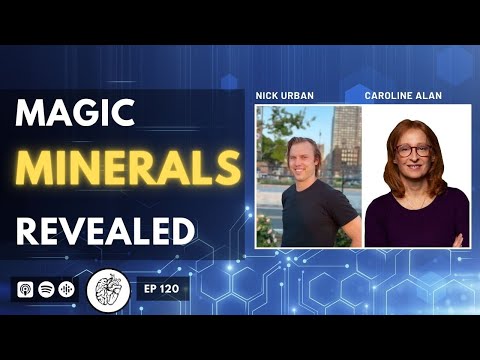




What You’ll Learn
- Your body runs on minerals: Every one of your 37 trillion cells is fueled by minerals and amino acids. Your body makes amino acids but produces zero minerals, meaning you must get them externally [06:07]
- Modern food is mineral-depleted: Industrial farming strips minerals from soil faster than they can be replaced. Even backyard gardens growing in the same soil repeatedly become nutrient-depleted. Most modern humans operate at roughly 40% of optimal mineral levels [11:39]
- The “hidden hunger”: Micronutrient deficiency creates a persistent feeling that something is missing. With inadequate minerals, your mitochondria can only generate about 1/12 of their energy capacity, like dimming your body’s lights to 40% [14:29]
- Three stages of bioavailability: Minerals must pass through digestion, absorption, and assimilation to reach your cells. Most supplements fail at stage one because rock-based minerals are only 10-12% digestible [24:30]
- Fulvic acid is nature’s delivery truck: Fulvic molecules are small enough to carry 70+ minerals directly through cell walls, bypassing the digestion stage entirely. They change polarity inside the cell, releasing nutrients and removing biowaste, heavy metals, and glyphosate on the way out [35:05]
- Humic acid, the “God Particle”: Humic molecules contain fulvic within them and specialize in intercellular detoxification. They bind to harmful substances like glyphosate, forming a protective biofilm that assists breakdown and elimination [48:34]
- Why BEAM Minerals are different: Self-manufactured, FDA-registered, and 3rd party tested. Their plant-based ionic minerals are already dissolved to chemical components, bypassing digestion and delivering immediate absorption [53:28]
- Minerals work in balanced pairs: Supplementing individual minerals in isolation (like mega-dosing magnesium) can throw off ratios with calcium, leading to cramping and bone issues. Full-spectrum plant-based minerals maintain natural balance [36:10]
- The body is a homeostasis engine: Given the right mineral building blocks, your body will self-correct imbalances. Mineral replenishment is the vanguard of health optimization [58:55]
Why It Matters
Minerals are the most neglected nutrient category in modern health. While everyone obsesses over macros, protein timing, and the latest supplements, most people are operating at 40% mineral capacity without realizing it. This single deficiency compromises mitochondrial energy production across every cell in your body, contributing to brain fog, anxiety, low energy, skin problems, and chronic conditions. Caroline Alan breaks down why food alone cannot fix this and why most mineral supplements fail at the digestive stage. Understanding humic and fulvic acid changes how you think about mineral replenishment entirely.
Who Should Listen
- Anyone experiencing brain fog, low energy, anxiety, or chronic fatigue who has tried other supplements without relief
- Biohackers and health optimizers looking to address the foundational layer of nutrition before stacking advanced protocols
- Athletes and active individuals who cramp, overheat, or struggle with recovery despite hydration and electrolyte use
- Parents concerned about mineral depletion in their children’s diets and its effects on energy and performance
Plant-Based Minerals, Fulvic Acid & the Hidden Hunger Crisis
Caroline Alan, co-founder of BEAM Minerals, joins Nick Urban to explain why minerals are the most overlooked and misunderstood category of nutrients. She opens with a striking premise: your 37 trillion cells are fueled by two things, amino acids and minerals. Your body manufactures amino acids but produces zero minerals. Yet most modern humans have only about 40% of the minerals their bodies require. Caroline calls this “hidden hunger,” a persistent energy deficit where mitochondria can generate only a fraction of their capacity because mineral cofactors are missing from the Krebs cycle.
The conversation moves into why food alone cannot solve the problem. Industrial farming strips minerals from soil faster than composting or crop rotation can replace them. Even backyard gardens growing in the same soil repeatedly become nutrient depleted. Bottled and filtered water compounds the issue by removing the trace minerals that well water and natural springs once provided. Caroline then dismantles the “car model” of supplementation, where people try to fill individual mineral reservoirs like gas tanks, and introduces the concept of bioavailability through three stages: digestion, absorption, and assimilation. Most rock-based mineral supplements fail at stage one, with only 10-12% digestibility.
The episode’s core revelation is fulvic acid: a plant-decomposition molecule small enough to carry 70+ minerals directly through cell walls. Fulvic molecules change electrical polarity inside the cell, releasing nutrients and picking up biowaste, heavy metals, and glyphosate on the way out. Humic acid, nicknamed the “God Particle,” contains fulvic within it and specializes in intercellular detoxification. Caroline explains how BEAM Minerals harnesses these natural substances in an FDA-registered, 3rd-party-tested formulation designed for immediate absorption and natural mineral balance.
Key Terms Quick Reference
[08:39] Macro Minerals (Electrolytes)
The minerals your body uses in the largest quantities: magnesium, calcium, potassium, sodium, and phosphorus. These are the ones most people think of when they hear “minerals,” but they represent only part of the full spectrum your body requires.
[08:39] Micro Minerals (Trace Minerals)
Minerals your body needs in smaller amounts but are equally essential: zinc, selenium, molybdenum, chromium, and dozens more. Most people never supplement these individually yet their absence compromises cellular processes.
[14:29] Hidden Hunger
The clinical term for micronutrient deficiency. Creates a persistent feeling that something is missing. People often try to fill this void with caffeine, sugar, or other stimulants when the real cause is that mitochondria lack the mineral cofactors needed for full energy production.
[24:30] Bioavailability (Three Stages)
The process nutrients must complete to reach your cells: (1) digestion, where substances dissolve to ionic chemical components; (2) absorption, where they pass from gut to bloodstream; (3) assimilation, where they travel from bloodstream into cells. Most mineral supplements fail at stage one.
[35:05] Fulvic Acid
A molecule produced by ancient plant decomposition that carries 70+ minerals. Small enough to pass through cell walls, it bypasses digestion entirely. Changes electrical polarity inside cells to release nutrients and collect biowaste, heavy metals, and glyphosate for removal. Considered one of the strongest natural electrolytes known.
[48:34] Humic Acid (the “God Particle”)
A larger molecule that contains fulvic within it. Specializes in intercellular detoxification by binding to harmful substances like glyphosate and forming a protective biofilm that assists in their breakdown. Contains 70+ minerals and is considered one of the strongest electrolytes known.
[14:29] Krebs Cycle (Mitochondrial Life Cycle)
The energy production cycle inside mitochondria. At each stage, two cofactors are required: an amino acid and a mineral. If a mineral cofactor is missing, the mitochondria can only generate approximately 1/12 of its energy capacity.
[03:52] Ho’oponopono
A Hawaiian practice of self-identity and reconciliation. Caroline’s daily morning ritual involves connecting with her subconscious (called “the child” in the tradition) to maintain inner balance and awareness. She has practiced it for over 20 years.
Why Can’t You Get Enough Minerals From Food?
The short answer
Industrial farming depletes soil minerals faster than they can be replaced, and even home gardens become mineral-poor when growing in the same soil repeatedly. Bottled and filtered water compounds the issue. Most modern humans operate at roughly 40% of optimal mineral levels regardless of diet quality.
What Caroline found
Plants build their structure by pulling minerals from soil. When you harvest a plant, those minerals leave the soil permanently. Commercial farming adds nitrates and other substances that bulk out plants and increase carbohydrate content, but these do not replace the full spectrum of trace minerals. Home gardeners face the same problem on a smaller scale: growing produce in the same plot season after season depletes micronutrients that compost alone cannot restore to ionic form. The ideal solution would be rotating garden plots and letting soil lie fallow for several years, which is impractical for most people. Meanwhile, modern water treatment removes the trace minerals that natural springs and well water once provided. The combined effect of depleted food and demineralized water means that even health-conscious individuals with excellent diets are operating at roughly 40% mineral capacity.
What to do about it
Accept that food alone is insufficient and add a bioavailable mineral source to your daily routine. Prioritize full-spectrum plant-based minerals over single-mineral supplements to maintain natural ratios. If you garden, rotate plots and let sections rest. For water, consider adding trace mineral drops or using a remineralizing filter after purification.
“It is an absolute fact that you cannot get enough minerals from the food you buy at the supermarket or grow in your backyard.” – Caroline Alan
Related: Best Trace Mineral Supplements
How Do Fulvic & Humic Acid Actually Work?
The short answer
Fulvic acid carries 70+ minerals directly through cell walls, bypassing digestion. It changes polarity inside the cell to release nutrients and pick up toxins. Humic acid contains fulvic and specializes in binding harmful substances for elimination.
What Caroline found
Fulvic molecules are among the smallest organic molecules in nature, produced over thousands of years through plant decomposition. Their small size allows them to pass directly through cell membranes, something most mineral supplements cannot do. Each fulvic molecule carries a payload of 70+ minerals in ionic form. When a fulvic molecule enters a cell, it changes its electrical polarity. This polarity shift causes it to release its mineral payload inside the cell, exactly where mitochondria need those cofactors. On the way out, the now-empty fulvic molecule picks up biowaste, heavy metals, glyphosate, and free radicals, acting as an intercellular detoxifier. Humic acid is a larger molecule that contains fulvic within its structure. Caroline describes it as the “God Particle” because of its versatility. Humic specializes in binding to harmful molecules and forming a protective biofilm around them that assists in their breakdown. Unlike many detox agents, humic molecules are effectively eliminated from the body rather than recirculating toxins.
What to do about it
Look for plant-based mineral supplements that use fulvic and humic complexes rather than rock, shell, or bone-derived minerals. Ionic minerals in liquid form bypass the digestion bottleneck entirely. Start with a product that provides both fulvic (for mineral delivery and intracellular detox) and humic (for binding and eliminating toxins). Be aware that some people experience a Herxheimer detox response when starting humic minerals as the body begins eliminating accumulated toxins.
“The Humic molecule, nicknamed the ‘God Particle,’ contains 70 plus minerals and is considered one of the strongest electrolytes known to man.” – Caroline Alan
Related: Best Pure Shilajit Supplements
Why Do Most Mineral Supplements Fail?
The short answer
Most mineral supplements are made from rocks, shells, and bones that must be completely dissolved to ionic components before absorption. Only 10-12% of what you swallow gets digested, and even less makes it into your cells. The “car model” of filling individual mineral reservoirs ignores how mineral replenishment actually works.
What Caroline found
Caroline spent nine years studying mineral replenishment and discovered that the fundamental problem is the paradigm itself. Most people think of their body like a car: low on magnesium, fill the magnesium tank; low on potassium, fill the potassium tank. But the body has no reservoirs for individual minerals. Replenishment happens at the cellular level through the Krebs cycle, where specific mineral cofactors are required at each stage. The bioavailability chain has three stages: digestion (dissolving to ionic components), absorption (gut to bloodstream), and assimilation (bloodstream to cells). Rock-based mineral supplements, including popular chelated forms like magnesium glycinate, may improve absorption at stage two but still require complete dissolution at stage one. Caroline’s research found that only about 10-12% of ingested nutritional supplements are effectively digested. Furthermore, supplementing individual minerals in isolation disrupts natural mineral ratios. Excessive magnesium, for example, can throw off the magnesium-calcium balance, leading to cramping and bone issues, the opposite of the intended effect.
What to do about it
Stop thinking about minerals as individual tanks to fill. Instead, provide your body with a full-spectrum, pre-dissolved mineral source that bypasses the digestion bottleneck. Plant-based ionic minerals from fulvic and humic complexes are already at the ionic level, so they skip stage one and go directly to absorption and assimilation. If you currently take individual mineral supplements, consider whether they might be disrupting your mineral ratios rather than helping.
“Most modern humans are estimated to have only about 40% of the necessary minerals required by their bodies.” – Caroline Alan
Related: Best Electrolyte Supplements
Mineral Replenishment Protocol
- Accept that food and water alone cannot provide adequate minerals regardless of diet quality
- Audit your current mineral supplements: are they rock-based, chelated, or plant-based ionic? If rock-based, you are likely absorbing very little
- Start with a full-spectrum plant-based mineral source containing both fulvic and humic complexes
- Take fulvic minerals daily for mineral delivery and intracellular detoxification
- Add humic minerals for deeper detoxification and toxin binding (start slow if you are sensitive to detox reactions)
- Stop mega-dosing individual minerals unless directed by a practitioner with mineral-specific testing. Isolated supplementation can disrupt natural mineral pairs
- If you garden, rotate your growing plots and add plant-based mineral amendments to soil
- Consider remineralizing your drinking water with trace mineral drops after filtration
Common mistakes
- Relying on food alone for mineral intake, even organic and home-grown produce
- Mega-dosing a single mineral (especially magnesium) without considering its ratio to other minerals
- Choosing mineral supplements based on marketing rather than bioavailability science
- Drinking purified water without remineralizing it
- Confusing electrolyte drinks (which address only macro minerals) with full-spectrum mineral replenishment
Source: Caroline Alan’s Mineral Replenishment Protocol, BEAM Minerals
Frequently Asked Questions
What is fulvic acid & why is it important for mineral absorption?
Fulvic acid is a molecule produced by ancient plant decomposition that carries 70+ minerals in ionic form. It is small enough to pass directly through cell membranes, bypassing the digestion stage that stops most mineral supplements. Inside the cell, it changes polarity to release nutrients and picks up biowaste, heavy metals, and glyphosate on the way out.
Why are most people mineral deficient even with a good diet?
Industrial farming depletes soil minerals faster than they can be replaced. Even home gardens become mineral-poor when growing in the same soil repeatedly. Bottled and filtered water removes trace minerals. Scientists estimate most modern humans have only about 40% of the minerals their bodies need, regardless of diet quality.
What is humic acid & how does it differ from fulvic acid?
Humic acid is a larger molecule that contains fulvic within it. While fulvic specializes in mineral delivery through cell walls, humic specializes in intercellular detoxification. It binds to harmful substances like glyphosate, forming a protective biofilm that assists in their breakdown and elimination from the body.
What are the three stages of mineral bioavailability?
The three stages are digestion (dissolving to ionic chemical components), absorption (passing from gut to bloodstream), and assimilation (traveling from bloodstream into cells). Most rock-based mineral supplements fail at stage one, with only 10-12% being effectively digested. Plant-based ionic minerals bypass digestion entirely.
Can you take too much of a single mineral like magnesium?
Yes. Minerals work in balanced pairs. Supplementing excessive amounts of one mineral can disrupt its ratio with others. For example, too much magnesium can throw off the magnesium-calcium balance, leading to cramping and bone issues. Full-spectrum plant-based minerals maintain natural ratios and allow your body to self-regulate.
What makes BEAM Minerals different from other mineral supplements?
BEAM Minerals uses plant-based fulvic and humic complexes rather than rocks, shells, or bones. Their minerals are already dissolved to ionic components, bypassing the digestion stage entirely. The products are self-manufactured, FDA-registered, and 3rd party tested with a formulation designed for maximum balance and absorption.
What is the hidden hunger & how does it relate to minerals?
Hidden hunger is the clinical term for micronutrient deficiency. It creates a persistent feeling that something is missing. When mineral cofactors are absent, mitochondria can only generate about 1/12 of their energy capacity. People often try to fill this void with caffeine, sugar, or stimulants when the real cause is mineral depletion.
What is a Herxheimer reaction from humic minerals?
A Herxheimer reaction is a temporary detox response that can occur when humic minerals begin mobilizing and eliminating accumulated toxins from the body. Symptoms may include fatigue, headache, or digestive discomfort. It typically resolves within a few days and indicates the minerals are working. Start with a lower dose if you are sensitive.
Products, Tools, & Resources Mentioned
Outliyr independently evaluates all recommendations. We may get a small commission if you buy through our links (at no cost to you). Thanks for your support!
Mineral supplements
BEAM Minerals: Plant-based fulvic and humic mineral supplements. Self-manufactured, FDA-registered, and 3rd party tested. Use code URBAN to save 20% on your order.
Articles & references
Herxheimer Detox Responses to Humic Minerals: BEAM Minerals blog post explaining the temporary detox reactions some people experience when starting humic mineral supplementation.
Best Pure Shilajit Supplements: Outliyr’s guide to shilajit, another natural source of fulvic and humic compounds.
Teachers & books mentioned
Morrnah Nalamaku Simeona: Creator of the modern self-identity through Ho’oponopono practice that Caroline uses daily.
Dr. Ihaleakala Hew Len: Practitioner and teacher of Ho’oponopono referenced in Caroline’s rapid fire segment.
Rumi (book collection): Caroline’s recommended reading, referenced during the rapid fire segment.
Skinwalker Ranch (TV show): Mentioned by Caroline during the rapid fire segment.
About Caroline Alan
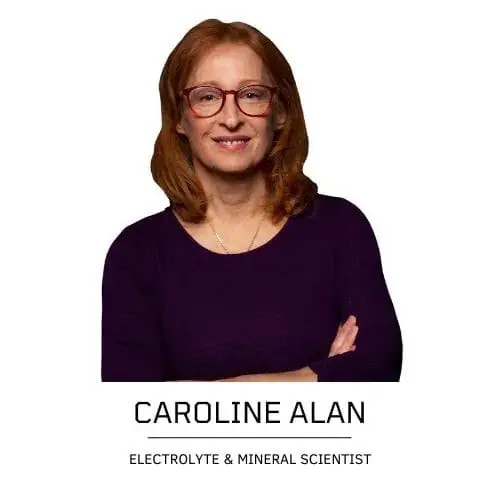
Caroline Alan co-founded BEAM Minerals to educate people about minerals and bring effective mineral replenishment to humanity. After a career in the corporate world left her struggling physically, mentally, and energetically, she dove into research and discovered the power of plant-based minerals. Her studies have taken her deep into microbiology, molecular biology, cellular biology, agricultural soil science, and the study of plant decomposition. She is committed to providing completely pure, 100% bioavailable, sustainably produced fulvic and humic products. Caroline practices daily Ho’oponopono and believes that mineral replenishment is the vanguard of health optimization.
Related Episodes & Articles
- Episode 153: Minerals, Magnesium Therapy, Benefits & Supplements (Dr. Carolyn Dean)
- Episode 109: Whole Foods vs. Synthetic Supplements (Carolyn Dean)
- Episode 150: Ormus, Shilajit & Marine Plasma Minerals (David Reid)
- Article: Best Trace Mineral Supplements
- Article: Best Electrolyte Supplements
- Article: Best Magnesium Supplements
- Article: Best Pure Shilajit Supplements
Full Episode Transcript
Nick Urban [00:00:05]: Hello, and welcome to MINDBODY peak performance with your host, Nick Urban. Pop quiz for you. What category of nutrients is the most abundant throughout the entire human body? Yet virtually all modern humans are deficient, and that deficiency has devastating consequences. If you guessed amino acids, you’d be close. That’s certainly one of them. But right behind it is minerals. These unsung heroes of the human body have all kinds of biological effects throughout the entire body. And quite simply, if you want to be your healthiest self and perform your highest, you need to be consuming an external source of minerals. As you’ll learn in this episode, the food in your diet simply will not have the amount of minerals you require to thrive. In this episode, we’ll cover why minerals are among the most neglected yet important nutrients of all. Why the RDA, the government’s recommendation of mineral intake isn’t even close to sufficient sources of minerals. The super micronutrients humic and fulvic acid. Why most mineral supplements do not work. Basically, everything you could want to know about minerals and then some. And if the biochemistry our guest shares this week is over your head, don’t worry. Towards the end, we translate that into actionable takeaways. Our guest this week is Caroline Alan of Beam Minerals. She came from a career in the corporate world and found herself struggling physically, mentally and energetically. So she dug into the research and discovered the power of plant-based minerals and their incredible ability to support a return to natural balance, aka homeostasis in the body. Ever since then, she’s been educating on minerals and plant-based humic and fulvic substances. Her own research has taken her deep into the realms of microbiology, molecular biology, cellular biology, agricultural soil science, and the study of plant decomposition. You’ll find the links to everything we discuss at the show notes, which are at outliyr.com the number of this episode, which is 120. If you’d like to give her product, Beam Minerals, a shot, you can use the code Urban on your order. All right, sit back, relax, and enjoy this mineral masterclass with our guest, Caroline Alan. Caroline, welcome to MINDBODY peak performance.
Caroline Alan [00:02:53]: Thank you so much for having me, Nick.
Nick Urban [00:02:55]: It’s a pleasure to host you and I first met you several months back here at KetoCon in Austin, Texas, and I’ve been actually using your Beam Minerals, microbiome and electrolytes products since then. So it’s nice to be talking to the face behind the brand.
Caroline Alan [00:03:14]: Right on. How do you like them so far?
Nick Urban [00:03:17]: I like them. I have several forms of micronutrients in my lifestyle in addition to my diet already, but these are nice and convenient. I can add them to my drinks, as I’m actually doing right now, and it’s a great way to get them in because I firmly believe that micronutrients are equally as important, if not more important than macronutrients.
Caroline Alan [00:03:39]: Yes, equally important. And we’ll talk about it for sure. Great.
Nick Urban [00:03:43]: Well, let’s start off today. What are the unusuals or non-negotiables you’ve done for your health, your performance and your bioharmony?
Caroline Alan [00:03:52]: Well, I’m not sure that I separate any of those. So to me they’re all one thing. So actually, I have some practices first thing when I wake up. When I first come into consciousness, I immediately do a practice that is part of something called self-identity through Ho’oponopono, which is something that I’ve done for probably about 20 years. And it’s a very simple practice of connecting with the child within me. And I spend a little time with her. I kind of talk about the day, ask her how she’s doing, ask her if she needs anything particular today, like maybe a walk or something in her water bottle or whatever, and just give her a chance to, and in the Ho’oponopono tradition, that’s really just talking to your subconscious. They call it the child, but really it’s just giving an opportunity for your attention to turn to your subconscious rather than it needing to scream and cry for your attention.
Nick Urban [00:05:05]: How do the responses usually come up in that format?
Caroline Alan [00:05:09]: Well, it is interesting. 20 years ago, when I first started doing that practice, literally, it was like I couldn’t even get that consciousness or that part of my being to even come into the room with me. But now we have quite an intimate relationship and it’s part of what’s allowed me to come more into my body and more present with myself and with people and raised my own awareness and allowed me to be more gentle and loving with myself because my subconscious doesn’t have to scream and cry to get my attention. I’m giving it that opportunity daily.
Nick Urban [00:05:53]: Nice. Well, let’s talk about minerals. Now, for people who have heard of them and haven’t given them much additional thought, what would you say is like the best segue, like a fact or stat or something that is interesting about minerals?
Caroline Alan [00:06:07]: What I always like to say before I say anything else is you have in your body, your body is made up of between 37 billion to 150 trillion cells if you’re a very large human. And your cells are fueled by two things, minerals and amino acids. And your body makes a lot of amino acids, but it makes no minerals. And what do we know about minerals? Very, very little. So that’s the first thing is to really begin to think, oh my gosh, everything, even your brain, your heart, your lungs, it’s all cells.
Nick Urban [00:06:59]: Yeah. And even when we’re talking about minerals, it’s usually lumped into the category of vitamins and then minerals as an afterthought. Can you break down why that is? Why are minerals not more well known if they’re so important?
Caroline Alan [00:07:15]: Yes. Well, really, I think it’s for one particular reason. The minute you start talking about minerals, the conversation gets very complex very quickly. And so I think it’s taken me nine years to find ways to communicate the importance of minerals. And that’s both in terms of helping people understand depletion and deficiency and helping people understand mineral replenishment and also how minerals operate in the body and find ways to communicate in simple metaphorical ways that people can easily grasp and understand. And they’re just literally, I think the people who were talking about it were scientists. And then if you think about doctors, practitioners, even naturopaths, none of these people, and I shouldn’t say none, but a very, very small percentage of even natural health practitioners know about minerals, how they operate in the body and how replenishment happens.
Nick Urban [00:08:24]: Yeah, it’s certainly a complicated subject. And I’ve read a couple of books on minerals and I read one book on magnesium alone and it was like 250 pages. And I’m like, okay, when we tend.
Caroline Alan [00:08:39]: To think about minerals, we tend to, as you said, think about the macro minerals, which are the electrolytes that we all take. They call them macro because these are the ones your body utilizes a lot. It’s also what your body is made of a lot. But there are a lot of other micronutrients that your body absolutely needs that nobody really understands or talks much about.
Nick Urban [00:09:07]: Can we talk about all of them today? And hopefully fairly concise and not too sciency level because I know that even just defining them, there’s the minerals, the macro minerals, the trace minerals, there’s like ultra trace minerals according to some people. Can you just define the landscape?
Caroline Alan [00:09:25]: Yeah. And there’s lots of different languages. And really here’s what I’d like people to think about. Look around your room and look at everything. Everything that has substance, your entire body is made of minerals. All the food that you eat, it’s all made of minerals. All structure is composed of minerals. If you took all the water out of your body, you’d be a little pile of minerals. Think of that. Okay? And really these concepts of like macro minerals, micronutrients, phytonutrients, these are really related to the formulation. So your body has a lot of the macro minerals and it utilizes a lot of macro minerals, which are magnesium, calcium, potassium, the ones that we hear about a lot, those are the ones your body uses a lot. But as you go down the chain of the ratio of what your body is made of in that little pile of minerals that you ended up with when you took the water out and we actually pulled it out and said, oh, there’s this much magnesium, there’s this much calcium, this much potassium, this much molybdenum, phosphorus. Things you wouldn’t take a pill for. But your body absolutely needs what we call the full spectrum of minerals.
Nick Urban [00:11:16]: Yeah, I’ve looked into it, especially in the context of the macro minerals and industrial farming practices. But like to play devil’s advocate, if you’re going to eliminate all the water from the body and all that’s left is the minerals, it seems like that’s the last thing we would need to add more of into our diets.
Caroline Alan [00:11:39]: Here’s the thing. When you grow a plant in soil, how does the plant grow? How does it create that structure? It sucks the minerals out of the soil. It’s the minerals that create the structure. It’s the minerals that also fuel all the cellular processes. And it’s very hard to get minerals back into the soil. They add nitrates, they add other humus and other things that bulk out the plant, actually make the plants create more carbohydrates, but it doesn’t necessarily make the food more nutrient dense. It is an absolute fact you cannot get enough minerals from food that you buy at the supermarket or food that you grow in your backyard. And in fact, most scientists who study this, they say that most people, modern humans have only about 40% of the minerals in their body that they need.
Nick Urban [00:14:29]: And the way I like to think about it is if the body is constantly deprived of energy because our mitochondria aren’t working as well as they should, then it has to cut corners somewhere. And a lot of times that’s going to result in the things that aren’t as necessary to our immediate survival. Which also, I think, explains a lot of the disease rates skyrocketing in the tissues where there are the highest number of mitochondria in every cell.
Caroline Alan [00:18:12]: Of course, it’s even higher than the eyes. I’m literally sometimes overwhelmed by the beauty of this. The human body has, it’s truly magical. And when I did my own research and I just delved so deep into all of this, I became more and more amazed at the incredible capacity of the human body to heal itself, to fix things, to just keep all our autonomic processes going to perform at really high levels. And the thing about it is that if you can imagine taking your light and turning the dimmer up on it, maybe even 20%, think how much more capacity your body would have to heal itself to deal with any chronic symptoms that are happening, whether it’s brain fog, anxiety, depression, panic, skin problems, cramping, hair loss.
Nick Urban [00:19:30]: I want to go back to what you were saying earlier. If you’re buying your produce from the supermarket, you’re certainly mineral deficient because there’s been several studies that have come out comparing the nutrient levels of produce these days versus decades ago. And it’s sadly a very different picture. But then even if you’re growing your own produce in your backyard, you still aren’t going to be getting enough of the micronutrients and the minerals. Why, if you’re doing it in your backyard and you’re doing all the right things, are you not going to be getting enough?
Caroline Alan [00:20:06]: Well, again, if you think about the plants, let’s say you have this beautiful backyard garden. You put a lot of humus in there and compost and all this stuff, it’s definitely better. It’s definitely going to be more nutrient dense than buying it at the store. But again, when you are growing plants in the same soil over and over again, it simply depletes the minerals from the soil. And we’re talking about the micronutrients because the problem is even when you put that compost in there to get it to go all the way back to its ionic components, meaning that plant material has to dissolve all the way down to its ionic chemical components for the plants to be able to utilize it.
Nick Urban [00:22:11]: First let’s talk about supplements in general. So we laid the groundwork for why supplementation of minerals matters. One thing I’m sure you’re asked about often is mineral products, because you’ll rarely see a product that’s just a full spectrum, has everything in it in this pure form. Usually it’s a mineral of some sort, bound to some kind of other molecule. How does it actually work when you take what occurs in our bodies and you’re packaging it into a supplement to try and increase those levels?
Caroline Alan [00:22:55]: So this is where I come in, because I’m a mineral geek. And I’ve spent years and years studying minerals and mineral replenishment in the body. And what I really want to do right now is completely change the way you think about it. The problem with the current methodology or paradigm is that it looks at the body the way you would look at a car. So you’ve got a gas tank, you’ve got an oil tank. You need some water, you put it in the radiator. And that’s how we tend to think about our body. So we’re like, oh, I need magnesium, let’s throw in the most bioavailable format. But the body has no reservoir for magnesium or potassium that you’re just filling up. So what we have to do is understand how mineral replenishment actually works. Let’s get into the word bioavailability.
Caroline Alan [00:24:30]: So bioavailability has three stages. The first stage is digestion. The second is absorption, from your gut into your bloodstream. And the final stage is called assimilation, going from the bloodstream into the cells. The most important thing to remember about minerals is they have to go through all three stages. It’s not good enough to get some potassium and throw it in your gut. It has to be absorbed, and it has to get into the cell because the mitochondria are inside the cell. That’s where the minerals have to get.
Caroline Alan [00:35:05]: Food-based minerals are better for long-term health. Minerals work in balanced pairs. And this is something that’s really important for people to understand. If you’re mega-dosing magnesium, you may actually be throwing off the balance with calcium, which can lead to cramping and bone issues. The body needs the full spectrum in proper ratios.
Caroline Alan [00:40:29]: How BEAM Minerals work is we provide the base components for your body to utilize. Our fulvic and humic products are plant-based, they’re already at the ionic level, which means they bypass digestion entirely. The fulvic molecule is small enough to go directly through the cell wall, deliver its payload of minerals, and on the way out it picks up the biowaste and heavy metals. It’s both a delivery system and a detox system.
Caroline Alan [00:48:34]: Fulvic and humic molecules have a massive capacity for intercellular detoxification. The humic molecule, which we call the God Particle, contains fulvic within it. It has the ability to bind to molecules, forming a protective biofilm around them that assists in breaking down harmful substances like glyphosate. And these humic molecules are versatile and are effectively eliminated from our bodies.
Caroline Alan [00:53:28]: BEAM Minerals are self-manufactured, FDA-registered, and 3rd party tested. The unique formulation is crafted for maximum balance and absorption. Our products are ionized and can bypass the digestion stage, so they are immediately available for absorption and ready to interact with receptor sites in the body.
Caroline Alan [00:58:35]: The body is a homeostasis-generating engine. If you give it the right building blocks, the right mineral components, it will self-correct. It will find its own balance. That’s what’s so beautiful about full-spectrum plant-based minerals. You’re not trying to fill individual tanks. You’re giving the body what it needs and letting it do what it does best.
Caroline Alan [01:04:52]: Mineral replenishment is the vanguard of health. If I could tell everybody one thing, it would be to start with minerals. Before your nootropics, before your fancy supplements, before your biohacking devices, get your minerals right. Everything else works better when your cells have the mineral cofactors they need.
Nick Urban [01:06:20]: How can people connect with you and try BEAM Minerals?
Caroline Alan [01:06:25]: You can find us at beamminerals.com. And your listeners can use the code URBAN on their order.
Nick Urban [01:06:58]: All right, let’s do the rapid fire. What’s a book or teacher that’s influenced you?
Caroline Alan [01:07:05]: Dr. Ihaleakala Hew Len, who’s part of the Ho’oponopono tradition. And I love Rumi. And I’m also fascinated by Skinwalker Ranch, the TV show.

Comments