Neurofeedback
Neurofeedback scored 8.3 / 10 (💪 Strong recommend) on the BioHarmony scale as a Neurostimulation device therapy (EEG-based operant brain training).
Neurofeedback uses real-time EEG or hemodynamic feedback to train self-regulated brain states. Best evidence is for PTSD adjunctive care, epilepsy adjunctive care, ADHD symptom-rating contexts, and durable attention gains after a completed course, but the 2025 JAMA ADHD meta-analysis found no meaningful benefit on probably blinded ADHD total-symptom ratings.
What is Neurofeedback?
Neurofeedback is real-time brain-state training. Sensors measure EEG, fMRI, fNIRS, or related signals, then software turns that signal into feedback you can see or hear. When your brain produces the target pattern, the game moves forward, the video brightens, or the audio improves. Over many sessions, your nervous system learns the state.
The best way to think about it: meditation gives you subjective feedback, neurofeedback adds instrumentation. That can be powerful, but it also creates a dependency on protocol quality. The same person might respond well to QEEG-guided SMR training and poorly to a generic consumer protocol. Marzbani 2016 summarizes why the protocol, electrode site, modality, and feedback design all matter.
The evidence is not one clean yes or no. Arns 2009 made the early ADHD case, Cortese 2016 weakened it under better blinding, and Westwood 2025 found no meaningful benefit on probably blinded ADHD total-symptom ratings. On the other side, Van Doren 2019 supports durability after completed ADHD training, Voigt 2024 strengthened the PTSD adjunctive case, and Tan 2009 supports epilepsy adjunctive use in medically refractory patients.
That combination earns a high BioHarmony score with medium confidence. Neurofeedback is not a fast fix, and it is not a replacement for first-line medical or psychiatric care. It is a durable brain-training intervention when you pick the right use case, measure response, and complete enough sessions.
Terminology
For a practical clinical-standard cross-reference, see BCIA neurofeedback certification.
- EEG: Electroencephalography. Scalp measurement of brain electrical activity.
- QEEG: Quantitative EEG. A computerized brain map compared with age-matched norms.
- SMR: Sensorimotor rhythm, usually 12-15 Hz, often trained for motor calm and attention.
- Beta: Faster EEG activity often associated with alert attention, commonly trained around 15-18 Hz.
- Theta: Slower EEG activity, usually 4-8 Hz, relevant to drowsiness, memory, and alpha-theta protocols.
- Alpha-theta: A protocol that rewards alpha and theta states, often used for trauma, addiction history, and deep relaxation work.
- Infra-low-frequency: Highly individualized training below 0.1 Hz.
- fNIRS: Functional near-infrared spectroscopy, a blood-oxygenation signal used by devices like Mendi.
- fMRI neurofeedback: Real-time MRI-based feedback, mostly research or specialty-clinic use because cost and logistics are high.
- EFP: Electrical fingerprint. A device-specific EEG pattern informed by deeper-brain fMRI targets.
- BCIA: Biofeedback Certification International Alliance, a voluntary practitioner-certification body.
- TBI: Traumatic brain injury.
- PTSD: Post-traumatic stress disorder.
- ADHD: Attention-deficit/hyperactivity disorder.
- Cz / C3 / C4: Standard central EEG electrode positions used in many attention and SMR protocols.
- Hz: Hertz, or cycles per second. EEG frequency bands are measured in Hz.
How do you take Neurofeedback?
Dosing & Protocols
Dosing information is summarized from published research and community reports. This is not a prescribing guide. Consult a healthcare provider before starting any protocol.
View 4 routes and 6 protocols
Routes & Forms
| Route | Form | Clinical Range | Community Range |
|---|---|---|---|
| clinical EEG | Clinical multi-channel EEG system, often 19 or 21 channels for assessment and 1-4 channels for training | 30-60 minute sessions, 2-3x/week, 20-40 sessions total | Same; some clinics use intensive blocks such as 5x/week for 2 weeks |
| home EEG | Validated EEG headset such as Sens.ai or Muse Athena | Limited direct equivalence evidence versus supervised clinical neurofeedback | 15-30 minutes, 5+ days/week, ongoing or in multi-month blocks |
| home fNIRS | Prefrontal blood-oxygenation biofeedback device such as Mendi | Not EEG neurofeedback; evidence should be considered separately | 10-15 minutes daily |
| fMRI neurofeedback | Real-time fMRI or fMRI-informed EEG / EFP protocol | Research and specialty-clinic protocols; session counts vary by study | Usually not practical for home use |
Protocols
SMR / beta for ADHD Clinical
- Dose
- Reward 12-15 Hz SMR and/or 15-18 Hz beta; inhibit excess theta and high beta depending on QEEG
- Frequency
- 2-3x/week clinical or 5x/week home
- Duration
- 30-40 sessions minimum
Classic attention protocol at Cz or C3 / C4. Modern evidence requires blinding caveats and should be framed as adjunctive, not as a replacement for medication or behavioral support.
Alpha-theta for PTSD / trauma Clinical
- Dose
- Reward alpha and theta in a low-arousal, eyes-closed training state
- Frequency
- 2-3x/week
- Duration
- 40-60 sessions
Best used alongside trauma-informed psychotherapy. Evidence is encouraging, especially after 2024 PTSD meta-analysis, but heterogeneity and control conditions still matter.
Infra-low-frequency regulation Mixed
- Dose
- Highly individualized training below 0.1 Hz with frequency adjusted by response
- Frequency
- 2-3x/week
- Duration
- 20-40+ sessions
Sensitive to practitioner skill and symptom tracking. Often used clinically for sleep, mood, arousal regulation, and complex presentations.
Sens.ai home daily Anecdotal
- Dose
- Focus, calm, attention, or performance protocol, usually 15-20 minutes
- Frequency
- Daily to 5x/week
- Duration
- Indefinite or in multi-month training blocks
Nick's default home option. Stacks neurofeedback with photobiomodulation and HRV training in a single session.
Epilepsy SMR adjunctive Clinical
- Dose
- Reward 12-15 Hz SMR at sensorimotor cortex; inhibit seizure-associated patterns as clinically appropriate
- Frequency
- 2-3x/week
- Duration
- 20-40 sessions
Adjunct to anti-seizure medication and neurology care, not a replacement. Use only with qualified clinical supervision.
Performance / cognitive optimization Mixed
- Dose
- Beta uptraining, alpha regulation, SMR stabilization, or flow-state protocols chosen by baseline pattern
- Frequency
- 2-3x/week clinical or daily home
- Duration
- 20+ sessions to establish; maintenance optional
Evidence in healthy adults is thinner than in clinical targets, but target engagement and self-regulation learning are supported.
Use-Case Specific Dosing
| Use Case | Dose | Notes |
|---|---|---|
How this score is calculated →
What are the benefits of Neurofeedback?
Upside contribution: 2.97
| Dimension | Weight | Band | Visual | Weighted |
|---|---|---|---|---|
| Efficacy | 25% | Strong | 1.000 | |
| Breadth | 15% | Strong | 0.645 | |
| Evidence | 25% | Strong | 1.050 | |
| Speed | 10% | Limited | 0.220 | |
| Durability | 10% | Exceptional | 0.450 | |
| Bioindividuality | 15% | Strong | 0.600 | |
| Total | 3.965 | |||
| Baseline offset (constant) | −1.000 | |||
| Effective upside contribution | 2.965 |
Dimensions are shown as a band rather than a decimal because repeat scoring of the same evidence moves a single dimension by up to 1 point. Hover or long-press a band to see the value it was scored at.
Upside Rationale
Neurofeedback earns its strongest efficacy when the protocol matches a real target, not when it is sold as a brain tune-up for everyone. The condition-specific record is the honest case. Voigt 2024 found PTSD symptom improvement across 17 randomized studies, even after flagging control and funding caveats, and Tan 2009 reported fewer weekly seizures in 64 of 87 medically refractory epilepsy patients after EEG biofeedback. ADHD is the contested zone: Arns 2009 was favorable while Westwood 2025 found no meaningful benefit on probably-blinded total symptoms. Neurofeedback efficacy stays high because the right protocol can genuinely move the right outcome, but the broad ADHD marketing needs trimming.
Neurofeedback's breadth is real, and that is the second pillar of its upside. The same closed-loop training shows signal across attention, epilepsy adjunctive seizure reduction, PTSD regulation, TBI rehabilitation support, anxiety and arousal control, sleep protocols, meditation depth, and flow-state performance work. May 2013 supports the TBI promise while conceding placebo-controlled evidence is thin, and Recio-Rodriguez 2024 weakens broad sleep claims, and von Altdorf 2025 shows EEG target modulation in Parkinson's without clear motor improvement. The breadth of neurofeedback is wide but uneven, so the upside is best read domain by domain rather than as one universal benefit, with the strongest indications carrying the score and the weaker ones treated as plausible rather than proven.
Neurofeedback's evidence base is now strong enough to anchor a high score without pretending the messiness is gone. This is the dimension that moved this cycle. Multi-decade practitioner records sit beside replicated PTSD trials and mechanism reviews, with Sitaram 2017 explaining closed-loop learning and Enriquez-Geppert 2026 supporting frequency-specific frontal-midline theta learning. The 2025 JAMA ADHD null result tempers confidence rather than dragging the core dimensions, because it narrows one indication instead of refuting the mechanism. The honest neurofeedback caveats persist: small samples, heterogeneous protocols, blinding challenges, and device-specific claims outrunning general evidence. The evidence supports the lever; it does not license certainty theater.
Neurofeedback is slow, and naming that early is part of using it well. Some people notice calmer mood, sharper focus, or better sleep within five to ten sessions, but those early impressions are not the same as durable learning. Most clinical protocols need at least twenty sessions before a fair judgment, and ADHD, stress regulation, and sleep work commonly run thirty to forty. PTSD, TBI, and complex dysregulation often demand forty to sixty or more. Against stimulants, sleep medication, or acute anxiety medication, neurofeedback feels glacial; against meditation skill-building, it is reasonably paced. The upshot for neurofeedback is simple: judge it on a training timeline, not a drug timeline, or you will quit before the real signal arrives.
Neurofeedback's durability is the standout of this whole profile, and it climbed again this cycle. Van Doren 2019 found ADHD gains that held or even improved six to twelve months after training ended, which is hard to explain as a session-only effect. Clinically, a completed course behaves more like a learned self-regulation skill than a dose that washes out the same day, which is exactly why retained skill pushed this dimension higher. Some people still use booster sessions after stress, concussion, poor sleep, or a life disruption, and that is normal maintenance rather than failure. The core neurofeedback upside is durable: when the training works, a meaningful part of the gain tends to stay with you.
Neurofeedback is highly protocol-sensitive, and that bioindividuality cuts both ways for the reader. Baseline EEG pattern, diagnosis, medication status, sleep debt, concussion history, trauma load, and practitioner skill all shift the odds of response, so two people running the same generic protocol can land in very different places. QEEG-guided selection is the best practical answer, trading convenience for personalization, and Adler 2024 shows the field moving toward fMRI-informed patterns for adult ADHD, though those methods stay early and device-specific. The neurofeedback lesson is concrete: match the protocol to the brain, then measure whether the trained target is actually changing, because an unverified protocol is just expensive guessing dressed as precision.
What are the risks & downsides of Neurofeedback?
Downside contribution: 0.35 (safety risks weighted extra)
| Dimension | Weight | Band | Visual | Weighted |
|---|---|---|---|---|
| Safety | 30% | Negligible | 0.360 | |
| Side effects | 15% | Low | 0.225 | |
| Cost premium | 5% | Moderate | 0.135 | |
| Effort | 5% | Low | 0.115 | |
| Opportunity | 5% | Negligible | 0.065 | |
| Dependency | 15% | Negligible | 0.150 | |
| Reversibility | 25% | Negligible | 0.250 | |
| Total | 1.300 | |||
| Harm subtotal × 1.4 | 1.379 | |||
| Opportunity subtotal × 1.0 | 0.315 | |||
| Combined downside | 1.694 | |||
| Baseline offset (constant) | −1.340 | |||
| Effective downside penalty | 0.354 |
Dimensions are shown as a band rather than a decimal because repeat scoring of the same evidence moves a single dimension by up to 1 point. Hover or long-press a band to see the value it was scored at.
Cost premium: premium over the cheapest legitimate route, not price.
Downside Rationale
Neurofeedback's worst-case safety risk is genuinely low, which is why this dimension stays near the floor. The training is non-invasive and carries no drug-like systemic toxicity, so there is nothing to overdose and nothing to taper. The real neurofeedback hazard is poor protocol selection: training the wrong pattern can temporarily worsen sleep, anxiety, irritability, headaches, or emotional stability. People with active psychosis, severe dissociation, unstable seizure disorders, or major psychiatric instability should not self-experiment without clinical supervision, and for epilepsy neurofeedback is adjunctive to neurology care, never a medication replacement. The excellent safety profile holds, but reading it as proof that protocols do not matter is exactly the mistake that turns a low-risk tool into a frustrating, wasted course.
Neurofeedback's side effects are typically mild and reversible, which keeps this dimension low. Early sessions can bring headache, fatigue, mental fog, irritability, a brief uptick in anxiety, vivid dreams, or short-lived sleep disruption, and these usually resolve within hours to days or after a dose and protocol adjustment. Measured against stimulants, SSRIs, benzodiazepines, anticonvulsants, or sedative-hypnotics, the neurofeedback side-effect load is light and self-limiting. Measured against meditation or HRV biofeedback, it is more technically sensitive, because a mistuned target can produce real if temporary discomfort. The practical safeguard is unglamorous: track symptoms session by session so a bad protocol is caught and adjusted quickly rather than endured for weeks under the assumption that discomfort is just part of the work.
Neurofeedback is expensive in its clinical form, and this cost dimension nudged up only slightly this cycle. Expect roughly $100 to $200 per session plus $300 to $800 for a QEEG assessment, which puts a real clinical course around $2,300 to $7,000 or more. Home platforms change the math, with Sens.ai near $1,500, Muse Athena near $500, and Mendi near $300, though Mendi is fNIRS rather than EEG. The slight neurofeedback cost improvement reflects that legitimate home tools now exist, but clinical-grade personalization stays costly and insurance coverage remains inconsistent. The honest framing is that the cheap end and the effective-for-hard-cases end are often not the same tier, so budget for the version that actually matches your goal.
Neurofeedback demands meaningful, active effort, and this dimension reflects a real burden rather than a trivial one. Clinical protocols mean travel plus thirty to sixty minute sessions, usually two to three times weekly for months, and home training only trims that to fifteen to thirty minute sessions roughly five days a week. Unlike red light, PEMF, or sauna, neurofeedback is active: you cannot zone out, let a device run, and call it done, because the engagement is the mechanism. That same effort is the reason durable skill acquisition is possible, so the burden is not waste. The neurofeedback warning is to enter it knowing the time commitment is months of sustained participation, not a quick passive add-on.
Neurofeedback's opportunity cost depends entirely on the goal, and that is where the real downside hides. For general optimization the cheaper basics come first: sleep schedule, exercise, morning light, meditation, HRV biofeedback, and stress cleanup, all of which deliver more per dollar than a generic protocol. For treatment-resistant ADHD, PTSD, epilepsy adjunctive care, or TBI recovery, fewer low-risk options offer comparable durability, so the calculus flips. Neurofeedback stacks well with therapy, medication, meditation, HRV work, and sleep repair rather than replacing them. The main neurofeedback displacement risk is spending thousands on generic training while obvious fundamentals stay unaddressed, which is the most common way a promising tool becomes an expensive detour.
Neurofeedback has no dependency, tolerance, withdrawal, or rebound syndrome, and this is one of its cleanest dimensions. It is a training process, not a daily input, so stopping does not trigger a crash the way discontinuing a pharmacological agent can. If you stop, the gains may persist, slowly fade, or call for occasional boosters depending on the person and condition, but none of that is withdrawal. That distinction is a meaningful part of why neurofeedback stays attractive despite its slow onset and real cost: you are not chaining your baseline to an ongoing dose. The only honest caveat is expectation-setting, since some people assume the effect is permanent and are surprised when a booster helps after a stressful stretch.
Neurofeedback is highly reversible, which closes the downside profile on a strong note. If a protocol produces unwanted effects you can stop, rest, or change the trained target, and most negative responses are transient and resolve after that adjustment. There is no implanted device, no tissue ablation, no drug taper, and no permanent procedure, so a bad fit costs time and money rather than lasting harm. The practical neurofeedback rule is to refuse to force a protocol that is clearly worsening sleep, anxiety, or cognition, because pushing through is the one way to turn a reversible tool into a genuinely bad experience. Reversibility is the safety net that makes careful experimentation defensible.
Is Neurofeedback worth it?
Neurofeedback is a 8.0–8.5/10 fit for cognition focus, neuroplasticity, and TBI support when the protocol, practitioner quality, session dose, and objective tracking all line up. The best evidence anchors are Westwood et al. 2025, which reviewed ADHD trials and found weak probably blinded total-symptom effects, and Ostinelli et al. 2025, which placed adult ADHD neurofeedback behind better-studied medication options. Neurofeedback uses real-time EEG or hemodynamic feedback to train self-regulated brain states. That makes Neurofeedback most useful for protocol-matched goals such as PTSD adjunctive care, epilepsy adjunctive care, and durable attention training, while weaker consumer claims should stay in the experimental bucket until the user can track a clear response.
✅ Best for: Adults with ADHD who want a slow, durable, non-drug adjunct and are willing to track response honestly. PTSD patients using neurofeedback alongside trauma-informed therapy, especially after the stronger Voigt 2024 signal. Treatment-resistant epilepsy patients considering SMR neurofeedback as an adjunct under neurology care. Athletes, veterans, and high performers with prior concussion history where QEEG-guided protocols can complement rehabilitation. Meditation practitioners who want objective feedback on attention and state regulation. Knowledge workers willing to trade short-term convenience for long-term brain-state skill acquisition.
❌ Avoid if: You need fast symptom relief, because neurofeedback usually takes 20-40+ sessions. You expect a $200 consumer headband to replace clinical QEEG-guided care for ADHD, epilepsy, PTSD, or TBI. You have active psychosis, severe dissociation, unstable seizures, or psychiatric instability without clinician supervision. You are using neurofeedback to avoid first-line care when medication, trauma therapy, sleep treatment, or medical workup is clearly indicated. You cannot commit enough sessions to know whether it works. You want passive wellness instead of active training.
What is Neurofeedback best for?
The overall BioHarmony score reflects the intervention's primary evidence profile. These subratings are independent assessments per use case.
Cognition / Focus: 8.0/10
Score: 8.0/10Attention remains one of neurofeedback's best-known use cases, but the claim needs caveats. Arns 2009 reported favorable ADHD symptom effects, while Cortese 2016 and Westwood 2025 found weaker or null effects on probably blinded ADHD symptom outcomes. The score stays bounded because Neurofeedback evidence for cognition focus can depend on protocol match, practitioner quality, session dose, and objective tracking. In practice, the useful question is whether this intervention changes the tracked outcome enough to justify the cost, effort, and risk profile.
Neuroplasticity: 8.3/10
Score: 8.3/10Ostinelli et al. 2025 supports the core mechanism. Neurofeedback directly trains learned self-regulation of brain activity. Sitaram 2017 describes closed-loop brain training as a neuroplasticity tool, and Van Doren 2019 supports durability after ADHD training. The score is high because target learning can persist, but it depends on protocol quality and measurable self-regulation. The score stays bounded because Neurofeedback evidence for neuroplasticity can depend on protocol match, practitioner quality, session dose, and objective tracking. In practice, the useful question is whether this intervention changes the tracked outcome enough to justify the cost, effort, and risk profile.
Traumatic Brain Injury: 7.5/10
Score: 7.5/10TBI is a strong practical use case among clinicians and athletes, but the literature is still not definitive. May 2013 found all reviewed studies reported positive findings while also flagging missing placebo-controlled trials and inconsistent methods. Best use is QEEG-guided adjunctive rehabilitation for persistent post-concussion symptoms. The score stays bounded because Neurofeedback evidence for tbi can depend on protocol match, practitioner quality, session dose, and objective tracking. In practice, the useful question is whether this intervention changes the tracked outcome enough to justify the cost, effort, and risk profile.
Stress / Resilience: 7.8/10
Score: 7.8/10Stress-resilience scoring rests on learned arousal regulation rather than a single biomarker endpoint. Alpha-theta and SMR protocols train state shifting, and PTSD evidence improved materially after Voigt 2024 found symptom reductions across randomized trials. It remains an adjunct to therapy and nervous-system basics, not a standalone trauma cure. The score stays bounded because Neurofeedback evidence for stress resilience can depend on protocol match, practitioner quality, session dose, and objective tracking. In practice, the useful question is whether this intervention changes the tracked outcome enough to justify the cost, effort, and risk profile.
Sleep Quality: 7.3/10
Score: 7.3/10Arns et al. 2009 gives the strongest anchor. Sleep claims need tempering. SMR protocols and clinical reports support insomnia work, but Recio-Rodriguez 2024 found no clearly favorable pooled effect for PSQI and insomnia severity versus controls. The score preserves v0.x because individualized sleep protocols can help, but broad sleep-quality claims are weaker than older marketing implies. The score stays bounded because Neurofeedback evidence for sleep quality can depend on protocol match, practitioner quality, session dose, and objective tracking. In practice, the useful question is whether this intervention changes the tracked outcome enough to justify the cost, effort, and risk profile.
Flow State / Peak Mental Performance: 7.5/10
Score: 7.5/10Flow-state protocols are trainable in principle because EEG state signatures can be rewarded in real time. Enriquez-Geppert 2026 supports frequency-specific frontal-midline theta learning and individual responder differences. Performance-transfer evidence is thinner than target engagement, so the score favors serious practice, not casual headset novelty. The score stays bounded because Neurofeedback evidence for flow state can depend on protocol match, practitioner quality, session dose, and objective tracking. In practice, the useful question is whether this intervention changes the tracked outcome enough to justify the cost, effort, and risk profile.
Anxiety: 7.2/10
Score: 7.2/10Anxiety response is clinically common but evidence is less mature than ADHD, epilepsy, or PTSD. Protocols vary across SMR, alpha-theta, and infra-low-frequency training, making pooled certainty harder. Marzbani 2016 summarizes anxiety as a common application while noting broad efficacy uncertainty, so the score stays useful but not top-confidence. The score stays bounded because Neurofeedback evidence for anxiety can depend on protocol match, practitioner quality, session dose, and objective tracking. In practice, the useful question is whether this intervention changes the tracked outcome enough to justify the cost, effort, and risk profile.
Neuroprotection: 7.0/10
Score: 7.0/10The TBI case is promising but not first-line or guideline-grade. May 2013 found broad positive reports in TBI studies while explicitly noting lack of placebo-controlled trials and nonstandard methods. This supports experimental adjunctive use for post-concussion cognitive recovery, not broad disease-modifying neuroprotection claims. The score stays bounded because Neurofeedback evidence for neuroprotection can depend on protocol match, practitioner quality, session dose, and objective tracking. In practice, the useful question is whether this intervention changes the tracked outcome enough to justify the cost, effort, and risk profile.
Memory: 7.0/10
Score: 7.0/10Memory benefits are mostly indirect through attention, working-memory, and arousal regulation rather than a dedicated memory protocol. Westwood 2025 found limited neuropsychological transfer overall, with processing speed more consistent than memory. Preserve v0.x score because TBI, ADHD, and alpha-theta clinical reports still support use in selected responders. The score stays bounded because Neurofeedback evidence for memory can depend on protocol match, practitioner quality, session dose, and objective tracking. In practice, the useful question is whether this intervention changes the tracked outcome enough to justify the cost, effort, and risk profile.
HRV / Vagal Tone / Autonomic Balance: 7.0/10
Score: 7.0/10van der Kolk et al. 2016 supports a plausible benefit. Neurofeedback overlaps with autonomic regulation but is not a substitute for HRV biofeedback. The score reflects downstream self-regulation, arousal control, and improved stress handling more than direct vagal stimulation. Home platforms that combine neurofeedback with HRV training make this more practical, but the evidence base should be separated by modality. The score stays bounded because Neurofeedback evidence for hrv vagal tone can depend on protocol match, practitioner quality, session dose, and objective tracking. In practice, the useful question is whether this intervention changes the tracked outcome enough to justify the cost, effort, and risk profile.
Healthspan: 7.0/10
Score: 7.0/10Healthspan value comes from durable skill acquisition: focus, arousal regulation, sleep stability, and post-TBI recovery support daily function. Van Doren 2019 is important because maintained gains imply more than a transient session effect. Still, broad healthspan claims should be framed around cognition and self-regulation, not systemic anti-aging. The score stays bounded because Neurofeedback evidence for healthspan can depend on protocol match, practitioner quality, session dose, and objective tracking. In practice, the useful question is whether this intervention changes the tracked outcome enough to justify the cost, effort, and risk profile.
Mood / Emotional Regulation: 6.8/10
Score: 6.8/10Mood benefits likely come from improved self-awareness, arousal control, and sleep regulation. The PTSD signal in Voigt 2024 supports emotional-regulation relevance, but general mood claims should stay modest. Use as an adjunct when you can measure whether symptoms, sleep, and regulation are actually improving. The score stays bounded because Neurofeedback evidence for mood can depend on protocol match, practitioner quality, session dose, and objective tracking. In practice, the useful question is whether this intervention changes the tracked outcome enough to justify the cost, effort, and risk profile.
Sleep Architecture (Deep/REM): 6.8/10
Score: 6.8/10SMR neurofeedback has a plausible sleep-architecture target and small clinical studies, including Cortoos 2010 in primary insomnia. The modern pooled sleep evidence is not clearly favorable, so this remains a secondary use case best judged with sleep tracking and insomnia questionnaires rather than subjective sleep optimism alone. The score stays bounded because Neurofeedback evidence for sleep architecture can depend on protocol match, practitioner quality, session dose, and objective tracking. In practice, the useful question is whether this intervention changes the tracked outcome enough to justify the cost, effort, and risk profile.
Depression: 6.5/10
Score: 6.5/10Depression evidence is mixed and more often adjunctive than primary. Real-time fMRI and EEG protocols can engage targets, but the clinical signal is not strong enough to replace psychotherapy, exercise, sleep, light exposure, or medication when needed. Treves 2024 supports target engagement but cautions that durable transfer remains limited. The score stays bounded because Neurofeedback evidence for depression can depend on protocol match, practitioner quality, session dose, and objective tracking. In practice, the useful question is whether this intervention changes the tracked outcome enough to justify the cost, effort, and risk profile.
Creativity / Divergent Thinking: 6.5/10
Score: 6.5/10Tan et al. 2009 supports selective use. Creativity claims mostly derive from alpha uptraining, alpha-theta states, and small performance studies. This is one of the more experimental optimization lanes. The mechanism fits introspective and divergent-thinking states, but there is not enough high-quality, blinded, endpoint-specific evidence to rate it near attention, trauma regulation, or epilepsy adjunctive care. The score stays bounded because Neurofeedback evidence for creativity can depend on protocol match, practitioner quality, session dose, and objective tracking. In practice, the useful question is whether this intervention changes the tracked outcome enough to justify the cost, effort, and risk profile.
Longevity / Lifespan: 6.5/10
Score: 6.5/10Longevity relevance is indirect: maintaining attention, sleep, emotional regulation, and cognitive flexibility protects functional aging. Neurofeedback does not have lifespan, epigenetic-age, or disease-incidence trials. The score is preserved because durable cognitive self-regulation can support long-term brain maintenance, but this is a healthspan argument, not a proven longevity intervention. The score stays bounded because Neurofeedback evidence for longevity can depend on protocol match, practitioner quality, session dose, and objective tracking. In practice, the useful question is whether this intervention changes the tracked outcome enough to justify the cost, effort, and risk profile.
Reaction Time / Coordination: 6.5/10
Score: 6.5/10Reaction-time benefits likely track attention, processing speed, and vigilance. Westwood 2025 found processing speed was one of the few significant neuropsychological outcomes in ADHD trials. This supports cautious optimism for performance users, especially when baseline attention is poor. The score stays bounded because Neurofeedback evidence for reaction time can depend on protocol match, practitioner quality, session dose, and objective tracking. In practice, the useful question is whether this intervention changes the tracked outcome enough to justify the cost, effort, and risk profile.
Spiritual / Consciousness Expansion: 6.3/10
Score: 6.3/10Alpha-theta neurofeedback can create introspective, meditative states that some users experience as spiritually meaningful. This is experiential and practice-dependent, not a medical claim. Treves 2024 supports mindfulness-related target engagement while cautioning that durable transfer evidence remains limited. The score stays bounded because Neurofeedback evidence for spiritual consciousness can depend on protocol match, practitioner quality, session dose, and objective tracking. In practice, the useful question is whether this intervention changes the tracked outcome enough to justify the cost, effort, and risk profile.
Energy / Fatigue: 6.0/10
Score: 6.0/10Marzbani et al. 2016 supports the main pathway. Energy effects are secondary. Users may feel more mentally clear when attention, sleep, and arousal regulation improve, but neurofeedback is not a mitochondrial or stimulant intervention. The v0.x score is preserved because fatigue tied to dysregulated sleep, stress, or post-concussion attention can improve when those upstream patterns improve. The score stays bounded because Neurofeedback evidence for energy can depend on protocol match, practitioner quality, session dose, and objective tracking. In practice, the useful question is whether this intervention changes the tracked outcome enough to justify the cost, effort, and risk profile.
Chronic Pain Management: 6.0/10
Score: 6.0/10Chronic pain may respond through central pain modulation, sleep improvement, and autonomic downshifting. Evidence is not strong enough to replace physical rehabilitation, load management, or medical evaluation. The score stays moderate because neurofeedback can be a reasonable adjunct when pain is maintained by nervous-system arousal and poor sleep. The score stays bounded because Neurofeedback evidence for chronic pain can depend on protocol match, practitioner quality, session dose, and objective tracking. In practice, the useful question is whether this intervention changes the tracked outcome enough to justify the cost, effort, and risk profile.
Acute Pain Relief: 5.5/10
Score: 5.5/10Pain relief is not a core neurofeedback strength. Alpha-theta and central modulation protocols may help some users change pain salience, but acute pain endpoints are not where the evidence is strongest. Treat this as exploratory unless a clinician is targeting pain-related brain patterns with objective symptom tracking. The score stays bounded because Neurofeedback evidence for acute pain can depend on protocol match, practitioner quality, session dose, and objective tracking. In practice, the useful question is whether this intervention changes the tracked outcome enough to justify the cost, effort, and risk profile.
Immune Function: 5.0/10
Score: 5.0/10Recio-Rodriguez et al. 2024 supports limited benefit. Immune effects are indirect through stress, sleep, and autonomic regulation. Neurofeedback is not an immune therapy. The score remains low-moderate because nervous-system regulation can influence inflammatory tone, but no strong neurofeedback-specific immune endpoint justifies a higher rating. The score stays bounded because Neurofeedback evidence for immune function can depend on protocol match, practitioner quality, session dose, and objective tracking. In practice, the useful question is whether this intervention changes the tracked outcome enough to justify the cost, effort, and risk profile.
| Use Case | Score | Summary |
|---|---|---|
| ○ Autophagy | 4.5 | No direct autophagy evidence. Any effect would be indirect through sleep, stress reduction, or healthier behavior after better self-regulation. Do not frame neurofeedback as an autophagy intervention. The preserved v0.x score reflects a weak secondary pathway rather than a measurable cellular-clearance claim. |
| ○ Cellular Senescence | 4.5 | No direct senescence data. Neurofeedback changes brain-state regulation and behavior; it does not have trials showing senescent-cell reduction or senescence-marker change. Keep this low and indirect, tied only to cognitive preservation and stress reduction rather than cellular-aging mechanisms. |
Frequently Asked Questions
Does neurofeedback actually work, or is it placebo?
Yes, neurofeedback can train real brain-state changes, but clinical benefit varies by condition and study design. Sitaram 2017 supports target learning, Voigt 2024 supports PTSD symptom improvement, and Westwood 2025 found ADHD benefits mostly disappear on probably blinded total-symptom ratings. The honest answer: real signal, not universal proof. It works best when the target is measurable and the protocol is personalized.
How many neurofeedback sessions do I need?
Plan on at least 20 sessions before judging response, with 30-40 sessions typical and 40-60+ for PTSD, TBI, or refractory epilepsy. Clinical sessions usually run 30-60 minutes, 2-3 times weekly. Home users often train 15-30 minutes, 5 days weekly. Van Doren 2019 matters because it found ADHD gains could persist after training, which is the main reason to finish a full course.
Clinical neurofeedback vs home devices: which should I choose?
Use clinical QEEG-guided neurofeedback for ADHD, epilepsy, PTSD, TBI, or complex anxiety because protocol selection drives outcomes. Home devices are a legitimate middle tier for optimization, meditation support, focus training, and maintenance. Sens.ai and Muse Athena are EEG-based; Mendi is fNIRS, so its mechanism differs. The evidence does not yet prove home devices are equivalent to supervised clinical neurofeedback for clinical conditions.
What conditions respond best to neurofeedback?
Best-supported uses are PTSD adjunctive care, epilepsy adjunctive care, ADHD symptom-rating contexts, and selected TBI recovery cases. Voigt 2024 strengthened PTSD evidence, while Tan 2009 supports epilepsy adjunctive use in drug-resistant patients. ADHD is mixed: Arns 2009 was positive, but newer blinded analyses are more skeptical. For performance or meditation, treat it as optimization practice rather than medical treatment, especially at home.
Is neurofeedback safe?
Neurofeedback is physically very safe, but wrong protocols can temporarily make symptoms worse. Common problems are headache, fatigue, irritability, anxiety, or disrupted sleep, usually resolving after protocol adjustment or rest. Avoid unsupervised clinical experimentation if you have active psychosis, severe dissociation, unstable seizures, or major psychiatric instability. Home optimization protocols are low-risk, but clinical conditions deserve a qualified practitioner. Stop or change protocols if sleep or anxiety consistently worsens.
How does neurofeedback compare to ADHD medication?
ADHD medication works faster and has stronger acute evidence; neurofeedback is slower and more durable when it works. Stimulants can improve symptoms the same day, while neurofeedback usually needs 30-40 sessions. Cortese 2016 and Westwood 2025 argue against overselling ADHD neurofeedback as stand-alone treatment. Best use is adjunctive, especially when side effects, tolerance, or long-term skill-building are practical priorities.
Does neurofeedback help with anxiety and depression?
It can help some people with anxiety and mood regulation, but this is weaker evidence than PTSD, ADHD symptom-rating contexts, or epilepsy adjunctive use. Alpha-theta, SMR, and infra-low-frequency protocols may reduce arousal and improve self-regulation. Treves 2024 shows mindfulness-related neurofeedback can engage targets, but transfer and durability remain limited. Use it as adjunctive care, ideally with therapy, sleep work, and symptom tracking.
What should I expect during a first neurofeedback session?
A clinical start usually includes QEEG assessment: sensors on the scalp, eyes-open and eyes-closed recordings, then a brain map compared with norms. Training sessions use fewer sensors while you watch a video, game, or audio track that rewards target EEG patterns. You usually feel nothing physical. Mild fatigue or fog can happen early. Home devices compress this into shorter app-guided sessions with less personalization.
What could change Neurofeedback's score?
BioHarmony scores are living assessments. New research, regulatory changes, or personal context can shift the score up or down. These are the most likely scenarios that would change this intervention's rating.
| Scenario | Dimensions changed | New score |
|---|---|---|
| Large sham-controlled ADHD RCT confirms standard-protocol specificity with meaningful blinded benefit | Evidence 4.0 to 4.3; Efficacy 4.0 to 4.2 | 8.4 / 10 💪 Strong recommend |
| Consumer devices validated as equivalent to QEEG-guided clinical neurofeedback in a meta-analysis | Cost 2.5 to 2.0; Bioindividuality 3.9 to 3.6 | 8.2 / 10 💪 Strong recommend |
| PTSD neurofeedback replicated in multiple sham-controlled trials with durable follow-up | Evidence 4.0 to 4.3; Efficacy 4.0 to 4.2 | 8.4 / 10 💪 Strong recommend |
| Multiple large sham-controlled RCTs show no condition-specific benefit beyond credible sham protocols | Efficacy 4.0 to 2.7; Evidence 4.0 to 2.8 | 7.4 / 10 💪 Strong recommend |
| Insurance coverage expands for QEEG-guided clinical neurofeedback | Cost 2.5 to 1.8 | 8.3 / 10 💪 Strong recommend |
| Home-device RCT shows non-inferiority versus clinical neurofeedback for ADHD or PTSD | Cost 2.5 to 1.8; Effort 2.0 to 1.6 | 8.4 / 10 💪 Strong recommend |
Key Evidence Sources
- Westwood SJ et al. 2025 - Neurofeedback for Attention-Deficit/Hyperactivity Disorder: A Systematic Review and Meta-Analysis, JAMA Psychiatry. 38 RCTs, 2472 participants; probably blinded ADHD total-symptom effect was not meaningful; small standard-protocol and processing-speed signals remained
- Ostinelli EG et al. 2025 - Comparative efficacy and acceptability of pharmacological, psychological, and neurostimulatory interventions for ADHD in adults, Lancet Psychiatry. Adult ADHD component network meta-analysis; neurostimulatory and neurofeedback evidence much smaller than medication evidence
- Voigt JD et al. 2024 - Systematic review and meta-analysis of neurofeedback and its effect on posttraumatic stress disorder, Frontiers in Psychiatry. 17 PTSD studies, 628 patients; 10 studies meta-analyzed; symptom outcomes favored neurofeedback with heterogeneity and funding caveats
- Treves IN et al. 2024 - Mindfulness-based neurofeedback: A systematic review of EEG and fMRI studies, Imaging Neuroscience. Mindfulness-related EEG and fMRI neurofeedback showed some target engagement; clinical transfer and durability remain limited
- Recio-Rodriguez JI et al. 2024 - Neurofeedback to enhance sleep quality and insomnia: systematic review and meta-analysis, Frontiers in Neuroscience. 7 randomized trials; pooled sleep-quality and insomnia-severity effects were not clearly favorable versus controls
- von Altdorf LAWR et al. 2025 - Effectiveness of EEG neurofeedback for Parkinson's disease: systematic review and meta-analysis, Journal of Clinical Medicine. 11 studies, 143 participants; EEG targets modulated, but motor symptom improvement was not significant
- Enriquez-Geppert S et al. 2026 - A mega-analysis of EEG-based frontal-midline theta neurofeedback, NeuroImage. Participant-level mega-analysis of 13 studies; frontal-midline theta increased more than active controls after training, with individual variability
- Adler LA et al. 2024 - Pilot Study of Prism EFP NeuroFeedback in Adult ADHD, Journal of Attention Disorders. Adult ADHD pilot of fMRI-informed EFP neurofeedback; promising but small and device-specific
- Arns M et al. 2009 - Efficacy of neurofeedback treatment in ADHD: the effects on inattention, impulsivity and hyperactivity, Clinical EEG and Neuroscience. Older ADHD meta-analysis found clinically meaningful symptom effects; later blinded-outcome syntheses are more skeptical
- Cortese S et al. 2016 - Neurofeedback for ADHD: meta-analysis of clinical and neuropsychological outcomes from randomized controlled trials, JAACAP. 13 RCTs, 520 participants; effects were not significant for probably blinded ratings or active/sham controls
- van der Kolk BA et al. 2016 - A randomized controlled study of neurofeedback for chronic PTSD, PLOS One. Small chronic PTSD RCT versus waitlist; supports symptom improvement but not sham-controlled specificity
- Van Doren J et al. 2019 - Sustained effects of neurofeedback in ADHD: a systematic review and meta-analysis, European Child & Adolescent Psychiatry. Sustained ADHD effects review; improvements could persist or improve 6 to 12 months after training
- Tan G et al. 2009 - Meta-Analysis of EEG Biofeedback in Treating Epilepsy, Clinical EEG and Neuroscience. 10 epilepsy studies; 64 of 87 medically refractory patients reported fewer weekly seizures after EEG biofeedback
- Sitaram R et al. 2017 - Closed-loop brain training: the science of neurofeedback, Nature Reviews Neuroscience. Foundational neurofeedback mechanism review covering closed-loop learning, target engagement, and clinical translation challenges
- May G et al. 2013 - Neurofeedback and traumatic brain injury: a literature review, Annals of Clinical Psychiatry. 22 TBI primary-research examples reviewed; all reported positive findings but placebo-controlled studies were lacking
- Cortoos A et al. 2010 - Tele-neurofeedback and tele-biofeedback in primary insomnia, Applied Psychophysiology and Biofeedback. Randomized controlled pilot in primary insomnia; relevant to SMR and sleep claims but too small for definitive sleep guidance
- Marzbani H et al. 2016 - Neurofeedback: A Comprehensive Review on System Design, Methodology and Clinical Applications, Basic and Clinical Neuroscience. Technical and clinical review of protocols, electrode placements, modalities, and application areas; notes broad efficacy uncertainty
What does the evidence say about Neurofeedback?
Evidence on this intervention is summarized across three complementary streams: contemporary clinical research, pre-RCT-era pharmacology and observational use, and the traditional medical systems that documented it first. Convergence across streams signals higher confidence; divergence is surfaced honestly.
Modern Clinical Research
Confidence: Medium
Citations: Westwood 2025, Voigt 2024, Recio-Rodriguez 2024, Treves 2024, von Altdorf 2025, Enriquez-Geppert 2026, Cortese 2016, Van Doren 2019
Pre-RCT-Era Pharmacology and Use
Confidence: Medium
Citations: Kamiya 1968, Sterman 1972, Lubar 1976, Peniston-Kulkosky 1989, Tan 2009
Traditional Medicine Systems
Confidence: Low
Holistic Evidence for Neurofeedback
The three lenses converge on learned self-regulation. Modern science adds measurement, feedback timing, and protocol specificity; historical clinical work adds decades of EEG experimentation; traditional practice adds the older insight that brain and body states can be trained. The honest divergence is that only the modern lens can validate condition-specific claims. Neurofeedback should be treated as instrumented brain-state practice, not as a universal cure.
What to Track If You Try This
These are the data points that matter most while running a 30-day Experiment with this intervention.
How to read this section
- Pre
- Test or score before starting the protocol. Anchors a baseline.
- During
- Track while running the protocol so you can see if anything is changing.
- Post
- Re-test after a full cycle to confirm the change held.
- Up
- The marker should rise. For most positive outcomes, that is a good sign.
- Down
- The marker should fall. For most positive outcomes, that is a good sign.
- Stable
- The marker should hold steady. Big swings in either direction are a yellow flag.
- Watch
- Direction depends on dose, timing, and your baseline. Pay close attention to the trend.
- N/A
- No expected direction. The entry is there to anchor a baseline reading.
- Primary
- The Pulse dimension most likely to shift. Track this first.
- Secondary
- Also relevant, but a smaller or less consistent shift. Track if Primary is unclear.
Bloodwork to Order
Open These Markers In Your Dashboard
- Cortisol AM Baseline (pre-protocol) During | Expected Watch
- hs-CRP During | Expected Stable
Pulse Dimensions to Watch
- Calm During | Expected Up | Primary
- Drive During | Expected Up | Secondary
- Sleep During | Expected Up | Secondary
Subjective Signals (Daily Voice Card)
- Focus Stability Scale 1-5 | During | Expected Up
- Headache Scale 1-5 | During | Expected Watch
- Emotional Volatility Scale 1-5 | During | Expected Watch
Red Flags: Stop and Consult
- Worsening anxiety, dissociation, or insomnia
- Severe headache after sessions
Other interventions for Cognition & Focus
See all ratings →📊 How BioHarmony scoring works
BioHarmony translates a weighted expected-value calculation into a reader-facing 0–10 score. Tier bands: Skip 0–2.9, Caution 3.0–4.4, Neutral 4.5–5.7, Worth Trying 5.8–6.9, Strong Recommend 7.0–8.7, Top-tier 8.8–10.0.
Harm-type downsides (safety risk, side effects, reversibility, dependency) carry a 1.4× precautionary multiplier. Harm weighs more than benefit. Opportunity-type downsides (financial cost, time/effort, opportunity cost) are subtracted at face value.
Use case subratings are independent assessments of how well the intervention addresses specific health goals. They are not components of the overall score. Each subrating reflects the scorer's judgment based on use-case-specific evidence, safety, and effect sizes.
Every dimension is evaluated on a 1–5 scale, and the baseline (1) is subtracted before weighting. A perfect intervention with zero downsides contributes zero penalty rather than a residual floor, so top-tier scores are actually reachable.
EV = Upside − Downside
EV = 2.965 − 0.354 = 2.611
Formula v2.0 maps EV = 0 to score 5.0. Above neutral, EV = +4.00 reaches 10.0; below neutral, EV = −5.36 reaches 0.0. Both sides use the full 5-point half-scale.
Score = 5 + (2.611 / 4.00) × 5 = 8.3 / 10
Further learning
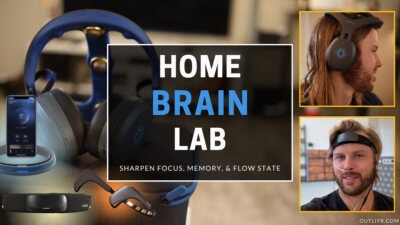
15 Best Home Neurofeedback Devices Review 2026: Pro Brain Training?
You can finally get professional Neurofeedback machines at-home. Some kits are better than others, and many devices are borderline scams.
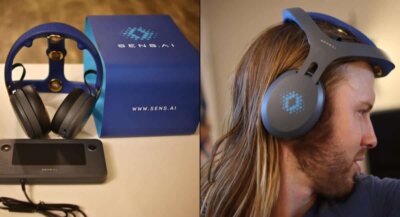
Home Neurofeedback Brain Training System for Peak Performance
Dr. Drew Pierson and Paola Telfer explain how Sensai combines 5 neurotechnologies into one headset for brain training, focus, sleep, relaxation, and flow states.