


A full-spectrum lamp is designed to provide daylight-style light, but the label covers very different devices. Choose a bulb for everyday room lighting, a UV-filtered bright-light lamp for a dark morning, or a UV sunlamp for a separate skin exposure.
Best Overall: SOLshine (BioBulb / PhotoVites)
Best Multi-Wavelength Sunlamp: Mitolux Solar X
Best for Vitamin D: Mitolux BTS2
Best Full-Spectrum Bulb: Ra Optics Lumios
Best Value Bulb: BON CHARGE Full-Spectrum Bulb
Best SAD / Light-Therapy Lamp: Verilux HappyLight
“Full-spectrum” is a marketing word with no legal definition. Many lamps that use it show big gaps when you measure the actual spectrum, so measurement beats the label every time.
For seasonal mood and circadian timing, the spec that matters most is lux at the distance you sit, not the headline lux printed on the box.
Flicker, color rendering (CRI), and EMR are the hidden variables. Flicker you can’t see has been linked to headaches and eyestrain in some people, so check a lamp’s flicker data.
No lamp replaces the sun. These fill the gap when the sky cannot, especially in winter, on early shifts, and through jet lag.
SOLshine is my overall pick for the desk setup I use daily. For existing fixtures, I’d start with Ra Optics Lumios for its day-to-night modes or BON CHARGE for a lower-cost bulb. The UV-capable Mitolux models and UV-filtered SAD lamps below serve different jobs; compare within the category you need.
Compare format first, then output at your working distance. The table separates ambient bulbs, UV sunlamps, and UV-filtered bright-light lamps.
The Best Full-Spectrum Lamps & Light Bulbs
SOLshine (BioBulb / PhotoVites): Best Overall Full-Spectrum Lamp

Is SOLshine SOL PhotoVites™ 3M worth it?
Puts out true full-spectrum light including near-infrared and trace UVA, with a low-EMF build verified by meters and a compact panel aimed at targeted sessions. Good beyond red and NIR alone. The treatment area is smaller than full-size panels, and daily use is required.
- Type
- Light therapy panel
- Spectrum
- Full visible (CRI 98.1) + near-infrared 780-900nm
- Brightness
- 13,470 lux at 2 ft
- Color temperature
- 5600K
- UV
- Trace UV
- Flicker
- Flicker-free (DC power)
- Size
- 8.5 x 4.75 x 1.1 in, 1.9 lb
- Warranty
- 2 years
Best For
- You want targeted full-spectrum light therapy sessions beyond just red/NIR
- You prefer a compact panel over ambient room lighting
- You want a low-EMF verified device
Skip If
- You only need ambient room lighting (get the bioBulb instead)
- You want a large full-body red light panel
- You're on a tight budget under $200
- You only want red and near-infrared wavelengths
Pros
- Delivers true full-spectrum light including near-infrared and trace UVA
- Low-EMF design tested and verified with meters
- Compact panel form factor for targeted therapy sessions
- HSA/FSA eligible purchase
- Designed by a photobiology researcher with decades of experience
Cons
- Premium price point
- Smaller treatment area compared to full-size red light panels
- Requires consistent daily use for best results
- Limited third-party clinical studies on this specific device
Your rating helps others choose
Tap to rate
URBAN for 10.1% offSee every current discount code and sale →
SOLshine’s strongest features here are its measured visible color quality, brightness at two feet, and near-infrared option.
SOLshine describes trace UVA in its spectrum, distinct from the UVB used for vitamin D production.
I own both SOLshine products, the PhotoVites lamp and the bioBulb, and I run them daily, passively, while I work. The PhotoVites sits under my monitor at about a 45 degree angle, so the light reaches my eyes while I look at the screen instead of into the panel.
On the spectrometer it earns its spot. My PhotoVites reads 96.5 CRI, a total irradiance around 13.5 mW/cm², and a daylight-like 6100K color temperature, and the flicker meter shows no flicker. I measured 11,300 lux from the PhotoVites and 10,650 lux from the bioBulb at two feet.
R9 checks how well a light renders saturated reds. It adds useful detail to the average CRI score, but neither score measures near-infrared or UV. I value the visible color quality here without treating the red/NIR balance as protection against UV exposure.
It uses Seoul Semiconductor’s SunLike diodes, and a button toggles between full-spectrum white and near-infrared only, so I use white in the morning and NIR after dark.
It isn’t flawless. The panel is small, the fan runs at a noticeable 49 decibels, it uses a proprietary charge cord, and it costs real money. The bioBulb fixes the size and noise (it screws into a normal fixture and throws a more concentrated beam that reads like afternoon sun), but it’s one mode only, more fragile, and its clamp is flimsy.
I keep both because they cover different jobs. My full SOLshine review has the complete spectrometer breakdown.
Mitolux Solar X: My Go-To Multi-Wavelength Sunlamp

Is Mitolux Solar X worth it?
Yes, if you want one panel for red, near-infrared, and UV instead of separate devices. I use the Solar X daily since its ten wavelengths and eleven modes handle full-spectrum light and indoor vitamin D together. It costs more than the simpler BTS2 and demands real UV safety habits, so it fits experienced users chasing full-spectrum coverage, not beginners wanting a plain red light panel.
- Type
- UVB/UVA + red/NIR sun lamp
- Spectrum
- 10 wavelengths, 295-940nm, 11 modes
- Brightness
- 85W peak (lux not published)
- Color temperature
- Not published
- UV
- UVB 295/310nm + UVA 365/380nm
- Flicker
- Not published
- Size
- 330 x 180 x 35 mm, 1.62 kg
- Warranty
- 2 years
Best For
- People who want Mitolux's most advanced full-spectrum lamp
- Experienced light-therapy users who want UVA, UVB, visible, red, and NIR modes in one device
Skip If
- You want the simpler, lower-cost BTS2 for focused UVB plus red/NIR
- You want to avoid UVA or tanning modes
- You will not follow UV safety precautions
Pros
- My current go-to Mitolux lamp because the 10-wavelength, 11-mode system covers more of the solar spectrum than BTS2
- Dedicated Sun, Tanning, Bronzing, UVA, UVB, and Red/NIR modes make it unusually flexible
- Compact tabletop, door-mount, and VESA-compatible form factor
Cons
- Costs substantially more than BTS2
- UV modes demand protective eyewear, conservative dosing, and attention to skin response
- Not a full-body light therapy panel
Your rating helps others choose
Tap to rate
URBAN for 10% offSolar X is my current go-to Mitolux lamp. I own and use it because it keeps UV in the mix while covering much more of the spectrum than the focused BTS2. Perhaps most uniquely, the programs it has are dynamic and change throughout the session, which is much closer to actual natural light exposure.
It combines 10 wavelengths across 11 modes: 295 and 310nm UVB, 365 and 380nm UVA, 415nm violet, 465nm blue, 590nm amber, 630nm red, and 850 and 940nm near-infrared. That gives me dedicated Red/NIR, UVA, UVB, Sun, Gamma, Fireplace (background), Tanning, and Bronzing options in one compact panel rather than a single narrow use case.
During a program's dynamic UVB phase, my UV meter read 0.158 mW/cm² of UVB, peaking at 300.7 nm, then 0.015 mW/cm² later as the UV ramped down. Tanning and Bronzing modes measured about 7.2 to 7.4 mW/cm² of UVA, peaking at 372.7 nm, with UVB around 0.005 to 0.03 mW/cm².
The wider set of options is why I reach for Solar X first when I want a multi-wavelength indoor session. A switch at the top of the device prevents you from accidentally activating the UV modes, which require the supplied eye protection.
The primary downside is that the Solar X is a small panel and not ideal for rapid full-body sessions.
I’ve searched far and wide, and this is the fullest-spectrum light I’ve found. I really like that the light balance changes dynamically throughout the session. When I travel, I bring this one with me.
Mitolux BTS2: Best Simpler Vitamin D Option

Is Mitolux BTS2 worth it?
Combines red, near-infrared, and UVB (295nm) in one compact, travel-friendly panel with a built-in stand and low-flicker, low-EMF design. Fits people who want UV indoors without sun access. The UV output means protective eyewear, and the treatment area stays small.
- Type
- UVB sunlamp
- Spectrum
- 295nm UVB + red and near-infrared
- Brightness
- Not published
- Color temperature
- Not published
- UV
- UVB 295nm (goggles included)
- Flicker
- Not published
- Size
- Not published
- Warranty
- Not published
Best For
- You want light therapy that goes beyond just red and NIR wavelengths
- You're looking for a compact panel that's travel-friendly
- You want UV exposure indoors without actual sun access
Skip If
- You want a large full-body panel for whole-body treatment
- You don't want to deal with wearing UV protective eyewear
- You're on a tight budget (premium pricing for the size)
Pros
- Combines red, near-infrared, and full-spectrum wavelengths in one device
- Includes UV spectrum that most panels skip
- Built-in stand for easy desk or floor positioning
- Low-flicker and low-EMF design
- Compact enough for travel
Cons
- Premium price point for the size
- UV output means you need protective eyewear
- Smaller treatment area than full-size panels
Your rating helps others choose
Tap to rate
URBAN for 10% offThe BTS2 is the simpler UVB-focused option in the Mitolux lineup. I used it before getting the Solar X; the distinction is its narrower set of wavelengths and programs.
Its 295nm UVB targets skin exposure, unlike a SAD lamp’s bright visible light at the eyes. It also includes red and near-infrared wavelengths.
UVB is the exact band that converts 7-dehydrocholesterol in your skin into vitamin D3, per a 2017 review by Holick in Advances in Experimental Medicine and Biology.
I own the BTS2 and, before I got the Solar X, used UVB P3 mode for my skin tone about five days a week, usually around midday. I also use its gamma mode while working and fireplace mode in the background.
Like the Solar X, one of the big drawbacks is that it’s a small panel, roughly the size of your head plus neck. A full-body red or NIR coverage takes longer than it would on a large panel.
One purchasing note: in August 2025, Health Canada advised Canadians to stop using unlicensed Mitolux UV sunlamps, naming the BTS-1, MTLE1, and BTS2, and warned of excessive, unsafe UVB that can burn skin and damage eyes. That advisory covers Canada and doesn’t name the Solar X. Mitolux says it has paused direct Canadian sales.
Ra Optics Lumios: Best Full-Spectrum Bulb

- Type
- A19 smart-switch LED bulb
- Spectrum
- CRI 98+ at 2700K, near-infrared enriched
- Brightness
- Not published
- Color temperature
- 4500K / 2700K / 2000K / 1200K modes
- UV
- None
- Flicker
- Flicker-free
- Size
- A19, E26/E27 base
- Warranty
- 2 years + 14-day trial
Best For
- People who want to upgrade everyday indoor light to an incandescent-quality, near-infrared-enriched, flicker-free spectrum and tune color temperature across the day, bright by morning and, per Ra Optics, zero high-energy blue by night.
Skip If
- You need a bright 10,000-lux SAD therapy dose, want UV for vitamin D through the skin, or want the cheapest possible bulb.
Pros
- CRI ≥98 at 2700K (manufacturer)
- Near-infrared-enriched spectrum, rare in an LED bulb
- Flicker-free output
- Switch-cycled modes per Ra Optics: 4500K Sky, 2700K Daylight, 2000K Evening, and a 1200K Candle mode rated low in high-energy blue
- Standard E26/E27 screw-in, ~25,000-hour (~10-year) rated life
- 2-year limited warranty plus a 14-day home trial
Cons
- No UVB for vitamin D production
- Premium price compared with a basic bulb
- Ambient lighting rather than a dedicated bright-light session
- Near-infrared percentage is not published
- Not made for dimmer circuits (keep any dimmer at maximum)
Your rating helps others choose
Tap to rate
OUTLIYR for 10% offLumios is the bulb I’d shortlist for changing room lighting without adding a separate lamp. Its switch-cycled modes are the main practical advantage.
Per Ra Optics’ specs, it renders at a CRI of 98 or better in its 2700K “Daylight” mode, so skin tones and warm colors come through the way your eyes expect. Cheap LEDs often render those poorly, which is part of why they feel flat.
At 12 inches, I measured a CRI (Ra) of 98.4 on Glow and 98.3 on Sky in Daylight mode, with a deep-red R9 of 96 on both. Glow measured 2806 K and Sky measured 2791 K against their 2700 K labels.
It’s also listed as near-infrared enriched (rare in a screw-in LED, though the amount isn’t published) and flicker-free. The Sky version I picked steps through four modes with your wall switch: a 4500K “Sky” mode meant for short 10 to 15 minute bursts, a 2700K “Daylight” mode, a 2000K “Evening” mode, and a dim 1200K “Candle” mode. The everyday Glow version swaps Sky for a 2200K “Afternoon” mode.
Ra Optics describes the night modes as having zero blue light. I measured about 4% of total energy below 500 nm in Glow Afternoon and Sky Evening, 1.5% in Glow Evening, and 0.4% in every candle mode. The candle modes were very low in blue, but not zero on my meter.
The Candle modes on the Glow and Sky bulbs measured about 11 to 12 lux at 12 inches, and the Candle bulb's dimmest mode measured 5.5 lux.
Every Lumios mode except the two Daylight modes put more than half its measured energy above 700 nm, in the near-infrared range. Ra Optics does not publish an NIR percentage. I also found that Sky mode, labeled 4500 K, measured 2647 K at 178.9 lux, close to Sky Daylight at 2791 K and 180.7 lux. Every other mode measured within 10% of its labeled Kelvin.
Practical details: it’s a standard E26/E27 screw-in, rated around 25,000 hours (roughly a decade), and it carries a 2-year warranty plus a 14-day home trial. Keep it off dimmer circuits, or leave the dimmer at maximum.
BON CHARGE Full-Spectrum Bulb: Best Value Bulb
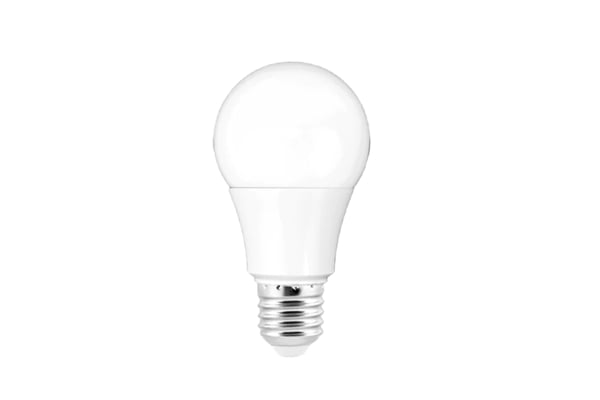
Is Bon Charge Full-Spectrum Light Bulb worth it?
Flicker-free and full-spectrum, this LED bulb shifts color temperature to mimic daylight, red at night and blue by day, low-EMF and longer-lasting than incandescent. Adjustment is manual with no smart automation, and one bulb won’t transform a fully lit room.
- Type
- Switch-cycled LED bulb
- Spectrum
- Visible; CRI not published
- Brightness
- 379-430 lumens (7W)
- Color temperature
- 5000K / 2500K / 1700K modes
- UV
- Not published
- Flicker
- Flicker-free
- Size
- E26/E27 base (E12 option)
- Warranty
- 1 year
Best For
- You want to support your circadian rhythm with healthier indoor lighting
- You spend a lot of time indoors under artificial lights
- You're sensitive to blue light and want a full-spectrum alternative
Skip If
- You already use smart bulbs with circadian scheduling
- You get plenty of natural sunlight throughout the day
- You're looking for blue-light-blocking glasses instead of bulb changes
Pros
- Adjustable color temperature mimics the sun's natural light spectrum
- Flicker-free design avoids the biological stress of typical LEDs
- Low-EMF and energy-saving compared to incandescent bulbs
- Supports circadian rhythm with red light at night, blue during the day
- Longer-lasting and easier to find than quality incandescent bulbs
Cons
- At , replacing a whole house adds up
- Requires manual adjustment (no smart home automation built in)
- Single bulb won't transform a room with other conventional lights
Your rating helps others choose
Tap to rate
BON CHARGE is my lower-cost starting point for a switchable bulb in an existing fixture.
The pitch is simple and useful: screw it into a fixture you already own and flick the wall switch to step its color temperature from cool daytime light to a warm evening setting. BON CHARGE also sells it as flicker-free and low-EMF. That flicker part matters.
This pick rests on published specs and third-party data: switchable day-to-evening color, low flicker, and screw-in convenience. BON CHARGE does not publish a CRI figure.
Choose it for ambient room lighting. A room-fixture bulb won't deliver the 10,000 lux at your eyes needed for a SAD session.
The three UV-filtered bright-light picks below are based on published specifications and category research, rather than my own long-term use or measurements.
Verilux HappyLight: Best SAD / Light-Therapy Lamp

- Type
- SAD light panel
- Spectrum
- UV-free white light
- Brightness
- Up to 10,000 lux, 4 levels
- Color temperature
- 3 settings, daylight to warm (K not published)
- UV
- UV-free
- Flicker
- Flicker-free
- Size
- 11.7 x 7.5 x 0.5 in, 2 lb
- Warranty
- 3 years
Best For
- A compact UV-filtered lamp for a dedicated bright-light session, provided its rated working distance fits your desk.
Skip If
- You cannot position it at its rated distance for a session.
- You need published spectral or flicker measurements before purchase and cannot obtain them for the exact model.
Pros
- 10,000-lux rating at the stated distance
- UV-filtered white light
- Compact format for a desk
- Adjustable brightness and color settings
Cons
- Working distance needs to fit your seating position
- UV-filtered visible light rather than a UVB device
- Consumer-grade build
Your rating helps others choose
Tap to rate
Verilux HappyLight is the straightforward option for a dedicated, UV-filtered bright-light session. Check the exact model’s rated distance before choosing where it will sit.
It’s a brightness delivery device, and it’s a good one. For seasonal low mood and a drifting winter body clock, that bright morning dose is one of the best-supported interventions in the field, with an effect size on par with antidepressants in a 2005 meta-analysis in the American Journal of Psychiatry.
Carex Day-Light Classic Plus: Best High-Intensity SAD Box

- Type
- SAD light box
- Spectrum
- Glare-free white light
- Brightness
- 10,000 lux at 12-14 in
- Color temperature
- 4000K
- UV
- Blocks 99.3% of UV
- Flicker
- Not published
- Size
- 16 x 13 in screen, 9.35 lb
- Warranty
- Not published
Best For
- You want a large overhead-style bright-light panel and have room for its stand and angled surface.
Skip If
- You need a compact desk accessory.
- You are looking for a UVB device.
- You have nowhere to position and angle the panel at its rated distance.
Pros
- Large panel shines light down toward your eyes from above
- Adjustable height and angle make positioning easier
- Carex says it's based on the model university researchers use
- UV-filtered high-intensity visible light for mood and circadian timing
Cons
- Large, utilitarian box takes up desk or floor space
- UV-filtered visible light rather than a UVB device
- Needs a stand or surface positioned correctly
Your rating helps others choose
Tap to rate
When you want the strongest, most clinically-styled bright-light dose, the Carex Day-Light Classic Plus is the box I’d look at first.
Its edge is the large, angled light surface. Because the panel is big and shines down toward your eyes, it should be more forgiving of posture than a compact lamp, so you’re not pinned to one exact spot to get the therapeutic dose. Carex says it blocks 99.3% of UV, so this is a high-intensity visible-light tool for mood and circadian timing.
The tradeoff is space: this is a large, utilitarian panel. Check whether the stand, panel angle, and rated working distance fit the chair and surface you’ll actually use.
Circadian Optics: Best Budget Desk Light-Therapy Lamp

- Type
- Compact SAD lamp
- Spectrum
- White light, 60 LEDs
- Brightness
- 10,000 lux at 9-12 in
- Color temperature
- 5500K
- UV
- UV filtered by diffuser
- Flicker
- Flicker-free
- Size
- Folds to 1.75 x 2.25 x 13.8 in, 1.3 lb
- Warranty
- 4-year replacement policy
Best For
- You want a compact, lower-cost lamp with adjustable brightness and can use it at its rated distance.
Skip If
- Your comfortable seating position is beyond the rated working distance.
- You need verified spectral or flicker measurements and cannot obtain them for the exact model.
- You are looking for a UVB device.
Pros
- 10,000-lux rating at close range
- Compact design for a work desk
- Multiple brightness levels with UV-filtered output
Cons
- Small panel requires close positioning for the rated lux
- Spectral quality and flicker performance need exact-model data
- UV-filtered visible light rather than a UVB device
Your rating helps others choose
Tap to rate
Circadian Optics is the compact budget option for a dedicated bright-light lamp.
The lamps offer a 10,000-lux rating at close range and several brightness settings. A small footprint helps on a crowded desk; the rated distance still has to fit the way you work.
A Monitor Add-On I Use Daily
I've also used Mitolux SpectraFill daily for about two months. It's easy to use above my monitor. It adds six selected wavelength channels to the workspace, with Day, Night, and Invisible modes. My preferred mode is effectively invisible to me, and the bar fits into my workday without a separate session.
I think of it as an add-on for desk lighting. The lamps and bulbs above serve different jobs, from lighting a room to a deliberate light session. SpectraFill leaves the monitor’s own light output unchanged while adding its own wavelengths nearby.
The housing feels plasticky to me, and it cannot replace my dedicated light-therapy panel. I still love how little effort it takes to use.
With my monitor on and the bar off, I measured 0.208 mW/cm² and 373 lux. From the same position, Day mode measured 0.376 mW/cm² and 395 lux, about 1.8 times the baseline irradiance with about 6% more lux. Invisible mode measured 0.347 mW/cm² and 384 lux, peaking at 812 nm, while Red mode measured 0.367 mW/cm² and peaked at 810 nm.
See my Mitolux review for the device comparison and my experience.
Who Should Use a Full-Spectrum Lamp (and Who Should Skip)?
The timing effect is well documented. Morning bright light phase-advances your body clock, nudging melatonin and sleep earlier, as shown in a 2015 study in Sleep Medicine. If your circadian rhythm has drifted late, that early dose is the lever that drags it back.
Light exposure has powerful effects on mood and cardiometabolic health beyond just regulating sleep.
Greg Potter, PhD, chronobiologist, on the High Performance Longevity Podcast
Here’s who tends to benefit most:
- People who get low, flat, or foggy through the darker months, when short days cut your bright-light exposure to a fraction of summer.
- Anyone with a shifted or sluggish body clock: trouble falling asleep, trouble waking, energy that peaks at the wrong time of day.
- Shift workers fighting a schedule that runs against the sun.
- Frequent travelers using a light schedule matched to their destination and direction of travel.
- Desk workers who leave for work in the dark and come home in the dark, and rarely see real daylight on the skin.
- People considering UVB exposure for vitamin D, as a separate choice from room lighting or bright-light therapy.
And who should skip, or at least talk to a professional first:
- Anyone with bipolar disorder, because bright morning light can trigger mania. This is a real risk, not a formality.
- People on photosensitizing medications (some antibiotics, acne drugs, St. John’s Wort, and others), where added light exposure can burn or react.
- Certain eye conditions or retinal disease. Run it by an eye doctor before flooding your retina with bright light daily.
- Anyone expecting a lamp to fix a problem that’s really about a wrecked sleep schedule, a nutrient gap, or a nervous system stuck in overdrive. Light is a powerful lever, but it sits on top of the fundamentals, not in place of them.
How Do You Choose a Full-Spectrum Lamp or Bulb?
I compare brightness at a usable distance, spectral output, flicker, color quality, and practical ownership. The SOLshine and Mitolux sections include my own use; the other picks identify where I’m relying on specifications.
Here’s my setup. I own light spectrometers plus a separate flicker meter, and I use them to check what a lamp emits against what the box claims. My workhorse is a Hopoocolor OHSP-350IR, which reads the whole curve from 380 to 1050nm, so I see the exact shape of a spectrum instead of trusting a marketing chart.
I also use a separate EMF meter. Its RF readings do not measure lux, color rendering, spectrum, or flicker.
This started the hard way. Back in 2018, I tried to build my own spectrometer, and it was painful and expensive enough that I gave up and bought professional gear instead. Since then I’ve put a spectrometer on 8 light devices and independently verified the manufacturers’ claims.
Here’s the order of priorities I used, top to bottom:
- Lux at usable distance. The lux rating applies at a stated distance. Check whether that distance fits your setup. What counts is the brightness reaching your eyes at the distance you’ll realistically use it, because lux falls off fast as you move back. A lamp that hits 10,000 lux at 6 inches but 2,500 lux where you sit is a different product than the box implies.
- Spectral completeness. Look for a spectral graph, then check whether visible light, near-infrared, or UV is relevant to your goal. Lux does not measure invisible near-infrared output.
- UV inclusion (where relevant). UVB and UVA serve different purposes and carry skin and eye risks. Added UV is not a requirement for an ambient bulb or a SAD lamp.
- Flicker and EMR. Ask for flicker data at the brightness setting you’ll use. An EMF meter reads RF. Use a flicker meter or published flicker data to assess flicker.
- Color rendering & R9 red saturation. A high CRI (how faithfully light shows colors, where 100 equals sunlight) is a decent proxy for spectral quality, but I look hardest at R9, the extended score for deep-red saturation. A lamp can post a flattering average CRI while R9 collapses, which makes saturated reds look dull. R9 says nothing about near-infrared or UV, so judge those from the full curve.
- Build, warranty, and who stands behind it. A lamp is a passive, one-time optimization when it’s built to last. I weight brands that publish real specs and back their product.
Timing matters as much as spectrum in a home setup. For healthy adults on regular daytime schedules, a 2022 expert consensus in PLOS Biology recommends at least 250 lux of melanopic EDI (how strongly light drives your circadian system) at the eye by day, under 10 lux in the 3 hours before bed, and under 1 lux during sleep.
That is why an evening mode needs to be dim as well as warm.
Full-Spectrum vs Daylight Bulbs vs SAD Lamps: What’s the Difference?

A SAD lamp (also sold as a “happy light” or “light therapy lamp”) is optimized for one job: deliver a large dose of bright visible light, usually 10,000 lux at a stated distance, to your eyes. That bright signal is what resets a drifting circadian clock and lifts seasonal low mood.
“Full-spectrum” describes a daylight-style spectral ambition, rather than one consistent product category. Some models include near-infrared or UV; others focus on visible color quality. Check the spectral graph and measured output for the bands you want.
A “daylight” bulb is a third thing, and it’s easy to mistake for full-spectrum. “Daylight” describes color temperature, usually 5000K to 6500K, so the light looks crisp and bluish like midday. It says nothing about whether the spectrum is continuous, whether the reds are there, or whether the bulb flickers. Judge either label by the CRI, R9, flicker data, and spectral graph behind it.
If you’d rather skip LEDs entirely, there’s an older route. Carrie Bennett told me on the High Performance Longevity Podcast that she’d pick bright incandescent bulbs like Chromalux by day and warm amber incandescents at night, because in her words they “have all the colors” and “don’t flicker.”
Incandescent bulbs are another option, with heat and efficiency tradeoffs. Check measured flicker whatever the bulb type.
Frequently Asked Questions
What is a full-spectrum lamp?
A full-spectrum lamp is marketed as providing daylight-style light. Check color quality, brightness, flicker, and UV or near-infrared output for your intended use.
What is the difference between a full-spectrum lamp and a SAD lamp?
A SAD lamp delivers bright, UV-filtered visible light at the eyes for a dedicated light-therapy session. A full-spectrum bulb or lamp may instead prioritize visible color quality or include other wavelengths.
Do full-spectrum lamps and SAD lamps work, and who needs one?
Bright-light therapy has evidence for seasonal depression and circadian timing. That evidence does not transfer automatically to every product labeled full-spectrum. Match the device, timing, and working distance to your goal; shift work and jet lag require timing that fits the schedule.
How many lux do you need for light therapy?
The standard target is 10,000 lux for about 20 to 30 minutes in the morning. Distance is what trips people up: that rating is measured close to the lamp face, and brightness drops off fast as you move back. Ask what lux a lamp delivers at the distance you’ll realistically sit, not just the headline figure.
Are UV full-spectrum lamps safe?
UV can burn skin and damage eyes. UVB can stimulate vitamin D production; UVA does not serve that same role. Follow the exact model’s exposure limits and eye-protection instructions. Photosensitizing medicines, eye disease, or a relevant skin history warrant clinical advice before added UV.
How long should you use a light therapy lamp?
For bright-light (SAD) therapy, protocols generally use 20 to 30 minutes of 10,000-lux exposure soon after waking. UV sunlamps work on much shorter, skin-type-specific sessions, since you’re dosing UV rather than brightness. Consistency in the morning beats marathon sessions, and evening bright light can delay your clock and wreck sleep.
Full-spectrum lamp vs red light therapy: which do you need?
Choose by the job. Ambient bulbs light a room; SAD lamps deliver a bright visible-light session; red and near-infrared panels deliver selected bands for a specific treatment goal.
Where to Start With Full-Spectrum Light
Start with the gap you can name. For ordinary room lighting, try one bulb in a fixture you use often. For a dedicated dark-morning session, choose a UV-filtered lamp that delivers its rated brightness where you can comfortably sit. Keep UV exposure as a separate decision, with the model’s safety guidance and the Canadian advisory above in view.

Comments