


If you’ve spent any time around biohackers discussing water, you’ve probably seen the same five words repeated. Structured, energized, coherent, vortexed, and living.
Proponents of the technologies purport benefits ranging from ordinary changes in flow and aeration all the way to big promises about hydration, cellular function, aging, and energy.
That spread makes choosing a device harder than it needs to be. A vortex carafe, a glass wand, a passive pour-through unit, and a whole-house flow system might all get called a structured water device. They don’t create the same experience, and they don’t answer the same problem.
I own and use an Analemma wand, an Analemma inline device, a Natural Action Technologies revitalizer, and a MAYU Swirl. This guide is the map I wanted before I spent money in this category, built from living with these devices.
Structured water devices do not replace filtration. Make the source water safe first.
The practical difference is format: wand, countertop carafe, pour-through device, or plumbed inline system.
Filtration and remineralization solve different problems from vortexing or water-structuring claims.
Treat taste and routine as personal observations, but not necessarly proof of a molecular change or a particular health benefit.
What Are Structured Water Devices?
Structured water devices are tools marketed to change the way water moves, mixes, aerates, or organizes at a molecular level. Some use a visible vortex. Others use a shaped flow path, a wand, minerals, magnets, or an electric motor.
That definition is deliberately broad because the category is broad. The word structured can point at several different things:
- A physical flow pattern created by spinning or redirecting water
- More air or dissolved gas in the water
- A change in taste, temperature, or mouthfeel
- Minerals added to or retained in the water
- A proposed change in hydrogen bonding or molecular organization
Those aren’t interchangeable outcomes. A device that makes water taste lighter has given you a sensory result. It hasn’t automatically proven better cellular hydration.
The first decision is more basic. Is your source water already safe? Structuring and filtration solve different problems. The AquaTru review and my full water protocol cover that foundation in more detail.
Which Structured Water Devices Are Worth Comparing?
The best device depends on the ritual you’ll repeat, the water you already have, and how much installation you want. This shortlist gives owned devices priority and labels the research-only comparison clearly.
Start with the problem you actually need to solve.
A wand or vortex device changes the preparation ritual. The PristineHydro system is the only option here built around filtration and remineralization too. That makes it useful for a different buyer, but it still doesn’t turn water-structuring claims into proven health outcomes.
Best travel filtration and remineralization system: America 250 Travel Portable Water Revival System

- Model
- WRS-TP4
- Format
- Portable hard-case system
- Filtration
- Reverse osmosis, deionization, and remineralization
- Output
- About 1 gallon per 15 minutes
- Setup
- No permanent plumbing
Best For
- Travelers, RV owners, renters, and anyone who wants a portable filtration and remineralization system without permanent plumbing
Skip If
- You only need basic sediment or carbon filtration, want a low-cost system, or require independently proven health benefits from water restructuring
Pros
- No permanent plumbing required
- Combines reverse osmosis, deionization, and remineralization
- Portable hard-case format for travel and RV use
Cons
- High upfront price
- Replacement filters add ongoing cost
- Manufacturer restructuring claims do not establish better human health outcomes
Your rating helps others choose
Tap to rate
This is the outlier in the roundup because it solves two jobs. The Travel/Portable Water Revival System filters source water through reverse osmosis and deionization, then adds minerals back before dispensing it. The hard case and lack of permanent plumbing make it more realistic for an RV, rental, or extended trip than a whole-house installation.
Unlike most products in this guide, filtration is a core function rather than an implied benefit. I’ve also explained why I remineralize heavily filtered water, which is one reason the post-filtration mineral stage matters here.
What remains unproven is whether the manufacturer’s additional structuring and energizing steps improve human health.
Choose this system if you need portable filtration and remineralization first. Skip it if you only want an inexpensive countertop filter or if the structuring language is the main reason you’re buying.
Best portable wand: Analemma Water Wand
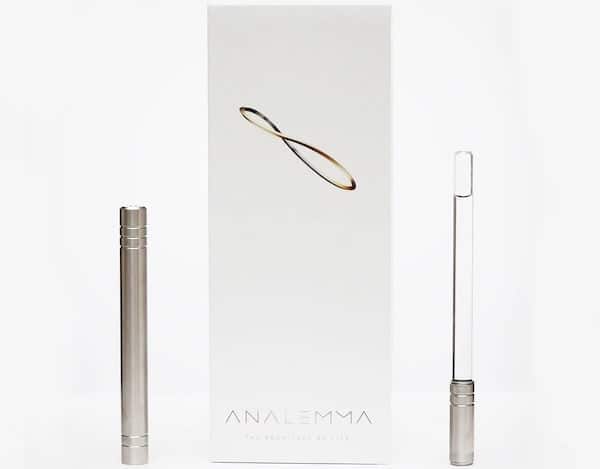
Is Analemma Water Wand worth it?
In a GlycanAge biological age trial, participants drinking 1.5 liters of Analemma water daily for three months reversed biological age by 1 to 12 years without changing diet or exercise. [Mario Brainovic]
- Format
- Portable water wand
- Materials
- Quartz vial, silicone cap, stainless steel cap, stainless steel protective case
- Wand dimensions
- 6.3 x 0.4 in (16 x 1 cm)
- Weight
- 10.9 oz (0.3 kg)
- Use
- Stir about 15 seconds per 8 oz or 1 minute per 35 oz
- Power
- No batteries or charging
- Care
- Hand rinse and dry; do not use in a dishwasher or with hot liquids
Best For
- You're interested in water structuring and coherent water research
- You want a simple, no-maintenance tool for your drinking water
- You're exploring subtle energy and biophysics approaches to health
Skip If
- You prioritize water filtration over structuring (filter first)
- You want peer-reviewed clinical evidence before trying new tools
- You're on a tight budget (water wands are a premium item)
Pros
- Early research suggests it may slow biological aging and balance brainwaves
- Simple to use, just swirl the wand in your water
- No maintenance, filters, or replacement parts needed
- Compelling science behind coherent water technology
- Works with any filtered or mineralized water
Cons
- Water structuring is still a fringe concept with limited peer-reviewed evidence
- Premium price for what's essentially a glass wand
- Subjective effects are subtle and hard to measure
Your rating helps others choose
Tap to rate
URBAN for 10% offSee every current discount code and sale →
The Analemma Water Wand is the easiest product here to understand as a daily ritual. You place the wand in a glass or bottle, swirl it for the right amount of time, then put it away.
My routine runs about 15 seconds for 8 to 10 ounces and 30 to 40 seconds for larger volumes. The wand doesn’t filter water, so it belongs after a clean source or a filtration step.
What makes it compelling is the low friction. There’s no motor, cartridge, plumbing, or recurring filter purchase. What makes it hard to evaluate is the same thing. The proposed coherent-water mechanism is tough to measure at home, and the published health claims go far past the evidence that would convince a skeptical reader.
My experience was subtle. The water tasted lighter and fresher. I noticed a difference I could feel, but I couldn’t pin a life-changing health outcome on the wand. The better approach would be to do a double-blind test either on yourself or other forms of life (plants, animals) less susceptible to placebo.
I also compared it with the MAYU Swirl, a useful reminder that a device can feel different without proving a unique biological mechanism.
If you want a small, portable experiment and you’re willing to treat the result as personal data, Analemma is the most practical entry point in this guide.
Best portable flow-through device: Natural Action Technologies

- Format
- Portable flow-through unit
- Power
- None
- Size
- 7.5 × 3 in
- Weight
- 9.5 oz
- Warranty
- 10 years
- Guarantee
- 90 days
Best For
- A portable, passive vortex device without recurring supplies
Skip If
- You need verified contaminant removal or a permanently installed system
Pros
- Passive design needs no electricity or replacement filters
- Portable 9.5-ounce format
- Ten-year warranty and 90-day guarantee
Cons
- Does not filter or disinfect water
- Requires manual placement in the water path
- Evidence for health outcomes remains limited
Your rating helps others choose
Tap to rate
The Natural Action Technologies revitalizer is a pour-through device. The manufacturer describes its internal flow geometry as creating a vortex without electricity, replaceable filters, or a permanent installation. It’s one of the few systems built on the fascinating work of Viktor Schauberger.
That makes the use case clear. You pour clean water through the device, collect it in a glass or bottle, and repeat when you want another serving. It’s more portable than a countertop carafe and more immediate than a wand ritual.
The limitation is just as clear. A passive flow device doesn’t make unsafe water potable. It doesn’t remove chlorine, bacteria, heavy metals, or other contaminants unless a separate filtration stage is doing that work.
Natural Action also makes claims about surface tension, user feedback, and hydration. This is one I bring with me when I travel and I have the weight allowance (otherwise, I bring the inlay or water wand).
Best countertop vortex carafe: MAYU Swirl

- Capacity
- 1.5 L (51 oz)
- Material
- Borosilicate glass
- Power
- Rechargeable, 5V 1A
- Dimensions
- 12.6 × 5.5 in
- Warranty
- 2 years
Best For
- A countertop vortex carafe for daily drinking water
Skip If
- You need filtration, whole-house treatment, or a no-maintenance setup
Pros
- 1.5-liter glass carafe handles a practical daily batch
- Rechargeable base avoids keeping it plugged in
- Nick owns and uses this model
Cons
- Requires regular charging and cleaning
- Does not filter or disinfect water
Your rating helps others choose
Tap to rate
URBAN for 25% offThe MAYU Swirl is an electric glass carafe that creates a visible vortex. It fits people who enjoy preparing water as a deliberate countertop ritual and who want the movement itself to be part of the experience.
The practical effects are easier to understand than the health language. A motor moves the water, the vortex exposes more water to air, and the finished drink might taste or feel different. It takes longer to vortex the water than some of the other systems, but it also can do more volume.
The tradeoff is routine. A countertop carafe takes space, needs power, and asks you to prepare water in batches. If you already use a pitcher and enjoy the ritual, that’s a feature. If you want something for travel or a glass at your desk, it becomes friction.
I’d choose the MAYU Swirl for the person who wants to see the vortex and make water preparation part of the day. I wouldn’t choose it as a replacement for filtration.
Best hands-off whole-house option: Analemma

- Connection
- 3/4 in
- Material
- Brass
- Installation
- Professional plumber recommended
- Box size
- 11.7 × 4.8 × 3.7 in
- Maintenance
- No filters, batteries, or refills
Best For
- A hands-off whole-house Analemma setup
Skip If
- You rent, need filtration, or want a portable device
Pros
- Treats the household water line after one installation
- Requires no replacement filters, batteries, or refills
- Compact 3/4-inch brass inline unit
Cons
- Requires professional plumbing installation
- Does not filter contaminants
- High upfront cost
Your rating helps others choose
Tap to rate
URBAN for 10% offThe Whole-house Analemma is the counterpoint to the wand. Instead of treating one glass, it applies the same idea to a plumbed household flow, so treated water comes from the tap without the whole per-glass ritual.
Run this downstream of the filtration stage. The order matters. The inline device isn’t a filter, so it belongs after whatever makes the source water safe.
This system excels in convenience. Once it’s installed there’s nothing to remember, the opposite of the wand’s deliberate ritual.
It’s only a really viable option if you own your house/apartment, and if you do it also treats the water that flows through your shower and bath.
Best whole-house vortex device: Alive Water Standard 3/4-inch

- Model
- 2004
- Connection
- 3/4 in
- Installation
- Main water line
- Weight
- 308 g
- Warranty
- 10-year limited
Best For
- A permanent 3/4-inch whole-house vortex device
Skip If
- You rent, need filtration, or want a portable countertop option
Pros
- Treats the main household water line after installation
- Ten-year limited warranty
- Made in Canada
Cons
- Requires plumbing installation
- Does not filter contaminants
- Research-only comparison without first-hand testing
Your rating helps others choose
Tap to rate
URBAN for 15% offThe Alive Water Standard Vortex Water Revitalizer also represents the whole-house end of the category. Instead of treating one glass at a time, this inline system changes the flow path for the water entering your home.
This is a different buying decision from a wand or carafe. You have to think about installation, flow rate, access to the plumbing, source-water quality, and whether the system works alongside your existing filter. A whole-home device might be convenient, but convenience doesn’t make the mechanism more established.
The right question isn’t “does this make my water alive?” The right questions are practical:
- Is the source water already safe?
- What does the system change physically?
- What does it leave untouched?
- Can you clean, service, or remove it later?
- What would count as a meaningful improvement for your household?
I’d reserve this category for readers who’ve already tested a smaller, reversible device and know they want the same preparation across many taps.
How Do Vortex, Flow-Through, Wand, Magnetic, & Mineral Devices Differ?
The mechanism determines the experiment you’re running. These are the five common families:
- Vortex carafes spin water with an electric motor. You can see the movement, but the device needs space and power.
- Flow-through units redirect water through internal geometry. They’re passive and quick, but they don’t purify the source.
- Wands and coherence devices treat a glass or bottle at a time. They’re portable and low-maintenance, but their proposed mechanism is hard to verify independently.
- Magnetic systems expose water to a magnetic field or combine magnets with flow geometry. The proposed effects have to be separated from ordinary changes in flow and aeration.
- Mineral systems add or retain minerals while water moves through the device. That can shift taste and composition, which is why the mineral input has to be documented.
One useful control is surprisingly low-tech.
Pour the same water into a jar and swirl it by hand for 30 seconds. It won’t reproduce every device, but it helps you ask whether the sensory result comes from movement, temperature, aeration, expectation, or the device’s particular materials.
Skepticism cuts both ways inside this category. On the Biowater episode, water researcher Isabel Friend, herself a structured-water advocate, digs into the truth about alkaline, ionized, and Kangen water. A useful reminder that not every “water upgrade” on the market builds structure.
When someone who sells the category still warns you off part of it, take the warning seriously.
What Can Viktor Schauberger Teach Us About Vortexing Water?
Viktor Schauberger gives this category a history that predates modern wellness marketing. An Austrian forester, naturalist, and inventor, he studied rivers, trout, forest channels, and the way water moved through natural landscapes. His practical work included unusual log-flume designs and, most relevantly, patents tied to water flow.
His central instruction was to observe nature and copy its patterns. That idea is one reason vortexing keeps returning in water technology. A mountain stream doesn’t move in a straight, frictionless pipe. It bends, spirals, aerates, collides with surfaces, and changes speed.1
The Water Wizard is a translated and edited collection of Schauberger’s writings assembled by Callum Coats. It’s valuable as a record of his observations and worldview.
Schauberger can inspire a question about flow, geometry, and living systems. Obviously, hs work isn’t a modern clinical trial, and it doesn’t establish that a consumer device creates a lasting health-enhancing water structure.
Does Structured Water Work, & What Does the Research Support?
Water’s physical behavior changes with surfaces, temperature, pressure, dissolved gases, minerals, and flow. Those changes are ordinary areas of chemistry and physics.
The physics itself is real and studied. The ordered water layer that forms next to water-loving surfaces gets modeled in peer-reviewed journals, including this interfacial-water model in Journal of Physics: Condensed Matter.
The exclusion-zone water these devices invoke even turns up in cryobiology, per a study of its dynamics.
There’s a real reason water structure is worth any attention at all. By molecular count the body is over 99 percent water, so water-to-water and water-to-surface interactions sit close to the molecular basis of life. I unpacked that in my own health-optimization breakdown.
That makes the physics worth studying yet it doesn’t make every device claim true.
A review of structured water research in animals describes treated water as having altered hydrogen-bonding structure. It also notes that proposed mechanisms are inconsistent and that animal findings can’t be treated as proof of broad human benefits. Read the peer-reviewed animal review for the full boundary.
The evidence ladder looks like this:
- Measured physical change. Flow, aeration, temperature, minerals, or surface properties.
- Preclinical signal. A plant, cell, or animal result under a specific protocol.
- Human outcome. A controlled study showing a meaningful benefit in people.
The first two can justify more research.
It also helps to reframe where structured water comes from. On the podcast, Dr. Dana Cohen made the case that the structured water that matters is built inside healthy cells by sunlight, movement, electrolytes, fiber, and healthy fats.
Those are the places to start.
That’s why I find the category interesting. A device can change the experience of drinking water. You can test whether you prefer that experience. Perhaps you can measure some endpoint before and after.
Should You Filter Water Before Structuring It?
Yes, if you don’t already trust the source (ie tap water). Filtration removes or reduces specific contaminants. Structuring devices generally change flow, preparation, or proposed molecular organization. Separate jobs.
My own water workflow starts with source quality and filtration, then considers minerals, taste, and structure. The full water protocol covers the sequence. The AquaTru review covers one popular water filter.
On filtration specifically, Dr. Carolyn Dean’s rule is a carbon filter over reverse osmosis or distillation. RO and distillation strip everything, and then you have to re-add minerals. But a carbon filter alone won’t remove as many contaminants. Structure the water after that step.
Treat any product that implies it removes contamination without naming a certified filtration mechanism as a glaring red flag. A vortex alone doesn’t clean unsafe source water.
How Should You Test a Structured Water Device at Home?
Keep the first experiment small enough that you can reverse it. A simple seven-day test can tell you whether the product earns a spot in your routine.
Start with one source water and one device. Keep the glass, temperature, time of day, and amount of water as consistent as you can. Record three things:
- Taste and mouthfeel
- How easy it is to remember and use
- Any subjective change you care about, such as thirst or how often you reach for water
Add a manual-swirl control for several days. If you want stronger evidence, blind the water labels and ask someone else to randomize them. Don’t change your electrolyte mix, caffeine, exercise, or sleep routine at the same time.
The minimum effective experiment is the one you can repeat. If you don’t notice a meaningful difference after a reasonable trial of 14-30 days, return the device.
Which Device Fits Your Home?
Match the format to the behavior you’ll repeat:
- Choose a wand if you want a portable, one-glass ritual
- Choose a countertop carafe if you enjoy preparing a batch at home
- Choose a passive pour-through unit if you want speed, travel, and no electricity
- Choose a mineral plus vortex unit if you want to change water composition and flow together
- Choose a whole-home system only after you’ve tested the smaller version and confirmed the plumbing, source water, and maintenance fit
Either way, the most expensive option is the one you stop using.
What Should You Ask Before Buying?
These are the questions worth settling before you spend anything, from filtration to safety to whether a whole-house system makes sense.
Do structured water devices filter water?
Usually, no. Read the filtration details separately from the structuring claims. The Travel Portable Water Revival System is an exception because reverse osmosis, deionization, and remineralization are core parts of the system. If another device doesn’t name a filtration stage, assume it doesn’t purify the water.
Is structured water the same as hydrogen water?
No. Hydrogen water adds dissolved hydrogen gas. Structured-water products usually focus on flow, geometry, minerals, magnets, or a proposed change in water organization. Some products combine categories, which makes testing harder.
Can I make structured water without buying a device?
You can swirl or aerate water manually as a low-cost option. That won’t reproduce every product’s geometry, but it gives you a baseline before spending money. It generally takes 5-15 minutes to get a significant effect.
Are structured water devices safe?
The device itself is only one part of the safety question. Use a safe source, follow the cleaning instructions, and avoid treating a structurer as a purifier. Mineral systems deserve extra attention because they change water composition.
Is a whole-house structured water system worth it?
It can make sense for someone who’s already tested a smaller device and wants the same flow treatment at every tap. It’s a poor first experiment because installation, cost, and maintenance make the result harder to reverse. Personally, if I could do it, I would.
What is the best structured water device?
For a portable first experiment, I’d start with a wand or passive pour-through unit. For a countertop ritual, consider an electric vortex carafe. For a whole-house system, test the smaller format first and keep filtration separate.
Your Structured Water Experiment
Before focusing on structuring your water, first, I’d focus on cleaning it to remove contaminants. Once you do that, structuring it can make sense.
Choose one device, one outcome, and one test window.
Schauberger’s work keeps the category intellectually alive because it asks us to watch water in motion instead of treating it as an inert input. Modern research gives us tools to test pieces of that idea. Your own repeatable observations add another layer.
You don’t need to buy the largest system to begin.
Match the device to your source water, your routine, and the question you want answered.
If this helped, share it with a friend who’s been wondering whether structured water is worth trying.

Comments