

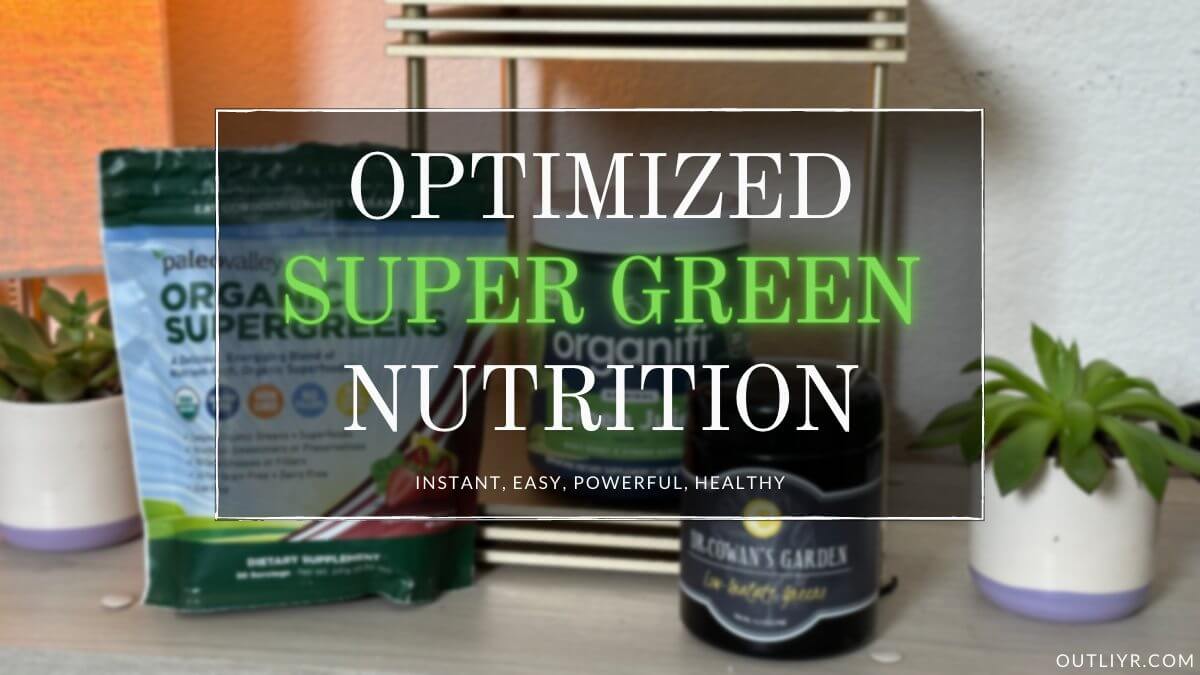
Many years ago, I was looking for the best AG1 alternatives. Why?
If you listen to health and performance podcasts, read biohacking blogs, or follow top wellness influencers, AG1 is everywhere. High-profile health experts, scientists, and professional athletes endorse Athletic Greens. A few of the more prominent AG1 fans include:
- Dr. Andrew Huberman
- Tim Ferriss
- Joe Rogan
- Mark Hyman
- Robin Arzón
- Lewis Hamilton
- Peter Diamandis
- David Sinclair
But not all the influencers.

Much of the popularity of Athletic Greens stems from a huge influx of capital. A funding round of $115 Million enabled a massive social marketing campaign.
Is it possible that there are better AG1 Next Gen alternatives? Do you even need a greens superfood powder?
Indeed, there are multiple superior, cheaper, and more effective products. Whether you should take them is another topic (covered later in this article).
In this research and product roundup, we’ll review the best Athletic Greens AG1 alternatives, examine the benefits of green superfood supplements (if any), and determine whether they’re a fad or useful tool to optimize your health and performance.
The best overall AG1 alternative is Paleovalley Organic Supergreens: fully organic, no proprietary blends, no cereal grasses, and about $1.60 per serving versus AG1’s $3.30, roughly half the price.
Every alternative on this list is cheaper than AG1’s $3.30 per serving. The cleanest budget picks run under $1.50.
AG1’s real problems are the premium price, proprietary blends that hide the dose of each ingredient, and some suboptimal nutrient forms, not the greens themselves.
For gut health specifically, Transparent Labs Prebiotic Greens leads with 8g+ of prebiotic fiber and a fully disclosed, per-ingredient label.
Match the pick to your goal: best value is Paleovalley, best taste is Organifi, best for gut health is Transparent Labs, and clinician-grade is Thorne.
Problems With Athletic Greens AG1 Next Gen
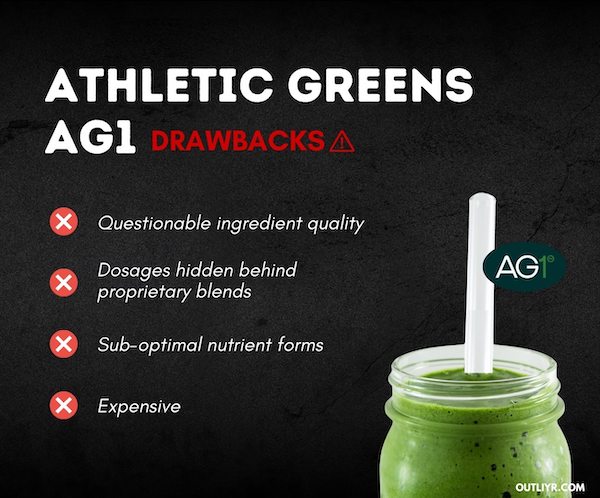
AG1 Next Gen still leans on a proprietary blend and carries the priciest cost per serving in the category. Here is exactly how it compares to every alternative worth considering:
First, we’ll discuss the problems with Athletic Greens. Specifically why I recommend other products instead.
Note that very few greens supplements check all the most desirable boxes. Some of my favorites also share one or more pitfalls.
The following list is ordered by the considerations I deem most to least important.
Credit where it’s due. The Next Gen reformulation that rolled out in 2025 fixed a few of my longstanding complaints. The upgrades that matter most:
- Methylated B vitamins (benfotiamine and the P5P form of B6) that your body puts to work more readily than cheap synthetic versions.
- Five clinically studied probiotic strains, plus added boron, choline, and molybdenum.
- Human randomized trials behind the formula, which almost no greens brand bothers to run.
- New flavors and a slightly bigger 13g scoop.
Those are real improvements. The problems below are the ones the reformulation left on the table.
Ingredient quality
Green superfood powders are all about improving health.
Unfortunately, most green supplements on the market cause the opposite. Low-quality, contaminated, and often adulterated products do more harm than good. My biggest concerns with AG1 Next Gen are twofold, both pertaining to quality.
First, they still manufacture in New Zealand in an NSF-registered facility and third-party test for hundreds of pesticides and banned substances, which is more than a lot of greens brands can say. What they don’t spell out is where each raw ingredient is sourced. And for a product at this price, AG1 still isn’t USDA-Certified Organic.
Second, I didn’t see anything regarding the way they process each ingredient to minimize vitamin and phytochemical (polyphenol) loss that occurs with normal dehydration. Normal processing degrades and destroys many of the other beneficial non-vitamin & non-mineral nutrients.
Proprietary blends
Big and bold, AG1 now touts 83 ingredients in the Next Gen formula, up from 75 in the old version.
Presumably in tiny doses, since they don’t show the full breakdown.
I like Dr. Sandra Kaufmann’s approach of micro-dosing a wide variety of nutrients for powerful synergistic effects.
Greens manufacturers often use proprietary blends to conceal the dosages of their vast array of ingredients.
I don’t like nutrition products hiding dosage information behind proprietary blends (or, as Athletic Greens calls it, “complexes”). We have no idea whether we’re getting clinically relevant doses of anything.
Usually, companies do this when the majority of the blend is incredibly cheap ingredients and they “fairy dust” tiny amounts of the key beneficial (often expensive) ingredients.
This allows them to boast about all the superfoods within their product, while maintaining incredible profit margins. At the cost of effectiveness.
Athletic Greens’ lack of transparency taints the brand’s trustworthiness.
Sub-optimal nutrient forms
Often, the specific form of a nutrient determines whether it’s rapidly excreted from the body, or absorbed and assimilated.
Consequences of consuming the wrong form range from a misleading waste of money to downright toxicity.
Magnesium is one classic example. Some forms, like magnesium stearate, for example, are used as fillers in the supplement manufacturing process and even can be potentially harmful.
Athletic Greens chose good forms for the ingredients they do disclose, including the methylated B vitamins in the Next Gen formula and well-absorbed electrolytes like calcium, magnesium, and potassium.
That said, they provide little information about the ingredients in their proprietary “complexes”. We don’t know the form, standardizations of particular active ingredients, or any other indicators of quality for the vast majority of their formula.
One example that caught my eye, for instance, is their organic chlorella. I’m a huge fan of this superfood, but in order for your body to assimilate it, the processor must have “cracked the cell wall”. Even then, how they crack the cell wall determines the quality of the end product.
Most likely, AG1 buys the cheapest bulk ingredients they can find and hides any relevant information by placing it into their proprietary blends.
Lead & Heavy Metals
I dinged Amazing Grass earlier for heavy metals, so it’s only fair to hold AG1 to the same standard. AG1 carries a California Prop 65 lead warning, and it has drawn a class-action lawsuit alleging the powder contains undisclosed lead, cadmium, and arsenic.
Before you panic, some context:
- Prop 65 warnings are common across greens and plant-based powders. California’s limit of 0.5 micrograms of lead per day is stricter than federal safety thresholds, so plenty of clean products trip it, according to this Prop 65 lead-warning explainer.
- Plants pull trace minerals from soil, heavy metals included. Detectable does not automatically mean dangerous.
- AG1 says its own testing shows metal levels below NSF and USP safety limits, and disputes the lawsuit’s claims.
The disclosure gap bothers me more than the trace metals do. If heavy metals are a dealbreaker for you, pick a brand that publishes its own per-batch third-party metal testing. That kind of transparency is exactly what AG1’s proprietary approach makes hard to verify.
Price
One of the biggest and most universal complaints is the price of Athletic Greens.
Depending on your order, each serving comes out to between around $2-$4. Of course, buying in bulk and opting into monthly subscriptions lowers the cost.
One-time orders have an added $9 shipping cost, bringing the total to $3.30 per serving. Travel packs come out to $3.63 per serving.
These pricing tiers peg AG1 Next Gen among the more expensive of all green superfoods powders yet they do not lead in quality.
Plus, one-time purchases don’t qualify for their 90-day money-back guarantee. This makes no sense, because first-time users testing AG1 are the most likely to actually use the guarantee.
If you like it enough to subscribe, surely you won’t capitalize on their refund policy. This seems most like an excuse to show a money-back guarantee badge on their website.
Overall, with Athletic Greens, you’re mostly paying for the brand name and marketing. Which is a primary reason I recommend better-value AG1 alternatives!
Best Organic AG1 Superfood Alternatives
Your ideal greens superfood product will depend on a variety of factors.
Here are brief reviews and comparisons between the best AG1 Next Gen substitutes available.
PaleoValley Organic Supergreens

Is Paleovalley Organic Supergreens worth it?
Every raw material is certified organic and non-GMO across 23 superfoods, with no cereal grasses so it sits easier on digestion. Strong value for daily organic greens, yet proprietary blends hide the per-ingredient doses and the strawberry-pineapple flavor splits opinion.
- Ingredients
- 23 (organic kale, broccoli, spirulina, spinach, and more)
- Proprietary Blend
- Yes
- Taste
- Greens with a hint of strawberry and pineapple
- Certified Organic
- Yes
- Lab Tested
- Yes
- Refund Policy
- 60-day money-back guarantee
- Servings
- 30
Best For
- Best for travelers and anyone who wants fully organic daily greens at the best value.
Skip If
- Skip if you need exact per-ingredient doses printed on the label.
Pros
- Every raw material is certified USDA organic, non-GMO
- No cereal grasses, so easier on digestion than grass-heavy blends
- 23 hand-selected superfoods with prebiotic fiber and digestive enzymes
- Strong value per serving on Subscribe & Save
- 60-day money-back guarantee
Cons
- Uses proprietary blends, so per-ingredient doses are hidden
- Strawberry lemonade flavor is divisive
- No published third-party testing certification
Your rating helps others choose
Tap to rate
Founded in 2012, California-based PaleoValley is a nutrition company dedicated to producing top-notch organic foods, snacks, and products that your body readily absorbs and utilizes. For each of their products, PaleoValley sources the highest quality certified-organic, non-GMO superfoods.
Their Organic Supergreens powder is no exception, each raw material is USDA organic, and the final product contains no additives or fillers. Another major differentiator between PaleoValley and virtually every other product is their decision to completely exclude cereal grasses. Although iconic in greens formulas, grasses like wheatgrass often disrupt digestion and cause gut issues. You’ll want a product free of these cereal grasses if you struggle with inflammation. Besides, microalgae (like spirulina) contain higher levels of every nutrient within wheatgrass.
Although Organic Supergreens does have proprietary blends, since they hand-selected just 23 superfoods, you still get appreciable amounts of each. I’m not a huge fan of the strawberry lemonade taste, but others seem to love it.
When you use the link below, buy in bulk, and subscribe, the price comes to about $47.99 per 30-serving bag on Subscribe & Save (roughly $1.60 per serving), and it now comes in three flavors, Unflavored, Strawberry Lemonade, and the new Tropical, making it an excellent greens superfood product.
For years, PaleoValley’s Organic Supergreens has been my go-to nutritional support while traveling due to its unparalleled value.
Transparent Labs Prebiotic Greens

Is Transparent Labs Prebiotic Greens worth it?
Fiber-first and deliberately short: 8g of prebiotic fiber plus 3g each of organic spirulina and chlorella, fully disclosed and Informed Choice tested. Reach for it when gut health is the goal, but the lean list skips the vitamin and adaptogen stack broader greens carry.
- Ingredients
- 6 organic superfoods (spirulina 3g, chlorella 3g, acacia fiber, green banana flour, Jerusalem artichoke, chicory root)
- Proprietary Blend
- None (fully disclosed)
- Taste
- Original, Peach Mango, or Pineapple Coconut (lightly sweet)
- Certified Organic
- Organic superfoods (not whole-product USDA certified)
- Lab Tested
- Yes (Informed Choice certified)
- Refund Policy
- 45-day satisfaction guarantee
- Servings
- 30
Best For
- Best for anyone whose main goal is gut health and full label transparency.
Skip If
- Skip if you want a broad multivitamin-style greens with dozens of ingredients.
Pros
- Full per-ingredient disclosure with zero proprietary blends
- 8g+ prebiotic fiber per serving feeds the microbiome
- 3g organic spirulina and 3g organic chlorella, heavily dosed
- Third-party tested via Informed Choice
- Undercuts most premium greens on cost per serving
Cons
- Short ingredient list skips the long vitamin/adaptogen stack
- Launched in 2024, so less of a track record than incumbents
- Fiber-forward formula can feel heavy for some first-time users
Your rating helps others choose
Tap to rate
Transparent Labs Prebiotic Greens is the newest pick here, and the one I would hand anyone whose main goal is gut health.
It launched in 2024 with a philosophy the incumbents avoid: full per-ingredient disclosure and zero proprietary blends. You see the exact dose of everything you are taking.
The formula is deliberately short and heavily dosed, built around:
- Organic spirulina and chlorella (3g each)
- Acacia fiber and green banana flour for 8g+ of prebiotic fiber per serving
- Jerusalem artichoke and chicory root to feed your gut bacteria
That fiber-first design is what sets it apart from the vitamin-stacked blends. It feeds your microbiome instead of just checking a long ingredient list.
At about $1.50 per serving on subscription, it undercuts AG1 by more than half while being far more transparent about what is inside.
Transparent Labs Prebiotic Greens is the best pick for gut health and label transparency: 8g+ of prebiotic fiber, no proprietary blends, and a fully disclosed formula.
Organifi Green Juice

Is Organifi Green Juice worth it?
Organic 11-ingredient greens with a full 600mg ashwagandha dose plus spirulina and chlorella, and a mint flavor that masks the earthy base better than most. Best for people who want the best-tasting greens. A proprietary blend hides most doses, and it’s the priciest per serving here.
- Ingredients
- 11 (spirulina, chlorella, ashwagandha, moringa, and more)
- Proprietary Blend
- Yes
- Taste
- Smooth, perfectly sweetened mint
- Certified Organic
- Yes (USDA)
- Lab Tested
- Yes (third-party, glyphosate-residue tested)
- Refund Policy
- 60-day money-back guarantee
- Servings
- 30
Best For
- Best for people who want the best-tasting greens and aren't already supplementing chlorella and ashwagandha.
Skip If
- Skip if you avoid cereal grasses or want the lowest cost per serving.
Pros
- USDA organic, glyphosate residue free, and Non-GMO Project verified
- Full 600mg dose of ashwagandha plus spirulina and chlorella
- Only 11 ingredients, so each one is meaningful
- Mint flavor masks the earthy taste better than most greens
- 60-day money-back guarantee
Cons
- Uses a proprietary blend, so most per-ingredient doses are hidden
- Highest cost per serving of the three
- Contains wheatgrass and matcha, which grass-sensitive users may want to avoid
Your rating helps others choose
Tap to rate
URBAN for 15% offSee every current discount code and sale →
Organifi is another well-established nutrition company. Founded in San Diego, California back in 2011 out of personal necessity by Drew Canole. They’ve long been a top alternative to Athletic Greens AG1.
That’s because Organifi offers all kinds of USDA-Certified Organic superfood powders for every goal and use case. Each of these powders is certified glyphosate residue-free (a major problem for most superfood powders) and Non-GMO Project verified.
Like PaleoValley, Organifi chose to include fewer superfoods (11), ensuring you get the right dosage of each. My favorite ingredients in Organifi Green include the micro-algae spirulina and chlorella, as well as a full 600mg dose of the stress-buffering adaptogen ashwagandha. You also get turmeric (better than just curcumin extracts), red beet, citrus, prebiotics, and moringa.
Organifi Green’s original mint uses just enough sweetness to mask the earthy taste. It mixes easily and hardly tastes like greens.
You can also build a kit of three products of your choosing (say, Green Juice, Red Juice, Gold) and save an additional 20% on your order. All orders come backed by a 60-day money-back guarantee, but judging by its consistently high customer ratings, you’re more likely to enjoy Organifi Green Juice.
Organifi makes an entire line of quality superfood products and if you aren’t already supplementing chlorella and ashwagandha, their Green Juice is quite popular.
Thorne Daily Greens Plus

Is Thorne Daily Greens Plus worth it?
Prints all 28 ingredients and exact doses with zero proprietary blends, matched to clinical-research amounts and NSF third-party tested. Built for anyone replacing a multivitamin, though the clinical ginger dose hits hard on the aftertaste and daily cost runs higher than bulk powders.
- Ingredients
- 28 (shiitake mushroom, mango, ginger, moringa, pomegranate, and more)
- Proprietary Blend
- No
- Taste
- Mint green/mint matcha (decent, with a strong ginger kick)
- Certified Organic
- Yes
- Lab Tested
- Yes (NSF third-party tested)
- Refund Policy
- 60-day money-back guarantee
- Servings
- 30
Best For
- Best for anyone who wants a clinically dosed, fully disclosed alternative to a daily multivitamin.
Skip If
- Skip if a strong ginger aftertaste turns you off or you want the lowest cost per serving.
Pros
- Every ingredient and its exact dose is printed on the label, no proprietary blends to hide behind
- 28 ingredients dosed to match the amounts used in clinical research
- One of the most rigorously third-party tested lines in supplements (NSF Certified, TGA-registered facility)
- USDA organic, covering power greens, adaptogenic botanicals, functional mushrooms, and antioxidants in one scoop
- Reasonably priced for the label transparency and testing quality
Cons
- Clinical dose of ginger comes through strongly in the aftertaste, not for everyone
- 30 servings per container means a higher cost per day than bulk greens powders
- Mint flavor is fixed, no variety if you dislike it
Your rating helps others choose
Tap to rate
Since its 1984 inception, Thorne Research has become one of the most trusted names in supplements. Each of their products is manufactured in-house and undergoes among the most rigorous third-party testing possible.
This is how their products get highly-coveted TGA-Certification. TGA is the Australian regulating body that imposes pharmaceutical standards on supplements. Their commitment to quality doesn’t stop there.
Thorne Daily Greens Plus sets a high bar in the greens powders market. They list every single ingredient and the exact dosage on the label. The proper dosages used in clinical research. Daily Greens Plus is one of the few products completely devoid of proprietary blends.
These 28 ingredients support cellular energy generation and mental performance while simultaneously providing antioxidant support. The formula itself is composed of four parts:
- Power greens
- Adaptogenic botanicals
- Functional mushrooms
- Antioxidant protection
It’s very reasonably priced and for the quality, unparalleled. As awesome as the formula is, the formulators really didn’t cut any corners on dosages. They used a clinical dose of ginger which becomes apparent in the drink’s aftertaste.
For those that want the highest-quality alternative to a multi-vitamin, complete with clinical doses of 28 ingredients (and no proprietary complexes!), Thorne’s Daily Greens Plus is a clear winner.
Dr. Tom Cowan’s Low-Oxalate Greens Powder

Is Dr. Cowan’s Garden Dr. Tom Cowan’s Low-Oxalate Greens Powder worth it?
Three whole-food greens (lacinato kale, mustard leaves, collard greens) chosen for low oxalate, Beyond Organic with no fillers or proprietary blend and about 50 servings a jar. Three ingredients mean a narrow nutrient profile, not a multivitamin stand-in.
- Ingredients
- 4 (organic lacinato "dino" kale, mustard leaves, collard greens)
- Proprietary Blend
- No
- Taste
- Subtle greens
- Certified Organic
- Yes
- Lab Tested
- Yes
- Refund Policy
- 30-day money-back guarantee
- Servings
- 50
Best For
- Best for anyone who wants the cleanest possible true greens powder with a low oxalate load.
Skip If
- Skip if you want a broad multivitamin-style formula with adaptogens, probiotics, or added vitamins.
Pros
- Just three whole-food ingredients: organic lacinato kale, mustard leaves, collard greens, nothing else
- Low-oxalate by design, so you get the greens without the calcium-binding irritants that drive stones and inflammation
- Beyond Organic sourcing, about as close to powdered vegetables as a product gets
- No proprietary blend and no fillers to read around
- Roughly 50 servings per jar keeps the per-serving cost reasonable
Cons
- Three ingredients means a narrow nutrient profile, not a multivitamin substitute
- Subtle plain-greens taste with none of the fruit or flavoring some people want
- Third-party testing is not published, sourcing trust rests on the Beyond Organic claim
Your rating helps others choose
Tap to rate
URBAN for 15% offAmong the newer and more notable AG1 replacements, are the line of greens products created by Dr. Tom Cowan. His low-oxalate greens are a worthy rival of any superfood drink on this list, and their shop carries all kinds of other related products.
From organic Ashitaba Powder to Wild-Harvested Sea Vegetables, Dr. Cowan’s Garden has something for everyone and any intolerance. Some of the supplements come in sweet or savory versions too. In fact, they have the largest catalog of 43+ different superfood products. What separates DCG superfood powders, however, is their attention to quality, especially anti-nutrients.
Oxalates are natural plant-defense compounds that bind with calcium in the bloodstream and cause both inflammation and accelerate the formation of kidney stones. The success of those following a carnivore-style diet is partially attributed to reducing oxalate levels. This Low-Oxalate Greens Powder allows you to get the health benefits of greens without unwanted irritants.
DCG sources locally and produces “Beyond Organic” standards. Inside, you get hefty doses of just three ingredients:
- Organic lacinato (“dino”) kale
- Mustard leaves
- Collard greens
Nice and simple. As close as you can get to powdered vegetables.
If you want the cleanest true greens powder at a reasonable price, supplements from Dr. Cowan’s Garden are unbeatable.
Green Vibrance

Is Vibrant Health Green Vibrance worth it?
Every ingredient dose is printed (no proprietary blend) alongside roughly 25 billion probiotics per scoop and a broad superfood, adaptogen, and enzyme mix refined across 21 versions. The cereal-grass base can irritate sensitive guts, and it isn’t USDA organic.
- Ingredients
- Cereal grass powders & juices, goji berries, astragalus, spirulina, holy basil (65+ superfoods)
- Proprietary Blend
- No
- Taste
- Typical greens, with notes of celery
- Certified Organic
- No
- Lab Tested
- Yes
- Refund Policy
- 30-day money-back guarantee
- Servings
- 30
Best For
- Best for anyone who wants full transparency into exact doses and tolerates a mix of cereal grasses.
Skip If
- Skip if cereal grasses upset your gut or you require a fully USDA organic product.
Pros
- Full dosage disclosure, every ingredient and its exact amount is printed, no proprietary blend
- Broad formula spanning polyphenols, adaptogens, plant superfoods, antioxidants, enzymes, probiotics, and nootropics
- About 25 billion probiotics per scoop from multiple strains
- One of the original greens powders, refined across 21 formula versions since 1992
- Lab tested with an actively updated formula
Cons
- Built on a complex of multiple cereal grasses, which can irritate sensitive guts
- Cost runs higher per serving than bulk organic powders depending on size
- Not USDA organic, a few ingredients could not be sourced organic
- 30 servings in the standard size means frequent reorders
Your rating helps others choose
Tap to rate
Established in 1992, Vibrant Health is the company behind Green Vibrance. It’s one of the original green superfood powders and they’ve continuously iterated the formula over the years. They print a version number right on every label. I love that they show the exact dosages of each and every ingredient within.
Perhaps that’s why Green Vibrance constantly wins awards.
This was the first greens superfood powder I tried. It certainly tastes like a greens powder, and Vibrant Health did a good job balancing the sweetness.
Most but not everything within this product is organic. Vibrant Health couldn’t source organic versions of a few key ingredients. Therefore, it does not qualify for USDA organic certification.
I’m impressed by the formula nonetheless. It’s got polyphenols, adaptogens, plant superfoods, antioxidants, digestive enzymes, herbs and spices, probiotics, and some natural nootropics. If only they didn’t include an entire complex of gut-irritating cereal grasses.
Green Vibrance deserves a spot on any roundup of top greens’ nutritional products. The primary downside is cost. Depending on where you get it, and the quantity, each serving comes out to about $1.30-$2.00.
Green Vibrance is the ideal greens powder for those that want full transparency into exact dosages and can tolerate a complex of multiple types of cereal grasses.
Tier #2: Top AG1 Next Gen Green Powder Alternatives
For different reasons, I don’t recommend these greens products as highly as the previous ones.
Still, depending on your lifestyle and budget, one of these may be the right choice for you.
Peak Performance Organic Superfood Powder

Is Peak Performance Organic Greens Superfood Powder worth it?
One of the few 100% USDA-Certified Organic greens, built on gentler cereal grass extracts across 25-plus ingredients and third-party tested. A budget route to certified organic, though stevia leaves an aftertaste and fulfillment now runs only through Amazon.
- Ingredients
- 25 (organic spirulina, wheat grass, kale, spinach, and more)
- Proprietary Blend
- Yes
- Taste
- Earthy and slightly bitter with a sweet stevia aftertaste
- Certified Organic
- Yes (100% USDA)
- Lab Tested
- Yes
- Refund Policy
- 30-day money-back guarantee
- Servings
- 30
Best For
- Best for anyone who wants a certified-organic greens powder without paying premium-brand prices.
Skip If
- Skip if you are sensitive to the aftertaste of stevia or want every ingredient dosed to label.
Pros
- One of the few 100% USDA-Certified Organic greens powders on the market
- Uses cereal grass extracts instead of whole grass, so it is gentler on digestion
- Broad lineup: organic spirulina, chlorella, veggies, polyphenols, herbs, prebiotics, enzymes, and probiotics
- Third-party tested by a US lab
- Budget-friendly for a certified-organic product
Cons
- Sweetened with stevia, so the aftertaste turns some people off
- Raw ingredients are likely sourced from China
- Dosages are grouped, so per-ingredient amounts are not fully transparent
- No longer sold on the brand site; all fulfillment moved to Amazon
Your rating helps others choose
Tap to rate
Peak Performance Coffee branched out into the nutrition space in 2017 as they launched Peak Performance Organic Greens Superfood Powder. This is one of few 100% USDA-Certified Organic powders.
I like their ingredients lineup, which includes: organic spirulina, organic chlorella, organic veggies, polyphenol sources, organic herbs, organic natural blood glucose stabilizers, prebiotics, digestive enzymes, and probiotics. Even though they added cereal grasses, they chose to use extracts. As opposed to the whole plant or hull, extracts are much easier to digest and absorb without irritating the gut.
I suspect that the raw ingredients come from China, but they do claim to enforce strict purity and safety standards from all their suppliers. They also claim to third-party test their final products. Labdoor put that to the test, and indeed, Peak Performance Organic Greens Superfood Powder passed.
The taste stacks up nicely against the other powders. In its current formula, the flavor is initially a tad bitter followed by a fruity aftertaste. It dissolves into liquids easily and isn’t as grainy as some powders. If you’re sensitive to the aftertaste of stevia, you might not like this product.
Peak Performance Organic Greens Superfood Powder is a budget-friendly USDA-Certified Organic product.
Primal Greens

Is Primal Harvest Primal Greens worth it?
Packs 50-plus superfoods plus ashwagandha, probiotics, and enzymes into a mild-tasting, low-cost scoop, the budget AG1 stand-in. Fine for anyone who shrugs at organics, but four proprietary blends hide every dose and buyers report pushy subscription billing.
- Ingredients
- 51 (green tea, chlorella, wheatgrass, turmeric, and more)
- Proprietary Blend
- Yes
- Taste
- Subtle greens, easily mixes into other drinks
- Certified Organic
- No
- Lab Tested
- No
- Refund Policy
- 90-day money-back guarantee
- Servings
- 30
Best For
- Best for anyone who wants a popular, low-cost greens powder and does not care about organics.
Skip If
- Skip if you want organic ingredients or transparent, clinically meaningful dosages.
Pros
- 50-plus superfoods including chlorella, spirulina, kale, green tea, and turmeric
- Includes the adaptogens ashwagandha and Korean ginseng
- Adds probiotics and digestive enzymes
- Mild, subtle greens taste that most people tolerate well
- 90-day money-back guarantee
Cons
- No organic ingredients
- Ingredient dosages are hidden inside four proprietary blends, so you cannot see what you are actually getting
- With 50-plus ingredients packed into small blends, many are present in trace amounts too low to matter
- Reports of aggressive subscription billing and cancellation friction
Your rating helps others choose
Tap to rate
Made by the nutrition brand Primal Harvest, Primal Greens is widely considered the top budget-friendly greens product. Making it a common Athletic Greens replacement.
Primal Greens contain 51 superfoods, including some of my favorites like chlorella, spirulina, probiotics, green tea, kale, and turmeric. I love that they included the adaptogens ashwagandha and Korean ginseng. Plus, this formula contains probiotics and digestive enzymes.
Taste-wise, Primal Greens is on the mild side. It’s a bit earthy, so you might want to mix it into something else. This powder easily dissolved into other liquids without overpowering their taste.
Two primary things I dislike about Primal Greens. First, none of the ingredients are organic. That partially explains the affordable pricing. Second, ingredient dosages are hidden inside their proprietary blends. You really don’t know what you’re consuming. I personally wouldn’t consume it anymore.
Primal Greens is the AG1 replacement if you don’t care about organics and want popular budget-friendly greens powders.
Garden of Life Raw Organic Perfect Food Green Superfood Juiced Greens Powder

Is Garden of Life Raw Organic Perfect Food Green Superfood Juiced Greens Powder worth it?
USDA-Organic and Non-GMO, this greens powder is built mostly on juiced cereal grasses, sprouts, and veggies with probiotics and enzymes at the lowest per-serving cost. It skips adaptogens and functional mushrooms, and Nestle has owned the brand since 2017.
- Ingredients
- Organic apple, beet root, broccoli, carrot, and more
- Proprietary Blend
- Yes
- Taste
- Apple, chocolate, and original (apple is best, still a bit sweet)
- Certified Organic
- Yes
- Lab Tested
- Yes
- Refund Policy
- 30-day money-back guarantee
- Servings
- 30
Best For
- Best for anyone who wants a certified-organic, no-frills greens powder at the lowest price.
Skip If
- Skip if you want adaptogens and functional extras, or you do not want to support a Nestle-owned brand.
Pros
- USDA-Certified Organic, Non-GMO Project Verified, and NSF-Certified Gluten-Free
- Whole-food formula of organic grass juices, veggies, fruits, sprouts, herbs, plus probiotics and enzymes
- Company has won awards for sustainability and worker treatment
- Available in original, apple, and chocolate
- Lowest per-serving cost of the three
Cons
- Owned by Nestle since 2017, which some buyers want to avoid
- Most of each scoop is cereal grasses, so it is greens-heavy and simple
- No adaptogens, botanicals, functional mushrooms, or rare ingredients
- Middle-of-the-road taste
Your rating helps others choose
Tap to rate
In 2000, Jordan Rubin created Garden of Life to simplify nutrition for the masses. Garden of Life grew a cult-like following due to its unwavering commitment to quality and transparency at reasonable prices.
Their green superfood product checks many of the boxes of high quality. It’s USDA-Certified Organic, Non-GMO Project Verified, NSF-Certified Gluten-Free (but not for Sport). Plus, the company has won awards for sustainability and worker treatment.
It contains some great ingredients like organic veggies, organic fruits, organic herbs and spices, organic sprouts, digestive enzymes, and probiotics.
It does have a fair share of faults. First, Nestle bought the company in 2017, so who knows what’s happened since then (Nestle has a very dark history). Next, the vast majority of each scoop is composed of cereal grasses. Although they claim it’s a superfood drink, there isn’t any inside: no adaptogens, no botanicals, no functional mushrooms, no rare ingredients.
Taste is middle-of-the-road. Earth and a little too sweet. It doesn’t dissolve as well as some of the other powders either.
If you don’t mind supporting Nestle, Garden of Life’s Green Superfood product is a decent certified organic option.
Beyond Greens

Live Conscious created Beyond Greens in 2021, and Forbes has already featured the product. Although it checks some important boxes, I don’t like it for several reasons. The mushrooms are indeed organic, and the right part (fruiting body). But the meager 25mg in the product doesn’t approach standard clinical dosages of 250-500mg or more.
None of the other ingredients are organic, so you won’t receive the same levels of beneficial phytochemicals. With certain ingredients like chlorella, I’d rather avoid it altogether as they naturally concentrate heavy metals from the environment. Meaning that you get high levels of toxicants and few beneficial phytonutrients.
Lastly, this product contains all kinds of additives.
Amazing Grass Super Greens
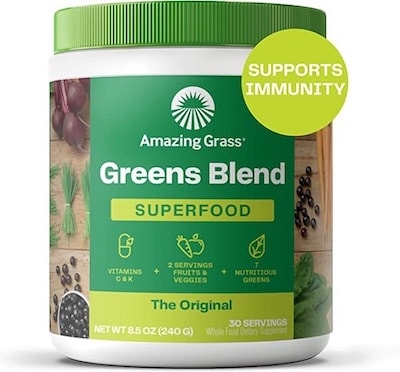
I was rooting for Amazing Grass as soon as I saw the unbeatable price. I don’t love the contents, mostly just cereal grasses. Then, the included greens are high in oxalates and gut-irritating veggies. They chose to use the questionable filler, silica, in this product. All of that pales in comparison to my primary concern.
This company claims to third-party test all of its products for purity and safety. Except this $213,000 settlement with the State of California shows otherwise. Granted, it wasn’t for their Amazing Grass Greens Blend Superfood product, but companies caught selling products with dangerous levels of lead and cadmium likely cut every possible corner.
Since there are so many reputable and high-quality superfoods for about the same price, Amazing Grass isn’t worth consideration.
SuperGreen Tonik
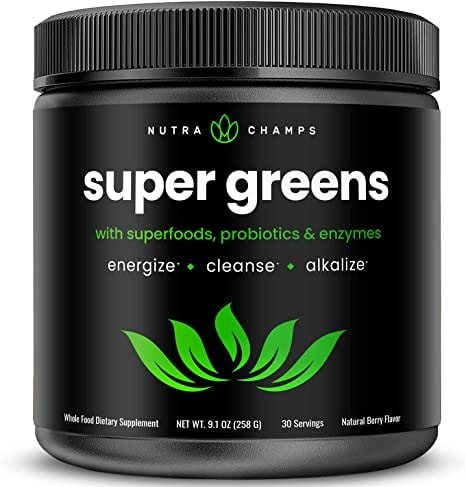
SuperGreen Tonik is another product that grabs attention at an incredible price. But overall, I’m not impressed. First, 7.5g of the 8.6g serving is carbohydrates, 2 grams of which are sugar. Next, the primary ingredient in this “super greens” powder is blue agave inulin. The majority of the ingredients in this are quite cheap. Which explains the price.
They do use organic versions of the raw materials, but it’s not a certified organic product, so we still don’t know about the quality. Nutra Champs also included the unnecessary additive silica which is potentially unhealthy. Even though they added probiotics and digestive enzymes, we have no idea the quantity of each.
Finally, the product has issues with clumping. It’s cheap at <$1.00 per serving, but not one of the best options.
What to Look for in Greens Superfood Supplements
There’s no single “best greens powder” for everyone. Diet, lifestyle, and personal preferences will determine which ingredients you want in your ideal product. While it may seem improbable, too much of certain fat-soluble nutrients can actually be toxic.
This is why I always recommend regular health testing and checking with your medical provider before changing supplement regimens.
That said, the best greens powders share a handful of qualities. Which ones matter most depends on your priorities.
Quality raw ingredients
Superfood supplements are only as good as the raw material inputs.
Farming practices determine a product’s nutrient levels, toxicity, and cellular information (micro-RNA).
Highest quality products use ingredients that are either: USDA Certified Organic, Beyond Organic, Certified Naturally Grown (CNG), Biodynamic, or Regenerative Organic Certified (ROC).
Look for one of the above certifications, as well as a lack of unnecessary (harmful) additives which extend the shelf life and increase manufacturing profit margins.
Processing technology
Even the highest quality raw materials won’t do much good if the manufacturer cuts corners turning produce into powder.
A common processing method is high-heat dehydration. Heat, oxygen, and light destroy many of the delicate nutrients and health-benefiting phytochemicals within produce, so the final product hardly matches the marketing claims.
Instead, what you want is “gentle drying”, “cold-processing”, “flash freezing”, or other forms of minimal processing. That ensures you get the highest-quality product and all the associated vitality-boosting benefits.
Optimal vitamins, minerals, & phytochemicals
The best products use the optimal forms of nutrients: activated vitamins, bioavailable minerals, and phytochemicals in their most usable forms. They also avoid “shotgun” bioavailability enhancers like black pepper extract (BioPerine), which increase your absorption of everything (including toxins).
Spotting quality formulations takes considerable study and research. A simple (but not foolproof) heuristic is price. Super cheap products virtually always use inferior, poorly absorbed, sub-optimal forms of ingredients. I’ve rounded up all the exceptions to this rule here in this post.
Digestive support
Run-of-the-mill greens powders don’t sit well in the stomach, which can eliminate any benefits before they’re absorbed.
More recent product formulations often include digestive support via added enzymes. These improve gut function, nutrient assimilation, and digestion. Important digestive enzyme levels naturally decline with age, especially in fruit and vegetable-deficient diets like carnivore or keto.
Paired with enzymes, these greens can improve regularity without pushing you too far the other way. And since elimination is one of the core detoxification pathways, that support can dramatically improve how you feel.
Adaptogens
Adaptogens are a special class of botanicals renowned for their long history of safe yet powerful effects.
Basically, they modulate the body back into balance. Bringing abnormally high biomarkers down, and increasing abnormally low biomarkers.
If you’ve heard of Ashwagandha, Rhodiola, Green Tea, Lion’s Mane, Reishi, or Ginseng (to name a few), these are all considered adaptogens.
Since I take many of these as standalone supplements, it’s convenient (and cost-effective) when a superfood product already contains them.
Superfoods
Finally, we’re at the contents every brand markets heavily: the flashy superfoods plastered all over the bottle. There isn’t a strict universal definition of “superfood”, but I think of them as star ingredients (adaptogens technically qualify).
Some of the top superfoods I’m obsessed with and look for in superfood powders include:
- Chlorella & spirulina micro-algae
- Berries
- Turmeric (not curcumin)
- Acerola
- Citrus
- Sprouts
- Red beet
- Moringa
- Matcha green tea
- Ginger
You may be surprised that I didn’t include wheatgrass juice. I’m not a fan for several reasons.
First, chlorella contains the same nutrients but at drastically higher levels (and also much more). Secondly, many people struggle to digest cereal grass (which includes wheat grass).
Of course, many other superfoods qualify that I left out. If I am missing anything major, let me know in the comments below!
Sensory experience
Taste matters.
I consider myself fairly stoic. I have a massive arsenal of downright nasty powders that I use often. Still, I appreciate and enjoy tasty treats.
Whether you’re like me and not at all interested in taste, or fairly picky, the flavor will influence how often and consistently you use the powder.
After all, the biggest waste of money is the product you never use.
The taste of greens powders varies dramatically. The chief variable is sweetness.
Some powders have a grassy, and earthy flavor. While many taste more like an overly sweetened dessert. For optimal health, you want the least sweetness (with a quality sweetener) that still satisfies.
Look for one of the following healthier sweeteners:
- Stevia
- Monk fruit extract
- Allulose
- D-Ribose
- Glycine
The other major consideration is texture. Products often use sweetness to disguise grainy, gritty, and overall unappealing consistencies. Worse yet, I’ve tried powders that form clumps and chunks, even when thoroughly mixed in a Blender Bottle shaker.
Last and usually less important, is the smell. Some green powders have a gross synthetic smell. Since smell dramatically skews our sense of taste, you’ll want a product appealing to the nose.
Few additives
Equally notable as the contents are the exclusions.
When evaluating greens powders, I immediately look to the “Other Ingredients” list. This is where you’ll find fillers, additives, binders, excipients, flow regulators, artificial sweeteners, emulsifiers, and even appetite stimulants.
While generally unnecessary and bad for health, each of these can fully negate the benefits of these drinks for certain people.
Some things to look out for:
- Maltodextrin (often derived from wheat)
- Corn products (corn starch and corn-derived citric acid)
- Silicon dioxide
- Magnesium stearate
- Talc
- Artificial flavors
- Natural flavors
- Artificial sweeteners
- Food colors
Trace amounts of certain things will not show up there.
The highest-quality products are often semi-hypoallergenic:
- Gluten-free
- Dairy-free
- Corn-free
- Nut-free
Of course, this excludes allergies related to the core superfoods.
Regardless of your current food/ingredient intolerances (or lack thereof), additives can eventually trigger an immune response and lead to diet-induced ingredient allergies.
Prebiotics & probiotics
Recently, prebiotics, probiotics, modbiotics, and now postbiotics have become trendy.
As science continues to uncover the incredible power of optimizing gut health, supporting our microflora only gains more exposure. The contents of our gut microbiome influence virtually every facet of our overall health.
One role of these biotics is to support digestion and nutrient absorption. Helping you get more out of your green drink.
Although details around which species, strain, and dosage are still to be determined. For this reason, I classify them as “nice to have” ingredients.
Price
By now you can infer the time and labor behind the best greens products: intelligent formulating, sourcing raw materials, proper processing, nailing the sensory profile, distribution, and a margin to keep the company running. Adhering to each step yields an expensive final product.
At the same time, great products stand out. This should equate to a stellar return/refund policy.
Companies that believe in their products often have impressive money-back guarantees. Whether you place a one-time order or a recurring subscription.
I consider the following when evaluating price:
- 30-day return policy: > okay
- 60-day return policy: > good
- 90-day return policy: > great
- 90+ day return policy: > optimal
With few exceptions, you shouldn’t pay more than $2.50 per serving of green superfoods powders.
Potential Health Benefits of Greens Superfood Powders
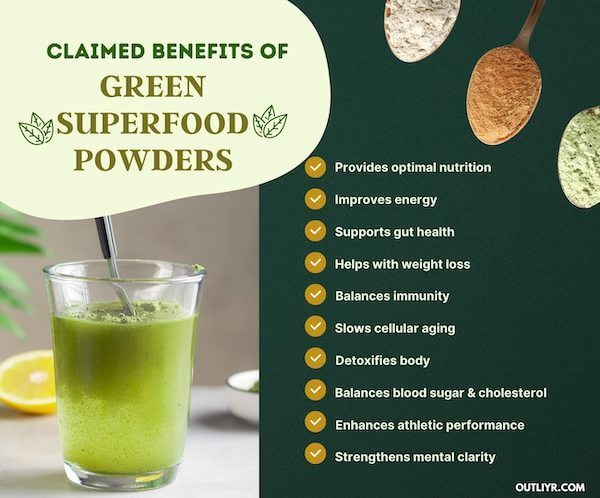
Greens supplements do not afford all the same benefits as eating the highest-quality produce.
Yet, the right ones also provide dosages of healthy ingredients you wouldn’t otherwise consume.
What follows are the top reasons I’d consider supplementing with a green superfood powder.
Nutritional insurance
Greens supplements are the ultimate nutrition convenience. High-quality powders use bioavailable forms of vitamins, minerals, trace minerals, and other phytonutrients. That means far greater absorption than traditional multivitamins, with added benefits. They’re also easy to pack, travel with, or keep on hand for on-the-go nutrition.
Boosts energy & recovery
Many greens powders raise energy through several ingredients. The most universal is a vitamin B complex, which helps your body transform food into energy. Micro-algae like chlorella and spirulina are well-documented to improve ATP synthesis and cellular energy. Adaptogens such as ginseng and rhodiola lift energy while reducing fatigue.
The same ingredients show up in pre-, intra-, and post-workout formulas because they double as ergogenic aids. Standouts include:
- Spirulina & chlorella
- Red beets
- Cordyceps
- Ginseng & rhodiola
- Green tea & pomegranate extract
They won’t replace your peri-workout nutrition, but the right superfoods can speed recovery and improve your results.
Supports gut health
The health of your gut microbiome largely shapes your overall health and well-being.
On their own, vegetables can either support or worsen gut health, depending on the current state of your gut. Quality greens powders sidestep this in several ways. They contain less gut-irritating fiber. Many brands add digestive enzymes, prebiotics, probiotics, postbiotics, and modbiotics. And the polyphenols and other phytochemicals within produce further improve gut function. Together, these create a gut health biosynergy.
Antioxidant & detox support
Greens powders help fix one of the primary drivers of aging: the overproduction of free radicals. Free radicals (reactive oxygen species) pull electrons from surrounding tissues, damaging them and triggering a cascade of inflammation that eventually leads to chronic disease. The antioxidants within superfood supplements halt this cascade and protect your cells. Some also target the other hallmarks of aging.
Those same antioxidants and polyphenols support detoxification, your body’s natural process for clearing compounds that impede optimal function. They buffer and even chelate toxicants and heavy metals, taking real load off your detox pathways when paired with the nutrients above.
Immunity & biomarker balance
Immunity is a delicate balance. Too little and you get sick. Too much and you drift toward autoimmunity and potentially reduced healthspan. The goal is equilibrium, and that starts with correcting the vitamin and mineral deficiencies underlying poor immune function. Certain ingredients also target immunity directly, including spirulina, chlorella, ginseng, astragalus, reishi, and other immunomodulating herbs.
This same modulating effect shows up across your bloodwork. The right superfoods, micro-algae, and adaptogens elevate what’s too low and lower what’s too high. Common improvements include:
- Blood glucose
- Cholesterol and lipoprotein imbalances
- Blood pressure
- HS-CRP inflammation
- Hormonal balance
The Case Against Greens Powders
I am a huge proponent of clean eating and whole foods.
I also like supplementation.
You’ll come across bold marketing claims like, “One serving of X product provides the nutritional benefits of 12+ servings of fruits and vegetables”.
Articles equating eating (and chewing) real foods with consuming processed powder are biased.
Nutrition from eating whole foods is unparalleled. You get more “nutritional bang for your buck”, salivary enzymes more easily break down eaten foods, and you feel fuller and more satisfied.
Then there’s the issue of dehydration, powderization, and oxidation from heat and time. These degrade some nutrients within plant-based supplements.
These products do not replace actual food consumption.
Let’s face another truth.
Produce rarely tastes or satisfies like a snack.
Green superfood supplements can serve as temporary substitutes or useful aids for those looking to augment their intake of real foods.
Should You Use Green Superfood Supplements?
I frequently get asked whether green superfood supplements are necessary.
As with most health & wellness topics, it depends on several key factors.
How is your current diet?
If you’re already consuming (and absorbing) all the vital vitamins, minerals, phytochemicals, biophotons, and other nutrients, you can probably skip it.
Maybe you just don’t know. Maybe you’re following a carnivore diet and already getting bioavailable forms of some nutrients (although deficiency is still fairly common).
I generally recommend going one of two routes:
- Log your diet for a few days using a service like Cronometer which will highlight your micro-nutrient deficiencies.
- Get a full blood work panel to evaluate micro-nutrient deficiencies, try supplementing, and retest to see the impact.
If you’re just missing a few vitamins or minerals, you might want to consider grass-finished organ meat supplements (or eating the real thing).
What’s your lifestyle like?
If you don’t stress much, travel infrequently, avoid coffee, have regular access to quality produce (and actually consume it daily), green superfoods might not be the place to spend your money.
Although in today’s world, how common is a stress-free, consistently nutrient-dense diet?
In most cases, supplementing produce makes sense. According to theories like The Optimal Foraging Theory, hunger will persist until you meet the body’s nutrient requirements.
Unless you’re a chef, even hardcore vegetarians and vegans often lack the life-force-enhancing constituents found within produce.
So although most people find superfoods powders beneficial, they certainly aren’t mandatory. Especially if you already prioritize clean eating.
Greens Superfoods Questions & Answers
Is there a cheaper alternative to AG1?
Yes. Every alternative in this guide costs less than AG1’s $3.30 per serving. Paleovalley Supergreens runs about $1.60 per serving on subscription, roughly half of AG1, and budget picks like Garden of Life and Dr. Cowan’s fall under $1.20. You lose nothing on quality by switching.
What is the best Athletic Greens alternative overall?
Paleovalley Organic Supergreens. It is USDA-certified organic, uses no proprietary blends, skips inflammatory cereal grasses, and costs about half of AG1. For gut health specifically, Transparent Labs Prebiotic Greens is the top pick thanks to its 8g+ of prebiotic fiber.
Is AG1 worth the money?
For most people, no. AG1 is a quality product, but you pay $3.30 per serving for proprietary blends that hide the dose of each ingredient. Cleaner, fully transparent alternatives deliver comparable or better nutrition for a third to two-thirds of the price.
What is the best budget alternative to AG1?
Thorne’s Daily Greens Plus is the best clinical-grade AG1 alternative with no proprietary blends and many powerful superfoods. Make sure to click the link to unlock an additional 15% off discount.
What is the highest quality alternative to AG1?
Paleovalley’s Organic Supergreens powder is the best quality AG1 alternative. It’s USDA-certified organic, third-party lab tested, free of inflammatory cereal grasses, affordably priced, and backed by a 60-day money-back guarantee.
Are greens powders necessary?
Greens superfood powders are beneficial but not necessary for those without any nutrient deficiencies (as confirmed via blood lab testing). They can be a great source of bioavailable nutrients.
Should You Replace AG1 Next Gen With a Better Alternative?
AG1 has popularized superfood drinks thanks to their sponsorship of many popular scientists, researchers, pop culture icons, and influencers.
The vast majority of products also use inferior ingredients, inflammatory cereal grasses (like wheatgrass), and may do more harm than good.
Many of the purported claims of greens powders are overexaggerated.
Yet there are some powders that don’t spend on marketing. They work even better and pass those cost savings on to customers. At the same time, eliminates the need to consume a bunch of other foul-tasting powders and capsules.
The right greens superfood products act as highly-absorbable all-in-one nutritional insurance.
To decide if these are right for you, consider the following:
- Track your nutrient intake with a tool like Cronometer
- Get a professional blood lab panel to identify deficiencies
- Lifestyle and stress burden
I’m a huge fan of using them when on the road traveling, or to fill dietary gaps. After all, delicious and healthy produce is rare. For quality brands across the rest of my stack, see my top supplement brands roundup.
Do you take any superfood products? Why or why not? Let me know in the comments below!

Comments