





What You’ll Learn
- Dinacharya morning sequence: The step-by-step Ayurvedic daily routine from tongue scraping to breathwork that Aldrich says produced noticeable changes in just 2 weeks. [04:57]
- Abhyanga self-massage: How to use sesame or medicated oil with circular joint motions to support lymph drainage, reduce inflammation, and move stagnant energy. [06:11]
- Medicated herbal oils: Why Ayurvedic practitioners steep turmeric, ashwagandha, brahmi, and arjuna into sesame oil for both topical and internal use. [08:15]
- Dosha-based personalization: How the 5 elements combine into 3 doshas (vata, pitta, kapha) to create a constitution unique to each person. [18:31]
- The one-third stomach rule: Fill your stomach one-third food, one-third water, one-third air for optimal digestion, with 4-6 hours between meals. [25:37]
- Agni optimization with spices: A 6-spice digestive toolkit (salt, pepper, garlic, ginger, cumin, coriander) plus CCF tea for all-day gut support. [27:29]
- Ayurvedic coffee upgrade: Adding coconut oil or ghee with cinnamon, cardamom, and nutmeg to an 8-oz serving, always after eating. [40:33]
- Seasonal eating framework: What to eat in each season, why transitions cause illness, and the twice-yearly kitchari cleanse protocol. [47:22]
- Travel-proof Ayurveda: The portable spice and herb kit (ginger, CCF, tulsi, ashwagandha) for maintaining digestion and sleep on the road. [37:00]
Why It Matters
Most people treat health symptoms in isolation, never connecting digestive issues, energy crashes, and poor sleep to the same root cause. Brett Aldrich, a Kripalu-trained Ayurvedic counselor with 21 years of practice, explains how a structured daily routine and seasonal eating framework address the whole person rather than individual symptoms. You’ll walk away with a practical system for aligning your meals, movement, and rest with your body’s natural rhythms.
Who Should Listen
- Biohackers who want to add a time-tested personalization layer to their existing stack.
- Busy professionals who experience afternoon energy crashes and irregular digestion despite eating “healthy.”
- Anyone curious about Ayurveda but unsure where to start without overhauling their entire lifestyle.
Episode Overview
Brett Aldrich is an Ayurvedic Healthcare Counselor, breathwork practitioner, and yoga teacher who trained at the Kripalu School of Ayurveda in Massachusetts. On the High Performance Longevity podcast, she shares the complete Ayurvedic daily routine (dinacharya) she’s refined over 21 years of personal practice, from tongue scraping and oil pulling at dawn to abhyanga self-massage and breathwork before the day begins.
The conversation covers how the three doshas (vata, pitta, kapha) shape individual responses to food, herbs, and lifestyle practices. Aldrich explains the one-third stomach rule for meal composition, the 4-6 hour gap between meals, and why your largest meal should land at midday when digestive fire peaks. She details a 6-spice digestive toolkit, the benefits of CCF tea (cumin, coriander, fennel), and how to upgrade coffee with ghee, cinnamon, cardamom, and nutmeg.
The episode also covers ritucharya, the Ayurvedic seasonal eating framework. You’ll learn what to eat in each season, why the transitions between seasons make people sick, and how a twice-yearly kitchari cleanse supports immunity. Aldrich’s core message: start by adding one small practice rather than overhauling everything, observe your body for a week, then build gradually. That approach, she says, creates lasting change without the stress of rigid protocols.
Key Terms Quick Reference
- [09:51] Dinacharya: The Ayurvedic daily routine. A structured sequence of practices from waking before sunrise through preparation for sleep, designed to maintain balance and prevent disease.
- [05:25] Abhyanga: Ayurvedic self-oil massage using sesame or medicated oil. Circular motions around joints support lymph drainage, reduce inflammation, and move stagnant energy throughout the body.
- [27:29] Agni: Digestive fire. The body’s capacity to metabolize food and life experiences. Optimal agni is neither too hot (which dries the body) nor too weak (which leaves digestion incomplete).
- [18:31] Doshas (vata, pitta, kapha): Three bio-energies made of paired elements. Vata (ether + air), pitta (fire + water), kapha (water + earth). Each person’s unique ratio determines ideal foods, practices, and lifestyle.
- [08:15] Decoction: Herbs steeped or heated into oils or ghee to create medicated preparations. Used both topically (abhyanga) and internally for targeted therapeutic benefit.
- [54:35] Kitchari: A nourishing Ayurvedic dish (typically rice and mung dal) used during seasonal cleansing. Simplifies digestion and supports the immune system during vulnerable transition periods.
- [39:19] Nervine: An herb that soothes or supports the nervous system. Tulsi (holy basil) is a nervine and adaptogen that Aldrich recommends for sleep challenges and overall calming.
- [47:22] Ritucharya: Seasonal regimen in Ayurveda. Adjusting diet, lifestyle, and practices according to the season helps the body adapt to environmental changes and prevents transition-related illness.
How Does the Ayurvedic Daily Routine Work?
The short answer
Dinacharya is a sunrise-to-sleep sequence of small practices that regulate your nervous system, optimize digestion, and align your body with circadian rhythms. The key is consistency, not complexity.
What Aldrich found
Aldrich discovered Ayurveda over 21 years ago when she picked up a book that laid out a 24-hour daily schedule tied to sunrise and sunset. She followed it and noticed a tangible difference within 2 weeks. The morning sequence she now teaches begins before sunrise with tongue scraping (which removes overnight bacterial buildup), oil pulling, eye washing, ear oiling, and nasal oiling. Next comes abhyanga, a self-massage with sesame or medicated oil using circular motions around each joint. Physical practice, breathwork, and meditation follow. The routine then shifts to warm water and a mindful first meal.
What makes this effective, Aldrich explains, is predictability. When your body can anticipate nourishment, rest, and activity at consistent times, it stops operating from a stress response. The nervous system downregulates, digestion improves, and energy stabilizes throughout the day. She emphasizes that the routine doesn’t require hours. Even sunrise viewing through a window counts as a meaningful starting point.
What to do about it
Start with just one practice: watch the sunrise. After a week, add tongue scraping (takes 30 seconds). Build from there. Aldrich’s approach is to add good habits before removing anything. The goal is regulated energy throughout the day, not a perfect morning routine on day one.
“I grabbed it and it told me how to live my life in a day, like a schedule, 24-hour, sunrise, sunset. And I did that and I was like, this really made a difference. It was the smallest thing I did.” – Brett Aldrich
Related: Healthy Routines & Habits
Why Does Ayurveda Prioritize Digestive Fire?
The short answer
Ayurveda treats agni (digestive fire) as the foundation of all health. When agni is balanced, the body extracts nutrients efficiently, eliminates waste completely, and generates stable energy. When it’s compromised, even the best food becomes a source of toxicity.
What Aldrich found
Aldrich explains that digestion in Ayurveda goes beyond the gut. It’s the body’s ability to metabolize everything: food, emotions, experiences. She teaches the one-third rule for stomach contents: one-third food, one-third water or moisture, one-third air. This ratio gives the stomach room to churn properly and prevents the sluggishness most people feel after meals. Meals should be spaced 4-6 hours apart, with the largest at midday when digestive fire peaks and a lighter meal around 6 PM.
Her digestive toolkit relies on 6 everyday spices: salt, pepper, garlic, ginger, cumin, and coriander. She also recommends CCF tea (cumin, coriander, fennel) steeped in hot water and sipped throughout the day. Fennel specifically targets gas and bloating. Aldrich emphasizes cooked food over raw because the cooking process begins breaking down food before it reaches the stomach, and the sensory experience of cooking activates digestive secretions.
What to do about it
Make a batch of CCF tea each morning and sip it throughout the day. Eat your biggest meal at midday. Stop eating 3-4 hours before bed. Cook your food when possible, and avoid combining raw and cooked foods in the same meal.
“Everything we do can be medicine, right? Everything we do could be poison as well. So it really is about the right combination, the quality, quantity, and timing of all things.” – Brett Aldrich
Related: Gut Health Tips
What Should You Eat Each Season?
The short answer
Ritucharya (seasonal regimen) matches your diet to what nature produces in each season. Warming, heavy foods in winter. Light, cleansing foods in spring. Cooling foods in summer. Grounding, stabilizing foods in fall. The transitions between seasons are when you’re most vulnerable to illness.
What Aldrich found
Aldrich explains that seasonal eating sidesteps the diet wars entirely. Instead of rigid food rules, you eat what’s naturally abundant. In winter, she recommends dense, warming foods like root vegetables, seaweed, and warming spices (cayenne, ginger). Spring calls for lighter, cleansing foods and herbs like dandelion root. Summer favors cooling foods. Fall needs grounding, stabilizing choices. She advises shopping the outer perimeter of the grocery store and visiting farmers markets to see what’s actually in season locally.
The twice-yearly kitchari cleanse happens at the two major transitions: winter-to-spring and summer-to-fall. Kitchari (rice and mung dal) simplifies digestion during these vulnerable windows when immunity dips. Aldrich notes that these seasonal junctions are exactly when most people catch colds or experience flare-ups. The cleanse acts as a reset, giving the digestive system a break while still providing complete nourishment.
What to do about it
Visit a local farmers market this week and buy what’s in season. Plan a 3-5 day kitchari cleanse at the next seasonal transition. Add warming spices to winter meals and cooling herbs to summer dishes.
“I usually don’t take anything away. I usually try to add before we start omitting anything. So I love to just flood someone with the good when they have a hectic life, and then over time they start to figure it out too.” – Brett Aldrich
Related: Cellular Detox & Natural Fasting
The Aldrich Ayurvedic Daily Protocol
Use this checklist to build your Ayurvedic routine gradually. Start with item one and add one new practice per week.
- Watch the sunrise daily: Even through a window. This is the single highest-impact practice for circadian alignment.
- Scrape your tongue each morning: Removes overnight bacterial buildup in under 30 seconds.
- Try oil pulling with sesame oil: Swish for 5-10 minutes while doing other morning tasks.
- Eat your largest meal at midday: Digestive fire peaks at noon. Keep dinner lighter, ideally by 6 PM.
- Brew CCF tea for all-day sipping: Equal parts cumin, coriander, and fennel steeped in hot water.
- Eat cooked food as your default: Reserve raw food for separate meals, never combined with cooked.
- Observe your body for one week before changing anything: Note energy peaks, crashes, hunger patterns, and sleep quality.
Common Ayurvedic mistakes
- Making drastic changes all at once: Aldrich warns this can create more disease. Go slow.
- Drinking coffee on an empty stomach: Always eat something first to protect your digestive fire.
- Mixing raw and cooked food in the same meal: They digest at different rates, creating conflict in the gut.
Source: Aldrich’s Ayurvedic Framework, Seed The Spirit
Frequently Asked Questions
What is dinacharya & how do I start an Ayurvedic morning routine?
Dinacharya is the Ayurvedic daily routine that runs from waking before sunrise through preparation for sleep. Start with just one practice like watching the sunrise or tongue scraping. Add one new element per week. Brett Aldrich noticed a difference within 2 weeks of following a basic sunrise-to-sunset schedule.
What are the three doshas & how do I find my constitution?
The three doshas are vata (ether plus air), pitta (fire plus water), and kapha (water plus earth). Every person has a unique ratio of all three. An Ayurvedic practitioner assesses your constitution through observation, pulse reading, and detailed health history. Your dosha determines which foods, herbs, and practices work best for you.
Why does Ayurveda recommend cooked food over raw food?
Cooking begins the digestive process before food reaches your stomach, making nutrients more accessible. The sensory experience of cooking (smell, sight, touch) also activates digestive secretions. Ayurveda advises against mixing raw and cooked food in the same meal because they digest at different rates.
What is abhyanga & what oil should I use?
Abhyanga is Ayurvedic self-oil massage using circular motions around each joint. Sesame oil is the standard base. Medicated oils with herbs like turmeric, ashwagandha, or brahmi can be used for targeted support. The practice supports lymph drainage, reduces inflammation, and moves stagnant energy.
How do I know if my digestive fire is too hot or too weak?
Signs of excess agni include acid reflux, burning sensations, and dryness. Signs of weak agni include bloating, heaviness after meals, and sluggish energy. Balanced agni produces steady energy, complete digestion with no bloating, and regular elimination. Ayurveda uses spices like ginger, cumin, and coriander to regulate digestive fire.
What herbs & spices should I travel with?
Brett Aldrich recommends carrying ginger powder, CCF spices (cumin, coriander, fennel), ashwagandha for evenings, and tulsi or chamomile tea for sleep. Focus on supporting digestion and sleep rather than restricting your diet while traveling.
How do I make coffee healthier according to Ayurveda?
Add coconut oil or ghee with cinnamon, cardamom, and nutmeg to reduce the stimulant effect. Keep servings to about 8 ounces. Always eat something before drinking coffee. During seasonal cleanses, Aldrich recommends abstaining from coffee entirely.
What is a kitchari cleanse & when should I do one?
Kitchari is an Ayurvedic dish of rice and mung dal eaten during cleansing periods. Do a kitchari cleanse twice per year at seasonal transitions: winter-to-spring and summer-to-fall. These junctions are when immunity dips and illness is most common. The cleanse simplifies digestion while providing complete nourishment.
What foods should I eat in each season according to Ayurveda?
Winter calls for warming, dense foods like root vegetables, seaweed, and spices like cayenne and ginger. Spring favors lighter, cleansing foods and herbs like dandelion root. Summer needs cooling foods. Fall requires grounding, stabilizing choices. Shop at farmers markets to see what is naturally in season locally.
About Brett Aldrich
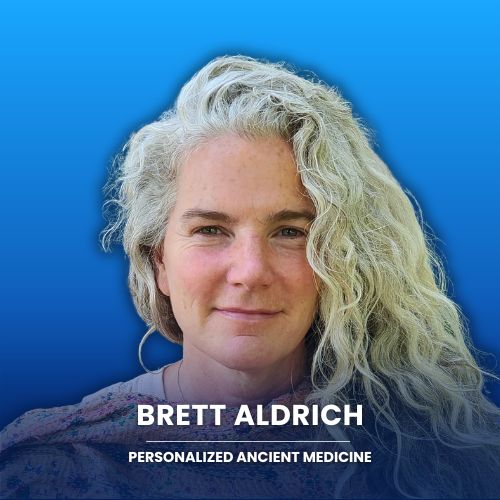
Brett Aldrich is an Ayurvedic Counselor, Breathwork Practitioner & founder of Seed the Spirit in Portland, Maine, blending decades of service with holistic training. Her work spans supporting trauma survivors & children with developmental needs to guiding clients through Ayurveda, breathwork & yoga. A graduate of the Kripalu School of Ayurveda & affiliated with the Global Professional Breathwork Alliance, she helps people cultivate lasting physical, emotional & spiritual balance through simple, sustainable practices.
Resources Mentioned
- Website: Seed The Spirit
- Free App: Outliyr Ayurvedic Seasonal Food Planner
- Article: Vital Biohacks Time-Tested Over 5,000+ Years
Connect with Brett Aldrich @ Seed The Spirit
Related Episodes & Articles
- Episode 80: Ancient Ayurvedic Wisdom & Modern Longevity Science Tips with Dr. Nick Bitz
- Episode 212: Ayurvedic Secrets Modern Science Finally Proves
- Episode 133: Optimal Routine, Ayurvedic Lifestyle & SuperSpices
- Episode 96: Merging Biohacking, Ayurveda & Functional Medicine
- Episode 240: Quantum Biology & Circadian Rhythm
- Episode 229: How Athletes Boost Recovery With Breathwork
- Article: Healthy Routines & Habits
- Article: Gut Health Tips
Full Episode Transcript
Nick Urban [00:00:01]: Brett, welcome to the podcast.
Brett Aldrich [00:00:52]: I thank you, Nick, for having me.
Nick Urban [00:00:54]: Today we’re gonna be discussing one of my favorite topics, and that is the system, the universe, or whatever you want to call it, of iron Ayurveda, ancient Indian indigenous medicine, goes by a lot of different terms and names and out there and everything. What is your story? How did you get involved in this? Because you don’t look like the typical person that would have a long lineage of study in the world of Ayurveda.
Brett Aldrich [00:01:19]: Sure. Yeah. So, gosh, long time ago. So I was like many of us, I was an athlete long ago. I still consider myself an athlete even though I don’t typically. I’m still not, I’m not really running anymore or as much as I used to anyhow. So I began just being a physical human being, just loved moving my body, always wanted to see how it could perform, right? I would just push myself to the limits as far as I could growing up. And then I, you know, slowed my, my life slowed down. I had a very, you know, challenging occupation, working, in trauma-centered work.
Brett Aldrich [00:02:06]: And then I started my family, and, after I had my first child, I just found that my body was operating differently. I didn’t know what was happening. So, I found, yoga is the physical practice, you know, the asana practice of, of yoga. And, it was purely just for physical reasons. It made my body feel better. Very simple, not super complicated. And as life progressed, my life became more complicated, you know, more children, age kept on happening, you know, kept on getting older and my body kept changing and I just couldn’t keep up. I didn’t really know what was going on.
Brett Aldrich [00:02:49]: So, interestingly enough, I was still practicing yoga, and I was having moments of like, I, I’m doing all the right things. It’s like, okay, I’m eating well, I’m physically active, I’m taking care of myself, I’m doing all these things, but something’s just not quite right. Like, I’m still not feeling well enough to, say I’m like, yeah, I’m doing great. So I went to a store one day, I looked to the left, I was at an interesting store I’d never been to before. I looked to my left and there was a little card that said Ayurvedic daily practice. I was like, what’s this? So I grabbed it and it told me how to live my life in a day, like a schedule, 24-hour, sunrise, sunset. And I did that and I was like, this really made a difference. It was the smallest thing I did.
Brett Aldrich [00:03:41]: After about 2 weeks of trying it, I was like, wow, this is like there’s something here. And I had never heard of it before. I’m like, where is this? You know, where, where can I find more of this? And over time, you know, I grew up in, in an area that all of a sudden just started coming back again. Oh, what? Then I heard the word again, and then I heard the word again, and, fell into my lap to get my education. Oder, in Massachusetts. This is the School of Kripalu, School of Ayurveda. And I was like, I’m gonna go for it. And I had no idea what I was getting myself into.
Brett Aldrich [00:04:23]: And it really is, a profound level or, or of study that is really true, fully encompasses all of me. And everything else around me and allowed it to make better sense that I never expected, and kept changing with me. And it’s the only thing that I knew that changed with me, and I was able to support myself in that manner. Just it, there was just more and more and more to know.
Nick Urban [00:04:57]: Before we explore all of that, I’m curious, people who heard you mention that one daily routine, which it was a special, special name for it in Ayurveda about like how the day is structured. And in that system they have like each of the periods of the day, the hours of the day broken off into different like sections and like they each, each energy repeats like I think twice. It’s like 2 times per day. What was in your routine that immediately made you feel a difference?
Brett Aldrich [00:05:25]: Yes. So one was waking up before sunrise. I know. Not for everybody, but for me, that did make a difference. Seeing the sunrise and seeing the sunset every single day, as best as I could, was the two things that really did help. Another one was a bianca, which is the self-body massage. It actually was assisted because I was tightened to injury, like I could injure. I injured so often. And it assisted with inflammation, it assisted with joint issues.
Brett Aldrich [00:05:55]: Moving of, lymph, of stagnant energy in the body. So that made a huge difference in how I felt overall and mentally too. Like, there was stagnation in the mind too, so it really did move things around.
Nick Urban [00:06:06]: You say you self-massage. Just for anyone tuning in, what exactly does a self-massage even look like?
Brett Aldrich [00:06:11]: Yeah, it’s so like, it’s like simple. It starts, if anybody sees it, you know, people see it on YouTube and stuff like that, it starts, it’s an oil. You can use a sesame oil or a medicated oil, and you start at the top of the head, and you basically just do circular motions around the joints to move stagnant energy around the joints. And then, depending on, your skin and depending on who you are and how you’re made up of, either you rigorously massage the skin and the muscles or slowly move, the oil over the skin as well. You even do like your hands, your joints, and you do it before you really do anything else that day,. And, you don’t have to do it every day. It’s depending on you and your, and how you’re, what you’re made out of, you know, is suggested to do every day or every other day,. And it’s seasonal practices as well.
Brett Aldrich [00:07:07]: So, abhyanga is not for a detox or anything like that. It just allows your body to move stagnant energy.
Nick Urban [00:07:17]: And the modern terms you might use for that would be things like helping with lymphatic drainage and/or like stimulating the fascia. There’s probably a lot of other things too, but like it doesn’t really matter necessarily what we call it today, but we know that it does a lot of different beneficial things.
Brett Aldrich [00:07:31]: Absolutely. And it pulls the, pulls, you know, as they say, detoxes the joint sometimes, you know, and it allows, yes, so any inflammation, and, and things like that too, and allows them to prevent, you know, arthritis. Things like that. And if you have any injuries in the tendons, things like that, it helps also soothe that. And, you know, knowing that to the, skin is the largest organ on the body, right? And it absorbs everything, right? So if we use an organic medicated, oil, it, it gets into all the layers of the skin, including towards, and if it stays on long enough, it can get towards the muscle and towards the bone.
Nick Urban [00:08:09]: When you say medicated oil, people are gonna be curious what kind of medications are in that oil specifically.
Brett Aldrich [00:08:15]: Mm-hmm. Sure. Yeah, absolutely. Herbals, I know there’s so much to this, right? So, and it can get heady and complicated, but you know, for me I’m like, it’s oil, just, it’s okay, you can look at it and you can see, see what you think about it, right? but there’s so many different herbs you can use, as we call it, a decoction, or you know, they’re steeped into the oils, or, or, oils are heated up and the herbs are placed in the oil. It can be like anything from turmeric to ginger to, to something called brahmi, which is a plant. It’s an herb, very strong herb for the mind. It can be ashwagandha, which is, you know, as they say, a really great, you know, thing to deal with stress, helps with oxygen, right? So ashwagandha, ashwagandha is utilized for maximum use of your oxygen. You can use Arjuna, which is also great for the heart and cardiovascular health.
Brett Aldrich [00:09:07]: So there are many different herbs you can use that are placed in the ghee. You can eat it too. So that’s the thing about Ayurvedic medicine is that a lot of what you place on the skin, you can also consume in another way. So if you, you know, depending on what you’re dealing with or working with, there’s always a way to make it work for you.
Nick Urban [00:09:28]: Yeah. Yeah. I know the point is that it’s not the medicated oil most people would, can think about when you’re talking in modern terms about a medicated oil.
Brett Aldrich [00:09:36]: Right, right. Yes. We are speaking of an ancient medicinal practice from Indigenous of India, right? So we’re speaking of medication, which is plant medicine too, as well. Yeah.
Nick Urban [00:09:46]: And so then after the self-massage, what is next in that routine of yours?
Brett Aldrich [00:09:51]: Sure. So it’s, it’s kind of long. Okay. So some people joke around, you have to sort of be retired to do this. So, you know, that’s why we, we wake up so early, you know, like anything, that’s partly why. So, so really a dinacharya is, is a daily, as they say, practice or a daily ritual or just a daily maintenance of the body. So, I can certainly say you wake up in the morning and there’s scraping of the tongue, which is making sure getting any, you know, unprocessed anything in the mouth. Oil pulling.
Brett Aldrich [00:10:21]: So utilizing an oil wash in the mouth to oil pulling takes care of any plaque or any, you know, dryness of the mouth, replenishes and hydrates the mouth, prevents cavity buildup, you know, things like that. The other piece is after that, you know, washing out the eyes. So I just take water in the eyes, making sure my eyes are clean. So you’re basically cleaning up and clearing out your senses, those, those things that have the 5 senses. I oil my ears, I clean out my nose, and I oil my nose. So it’s really about oiling your body. So that’s the big piece of it as well. And you know, prior and after that, you know, a, some sort of physical practice.
Brett Aldrich [00:11:03]: I don’t always say you have to do yoga all the time. It’s a physical practice to help just move the body, allowing it to, you know, let go of the evening sleep, right? and anything that you didn’t process from the day before. It really is about processing, life stressors and also food, right? Metabolizing life, right, as best as you can. And what it is to prevent buildup of stagnant, like food buildup or emotions we’re trying to burn those out of the body. So you wanna have really good digestion and that’s a piece of it as well. It’s about, you know, metabolizing life, right? So that is, you know, and pretty much by then the sun is rising. So I usually get my physical practice in, which is very light these days. I’m, you know, getting older so I’m not doing any rigorous work here, but it is just in, in having some sort of breathwork involved too as well.
Brett Aldrich [00:12:02]: so using the breath to clear out stagnant energy as well, clearing out of the lungs, opening up the diaphragm, allowing space for your organs. Breathwork is great for that as well. And it also allows, you to kind of, you know, clear the mind to prepare for meditation. And then, you know, meditation can be as long or as short as you want it. That’s kind of how I do it. Depends on the day. You know, we have busy lives, right? So this could be a 5-minute situation or even 2 minutes, like whatever you can do to allow yourself a moment, before you step into your day. So that really, the meditation is kind of the last thing.
Brett Aldrich [00:12:45]: And then, you know, you pray, prepare yourself for, a glass of warm water. I usually have that too as well before I begin eating anything. And then, yeah, so, and for me, eating something in the morning that’s easily, easy to digest and quiet. And it is part of my meditation too. Like, I consider, eating a nutritious meal meditative for me. So, I, that’s how I, you know, begin the day. And that’s just the start, right? So there’s so much more. And I always feel whatever happens during the day happens, and we do the best we can.
Brett Aldrich [00:13:28]: You know, I do suggest to eat the largest meal in the middle of the day where your digestion is at its height, which they say noon, and the sun is right above you, you know, and, which is a great way to help yourself to prevent that strange, sometimes I personally, I would have like a sugar crash or whatever at like 2 o’clock, 3 o’clock in the afternoon. It was just because I didn’t eat enough, you know, for me. It all depends on you as well, but, largest meal in the middle of the day and the end of the day, you know, you, you taper off and you have something lighter, you know, around 6 o’clock in the evening, to prepare yourself for sleep. So really, like, after the sun goes down, you’re just really preparing yourself for sleep. So, that is really kind of the end of the day and, You know, of course my kids think I’m funny. I like turn off all the lights and I just have like a little bit of light going and, you know, things are quiet. It’s not for everybody. You know, this was not my life when I had 3 toddlers, that’s for sure.
Brett Aldrich [00:14:29]: so it’s challenging, you know, when you’re in a more, busier part of your life. My kids are older now, so finding that time in the evening to prepare yourself for sleep, knowing that you don’t always get alone time either We. I get it, I’ve been there myself. So finding that time in the evening to prepare yourself for sleep sometimes can be shorter than some, you know, attempting to quiet things down in the evening. Over time, it starts to happen, you know. But when I work with people and their life is so busy, they’re like, I don’t know if I can do all this. However, I just say, just try one thing. So we usually just, it’s attainable and it’s manageable and it’s practical, but it takes a time to, to get that process going. This didn’t happen overnight for me as well.
Brett Aldrich [00:15:19]: You know, I’ve been doing this since my daughter was a baby and she’s 21. Okay, so it takes some time to kind of really shift, and as you change in your own life, your practices will change as well. So this isn’t for everybody. What I do today isn’t for everybody either. So, you know, when, you have a busier lifestyle, you know, we do work with what’s going on in your life. We are what they call, you know, we’re walking this earth, we’re householders, we’re living our life, and we can’t shy away or run away from our lives. So these Ayurvedic practices assist in supplementing what’s already going on. So, that’s the big piece, is that Ayurveda has a really great way of meeting you somewhere with, with your life and what you have going on.
Nick Urban [00:16:08]: We’ll explore more of that. But to underscore what you’re saying, like really just starting simply, like not necessarily implementing everything we just discussed, because after, like, I’ve been using tongue scraping and oil pulling for like 6, 7 years now. And now when I brush my teeth and I don’t do the other stuff, I don’t clean my senses. I don’t. I haven’t done the ear cleaning every day like it sounds like you do with oil. But like, now when I don’t do that stuff, I feel dirty if I just brush my teeth. Like, it doesn’t feel like it’s enough. And just to start off, like, 1 minute for each of those and then like a 1-minute meditation and then like 90 seconds of mobility work, if that’s all you can do, like that in 15 minutes, you can have like a solid morning routine that you’ll feel good and recharge with.
Brett Aldrich [00:16:53]: Yes, absolutely. You know, I, the way I describe it, it feels like, sounds like forever. Though your morning’s completely used up, you know. But yeah, absolutely, you can be as short or as long as you need, or what works best for you. Yeah, absolutely. And, and, you know, a lot of us, when we wake up in the morning, sometimes we’re just like, oh my goodness, hang on a second, I just need like 10 more minutes before I really get moving. So, you know, that practice of, preparation for your day, you know, even preparation to just get out of bed, you know. I have a teacher that just said, jeez, you know, waking up in the morning is just traumatic enough.
Brett Aldrich [00:17:28]: You know, like, you know, our body’s like just coming out of sleep, you know? So it takes a lot to, to get moving. So absolutely just the shorter or whatever’s attainable. We want this stressless. We don’t want more stress. We don’t want more stress on yourself. So we try to keep it as simple. So to prevent the stress, ’cause sometimes it, you don’t want it to feel like it’s an obligation. It’s an extra credit.
Nick Urban [00:17:54]: There’s a really popular longevity doctor that’s been making the rounds for years and wrote books on the topic and everything. And he often talks about how we need personalized medicine. And when he looks back at like the ancient systems, he discounts them and says that, oh, these are so generic, they don’t actually work. They were like harming people. They were like doing bloodletting and stuff like that that we know wasn’t, isn’t as effective as they made it seem. But at the same time, like, you have systems like Ayurveda where you’re really personalizing it to the individual. What are your thoughts on whether or not Ayurveda is actually like personalized precision medicine?
Brett Aldrich [00:18:31]: Or, you know, I personally feel it is, you know, you know, we are described, you know, so speaking of that, there’s, everything is made out of elements is where we’re going to the most, you know, minute, or, or the foundation, right? We want to go into the foundational piece. So we’re all made out of elements, if we can go as simple as possible. And all of those elements have characteristics, all right? There’s, you know, these elements are ether, air, fire, water, and earth, right? And then those are kind of collected into different sub, you know, sub-subjects, you know, as, they’re called vata, pitta, and kapha. And those three doshas all have different elements involved as well. And when you’re working with someone or you get to know with someone, these people, all of us have a certain kind of chemical makeup or elemental makeup, and everyone is different. And the way we perceive and see the world around us is through the lens of these doshas, right? And, understanding how they operate and their characteristics, we’re able to, and also knowing that our food also has elements, you know, and, the herbs have elements, and our activity has these elemental factors and characteristics. So When we are working with an individual, we’re also working with their life experiences. So it really is a unique, philosophy, but it’s also a medicine and a science.
Brett Aldrich [00:20:18]: So we’re util, we’re understanding this human being. You know, a teacher of mine, says, and I think it was Claudia Welsh says, you know, as many constitutions there are as human beings. Right? So each human being has its own constitution, and that’s, and that’s what we’re working with, the one human, as a whole, but also knowing that they are a unique design, and what works for one won’t work for another. We know this. So, using this individual, individualistic medicine, you know, it can get very complicated and we can get very detailed, you know, when it comes to all kinds of practices, but also, you know, different medicines that we utilize with, with an individual. But also when it comes to life practices, when it comes to the individual and what we want them to do for themselves, we also wanna make sure that it’s simple enough and accessible enough that they feel that they can do it for themselves. And then the details and the complicated pieces, you know, you come to us, you know, and we have a conversation around it, you know, because we want people to feel like this is not just attainable but, useful for them, and they feel good doing it, and they feel confident in knowing who they are, in full acceptance and expressions, how they express themselves. And that’s a big piece of it, is that we want people to be fully aware of who they are and accept every bit of them, whether they’re healthy or, imbalanced, right? and when you do that, you’re able to use the tools.
Nick Urban [00:22:07]: Yeah, I’m going to take the obvious answer off the table here. No saying that it depends on the person because everything is personalized. If you were to say like what you see having the biggest magnitude of effect, whether that’s a particular food group, a diet, a drink, morning and evening light exposure, first thing when the sun’s in the right place, what would you say are like the big pillars? If people wanna focus on a select number of things, where should they at least consider?
Brett Aldrich [00:22:37]: Sure. I would, if honestly sunlight really is one of the things that I would wish upon people to try to have more accessible in their lives. Whether, you know, when I joke around with some people, you know, I said just like open the curtain and take a look out your window, just take a look. And if you have to go back to bed, that’s okay. Like I’ve definitely had those moments, like you do a little bit at a time, right? So getting sun exposure as much as possible if you can, I feel is one of the biggest pieces of it. It really is kind of uplifting for many of us. It’s just a mood booster. To be honest.
Brett Aldrich [00:23:12]: And any kind of vitamin D, we know it allows, especially into the eye, not directly into the eyes, but like sun exposure with the vitamin D allows you to absorb a lot of the things that, we’re kind of lacking too when it comes to our, you know, minerals and our vitamins and how we nourish ourselves too. We, that is a piece of it. Another thing I would definitely suggest is cooked foods if you can. And knowing and under, not all the time, but you can, there’s fruit too as well, but I don’t try to be too strict about that. But cooked foods are helpful. And knowing that you can be hydrated by eating your food too. Hydration is really huge. And knowing that your organs internally and externally, you want to be hydrated.
Brett Aldrich [00:24:03]: and so that, so you’re able to assimilate your nutrients to absorb your foods and have proper digestion. And that is another piece too that I think is really important. And there’s different ways that you can make sure that you maintain the hydration to a level that works for you. And one of them is eating your food and, and cooked food too as well and having moist food. You know, there’s an ancient grains as well, and it helps as well. But those are two things that I think, you know, are as simple as they can get.
Nick Urban [00:24:38]: I wanna double-click onto the idea of external hydration. What do you mean by that, first of all? And then after that, I’m also curious about why you’ve emphasized cooking foods specifically many times.
Brett Aldrich [00:24:50]: Yeah, absolutely. So let’s see, external hydration. Well, if you’re hydrated on the internal, eventually over time, the external will start showing. Right, so, so it’s working from the inside out. So when you’re eating cooked foods too, specifically they’re moist, they use, water, and cooked food also is processed, so to speak. So, it assists it in allowing your body to process the food and metabolize the food internally better. So you can have, so you’re not trying to um, metabolize or, or digest raw foods and cooked foods at the same time. It makes it harder, more challenging to digest and process at the same time.
Brett Aldrich [00:25:37]: And the hope is to kind of like have yourself where you’re like burning your foods while you’re eating it, if that makes sense, or digesting your food as you’re eating it. Yeah, so like pretty much like as you’re eating it, you’re metabolizing and absorbing what you’re eating. Right? So, there’s this place where it says it’s a third, a third, a third. So you want to have a third in your stomach your food, a third in your stomach air, and a third of your stomach water or moisture. And it churns, it moves and processes in the stomach and digests. And, when that happens, it’s just a system metabolizing food, and better, you can better absorb the nutrients. When you eat them. And that’s a piece of it as well.
Brett Aldrich [00:26:22]: I hope that explains it. But cooked food, you know, also too, when you’re cooking your own food, you smell your own food, it starts the process of digestion before you’re even eating it. So your body knows it’s going to eat, and be, you know, nourished. And, and part of that is, you know, seeing it, smelling it, touching it. And that is another process and piece of it too as well.
Nick Urban [00:26:46]: It’s interesting because there’s certain things, certain compounds, certain enzymes in raw foods that you don’t get when you cook them because you just, you denature them. But at the same time, there’s like a whole movement around like bioenergetic nutrition and everything. And that’s like, how do you optimize for digestion? And then hopefully you assimilate what you’re digesting if your digestion is good and your overall health is good. And like, that is like one of the big focuses right now in like the nutrition world because it’s like, you you can eat the best things, if you’re not actually digesting them and you’re not assimilating them into your body, they don’t do much good. And in the Ayurvedic world, digestion is up towards the very top of like the most important things, like your agni, I think it’s called, or your like digestive fire.
Brett Aldrich [00:27:29]: Yes. And, you know, and I, of course, like, there are so many things out there people can do, and you know, if it works for you, it works for you. When it comes to Ayurveda, yes, you know, in making sure your agni, or your digestive fire, is at optimal level or good level for you, right? We don’t want it too, too hot because then, you know, we, it’s, you know, it doesn’t work and we dry out our body. It’s just finding that like balance, the middle ground here, you know? So, the agni and, you know, having like, there’s, spices, there’s, you know, salt and pepper helps with digestion, right? Garlic helps with digestion. Ginger helps with digestion. It’s big You know, there’s ginger root or ginger powder that helps with digestion. You know, there’s, you know, cumin, coriander, fennel. There are so many, fennel seed, there’s so many seasonings and spices out there that are, that assist with this because not all of us can just digest things as they are.
Brett Aldrich [00:28:30]: We do need help. We do need help with that.
Nick Urban [00:28:33]: Yeah. How does someone know if they need help or conversely if their digestion is already so hot that they’re drying themselves out?
Brett Aldrich [00:28:41]: Yeah, so usually, you know, we just have a conversation around that, like, and sometimes people’s mannerisms show that, show you that, their digestive fire is pretty hot. Like, sometimes our skin, can show us that, we’re hot or heated people. We can see, and usually, when They explain how they feel after they eat. You know, if they’re hungry like an hour later after eating a, a decent meal, you have to ask yourself like, oh, okay, we have to like look at the big picture. But that’s one of them, like how do you, make sure that this person’s fully stabilized after eating a meal so they can wait, you know, 4 to 6 hours for the next meal. And over time it creates a rhythm for the body. So the rhythm in the body starts to work and there’s an, a, a feeling of, of stability and balance within. So the, the body can heal naturally.
Brett Aldrich [00:29:42]: so the understanding too is that this digestion, if it’s, working at an optimal rate or a rate that’s, works well for the body, over time you notice that there’s a stabilization of the nervous system, there’s a balance, and the likelihood of disease, starts to minimize. So, we usually see it in people’s, you know, symptoms, mannerisms, you know, the, the great thing about the body, it tells you, has a, has a great way of letting you know what’s going on. And sometimes it yells at you.
Nick Urban [00:30:13]: Well, that, that’s a really important concept in itself. It’s like the symptom that you’re experiencing isn’t the cause of the issue. There’s something else going wrong, and that is the warning sign of the body. And if you just address the symptom, you’re missing something deeper and you can cover over that symptom for a long time, but you’re not actually addressing the core dysfunction. And then eventually that turns into something nasty if you keep covering it up
Brett Aldrich [00:30:34]: and don’t actually address it. Yes, yes. And it could be something as small as like, you know, feeling distended and irritated after eating. It could be something, you know, as small, like someone says, I have bad breath, or, you know, something that may just be a small irritation. However, in Ayurvedic medicine, that’s considered an imbalance and disease and something to address immediately. So we’re always working towards balance. So, you know, and that’s kind of what we do every single day, daily. So our food, everything we do can be medicine, right? Everything we do could be poison as well.
Brett Aldrich [00:31:09]: So it really is about the right combination, the quality, quantity, and timing, you know, of all things typically allow us to find balance throughout our day, you know, and being kind to our senses, not overusing them, not underusing them as well. And when we understand ourselves well enough that we know better and we do it anyways, that also can create disruption and imbalance as well. So, that’s the, that’s the challenge sometimes with Ayurveda is like once you really know how to do it and then you kind of like do it anyways, it doesn’t, you then it kind of like, ugh, you know.
Nick Urban [00:31:51]: Then you’re in trouble. No more ignorance. Once you, once you know it, you’re aware of what it is that you’re doing and you feel guilty about it.
Brett Aldrich [00:31:58]: Absolutely. There’s no, like, there’s no looking back, you know, at that point. Once you know, you know. But that’s okay, you know. I mean, that’s the great thing about this practice too, as well. It’s like, you know, okay, all right, there’s another time, another day, you know. There’s a lot of forgiveness here too, as well.
Nick Urban [00:32:13]: You said bodily rhythms earlier. People at this point have probably heard of circadian rhythm. The, the rhythm that we’re all experiencing on a daily basis. There’s also septian rhythm, I think it’s called, and then women have infradian rhythms. There’s a lot of different rhythms that go on in the body. How do you go about like working with those or supporting those rhythms? The, one of the most important ones you mentioned earlier, which is also like getting early light exposure and then evening light exposure. Your mealtime makes a difference, when you exercise makes a difference. What are the other like ways of supporting healthy rhythms?
Brett Aldrich [00:32:44]: Sure. A lot of it too is you know, observing yourself before you really make a change. So sometimes the circadian rhythm is, is beneficial, and there’s also the rhythm of, of the female, you know, they call the moon cycle. There’s so many different rhythms, right? So it really is about you, and self-observation really is like also a piece of this too. So what I always suggest is observe yourself during your day without doing, making changes first. Just slow yourself down and becoming more aware of how you feel, getting back into your body, you know. So being aware of your breath, being aware of your day, being aware of your mind. And then we kind of go from there and discuss, you know, where do you feel your peak, where you
Nick Urban [00:33:39]: feel your valley, valley. Time of day, where in the body,
Brett Aldrich [00:33:42]: What do you mean by that? Yeah, so where do you feel you have best energy? What time of day do you feel like a little like, you know, like unearthed? Where do you, what, what time of day do you feel kind of like you foggy, foggy in the mind? What time of day do you feel the most tired? what time of day are you most hungry and why? and we could be kind of a little off, you know. So when we see that, then we start to try to like supplement and make some changes and tweaks along the way, to slowly navigate to, that circadian rhythm. Not everybody’s on that, not everybody’s doing it, and it’s, it, and it takes, like some life-changing decisions in as much as we, you know, we, we think it isn’t because it is good for us and in that way. But so the body is aware and knows, what it needs and it tells us, right? So, so you gotta kind of like pay attention to how your body’s reacting to your day, you know, and then over time you just slowly make those tiny changes, that work best for you. But also the hope and the goal is that your body gets to a point where it knows when it’s going to be nourished, it knows when it’s going to rest, it knows when it’s going to be awake. And knows when it’s going to work. So, and, and we follow through with that, right? So like not only our body knows it’s going to happen, but we follow through with that and actually deliver ourselves and do it. So it creates a feeling of safety within the body and the body can feel balanced and nourished.
Brett Aldrich [00:35:21]: So, you know, when life happens, we’re more in that rest and digest space. And were able to adapt with, with, you know, a level head.
Nick Urban [00:35:34]: So a big part of it is, yeah, yeah, it’s, it’s building stability into lifestyle routines so the body can predict what’s going to happen next. And if it can predict and it’s accurate when it makes that prediction, then your nervous system is more regulated and you’re able to do whatever it is
Brett Aldrich [00:35:49]: that you want to do and be. Absolutely. And, and making, and when drastic changes happen, that also is really tough. So making these shifts and changes slowly. And over time. So, you know, it can, sometimes making drastic changes right away can make more disease as well. So really slowing it down and making sure you’re, you’re getting to that point where, you know, you’re starting to feel like regulated energy or typical energy throughout the day. You know, of course there’s hormone changes and life changes too, so we can always get, get thrown off a little bit from time to time.
Brett Aldrich [00:36:26]: however when we have those moments, we can recognize that that’s actually something different and new and can see something different, new, not just like, oh no, here I am again, like I’m unable to regulate myself. It’s more along the lines of, oh, this is something new. Oh, oh, okay, so, so I’m gonna have to like figure this out, right? so there’s less feeling of emergency, you know, when there’s these changes within. Yeah, so sometimes it happens, sometimes we get, you know, caught off guard too. There’s no doubt life comes at us, but we do the best we can with the knowledge we have.
Nick Urban [00:37:00]: So, right, what would your prescription be for someone who doesn’t have the ability to control as many variables in their lifestyle as is optimal, such as a frequent traveler? And what would you change in their routine, add or remove, or just modify?
Brett Aldrich [00:37:18]: Yes, anyone that’s super busy, I try not to take away. I just like, whatever, like, you’re doing to keep it together, I’m so happy for you, right? what I do suggest, if there’s anything they can bring with them to travel, like any kind of spice or any kind of digestive, because you can bring stuff on you on the plane and you can have it in your, if you have to be in a hotel all the time, like, I know a lot of people that like live in hotels, you know, you know, for work, and, knowing that there’s constant stress, so that’s like a lot of agitation, that’s a lot of movement, that’s a lot of mobility. So I do try to give them tips on, you know, spices or herbs that they can bring with themselves, teas. I usually don’t take anything away. I usually try to add before we start omitting anything. So I love to just like flood someone with the good when they have a hectic life, and then over time they start to figure it out too. A lot of times like people just. I’ll figure it out, a lot of stuff out on their own. We just wanna give them that little extra, you know, positive enforcement, reinforcement of like, oh, you can do this to help this.
Brett Aldrich [00:38:24]: You can do this, right? So that’s the thing too I like to give people is that they can pick one. However, like, you can do this. These are things you can do. And, I do the best I can say, don’t do that, don’t do this. It’s just, it’s more of like, you can do these things and, and decide what works best for you. But really what it is when people travel a lot, I do the best I can to suggest to them to try to set them up for some sleep if they can, and I do provide them with different spices or, herbal remedies to kind of deal with the, you know, up and down of it, you know, because I know digestion can be a challenge when people travel a lot.
Nick Urban [00:39:03]: So that is a piece of it. And would those herbs and spices be the ones you mentioned earlier, the turmeric, the cumin, the ginger, all that type of stuff? Or would you also add in like others that are like adaptogens or other things that are supportive for travel specifically?
Brett Aldrich [00:39:19]: Yeah, absolutely. So there’s, ashwagandha is always like something I do recommend to somebody, unless that some people do have sensitivity to ashwagandha. But ashwagandha is lovely, to have, you know, in the evenings. You know, there’s also, tulsi is, is an herb, but it’s also a tea. You know, tulsi is a great, nervine. It’s also an adaptogen as well. For me, it’s soothing to my nerves, so I usually do it if I have challenges sleeping. You know, I always say chamomile is great.
Brett Aldrich [00:39:46]: You know, ginger is great for digestion for sure. You know, you can do it in powder form or you can have a ginger root. Usually you can bring that stuff on the plane, but, or you can find it somehow. You know, cumin, coriander, fennel are really great for, to have in your water, like, like a steep it in as a tea. That’s great for all day. And helps just, helps with digestion, helps to, helps with the colon, and helps like kind of like in the, fennel is really nice and cooling for any gas or bloating that you can have. ‘Cause I know with air pressure on a plane, you know, so you really work hard at like making sure that your, your colon and your digestion feels
Nick Urban [00:40:25]: like supported and hydrated. Outside of travel situations, perhaps in everyday life, what does Ayurveda say about stimulants
Brett Aldrich [00:40:33]: like Coffee or tea? It’s so debated. Okay. And I know, like, I do like a cup of coffee, you know, I have to admit. You can do it in even, and one of my teachers actually just discussed what he likes to do in his coffee. So I’m like, okay, it’s all right, I guess. So, what it is is that everything within reason, right? You want to have balance. Okay. So, so you can’t have 10 cups of coffee in a day.
Brett Aldrich [00:40:58]: I wouldn’t suggest it. You know, coffee is a stimulant, and, you know, just take it as it, what it really is, right? So if you choose to have a cup of coffee, right, set yourself up for success, okay? There are, you know, some of these, so you could. I put for whenever, when I do choose to have a cup of coffee, I say choose, right? This is a choice of mine, right? So like, I know I have to take care of myself, so, You know, making sure that you eat before you have a cup of coffee. Like, if you do wanna have a cup of coffee, I get it. Try to step away from it. You know, when we go through our seasonal, in Ayurveda, there’s a seasonal cleanse. Every 6 months we do a cleanse, right? So, so we try not to have any stimulant whatsoever. And stay away from sugar too. And, and I do try to do that.
Brett Aldrich [00:41:45]: However, you know, if you do have a cup of coffee, a small cup of coffee, which honestly, an 8-ounce cup of coffee for a lot of us, we’re like, that’s really small. Like we have to look at servings, right? So the real, the, the, for realistic, a small cup of coffee with, I put coconut oil in mine, some people do ghee with cinnamon, cardamom, and nutmeg. That combination, your coffee does assist in creating a, it’s a healthier cup of coffee, dare I say. It’s a little less stimulant. It just helps even it out for you. And, and you do feel less jittery if you do have a cup of coffee with those things in it. You know, I don’t like to take things away, right? But I do say when we start flooding you with the good and you start taking on the lifestyle, over time your body starts to want what it needs and then lets go, lets go of what it doesn’t need. So you don’t even, you know,
Nick Urban [00:42:45]: yes, no, we’ll, we’ll get you through it. Yeah, bro, that’s one of the hardest, like, concepts to talk about. On a podcast is like your body, not just the coffee, but like your body will tell you these things. But in order for your body to tell you those things, to get enough signal through all the noise, you have to already be fairly healthy. If you are not in that state, it’s really hard to discern what is a craving, what is a certain overgrowth of microbes in my gut causing me to want and crave versus like, what is my body actually needing and wanting? But after you get healthy, it becomes a lot easier to discern that. Do you have any tips on making that transition? I mean, obviously, again, it’s going to go back to like personalizing everything to what it is that you need specifically. But like in order to be able to like hear the noise, the signals
Brett Aldrich [00:43:31]: that the body is providing. Sure. And some people, sometimes some people really like the noise and signals, right? Like there’s that level of like, oh, I like that. It makes me feel like really jazzed and, you know, and all of that. And that’s why they want to do it, right? What I do say, there’s two things. One, I always ask people to connect back to their breath. You know, if they’re avoiding just themselves, right, and their own breath, then they’re, they’re not paying attention to the signals, right? there’s also that level of like, you know, don’t take it too, we don’t want to take this too seriously, you know. So, and we take it seriously, but, you know, give yourself a little bit of a break.
Brett Aldrich [00:44:12]: Yep. Okay, you got this challenge in front of you. This is something that you’re gonna, that you’ve been advised, you know, that isn’t good for you. Okay, sure, right? so we do want to take the pressure off, you know. The more pressure you place on yourself, sometimes I feel like you feel more of the urgency to do it. It’s such a strange thing, right? We are such interesting beings, I have to admit. So, but that’s basically kind of what it is too, is like acknowledging, yes, okay, that’s something that I want to start changing in my life. But at the same time, okay, I’m gonna. I, it took me, you know, 40 years to get here, right? So give me a break, right? So we’re going to take our time, you know.
Brett Aldrich [00:44:53]: And the other one is, again, giving yourself and continue to say, you can do these things, you can do this, you can do this too. Right? And you can do this too, right? you can make your cup of coffee the most amazing tasting cup of coffee ever, right? In this one cup. And it like makes you happy, lights you up. Along with that, there are these other things we’re going to do to support your body, you know? So we’re not perfect, right? And, and this is not going to be a perfect, perfect path here. What it is though is that you’re coming to the realization that your body is encapsulating something very precious, right? It’s you, right? So once you start understanding that too, the, the philosophy and understanding is like, you are really important and your health is really important. And really believing that wholeheartedly, over time you start to come to that understanding. And, and, and there’s a little grief and loss, those life practices that we have, but asking ourselves, what are we really gaining? By turning around and going in the direction of, of more of a healthy practice. You know, we gain so much, when we let go of the things that don’t serve us right and then, and take on the things that really, like, feed you, feed your soul, you know.
Brett Aldrich [00:46:16]: And that takes a little time, you know, but again, it’s, it’s about the, it’s about knowing that this is a lifetime practice in life. So, taking some of the pressure off and knowing that, you know, a little bit at a time is, is enough. And, you know, being your cheer, being a cheerleader. Like, I’m cheering people on all the time. I’m like, that was awesome, you know? Like, you gotta just like be happy about it that someone walks through your door and they want to make an effort to make some change for themselves. Like, that alone is a huge, huge, huge deal. But yeah, that’s the, what, that’s
Nick Urban [00:46:52]: the way it goes. I think one of the other low-hanging fruits here to help people along that journey is, as you mentioned earlier, to start observing the seasons, whether it’s like life seasons, like your tens, twenties, thirties, forties, etc, each the decades, or it’s just like the actual seasons changing within one year. And you mentioned that in Ayurveda there’s two seasonal detoxes per year. What is the overall importance of seasonality in Ayurveda and in your experience working with clients?
Brett Aldrich [00:47:22]: Well, the way I look at it is, a big piece is how we eat each season. So depending on where you live is of course, a big piece. But I do know everywhere you live there’s a season, right? So there’s always a shift or change, in our environment, our external environment, wherever we live. So for me, I live in a colder area, I live in New England, so, you know, so I go by that rhythm, right? So there’s, the seasons are described by the elements and also the doshas as well. And what we also want to preface on is that seasonal eating is eating what’s in abundance for that time of year. And usually what’s in abundance that time of year is, has the most nutri, nutrition and usually is the best for us. Well, that’s kind of part of is we want to be able to eat our food that’s optimal availability, right? And the spices as well. We noticed too, like, when, say for example, springtime, what’s in season are things that are more cleansing to the bodies because we’re trying to let go of the stagnation or the, maybe weight that we accrued over the wintertime.
Brett Aldrich [00:48:39]: Some of us do. And so When we do this, our body tends to have a, an ability to adapt to the season better. So our body operates better for the season, right? So, for summertime, if we eat foods that are cooling to the body, we’re able to adapt to the temperature change and the heat in the summertime. Same thing with fall. Or autumn, we start eating more stable warming foods. So it’s, we’re heading towards a colder or windier time of year. So our, we’re able to maintain that, our bodies are supposed to be, we’re maintained better during that time. Then as we get into winter, we need, you know, again, warming stabilizing food, right? To withstand the winter months.
Brett Aldrich [00:49:35]: and then again, right, spring comes around again and we want cleansing foods because there’s been stagnation for so long, right? Well, we see, depending, right, where I am, we’re, we’re inside often, right?
Nick Urban [00:49:48]: So you guide folks towards which foods specifically? Because like perhaps they don’t know what foods are warming or cooling. And also like with most people that shop at supermarkets, I can buy berries 365 days a year. I can buy produce any time of the year. I can buy anything at any point.
Brett Aldrich [00:50:06]: I know, right? And that’s the, you know, the wonderful thing about having this at our fingertips, right? Such a wonderful thing. We’re so lucky, right, to be able to have things available to us and however we want and whenever we want it. However, at the same time, yeah, so, it’s not always necessary, right? What is necessary for the time that we’re, we’re in need, right? So Um, you know, wintertime, what we suggest, you know, brothy foods, spicy foods too as well, you know, pungent foods. So we, ginger, of course, I always say ginger is for everything. I feel it’s like a round-the-year type of thing to be eating, you know. Ginger is great. Cayenne pepper is great, you know, for wintertime too. Greens are great too.
Brett Aldrich [00:50:47]: Greens are pretty much mostly year-round, you know, kale, you know, we say, Seaweed is a good time. It’s very dense and nutritious. In the wintertime for us, like, we’re kind of in need of that, right? So we’re looking for things that are like really nutritive and stabilizing. At the same time, we don’t have to eat a lot of it in order to get to that benefit, right? So wintertime too is like root vegetables, you know, and also things that are really, really healthy fats. You know, we’re trying to maintain the brain during that time of year. And so healthy fats are also great for then, you know, springtime we go, we’re heading towards, you know, dandelion root. Dandelion is a great resource for cleansing of the body after wintertime. You know, berries are for summertime.
Brett Aldrich [00:51:42]: They’re in season in the summer. They’re astringent. They’re also a little sweet. So, so again, spring, we want cleansing foods. You know, we’re heading towards getting close to, you know, there’s ramps during that time of year. So, and then there’s fiddleheads, all that stuff you find that just starts to poke up, you know, through the dirt, right? and you know, lighter foods in the springtime is really beneficial. We start to lighten up. The way we eat, and there’s more like grains involved, you know, chickpeas, things like that.
Brett Aldrich [00:52:20]: There are people that love meat and want meat in their life, so we don’t say no to it. However, it is a seasonal practice, right? So I can just say from my own personal experience, meat eating is usually during the time of year where it gets colder. So that’s usually like an autumn winter thing. So as we going back to spring and then summertime, we want cooler foods, right? So cooler foods that are cooling are like mint, you know, cucumber, anything in the cucumber family, is helpful. Fruit is definitely a plus. You know, we do eat it by itself. We don’t typically eat it with cooked food as well. So if we eat fruit, we eat it alone.
Brett Aldrich [00:53:06]: and that’s a big piece of it as well, ’cause, fruit processes and digests faster than other foods. And we wanna make sure when you digest your food, it can be done kind of at the same time. So, summertime too is, you know, cooling foods, love, like, lot more water. We treat our water differently too as well. You know, we put cucumber in the water. So when we’re drinking it, it cools us from the inside out. So, and that’s a piece of it as well, you know, and of course like berries are summer fruit, you know, anything that comes up in the summertime that’s at its most peak. Summer is so great.
Brett Aldrich [00:53:46]: By the end of the summer, it’s like, there’s like so much available, right? So, you know, anything that is in plenty during the summer is useful. And then come fall, you know, again, you know, we go back to the other transition, right? Moving towards the heavier, more stabilizing foods. So if that makes sense, that’s kind of how we do it. And you know, there is two seasons of cleansing or detoxing. I do a kitchari cleanse, so it’s a certain kind of food that we prepare. It’s a nourishing food. And it’s done usually, between winter and spring and also between summer to fall. And it’s like that transition.
Brett Aldrich [00:54:35]: So a lot of people tend to, have season, seasonal, like, allergies during that time of year, because it’s a bridge between one season to the next. And with that change, there’s a mobility Um, and there’s an instability sometimes when we transition, and what we do is we try to simplify our food during that time so, it maintains our health and our, in our immune system. Yeah, there’s a lot more to it, but that’s a piece of it too. That’s a bit of it. Yeah. So complicated, yet simple when you’re doing it right. In practice, it’s simple for us, but like, it can sound complicated.
Nick Urban [00:55:13]: Yeah. When I was traveling, I’d sometimes be up way up north, and then sometimes I’d be down near the equator. And January in these different places can look very different. So actually, I built a little Ayurvedic, like, seasonal food planner, which you, it detects your location, and then based on that, it tells you what’s like your, what’s in season locally. So you can use that when you go grocery shopping. I’ll put that as a link in the show notes to this episode, because seasonal eating can be complicated unless you go to a farmer’s market where you can actually see what is currently going on and what is actually available outside of the supermarket.
Brett Aldrich [00:55:47]: Absolutely, absolutely. And, you know, and I think, and, and what I find really fascinating is when we, as they say, you shop the outer perimeter of your grocery store, you know, that’s a really great way of doing it too as well. If first, that’s what I do first. Of course, like, my kids love snacks, and of course I get them junk food. They, they, I, they can’t help it. You know, I’m gonna be okay with it a little bit. You know, you gotta let it go a little. But, yes, that’s a really great idea because, you know, unless, and plus too, if you’re in the city, things like that too, it’s tough to really see, you know, unless you’re out at the farms like you said, like, and you don’t see it in person, you don’t know, right? Like, I, of course I was traveling a little bit and I was in an area with like, oh, the soursop is so amazing, the fruit.
Brett Aldrich [00:56:32]: And I was like, oh awesome, I can’t wait to go. So I go and they’re like, they’re not not ready yet, you know. It’s kind of one of those things, like, you know, it’s good to know that, you know. And, you know, what’s also to, to go with that too, that I think is really wonderful to, to also say, is that, right, the transition brings it, you know, we get sick or, or something happens when there’s more like a, a, a transition, change, right, from taking a plane or, or the season. Right? So when that happens, that’s when you start to have to go, you can’t forget about yourself, right? And doing those things and taking a moment and be like, okay, what can I really do to take care of myself, while I’m traveling and all that? But I definitely have to look at that because I, that would be so beneficial because I could have used that when I was traveling. And I was like so disappointed, I
Nick Urban [00:57:24]: have to admit I was. The other thing I like about seasonal eating, it’s like a very simple in concept way of eating. And unlike a lot of the diet tribe wars that are out there, like instead of just focusing on one food group or excluding an entire macronutrient class, when you’re seasonal, eating seasonally, you’re addressing deficiencies. You’ll never go too long without getting a class of food, and you also will protect yourself from the dangers of excess of particular foods. If you only eat one food group, over time it’s gonna build up and accumulate, especially if there’s like the, the fat soluble nutrients and everything. And so it’s a nice, elegant way that like helps keep you in the
Brett Aldrich [00:58:04]: healthy zone over the long term. Absolutely. Absolutely. And, you know, I always like, like we’ve said, it’s, it’s something that changes with you, right? There’s always something there that, that can take care of you. You just got to kind of like feel into it and get to know it and knowing yourself, right? So yeah, absolutely. It’s, it’s one of those practices or sciences or lifestyles where it opens you up to so many potentials and possibilities. Anything is possible in this practice, and anything is available to you as long as you get to know yourself, right? and when you do, omiit yourself. I feel like it just is personal, probably more than practical, but sometimes I feel that when you take yourself, you, you say, no, I could never have that ever, ever again, I’m only gonna do this. It does create a, a mental thing, like it just kind of gets to you mentally, and, you know, in, in a rigid, in a rigidity that, you know, that you can soften around, you know.
Brett Aldrich [00:59:11]: And that’s part of Ayurveda, is, is, loving yourself so much that you’re softer to yourself and you’re kinder to yourself. And, you know, I’ll you know, I’ll try a little bit, see what happens, right? Like, we are kind of, this is an experiment. Like, our bodies are, you know, we can experiment within reason, you know, on, on what we can do to, to optimize our health and take care of ourselves.
Nick Urban [00:59:37]: Yeah, full agreement. My strongest food cravings I ever experienced were like a couple days into a, a dramatic dietary, like, change. I’d say I, I’d start trying carnivore, then all of a sudden I have like a weird craving for broccoli. I’m like, since when do I crave broccoli? It’s, it’s stuff like that. And it’s like, I think a clear sign, like, yeah, things are changing in the gut. Sure. But also it’s like, if I just let myself have a little bit, then the craving would probably go away. But it was knowing that I couldn’t have it all of a sudden, that’s what made the craving come out the strongest.
Brett Aldrich [01:00:11]: Of course. Sounds about right. What we can’t have, we want, right? So, If we, yeah, and if we know that, and that’s the wonderful thing, is that once we know that you can have, like, there, there’s no limit, right, to, to your health, right? There’s no limit to your health. Then the cravings change, right? And that want or, or desire or whatever subsides because you’re like, do I need it or do I not need it? So that’s a big piece too, is like Um, it’s the not wanting for anything if you don’t need it, right? and, and I think that’s really great, and, and the prevention of that, like, you know, aggressive feeling, right? And it’s about balance and it’s about feeling calm.
Nick Urban [01:00:58]: Yeah, well, that’s a good note to wrap this one on, Brett. If people want to follow your work, to connect with you, to work with you, where do you want to send them?
Brett Aldrich [01:01:06]: Absolutely. Please come to my website. That’s usually how it starts, at, seedthespirit.com. You can reach me there. And, you know, usually I have, you know, a community that I, work with here where I live. However, I do online work as well. You can also email me at, all lowercase brett.seedthespirit@gmail.com. You can reach out to me directly too as well.
Brett Aldrich [01:01:32]: and I am on Facebook and Instagram. You know, I just put out little bits of information, there as well. However, I, I do like the direct communication too. So, you know, I’m available for that too. Yeah.
Nick Urban [01:01:45]: Perfect. Well, thank you so much for joining the podcast today.
Brett Aldrich [01:01:47]: All right. Thanks so much, Nick.

0 reader comments