



Episode Highlights
Podcast Sponsor Banner
About William Person
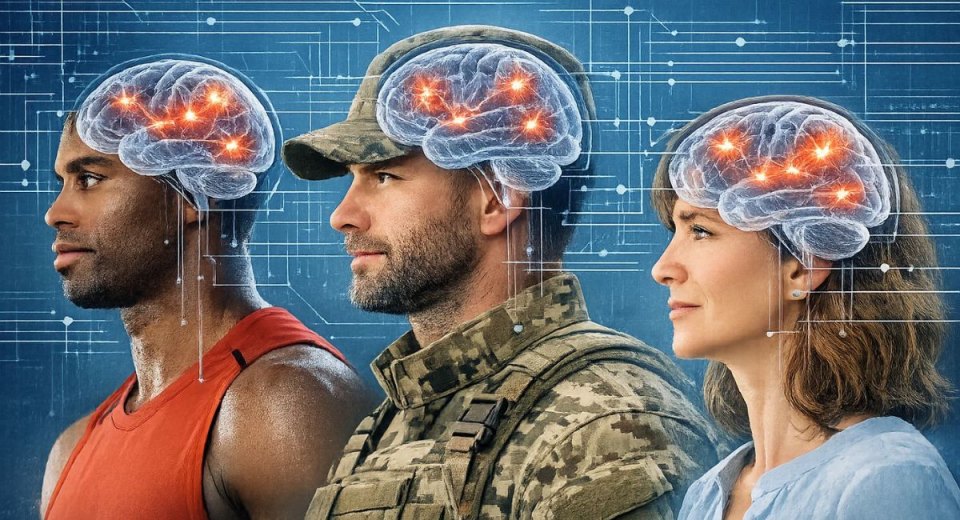
William Person is a former nine-year Team USA bobsled athlete whose career left him battling severe CTE symptoms including cognitive decline, depression & debilitating headaches. After discovering Hyperbaric Oxygen Therapy, he regained mental clarity, vision & purpose, inspiring a new mission focused on brain healing. Today, William is raising awareness around brain injury in sports, the military & beyond while working to open a nonprofit Post Concussion Recovery Center to provide care at no cost.

Top Things You’ll Learn From William Person
[00:00] Expose Hidden Brain Injury Risks in Elite Sports
- Reveal overlooked dangers of Olympic bobsledding
- Compare head trauma risks across NFL rugby military & contact sports
- Highlight extreme g forces exceeding fighter pilot thresholds
- Address repeated micro concussions without athlete awareness
- Call out suppressed reporting media removal & hidden waivers
[06:12] Connect CTE to Mental Health Decline
- Link CTE progression to depression aggression & suicidal ideation
- Share lived experiences of cognitive decline memory loss & disorientation
- Describe loss of independence daily function & time awareness
- Compare CTE patterns across athletes veterans & high impact populations
- Emphasize early psychological changes before physical collapse
[15:48] Challenge Medical & Organizational Failures
- Expose lack of informed consent & athlete warnings
- Document resistance from governing bodies & legal systems
- Reject financial settlements without treatment pathways
- Highlight systemic prioritization of litigation over care
- Advocate for accountability prevention & transparency
[25:36] Understand How CTE Develops Over Time
- Explain sub concussive trauma inflammation & neural damage
- Track symptom progression from subtle changes to severe decline
- Clarify limitations of post mortem diagnosis
- Connect inflammation to sleep disruption routine breakdown & cognition
- Emphasize urgency of early recognition
[36:58] Explore Recovery Pathways & Treatment Hope
- Highlight hyperbaric oxygen therapy functional improvements
- Share rapid gains in cognition mood & independence
- Reduce reliance on polypharmacy approaches
- Evaluate supportive modalities like red light therapy
- Reinforce recovery as possible not theoretical
[51:42] Build Advocacy Community & Next Steps
- Launch nonprofit efforts for accessible CTE treatment
- Create treatment centers serving athletes veterans & civilians
- Expand awareness education & early intervention
- Invite listeners to fund support & share resources
- Shift the narrative from inevitability to action
Resources Mentioned
- Article: Biohacking Concussions: Natural Remedies & Tech for Rapid TBI Recovery
- Article: Powerful Tips to Biohack Brain Health & Performance
- Article: Best Nootropic Stacks & Brain Supplements for Adults
- Article: The Ultimate Guide to Nootropics for Beginners (How to Upgrade Your Brain)
- Review: RoXiva Review – Benefits, Uses & My Experience With the RX1 Psychedelic Light
- Review: Brain.fm Review: Neurotech for Focus, Sleep, or Deep Relaxation
Related Episodes
- Episode 244: How Improving Reaction Time Supports Brain Performance & Mental Clarity With Dexter Ang
- Episode 243: Improve Gut Health to Protect Your Brain, Metabolism & Longevity With Martha Carlin
- Episode 241: Brain Mapping & Neurofeedback: How Elite Athletes Train Focus, Calm & Performance With Santiago Brand
- Episode 157: Unconventional Ways to Power Up Your Brain & Perform Like an Elite Athlete With Andy Triana
Episode Transcript
Click here
Nick Urban [00:00:01]:
You’re listening to High Performance Longevity. The show exploring a better path to optimal health for those daring to live as an outlier in a world of averages. I’m your host, Nick Urban, bioharmonizer, performance coach, and lifelong student of both modern science and ancestral wisdom. Each week, we decode the tools, tactics, and timeless principles to help you optimize your mind, body, body and performance span things you won’t find on Google or in your AI tool of choice. From cutting edge biohacks to grounded lifestyle practices, you’ll walk away with actionable insights to look, feel, and perform at your best across all of life’s domains. Hey, Will. Welcome to the podcast, man.
William Person [00:00:53]:
Thank you for having me. I’m just disappointed I see you somewhere exotic by that rooftop, and my rooftop is not exotic. So I’m a little bit bitter today. So just so you know, I just want to put that out there to you, to your listeners.
Nick Urban [00:01:07]:
Yeah, well, next time we’ll do this in person so you can experience the thatched palapa roofs for yourself down here in Baja.
William Person [00:01:13]:
And the beaches. Yeah. And the food. Oh, my God. There you go. Yes, absolutely.
Nick Urban [00:01:18]:
Yeah. All of the above. So, Will, for people who are aren’t familiar with you, what brings you here today? Why are you sitting in front of me, man?
William Person [00:01:28]:
By the grace of God, man, I was dying, man. My teammates, well, you know, I raced for Team USA for nine years, and, man, I put a lot of wear and tear on my brain. They told us we were pulling like four or five G forces. And the article eventually came out that we were pulling. There were spikes of 84.5 GS, and I was like, oh, my God. And all my teammates, you know, CTE is running rapid through the NFL. It’s also huge. And the biggest population, which is our military now, but also my teammates, began to commit suicide.
William Person [00:02:02]:
And I wasn’t too far behind them. Except a couple things saved me is I used to work in mental health, and I used to own a treatment facility, and I used to run a lot of big ones. Like, I think I worked for the. One of the biggest ones in the world at one point, Psychiatric Solution, and I ran one of their gang conduct disorder units. So that this is my background was mental health. And so a lot of things I’ve taught people, like, for one was if suicide is a great idea today, it’ll be a great idea tomorrow. So what’s the hurry? You know, Give yourself some time to kind of help us figure this out. And that was in the back of my mind.
William Person [00:02:34]:
But with cte, if you look at the suicide rate is through the roof and the. Not just that and the violence that comes with it. And my brain was telling me to do all those things that you see these. Our military doing, our NFL players doing. My teammates were committing suicide, and I just couldn’t do it because I know I’ve seen that lead, that trauma for the family, and I just wouldn’t do that to my family. And that’s how I really made it through the tough parts. But I promise you, people ask me, were you stronger than your teammates? Like, no. No, I wasn’t.
William Person [00:03:09]:
You know, I was praying for death, though, I’ll be honest. Like, I was asking God every night, please come get me. And every morning when I woke up, I was, you know, I wasn’t a happy camper. I was ready to get out of here. And I didn’t understand why, you know, he wouldn’t just end this for me, because I couldn’t. Couldn’t do it myself, you know.
Nick Urban [00:03:26]:
But, yeah, I’m gonna rewind us a little bit so people have context as to what exactly it is that you do. So you were a former Olympic. Olympic bobsledder for Team usa, And I think people would hear bobsledding like I did and not think much about the health consequences and the neurological, like, the brain consequences of a sport outside of, like, let’s just say football, rugby, maybe soccer, if you’re heading the ball very often. And those get a lot of the attention around brain injury and cte. We’ll talk about what CTE is in in a minute. But then there’s the other sports, like bobsledding, which you’re not getting attention, the attention as to, like, the risk of head injury. And then also, you’re. Unlike in the most, like, the common sports where these are concerns, it’s not one incident and then you’re taken out of the game these days or you’re let to rest or, like, you’re at least like, more cognizant of the fact that you had a big hit and all of a sudden you should take.
Nick Urban [00:04:28]:
Take it easy a little bit. These are repetitive day after day, run after run situations in which you’re exposed to a lot of force. And it’s not the really intense, sudden impact that you’re getting from, say, a football hit, but it’s the low grade, or maybe not even very low grade, medium grade, constant exposure, you’re getting to it that’s doing the damage. And it’s underappreciated or not. Not underappreciated. It’s under recognized and therefore it’s flown under the radar. And you’re out here to change that?
William Person [00:05:02]:
Yeah, absolutely. Well, the truth is, like, we get those micro concussions. We get the extreme G force exposure. Like, you know, fighter pilots pull six GS. What the hell is a bobsledder doing pulling 84.5 GS? And one time we took some fighter pilots on the bobstead, right, because they’re the only people on the planet who pull the same G force as us. And on that day, I took seven rides. It was the first time I ever did seven rides in one day. They took one smooth ride and they were rattled at the end.
William Person [00:05:30]:
And that always sat in the back of my mind, but I didn’t understand it. And yeah, it took for the New York Times to have some people test the track up in Canada and they said there were spikes of 84.5. And I’m just like, oh my God, that’s why everybody’s dying and sick. And the reason they’re, you know, reason why it’s not in the press as much. Like my driver, Stephen Holcomb, he won the world championships. He won every Olympic medal for America since 2003. He’s the only gold medalist in America from America since 1946 from Billy Fisk. And so he committed suicide at the Olympic Training Center.
William Person [00:06:07]:
One of my teammates called me, speaking gibberish. And because I’m a mental health guy, like, I wanted to help him and I told myself to help this guy. And I didn’t do anything. Absolutely nothing other than think about it. It was stuck in my head like an elute. Like, you gotta help Pavlov. You gotta help Pavlo. But I didn’t do anything to help him.
William Person [00:06:25]:
And eventually I got the word. He went to his family’s factory and he hung himself. And that brought me here because the guilt just riddled me and I just. I mean, I was just really heartbroken about it. And I felt responsible. And the truth was, when his autopsy report came out, he was in stage four. And so I realized there was nothing I could do that was going to help him. And the truth was, I couldn’t help him because I needed help.
William Person [00:06:53]:
At that point, I was actually living on the floor of my own apartment. I wouldn’t even go in my bedroom. I took the mattress off the bed and put it between the kitchen and the bathroom. And so it was. I didn’t even know. Like, people ask me, were you depressed? I would tell them, no, but I was Praying for death every day, all day. So I must have been depressed. I was getting lost in my own community.
William Person [00:07:15]:
Every day I woke up, I didn’t know if it was Monday, Tuesday, Wednesday, Thursday, or Friday. I didn’t know. And I know I didn’t know. And so I stepped in that hole too many times. I kept getting in trouble about it. And so I realized every day I got to figure out the day, and then I have to figure out what month we’re in. My brain kept telling me it was either January or August. I don’t know why those two months, but I don’t know if it goes back to my college days.
William Person [00:07:40]:
But something about this condition puts you in a loop and you get fixated on things. So my brain was telling me in this, kill yourself, kill yourself, help Pavlov. You know, that’s everything. Nothing else other than the ringing in my ears was silence. Yeah. And it’s just brutal stuff, man. And. And the reason why it’s not in the press is because.
William Person [00:08:06]:
Let me. I don’t want this to sound like a conspiracy thing. I’m gonna give you the facts and let you guys make up your own. In December of 2024, an article came out from the New York Times. They had. They go to the pilots, and there were. The pilots have the same identical issues as the Bob’s letters, which are the same identical issues as the military veterans, the same as the NFL players. And so I’m going over this thing, I’m looking at it, and I’m just blown away that it’s all the same stuff.
William Person [00:08:40]:
So the HBO did a story on us, the military article came out. I filed a class action in court to ask for, number one thing, warn the new generation before they get in that bobsled. They should understand what the possibility is. Too many people are sick, so they should at least know what they’re getting into. So they’re refusing to warn. So I. I took them to court to make them warn, number one. And number two, I told them to help.
William Person [00:09:05]:
Help my guys. Right. And so when I went to the court, I spoke to the judge and I showed. I shared the articles, lawyers on the defense, and so the defense team signed. My lawyers definitely saw it, the judge saw it, and then it was erased from the Internet. So if you guys go to try to find an article right now, it’s gone. Also, the HBO Winter Olympic Suicide CTE episode they did on us in 2021 has also disappeared. You can go to their server.
William Person [00:09:36]:
You can see the time slot where it was At. But you will never be able to see it again. And so that’s why it’s quiet. See, when we raced the World cup and stuff, our TV audience when I was racing was bigger than Monday Night Football. It’s huge because we broadcast in all different countries at the same time, except America. So if bobsledding was an American sport, it would be mainstream, like the NFL. But because I’m one guy talking and trying to warn people and help people, they’re really doing a good thing about scrubbing my message. And that’s what this really is.
William Person [00:10:11]:
And so I won’t stop talking. I’m not going to stop talking. And I found my way back. Matter of fact, when I started this two years ago, we couldn’t have this conversation. I couldn’t form sentences in some words. I just lost words. Couldn’t talk. I was like this.
William Person [00:10:28]:
I don’t know. It’s hard to explain, but you see somebody in dementia. That was a. Dementia. That’s what it was.
Nick Urban [00:10:34]:
Yeah. And there is a hopeful message here. We will get to that at some point today because that’s also very important to me. There’s also a couple other things I want to touch on. First, when I was doing my research for this episode, I came across a 1986 report that was describing headaches as like, really common, almost universal experiences among luge athletes.
William Person [00:10:55]:
Yeah, migraines, man. And vertigo that comes with it. Yeah, migraines and vertigo. Yeah.
Nick Urban [00:11:02]:
So it seems clear that there was some knowledge going way back that this was probably not good for the brain in some capacity. If you’re having symptoms that as severe as migraines, that’s certainly an indication that your body and your brain don’t like something.
William Person [00:11:15]:
You need to send me that article. I would love to see that. But the truth is, when I filed the case, I found out that from one of the employees who worked there, they knew what was going on because they couldn’t find helmets that were safe and aerodynamic. So they did something. And I’m. I’m. What I assume they did, I’m not sure. But they.
William Person [00:11:35]:
We went through discovery in court. They found waivers for me. The first three years I raced, they didn’t have waivers. But on that year that they wanted to do something to protect themselves from litigation, some of my waivers showed up where the waiver was. Now, it was placed on the medical page that I sent to my doctor to do my physical. So if you’re not really paying attention, you’d have just went right over it. And I’m not Sure, if that’s what they did. But they did something.
William Person [00:12:01]:
And the guy told me they did something because he told me he didn’t know if he’s going to be a plaintiff or a defendant because he’s sick too. Because he was also a slider before he began to work for the office. And. Yeah, so they know. They’ve known for a long time and they didn’t share it with us at all.
Nick Urban [00:12:16]:
To add some more detail, we were talking about earlier, the difference between contact sports that are recognized as contact sports and sports like bobsledding. I saw that they’re. The diagnosis for a concussion tends to be around 85 to 95 G force. And. And the peak GeForce that you guys were experiencing during your bobsling runs was 84.5. So it’s like you’re right there each and every run that you’re doing day in, day out, week in week out, month in, month out and year in, year out.
William Person [00:12:46]:
Yeah. And also that track that they did Test, they said 84.5. It’s the mildest track in the world. It’s the movie. It’s where they shot the movie. Cool runners. Like I could get in that sled and take a nap. I can literally take a nap on that.
William Person [00:12:57]:
And that’s lit, you know, but so wait till you get to this track to Altenberg. Get to the track. Lake Placid, New York is one of the most violent tracks as well. The matter of fact, the Europeans want to boycott us sometime. That’s my favorite track, is my home track. So. Yeah. Yes.
William Person [00:13:13]:
Yeah. Also like you mentioned, like we get the sub concussions, you know, the vibrations. Is the vibrations. The shaking baby syndrome. Because we running these metal blades across this bumpy ice. But also we’re hitting our heads too. If we have a violent turn or if you see us hit that little wall, that’s equivalent to me punching you in your kidneys. That’s what it feels like.
William Person [00:13:35]:
And I’ve literally cracked a helmet without crashing. And so it’s a very valuable sport. And it just. It doesn’t look like it on TV until you see the crashes. But no, every day you’re getting beat up and you just, you know, it’s just like the football players. You know, this is part of their job, this is what they do. You get accustomed to it and you move on to the next day.
Nick Urban [00:13:59]:
You’re saying that you cracked a helmet without actually contacting anything just from going through a run.
William Person [00:14:06]:
During bobsledding, I was breaking for Todd Hayes. He’s the silver medalist from 2002 Water Olympics. Yeah, we were racing Altberg, Germany. Matter of fact, the crazy part is I was doing two man with a different driver. He crashed me twice within an hour over there, and they wanted me to go again. I just couldn’t. I was like, you know, we brought an alternate for a reason. Where’s the alternate at? You know, and the alternate was looking at me like, why’d you send me out here? Like, you know, he didn’t want to go either because he just saw me crash twice in an hour, you know, and.
William Person [00:14:35]:
But, you know, that’s what it is. But when I raced, when I did four man with Ty, like on Augsburg’s Germany, there’s a turn. I think he’s turned number nine. You’re almost totally inverted. And so when it comes back, it’s like a whip effect, and I’m all the way on the back. So the break. But we get the worst of it. The guy, the driver doesn’t feel a lot.
William Person [00:14:53]:
The guy in the number two spot, he’s. We call that the Cadillac seat because it’s a smooth ride. The number three guy gets a little bit more beat up, but I’m in the back and I’m just getting just whooped, like. Yeah, it’s brutal back there, but, you know, I love it back there. That’s the glory spot. Like, if you. The brakeman, you probably the fastest and the, you know, the most athletic, and, you know, it’s the glory spot for us. But, you know, you.
William Person [00:15:15]:
You pay for it, man. Like, you really pay for it.
Nick Urban [00:15:17]:
Well, part of the reason I think your message is so impactful is that you’re taking an industry that’s traditionally looked at as fairly safe, at least from a brain health standpoint. Like, your average person on the street’s not going to know that bobsledding has any risk at all unless you crash. And then, of course, there’s risk with anything. But you’re sharing a message that’s like, yes, this is happening to your community, which is tragic. And it’s also, at the same time, an indication that there’s a lot of other places that this is happening, whether it’s in the military, whether it’s on the sports field, but also perhaps more relevant to the average person listening in to other facets of life that we wouldn’t even think twice about the impact on our brains.
William Person [00:15:58]:
Yeah. You know, and also, like, just on the bottle side alone, they’re fighting me so hard on the warning people part. They won’t put it in Writing. And I’m, you know, so the last four court hearings, my. My lawyers actually have turned colt. They’re now standing with the defense. They put an offer on the table of $2.1 million in January. I’m the lead plaintiff.
William Person [00:16:17]:
I rejected it because it all goes to the lawyers and it goes to doctors to evaluate us only. No exact. No treatment. Zero treatment. And so I asked the judge, I said, you, Honor, would you take your child to a doctor who won’t treat your child? Because at that point you’re just elab rat. And it doesn’t make sense. And they’re trying to sweep this under the carpet. And they think they’re going to write a check for $2.1 million and keep doing business as usual.
William Person [00:16:41]:
And see, when I filed this case, I never asked for anything for myself. Like I said, just I was preparing for death already. And I just told him, just take care of my guys and warn that new generation. And that was my only quest. I didn’t say give Will a million dollars or give me some. No, I didn’t ask for any of that. And matter of fact, they even tried to come back and bribe me to sign off on the case, and I refused. And so I’m sure they won’t admit to that.
William Person [00:17:08]:
But, no, I’m not signing off. I’m not selling anybody out. These guys need help. And it’s a global issue. It’s going on all around the world. But the athletes now were starting to talk, and I didn’t think it was working. And I was starting to get a little bit frustrated and saddened by. But one bobsled Olympic box just retired last week because of concussion issues.
William Person [00:17:30]:
He didn’t want to. Yeah. So they’re now hearing my story. They’re listening. And then the Swiss team boycotted World cup in. They boycotted. I forgot which track. They just boycotted it last week.
William Person [00:17:42]:
It’s in the media. It’s huge because. Because of safety concerns. I’m finally like, thank you, thank you, thank you. So these victories are coming. And I’m not here to, like, I didn’t come to destroy the bobsled team. I really tried to do it quietly. I just hope they were going to come in and help.
William Person [00:17:58]:
And they didn’t. And so now I said, well, you know what? It actually, they gave me the fire to get up off the. Because I was living on the floor. And when I found out they weren’t going to do the right things, it gave me that fire to stay alive a little bit longer, to make sure these guys are going to be okay. And good old Joe Namas showed up and saved my life, man. And, man, what a blessing. What a blessing.
Nick Urban [00:18:22]:
Will, I hope you don’t mind me asking this, but I think to connect the dots to anyone who’s listening in, who can’t see you, how old are you? Because you shared some symptoms previously that usually indicate dementia when people present with them, but you’re not the age that most people would associate with dementia.
William Person [00:18:41]:
Well, I was in dementia since my probably late 30s. And I didn’t know. But I didn’t know I was in dementia. I didn’t know, you know. You know people. You don’t know what day it is, you know, what month. Matter of fact, when people. When I left, 10 years, my last race, I won my last national championship.
William Person [00:18:58]:
It was like 2007, I retired. I left. And so I went back to Hollywood because before that, I was doing stuff like, if you ever see the movie Jerry Maguire, I’m the guy they hired, too. If you see somebody running fast on the field, I was a 42340 guy. And so I was the guy who had on five different uniforms. And you see me running through the crowds and stuff. That was me. And so I forgot the hill I was talking about, man.
William Person [00:19:23]:
See, there we go again. I think that is just. This is my. You know. But, yeah, so when I left, I was 36. I turned 37 that summer. And so, because I was doing Hollywood stuff before I went back to Hollywood, and when I got there, people asked me, how old are you? I automatically said 28. For some reason, that loop.
William Person [00:19:42]:
That loop was still stuck in there. And so to some of these probably young ladies who asked me, I probably thought I was an old pervert or something, because here I am 40, and I’m telling people I’m 28 years old, but I really didn’t know. I thought I was still 28 years old for some reason. And that’s what. This thing is devastating because your reality is not your reality. And. And so your enemy is not really your enemy. And that’s why we have.
William Person [00:20:08]:
Man, 31% of the mass shootings in America are veterans coming back and turning a gun on us or other veterans. And that’s the scary part of this.
Nick Urban [00:20:17]:
Can you show that again? Like, is there a link between. I guess we should probably also, in a second, define what CTE is. But, like, is there incidents of head injury in. Do you believe or have you seen any research on this in those, like, shootings?
William Person [00:20:31]:
Absolutely. You check out every mass shooting, you see that either people are radicalized or they come in from a compromised background, like either athlete or a veteran. That’s who’s committing the mass shootings here in America. Since 2012, 31% are veterans under the age of 60. I don’t know what that really means. But, yeah, the 31% of the mass shootings, and that was early numbers. I think it’s a lot higher than that because. Did you hear about the.
William Person [00:21:01]:
The nf, the. The high school football player who went to the NFL office to shoot them in New York? This was about three months ago. When he left the suicide CTE note, he said, he’s doing it because. And they said, well, he only played high school football. He can’t have no cte. And when they checked his brain, it came back he had cte. But my social media was blowing up. My phone was ringing about this and so forth.
William Person [00:21:28]:
To stop. I made a video and I put it on my TikTok channel. You guys can go see it as one man with a chamber. I’m wearing a red Team USA shirt. Don’t laugh at me, because I’m. I’m just walking and talking. I’m all, I look kind of disheveled, man. I’m just.
William Person [00:21:39]:
You know, sometimes I’ll hit me in the wrong directions. But, yeah, I’m just telling people, like, I know our athletes are doing these awful things. I said, I. I said, but that’s not the population I fear. The population I fear is our military, because they have the same condition that I have. I know what my brain was telling me, but they are now the best killers in the world. And so they’re now doing what’s normal to them. And so what they’re doing, it’s not.
William Person [00:22:03]:
It’s not intentional. It’s not on purpose. I said, they need help. That’s what this is. And so I made that video. I posted it, guys. It’s there. And the next day, I hit court.
William Person [00:22:14]:
I shared that information with the judge, and on the courthouse steps, I gave the same speech I just gave right here. And I can’t make this up. Guys, please go. Go check the. The your. Go to your Google searches and do your own research. But the following week, the very following week, we had a veteran go up to a bar in Anaconda, Montana. He killed four people, and he was hiding in the woods for a whole week.
William Person [00:22:37]:
Like. Like the Rambo movie. It was identical. And as they caught him, another veteran went to a military base and he shot a lot of people on the base. I don’t think anybody died, but he shot a lot of people. And then two weeks after that, we had a veteran go up to a Mormon church in Minnesota. He said one half of the building on fire, and he went to the other side and started shooting. And when they stopped him, there were bodies missing because, you know, I’m sure they probably perished in the fire, you know, and so that’s what we’re dealing with.
William Person [00:23:10]:
And then if you just notice, we had. It was about three weeks ago, we had a. We had somebody to go shoot our National Guard, who were. I think they were in D.C. and that guy was working with our military on the ground in. In one of the war zones. And they brought him back to America, you know, and so he also compromised. So he was the one who did that shooting.
William Person [00:23:33]:
So these are. These are people around compression blasts. If you’re around those big guns and they shoot, they know this is what it is. They’ve admitted it. It’s our UK people, our Canadian soldiers as well as our American soldiers. They’re all suffer from the same stuff. And so what I found out is there’s 6,400 reported suicides a year in America for veterans. But what they don’t tell you is there is an additional 5,000 overdoses.
William Person [00:24:01]:
And even if they leave a suicide note, it does not count as. Is not counted as a suicide. So we’re looking at 11,000 suicides. And if you look at CTE victims, the. The alcohol, the things you do to kind of calm your. Calm your stuff down is what kills you. And so if you’re drinking, that’s what’s going to kill you. If you’re doing drugs, this was going to kill you.
William Person [00:24:22]:
If you’re gambling, you’re going to be broke. But, you know, that’s just kind of what it really is. You know, it’s. It’s sad stuff. And the crazy part is such an easy treatment to come out of this stuff. And when they’re just now getting around to do the work so people know about it. That’s the sad part. Like, I looked at 11,000 veterans one day, I just broke down and I was like, I remember where I was.
William Person [00:24:46]:
And I was like, how did they not get the help? Like, I mean, I shouldn’t have made it. I should not have made it. But, you know, they’re backed by the government. They should have known what to do with it. They knew. And this thing is, they did know, but. And I’m not bad. I don’t Want to badmouth anybody.
William Person [00:25:04]:
I’m, I’m a friend, not a foe. I’m here to just help and not. I’m not here to bash.
Nick Urban [00:25:09]:
So yeah, it seems that a lot of, there’s a lot of knowledge around these that’s kept hidden because essentially you can work with it, you can admit fault and you can actually address the issues. But that costs money and unfortunately people don’t want to expend that yet. And conversations like these hope to cause those reforms so that these things are not just topics, but they’re actual like implementations into these different programs where it’s needed. We’ve now danced around the topic that is also the name on your profile here. If anyone’s tuning in, maybe they can see it. CTE Advocate. And CTE stands for Chronic Traumatic Encephalopathy. Cte.
William Person [00:25:53]:
Wow.
Nick Urban [00:25:53]:
What, what, What does that mean though, man?
William Person [00:26:00]:
If you, if you have it, it means your life is, is it probably in shambles? Because like right now, like we thought it was football. And now when I once I realized it’s bobsled, then I found this military. But along my journey, I kept running to these random people. Like one day I was speaking with this lady and she was frustrated with her doctors because she didn’t, they couldn’t figure out what’s wrong with her. And when she told me her symptoms, they lined up with my teammates and myself and I was like, wait a minute. I said, were you an athlete? She was like, no. And then I found out there’s a whole lot of women now they’re checking the ladies brains upon death because you only see cte, you can only diagnose it upon death. When they dissect the brain, that’s the biggest issue right now.
William Person [00:26:43]:
And so they’re checking housewives who had domestic violence done to them. They’re, you know, they’re finding it is a lot of our women. So these women been in these abusive relationships. Now they’re acting all wild and crazy and maybe becoming more promiscuous and things like that. And people look at them like, what’s wrong with them? They found out they had cte. This is what this thing is. Yeah. And so it’s so many populations and it’s all the same symptoms and it’s just like this.
William Person [00:27:11]:
It doesn’t matter how you got it, but it’s matter of fact. So that young lady I was talking to, I asked her, I said, was your ex husband, was he violent? And she was like, no, nothing like that. We just, you know, it just didn’t work out. We moved on. I said, okay. And it baffled me. And then right before we about to part ways, she said, hey, wait a minute. One time I was snowboarding with my son, and I fell backwards and I hit my head and my arms did this.
William Person [00:27:34]:
You know, it seized up and pointed out straight like she was a mummy. I was like, that’s your problem. I said, doctors aren’t looking for that. You definitely didn’t tell them about that. And even if they were looking for that, they’re not going to find. Most brain bleeds don’t show up on MRIs or imaging unless it’s massive, massive, massive, massive. And that’s the problem with this thing people aren’t looking for. It’s right in plain sight.
William Person [00:27:59]:
And, yeah, it’s right in our face. And nobody’s. I’m just looking again. I can’t be the only one connected to that. I’m not the smartest man in the world. I’m compromised, you know? And so, yeah, but it’s out here. It’s right in our face, guys. It’s the link between our mass shootings in America, number one.
William Person [00:28:16]:
That’s the scary part. Suicide issues and mass shootings is tied to this. Oh, and by the way, our veterans who come back diagnosed with ptsd, now that they’ve started to do studies and they’re checking their brains upon death, they’re finding CTE is the underlying cause.
Nick Urban [00:28:33]:
Yeah, I can. I can totally see that. A lot of conditions that are becoming more and more common, they’re diagnosed as one thing, and that layer might be what’s being expressed, but underneath that, what’s causing those behaviors and traits and everything could be a brain injury like CTE.
William Person [00:28:49]:
Yeah, I thought it was diagnic. For 10 years, I was seeing doctors, and I was like, can I get my insulin this year? Because, you know, I thought it was low blood sugar because I couldn’t get up and have no energy. And every, like, they, you know, give you all this syrup to drink, and they do the lab stuff. And they keep telling me every year I go back, you don’t have diabetes. And it didn’t make sense. I was always a clean eater. Remember, I was such a clean eater when we was on World cup tour. See, I was already traveling Europe a lot before I made Team usa.
William Person [00:29:14]:
And I knew, like, they cook me breakfast, lunch, and dinner every country we go to, but it’s going to be their style of breakfast, lunch, and dinner. So if you’re in Italy, you’re getting pasta, pasta, pasta, And a piece of pork, you know, or at some stage you’re going to get some beef. But that’s when they had the mad cow disease. I don’t want any of that. I don’t eat pork. So I knew automatically go to the chef as soon as I get to the hotel. Hey, can you just give me some, some chicken or fish? Usually just chicken, because fish over there could be a little bit strong. So just give me some fish and a salad.
William Person [00:29:44]:
That’s all I asked for. And so my teammates used to rattle me like, he’s so bougie and uppity. Look at him, he’s so special. After three days eating pork and noodles for breakfast, lunch, dinner, they’re on my side now. Hey, can we have what he has? So I was always that clean eater. And it did make sense that I had diabetes. But I’ve seen people with diabetes and that’s what my symptoms look like. So a lot of these conditions is right in our face and where a lot of us are misdiagnosed.
William Person [00:30:11]:
And I wasn’t, but I was misdiagnosing it. But my doctors were like, no.
Nick Urban [00:30:16]:
So how does it actually manifest, like immediately, like is cte? I thought it was something that builds up usually over time. It’s like you get a lot of low grade or mid grade or maybe even high grade brain injuries, and then CTE develops. And I’m not sure if it’s like a abnormal pattern of proteins or plaque buildup or like stuff like that, or if it’s something entirely different. But I know there’s some obviously association between CTE and brain injury.
William Person [00:30:46]:
Well, I think the medical community might have it wrong because I met people on my journey with the same symptoms. They hit the head only one time. Some of my teammates never, ever crashed in a bobsled. I had seven crashes. I know people over a nine year career. I know people who crash 17 times per year. We all have the same conditions. And my teammates, some of my teammates had 100 helmets, $200 helmets.
William Person [00:31:12]:
I had a 1200 helmet because I owned a treatment facility. I had my own money and I wanted to protect my head. I had a 1200 helmet, which is on my mantle, as well as that cracked helmet is on my mantle back at home. And I have the same symptoms as the guy with the $100 helmet. And so it’s just, man, this stuff, I think they have it wrong. You could probably hit your head one good time and see, this is the thing. I think I figured it out. And anybody who’s Ever been an athlete who said any type of injury, or if you’ve never been athletes, if you had an injury like a pull a hamstring? Let’s start with something simple.
William Person [00:31:45]:
When you pull a hamstring, you get inflammation in that area. All the swelling goes there to kind of protect the area. And so for the first 72 hours, no heat can be put on that muscle, only ice. 72 hours. Then after that, you ice and heat and you kind of alternate. Then you do, like, electrical stimulation. Then they do the ultrasound machine, acupuncture. And then when you get to the very end of that, you have some scar tissue in there.
William Person [00:32:09]:
Right. And then at the Olympic Training center, that’s when you see the little lady come out or the. Or the guy, and they have a little white rag or a white towel. And then when you see that white towel come at the Olympic Training center, you’re just like, oh, my God, it’s going to be a bad day. That towel is for us to bite on it so we don’t break our teeth, because they’re going to take that elbow and they’re going to stick it right on that mass in my muscle, and they’re going to break up the scar tissue for me. So when it comes to the brain, it’s a soft tissue injury as well. And so I’m sure the inflammation was there. So how do you remove it? They don’t remove it.
William Person [00:32:41]:
All they ever told us was to go sit down somewhere and don’t go to sleep for three hours. That’s the only treatment I’ve ever received for concussion. And for me, like I did between one to six rides a day for three to five days a week, four to five months of the year, depending on the year, for nine years. So I literally. Somebody did the numbers the other day for me, and it was a obscene amount of possibilities how many rides I possibly could have taken. And, yeah, and it’s. It’s just. And I have the same symptom as the house lady who fell down here to head one time is, something’s wrong with this picture.
William Person [00:33:18]:
Yeah, but it’s really. I believe it’s the inflammation. They need to remove it. And so the only way to remove that inflammation is hyperbaric oxygen. And I was in that chamber for one hour, man, and it changed my life. But before we go there, you just said something. You were mentioning the.
Nick Urban [00:33:37]:
No, I was curious about, like, the science of CTE and how exactly it works.
William Person [00:33:42]:
Yeah, yeah. It’s really slow and progressive. Like, for me, my science Kicked in early, like. Like I didn’t know where I was sometime when I. Middle of the night. But I rationalized, I was like, oh, you know, I travel so much, I don’t know where I’m at. You know, One time I was out shooting pool with my buddies. I hadn’t been home in a long time, and my buddy said, hey, man, this young lady, that’s your ex girlfriend coming in.
William Person [00:34:03]:
And I looked at her, I was like, she’s pretty, but I don’t know her. And she ran over, she sprinted over, actually, and she jumped in my arms and I caught her. It was like we were the long lost best friends. And I realized I wasn’t recognizing familiar faces anymore. And I still have four or five more years of sliding to do on top of that. And. Yeah, and then. And then eventually I had these random cloudy days.
William Person [00:34:27]:
Like, they were so random. That’s why I thought it was low blood sugar. I thought it was diabetes. And eventually they turned into random days of clarity. It totally switched over, and it was so slow, I didn’t see it coming. So by the time it hit me, oh, man, I. I just. I didn’t have a response for it.
William Person [00:34:43]:
It was too late. I was in dementia, full dementia, without knowing it. And if you look at the last five. I looked the last two years of NFL suicides, each of those men were. All those men were married men, and they were now living separate from their partners. It was only one who was still living at home, but he lived in the back bedroom, and his. His wife and his kids just lived around him. And I was living the same way.
William Person [00:35:06]:
I was living by myself. I’m laying on my floor and I just. I was fading into the abyss and. Yeah, and you add that in, we’re not having a real grasp on reality. Like, I. Yeah, I couldn’t even tell. Yeah. What I did know, I was protecting myself.
William Person [00:35:23]:
Like, I knew not to drive my car on those days. I decommissioned my motorcycle and I didn’t want to hurt anybody, you know, And. But on them days, I would try to walk to the store and give me. At least give me a salad, get a little exercise and. Oh, let me. Let me show you this. This might be a best way to explain it. Let’s pretend this is my neighborhood.
William Person [00:35:45]:
Right. I lived in the middle of this block. The stores were over here, on this block. So I had to walk, say, 100 meters. No, 150 meters. Make. Make that left. Walk another 100 meters, make a left.
William Person [00:35:59]:
The stores are right here. Right. So on some Days I said, you know what? I’m gonna go the other way. What’s on the other side? I couldn’t figure out how to go this way. All I do is make two right instead of two lefts. And so that’s how unforgiving this thing is. I drive that way every day, you know, but on them days when it kicks in, you just don’t. You can’t process properly.
William Person [00:36:20]:
And I was really having meltdowns trying to figure out what’s on the other side of that block, you know, and the same thing, stupid. I just made two ranks instead of two lefts. But I couldn’t process that, man. And like I said, it’s unforgiving. And if you don’t have people around you who love you, man, you’re going to perish. That’s why the NFL players are all living alone and they just perished. And our veterans, it’s the same stuff over and over.
Nick Urban [00:36:44]:
Yeah, it’s insidious too, because the NFL is actually reforming the game. And they recently changed the rules of the most dangerous parts, like kickoff kick return, so that they’re safer because of head injury concerns first and foremost. And this, on the other hand, it’s not something you necessarily notice, especially from the sub concussive blows day in and day out, but then it gradually happens. You’re like, oh, well, it’s not any one particular thing I’m doing because it’s just like very slowly getting worse and worse over time.
William Person [00:37:14]:
Yeah, yeah. But also the, the subconcussions, concussives are more. I believe they’re more dangerous than those big ones because like the, the big ones, like my first crash was in St. Maritz, Switzerland, and one of my guys was knocked unconscious. I had vertigo for a week and I just like, I couldn’t walk straight. And all they did was tell us to go back to the hotel and watch each other and don’t go to sleep, you know, So I. The truth is he was knocked unconscious and I had vertigo, so I couldn’t sit up in the bed without the room spinning. So we weren’t watching each other.
William Person [00:37:48]:
We were. We were in survival mode. And so that’s. But. But it made me sit down for a week. I couldn’t do anything for a week. Now with the sub concussive, it’s doing the same damage, but it’s not letting your body read as damaged, so you don’t know something’s wrong. So you’re still out doing the same things that you were doing.
William Person [00:38:06]:
And what I know about the sport of bob study. Now I was getting that every time I went down the track. And so, you know, if I took one ride, like I’m in trouble for the next two weeks, you know. But now, guess what? I’m taking three more rides that day and for the next day, you know. Yeah, this is very, very up. Yeah.
Nick Urban [00:38:25]:
I don’t know if we actually clarified how exactly this is happening during bobsledding and my layperson’s understanding of it. It’s because you’re going very fast down a surface and you’re getting, your head is getting jarred around and it’s kind of getting like rattled. And because of that, your brain is inside your head and you have the cushioning of the cerebral spinal fluid and also of like the other liquids and fats and everything inside the brain. But the brain itself is a fatty organ. And so when it rattles around and hits the skull, even if it’s not hard enough to cause what’s typically considered a concussion, it’s still causing those sub concussive blows. And it’s essentially triggering repair and inflammatory processes in the brain because your brain sees it as a threat to your survival. When that happens, you day in, day out, over long time horizons, you might not even know that anything’s happening because you don’t see stars, you don’t go unconscious. But the damage is still being done and the repair cascades are still happening.
Nick Urban [00:39:24]:
And you’re not stopping the behavior because you’re actually not aware that it’s causing issues.
William Person [00:39:28]:
Absolutely, absolutely. I need to put you on the payroll, buddy, because you said it better than I could ever say it. Yeah, yeah, it’s like I said. But, but you know, we still get our head knocked around too. Like I said, we. I’m smacking my helmet on, but like, I was such a big guy, like my shoulders, I fit perfectly in that sled. There’s no, like, if you were narrow, you have more room to. And then, but my head also, my job is the guy sitting in front of me.
William Person [00:39:56]:
My job is to put my helmet right in the middle of his top of the middle of his back. So I’m aerodynamic and I’m pulling myself into his back. And so my job is to put a knot. By the time we got the bottom of the sled, he should have a goose egg on his, on his back for me putting my helmet, the pressure, you know, and so, so I’m not really shaking around in there too much usually. But if it’s extremely violent, it’ll, it’ll, it’ll break me loose. Like I said, it won in Ottenberg, snapped me right out of there, and I smacked my head on the side of that helmet, on the side of that thing and cracked my helmet. But if I had that helmet on my mantle as well, I saved that helmet as well.
Nick Urban [00:40:30]:
So I’m generalizing this to, like, everyday life. I’m just thinking about how I might be experiencing these in my daily life, even though obviously I’ve never bobsled, and I’ve definitely not done it on an Olympic level. But, like, if I’m driving down the road, say I’m down here in Baja and there’s a dirt road over there. I’m in a vehicle, and we’re going off road. There’s bumps in the road, potholes, and, like, some of this is really washboardy dirt roads. It’s plausible that my head’s going to be rattling around inside my skull, and then maybe we’ll hit something in my head. Might, since I’m tall and I have a long torso, my head might bump the roof, and that might not be a huge deal because it’s one acute instance. But if I have a commute that involves that same thing, and perhaps my commute’s an hour long, that kind of thing could start to add up very quickly.
William Person [00:41:14]:
Well, just. Just forget about the bumpy part on the head. Let’s say you never hit your head on top of that thing, but just the. You’re shaking that head up on their bumps, your brain is being shook in the skull. And what I was told is there’s like two hooks in the back of the skull that hold the brain. And when you do that is shearing the brain. And so it’s always. It doesn’t take a hard hit to do that.
William Person [00:41:34]:
Matter of fact, if somebody’s standing still and you came in and gave them a nice hard push and their head snapped back or it just moved ahead. It’s really when the head wants to move forward, but it. But it can’t. So it stops. And so the brain keeps going in that skull. It keeps moving forward, but the. But the actual physical skull stops. So you can’t go any further forward, but that brain inside is still going forward.
William Person [00:41:57]:
So that’s where the damage is coming. It’s that the brain wants to keep moving, but we stop. If we kept going with it, it wouldn’t. Wouldn’t do. It would be fine. But it’s just that stopping point.
Nick Urban [00:42:07]:
Yeah, I think you’re right, too, that, like the modern research suggests, it’s some things and our explanation is likely very inadequate. It’s likely very short. Like one of the big theories is that like tau protein tangles build up from these types of sub concussive and concussive blows over time. And it’s because of that or it’s because of like the beta amyloid, things like that. But I think like these are only a tiny part of the overall picture. And I think over the next coming years, and hopefully not decades, we’ll start to have a better grasp on what exactly it is going on inside the brain that’s causing this. And then hopefully with that, some interventions we can do before, during and after to help like prevent some of the damage.
William Person [00:42:49]:
Yeah. The truth is, I believe the studies are already out there. I believe they already know. Matter of fact, I was watching this. Somebody sent me a video the other day. And it really. It’s kind of like the, it’s the, it’s these people who are at the top of the food chain somewhere. They’re the ones that don’t want the hyperbaric oxygen come out.
William Person [00:43:06]:
They don’t want it to. And I have a feeling, I think I know who it is, is they don’t want to pay for this thing to be used, but it’s actually more cost effective to use this thing. Because for me, let’s say I bought this machine that’s behind me. Once I have it, all I got to do is get on, get in it and turn it on. That’s it. I’m not taking. 13 of most people with this condition are taking 13, 14, 15 pills a day. I now take zero pills.
William Person [00:43:33]:
I take absolutely nothing. And I’m thriving again. I still have like, I still have some glitches, guys. I don’t try to hide it. I’m not perfect and I’ll never be. You guys, you saw it in real time. You know, he asked me questions and I’m, I’m, I’m a. If you get right, if you gave me two questions at the same time or three, I’m actually, I’m actually going to answer half of one.
William Person [00:43:54]:
Like, you know, that’s how my brain is wired now. So I have to be. I’m. But I’m conscious of it. I’m aware. And that’s the thing about this thing. Once you understand it and you see what it is and you become aware of like, other than the anxiety and the depressive stuff that comes with it, once you have that rational thought back and you can process what’s going on, it’s not as bad as it was. There’s still a lot of things I can’t do again or never be able to do.
William Person [00:44:18]:
Like, I was a counselor. Now I process too slow. You know, like somebody asked me a question about saving their life. I won’t have the answer till maybe an hour later or something, or two hours after I have a song. So I don’t want to do that. And, like, I used to run some of the celebrity rehab places here in Malibu, California. Like, I don’t know, I guess Matthew Perry, he’s deceased now, but, like, he was at our program, you know, one of the nicest guys I ever met in my life, you know? But, yeah, so this is my background, this is what I’ve done. And the thing that baffles me the most about me is, like, if I was a counselor, I was a mental health guy.
William Person [00:44:55]:
If I couldn’t connect them dots, people land on that ground like I was, you’re not going to connect these dots. You can’t do it alone. I couldn’t do it. Even after my teammates were committing suicide, I saw the articles that were written about us, and I was like, oh, my teammates were a mess. But it didn’t get me. Yeah, let my girlfriend see that article. She circled some stuff and I went. I went, oh, oh, oh.
William Person [00:45:23]:
Oh, my God. Like, that’s when I knew where my boogeyman was. You know, it took for that article to come out and for my loved ones to tell me, you need to reread that, son, and let’s talk again. And my every athlete that I shared the article with, you know, it’s like this. We haven’t seen each other in years. We, most of us, we own all little parts of the world. We don’t talk that often. And so when I shared the article with other people, they gave me the same answer.
William Person [00:45:48]:
As I said, all the symptoms miss me. But since we haven’t talked in so long, we, you know, we’re on the phone for an hour now. They’re telling me these bizarre stories. And my God, I was like, you know what? I want you to share that article with your loved ones. And if you feel the need to call me back, if you feel just, yeah, call me back. Every single time my phone would ringing, ringing, ring, you know. Yeah, we can’t see it in ourselves, same as the NFL players can’t see it in themselves. The veterans aren’t seeing themselves.
William Person [00:46:17]:
That’s why they’re murdering people and killing themselves, because they can’t see reality. Nor could I. I Couldn’t.
Nick Urban [00:46:25]:
Okay, well, I want to go on to the, the light side of this, and that is the solutions, the things that you’ve noticed have the biggest effect. You have one right there behind you. I’ve talked about hyperbaric oxygen therapy a little bit on the podcast. I’m curious about your experience there. And then also anything else that you’ve tried that either worked and made a big difference for you or didn’t work. Like, one thing I was thinking of just now, exogenous ketones. Those can be really helpful during periods of, or not even just periods pre, post and intra brain injury. I’m not sure if you experimented with those at all.
William Person [00:46:56]:
Not at all, no. For me, all this time, I was always treating the symptoms and never the root cause or, you know, so I was like, get a headache. Okay. Take a pill with a headache. Okay. I don’t have any energy pumping. All these things that you never drink. I never drink coffee or soda before.
William Person [00:47:12]:
Like, I didn’t drink that. You. I remember I didn’t let my children drink. It wasn’t. No, that’s not in our household. But I began to live off of it, you know, and. Yeah. And so the only treatment I’ve ever found that worked, it came from Joe Namath.
William Person [00:47:25]:
I’m sure you’re familiar with Joe Namath, right? Yeah, he had. He had a series of videos out that said he used hyperbaric oxygen to. To reverse his symptoms. And, you know, nothing else worked. I didn’t think it was going to work. So I go to this place in Orange County. They let me do it for free. And I mean, I think for one hour and feel free to edit out part of this next thing.
William Person [00:47:45]:
But I’m warning you ahead of time. But, you know, I’m gonna give you. I’m gonna give you the. The. I’m gonna give you. I’m not gonna give you the slang words. I’ll give you the. So I’ll.
William Person [00:47:55]:
I’ll keep it as clean as I can keep it. So, yes, I’m in this chamber for one stinking hour, and I was cloudy for 10 years at that point. And so when I get out. Let me show you my glasses. They’re. They’re slightly tinted because I’m sensitive. I don’t know if you can see it with my background.
Nick Urban [00:48:16]:
They look like glasses to me.
William Person [00:48:17]:
Yeah. Let me see. They’re. The top of them are tinted. There you go. They’re slightly tinted at the top.
Nick Urban [00:48:23]:
Okay.
William Person [00:48:23]:
Yeah, yeah. Because I’m sensitive to lights, sounds and smells and so when I get out this chamber, only one hour, one hour, guy. I’m not making this up, guys. First of all, I don’t sell these things. I don’t get a residual, I don’t get a kickback. I’m just sharing my story. So I’m in there for one hour. When I get out, I grab my glasses to put them on.
William Person [00:48:40]:
But something’s different. Like all the colors are so vivid and pretty. It’s like I was walking around in 3D, like I was in a Simpsons cartoon. And I put my glasses on, I didn’t need them, I put them off and I was like, I don’t need these things. And so the salesman comes over and he’s like, hey, what’s wrong? I said, I don’t know, I don’t think I need my glasses right now. And he said, oh, you one of those. And I was like, he’s trying to sell me this twenty two thousand dollar machine. I’m like, good salesman.
William Person [00:49:07]:
That’s what my brain is telling me. I’m like. I said, I’m a little standoffish now. I’m watching this guy, you know, okay, well what are the next words out of his mouth? But he told me, some people need like 30 days of two sessions a day to get the same effect. And some people get immediate relief. I happened to be the first one. So I went home that night, man, and I’m just watching TV. I fall asleep on the couch about 9:00′.
William Person [00:49:32]:
Clock. And I remember waking up, it was about midnight and I had the worst migraine. I hadn’t had one in about a couple of months. And I’m thinking, okay, did this machine do something to me? I don’t know. Why is this migraine so awful? But while I had that migraine, I also had an erection. And like those two things that we know don’t go together. Like I’ve never had a migraine before and said, hey, it’s gonna make love. Like, no, you know, you don’t want anybody around you, you know, like go away.
William Person [00:50:00]:
And but yeah, and so that was at midnight. So I went and climbed into bed, left the sofa, went and got in bed. And I woke up in the morning about 8, 9 o’ clock or something. Migraine is gone, that erection is still there. And so it was doing something, it was rewiring something, I don’t know. And I didn’t even have any erectile dysfunction issues at all. And so for this to happen, I was just, wow. And over the next few hours, my cloudiness just wiped away.
William Person [00:50:27]:
And I was clear for six days, man, I was a human being again. After that, six days started to wear off and I went back and the next treatment got me nine days. And so after that, I had to find a way to find the money to buy this machine. And that’s where it gets a little bit dark, because after I had just bought a house in the Midwest because, like, I was lost in my community in Los Angeles, I was struggling. And so I bought this place to go. It was my death house. I was going to die. You know, all I could do over there, I couldn’t get lost on that.
William Person [00:51:00]:
It’s four acres. All I could do was fish or cut the grass. That’s all you can do out there. I’m not going to get lost out there. And so I didn’t have the money to spend on this chamber because I just bought the home. And the truth is, by the time I tried to raise the money, I was already. All the effects had worn off and I was back in that dark place again. And then my dad stepped up one day, I looked at my account, there was extra 20 grand in there.
William Person [00:51:25]:
And I called. I knew I had only one person could have done that. And so I called my dad. He’s like, go get that chamber, son. So, yeah, yeah, life changed for me after that. So. So I’m gonna repeat that. The first people let me do it for free.
William Person [00:51:44]:
The second time was for free. My dad bought my chamber because I didn’t have. I didn’t have the funds to do it. And I’m. I’m paying it forward, guys. So I’ve. I’m officially at 501c3. And a lot of people know me because I.
William Person [00:51:56]:
I’ve been navigating, helping people find this technology in their communities. But now we’re gonna have a facility where you can just come here. I don’t need to worry about the. How ethical these people are, who I’m sending you to. Now. You just come to us and we’re going to treat you for free. Is going. I’m opening the first only free CTE Wellness center.
William Person [00:52:13]:
And so, yeah, we’re officially up and doing. And. And I got some. I won’t say I got threats, but I got warned about what I was doing. Some people aren’t very happy about the information coming out. There was some TV producers, they were pitching this show and they said some really big people don’t want this information coming out. And they also told me that it’s. They put in quotation mark, as I have it in writing.
William Person [00:52:39]:
They said this is not safe material. And I say I warned them first, but I didn’t know if I was being paranoid. I said, I don’t know if my life’s on the line for this, but we all know whistleblowers in America don’t live long. And they actually came back and confirmed that for me. There are some people who. So what I did to battle that is I’m purchasing a building myself that we’re going to Open in my 501. C3 is official, officially recognized by the government. And so it’ll all be there.
William Person [00:53:05]:
It’s going to be self sustaining. And so if something ever does happen to me, it’ll still be here and running forever. And so hopefully I’ll get to hit all the major cities. And yeah, we’re going to see how much we can knock out of this CTE stuff with this. The suicides and mass shootings, man, the mass shootings are just ridiculous here. You know, every year it’s just a little bit worse and it’s all related. I just don’t understand why, you know, I’m not the only one who could be, should be connecting these dots. I know other people have to understand and see what’s going on.
Nick Urban [00:53:38]:
There’s also a handful of other biohacks. I’m not sure if you’ve looked into it. I think perhaps there’s another conversation that we could have offline or something that might be worthy of like inclusion or at least consideration for your center. Because these things, they could have potential to like improve TBI and ct. Maybe not. No medical claim there, but like people report good success, especially clinicians when they combine multiple things into one.
William Person [00:54:04]:
Yeah. Other things that we’re going to be doing, there’s a lot of red light stuff out there. There’s a lot of magnetic stuff out there. The only things I try to stay away from, appeals and things you have to introduce into my system. Because I’ve noticed people with our condition, like they’re, they’re on so many pills and then I don’t like relying on stuff. And I know it sound a little hypocritical because I was so frustrated for a while because like Joe Namath, he said he did it, reversed his symptoms, he doesn’t need chamber anymore. Right. I met so many people on my journey who don’t need the chamber anymore.
William Person [00:54:38]:
But If I go 30 days without it, my symptoms start to fade back in. And so I was so frustrated until I met the guy who lived in an iron lung for 57 years. He. He actually died last year. But he had such a great attitude, man. And I was like, it made me look in that mirror and I was like, you know what? I get in my chamber for 90 minutes a day. When I do get in there, stop complaining. You’re blessed.
William Person [00:55:00]:
And, man, I forgot where I started this story at. But. Yeah, but.
Nick Urban [00:55:08]:
The fact that you’re here right now and you’re able to go through an entire podcast interview like this is a testament that it’s actually working, especially from where you came from not too long ago. The symptoms that you’re experiencing on a daily basis, the fact that you couldn’t remember simple things about you and your lifestyle, where you were in the world, and now you’re able to actually string together coherent in, like, sentences that actually make perfect sense. That’s incredible.
William Person [00:55:33]:
Yeah. And when I started this, I couldn’t make sentences completely. It was very. It was difficult. I could do it, but it was just difficult then. As a matter of fact, guys, this is public record. I’m not making this up either. I hired a law team to help us.
William Person [00:55:46]:
They turned, like I said, they turned their back on us. And they’re standing with the defense now to put this offer through. And so the last four court hearings, it’s literally myself versus these high powered lawyers that the Olympic team purchased, as well as the high power lawyers that I hired. And they’re now standing against me to send this offer through. And think about it. So if they could pay this $2.1 million and they won’t have to warn the athletes about the dangers, and they don’t have to help us with our medical stuff. And so that’s what we’re dealing with right now. And I, I’m, I’m there.
William Person [00:56:21]:
I can stand up and speak to the judge. I could, I can. I’m, I’m rebutting these lawyers, and I’m kicking their asses right now. And that’s the truth of last four years. I’ve kicked their asses, and I’m proud to say that. But the truth is, eventually it’s going to come down to law, and then they’re going to kick my ass. So I know that’s coming. Matter of fact, I had, man, I can’t make this up either.
William Person [00:56:39]:
I got emails, guys. I, you know, everything I tell you is the receipts for Robert Shapiro, OJ Simpson’s dream team lawyer. I spoke to his office. I spoke to him personally. I have his personal cell number. We spoke a Few times I told him what was going on. He did an investigation. He called me with more emails.
William Person [00:56:57]:
Okay. He sent me an email. He said, hey, Will, I fired your lead attorney. I kept your cold counsel because I know them and we will get you guys the results you need. And I was like, yes. 24 to 40 hours later, he sends me another email saying how quick. And so somebody are getting to these lawyers. I don’t know who it is, guys.
William Person [00:57:16]:
I don’t know why. I just. I don’t really have a real answer. But once the insurance company showed up that we were dealing with and. Yeah, and I have. I have emails, guys, like, I’m not making this up. This is real stuff. And we’re still in court, guys.
William Person [00:57:31]:
Next court hearing is, I think, March 26th. Feel free to come out in Los Angeles and support us. This is real. This is. They’re trying to sweep this under the rug.
Nick Urban [00:57:39]:
Well, I’m glad that things are going well for you and that you’ve made it this far and that you’re actually building awareness and support for these very issues. Because I think we’ll see in the next 5, 10 years how prevalent of an issue it really is and has been in for the most part, has flown under the radar. But thanks, people like you, this is starting to come out there.
William Person [00:58:01]:
Well, the awareness is very important to stop it. But the biggest part is this next session, which is treating it. As a matter of fact, in America, I can’t even legally say treat. I have to say therapy. So we have to offer the therapy that saved my life, that saved Joe Namath’s life. Remember, you can’t even say donate to me without me crying for two years, man. It was just like, ah, you know, so that guy really, you know, I have such part of my heart for that guy because he’s the father of this movement, whether he knows it or not. One time I left a message at his foundation and he said, how can he help? I was like, help? Like, you already helped.
William Person [00:58:38]:
Like, you know, what more can I ask you? And he gave me life back, man. And so, yeah, I really love that guy. I never haven’t had a chance to shake his hand yet, but hopefully I will at some point.
Nick Urban [00:58:48]:
Well, if people want to check out your foundation, say they are either a professional or Olympic bobsledder or they just want to get involved in all this. Where do you want to send them?
William Person [00:58:58]:
The best way to find me right now is through my social media on one man with a chamber on Tick tock or use my name William person. You’ll find me on Tick Tock. I help people right now. Like, I don’t charge for this guys at all. I’ll help you. First of all, the people who need the help, usually some of those guys are finding me, but it’s the loved ones who are finding me. And those are the ones who can help you. Because the loved ones, the ones who are actually suffering from it, they don’t really know how bad they’re really suffering and what it really is because we can’t process.
William Person [00:59:25]:
But it’s the loved ones around you. And so it started out me just showing how the chamber changed, how it’s helping me, the ups and the downs with it, until I got stable. Once I got stable, I knew I could live with this thing. Now I just help people not step in the potholes that I stepped in. For example, during COVID I bought four different new cars, man. Why? I don’t know. I just, you know, it’s just. You do dumb stuff.
William Person [00:59:46]:
You just. You’re convinced you have to have this thing. And so most people wind up going into bankruptcy or, you know, loot. Now they’re destitute because you’re making poor decisions. Yeah, yeah. I couldn’t. I was having meltdowns. And so what I did is what I tell everybody else to not do, which I started swiping my credit cards to pay for stuff every time I’m swiping because I can’t count anymore.
William Person [01:00:07]:
Now my routine is off. Now instead of me paying my credit cards off with my regular routine like I normally do, now I’m in credit card debt because I’m just trying to survive. It wasn’t that I didn’t even have the money. I had the money to pay for the stuff, but somehow things just. You just can’t. You can’t do things like you used to. It’s. It’ll mess you up pretty bad.
William Person [01:00:25]:
So I. My Tick Tock channel is I. I help people to not step in the same potholes that I stepped in. And. And so that’s what it’s really about. If you need help with your loved ones, they’re doing something that’s bizarre. The doctors don’t know what it is. And they’ve been in those comp.
William Person [01:00:38]:
It’s not about what. What’s wrong with them. Now you have to ask yourself, where were they five to ten years from before? Because it. It was a. It’s. I got. It’s almost like a science now. From my first concussion to when things got unbearable was was like when I knew something was so bad it was 10 years.
William Person [01:00:55]:
And then from that six to eight year point, the next six, eight years after that is when it was like, oh my God, what the hell is this? And so there’s a, there’s a timeline. You can, I can put it with. Almost every person that I’ve been checking with is. There’s a timeline here and you can see it. It’s just a little bit. It’s like a two, like plus or minus two years when I’ve been able to see difference. But social statistics, who thought I would ever really need that work. But yeah, it’s predictable.
William Person [01:01:21]:
And this thing. Yeah, I’m sorry, I’ll ramble on. You on a minute. So I apologize.
Nick Urban [01:01:27]:
No, no, no. Well, I will put everything that we’ve discussed, links to all the resources in the show, notes for this episode will any final thoughts or takeaways you want people to leave here with if they made it this far through the interview?
William Person [01:01:40]:
Yeah, guys, we have, we have two places we want to open up like immediately. We can use help with fundraising. We’re 501c3. We also have a crowdfunding out there. Crowdfunding is one man with a chamber. And I say one man with a chamber. This might help you remember it. Joe Namath had a team of doctors.
William Person [01:01:59]:
I’m one man with a chamber. Sharing my experience. So my social media is one man with a chamber. Help us raise that money while we, we have to buy the equipment. Equipment is expensive. My machine here cost me 20 grand. The ones that we need for the commercial use is going to be close to 100 grand. But the good thing about that is once we have it, you know, there’s no, I don’t have to like provide oil and gas and you know, all we do is turn it on and treat people.
William Person [01:02:22]:
And so if we, if we had a chamber that has four people or six people, there’s four, four man chambers. There’s six man chambers. So we had the big one six person chamber. And I’m open eight hours a day. That’s 48 people that got treatment that day. That’s what this science really is. And just help us get the equipment. We’re 501c3 guys come and we’re open to the public.
William Person [01:02:41]:
This is not just going to be treating the military and our athletes. We’re going to start with those guys. But we’re going to be open to the public. We’re not going to turn people away with this condition. So just please help Us get up and going. I’m providing the building myself, so. Well, I’m all invested. Yeah.
Nick Urban [01:02:59]:
Will, thank you so much for joining the podcast today and sharing this whole realm that I think most people haven’t even heard of.
William Person [01:03:06]:
One more. I got one more. I got one more. I’m sorry. If you. If you. If you go look at all my pictures, like, most of the time in my older pictures, I was. My hair was balding.
William Person [01:03:17]:
I was going bald. Like. Like, my dad was going balding and my. My brother was going balling. And if you. You kind of can’t see me. Some of you guys can’t see me. I have hair down past my ch.
William Person [01:03:27]:
Can I say nipples on here? But, yeah, you know, my hair is down my back now. Like, I. People online, I have trolls online on some of my social media. They’re commenting like, why is that guy wearing a wig? Like, it’s not a wig, man. It’s my hair. Matter of fact, it’s the biggest compliment they can ever give me because I always knew I was going bald, and they just mess with my psyche. And, like, no, I don’t know if I think the chamber did this. I.
William Person [01:03:50]:
I don’t know what else could have done it. So I’m just saying it’s out there. Yeah.
Nick Urban [01:03:55]:
Thanks for that. Yeah. And there are a lot of different uses for hyperbaric oxygen, and it seems to be growing in popularity, and it’s awesome to hear that it’s worked so well for you in your own journey and that you’re actually making this more accessible. One of the biggest barriers to its use is the price, the cost of whether the full chamber or even just individual treatments in it. Like, it’s prohibitively expensive for a lot of people. So glad that you’re making this accessible, especially to the populations that need it most and then eventually the general public.
William Person [01:04:26]:
Yeah. Coming to a city everywhere. We want to be everywhere. First one in St. Louis.
Nick Urban [01:04:31]:
Very nice. Okay, Will, thanks again. Have a good one. Appreciate you joining me today.
William Person [01:04:36]:
Thank you. I appreciate you.
Nick Urban [01:04:37]:
Thanks for tuning in to high performance longevity. If you got value today, the best way to support the show is to leave a review or share it with someone who’s ready to upgrade their healthspan. You can find all the episodes, show notes, and resources mentioned@outlier.com until next time, stay energized, stay bioharmonized, and be an outlier.
Connect with William Person
This Podcast Is Brought to You By
Music by Alexander Tomashevsky
Nick Urban is a Biohacker, Data Scientist, Athlete, Founder of Outliyr, and the Host of the High Performance Longevity Podcast. He is a CHEK Holistic Lifestyle Coach Level 2 and a School of Biohacking Instructor. Nick is driven by curiosity which has led him to study ancient medical systems (Ayurveda, Traditional Chinese Medicine, Hermetic Principles, German New Medicine, etc), and modern science.

Subscribe to HPLP!



What did you think about this episode? Drop a comment below or leave a review on Apple Music to let me know. I use your feedback to bring you the most helpful guests and content.

Comments