
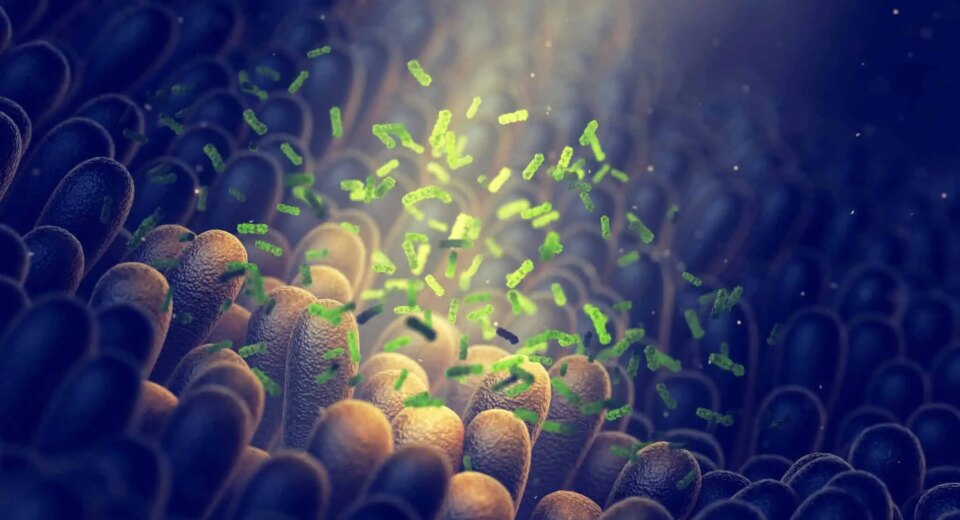
With Dr. Nick Bitz, Episode 119




What You’ll Learn
- Prebiotics vs. probiotics vs. synbiotics: Dr. Bitz defines the full spectrum of biotics, from prebiotics (non-digestible fibers that feed good bacteria) to postbiotics (heat-inactivated cell components that trigger immune responses) to synbiotics (the strategic combination of pre and probiotics) [13:12]
- Why most probiotics fail: Lactobacillus and Bifidobacteria are often dead on arrival, produce problematic D-lactic acid, and never colonize the gut. Most people are wasting money on B-list strains [18:38]
- Spore probiotics are the upgrade: Bacillus-genus spore formers survive stomach acid 100% of the time, produce beneficial L-lactic acid, transiently colonize for 2 to 3 weeks, and work at far lower CFU counts [16:18]
- Modern gut diversity crisis: The Hadza people of East Africa carry roughly 700 bacterial species in their gut versus about 200 for a typical Californian. We have lost ancestral strains through C-sections, antibiotics, sanitized food, and reduced soil contact [08:09]
- Gut-brain axis and psychobiotics: LactoSpore (Bacillus coagulans) improved symptoms of intractable depression in clinical research, demonstrating how specific spore probiotics strengthen gut-brain communication [31:56]
- How to evaluate a probiotic label: Look for DNA-verified strain codes, check whether CFU count is guaranteed at expiration (not just manufacture), and favor spore-based formulations that do not require refrigeration [39:28]
- Qualia Synbiotic formula breakdown: 13 ingredients from 140 candidates: 3 spore probiotic strains, 4 prebiotic fibers, fermented berries, fermented curcumin, digestive enzymes, N-acetyl glucosamine, magnesium, trace minerals, and Celastrus (Ayurvedic brain botanical) [25:01]
- Ayurvedic digestion wisdom: Triphala as a universal gut tonifier, the six tastes and their therapeutic effects, why Ayurveda recommends eating sweet foods first, and how food energetics (sattva, rajas, tamas) shape mental states [47:15]
- Debunking the “more is better” myth: Higher CFU counts and more strains do not equal better results. Choose 1 to 3 well-researched strains with proven specificity rather than a 100 billion CFU kitchen sink formula [53:58]
Why It Matters
Probiotics are now the second or third largest dietary supplement category in the world, yet most products use strains that are dead before they reach your gut. Dr. Nick Bitz, a naturopathic physician and Senior VP of Product Development at Neurohacker Collective, explains why the standard Lactobacillus and Bifidobacteria formulations are fundamentally flawed and what next-generation spore probiotics offer instead. Whether you currently take a probiotic and wonder if it is working, or you want to understand the full ecosystem of pre, pro, post, and synbiotics, this conversation separates effective gut health science from expensive marketing.
Who Should Listen
- Anyone spending money on probiotics who is unsure whether their current supplement actually works
- Biohackers and health optimizers looking to understand the full spectrum of biotics beyond basic Lactobacillus
- People interested in the gut-brain connection and how targeted probiotic strains can influence mood, cognition, and mental health
- Ayurveda enthusiasts who want to see how ancient digestive wisdom aligns with modern microbiome science
Synbiotics, Spore Probiotics & the Gut-Brain Connection
Dr. Nick Bitz returns to the show following his Episode 80 appearance on senolytics. This time, the focus shifts entirely to gut health. He opens by explaining why ancient physicians, from Ayurvedic to Traditional Chinese Medicine, considered digestive health the foundation of whole body wellness, a principle now validated by the discovery that the microbiome contains roughly as many cells as the human body itself.
The conversation moves into the taxonomy of biotics. Dr. Bitz defines prebiotics (non-digestible fibers that feed gut organisms), probiotics (living microorganisms that confer health benefits), postbiotics (heat-inactivated organisms that trigger immune responses), and synbiotics (the strategic combination of pre and probiotics). He argues that the standard Lactobacillus and Bifidobacteria strains, which make up 99% of commercial probiotics, are largely ineffective: they are often dead on arrival, fail to colonize the gut, and produce problematic D-lactic acid that can cause brain fog and fatigue.
The alternative is spore-forming Bacillus probiotics. These soil-born organisms survive stomach acid with a calcified protein coat, produce beneficial L-lactic acid, transiently colonize for 2 to 3 weeks, and work at far lower CFU counts than traditional strains. Dr. Bitz then walks through the Qualia Synbiotic formulation: 13 ingredients selected from 140 candidates, including 3 spore strains, 4 prebiotic fibers, fermented foods for postbiotics, digestive enzymes, and Celastrus for brain support.
The episode closes with Ayurvedic perspectives on digestion. Dr. Bitz discusses Triphala as a universal gut tonifier, the six tastes and their therapeutic properties, and the concept of food energetics (sattva, rajas, tamas) and how they shape mental states. He recommends eating sweet foods first (contrary to Western blood sugar advice) based on 5,000 years of Ayurvedic observation.
Key Terms Quick Reference
[13:12] Synbiotic
From the Greek “syn” meaning together. A synbiotic combines probiotics and prebiotics in one formula. The combination feeds existing gut bacteria while introducing beneficial new ones.
[13:12] Prebiotic
A non-digestible fiber that feeds beneficial microorganisms in the gut, inducing their growth. Different bacteria require specific fibers, so prebiotic specificity matters.
[13:12] Probiotic
A living microorganism that, by definition, must confer a health benefit when consumed. Roughly 99% of commercial probiotics are Lactobacillus or Bifidobacteria strains.
[13:12] Postbiotic
An inanimate (heat-inactivated) cell organism or its constituents. When ingested, postbiotics trigger immune and anti-inflammatory responses without colonizing the gut.
[16:18] Spore Probiotic
Bacteria from the Bacillus genus (B. coagulans, B. clausii, B. subtilis) that have a calcified protein coat. They arrive dormant, activate when pH shifts in the small intestine, and colonize for 2 to 3 weeks before the body eliminates them.
[31:56] Psychobiotic
A probiotic strain that has demonstrated benefits specifically for brain function. LactoSpore (Bacillus coagulans) is the most studied psychobiotic, with clinical evidence of improving depressive symptoms via the gut-brain axis.
[18:38] D-Lactic Acid vs. L-Lactic Acid
Lactobacillus and Bifidobacteria produce D-lactic acid, which the body breaks down poorly. Accumulation can cause brain fog, fatigue, and balance issues. Spore probiotics produce the beneficial L-form instead.
[10:41] Core Biome
The foundational set of ancestral bacterial strains gathered at birth (in utero, through the birth canal, via breastfeeding, and through skin-to-skin contact). Modern practices like C-sections and antibiotic use diminish this inheritance.
Why Are Most Probiotics Ineffective?
The short answer
The majority of commercial probiotics use Lactobacillus and Bifidobacteria strains that are dead before they reach your intestines, never colonize the gut, and produce problematic D-lactic acid that can cause brain fog and fatigue.
What Dr. Bitz found
After years formulating at Neurohacker Collective, Dr. Bitz considers Lactobacillus and Bifidobacteria “B-grade or even C-grade bacteria.” They are often dead in the capsule before you even take them. Those that survive manufacturing are destroyed by stomach acid. Manufacturers frequently use a tenfold overage at production just to meet label claims at time of manufacture, but after two to three years on a shelf, most organisms are no longer alive. Even the small percentage that arrive alive do not take up residency or colonize the gut. They pass through, offering only a postbiotic-like immune activation rather than the sustained gut remodeling most consumers expect. The additional concern is D-lactic acid production. Clinical reports show that chronic Lactobacillus supplementation can cause acidosis, leading to impaired brain function, balance issues, speech difficulties, and fatigue.
What to do about it
Switch to spore-forming Bacillus probiotics. They arrive alive 100% of the time thanks to their calcified protein coat, produce beneficial L-lactic acid, and transiently colonize the gut for 2 to 3 weeks. Studies show they work at dramatically lower CFU counts (as low as 15 million in children, 2 billion in adults). Look for products that guarantee CFU at time of expiration, not just manufacture, and verify DNA-identified strain codes on the label.
“By and large, they’re dead on arrival. They’re either dead in the capsule or the powder, or they are compromised by our stomach’s acid.” – Dr. Nick Bitz
Related: Key Essentials in Choosing the Best Prebiotics, Probiotics & Synbiotics
How Does the Gut-Brain Axis Actually Work?
The short answer
The gut and brain communicate bidirectionally at all times. Specific probiotic strains, called psychobiotics, can influence neurotransmitter production (serotonin, dopamine) and have shown clinical improvements in depression symptoms.
What Dr. Bitz found
The gut microbiota influences neurotransmitter production, including serotonin and dopamine, which are critical for mood regulation and cognition. Dr. Bitz highlights LactoSpore (Bacillus coagulans), the most researched spore-forming psychobiotic, which improved symptoms of intractable depression in clinical trials. The effects build over time rather than being immediately noticeable. From an Ayurvedic perspective, this gut-brain connection was understood thousands of years ago through the “seven dhatu” (tissue) theory, which describes how digestion (agni/fire) converts food into blood, muscle, fat, bone, nervous tissue, and reproductive tissue. Every organ system derives from and depends on the gut.
What to do about it
If you experience mood or cognitive issues alongside digestive problems, consider a spore-based synbiotic that includes LactoSpore or similar psychobiotic strains. Give it at least 2 to 3 weeks for the gut-brain effects to build. Support the process with fermented foods, diverse plant fibers, and reduced antibiotic use. Track mood and cognitive clarity alongside digestive improvements to measure the full spectrum of benefits.
“The gut microbiota can influence the production of neurotransmitters, such as serotonin and dopamine, which are crucial for mood regulation and cognition.”
Related: Biohacking Gut Health Tips
What Makes Qualia Synbiotic Different from Standard Probiotics?
The short answer
Qualia Synbiotic uses 13 ingredients (selected from 140 candidates) spanning spore probiotics, prebiotic fibers, fermented postbiotic foods, digestive enzymes, and a brain botanical, addressing multiple pathways instead of relying on a single strain.
What Dr. Bitz found
The Neurohacker team rated and ranked 140 ingredients based on published science, then taste-tested them to ensure the powder format was palatable (since digestion starts in the mouth). The final formula includes the three most well-researched spore probiotic strains, four prebiotic fibers (all low-FODMAP to avoid gas and bloating), fermented berries and fermented curcumin for postbiotic immune benefits, digestive enzymes for upstream support, N-acetyl glucosamine as a prebiotic amino sugar, magnesium as an osmotic bowel tonifier, trace minerals, and Celastrus (the Ayurvedic “intellect tree” botanical) for brain support. Their internal beta study found over 90% of participants experienced benefit within 2 to 3 weeks, reporting lighter digestion, more regular bowel movements, less gas and bloating, and improved mental clarity over time.
What to do about it
If you want a comprehensive gut formula rather than a single-strain capsule, look for products that combine spore probiotics with prebiotic fibers (preferably low-FODMAP), postbiotic components, and digestive enzymes. Powder formats offer the advantage of initiating digestion in the mouth. Stack with Triphala at night (1 to 2 grams in water) for additional Ayurvedic gut support, and incorporate more fermented foods and diverse plant fibers into your diet.
“We aren’t what we eat, rather, we are what we don’t poop out!” – Dr. Nick Bitz
The Probiotic Selection Checklist
- Check the strain type: favor spore-forming Bacillus strains over standard Lactobacillus and Bifidobacteria
- Look for DNA-verified strain codes on the label (e.g., “Lactobacillus acidophilus MTC 188”)
- Verify CFU count is guaranteed at time of expiration, not just time of manufacture
- Choose low-FODMAP prebiotic fibers to avoid gas and bloating
- Select 1 to 3 well-researched strains rather than a 10+ strain kitchen sink formula
- If the product requires refrigeration and you found it on a room-temperature shelf, skip it
- Consider synbiotic formulas that combine pre, pro, and postbiotic components for multi-pathway support
- Allow 2 to 3 weeks to evaluate, especially for gut-brain effects
- If taking antibiotics, gap your probiotic dose by at least 4 hours
- Stack with Triphala (1 to 2 grams in water at night) and more fermented foods for comprehensive gut support
Source: Nick Bitz’s Probiotic Selection Protocol, Neurohacker Collective
Products, Tools, & Resources Mentioned
Outliyr independently evaluates all recommendations. We may get a small commission if you buy through our links (at no cost to you). Thanks for your support!
Supplements
Qualia Synbiotic: Neurohacker Collective’s comprehensive gut formula with 3 spore probiotic strains, 4 prebiotic fibers, postbiotic fermented foods, digestive enzymes, and brain-supporting Celastrus. Code URBAN saves 15%.
Books
Prakriti: Your Ayurvedic Constitution: Dr. Robert Svoboda’s introduction to Ayurvedic body types and philosophy. Dr. Bitz’s recommended starting point for learning Ayurveda.
Perfect Health: The Complete Mind/Body Guide: Deepak Chopra’s first book, which explains the principles of Ayurvedic medicine clearly for Western audiences.
Other references
Dr. Robert Svoboda: Ayurvedic teacher and author referenced by Dr. Bitz as a foundational resource.
Neurohacker Collective: Dr. Bitz’s company. Extensive education, blogs, and ingredient monographs on their website.
Key Essentials in Choosing the Best Prebiotics, Probiotics & Synbiotics: Outliyr article covering the full spectrum of biotic supplements.
Frequently Asked Questions
What is the difference between a probiotic & a synbiotic?
A probiotic is a living microorganism that confers a health benefit when consumed. A synbiotic combines a probiotic with a prebiotic (non-digestible fiber that feeds beneficial gut bacteria) in one formula. The word comes from the Greek “syn” meaning together. By pairing them, the prebiotic nourishes the probiotic and supports the growth of existing beneficial bacteria in your gut.
Why are spore probiotics better than Lactobacillus?
Spore probiotics from the Bacillus genus have a calcified protein coat that protects them through stomach acid, so they arrive alive 100% of the time. They produce beneficial L-lactic acid instead of the problematic D-lactic acid that Lactobacillus produces. They transiently colonize the gut for 2 to 3 weeks and work at far lower CFU counts. Standard Lactobacillus strains are often dead on arrival and never take up residence in the gut.
How do I know if my probiotic supplement is actually working?
According to Dr. Nick Bitz, you should feel a probiotic working within about a week if it contains spore-forming bacteria. Look for lighter digestion, more regular bowel movements, less gas and bloating, and reduced abdominal distress. Over 2 to 3 weeks, you may notice improvements in cognitive performance and mood through the gut-brain axis. If you notice no changes after several weeks, your product may contain dead organisms.
Should I take probiotics with antibiotics or wait until after?
Dr. Bitz recommends continuing probiotics during an antibiotic course but spacing them apart by at least 4 hours. Never take them at the same exact time. Some physicians prefer waiting until the antibiotic course finishes. The evidence does not clearly favor one approach over the other, but ensuring probiotic supplementation at some point during or after antibiotic use is important for gut recovery.
Does a higher CFU count mean a better probiotic?
No. Dr. Bitz calls this the “Costco mentality” and considers it one of the biggest myths in probiotics. Spore probiotics work at 15 million CFU in children and 2 billion in adults. More strains also does not mean better results, since multiple strains may not be complementary and could cancel out benefits. Choose 1 to 3 well-researched strains with proven specificity rather than chasing high CFU counts.
About Dr. Nick Bitz
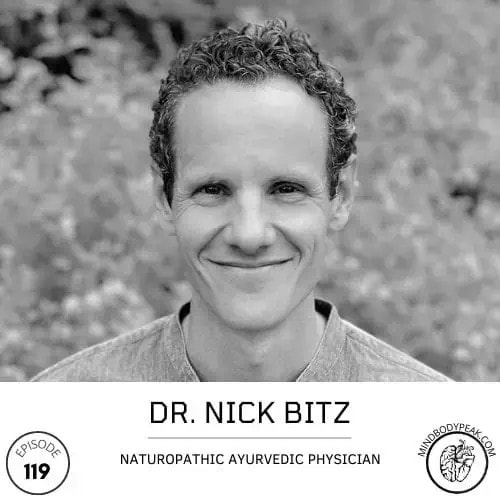
Dr. Nick Bitz is a Naturopathic Physician who specializes in Ayurvedic medicine. He is a leading voice in the natural products industry and currently serves as Senior VP of Product Development at Neurohacker Collective. His areas of expertise include nootropics, anti-aging medicine, biohacking, herbology, nutrition, and dietary supplements. This is his second appearance on the show, following EP80 on Ayurveda and Senolytics.
Related Episodes & Articles
- Episode 80: Ancient Ayurvedic Wisdom & Modern Longevity Science Tips (Dr. Nick Bitz, Part 1)
- Episode 3: Heal the Gut to Strengthen the Brain
- Episode 83: Gut, Heart & Mind: Brain Living (Jeanine Thompson)
- Episode 243: Microbiome, Endotoxin & Gut Health (Martha Carlin)
- Episode 232: NAD, Cellular Energy & Longevity (Dan Pardi, Neurohacker)
- Article: Key Essentials in Choosing Prebiotics, Probiotics & Synbiotics
- Article: Biohacking Gut Health Tips
Full Episode Transcript
Nick Urban [00:00:05]: Are probiotics one of the top ten most essential supplements that virtually every modern human should take? Or are they a massive billion or even trillion dollar scam? In this episode of Mind Body Peak Performance, we will cover the microbiome, the supportive nutrients, what actually works and doesn’t to improve the gut, the Ayurvedic perspective on gut health, microbes, and digestion, and how the integrity and health of your gut is really the basis of virtually every health or even anti-aging goal. Joining us this week is Dr. Nick Bitz of the Neurohacker Collective. He’s a naturopathic physician that specializes in Ayurvedic medicine. He’s a leading voice in the natural product industry and currently serves as Senior VP of Product Development at Neurohacker Collective. His areas of expertise include nootropics, anti-aging medicine, biohacking, herbology, nutrition, and dietary supplements. As I mentioned, in this episode, we focus primarily on the gut and the probiotics, prebiotics, synbiotics that can improve it. But if you go back to episode number 80, Dr. Nick and I recorded a podcast on one of the hallmarks of aging, which is senolytic therapy. So that episode will nicely complement this one. And if you want to find the links to everything we discuss, the show notes will be at outliyr.com and then the number of this episode, 119. If you feel like trying the Qualia Synbiotic product for yourself, one of the very few probiotic hybrids that I actually use, you can use the code Urban in the Neurohacker store. So if you’ve been wondering whether or not that expensive probiotic supplement you’re taking is actually working, this is the episode for you. All right, sit back, relax, and enjoy this conversation with Dr. Nick Bitz.
Nick Urban [00:02:00]: Dr. Bitz, welcome back to another round of Mind Body Peak Performance.
Dr. Nick Bitz [00:02:38]: Great to be here, Nick.
Nick Urban [00:02:39]: Your last episode was a hit. We talked about your product, Qualia Senolytic, and that whole front of the longevity movement, where things are going, the hallmarks of aging. And today we’re going to touch on a completely separate topic, but equally as important, if not more important, in my own opinion, and that is the gut microbiome and the ingredients, the compounds, the supplements, and things we can do to support that, to build a robust, healthy microbiome.
Dr. Nick Bitz [00:03:10]: Yeah, we had a really great conversation last time. I appreciated that. That was all geared around aging, senescence, and what we can do to kind of reverse that whole process. This is a corollary. I mean, it relates to the hallmarks of aging. It relates to longevity. But I think today we’re going to focus a little bit more on gut health. So a slight tangent, but I’m happy we’re going here. This is a really fun area to talk about.
Nick Urban [00:03:39]: So set the stage for us. Why is this something worth looking into and considering?
Dr. Nick Bitz [00:03:46]: If you go back to the ancient physicians, they knew that digestive health is the foundation of whole body health. That idea gets thrown around a lot, but it’s real. When you start leaning into the Ayurvedic philosophy, you lean into traditional Chinese medicine, you lean into some of the eclectic physicians. They all had that same philosophy, and it’s really core to how they approach the human body. And so we are, as a human body, we are a combination of 37 trillion cells. And they like to throw out the idea of, well, there’s ten times the amount of microbes in your belly. And that’s been talked about for the last decade. But in recent years, they’ve actually identified that it’s really about a one to one. So your cells versus the microbiome cells inside. So we have this really interesting symbiotic relationship with all of these bacteria and viruses and fungi and parasites that live inside our belly. I mean, they are a world in and of themselves. And I think we’re just starting to get into the research and unpacking that little by little.
Nick Urban [00:05:43]: Yeah, and I’ve seen research showing that if you have imbalances of certain microbes in your gut, that can translate into different behaviors and it can alter your personality. So it’s interesting to see how these things that are invisible to the naked eye can actually directly influence and even control the way we are, who we are, and our general life.
Dr. Nick Bitz [00:06:04]: Yeah, absolutely. I mean, there’s so much information that’s bound within the microbiome. I mean, the microbiome is now starting to be viewed as really the last human organ. And so there’s a lot of active research in that area right now. The microbiome weighs about three pounds, which is heavier than the human brain. So just to show you how much information is there, and then you start getting into the metabolites, that’s a whole other area. And that really is, I think, the future of microbiome research: what are these bacteria producing and then how the body reacts to that.
Nick Urban [00:06:43]: We’ll certainly touch on that. Before we get started into exploring this entire world, what are the unusuals or non-negotiables you’ve done so far today for your health, your performance, and your bioharmony?
Dr. Nick Bitz [00:06:56]: Oh, boy. More and more I prioritize some of the simplest things. I prioritize sleep, I prioritize early morning sunlight, I prioritize walks or something more vigorous like getting out and playing basketball with my friends. And lately, I’ve really prioritized earthing or grounding. That is a core tenet to really my daily regimen. If I can’t get outside, if I can’t get barefoot and really absorb the earth energy, I use an earthing pad underneath my desk. I am right now, and I have found that to be incredibly beneficial. And the more I dig into the research, it’s proving to be beneficial for a lot of different people as well.
Nick Urban [00:07:43]: Well, everything you just laid out has roots in ancestral medicine. These are all tried and true practices. And some of the research is now starting to actually show how they work and that they do, in fact, work, and that it’s no longer just a fairy tale that was created a long time ago.
Dr. Nick Bitz [00:08:09]: Yeah, fortunately, what’s old is new again. I think we certainly have lost our connection with nature. And the more you dig into the literature, that becomes more apparent. Even when you look at probiotics, the diversity that we have in the industrial world is minimal relative to what our ancestors had. Our ancestors had great diversity of bacterial species in their gut, and we just don’t. And that really limits how we function in the world. I mean, in part, we rely on those metabolisms, those metabolites. We rely on the genetic expression of these bacteria in order to function as a whole healthy individual. And if we lack those bacteria, we lack that information.
Dr. Nick Bitz [00:10:41]: We definitely coevolved with bacteria. When you look at a cell structure itself, the mitochondria is one cell ingesting another cell and having a symbiotic relationship. It’s very interesting when you get into the literature. The Hadza people in Eastern Africa, they have on average about 700 different species of organisms in their gut, whereas the typical Californian person has about 200 species. And so a lot of these microorganisms are becoming extinct, more or less. We’re not getting them through environmental exposure, through the diet.
Dr. Nick Bitz [00:13:12]: I’ll start with the word synbiotic. Synbiotic is kind of this emerging term. “Syn” comes from the Greek word that means together. So a synbiotic really refers to the combination of a probiotic and a prebiotic. A prebiotic is in essence a non-digestible fiber, specifically beneficial for the microorganisms in the gut because they induce the growth of those microorganisms. Of course, probiotics are the living microorganisms by definition. They have to be living, and they have to confer a health benefit. And then we’re starting to get into this whole new realm of microorganism constituents that are called postbiotics.
Dr. Nick Bitz [00:16:18]: Spore probiotics come from the Bacillus genus. You have Bacillus coagulans, Bacillus clausii, Bacillus subtilis, various types of spore-forming bacteria. And these bacteria are very unique because they have this calcified protein coat that protects them. They’re generally found in the soil or in the air, and they’re really dormant bacteria. They’re neither really living nor are they dead. They’re just kind of asleep. And when you ingest them and they move through your GI tract, when they reach the small intestine, the pH shift is what allows them to come alive.
Dr. Nick Bitz [00:18:38]: I’m not a big fan of Lactobacillus and Bifido. By and large, they’re dead on arrival. They’re either dead in the capsule or the powder, or they are compromised by our stomach’s acid. And so they don’t actually reach the intestinal tract alive. The downside is, even if 1% arrive alive, they don’t take up residency in the gut, they don’t normally colonize the gut, and they don’t have this really profound health impact. The last thing worth mentioning is that these are lactic acid bacteria. Lactobacillus and Bifido produce D-lactic acid, and the body doesn’t break down D-lactic acid very well. People that are taking these probiotics get this acidosis effect where you have accumulation of lactic acid in the blood, which can impact brain function, balance, speech, causes fatigue.
Dr. Nick Bitz [00:25:01]: We looked at 140 different ingredients. We rated and ranked all of them based upon the science that’s available. And then we went into the lab, we taste-tested all of them. We wanted to make sure that it tasted good. And in the end, we landed on about 13 ingredients that we felt was super comprehensive from a gut-brain axis perspective. We have three probiotic strains, the three most well-researched spores. We also have four prebiotic fibers, including a fermented blend of berries. We have a fermented curcumin in there as well, giving us the postbiotic heat-inactivated bacteria strains.
Dr. Nick Bitz [00:31:56]: Generally speaking, people will feel a little bit lighter, they’ll notice that they’ll have more frequent, more full bowel movements, they’ll have less abdominal distress, less gas, bloating, indigestion. In the long term, you’re going to notice benefit in your mentation, in cognitive performance. LactoSpore is the most researched spore-forming bacteria and it’s known as a psychobiotic because it has really impactful benefits for the brain specifically. They actually did research on individuals with intractable depression and they found that giving a Bacillus coagulans LactoSpore probiotic improved symptoms of depression.
Dr. Nick Bitz [00:39:28]: If it’s a probiotic product, I want to know, is it DNA verified? Does it have a little strain code after? So if it says Lactobacillus acidophilus MTC 188, that is a specific code showing that that strain has been DNA verified. I would want to know too, does it say 10 billion CFU at time of manufacture or is that at 10 billion CFU at time of expiration? There’s a huge difference there because at time of manufacture essentially means that they’ve only put in 10 billion organisms. Most of them are going to be dead by the time they actually reach your mouth.
Dr. Nick Bitz [00:47:15]: I certainly like to stack magnesium in there. Magnesium is a fantastic osmotic laxative. If I lean into the Ayurvedic perspective, I’m a huge proponent of a product called Triphala. From an Ayurvedic perspective, that’s considered really the panacea. If you work with any Ayurvedic physician, inevitably you will walk out the door with a prescription for Triphala. It’s super incredible. It balances all three body types. It tonifies the GI tract if somebody’s too constipated or if they have loose stools, it creates balance. Incredibly nutritive.
Dr. Nick Bitz [00:50:21]: Taste is therapeutic. The American diet in particular is lacking the bitter taste. In part, that’s why apple cider vinegar is so healthful, and it’s why it’s been used for hundreds of years. It’s a pre-meal digestive tonic. And when you taste that bitter component in the mouth, it really fires up your digestion. It prepares the body for food.
Dr. Nick Bitz [00:51:12]: Ayurveda recommends eating sweet first, so they recommend eating desserts first. If you eat desserts after a meal, it really disrupts all of the digestive processes because the body always digests the sweet taste first. So just try it. Try eating dessert before you have a meal. You’ll find that your digestion is much more easy.
Dr. Nick Bitz [00:53:58]: I think the biggest myth that we’re trying to dispel is that more is better. That kind of Costco mentality where people are gravitating towards moving from a 50 billion CFU product into 100 billion CFU and they expect greater results. That’s just not the case. There’s also the mentality of more strains is better. And so you find a lot of products that are in the marketplace that are like ten or more bacterial strains. And I’m certainly not convinced that that’s the case. We don’t know that they’re complementary or that they’re synergistic.
Dr. Nick Bitz [00:57:15]: We use validated questionnaires. We always run a beta study on all of our products before they launch to make sure that they’re safe, tolerable, and efficacious. In this case, we found that over 90% of study participants enjoyed using the product, and they actually got benefit over the course of two to three weeks.
Dr. Nick Bitz [00:58:03]: Neurohacker.com, that’s the best place. Of course, we’re on all the social media platforms as well. But neurohacker.com is a fantastic resource. We have a ton of education on there. We have a lot of blogs. We have ingredient monographs, written documents about why we formulated in the way that we formulated.
Nick Urban [00:58:27]: I believe I also have a code for all Neurohacker products, and I think it’s Urban. So if you use Urban, that’ll save you on your Qualia Synbiotic order or any other of their products.
Dr. Nick Bitz [01:00:05]: My biggest focus right now is just starting my yoga practice again. I’m starting to do sun salutations every day, maybe every other day. That was a core exercise practice for me for years, but that certainly has fallen off. So I want to start doing a deep dive back into the world of yoga.
Dr. Nick Bitz [01:00:42]: I’m really starting to do a deep dive into the oral microbiome and the impact that oral care has on the digestion tract and whole body health, especially brain function. I think that’s a super interesting area right now. I don’t think people think about their oral care enough, and so just the basics of why you should floss and how that relates to cognitive health and potentially even dementia down the line.
Dr. Nick Bitz [01:01:29]: I just want to thank you for having me on again. It’s always fun chatting with you. I’ll just end by saying that there is no one remedy that people need to lean into. And so use your body as a lab, try various products, see how they react, and get back to basics, get back to nature. Focus on the easy things that are controllable, that are within your grasp. Focus on sleep, stress management, relationships, and from that, I think you can gain and regain health.
Nick Urban [01:02:15]: That’s a great list, and I like to take the same approach. Look for the timeless wisdom that’s held true for hundreds or thousands of years, and then layer on some of the modern conveniences and technologies and tools to help reduce the amount of work that each of these require and make living in harmony with our bodies and our biologies easier. And that is the perfect marriage for long-term health, performance, and, as I call it, bioharmony.

Comments