
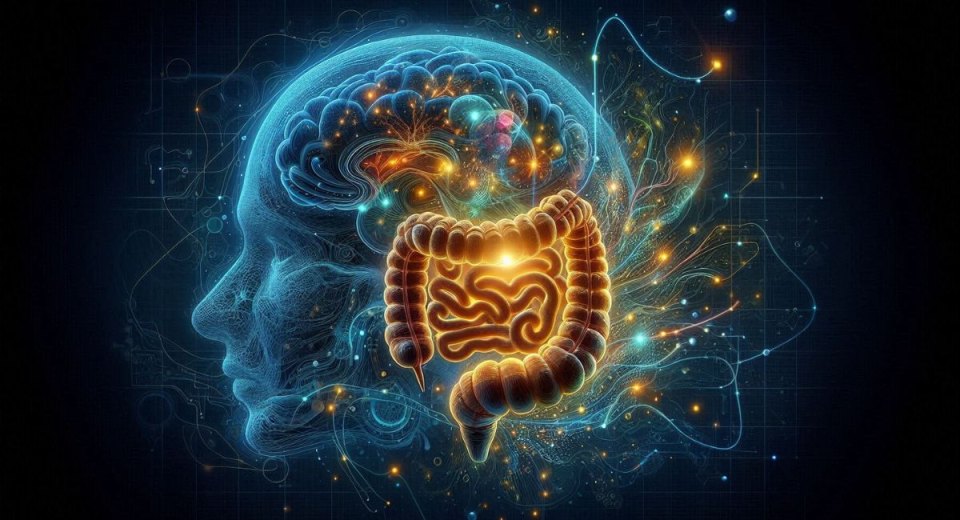
With Martha Carlin of BiotiQuest, Episode 243




What You’ll Learn
- Question everyday inputs: Martha frames daily choices (food, drink, air, household chemicals) as long-term health investments and hidden biological signals most people ignore. [0:00]
- 60 years of antibiotic overuse: Citing Dr. Martin Blaser’s Missing Microbes, Martha walks through how antibiotic saturation over decades has collapsed microbial diversity and driven chronic disease. [4:12]
- Gut health blind spot in clinical medicine: Doctors check bowel function less rigorously than pet vets check dog stools. Bowel health is a leading indicator that rarely gets mapped in primary care. [5:51]
- Horizontal gene transfer explained: Microbes share genes laterally, not just through reproduction. This is how antibiotic resistance spreads and why the microbiome behaves like a distributed intelligence. [17:25]
- Single-strain probiotics are the wrong model: High-dose one-strain probiotics work like dumping a single species into a collapsed coral reef. Ecosystems beat solo strains. [21:07]
- BiotiQuest’s ecosystem approach: Dr. Raul Kano, Martha’s chief scientific officer, pioneered microbial team design at Cal Poly using oil-spill bioremediation principles applied to the human gut. [23:00]
- Protect the glycocalyx: The sugar-coat lining your gut cells is the first line of defense. Household chemicals and processed food degrade it faster than most people realize. [41:05]
- Polyphenols, seaweed, bone broth, hyaluronic compounds: Martha’s short list of food-based interventions that rebuild the gut lining and calm systemic inflammation. [48:00]
- Potassium vs sodium at the gut barrier: The mineral ratio at the epithelium controls whether the gut lets things in or keeps them out. Most leaky gut protocols ignore this. [55:00]
Why It Matters
Most gut health advice stops at fiber and probiotics. Martha Carlin, founder of BiotiQuest and self-taught microbiome researcher who built her company after her husband’s Parkinson’s diagnosis, shows that the current probiotic model is backwards. The gut isn’t a collection of strains you add. It’s an ecosystem that collapses or thrives based on what you feed, what you kill, and how intact the lining is. Pulling from her chief scientist Dr. Raul Kano’s 35 years of microbial ecology research, she explains why single-strain probiotics fail where designed microbial teams succeed, and why household chemicals, antibiotics, and processed food erode the glycocalyx that keeps the whole system running.
Who Should Listen
- Anyone with chronic bloating, irregular bowels, inflammation, or autoimmune flares who has tried probiotics without lasting results.
- Biohackers interested in the frontier of microbiome science including horizontal gene transfer, microbial ecology, and designed microbial teams.
- Parents, caregivers, or anyone concerned about how decades of antibiotic exposure and processed food have shaped their microbial baseline.
Gut Health as an Ecosystem, Not a Supplement
On the High Performance Longevity podcast, Nick Urban sits down with Martha Carlin, founder of BiotiQuest. Martha came to microbiome science the hard way: after her husband’s Parkinson’s diagnosis, she spent years digging into gut-brain research and eventually built a company around what she learned. BiotiQuest’s chief scientific officer Dr. Raul Kano spent 35 years at Cal Poly as a microbial ecologist designing microbial teams for oil spill remediation. BiotiQuest applies that same ecosystem-design philosophy to human gut health.
The conversation covers why 60 years of antibiotic saturation has collapsed microbial diversity (citing Dr. Martin Blaser’s Missing Microbes), why single-strain probiotics at high doses are the wrong intervention, how horizontal gene transfer means microbes share traits laterally, and how to protect the glycocalyx (the sugar-coat on gut cells that keeps toxins out). Martha walks through polyphenols, seaweed, bone broth, and hyaluronic compounds as food-based gut-lining support. She also explains why potassium-sodium balance at the epithelium is an overlooked lever in leaky gut protocols.
You’ll walk away understanding why the ecosystem model matters, how to audit everyday inputs (food, household chemicals, air) for microbiome impact, and the specific foods and formulations that rebuild gut lining without dumping in foreign strains the body has to filter out.
Key Terms Quick Reference
Specialized terms surface throughout this conversation. Here’s a quick reference.
[4:12] Missing Microbes Hypothesis: Dr. Martin Blaser’s thesis that 60+ years of antibiotic exposure has collapsed microbial diversity in modern humans, driving the rise in chronic disease, allergies, and autoimmune conditions.
[17:25] Horizontal Gene Transfer: The process by which microbes share genes laterally rather than only through reproduction. It’s how antibiotic resistance spreads through the microbiome in days rather than generations.
[17:59] Microbial Ecosystem: A community of microbes whose members interact and depend on each other like a coral reef. Lose key species and the whole system can collapse from a single gap.
[21:07] Single-Strain Probiotic Limitation: High-dose one-strain supplements work like planting one species in a deforested landscape. The intervention ignores the ecology that determines whether the species can establish.
[23:00] Microbial Team Design: Dr. Raul Kano’s approach. Combining complementary microbes in specific ratios so the ecosystem produces the target metabolites, rather than relying on one strain doing everything.
[41:05] Glycocalyx: The sugar-coat on the outside of cells lining your gut. Functions as a biological buffer that filters what crosses into your bloodstream. Damaged by household chemicals, NSAIDs, and ultra-processed food.
[48:00] Endotoxin (LPS): Lipopolysaccharide, a component of gram-negative bacterial cell walls. Leaks into circulation through a damaged gut lining and drives systemic inflammation, brain fog, and metabolic dysfunction.
[55:00] Epithelial Potassium:Sodium Ratio: The mineral balance at the gut barrier that controls tight-junction permeability. Leaky gut protocols often focus on food triggers but miss the mineral physiology.
Why Single-Strain Probiotics Fail at High Doses
The short answer
Microbiomes are ecosystems, not strain collections. Dumping a trillion CFUs of a single species into a collapsed gut works the same way dropping one plant species onto a clearcut works: without the supporting community, the newcomer can’t establish. Designed microbial teams solve this.
What Carlin found
Martha partnered with Dr. Raul Kano, who spent 35 years as a microbial ecologist at Cal Poly designing bacterial teams for oil-spill remediation. His insight: in any complex environment, microbes specialize and hand off metabolic work. One strain alone can’t do what a coordinated team does. BiotiQuest’s Sugar Shift product is a team of specific strains that together produce mannitol (a sugar alcohol that modulates blood sugar downstream). No single strain in isolation produces the same effect.
What to do about it
Skip mega-dose single-strain probiotics unless you have a specific clinical reason. Look for products where the strains are chosen to work as a metabolic team toward a target outcome (blood sugar, sleep, immunity, stress). Pair any probiotic with diverse fiber sources (different vegetables, resistant starches) so the microbes have fuel.
“Ecosystems are not simple. If you look at a coral reef, some tiny little thing that dies off is what collapses the whole reef. That’s been one of my biggest beefs with probiotics.” – Martha Carlin
Related: Biohacking Gut Health Tips
How Microbes Share Genes & Spread Antibiotic Resistance
The short answer
Microbes don’t only pass traits through reproduction. They swap genes laterally in what’s called horizontal gene transfer. This is how antibiotic resistance spreads through a gut community in days. It’s also why microbial ecosystems behave as distributed intelligence rather than a bag of independent organisms.
What Carlin found
Each time a person or an animal completes a course of antibiotics, surviving bacteria can pass resistance genes to their neighbors via plasmids, transposons, and phages. The gut effectively becomes a gene-sharing marketplace. Factory-farmed meat treated with sub-therapeutic antibiotics compounds this: residual antibiotic resistance genes travel with the meat into the consumer’s gut. Most people don’t realize they’re inheriting the resistance history of every animal in their food chain.
What to do about it
Use antibiotics only when genuinely medically necessary. Source meat from farms that don’t use sub-therapeutic antibiotics (grass-fed, pasture-raised, antibiotic-free labels). After any antibiotic course, rebuild with fermented foods and diverse fiber over 60 to 90 days rather than just a 2-week probiotic. The ecosystem needs time to reorganize, not a strain flood.
“For the last 60 years we’ve all had a massive amount of antibiotics. And the microbes learn from each other. Horizontal gene transfer is how they share resistance.” – Martha Carlin
Related: Biohacking Gut Health Guide
The Glycocalyx: Your Real First Line of Gut Defense
The short answer
The glycocalyx is the sugar-based coating on the outside of your gut cells. It’s the first barrier between the contents of your gut and your bloodstream. Most "leaky gut" conversations skip it and focus on tight junctions, but the glycocalyx is where the defense actually starts.
What Carlin found
Household chemicals (glyphosate, surfactants, bleach residues on produce), NSAIDs, excessive sugar, and ultra-processed food all degrade the glycocalyx. Once that layer thins, endotoxin (LPS from gram-negative bacteria) leaks through more easily, driving systemic inflammation. Martha’s clinical hypothesis: repair the glycocalyx first, then the tight junctions downstream recover more easily. Food-based interventions beat most supplements here because the precursors are nutritional, not pharmacological.
What to do about it
Add polyphenols (berries, olive oil, green tea, dark chocolate), seaweed (nori, wakame, dulse), bone broth, and hyaluronic acid-rich foods (bone-in meats, eye tissue in small fish). Audit household chemicals, especially cleaning products and conventional produce. NSAIDs only when necessary, since ibuprofen is a known glycocalyx disruptor.
“People talk about leaky gut, and I think that’s been great. But it’s taken about a decade for the glycocalyx to enter the conversation. Potassium and sodium have very different impacts on how those little seaweeds stretch out.” – Martha Carlin
Related: Best Colostrum Supplements Guide
The Carlin Microbiome Rebuild Protocol
Martha’s framework for rebuilding gut ecosystem integrity rather than chasing symptoms. Start with input audit. Layer the lining support. Add ecosystem-designed probiotics last, not first.
- Audit your inputs first: Food, water, air, household chemicals, skincare. Microbial damage often comes from inputs you never thought to question.
- Cut the glycocalyx disruptors: Glyphosate (conventional wheat, oats, legumes), NSAIDs when possible, surfactants in cleaning products, ultra-processed food.
- Feed the ecosystem with diversity: 20 to 30 different plant foods per week. Diverse fiber = diverse microbes. Fermented foods (kimchi, sauerkraut, yogurt) every day or two.
- Add gut-lining food support: Polyphenols, seaweed, bone broth, hyaluronic-rich foods. Food-based glycocalyx rebuilding beats most supplements.
- Only then add designed probiotics: Look for team-based products aimed at a specific metabolic outcome (blood sugar, sleep, immunity). Skip mega-dose single strains.
- Rebuild slowly after antibiotics: 60 to 90 days of ecosystem repair, not a 2-week probiotic course. The community needs time to reorganize.
- Track bowel function as a leading indicator: Consistency, frequency, smell, urgency. These change before symptoms escalate elsewhere.
Common gut health mistakes
- Mega-dosing a single-strain probiotic and expecting ecosystem-level change. One species can’t replace a community.
- Fixing the gut lining without cutting the inputs that damaged it. New tissue can’t form while the attack continues.
- Using antibiotics for every illness. Most upper-respiratory bugs are viral. Antibiotics hit your microbiome anyway.
Source: Carlin’s Microbiome Rebuild, BiotiQuest
Frequently Asked Questions
Why do single-strain probiotics fail?
Because the gut is an ecosystem, not a strain collection. A single species at a high dose can’t do what a coordinated microbial team does. It’s like planting one tree on a clearcut and expecting a forest. The strain has no supporting community to establish with.
What’s horizontal gene transfer & why does it matter?
Microbes share genes laterally (through plasmids, transposons, phages) instead of only through reproduction. This is how antibiotic resistance spreads through a gut community in days. It’s also why your microbiome is a distributed intelligence rather than a static collection.
What is the glycocalyx?
The sugar-based coating on the outside of cells lining your gut. It’s the actual first line of defense between gut contents and bloodstream. Most leaky gut protocols focus on tight junctions but skip the glycocalyx where the barrier actually starts.
What damages the glycocalyx most?
Glyphosate (common on conventional wheat, oats, legumes), NSAIDs like ibuprofen, surfactants in cleaning products, ultra-processed food, and excessive sugar. Most people are exposed to several of these daily without realizing it.
What foods rebuild the gut lining?
Polyphenols (berries, olive oil, green tea, dark chocolate), seaweed (nori, wakame, dulse), bone broth, and hyaluronic-rich foods like bone-in meats. Food-based glycocalyx rebuilding typically outperforms isolated supplements.
How long does it take to rebuild the microbiome after antibiotics?
Martha says 60 to 90 days of ecosystem-focused work, not a 2-week probiotic course. The community needs time to reorganize, which means diverse fiber, fermented foods, and cutting disruptors for 2 to 3 months minimum.
What is BiotiQuest’s Sugar Shift?
A team of specific probiotic strains designed to work together to produce mannitol, a sugar alcohol that modulates blood sugar downstream. It’s an example of the designed-team approach rather than a single mega-dose strain.
Is it safe to consume a probiotic daily long-term?
With ecosystem-designed team products, generally yes. With single-strain mega-dose products, there’s evidence of diminishing returns and potential overgrowth of one species. Rotate foods and products, favor diversity over dose.
Do bowel changes really signal broader health issues?
Yes. Stool consistency, frequency, smell, and urgency shift before many chronic conditions escalate. Martha points out that we track pets’ bowel health more rigorously than our own. It’s a leading indicator worth monitoring.
Products, Tools, & Resources Mentioned
Outliyr independently evaluates all recommendations. We may get a small commission if you buy through our links (at no cost to you). Thanks for your support!
Supplements & probiotics
BiotiQuest Sugar Shift: Martha’s flagship team-designed probiotic. The strains work together to produce mannitol for downstream blood sugar modulation.
Viome Gut & Cellular Health Test: RNA-based microbiome testing for personalized food recommendations. Martha references the ecosystem-level data approach.
Foods & practices
Polyphenols: Berries, olive oil, green tea, dark chocolate, herbs and spices. The first-line food category for rebuilding the glycocalyx.
Seaweed: Nori, wakame, dulse. Contains sulfated polysaccharides that specifically support the mucus layer of the gut.
Bone broth & hyaluronic compounds: Bone-in meats and traditional broths supply glycine, proline, and hyaluronic acid precursors for gut lining repair.
Books & references
Missing Microbes: Dr. Martin Blaser’s book on the collapse of microbial diversity under 60+ years of antibiotic exposure. Foundational reference for this episode.
Connect with Martha
BiotiQuest: Martha’s company with the Sugar Shift and other ecosystem-designed probiotic formulations.
Instagram @biotiquest: Microbiome science and protocol updates.
YouTube @BiotiQuest: Deep-dive videos and interviews.
LinkedIn: Professional updates and research.
About Martha Carlin
Martha Carlin is the founder of BiotiQuest, a probiotic formulation company built on ecosystem-design principles. After her husband was diagnosed with Parkinson’s disease, Martha spent years self-teaching microbiome science and eventually partnered with Dr. Raul Kano, a microbial ecologist with 35 years at Cal Poly, to apply bacterial-team bioremediation concepts to human gut health. BiotiQuest’s flagship product Sugar Shift uses a designed microbial team to produce mannitol for downstream blood sugar modulation. Martha writes and speaks on the limits of single-strain probiotics, horizontal gene transfer, glycocalyx protection, and the missing-microbes hypothesis. Find her on Instagram, YouTube, or LinkedIn.
Related Episodes & Articles
- Episode 204: Glutathione: Master Antioxidant for Longevity
- Episode 208: Peptides vs Natural Supplements: Oral Gut Peptides
- Episode 212: Ayurvedic Secrets: Doshas, Seasonal Eating & Rituals
- Episode 222: Biohack Your Gut & Restore Your Microbiome
- Episode 257: Personalized Nutrition, RNA vs DNA & The Future of Microbiome Testing
- Article: Biohacking Gut Health: Scientific Optimization Guide
- Article: Best Colostrum Supplements for Adults
- Article: Nervous System Regulation: High-Performance Biohacker’s Guide
Music by Alexander Tomashevsky
Full Episode Transcript
Martha Carlin [00:00:00]:
The universal principle of being conscious of what you put in your body at the simplest level.
Nick Urban [00:00:09]:
You’re listening to High Performance Longevity. The show exploring a better path to optimal health for those daring to live as an outlier in a world of averages. I’m your host, Nick Urban, bioharmonizer, performance coach, and lifelong student of both modern science and ancestral wisdom. Each week we decode the tools, tactics and timeless principles to help you optimize your mind, body and performance span things you won’t find on Google or in your AI tool of choice. From cutting edge biohacks to grounded lifestyle practices, you’ll walk away with actionable insights to look, feel and perform at your best across all of life’s domains. Martha, welcome to the podcast.
Martha Carlin [00:00:59]:
Thanks for having me, Nick.
Nick Urban [00:01:01]:
Yes, we were just chatting offline about all of the topics that you’ve studied and are involved with. We’re today going to cover some things such as lipopolysaccharides, glyphosate, the microbiome, Parkinson’s, and the interconnection between a lot of fields that are traditionally not seen as interconnected. So before we begin, how did you get involved in all this? Because your story is an interesting one in itself.
Martha Carlin [00:01:27]:
So my actual training and background out of university, I was trained as an accountant and of course in accounting. Everything must balance. It’s nice and tidy. And coming out of that, I went to work for one of the large public accounting firms as an auditor and they train you there to never take anything at face value, examine the evidence for yourself. So that kind of mindset and training sets you up to be a, I’ll say, a different kind of person in the world. And then they trained me on something, on a way to look at a business, to identify business risk called transaction flow review, which is where you draw these big flowcharts of everything going through the business and you’re looking for those breakpoints. And fast forward from that point in 2002, my 44 year old, healthy, marathon running, you know, looked perfect. Husband was diagnosed with Parkinson’s and I was like, that’s an old person’s disease.
Martha Carlin [00:02:38]:
And the way they hand you the diagnosis is a very, it’s like this heavy weight that gets dropped on you with really no hope. And from my kind of mental thinking of never take anything at face value, examine the evidence for yourself. I started down this path of examining the evidence for myself and with that, mapping out the risk, like what’s flowing through the body. So the first place I started was, okay, I got to look at the food, because that’s the main thing that’s flowing through the body. And so I spent about a decade looking at our food supply, changing what we were eating, trying to go all organic, which there wasn’t a lot of available back in 2002, and then saying, okay, well if I can’t find organic, can I understand, like what we’re doing to our food supply? Like, what kind of chemicals are we using? What is this thing called genetic engineering? How does it work? Could it transfer to us? And if it could transfer to us, like, what might that mechanism be? So I set up kind of all these questions along the process of looking at food and studying food science and nutritional epigenetics, even like how different foods affect gene expression in our body. And then in 2014, I read a book by Dr. Martin Blaser called Missing Microbes. And Dr.
Martha Carlin [00:04:12]:
Blaser is a world renowned infectious disease doctor, spent a lot of his career researching H. Pylori that is connected with ulcers. And once that was discovered, of course everybody was given antibiotics. And his book, Missing Microbes was actually about us growing up in the age of antibiotics, which for the last, let’s say 60 years or maybe a little longer now, we’ve all had a massive amount of antibiotics. And what he was studying was the connection to the rise in what are called non communicable diseases or chronic diseases as opposed to acute infection. And, and through that work, basically started to show that we had depleted our microbiome. And I had never heard this term microbiome. Like what is that? Well, it’s the trillions of bacteria, fungi and viruses that live in and on our body and they function as our internal pharmacy.
Martha Carlin [00:05:19]:
And we are about two thirds microbial in terms of cells. So we’re kind of like a giant petri dish really. And so that was just this really big epiphany for me. And about six months later, I read the first paper where they showed the two different types of Parkinson’s. One is primarily tremor dominant and the other is posture and gait dominant. And they could divide those people by the bacteria in their gut. And I was like, it was like, you know, home run. The gut is the general ledger.
Martha Carlin [00:06:00]:
Sort of back to my accounting, that’s where it all balances out and the record of your history is there. And so I actually quit my job that December and started funding some research at the University of Chicago that introduced me to Dr. Jack Gilbert, one of the pioneers in the microbiome space, who was later my co founder along with Dr. Suzanne Vernon of the Bio Collective, where, you know, I had this idea, okay, we’re going to collect people’s poop, because that’s how you look at the microbiome. And people are like, what are you nuts? And I was like, no. And we’re not only are we going to collect people’s poop because there was, there was a project going called American Gut and a company called Ubiome, and they were basically just taking a little swab and we actually were like, no, you need the whole thing. So we designed this kit. People look at us like we were crazy to like send you a box, a giant box.
Martha Carlin [00:07:03]:
It said revolutionary on the side. And it had this little hammock. And you went in the hammock and this picked up the arms of the hammock and stuck it back in the cooler with this big freezer brick and you know, put your sticker on there that said, I did my duty and you shipped it back to us. And we then inside the bag so it wouldn’t be exposed to oxygen, would basically homogenize the sample and then squeeze it into a syringe and put it into these little 1 gram aliquots that we made available to scientists all over the globe. And then we did sequence, we sent them off for sequencing ourselves and started building this big data bank to try to kind of comb through all the data and start to see not just Parkinson’s, but across the population, like, what are the things that are disrupted in our system?
Nick Urban [00:08:03]:
And so what did you find?
Martha Carlin [00:08:05]:
We label all these different diseases, but there are some very key metabolic disruptions that are shared across diseases in the microbiome that are rarely connected because when people study it, they’re still studying it in a very reductionist way. And like, what was one of the really interesting things to me that we found? So we had our Parkinson’s cohort and we actually got hired by Philip Morris, the tobacco company, to look at microbiomes of smokers that we had. And so we were doing a bunch of analytics on that. And you know, some people will know this, but not many. Parkinson’s is less prevalent in smokers. And as we were looking at the microbiome data, we could actually see kind of the flip metabolic profile of different microbes and the meta, the meta. Metabolites that they were producing in the smoker and the Parkinson’s. But another kind of really crazy other thing that we found is the people in our lab, after, I would say after a year or two of collecting samples, they came to me.
Martha Carlin [00:09:24]:
And they said, you know, we can tell if somebody has Parkinson’s just by looking at their sample. When it arrives in the lab, we don’t need any information from them at all. And I was like, what do you mean? And they said, oh, it’s like concrete. So if you remember, I said we used the syringe to make the little one gram aliquots. Well, the Parkinson’s stool was so hard, it was like concrete and it would not go through the syringe. They actually had to make those little aliquots using a caulking gun so that they could apply more force. So, and this ultimately has led to some research. I actually have a paper in review right now that that’s kind of one of the foundational pieces of kind of what led us to connect many different dots in Parkinson’s.
Martha Carlin [00:10:17]:
So what we found was there’s a lot about in the poop of information. I mean, I’m actually just finishing writing a really short book called In Search of the Perfect Poop. And it’s talking a bit about this sample collection. You know, we had somebody who went on an all milk diet for two or three months before they sent us a sample. And their stool was white, which, you know, I guess makes sense, but kind of crazy because never heard that before. We had a young man who was autistic and his sample came in and it was full of cherry pits. And his mother said, oh, you know, he eats cherries all the time, pits and all. And I started looking into that because, you know, often the body is like giving you a signal of something that it needs.
Martha Carlin [00:11:10]:
And cherry pits, like apricots, contain amygdalin that makes that cyanide compound that can also make the sulfur compounds that are in our tears or different things that are antibacterial. So do I know for sure that’s what was going on there? I don’t. But there, you know, there were a lot of really interesting clues, I would say, or questions that arose out of that. Some of which people are answering today and some of which are still out there to be answered.
Nick Urban [00:11:41]:
Yeah, yeah. I mean, any good holistic health professional, it’s not the most fun question to ask and to answer, but like the stool is a really important source of information. Understand what’s going on in the body. And there’s other ones too, but that’s one that gives a lot of information and is something that is free. So it’s, it’s worth looking into.
Martha Carlin [00:12:02]:
It’s also. It was interesting to me when I first Started the company. I was out on a hike and I stopped for lunch and this couple sat down next to me and they had a dog. And they were asking what I did and I said, well, I have this company, we collect poop. This is what, you know, blah, blah, blah. And they looked at me and they said, oh, that makes perfect sense. Because that’s how we know if our dog is healthy. We look at his poo, is he pooping every day? What does it look like? All that? And it’s.
Martha Carlin [00:12:34]:
It’s so logical for a pet owner to think about that, but they don’t really apply it to themselves. It’s. It’s kind of nuts. And then in most cases, you know, if you’re just going in to your GP or whatever for a regular checkup, they’re not going to ask you about your stool. And even if they do, they’ll often say, like, if somebody says, well, I only go every three or four days, they’ll say, that’s normal. I’ll say, you know, normal in today’s world is not optimal. And since you talk about longevity, optimal is really getting rid of that waste every day. Because waste sitting in your body is producing toxin.
Martha Carlin [00:13:23]:
Toxins. I know we’re going to talk about endotoxin, but that is one of those things where waste sitting in your body is multiplying bacteria that can produce. Produce toxins that can cross those barriers in your gut, get into your bloodstream and be inflammatory, really, anywhere in your body.
Nick Urban [00:13:43]:
So to connect the dots that we’ve touched on so far, you mentioned diet and understanding the food supply and even the epigenetic effect of those foods on the body. And also, can these things that we’re engineering, these microbes that were engineering, can they cross over into the human host? What did you find there? And is there any link between that and this?
Martha Carlin [00:14:06]:
Well, so I did find some interesting things there. So when we did our sequencing of samples, we did what’s called whole genome sequencing. So that means we got everything in the sample, like every gene of everybody. It’s a tremendous amount of data for every sample, because in a stool sample, it’s about 300 times more genes than the human genome, just to give you some perspective. So you can get antibiotic resistance genes, all these different things. And so I was giving a talk about some of this, and so I started combing through some of our data related to Parkinson’s, and I had a paper on what are called marker genes that are used in genetic engineering. So, for example, often antibiotics are used in Genetic engineering, where they’ll take the gene segment they want to engineer into a plant and they will blanket that segment on each side with a particular antibiotic resistance gene so that after they do the gene modification, then they apply that antibiotic and the only thing that survives is those, the genetic material that had the antibiotic resistance. And so I had this question like, okay, you’re putting that into the food, we’re eating the food, could that be in our gut? And so we did this analytics and I took several of the genes from that marker gene study and showed a difference in the Parkinson’s gut and controls that these genes were more prevalent in the Parkinson’s gut.
Martha Carlin [00:15:46]:
Now, I don’t think anybody’s ever taken that and run with it to look at the research, but it certainly showed me that the genes were present in the microbiome. And then I think I found a study, it’s been a while since I’ve looked where they actually show that those genes could transfer into the somatic cells or the epithelial cells in the gut. But it’s been a long time since I’ve looked at that. So that was kind of a big part of that. And this was a multi part question. So you might have to.
Nick Urban [00:16:20]:
Well, is that phenomenon of the genes transferring called horizontal gene transfer?
Martha Carlin [00:16:24]:
It is called horizontal gene transfer. And when I first started looking at the food supply and horizontal gene transfer, so that was like the early 2000s, you know, everywhere I looked is like, oh, there’s no such thing as horizontal gene transfer. Which is kind of ridiculous because I think there’s a woman named, a scientist named Barbara McClintock who had been doing research and publishing on this, and I think she had published quite a bit before 2002, but it, you know, wasn’t widely known, I guess, or it was perhaps suppressed. But horizontal gene transfer is widely known now to be the case. And the way it moves is through the microbes. And if you just think about it, you know, the microbes are in the soil, they’re on the plants, they’re in the animals, they’re in us, and we’re sharing all that. And genes are just information and we’re all made of the same information.
Nick Urban [00:17:25]:
Yeah. And if, as you mentioned, we’re 2/3 or more microbes, then it begs the question, why are we not focused more on the microbial nature of us versus our hard coded human genome?
Martha Carlin [00:17:40]:
Yes. That’s a question I still ask every day.
Nick Urban [00:17:43]:
And why is that? Is it, is it just too hard to study? Why do we not know nearly as much as we should because people have heard about the gut being the second brain for a long time now, for over a decade. If people in the alternative health world, why is there still not as much knowledge there as there should be?
Martha Carlin [00:17:59]:
Well, I think there’s a couple. Well, there’s more than a couple of reasons for that, but a few I’ll focus on is the complexity of ecosystems. Ecosystems are not simple. If you look at a coral reef and it may look like it’s healthy, but some tiny little thing that dies off out of the reef is what collapses the whole reef. And so there, there are scientists who are looking at ecosystem dynamics in the context of the microbiome. But that’s, that’s a small niche and, you know, funding is part of that. But one of the things I would say from the early part. So I founded the biocollective in 2015 and that’s when the microbiome was really emerging in the scientific consciousness because they had just finished the Human Genome Project, which was a five year massive undertaking of mapping the microbiomes of all the surfaces in different places in the body and working with all the national labs and the big universities.
Martha Carlin [00:19:10]:
And so, you know, it was this area of excitement and going to the conferences. There were a lot of pharmaceutical companies there who were really interested, I think, in the promise of what the microbiome might hold. But as I saw it evolve over time, I think the light bulb comes on is like, oh, wait a minute, people are two thirds microbial and we are making all of these drugs that have never been evaluated for safety on the microbiome. Whoa, whoa, whoa. Let’s back up and let’s move away from this because we don’t want to have to go back and look at all of the safety profiles of all of our drugs and their impact on the microbiome. And we don’t want to have to look at the microbiome’s impact on the efficacy of our drugs because there is, there has been some work in recent years on the impact of the microbiome on certain cancer drugs. So some microbiome profiles can make the cancer drugs more optimal and others can turn it off. So it’s, you know, it’s not, it’s not simple, shall we say, ecosystems are not simple.
Martha Carlin [00:20:34]:
And so we come out of maybe 50 years of very reductionist science that wants to just kind of look through the pinhole. And you can’t do that with the microbiome. You’ve got to have a much bigger vision and understanding about how all it’s. It’s all interconnected.
Nick Urban [00:20:52]:
It seems to me if you have to rely heavily on the ecosystem nature of the microbiome, it’d be hard to use it as, like a intervention target. Like, how do you say, well, I’m just going to introduce this one thing into the microbiome and all of a sudden fix all of the issues.
Martha Carlin [00:21:07]:
That’s actually been one of my biggest beefs in looking at probiotics, you know. But let me back up to my chief scientific officer who came on board in 2017. Dr. Raul Kano was a microbial ecologist, and he had spent about 35 years at Cal Poly, and he actually had an endowed chair from the oil company Unocal because. Because he had pioneered using teams of microbes, a microbial ecosystem, to clean up an oil spill in a very sensitive area in California. And so learning from him about how microbial ecosystems work together and how, you know, how the systems are working in our body, because the waste of one microbe is the input of another microbe. And so you can build these teams. And that’s ultimately what we ended up doing on both the human side and the soil side.
Martha Carlin [00:22:13]:
So was to build teams that put back functions that work. So if you think of it like a factory, I mean, we have different operations in our gut and different shifts, if you will, that. You know, if you’re going to build a car, you need people with different types of skills on the line. And the same thing in your microbiome, you need, you know, organisms that break down sugars and fats and lipids and can degrade or detoxify things. And, you know, the more toxic burden where we are exposed to, the more we might have microbes that can break down those toxins, but they actually might produce some not so great stuff in that breakdown. So you kind of have to look at that whole picture. And so we started to build teams on the human side. But then Raul and I had this discussion.
Martha Carlin [00:23:08]:
It’s like, okay, well, you know, you’re kind of pushing a string up a hill back to that food supply. All the chemicals we’re using in the food supply, how we’re growing our food, the decrease in the nutrient density and all of that. If we don’t go all the way back downstream and try to look at. And solve the problem at the level of the soil and what we’ve done to the soil, which is, you know, quite frankly, similar to Dr. Blazer’s missing microbes. We have missing microbes in the soil, too, because of all the chemicals and antibiotic type things that we’ve put on the soil. And so we started kind of thinking about it like he’d done with oil spills, but looking at, okay, what needs to be broken down in the soil to restore the environment so that we have soil respiration and we restore the carbon cycle, the sulfur cycle, the nitrogen cycle, like all of those natural cycles can come back into balance and make more nutritious food, increase the yield, and go all the way downstream to the human. And then putting back a system of microbes which, you know, our.
Martha Carlin [00:24:21]:
Our bestselling product, Sugar Shift, is the one I made for my husband. And that kind of came out of a conference I had gone to where they were talking about the sugar alcohol mannitol, being able to stop the aggregation of the proteins in an animal model and actually pull them out of the brain. I was like, wow, that’s really interesting. And I came back and bought a little mannitol chemistry book. And the first chapter in the book was the microbes that convert glucose and fructose into mannitol. And so we started looking at that and I was like, well, could we put a system, a team, back together in the gut that can essentially convert these excess sugars that we have so much of in our diet into something like mannitol, which we essentially pee out, but on the way out, it actually feeds a. A healthier profile of gut microbiome because it’s prebiotic. So it’s.
Martha Carlin [00:25:22]:
While it might seem complicated, if you start to think in ecosystem dynamics and like building teams, it’s not that different than, you know, building a good corporate team or building a good team in a factory.
Nick Urban [00:25:36]:
So using that as an example, how did you think through the communal dynamics and the ecosystem to make sure you weren’t just going to take. Make this one change over here and think it had this one outcome difference, when really you change all kinds of other stuff in between the upstream and.
Martha Carlin [00:25:54]:
The downstream, say, for the initial product. I can’t take credit for this magic view. It ultimately evolved, but our original thought process was just building a team that worked together to support a sustained conversion. And then in the process of that, we began to learn more and more how that sustained system worked together. And then from that, we actually, our bioinformatics person, who was both, you know, biology background in systems technology, kind of put that together and we built something called a bioflux metabolic model, where we would take the actual full genome of each of the strains of bacteria and run it through this program. That could take days to run because of the data volume. And it’s all built on a database from Argonne national lab that was 17,000 different metabolites from bacteria from lab data that basically shows, based on, you know, microbes together, microbes separately, what the different metabolites are, how that all interacts over in a what’s called a flux balance model, which is constantly going on inside our system. And so we were looking at that flux balance, and can we build a team with this flux balance that can produce what we want it to produce for a sustained period of time? So for our sugar shift product, that’s about 12 hours.
Martha Carlin [00:27:42]:
And then we started to do, you know, laboratory data, looking at all of the different metabolites and things we wanted it to produce, whether that’s mannitol or butyrate, which feeds the lining of the gut, some of those things, and seeing did it perform better as a team compared to each of the individual strains. And that’s actually, we ended up getting a patent for it because the team together performs superior to any of those individual strains. And so then taking that concept, we went on to build a product for sleep that helps support tryptophan and bacterial melatonin production, which we have in our gut. But it’s disrupted by all this. I mean, you name it. What, you know, from light to the food to whatever that system can go back in and help you do that. You know, we have one for immunity, we have one for restoring after you take antibiotics. We have a new one for stress and anxiety that really just kind of takes the edge off.
Martha Carlin [00:28:52]:
And you can notice that in about 20 minutes. And what it’s doing is supporting GABA production in the gut, which. And a lot of people don’t realize serotonin, gaba, these things are produced in the gut. I think it’s 80 to 90% of our serotonin is actually produced in our gut. And one of the early kind of fields of research I was looking at was the work of this guy named Mark Light, L Y T E. And he was the father of what’s called microbial endocrinology. And, you know, we think of endocrine hormones coming out of the organs in our body, but essentially what he showed was many of these hormones are actually made by microbes. And there’s kind of a loop going on between the organs in the body of the production of different types of hormones.
Martha Carlin [00:29:50]:
And in particular, the stress hormones are very kind of gut brain driving behaviors and choices that we make.
Nick Urban [00:29:59]:
Yeah, can the hormones and the neurotransmitters, the brain chemicals produced in the gut, such as GABA or serotonin, actually make their way across the blood brain barrier and into the brain.
Martha Carlin [00:30:09]:
So they’re going. They’re going up the. The vagus. I mean, the vagus nerve is one of the. Is basically the super highway between the gut and the brain. So that’s where a lot of that communication is going on. And it was interesting, too. It’s probably been a decade, but they went back looking at old data of people who had gotten what’s called a vagotomy, where they cut the vagus nerve and they had less Parkinson’s.
Martha Carlin [00:30:45]:
So they’re still not 100%. But there is a researcher, I think, at Johns Hopkins who showed that the alpha synuclein, that’s the protein involved in Parkinson’s, could travel up that vagus nerve and into the brain. So there’s a lot more to that superhighway, I think, to be explored. But we see now a lot of companies coming on the scene and people talking about vagal tone and dealing with the vagus nerve. And that is. I mean, it’s a. It’s tied to every organ in the body, and that’s where that sensing is really going on. And a lot of connection to our autonomic nervous system, too.
Nick Urban [00:31:30]:
Yeah, I was gonna say, because the gut is also called the enteric nervous system, the ens. Right. And then there’s probably a pretty strong relationship with the microbiome in the gut and the function of the gut as well as the activity of the vagus nerve.
Martha Carlin [00:31:47]:
So. Yes, and one of the things in our paper that’s under review right now is looking at the battle in the gut and how that impacts peristalsis, which is the movement of the GI tract, which connects to the vagus nerve too. But in this battle in the gut, you have gram negative bacteria and gram positive bacteria. And a number of these gram negative bacteria produce something called urease. And that will kill the good bacteria. The good bacteria will spill out their contents, which is mostly potassium and a little bit of calcium. So that a tiny amount of calcium can actually cause that concrete stool. And the potassium outside the cell.
Martha Carlin [00:32:37]:
Potassium is supposed to be inside the cell. So when you spill a lot of potassium into the. The system, you basically lose that gradient for signal propagation. That comes from the sodium that. So it’s supposed to be sodium outside the cell, potassium inside the cell, and that’s where your signal propagation comes. And so that’s also messing up the signal to the, to the vagus nerve and essentially all the nerves.
Nick Urban [00:33:08]:
So take a step back. It sounds like your general formulation process, when you’re like trying to develop a new product, is to think about the goal you want to accomplish. Then like determine if there’s any known mechanisms of how to get there and then start designing the ideal team, the community that’s going to modulate, it’s going to alter the existing community in the beneficial direction towards that hypothesis. And then after that, you put everything into a super complex model and you run a bunch of simulations through that to figure out what are the actual things that are going on here, what are the metabolites that are created, how are these influence influencing each other. And then as a result of that, you tweak whatever you need to tweak as necessary. And then to contrast that against like what the traditional probiotics company does, they put one strain inside their product and they crank up the colony forming units. The CFU is really, really high and then just put in the label that that’s what it is and does its.
Martha Carlin [00:34:08]:
Thing that might be a little bit oversimplified. So you will find some products like that where they’ve just taken a single strain and done a high, what’s called a colony forming unit count. So that’s the number of live bacteria. You’ll find some people that just throw everything but the kitchen sink in there. And we did some analytics on that and saw that, you know, often when you do that, the dynamics of the system is capable, chaotic and there’s not a lot of diversity in the market. So there’s about, and I mean this is a rough estimate, but there’s roughly about 12 common strains that you will find in most probiotics. And those 12 strains are produced, probably 90% of the market is produced by just three suppliers. So if you’re to go to a grocery store or a, you know, health food store or something and they have a wall of probiotics, most of those are going to be pretty similar to each other.
Martha Carlin [00:35:15]:
So you’ll have your low end, low dollar that might be in the, you know, nine, ten dollar range. Those are going to be low CFU counts, one or two strains. Maybe you’ll have your higher end products that might be in the refrigeration section in some kind of a liquid formula or something in that section. But many of those are still going to have the same strains. And then you’ll have some that have taken a strain that has a fair amount of research around it. So let’s say Lactobacillus rhamnosus. There’s a, and I can’t remember if LGG is a rhamnosis, but I think it is. That’s a very well researched strain.
Martha Carlin [00:36:03]:
And so they can make a lot of claims about it on the research from that particular strain. So if you’re looking for just that particular strain, I mean, you might want to try that and you might have some success. But I have talked to a lot of people who have said, well, I’ve tried probiotics and they don’t work. And I’m like, well that’s. And I try to explain it’s because you really need a team to address what your issue is. Like a single strain of bacteria is probably not going to do that. And you know, one of the, I’ll say more on the forefront strains that’s being marketed pretty heavily right now is a single strain called Akkermansia mucinophila. And I have people ask me about that a lot.
Martha Carlin [00:36:50]:
It is an interesting strain because it is involved with mucin in the gut. But if you don’t have a healthy gut, it can actually eat your mucin. And in people with Parkinson’s and multiple sclerosis, it’s actually quite elevated above the normal range. And so when I have people who say, oh, you know, I just saw this new strain that says it’s like the answer to everything in your gut. And I’m like, maybe not so much. Especially if you’re at risk of one of these things you want, you might want to be very clear that you have a very healthy gut lining and you’ve done some things to address the lining of your gut first before you go down a path like that. And that’s maybe something we should talk about is the things that are damaging our gut lining.
Nick Urban [00:37:51]:
Yeah, I was gonna say that’s an important part because I think even if like your gut lining is already okay, you’re not gonna hurt yourself by like supporting it in certain ways. Perhaps you do overly aggressive things, but in general it seems like you’re not gonna necessarily know how thick and how resilient the lining of your gut is. So if you don’t know that, perhaps work on the gut lining before using single, like high dose single strain or certain probiotics.
Martha Carlin [00:38:18]:
One of the things I have been, I’ll say blessed to be a part of in this paper I’ve been working on. I’ve been working with Dr. Barry Ninham of Australia National University for the last three years. He’s a world renowned Colloid and surface chemist, background in physics and mathematics. He founded the Department of Applied Mathematics at Australia National University. And somebody would go like, what does that all have to do with this? Well, I actually got introduced to him by a respiratory therapist who followed me on LinkedIn. And he said, I think you need to meet Dr. Ninham.
Martha Carlin [00:38:59]:
And we started, he started sending me his papers and I started sending him Parkinson’s papers and could see like how these things were interconnected and explained. Of course, our gut lining is a surface. And he’s a world renowned surface chemist. Our cells, the cell wall is a surface. And what I learned from him is about something called the glycocalyx, which I, I’m not sure I had ever heard of it, but over the last year and a half have really been immersed in the glycocalyx. So the early research on that was that lining of our blood vessels. So it’s this fuzzy hair like lining on the blood vessels that kind of sways like seaweed and keeps things in, going in and out of the blood. But it’s actually a lot more than that.
Martha Carlin [00:40:00]:
So it, it lines everything in the body, it lines every cell. Bacteria have a glycocalyx, it lines our gut lining, it lines the blood, brain barrier, all of our organs, everything is surrounded by this gel like glycocalyx and it is made. So you have the glycocalyx, which is about 50nm thick, and then you have the seaweed, the endothelial surface layer, that’s anywhere from 50 to 1,000 nanometers thick. So, you know, big difference in size. And then our cell membrane is only 2-3nm thick. So there’s a lot of things that have been attributed to going on in the cell membrane that aren’t physically possible in the cell membrane. They’re going on in the glycocalyx, endothelial surface layer. But so many of these chemicals and drugs have different interactions in the glycocalyx.
Martha Carlin [00:41:05]:
You know, if you remember, I talked about the potassium spilling into the gut. Potassium and sodium have very different impacts on how those little seaweeds stretch out and whether or not they let things in or keep things out. And so this lack of understanding about how important that is, I mean, we hear people talking about leaky gut and I think that’s been great. But it’s taken about a decade for, you know, some people in the medical world to actually agree that there is such a thing as the leaky gut. And that is basically a leaky Glycocalyx. And there are many factors that are damaging that, but one of the big ones, and we’re, we’re doing a publication on that as well, is a lot of our household cleaning things. So. And what happened during COVID is we just about cleaned ourselves to death.
Martha Carlin [00:42:02]:
So if I go back to the early microbiome data, they were talking about the hygiene hypothesis and how like growing up in a really clean environment now, you know, we’re not exposed to as many microbes and all of this that train our immune system. And that makes a lot of sense. But another piece of that puzzle that’s missing that makes a lot of sense is that all these cleaning products are very damaging to that glycocalyx endothelial surface layer. And that is really the sensing intelligence of every organ, every cell in the body. And so that’s what’s so important to support that glycocalyx. And it is made out of hyaluronic acid, which doesn’t sound like a fiber, but it’s actually a fiber that comes from animals and sulfated polymers. So keratin sulfate, heparin sulfate, chondroitin sulfate, and depending on where, what tissues in the body, the consistency of those little kind of spiraling seaweed like threads can have a slightly different makeup.
Nick Urban [00:43:17]:
So if people want to work on their glycocalyx, it sounds like one of the important things to do here is to audit the chemicals you’re using in the house. These are probably like the personal care products and then also like the household cleaning stuff for like laundry countertops, that kind of stuff. Are there any ingredients? I mean, I guess if you just choose a natural, organic, whatever, like buzzwords, a clean product, it’s probably better. But are there any things to look out for anything?
Martha Carlin [00:43:43]:
So many of them are what are called quaternary ammonium compounds. So if they have onium at the end of any of the ingredients in them, they are very likely one of these compounds that you want to stay away from. I have noticed a few recently. Like somebody sent me this one that was supposed to be really clean, but they had listed the ingredient as like C16, something something. Well, the double chained C16s are actually some of the worst ones. So. And what happens is they can incorporate into that membrane and they change the structure of the membrane and it takes about nine months for them to leave your body. So if you keep exposing yourself over and over again, then it’s becoming cumulative.
Nick Urban [00:44:33]:
Do you have any guides or recommendations there that people can look for?
Martha Carlin [00:44:36]:
So I’m actually working on a guide and in January, so we have, we do these every, the second and fourth Thursday of the month. We do like a little educational call in thing. And the one that I’m doing on the second Tuesday in January is going to be specifically about this and providing a guide that people can take with them of here’s what to look for. Here’s some products that, you know, look like they’re pretty good. And if you want to make your own household cleaners, here’s a recipe. Not everybody wants to do that. I totally get it. But you know, I’ve even just started in my laundry, just doing my laundry with vinegar or like white vinegar or borax, you know, 20 meal teen borax.
Nick Urban [00:45:31]:
Got it. Okay. So that’s the first step is to remove the things that are interfering with and, or breaking down the glycocalyx. If we want to support it in other ways. Are there things that we should be adding or other things to remove?
Martha Carlin [00:45:42]:
Well, you know, I said hyaluronic acid. Hyaluronic acid is very important to that. So you know, somebody who’s a vegetarian is not going to be getting hyaluronic acid. So you know, if they’re open to taking a hyaluronic acid supplement, that’s probably a good idea. But you know, bone broth will have more of that hyaluronic acid in it. Seaweed. So your seaweeds, those seaweed, it’s that sulfated polymer. So.
Martha Carlin [00:46:13]:
And that, you know, I’ve thought about that too, about the health of the Japanese that are, we’re always hearing that they live longer and I, I think maybe there’s, you know, some connection to the amount of seaweed that they eat. So it has Fuquitan also, which I think is a seaweed polyphenol. You want polyphenols Also there’s a product that we’re going to do a small study together using our Sugar Shift probiotic, which produces an exopolysaccharide that’s kind of like mucus. And the Rivasca product which is designed to feed the glycocalyx. And we have a few people who have been trying it so far and having some interesting results. But we’re going to do a little 30 person study starting probably sometime in the first quarter of, you know, looking to see how that. And they, the company that makes Revasca actually has a camera, it’s called the Glyco check. And you can, if you find somebody or you know, we could have people contact me if they want.
Martha Carlin [00:47:26]:
I can probably put them in touch with a place or they could go to the glycocalyx.com and see if they can point them to a place where they could get tested. But you put the camera under your tongue. So if you look under your tongue, that’s probably the one place where you can see all the different size blood vessels. There’s big blood vessels, small, small and tiny microvasculature. And the camera is taking an image of all that microvasculature and scoring the health of your glycocalyx. And so that’s pretty interesting. And, and we had them come to a Parkinson’s conference I had in May and I scored one of the best scores. I was pretty excited because I had, I think because I had been taking the Revasca product for five or six months.
Martha Carlin [00:48:18]:
And of course I’ve been on my sugarshift product, you know, since I started making it in 2017. So that probably helped because also sugar shift in our clinical trial, one of the markers that people. So we did our trial in diabetes and most people think, okay, you’re looking at blood sugar, you’re looking at HbA1c, triglycerides, things like that, Homa IR, insulin. We looked at all of that and it. And there were statistically significant benefits in all of those measures. But one of the things I wanted to look at was serum endotoxin, which a lot of people will never have heard of. But serum endotoxin is that lipopolysaccharide. It’s the cell wall of those gram negative bacteria, the bad guys that cross that weakened barrier and get into your bloodstream and raise your serum endotoxin or serum LPS that is inflammatory and it can go anywhere in your body.
Martha Carlin [00:49:26]:
And that was one of the markers in our clinical trial, trial that dropped the most. And the, those little components of the, of the gram negative bacteria, they can damage the glycocalyx. So they’re one of the ways that the glycocalyx gets damaged.
Nick Urban [00:49:44]:
Yeah, I think lipopolysaccharides is like highly correlated with a lot of disease and if not highly correlated, directly causative of a lot of conditions. So that’s interesting. Why would you imagine that the sugar shift product worked on LPS specifically?
Martha Carlin [00:50:01]:
We knew it was very likely going to change the aerobic environment of the gut. So the gut is supposed to be anaerobic, not supposed to be air in there. And a lot of those pathogens that produce endotoxin or Gram negative. They are what are called arrow tolerant. And so, I mean, partly it was just an intuitive thing for me. I knew I had studied some papers and found a researcher who was proposing that endotoxin was a cause of Parkinson’s. And I looked and saw that there were animal models in diabetes using endotoxin. And I was like, okay, well we’re not going to do a trial in Parkinson’s because there are no agreed upon endpoints that would be used useful.
Martha Carlin [00:50:53]:
But we know there’s this connection to endotoxins, so let’s see if we can move endotoxin. And we did. And so then I started looking even deeper. And just like you said, it’s pretty crazy if you go into PubMed and you, and you just type like type any, any disease at all that has inflammation. You know, it could be Alzheimer’s or Ms. Or Parkinson’s or, you know, diabetes. Depression is a big one. They all have these animal models using endotoxin autism.
Martha Carlin [00:51:28]:
So I’m like, okay, like crazy, we have all these models. Why are we not asking how can we deal with the endotoxin in our internal ecosystem? It’s kind of wacky to me. So that’s how the idea came. And I just think I got lucky.
Nick Urban [00:51:46]:
One of the things that always troubles me when I’m choosing a product is like a lot of times you have to decide whether you want to take something that’s going to work on the human genome level or the microbial level. And I’m like, I could either take something that feels like it’s directly interacting with me and therefore going to be more significant. As I put in air quotes, it feels that way versus targeting my microbiome. And I can use a glucose disposal agent, a blood sugar supply support that is like working on the human level, if you will, versus targeting my gut. What’s the benefit of targeting the microbiome instead?
Martha Carlin [00:52:24]:
You’re 2/3 microbial to start with. So when you say you could use something, a glucose disposal that works on the human side. Tell me, give me an example of specifically what you’re talking about.
Nick Urban [00:52:39]:
I was going to say berberine, but I realized it’s a bad example. Because it actually works on the microbiome? Yeah, yeah.
Martha Carlin [00:52:44]:
Because it’s, it is actually antimicrobial and is. I, I need to look. I think I looked at this a while back. It, I think it also has some impact on the gram negative bacteria.
Nick Urban [00:52:55]:
Yeah, I think it does.
Martha Carlin [00:52:56]:
But because it’s antimicrobial, it’s something that you I’m going to say you don’t want to use it all the time because of the killing nature of it. Whereas we’re putting in something that is kind of self balancing. It’s like, it’s almost like you’re putting in a culture of good behavior. So if you had like a town that was sort of overrun by criminals and didn’t have a strong police force or, or a culture that enforce the laws, then the crime might get out of hand. But then when you put the team back in and everybody’s kind of copacetic, you know, the bad guys, they kind of go back into the corners or they move to another town or they move on out your toilet.
Nick Urban [00:53:56]:
Yeah. And I wonder also if it would have more of a modulating effect. Meaning if like my blood sugar was already dangerously, dangerously low and I took a, like the microbiome supplement, then it’s gonna have less of an effect. It’s not gonna push me into like dangerous territory versus more of like the pharmaceutical natural medicine approach. Even if it’s just like a natural product, still, it might like still push that too hard.
Martha Carlin [00:54:22]:
Interesting things about this mannitol pathway is that it is reversible. So the body, if you’re converting that glucose and fructose, but the body says, oh wait a minute, I need some glucose or fructose, it can convert that mannitol back. So it’s a reversible pathway where you know something that you’re taking that’s a specific target, may not necessarily, it’s not reversible until it’s out of your system.
Nick Urban [00:54:58]:
Interesting. Yeah. And then for things like the stress like product and the stress approach via the microbiome, like I could use that or I could use something like a gaba, like a pharma. Gaba. Ph. GABA kind of thing. Or I could use taurine or some other inhibitory supplement that is easy and well, fairly well understood in comparison to like modulating the gut microbiome. Why, why there? Do you think that this is a better approach?
Martha Carlin [00:55:26]:
That’s a good question too. But I think, you know, the system is always wanting to be in some kind of homeostasis. So often supplements, even though they’re well tolerated, they can swing the metabolic pathways from one side to another. And I, I learned quite a bit about that from a, a doctor who has a device that actually measures not only oxidative stress, but redox stress.
Nick Urban [00:56:01]:
What device is that?
Martha Carlin [00:56:03]:
Hang on. Redox Diagnostics. Thanks.
Nick Urban [00:56:06]:
Nice.
Martha Carlin [00:56:06]:
It’s available. He has a lot of dental offices that have it because before they do certain types of dental procedures, they like to see that there’s, you know, that that’s been dealt with. But I had a great example of overdoing reductive support, if you will. So I was going to visit one of the dentists who had one of these devices and I thought he was going to remove a root canal that day. So that morning I took a large, like a thousand milligrams of vitamin C and a liposomal packet and I put on a glutathione patch. So two kind of major reductive things. Thinking, okay, I’m going to like proactively prepare myself because I’m going to be under some oxidative stress.
Nick Urban [00:57:02]:
Will you explain high level overview. What is reductive stress and oxidative stress? What is redox like that oxidative stress.
Martha Carlin [00:57:09]:
You’Re having like these bursts of hydrogen peroxide or these oxidative byproducts that are maybe trying to kill something or deal with an infection or whatever. And then you have what are anti inflammatory or these products that are designed to quench that oxygen that has kind of come in to deal with, with a problem. And so, you know, there’s lots of antioxidants on the market, but you can over antioxidant which puts you into what’s called reductive stress. Does that make sense? Yeah. Okay.
Nick Urban [00:57:52]:
Yeah. The way I visualize it is that like life exists in a balance between oxidation and reduction. Oxidation are a lot of the therapies and things that are important for certain functions. Reduction is the other side of that. And a lot of the antioxidants and things that we use and supplement for health purposes are reductive. And they counteract the all the oxidation we’re exposed to by living in modern life. And so it’s possible to go too far in either direction.
Martha Carlin [00:58:17]:
Correct. And so I had my little test at the dentist’s office and I was way over in the reductive stress category, which kind of launched me into this whole another rabbit hole of looking at like are we in reductive stress? Is some of what’s going on in something like Parkinson’s. And looking at my husband was, you know, when he would take certain supplements, this, you could see these metabolic swings. And I think reductive stress this over antioxidant, if you will, can be part of that. As we’re trying to, you know, we got this seesaw where we’re trying to maintain balance and a countertop full of all these different supplement choices. Some of which are mega doses and electrolytes actually being one of those that we determined was causing problems for John because depending on how the electrolyte is, is formulated and what the balance of the different ions in the electrolyte are, because those different ions affect the glycocalyx and signal propagation and oxidative and reductive stress, like all of those pieces were, you know, he was swinging pretty dramatically back and forth. So I think to sort of circle back to using microbes and a team of microbes because they are the workhorse of the gut. Many of your vitamins, hormones, neurotransmitters are all made by those microbes.
Martha Carlin [01:00:07]:
So if you can restore that healthy balance, restore those functions and provide them with a nutrient dense diet, which is harder than you think, then they should be able to produce most of what you need. But we’re in a situation now where we have a little bit of a desert type landscape where we’ve had a, you know, a scorched earth, if you will. And so those systems are not working that well.
Nick Urban [01:00:38]:
And so how do you know if you need that extra support so that your internal pharmacy can produce everything that you need or if you’re already there?
Martha Carlin [01:00:46]:
That is a great question because I’m still, you know, I still look at. People send me different microbiome tests and they’re getting better. So some of them now will show whether you have B vitamin production. Some of them I think can show whether you have the bacteria that are involved in vitamin K synthesis and different tests have different pieces of it. But I would say there’s nobody yet who’s really doing a great comprehensive job that I’ve seen of kind of putting it all together. And I listened to a talk by Jill Carnahan at the GIA 4M, I think back in August and she was talking about all these different microbiome tests and trying to look at them. And one of probably the most important thing is if you’re going to start with a particular test, you should stick with that for a bit as you try to look at your microbiome because different, different kits have different biases and, or different focuses. And so you don’t want to just hop around to all the different ones because they’re impossible to compare to each other.
Martha Carlin [01:02:09]:
So I don’t know if I really gave you a great answer there, but, but it’s come a long way since 2015 and when we were, we gave this 60 page printout that was, we had a little bit of a report who gave, gave Some people, some general ideas, but the 60 page report was every bacteria, like how much there was of them, all the antibiotic resistance genes, all the virulence genes, all the, all the fungi, all the. It was like all this stuff. And people would take it to their doctors and they would go like, they don’t know what to do with that. They haven’t been trained on that. And we’re still a decade later. And functional medicine and naturopaths have been trained on looking at the microbiome, but even there, they’re not experts. There’s. There’s a few.
Martha Carlin [01:03:02]:
I would say Joel Carnahan is, is the closest to an expert that I have seen in listening to her talk about it, who really, deeply understands it. And I’m sure there’s, there’s more like her, but there’s an awful lot of people who hold themselves out as experts that really aren’t.
Nick Urban [01:03:22]:
Yeah, so it sounds like even if your gut doesn’t, you don’t have any gut symptoms, you don’t have any digestive complaints or anything like that. It’s not necessarily indicative that your gut is. Your microbiome is producing all of the vitamins and chemicals that you need it to produce. And so there are tests currently, none of them are a gold standard that really will tell you everything. We’ll probably get there at some point. But like, to work, working with someone who really understands this landscape well right now is the best thing that we can do in addition to a lot of the core foundational gut health. Like universal principles.
Martha Carlin [01:04:00]:
Exactly. Great summary.
Nick Urban [01:04:03]:
Are there any of those universal principles that you think warrant a minute of conversation before we start to wrap up?
Martha Carlin [01:04:10]:
Yes, I would say the universal principle of being conscious of what you put in your body. At the simplest level, you know, that goes to, like people often say, oh, you know, there’s so many different things, like, what do I do? What’s one simple thing I could do? And I’ll say the simplest thing you can do is drink clean, filtered water that has minerals in it. So if you’re using reverse osmosis, you need to add back minerals because you’re stripping all the minerals out. But our water people don’t understand that. Our water systems were designed to remove bacteria, but now they have a lot of chemical pollutants in them. You know, every drug your neighbor pees out goes into that wastewater treatment plant, and the systems aren’t designed to take those out. So water, to me is the most essential and simplest thing that we can do is start to think about the quality of the water we put in our body. And then number two is the quality of the food.
Martha Carlin [01:05:19]:
And not everybody can afford organic. But I do know, like here at our farmer’s market, they take the snap and the government assistance they take at the farmer’s market. And you can ask the farmer, like, have you used chemicals? What chemicals have you used? And they’re very open and honest about what they use and when they use it, and if they need to use it, why they need to use it. So I think that’s. Those are the two kind of foundational things that I tell people because, like, you could go for hours on all the different things to think about, but those are the two simplest things. And they go all the way back to when John was first diagnosed, to the two things that we did, which we cleaned up our water supply and we cleaned up what we were eating, and we ate whole foods that we made ourselves in our home more than eating out in restaurants. And I think those things alone had a big impact on. I mean, unfortunately, John passed away in 2023 from a pulmonary embolism after kind of struggling with long Covid.
Martha Carlin [01:06:32]:
But he had a very active life. Up until the point that he had Covid, he was still rock climbing, driving, running, exercise programs, doing all of that, you know, 21 years into or 20 years into his Parkinson’s. So just those two basic things can have a huge impact on your health.
Nick Urban [01:06:54]:
Well, Martha, you brought us back full circle. Thank you for that. If people want to connect with you to try SugarShift or any of your products and future inventions, how do they go about finding you?
Martha Carlin [01:07:06]:
You can find me on our BiotaQuest website. And that’s B I O T I q u E-S-T.com Perfect.
Nick Urban [01:07:17]:
And you already gave the final words. So thank you for joining me today on the podcast. It’s been a pleasure chatting with you and learning about this interesting and complex and still not fully understood world of microbiome science and how that connects to the outside world.
Martha Carlin [01:07:32]:
Thanks so much for having me today, Nick. I really enjoyed it.
Nick Urban [01:07:35]:
Me too. Bye, everybody. Thanks for tuning in to high performance longevity. If you got value today, the best way to support the show is to leave a review or share it with someone who’s ready to upgrade their healthspan. You can find all the episodes, show notes and resources mentioned@outlier.com until next time, stay energized, stay bioharmonized, and be an outlier.

Comments