





Episode Highlights
Podcast Sponsor Banner
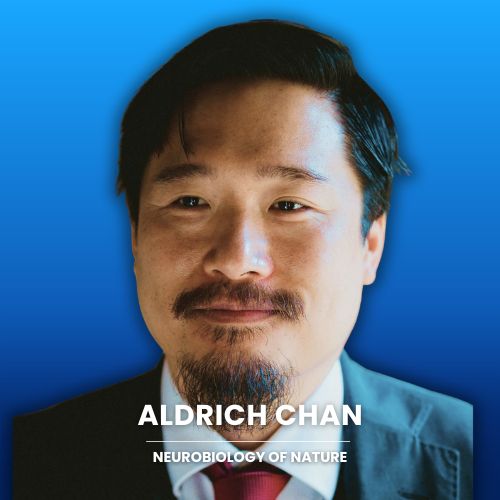
About Aldrich Chan
Dr. Chan is a neuropsychologist, psychotherapist & award-winning author of Reassembling Models of Reality & 7 Principles of Nature: How We Strayed & How We Return. He is the founder of the Center for Neuropsychology & Consciousness in Miami, with a background in research on Alzheimer’s disease, trauma & the Default Mode Network, plus experience teaching at Pepperdine University. His work integrates neuroscience, psychotherapy, mindfulness, creativity & long-standing study of Daoism & Zen.
Top Things You’ll Learn From Aldrich Chan
[01:17] Identify Why Modern Life Creates Suffering
- Define separation alienation & discord as core drivers
- Link default mode network dominance to disconnection
- Explain evolutionary mismatch between brains & environments
- Connect technology polarization & misinformation to distress
- Frame modern inefficiency as misalignment not weakness
[05:39] Use Nature-Based Principles to Restore Function
- Treat alignment as an active corrective process
- Replace abstract optimization with embodied action
- Reduce friction by working with biology not against it
- Escape modern traps through intentional realignment
- Apply principles as operating rules not beliefs
[9:57] Apply Creativity & Process for Adaptive Performance
- Redefine creativity as adaptation not artistic talent
- Use uncertainty to fuel growth instead of fear
- Stay present to improve focus decision making & timing
- Reduce abstraction to counter negative bias
- Design environments that support attention & flow
[36:14] Strengthen Relationship & Wholeness
- Recognize interconnectedness across people nature & systems
- Experience connection instead of intellectualizing it
- Synchronize with others through shared rhythm & presence
- Integrate opposing traits rather than suppressing them
- Transform shadow impulses into constructive outlets
[54:27] Maintain Equilibrium Without Rigidity
- Redefine balance as dynamic not static
- Manage desire without feeding endless seeking loops
- Simplify inputs to reduce cognitive overload
- Avoid overstimulation multitasking & constant novelty
- Build resilience through controlled imbalance
[01:01:06] Activate Spontaneity & Transformation
- Differentiate intuition driven action from impulsivity
- Use play to unlock learning creativity & growth
- Loosen rigidity to expand psychological range
- Track alignment across body mind & behavior
- Treat transformation as continuous applied practice
Resources Mentioned
Related Episodes
- Episode 244: How Improving Reaction Time Supports Brain Performance & Mental Clarity
- Episode 242: Mind vs Brain: How to Stop Overthinking & Build Mental Resilience
- Episode 241: Brain Mapping & Neurofeedback: How Elite Athletes Train Focus, Calm & Performance
- Episode 218: Ultimate Neurofeedback Blueprint To Deep Heal, Reset Your Nervous System & Access True Joy
Episode Transcript
Click here
Nick Urban [00:00:01]:
You’re listening to High Performance Longevity. The show exploring a better path to optimal health for those daring to live as an outlier in a world of averages. I’m your host, Nick Urban, bioharmonizer, performance coach, and lifelong student of both modern science and ancestral wisdom. Each week we decode the tools, tactics and timeless principles to help you optimize your mind, body and performance span things you won’t find on Google or in your AI tool of choice. From cutting edge biohacks to grounded lifestyle practices, you’ll walk away with actionable insights to look, feel and perform at your best across all of life’s domains. Aldrich, welcome to the podcast.
Aldrich Chan [00:00:53]:
Thank you so much for having me, Nick.
Nick Urban [00:00:54]:
Today we’re going to be discussing your work in some depth and I’m excited to dive into some of these topics with you because I’ve talked about them a little bit on the podcast, but in my opinion, not enough. And so we can start off today before we even mention the D word, what exactly is the premise of your new book, the Seven Principles of Nature?
Aldrich Chan [00:01:17]:
So it’s separated into two parts, we could say the first part explores what the issue is that I’m addressing. And for that one it’s called, I came up with something called the SAD theory S A D. The S stands for separation, the A stands for alienation, and the D stands for discord. And just to, you know, briefly maybe go through some of these before diving into the second part, the separation component is more related to a neuropsychological theory of mind. One of the networks in the brain that I studied is called the default mode network, which is your resting state, resting state brain network. Your brain is never really resting, but it’s involved with, you know, things like mental time travel, which is your ability to retrieve a memory from the past or simulate a future event, self reflection, self referential processing, or social cognition. I actually call it the Moats network for mental time travel, others and the self. So that network, along with something called the central executive network, these are areas of the brain, multiple regions of the brain active in simultaneity, that allows us ultimately to suspend the immediacy of space and time.
Aldrich Chan [00:02:27]:
It allows us to really separate or decouple from the present moment, which is why it’s the phase of separation, right? And so, I mean, try and think about this practically. I know some people might have been lost with some of the neuro jargon. So just to put it simply, when you’re daydreaming, when your mind is wandering, right, you’re no longer present. You’re. How many times have you been in a situation where you’re interacting with someone or you’re in class and there’s something going on, but your mind has wandered and you totally lost focus and you didn’t know what was said? Right. So that is a perfect example of what I mean by the separation. Now, that said, the separation component does not need to be a negative thing. It can be something positive.
Aldrich Chan [00:03:09]:
Musical instruments, bands, orchestras, they play together. They are separate, independent instruments, but when they play together, well, they can play together in harmony or they can be, well, in discord. Now, the alienation component, that’s where I really bring in hunter gatherers. And this idea of mismatch theory, this idea that the environment, the culture, what we originally evolved to be in, is entirely different from the civilization and the world that we live in today as a result. And before saying as a result, our brains have barely evolved since those times, and so we’re not well adapted to the things that are happening today. And so there are different ways, and I’m sure we’ll get into it, in which we can better align our capacity to function in relationship to our evolutionary history. And then the discord part really dived into how our belief systems have changed and how there’s polarizing information and misinformation and disinformation and all of this technology that’s really leading us further and further away from the conditions that we originally evolved for. So that’s sort of the sad theory in a nutshell.
Aldrich Chan [00:04:27]:
And then, well, should I pause there or do you want me to go to the second part? Do you have any questions?
Nick Urban [00:04:31]:
We’ll go on to the second part in a minute. Aldrich, if people take what you just said and they use those principles and they work on those, each of the letters inside each of the, the whole acronyms, then what do they get out of life? What changes? What is the benefit of paying attention to these things versus continuing on, knowing this, hearing this today, and then not taking any action at all afterward?
Aldrich Chan [00:04:57]:
Right. Well, I mean, then you’ll just continue being inefficient and potentially continue to suffer. And, and really, this is where the greater part of the book comes in. And, you know, the, the principles are a way to counter the pressure that has developed as a result of this incongruence that has arisen. Right. And so if we know if our brains have evolved a certain way and it has certain predictions and expectations and abilities and we’re Ms. And we’re utilizing them inefficiently because we don’t know or have been or fallen into some sort of modern day trap. Well then we can be just like a moth that’s flying towards an artificial light.
Aldrich Chan [00:05:39]:
Right. And so we can simply be wasting our times and again not living a life that’s optimal. And so the principles come in to help redirect us in order to improve upon and realign with these natural principles. And so what are these natural principles? Well, it spells out the word CPR west, that’s the acronym. Right. And it was great in the sense that I came up with them through a dialogue between neuroscience, psychology and an ancient natural philosophy. Of course this is classical Daoism. And in dialogue I came up with these principles and then I was able to scrabble them into cpr.
Aldrich Chan [00:06:17]:
West which so perfect. So the first principle, it’s creativity, then it’s process, then it’s relationship. So that’s a cpr. And then the west is wholeness, equilibrium, spontaneity and transformation. And so another sort of novel thing that I do here is I reframe mental illnesses, certain mental illnesses or challenges as not so much the idea that there’s something wrong with you, but more simply the idea that you may be misaligned with certain principles of nature and if you were to realign with them, you may not be experiencing those challenges. And ultimately the goal of the book is to help cultivate potency. That’s the sort of Taoist word of it, but it’s great. It’s this empowering feeling, potency of aligning, having nature behind your back.
Aldrich Chan [00:07:07]:
Right. Not swimming against the current, but swimming with the current, having the wind behind your back from that, you know, famous poem. So I’ll pause right there and let you continue.
Nick Urban [00:07:18]:
I like that. It’s also one of the, through lines between a lot of the ancient ancestral medicines. Like first and foremost they were about living with nature and like nature in meaning many different things, but like essentially the rhythms of life, the seasonality, all these types of things, like it doesn’t really matter where you look. But like every ancient medical system had some or a large degree of that woven into the tapestry of it.
Aldrich Chan [00:07:46]:
Absolutely.
Nick Urban [00:07:47]:
So you mentioned that you’re able to reframe certain illnesses as like a mismatch, a misalignment between the person and nature. What would be like a practical example of that? Be like, it doesn’t really matter which one, like say bipolar. Is that a good example of one that you could reframe?
Aldrich Chan [00:08:07]:
Well, bipolarity is that one, the one you Chose is actually it’s highly biological. But of course, there are some. There are some psychological elements to it. The evolutionary theory behind bipolarity is quite interesting in the sense that it’s believed that condition, if we don’t view it as a mental illness, but actually as an adaptation, actually evolved from potentially Neanderthals that lived in caves and that because of severe extreme seasons, they were forced to stay inside the cave. And subsequently, you know, when they did have time to go hunt, well, then they were highly active to do so. That would be the manic phase. Right. They would be able to have too much energy and not need to sleep as much and all this sort of thing to really capitalize on that, to prepare for the winter to come.
Aldrich Chan [00:09:01]:
And so that’s one of the ideas of how bipolarity evolved from that perspective. So if we think more about. So I’m going to step outside the diagnosis itself, but if we look at it merely from some of the symptoms, bipolarity, of course, we have the major depressive component and then you have the manic component. If we look at the symptoms of depression, sometimes symptoms of depression may relate to people’s inability to face uncertainty. They start feeling hopeless, right, because their past was, let’s say, filled with joy, but now they’re facing new conditions of life and they’re unable to adapt to it. Right. So that could be a very, I think, practical and something lots of people can relate to. What principle might this relate to when it comes to nature? Well, the first one would be creativity.
Aldrich Chan [00:09:57]:
And the idea here is if we accept, if you accept that a part of the natural process is creativity, right, and that humans are a part of nature, then this principle of creativity permeates ourselves as well. And we are creative organisms, not necessarily just in the sense of, like people being having a creative disposition, but just by the very existence of biodiversity and the diversity of minds that are out there, we are all creative in some sense. And what is the action of creativity? Well, it’s change. And in change, there must be uncertainty that’s involved as well. Right. And so what does the principle of creativity invite us to do or to be? It invites us to be open, invites us to approach change with curiosity and acceptance. And so that’s one. So that’s one very practical way to shift an attitude and to face it.
Aldrich Chan [00:10:53]:
Looks like you’re about to say something.
Nick Urban [00:10:56]:
I can already tell there’s people tuning in, perhaps partially, myself included, that think of creativity and think, oh, well, I can’t. I’m not an artist. I’m Not a dancer. I’m not this and that, therefore I’m not creative. And of course there’s more to creativity than just those things. And if you just break down the word itself, like humans all create something or another. And I guess with that reframe right there alone, it’s can highlight like how this is broadly applicable and not just to a small subset of the population.
Aldrich Chan [00:11:26]:
Yeah, absolutely, yeah. So that’s why I sort of distinguish the act. Right. Versus the very disposition of being creative. Right. There’s the act of creativity and we are ourselves acts of creativity. Right. Like our bodies and minds.
Aldrich Chan [00:11:40]:
And our reality is in a constant, constant process of creation. Right. And our thoughts are always changing. And yes, we may get stuck in certain traps and certain loops, but nonetheless our biologies are always changing. Everyone knows about this whole idea that our bodies are, you know, by seven years a lot of our cells have been completely replaced and we’re considered a different person. And our emotions change from moment to moment. And you know, there’s, there’s all sorts of changes that are constantly happening. And this obviously is going to include the conditions of life and our biology in relationship to the environment.
Aldrich Chan [00:12:15]:
And so the question now is, okay, so now we’re faced with, we have change and we have uncertainty. Right. So what can people do here that would be in alignment with this principle? So like I said, the attitude is to be open and curious. So instead of clinging or, you know, holding on to dear life to who you used to be, can you be more open to what’s going to happen in the future? Right. And one of the Daoist parables that falls very well into this, into this line of inquiry is the Divine Farmer. Have you heard of this before?
Nick Urban [00:12:48]:
No, I haven’t. When I alluded to the D word earlier that I didn’t want to drop too early to make sure we didn’t lose anyone that is Taoist or I guess also tea sometimes. But for people who aren’t even familiar with that entire realm, how would you describe what that is?
Aldrich Chan [00:13:03]:
Well, it’s an ancient Chinese philosophy that began about 4,500 years ago. And the Dao de Jing is probably its most. The seminal document associated with it, believed to be written by Lao Tzu, it’s the second most translated work just behind the Bible. And what that really tells us is that there’s of course, ancient wisdom there that still continues to resonate with, with all of us today. And so there are religious Daoists and then there are people don’t. Like the scholars don’t like to say there are philosophical Daoists, but that’s sort of what I’m leaning towards. I don’t, I’m not proposing it as a religion. I’m more so interested in its philosophical themes and its implications for modern life.
Aldrich Chan [00:13:52]:
And so you don’t have to believe in, you know, the Taoist religion, quote unquote, to, to read this book or whatnot. Because again, I’m just mainly looking at patterns and themes and different ways in which they think and contribute to the puzzle piece that creates our reality. It’s similar to Buddhism in some respect, but Buddhism is more well known. I imagine most listeners are more familiar with this. But the difference, for example, would be that Buddhism is more abstract, it’s more based on thinking, whereas Taoism is more experiential, it’s more primal. Buddhism is more about. It’s about liberation at the end, whereas Daoism is actually more about returning to your origins or your original nature. So there are similarities and differences.
Aldrich Chan [00:14:43]:
I mean, both of them do believe desire can be an issue, but Daoism adds a little more. And lots of times the fun part about Daoist parables is that whatever common sense knowledge you have about some subject, it will try and completely flip it on its back to see if the opposing side is just as possible or to consider. So let me just give an example of. Because to connect it back to the previous conversation. It’s a great parable and there are many ways to go about it. I’ll share the westernized version, I guess it’s simpler, but. So there’s a Chinese farmer who’s also a diviner. In any case, this Chinese farmer has a stable, has horses and a farm and so forth.
Aldrich Chan [00:15:28]:
And he lives in a village and basically his most beautiful prized horse runs away. And, well, the villagers all come over to this Chinese farmer’s house and expresses their sympathies. And the Chinese farmer looks at them and says, well, you know, this is not such a big deal, right? Whereas everyone’s like, this is horrible, this is terrible. We’re so sorry that this actually happened, you know, but he’s like, well, maybe, okay. So they’re like, they left scratching their heads, they’re wondering what’s going on here, right? A week later, that horse comes back with five other horses, wild horses. And so the villagers come by and they express how excited they are. And this Chinese farmer looks at them and it’s like, well, it’s all right, you know, it might be okay. The, the villagers, however, are like, this Is amazing.
Aldrich Chan [00:16:23]:
This is wonderful news. You have all these new horses, you know. And the farmer says, maybe. So they left again, scratching their heads. Yeah, that’s. They’re a very strange, strange person here. Well, two weeks into the process, the Chinese farmer’s son starts to ride the horses and starts to try and train them. But one of them gets thrown off the horse.
Aldrich Chan [00:16:45]:
Right. And breaks his leg. And so the son’s leg is broken. The villagers come by to express their sympathies. We’re so sorry that this happened. This is so unfortunate. Right. The farmer looks at them and says, maybe.
Aldrich Chan [00:16:59]:
Right. And then they left again. And they’re like, this guy is very strange. Okay. And then a month later, the Chinese army comes in and they try to recruit the son and to a battle where nine out of 10 people died. But because of his broken leg, he was safe enough to stay at home. And so this, the farmer stopped by and the farmers, the villager stopped by and they said, hey, this is so fortunate. Of course, the farmer looks at them and says, maybe.
Aldrich Chan [00:17:25]:
Right. So of course, the idea here. Right. Is in the actual text from the. This comes from the Hunan. It’s the idea that fortune can be misfortune and misfortune can be fortune. You can never tell. Right.
Aldrich Chan [00:17:38]:
Like we have the present moment and an experience that we’re having at the longer spectrum of things, and we have the ability to think into the future. And part of that capacity can allow us to be able to reduce our levels of anxiety when we’re faced with a moment that may be difficult for us in the present.
Nick Urban [00:17:58]:
That’s a great one. I’ve heard an abbreviated western, westernized version of that, but I like the full one there. And this reminds me, it seems like it has some overlap between stoicism or stoic philosophy.
Aldrich Chan [00:18:10]:
Yeah, well, they’re both based on nature. The one biggest difference between the two, and I really like stoicism in my undergrad years, the one biggest difference is that stoicism is more interested in reason, whereas Taoism is more interested in intuition. And intuition is a very, I think, misunderstood topic and a very fascinating one as well. And we can get into that if you’d like, or wherever you want.
Nick Urban [00:18:35]:
Yeah. Since we’re already here, I think that’s a great place to dig in because I think again, kind of like what you were saying earlier, people hear that word and they all of a sudden think, okay, this is either a gift that I have or I don’t, or it’s like totally woo woo, and has no merit. At all. How do you describe intuition and what’s the application of it?
Aldrich Chan [00:18:53]:
Okay, so from the perspective of science, there are many theories to intuition and many ways to define it. One of the ways that they’ve looked at it is basically there was a famous study from Antonio Damasio and his wife, and basically they came up with a theory or a hypothesis called the somatic marker hypothesis. And the idea here is that people were engaging in a gambling task, it was called the Iowa gambling task. And they were faced with uncertainty. And he wanted to know, how do people make decisions when they are feeling uncertain? Right. And what they found through brain imaging and these psychological tests was that a certain area of the brain became highly active in relationship to when people made a particular decision, even if there was no conscious reasoning about it. Now, this area of the brain called the ventral medial prefrontal cortex is a convergence zone of many areas in the brain. So lots of areas in the brain are active and they’re all funneling information to this one area that lights up before someone makes this decision in this uncertain context.
Aldrich Chan [00:20:01]:
And it’s called somatic marker. Soma means body because there’s a bodily experience that pushes or tilts someone towards a particular decision. Right. And so this is one way, for example, that we would understand what intuition might be in an uncertain situation, where I’m sure yourself, and maybe other people have experienced the time where they were talking to someone and they felt like that something’s just a little off, but there’s not. The person’s not saying anything. Right. They’re not dressed strangely, but there’s something off about this person. I have a strange feeling I’m going to leave this conversation, right, to find out the next day that this person was, you know, xyz, whatever the case is, right? Or walking into an unfamiliar environment and leaving quickly when they felt like it was dangerous, even if there’s no apparent sign that.
Aldrich Chan [00:20:45]:
And so that’s one theory. And there are other theories that I described in the book, including the predictive processing theory, type 1, type 2, thinking. I don’t want to get too deep into all this stuff, but they all converge upon the idea that intuition appears to be a non conscious system. It appears to be a complex nonlinear system, and it’s a very rapid system and it brings in information from multiple areas of the brain. And that helps us understand the idea that intuition is not blind by any means, that these bodily experiences, that gut feeling that you have is not blind. It evolved through many, many thousands and thousands of years of evolution. To provide us with a signal that will push us in one particular direction over another. Now, again, because our civilization now is so different from the circumstances and conditions that that intuitive signal evolves for, of course it’s not perfect, it’s not going to, you know, help solve all the mysteries and problems of life.
Aldrich Chan [00:21:48]:
But nonetheless, in certain situations, such as safety, survival and such, perhaps it can be quite beneficial. Now to answer your other question a little more practically and people can, you know, you could check out the book and you’ll find, you know, a big summary and review table. Looking at many different studies, looking at intuition versus analysis. Does intuition actually outperform analysis in any domain? Here’s what I’ve found. Overall, this is a generalization for sure. It’s not going to be a perfect formula, but when a problem that you’re facing is simple and you know what all the variables are, analysis will outperform intuition. When a situation is complex but you know what all the variables are, analysis will still outperform intuition. But when a situation is complex but you don’t know the variables and all the variables, which is the tendency for a lot of the situations we face in life, intuition seems to outperform analysis.
Nick Urban [00:22:55]:
That’s very insightful. And I was about to ask as a follow up question, how often do we actually really know all of the variables?
Aldrich Chan [00:23:02]:
Very, very rarely. That’s the thing, right? It’s, it’s in circumscribed situations that are maybe in academia or mathematics or you’re solving equations in school, you know, like if you’re trying to multiply certain numbers and add certain numbers and divide them to stuff, you know what all those variables are for, right? And your intuition is not going to give you the correct answer there, right? But lots of times when we’re problem solving, sometimes like you know, what materials you have versus other times where you may not know what the, you know, materials you might have are, what the outcomes would be and you’re, you know, and you’re limited on time. That’s another thing, like if you’re limited on time, there’s not enough time to look at all the variables. Intuition will definitely outperform analysis.
Nick Urban [00:23:42]:
So, okay, I took us on a rather large digression here. So I will gently guide us back towards the laws of nature that you were mentioning earlier. Creativity being the one we had explored a little bit. And then after that, oh, so creativity.
Aldrich Chan [00:23:58]:
Then the next one is process. Process is the next one. And that’s a fun one. It really was inspired to me by A philosopher named Alfred North Whitehead and very congruent with Taoist thought. And you know, the idea of process is ultimately the fact that life is not static. Right? Life is a verb, it’s not a noun at the end of the day, right? Everything is in constant motion, everything is moving. And to be aligned with processes, to move with the dynamics of life, it’s to join in with the orchestra, with the dance of life. Right? Life is a dance and we are co creating our reality with life.
Aldrich Chan [00:24:38]:
And so it’s to be there moving with it, rather than simply being static and watching from afar. And so one way to think about how we might align with this idea of process. And this is really where ideas such as, or practices like, like Tai Chi can be helpful or meditation in some respects. Right. The idea here is, of course, it’s learning how to be present. And I know that this has been talked about so much in so many different podcasts, but that is a very important aspect. And by the way, Hunter Gatherer’s present orientation is considered one of the core areas of mismatch with modern day civilization. And we also know from, from this default mode, network literature, that the more that your mind wanders, the more likely it is that your mind will wander to a negative place.
Aldrich Chan [00:25:28]:
And we also underestimate time intervals. We’re poor at underestimating time intervals if our mind, if we’re more in, stuck in this abstract mode of being. So that’s, that’s, that’s really where it comes in. So one of the things that I mentioned in this idea of processes, I use the analogy of sight. We can be myopic and we can be hyperopic. You’re either nearsighted or you’re farsighted. And people who are too far back and they can’t see from afar, well, they’re, you know, they’re not, they’re not. They may be too detached from experience when they’re too abstract.
Aldrich Chan [00:26:04]:
Right. Whereas people can also be too. Go ahead.
Nick Urban [00:26:06]:
Are you saying that when people are like their vision biases a certain direction that corresponds or at least correlates to their overall disposition on life, like they’re more checked out or more engaged.
Aldrich Chan [00:26:20]:
I’m just using it as a metaphor, so. No, no, no, I’m definitely not stating that. Yeah, yeah, no, I’m just using that as a metaphor because vision is something lots of people can relate to. Right. And so it’s just that if you’re, if your vision is, is. Maybe we don’t even use that then. But if you’re too detached and disconnected from the experience of now and you’re too abstract. It can lead to quite a bit of suffering.
Aldrich Chan [00:26:42]:
Right. And the opposite is true also because you can also be too close to the process and then you can’t see far enough. Right. And this is where you have people who are very impulsive. Right. And I mentioned to you earlier on about going with the flow. Lots of people who will use this as an excuse. I just want to go with the flow.
Aldrich Chan [00:27:02]:
And it’s just like an excuse to basically at times to say that it’s not important for me to think about the future. That’s not in any respects what, what I’m, I’m suggesting, at least in the book and in my messages.
Nick Urban [00:27:16]:
So with these, it seems very easy to either not see an imbalance in ourselves or at the same time to see that we are in one, like on one side of the pendulum, whereas other people around us might actually classify us as the other. How do you actually determining where you fall so that you can make a better, more aligned decision?
Aldrich Chan [00:27:42]:
The professional answer to this is perhaps have a neuropsychological evaluation, which I can help out with. But I mean, seriously, actually that does help because it helps us determine very, very specifically what cognitive faculties are impacted. Some people, for example, with adhd, that’s probably the one that comes up for most people when they think about this sort of thing. Their attentional capacities are not aligned with modern day. And again, this perhaps is an evolutionary mismatch we don’t fully know yet, but it could be viewed from that perspective. Just to sidetrack slightly, one of the things I like to tell my students, just in case some people have stigmatizing adhd, I tell my students, who do you think came up with fire? You think it’s the neurotypical person or is it the ADHD person who’s messing around with things and all of a sudden realizes, oh my God, look at that, I rubbed these two sticks together and all of a sudden we created spark, so on and so forth, right? And so ADHD may have been very beneficial in an unpredictable world, but again, now that things are so different, it may not be so helpful. Nonetheless, one of the issues is that people can be quite stimulus bound with adhd. They’re constantly grabbing things and they’re unable to keep their hands off things.
Aldrich Chan [00:28:55]:
They’re unable to view much else other than the present moment. Right. And that can lead to all sorts of challenges. Right, so to get back to your question, right, so one of the things that you could do well is have an evaluation and have it figured out as to whether there really is an issue. But to keep in mind that most people, they think like, okay, if you go into the DSM 5 and you read it, you can relate to almost every symptom that’s there to some extent. Right. The key thing to keep in mind there though is that one of the criteria for it to be considered clinical is if there is a significant disruption to your occupation, to your social circles, to your, to your academic life or whatever, whatever, wherever it is that you are in life, if it’s not significantly interrupting your life, sometimes you’re, you know, a little impulsive or spontaneous or inattentive. That’s perfectly normal.
Aldrich Chan [00:29:52]:
None of us are, we’re not machines. We’re. We’re organic, we’re relational, we’re flexible.
Nick Urban [00:29:56]:
Yeah, and I’m actually curious about that specifically too because as you mentioned, the textbook that’s used to diagnose, that’s like the reference standard is fairly broad and a lot of people experience symptoms without actually having those different conditions. And then at the same time there is like a trade off to everything. Like, yes, perhaps you don’t focus as well on topics that you’re not interested in if you have ADD or adhd. But at the same time, when you find something that actually interests you, it’s hard to keep that person away from that thing. And they are very goal focused, motivated on that thing that they’re supposed to not be able to focus on. So to me, it seems interesting that like, okay, they’re in a career that doesn’t fit their preferences and what they want to do. And because of that, like, of course this is, not every case is like this, but some people are. And it’s like that, does that warrant treatment or does that warrant just like taking a step back, looking at what they’re doing and then helping them make the life decisions that orient them in the direction that’s most serving to them.
Aldrich Chan [00:30:58]:
Yeah, I think that’s, that’s, that’s wonderful insight that you just brought up and it is the case for most people who suffer from ADHD that they are capable of really intensely focusing on things they’re interested in, but when they’re not interested in it, all of a sudden the attention seems to fly out. Now keep this in mind though, right? That all of us, when we are uninterested in a topic, it is hard to pay attention to it. Right. But there is a significant difference when it comes to someone who is, you know, neurotypical quote, unquote, versus someone who does have this diagnosis of adhd. So, so, so that’s one part to, to keep in mind.
Nick Urban [00:31:38]:
I was curious about that presentation specifically because a lot of things are viewed as like, okay, there’s actually no trade off here. This is just bad. We need to fix this issue over here. But a lot of times there is a trade off. And it’s like perhaps your average neurotypical, neurotypical person can focus and they can do things they don’t want to do and they can focus on that better, but perhaps they don’t focus as deeply, as easily, as intensely on the things that they do care about.
Aldrich Chan [00:32:01]:
So, so when it comes to this, right, there are different occupations that are likely more well suited for particular individuals with adhd. But we have to remember that adhd, you know, there’s the inattention, there’s the potentially an inattentive type, there’s potentially this hyperactive, impulsive type, there’s potentially this mixed type. To find the perfect occupation that balances those factors perfectly so that the person remains optimally engaged is very, very difficult. And so even if we find this perfect occupation and we identify the different types of attention that are impacted in the executive functioning and the working memory and all that sort of stuff, the person may still, you know, have moments where they are not as efficient as others at whatever occupation they’re engaged in. Because all of us once in a while have to do things we don’t want to do or that we’re not interested in. That’s just a part of life, right? But for them, and to help them, you know, better orient themselves in those moments and to better focus in those moments, you know, different types of treatments can be beneficial. Now this doesn’t mean just medications, although I will say medications has been shown to be very beneficial for someone with legitimate adhd. Right? Like some people come by and they, and they think, okay, they want the medications.
Aldrich Chan [00:33:21]:
And when they’ve talked about the medications and how they’ve tried it before and they’re just like, oh, I was so wired all night and I was able to study like non stop and I couldn’t go to sleep and I’m like, well, actually that tells me you probably don’t have adhd. Because what that tells, because the problem with people who have, tend to have ADHD are actually these lower levels of dopamine and norepinephrine. And so when we increase it, it actually centers them so that they’re able to focus just as well as someone without adhd. Right. But there are other treatments. Like I’ve had one of my clients, actually, we’ve been doing mindfulness meditations for about a year now. And we found significant improvement in different attentional categories. So there are different strategies and people respond to them in different ways.
Nick Urban [00:34:09]:
Okay. Yeah. I was gonna ask you about like your recommendation. If someone had something like that that they wanted to address through realigning with nature, first and foremost, how they go about that meditation sounds like one option. Perhaps a more tech focused thing would be like heart coherence or HRV training, perhaps neurofeedback, A lot of other like things like that you could do to help like regulate the nervous system and then also to just like build coherence. I’m not really sure how to describe it.
Aldrich Chan [00:34:36]:
Yeah, no, I think you’re totally on the right track. The other side to it is just simply like the non medication side is adapting your cognition to your lifestyle. Right. Like, yes, our world is far more bureaucratic and structured than it used to be. But that doesn’t mean that there aren’t workspaces or ways of interacting and engaging the world that can still be optimized with different tweaks. Right. So just as a brief example, right, like somebody who, let’s say with adhd, who drives automatic and they keep getting tired on the wheel because they get too bored. Right.
Aldrich Chan [00:35:15]:
One of the things that they could do, for example, is learn how to drive a stick shift. That way they’re constantly, you know, changing gears and so forth. That keeps them engaged. That’s what I mean by these. There are little, little hacks like that that can keep your, your, your, your focus attuned and, and, well, keep your focus sharp so that you’re not suddenly just drifting off somewhere.
Nick Urban [00:35:34]:
Does this all still fall under the process category you mentioned?
Aldrich Chan [00:35:38]:
Oh, I mean, here’s the thing. We can’t think about all of these principles as separated, like completely separate. They’re definitely all interdependent. For example, you know, humans, we are, we are creative processes, but we’re also relational. Right. And all of those come together. The creativity ponent cannot exist without the relationship component. Right.
Aldrich Chan [00:36:02]:
And the very nature of our reality wouldn’t be possible without a process occurring at the same time. So maybe we can move to the relational part.
Nick Urban [00:36:13]:
Yeah, let’s do it.
Aldrich Chan [00:36:14]:
Yeah. Relationship is, I think, the easiest one to touch on in the sense that I think most people are aware, intellectually speaking, at least, right through science, that everything is interconnected. The very idea of you think of A natural scene where there’s the river and there are trees and then it rains. And this whole cycle of nature that I don’t have to get into, everyone’s very familiar with that and that we survive off of nature. We need to eat, we need to drink, we need water, we need these sorts of things. That’s very obvious. The problem is, however, that we do not have an experience of this connectedness. Most people that I’ve spoken to feel isolated in their own heads, in their own minds, very separated from the other person.
Aldrich Chan [00:37:05]:
Right. Like the other person is a mystery. And some people even question, does that person even have a mind? Right. Or is my mind the only mind? There’s just sort of lapse into solipsism that can be quite unhealthy and dangerous. So part of what I was doing in that relationship chapter, the first part is of course, identifying all the science to bridge it all together to show how connected we actually are. And there are some very fascinating studies being done. There’s hyper scanning studies are quite fascinating where they’re able to scan two brains at the same time. And they have people, for example, engage in conversations and when the conversation isn’t really flowing, they find there’s a sort of desynchrony between your brain waves.
Aldrich Chan [00:37:44]:
Whereas when, for example, us, if we’re engaged with each other and really focused, you will see the brain waves actually begin to synchronize between two individuals. It’s absolutely fascinating.
Nick Urban [00:37:55]:
Yeah. Because I think heartmath research was showing that just being around someone else’s electromagnetic field can influence the coherence of the brain heart. But then also I didn’t realize that a conversation and different things like that, even if we’re across the world from each other, we’re still able to do that.
Aldrich Chan [00:38:11]:
Well, I don’t know if they’ve done studies like virtual studies, but I, I would. I’m theoretically imagining that, like, if, if two people are having a conversation, you know, that our brain waves are at least synchronized in their, in their, perhaps their frequency or something of, of that nature. Like they’re in some way being connected rather than in discord. And there’s also really interesting research from George Northoff which examines the idea that it’s not just people that are connected, but our brainwaves are always in connection with the world around us. There’s what he calls a spatial temporal alignment. And when you look at particular diagnoses and so forth, you can find different signatures of individuals whose electromagnetic signatures are no longer aligned with that of the environment. And so it is very quite fascinating how connected we are. One of the reframes I really liked from.
Aldrich Chan [00:39:06]:
From Daoism is. Is this idea of, okay, so you’ve. You’ve heard of this golden rule, right? I believe it’s called the. You treat others as you would like to treat yourself. Right. One of the reframes that comes from the Zhuangzi or commentators like Livia Cohen is the idea that it reframes it into treat others as they would like to be treated.
Nick Urban [00:39:29]:
I thought I came up with that. I’ve been saying that for a while. I didn’t realize that that’s been. That’s common wisdom at this point.
Aldrich Chan [00:39:35]:
Oh, it’s funny, right? Well, I wouldn’t say it’s common wisdom, but, you know, it’s. It’s what that tells you, Nick, that is that your. Your mind is in the right track. I hate that feeling also, though. Like, I feel like I came up with so many things and then I read about it in some philosopher or some esoteric book where I’m like, I thought I came up with that. But really, that the good thing about that, it should make you feel more connected and that we’re on the right track.
Nick Urban [00:39:56]:
Yeah, exactly. Go on.
Aldrich Chan [00:39:58]:
Well, I mean, I was just going to say, you know, so there is this notion of oneness, right. When it comes to Taoism, and this is in the 60s, of course, was extremely popularized, but the experience of oneness was already being discussed. This is literally 3,500 years ago, right, by old ancient Taoist philosophers and so forth, talking about oneness in many different ways. And so one of the ideas of how you reach this oneness or the reason why we don’t experience this oneness. And to me, this oneness, by the way, is. Is the true experience or the fundamental ground in which our relationship can come into experience. Because I told you, the problem is that we’re intellectually aware, but we’re experientially disconnected, right? And so, yeah, so meditation is one of the ways. Getting into flow states is another way.
Aldrich Chan [00:40:51]:
And of course, people love talking about psychedelics. Psychedelics is another way you can experience it momentarily. There’s this whole idea of ego dissolution, right. And when. When people are on psychedelics, well, sometimes this sense of self disappears, but that doesn’t mean everything disappears, right. Because we’re still aware of the ego disappearing, which then gives us a little bit of information about the difference between consciousness and the self. Right. And this is something I talked about actually in the.
Aldrich Chan [00:41:20]:
In the first book That I wrote Reassembling Models of Reality, which is all about consciousness. So I’m not going to get into this. But nonetheless it’s this I think experiential foundation that we are now lacking that if we all experience would be much better, would lead to a much better society. So yeah, we have all these advanced cognitive faculties and they are basically useful for helping us survive, but at the same time they keep us separated from this original nature.
Nick Urban [00:41:51]:
Yeah, I think the relation principle is fairly easy for most people to understand. Is that specifically about human to human relationships or is it our relation in context of other things going on around us to the world, to animals, to objects, to plants?
Aldrich Chan [00:42:08]:
Yeah, wonderful follow up question. So this is sort of why I brought up this spatial temporal alignment that this individual Northoff is doing research. This individual, he’s a colleague and a friend. So is the most. I don’t know why I referred to him like that. But yeah, there is an alignment with the world and so it is also a relationship with nature. And the truth is that, you know, if you go back to modern day hunter gatherers, their relationship with nature is far more sacred than ours. And it’s quite surprising how far we drifted from it.
Aldrich Chan [00:42:41]:
Yet at the same time it’s very clear in the science that if you go into nature and you go for walks, it can increase, decrease stress, you know, and optimize health in many different ways. In fact, even viewing fractals, right. And you know, just for a period of time can actually also decrease levels of stress and improve emotion regulation.
Nick Urban [00:43:05]:
What are fractals?
Aldrich Chan [00:43:06]:
So most people, when you think about, for example, most, most of us learn geometry in school, right. Actually my niece is learning this stuff right now. And so you learn these geometric figures, you learn the squares and you learn about triangles and such. But the truth is when we go into N, well we don’t have these perfect triangles or these perfect squares. On a very rare occasion, will you find something like that? Most of it is irregular and again it’s non linear. And as you look at the edges or the tips of mountains, or you look at leafs and their patterns and so forth, these sorts of shapes are related more so to what we call fractals. And so one of the ideas of the fractal is that it’s not the, the hole can be found in the parts. And so if you look at like a fern leaf, right, you’ll find that when you look at the hole of the fern leaf and then you look at the leaf, it’s reflected within the leaf.
Aldrich Chan [00:44:04]:
And there’s a famous Mandelbrot image that you can find online. It’s a very simple mathematical equation, but it creates a fractal and you just sort of zoom in and it zooms in infinitely, right? Like it doesn’t stop and it just keeps bringing up a self similarity. And so it’s a really fascinating dimension of work. And actually it’s the branch of mathematics that I suggest would help us understand seven principles of nature from a more scientific viewpoint. Right. This sort of idea that at the grand whole of it all, we have these seven principles at the level of, we could say physics and so forth, but we also find it at the level of cells and like regular levels of atoms and even within our minds.
Nick Urban [00:44:47]:
And that’s a. I mean one of the currently understood mechanisms by how immersion in nature, or forest bathing as it’s sometimes called, is a health habit that has all kinds of different biological effects. Whether it’s grounding, it’s the light, it’s the terpenes and things you’re inhaling from, like the volatile organic compounds from the trees. Lots of different reasons. At the end of the day, it just matters that you’re doing it. So as long as you get outside, you’ll be getting some of those benefits. I think we got relationships covered pretty well. We don’t have all that much more time, so I want to make sure that we cover.
Nick Urban [00:45:19]:
What you think are the more impactful ones to. To cover if we can’t get through all of them?
Aldrich Chan [00:45:23]:
I think they’re all just as impactful as the issue, but we’ll just walk down the line, right. So. So the next one is allness. And the idea of wholeness is. Well, reality in nature is expressed as a whole, not parts. Right. We view parts, our left brain hones in onto parts, but it really begins as a whole. Everything is expressed at once.
Aldrich Chan [00:45:47]:
And part of this is about accepting paradox, but also accepting multiple viewpoints and accepting from more of a psychological perspective different aspects of ourselves. Right. And so, you know, some. Another sort of, I think popular topic that has arisen is the Jungian shadow, right. The parts of ourselves that we reject. And part of wholeness from this perspective is. Well, it’s in alignment with, with what Jung believed. And actually Jung mentioned to some of his close colleagues that he believes he is Taoist himself, especially near the end of his life, especially when you talk about the yin and the yang and how they connect and this, you know, the bringing together the opposites and not even viewing them as opposites actually that’s already an error of perspectives.
Aldrich Chan [00:46:40]:
So, you know, a big part of wholeness that could be helpful to others, I think, and impactful that people like to, I guess, bring up is accepting the darker sides, quote unquote, of ourselves. And then the question though, becomes, well, how do I do that? Right? Like, let’s say someone’s like, I have murderous impulses. Like, how do you expect me to integrate that into life? Or I, you know, whatever the case is, we can stick with that for now. Well, this was, was elaborated by the work of Eric Neumann, which is one of Jung’s proteges. But the idea here is, okay, there are different ways we can manage these impulses. So let’s say you have them, you have these murderous impulses. Right? You have these morbid impulses. They come up in you.
Aldrich Chan [00:47:25]:
What can you do? Well, you can act them out and kill people. That’s not going to be very helpful to you, though, because you’re going to be living a life of paranoia and you’ll probably end up in prison. Right. And who knows what else. Right. Okay, what’s another way you could do it? Well, we can just push it down or try and forget it. Right. That doesn’t work.
Aldrich Chan [00:47:44]:
We know that doesn’t work in the science also. That’s just been unproductive, unhelpful. So another way that we can approach it is, well, now bringing in the curiosity, the creativity principle is to view it from a curious perspective and an open perspective. So accepting the fact that this information, this energy and information, first of all, viewing the murderous impulses and fantasies as just energy and information is present within you. Right? So we don’t want to endow it with a lot of energy. We want to just kind of view it from a distance. Right? So instead of being in the storm, we’re standing on a mountain looking at the storm. Right? Okay, so that’s part one.
Aldrich Chan [00:48:22]:
We have to accept that it’s there. Let’s be open to the fact that it’s there and understand that nature isn’t so pure and pristine in that sense and that perhaps this can be beneficial in some way. Right? Okay, so that’s part one. The part two is how do we integrate this regulation that we might feel. So now it’s like, oh man, having these murderous impulses to kill somebody or whatever the case is. How do we adapt this to real life? Well, one of the suggestions might be finding an occupation that can help you with that outlet. Let’s say you like dissecting animals or doing and stuff like that. Right.
Aldrich Chan [00:49:02]:
Well, why not go and become a butcher or a butcher apprentice. Right. Where that is your job and you’re actually being helpful in community. Right. Or, you know, people who have a higher level of intellectual, let’s say, might be interested in getting into the surgical field. Right. And being involved with surgery and using those impulses in a way that can be beneficial to them. Right.
Aldrich Chan [00:49:24]:
And so these are creative ways of integrating these sorts of impulses and experiences so that you become more of a full and whole individual as opposed to one that has a fragmented piece that’s clawing at the doors, trying to get out and, you know, creating all sorts of, you know, problems within yourself.
Nick Urban [00:49:45]:
Interesting. I had no idea how you were going to integrate murderous instincts into like a productive channel, but that actually makes a lot of sense.
Aldrich Chan [00:49:54]:
Right. Yeah. Well, thank you. Yeah.
Nick Urban [00:49:57]:
And I think the whole concept of like having certain urges or feelings or desires and then not being able to do them or carry them out in any way and then the fragmentation that that creates, I don’t think it’s really, it has been as recognized as it should be because it seems like that that’s a huge source of suffering, whether conscious or sub or unconscious suffering. And I think like in the coming years that will become more clear, like how important it is to see the entirety of your person and then to like make sure you’re able to fully express your entire person without having to suppress anything over the long term. Because like that just, it grows and grows and boils over and eventually causes like. Comes out in weird ways.
Aldrich Chan [00:50:45]:
Yeah, exactly. Yeah, it could come out in pretty terrible ways or like you said, very weird ways as well.
Nick Urban [00:50:51]:
And it doesn’t have to be as extreme as like murderous rage or anything either. It could, it can come out as like other things that aren’t just as socially acceptable to do or to make a part of like your public facing Persona.
Aldrich Chan [00:51:04]:
You know, there are other ways that you can integrate certain, we can call them anti social tendencies that can be very beneficial. Right. Like people who are like very manipulative people. Right. And deceptive people. Right. That exploit others for their own gain. It’s like, okay, well, you know, you do that long enough, then you’re going to lose a lot of friends and you’re going to be alone.
Aldrich Chan [00:51:27]:
And that’s probably wasn’t the, the goal to begin with. But if you dial that back, what can that become if we think about it productively? Well, it can become strategy, you know, can be. You could be a strategist for some company or Whatever the case is, to help achieve, you know, goals that are helpful. Too much lust. Well, dial that back. What can we do if we integrate too much lust? Well, that can become, you know, it can lead to improving your. Your social skills and capacity to. To seduce another person, for example.
Aldrich Chan [00:52:00]:
Right. So, you know, there. There are aggressive tendencies. Again, not if they’re not so murderous, which we dial back. What can that become? Well, that can become something like assertiveness or ambition. Right. So all of these sorts of things that we classify as extreme or terrible. I think not all of them, but a large part of them are likely related to the ways in which we regulate our emotions and the lack of strategy and awareness of strategies that people could use to better improve their ability to function.
Nick Urban [00:52:32]:
Aldrich, I don’t know if this counts. I know you talk about paradoxical thinking, but one of my favorite exercises to do is when something really upsets me, say, a person, and I think they’re just a terrible person, I look at them and I think to myself, what is. Where’s the good in this person? And I can find good, even the most, like, heinous people throughout history. I’m like, okay, yeah, they might have done all these things over here, but I can see, like, in their reality, they thought they were doing this for whatever good that was going to come about it, and they thought they were protecting the people they cared about or whatever. And it helps me come to feeling a peace a lot more readily than if I just, like, view other people as sources of, like, issues in the world and that their reality doesn’t make sense. If I can just, like, take it and I can sit with it and I can understand the entirety of who they are, life just feels a lot smoother.
Aldrich Chan [00:53:23]:
I think that’s a great technique. And it’s actually what some therapists call the dilemma of a therapist in the sense that because we’re so used to hearing the. The other side, right, that now when we do view people that we don’t like, we cannot help but think about their potential traumatic history or what has led to those symptoms or what their strengths might be, right? And so you can’t really ever hate anyone anymore because you realize that it’s so much more complex than that. And I think it’s a great exercise. And it relativizes people in a framework that’s more realistic. And, you know, what media capitalizes on this, all these serial killer shows that are so popular, one of the things that they do, right, is that they humanize the villain, right? And Then they make it hard for you not to like them because, or at least understand them or sympathize because you know what they’ve been through, right? And, and so it’s, it’s, it’s a great way to, to again, to leverage, to leverage your awareness and knowledge there.
Nick Urban [00:54:25]:
What comes after that.
Aldrich Chan [00:54:27]:
So after wholeness is equilibrium. And equilibrium is not what people might think. Equilibrium, some people might think of just like two things that are static and not in motion. For me, equilibrium is actually asymmetrical. What I mean by that, well, is that there is a sort of balanced imbalance, we can say, that keeps the process going. Because stasis is not a good thing. That’s something that can definitely lead to all sorts of difficulties. And even if we use our biologies as a reference point, we have something called homeostasis, right? And you know, one of the things we do when the homeostatic balance is off, when we’re hungry, for example, our brains release certain neurohormones and we’re moving towards eating fine food.
Aldrich Chan [00:55:18]:
Let me find food. Then you eat the food, you drink your water, whatever, and you feel better and you’re back to a balanced state. But there’s always this sort of motion forwards, right? And this is a very clever mechanism that evolution designed to keep us humans from, to keep us humans desiring more and more. It’s an interesting perspective because, well, what does that do? It keeps us alive, right? If we always want more, if we’re never satisfied, then we will survive. And it increases our chances for survival and potentially flourishing. The problem though, with our society now is that we have an excess really at the end of the day, right? For most of us in the west, right, in this, what we call the weird country. But the equilibrium is about asymmetry and part of this asymmetrical balance, both from a universal perspective, but from a human perspective, involves this idea of desire. One of the things that I do, and this might be interesting to the folks listening, is I divide desire into three different categories.
Aldrich Chan [00:56:23]:
We have desires that are aspirational, we have desires that are selfish, and we have desires that are related to self sufficiency. We could call it survival, right? I like self sufficiency more because it goes a little bit above survival. But in any case, the idea here then is when you are faced with a particular desire for something, is it something that’s in excess or is it something that’s aspirational? If it’s aspirational, if it’s for self sufficiency, I would Say that’s completely fine if it’s selfish, if it goes beyond you classify it as that and you have an intuitive experience about that. Well then maybe you should reconsider going after it. Because at the end of the day there’s a really cool paradigm that comes from this psychoanalyst, Jacques Lacan. And basically it’s like just briefly, you have this circle, you have a desire. The desire points towards an object, right. And so we desire an object.
Aldrich Chan [00:57:22]:
When the object is met, well, it goes back to the desire. Right. And so it’s a perfect circle. So let’s just remove the object altogether and what we’re left with is desire simply seeking its own existence. Right. So it’s just, it’s a never ending circle. Right. And this is in jakping steps where what we call the seeking system.
Aldrich Chan [00:57:41]:
And so being aware with that and grappling with that sort of ace asymmetry that’s, that’s naturally within us, that keeps us to survive and, and also using our ability to think about thinking and other strategies to be able to better regulate us so that we don’t go too far off the end.
Nick Urban [00:57:58]:
So to actually work on that level, to address that. Of course, awareness like all of these is the first step. It’s important for me to actually realize that I’m going to continue to seek in the absence of reason, not to seek anything other than just like that, that reframe that remembering.
Aldrich Chan [00:58:17]:
Yeah. I think there are different ways that we can simplify our lives. As an example, to bring us back to the hunter gatherers and even to our working memory. Our working memory. Some estimates that our short term memory is seven plus or minus two items, that our working memory is three to four. And when we think about the amount of options that we have when it comes to food, when it comes to movies and all that stuff, it far exceeds what our brain’s capacity actually is. And that is going to mess up or interrupt our evolutionarily inherited faculties. Right.
Aldrich Chan [00:58:51]:
And so it’s going to keep us wanting more thinking. You know, there’s this sort of cornucopia out there, this never ending endless amount of resources that we keep on wanting and wanting. So simplify is a, is a big part of what I suggest in the book. Not to the point where, you know, you have like, I don’t expect us to become hunter gatherers again, but I do think there are values there that are very important for us to consider. And again, one of them is to simplify. So with choices, for example, try and keep them at that, three to four mark or seven plus or minus two mark. When it comes to tabs open when you’re on your computer, that’s another way you can apply this idea. Do you have 20 tabs open? I know people that do that.
Aldrich Chan [00:59:39]:
Do you need the 20 tabs open? It can be quite distracting. Could you keep four tabs open or would that be sufficient, like, to help you or. And if you’re, you know, if your desk is too filled with all sorts of items, could you clear out your desk and just keep the one thing that you need available to you? Right. Like that’s going to help us hone in our attention. We know from the sciences that multitasking leads to impoverished performance. Right. And also in this respect, confidence. Some people think they’re amazing multitaskers, but confidence has no bearing on accuracy.
Aldrich Chan [01:00:14]:
And it doesn’t. Like, you could think you’re the best multitasker, but we put you to the test, and it’s most likely more likely than not that you’re going to perform much, much less efficiently than if you were just focused on one thing at a time. Right. And so it’s not just evolutionarily coherent, but it’s also supported empirically.
Nick Urban [01:00:31]:
All right, cpr. West, we’ve gone through cpr. We. And there are two more.
Aldrich Chan [01:00:37]:
Spontaneity. First of all, we have to define spontaneous, because people, I think, misconstrue spontaneous with impulsive. They’re different. They’re very different. Okay. Someone who is impulsive is somebody who is not aligned with the context, with the process. Okay, so this is the person, for example, who, like, you know, there’s a class going on and then they just blurt something out that’s completely unrelated to everything that’s happening. Right.
Aldrich Chan [01:01:06]:
It’s just like a complete distraction, a complete anomaly. Like something out of left field, unrelated. Okay, that’s out of context. All right. Spontaneity is someone who understands that there’s a class going on, is actually attuned to what’s happening in the class. And then they blurt out something, but what they blurt out ends up being something that can be productive in some way or facilitate an improved understanding. Much like the conversation that we’re having. Right.
Aldrich Chan [01:01:34]:
There are. There are times you ask me certain questions that add on to it, and some of them are intuitive. Like, you come up with it because you’re like, oh, the viewer is probably interested in this because I’m interested in this question. So let me ask this question. And it comes out spontaneous, and it’s not structured. Right. So that’s the spontaneity portion. It’s.
Aldrich Chan [01:01:49]:
It’s being in. Tuned with your intuition and being aligned with the context. So it considers the context and that’s what spontaneity is. Why is that a principle of nature? Well, because reality and nature is spontaneously emerging every single moment, right? It’s crazy to think about the fact that everything, like our existence is literally edging towards nothingness and everything is continually spontaneous, spontaneously being recreated. Recreated. There’s nothingness right now, but it’s being recreated too quickly for us to fall into this nothingness. Right. It’s interesting to think of it that way.
Aldrich Chan [01:02:26]:
It’s kind of like what’s going on here. Right? But, but that’s, that’s at least from, from, from my perspective, what’s, you know, what’s, what’s going on? All right, so that’s, that is a principle. And as a human, it’s about, again, being. It’s actually about harboring a playful disposition. That’s the invitation that Spot brings to us. Play. Because when we play, we’re spontaneous and we are also learning, right? Like people sometimes think, well, you have to be stressed out to learn and you have to feel the pressure to cram. But it’s like, well, let’s think about the times that you’ve learned the most information.
Aldrich Chan [01:03:03]:
Well, we could learn it that way. That is true. But you could also learn it through play. Why do kids play? Right. Why do kids pretend to be doctor, lawyer? They play to start pretending and experiencing what these parts are. When kids play together in a group, they naturally form a social hierarchy. They develop their social skills through play. And it’s all.
Aldrich Chan [01:03:24]:
Well, it’s all in fun, right? And so it’s like, why the professors you have who make jokes and make you laugh are the ones that are able to sort of sink in and stick as the most effective professors, right? Because they are to bring in this element of play which is very natural for all, for many of the species, especially social animals. And it’s very helpful for learning.
Nick Urban [01:03:46]:
What does it tell you when people come to you and they’re rigid and they perhaps say, I can’t afford to play or be spontaneous, I need my structure. Or I just, I feel better, I do better with structure.
Aldrich Chan [01:03:58]:
I wouldn’t call them out, like, directly. And, you know, maybe some, some require that, like sometimes if I hit a barrier, like, I will simply be very straightforward. But more so than not, you. You work with the resistance and you work with the rigidity and you question the rigidity. And again, I will approach it curiously and ask them, well, is that really true? And what is underlying that? Is it a fear of control or a fear that when you are spontaneous, that you will say an error or you will make a mistake and people will make fun of you? And oftentimes, when you go deep enough into the rabbit hole of somebody’s history, there is a psychodynamic, or there may be a psychodynamic sort of explanation to it where somebody was, you know, trying to be themselves, but because they were being themselves, they were thought like they were awkward or made fun of or socially rejected, which can be very, very impactful at a young age. And then eventually what happens is that they build up all these barriers and become very, very structured. So I would also question what their definition of play actually is. Right.
Aldrich Chan [01:04:57]:
Because I think that even when with people who do come in rigid, there’s usually at least a tiny element of play. Maybe it’s in a game of poker, online poker. Right. They’re playing poker, or in person poker, and they’re reading people’s emotions or whatever the case is, there’s some playfulness that might be involved. And, you know, can that be understood then as a form of learning when you are trying to read another person’s face in a game of poker? Right. And do you learn from it? And so it’s. It’s helping people understand, learning from a broader context. Right.
Aldrich Chan [01:05:28]:
Instead of just like this classroom context of sitting down and watching the person teach.
Nick Urban [01:05:33]:
I like that. I thought I was going to have some introspection. Introspection homework to do now, but I think that I do learn through play as well. So I guess perhaps not right now, but it’s an interesting thought exercise nonetheless. Okay, and then bring us home with the final letter.
Aldrich Chan [01:05:46]:
So transformation, and it may be sounding very well, transformation is exactly as it sounds. Right. It’s. Okay, so now that all these different principles, you’ve been able to align with them, now we’re transforming into the next moment. We’re transforming not into the. Well, we are transforming into the next moment. We’re also transforming with the next moment. And what does that entail? And so this chapter is now more about cultivating and being somewhat proactive with the changes that are happening within us.
Aldrich Chan [01:06:18]:
And so in this sort of principle, I bring in more concrete techniques that people can use in order to align themselves with natural principles. And so one of the chapters looks at, for example, stages of meditation and what you may or may not experience so that you can be Aware of what’s happening as you transform. The other portion of it is this sort of table that I’ve created which allows you to basically place yourself in relationship to or rank yourself in relationship to how close you’re currently living your life in relationship to a natural principle. And then what comes after that is, well, what can you do in your life differently that you’re not doing now that may lead to an improved alignment with that particular principle? So it’s more of a, I think a more of a sort of practical chapter which then leads into more of the psychotherapeutic element which we might not have time to talk about, but nonetheless it’s all about bringing it, as you mentioned, bringing it home, bringing the theory now into practice. What else, you know, can you do?
Nick Urban [01:07:35]:
And that’s. I love the theory and I also like the practicality of actually knowing exactly what to do to help me develop these abilities and come back into alignment. Because as we’ve kind of mentioned throughout today, alignment with nature in many ways is like a prerequisite to long term optimal health, longevity, performance, really all of the goals.
Aldrich Chan [01:07:56]:
Yeah, yeah. Something related to, you know, performance and so forth. You know, what’s really interesting about transformation and spontaneity kind of goes back to spontaneity a little bit is this idea of the necessity for movement. Right. Like if we look at the modern day hunter gatherers, they’re the Hadza. If you average from between the ages of 18 to 75, if you average the amount of steps that they take throughout the day, it’s well, the males were like up to 18,500 or something. But if you average it with the females, it goes to 14,500. And then if you look at modern day humans, we’re averaging about 4,500.
Aldrich Chan [01:08:35]:
There’s a 10,000 step mismatch here. But what’s interesting is that again, what I’m supposing is this middle way where. Okay, well let’s find what’s in the middle, in between. And when we look at the science, well, we find that 7,000 to 10,000 steps are what leads to the greatest outcome when it comes to health benefits. And then things start to plateau afterwards. Right. There are also other things that I’ll throw out here since this is about high performance, right. It’s sit to stand ratios.
Aldrich Chan [01:09:05]:
You know, right now I’m in my little cave cavern up here, so I don’t have my standing desk, but if I were at my work, I have a standing desk, right. And sit to stand ratio Tends to be one to one or three to one. And that can be helpful for those.
Nick Urban [01:09:18]:
Three to one, stand to sit or sit to stand.
Aldrich Chan [01:09:21]:
That’s it. Yeah, So I do 1 to 1. But there are some estimates that say also 3 to 1. I think 3 to 1 is a little high, but thing that you can do like, because people have commented on some of my posts like, well, you know, the way that we live and the way that the industry is set up, there’s just no way I can get those amounts of steps every single day. But it’s like, well, I don’t know about that because, you know, do you have enough money to invest in, in a small little treadmill? Right. You know those at home treadmills that you just put underneath your desk and you just walk like you can easily get. Walking 7,000 steps is not that much, you know, in the spectrum of things. And it’s easily achievable if you can, you know, take meetings or write a report or something.
Aldrich Chan [01:10:05]:
Walking just slowly as you’re, as you’re typing. So that’s another sort of thing that could be beneficial and again, simplify. And when you align, there are lots of creative ways of thinking about this stuff. And I’ll throw one more thing in here that I think is kind of cool. And this relates to the fact that our bodies are very much connected with our thoughts because they have done some studies of creativity showing that people can be more creative when they are standing in particular positions versus when they’re just sitting down. Right. And so when you are brainstorming or when you are thinking, feel free to be weird, stand up and get into strange postures and you know, you know, move around a bit and get the blood flowing because that’s, that’s going to potentially help you come up with more, more interesting or creative ideas. Sometimes it may be the positioning of our body that allows for certain thoughts to even exist.
Aldrich Chan [01:11:04]:
And this is one of the big sort of movements that are happening now with, with somatic therapies and so forth. Yeah.
Nick Urban [01:11:11]:
I interviewed Bill and Liz from Cogno Movement and they were talking about how simply the position of your eyes even can trigger different thoughts and ideas and memories. So like, there’s a lot to play with in terms of posture. Perhaps standing is a good first start. And then also with like where you’re even looking into the distance or close up and the different like processes that kicks off in the body.
Aldrich Chan [01:11:34]:
Wow. Fascinating. Fascinating.
Nick Urban [01:11:36]:
Awesome. Well, this has been a blast. Thank you for sharing so much wisdom. Not just knowledge, but actual wisdom here. If people want to connect with you to grab the seven principles of nature, where do you want to direct them?
Aldrich Chan [01:11:47]:
Okay, so you can find me on, on Instagram. That’s the main social media outlet that I use. It’s under Dr. Aldrich Chan. You can find the book on Amazon and really other, you know, major outlets at this point. Amazon, sort of the main hub where I send people because most people have Amazon. It’s easier to just get it from there. There’s a great audiobook that’s out now also with it.
Aldrich Chan [01:12:06]:
It’s read by someone with a, with a British accent and I really like British accents. So, you know, I thought it came out really, really, really well. So you can find me on Instagram. I do have a Facebook page also under, well, Dr. Aldrich Chan. And that’s. And my website, of course, drchans.com perfect.
Nick Urban [01:12:26]:
For those of you tuning in, go ahead and drop a comment and let us know which of these principles resonated most with you. Curious to hear your thoughts. And Aldrich, thank you so much for joining me. It’s been a pleasure chatting all things principles of nature and Daoism and the overlap between that and the latest modern science.
Aldrich Chan [01:12:45]:
Wonderful. Thank you so much for having me. It’s been a true pleasure.
Nick Urban [01:12:48]:
Me too. Thanks for tuning in to high performance longevity. If you got value today, the best way to support the show is to leave a review or share it with someone who’s ready to upgrade their healthspan. You can find all the episodes, show notes and resources mentioned at outlier.
Aldrich Chan [01:13:08]:
Com.
Nick Urban [01:13:09]:
Until next time, stay energized, stay bioharmonized, and be an outlier.
Connect with Aldrich Chan
This Podcast Is Brought to You By
Music by Alexander Tomashevsky
Nick Urban is a Biohacker, Data Scientist, Athlete, Founder of Outliyr, and the Host of the High Performance Longevity Podcast. He is a CHEK Holistic Lifestyle Coach Level 2 and a School of Biohacking Instructor. Nick is driven by curiosity which has led him to study ancient medical systems (Ayurveda, Traditional Chinese Medicine, Hermetic Principles, German New Medicine, etc), and modern science.

Subscribe to HPLP!



What did you think about this episode? Drop a comment below or leave a review on Apple Music to let me know. I use your feedback to bring you the most helpful guests and content.

Comments