

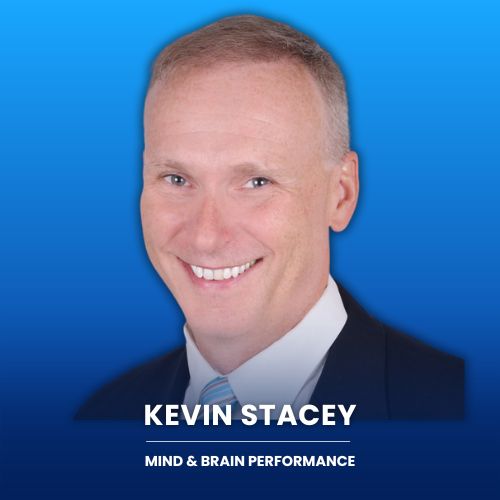
With Kevin Stacey of TrainRight, Episode 242




What You’ll Learn
- Your brain isn’t you: Kevin reframes the brain as a tool, not the decision-maker. The mind observes, the brain processes. Confusing the two is the root of overthinking. [0:00]
- Survival of the busiest: During deep sleep, the neural networks that fired most during the day get reinforced. Whatever you repeatedly think about, you literally get more of. [1:29]
- Hebb’s Law in practice: Neurons that fire together wire together. Savoring positive experiences strengthens beneficial pathways; ruminating on negatives does the opposite. [4:30]
- Pattern interrupt questions: When caught in a thought spiral, ask: "Is this all-or-nothing thinking? Mind reading? Fortune telling? Self-blame?" Naming the distortion breaks the loop. [8:12]
- Write it down: Putting overthinking on paper stops the mental snowball. Kevin walks through his 3-column worksheet for catching and disputing cognitive distortions. [14:00]
- Identity drives behavior: The stories you tell yourself and the labels you use ("I’m anxious" vs "I’m someone learning to regulate") rewire subconscious patterns. [23:28]
- Mind movie for future self: Visualize a detailed future identity 30 seconds a day. The brain can’t tell the difference between vivid imagination and lived experience. [25:00]
- Daily anchors beat willpower: Breath, movement, and short meditation windows throughout the day regulate the nervous system before willpower needs to override it. [27:44]
- Protect your sleep like your life depends on it: Sleep is where the rewiring actually happens. Poor sleep biases the brain toward negative thinking the next day. Don’t make big decisions after a bad night. [35:00]
Why It Matters
Overthinking is the silent performance killer most high-achievers never address. Kevin Stacey, a former brain imaging specialist, founder of TrainRight, and author of MindRight, has trained over 80,000 people across multiple countries in the neuroscience of self-regulation. His central reframe: your brain is a tool, not the master. When you learn to direct it instead of react to it, anxiety, rumination, and self-doubt lose their grip. This episode gives you 7 concrete techniques to interrupt thought loops, rewire identity, and build daily anchors that work even when willpower fails.
Who Should Listen
- Anyone stuck in thought spirals, chronic rumination, or self-doubt who wants practical neuroscience-based tools rather than generic "just think positive" advice.
- Executives, leaders, and high-performers who feel their mental noise is capping their decision quality and energy.
- Biohackers optimizing physical systems who haven’t yet worked on the cognitive layer, plus anyone building a mindfulness or meditation practice who wants the brain science behind it.
How to Stop Overthinking & Use Your Brain as a Tool
On the High Performance Longevity podcast, Nick Urban sits down with Kevin Stacey, MBA, an effectiveness expert and former brain imaging specialist who’s trained over 80,000 people across multiple countries in neuroscience-based performance strategies. Kevin is the founder of TrainRight and author of MindRight and TimeRight, with a background spanning military service, healthcare, and corporate leadership.
The conversation centers on a counterintuitive reframe: your brain is a servant, not the master. Kevin explains how neuroplasticity rewires thought patterns every night during deep sleep, following the principle of "survival of the busiest": whatever neural networks fire most get strengthened. This is why rumination compounds and why positive savoring works. He walks through concrete tools including pattern interrupt questions, cognitive distortion identification, written thought records, identity language updates, and the mind movie visualization technique he uses with executive clients.
You’ll walk away with Kevin’s daily regulation stack (breath, movement, short mindfulness windows), a framework for catching cognitive distortions before they escalate, and the identity reframe that rewires subconscious behavior patterns over time.
Key Terms Quick Reference
Specialized terms surface throughout this conversation. Here’s a quick reference.
[0:00] Mind vs Brain: Kevin’s core distinction. The brain is the biological hardware that processes signals. The mind is the observer that can direct the brain. Confusing the two is the root of overthinking.
[1:29] Hebb’s Law (Survival of the Busiest): Donald Hebb’s principle that neurons that fire together wire together. Whatever thought patterns fire most frequently get reinforced during sleep’s rewiring phase.
[6:45] Cognitive Distortions: Predictable thinking errors like all-or-nothing, mind reading, fortune telling, self-blame, and catastrophizing. Naming them is the first step to breaking their grip.
[8:12] Pattern Interrupt Questions: Short reframes Kevin uses mid-spiral: "Is this all-or-nothing? Am I mind reading? Jumping to conclusions?" Breaking the loop requires conscious interruption.
[14:00] Thought Record (3-Column): Written tool: thought, emotion, cognitive distortion. Identifies what’s driving the feeling so the mind can respond instead of react.
[23:28] Identity Labels: The self-descriptors ("I’m anxious", "I’m a procrastinator") that the subconscious treats as commands. Updating them intentionally shifts downstream behavior.
[25:00] Mind Movie: Kevin’s visualization technique. A detailed mental image of your future self lived for 30 seconds to a few minutes daily. The brain reinforces the imagined identity as if real.
[27:44] Regulation Anchors: Daily micro-practices (breath, movement, short meditation) that keep the nervous system regulated so willpower isn’t spent fighting dysregulation.
How Your Brain Rewires Every Night in Sleep
The short answer
Every night during deep sleep, the brain selectively reinforces the neural networks that fired the most during the day. Kevin calls it "survival of the busiest." Whatever thoughts you rehearse most often get more efficient pathways. This is why rumination compounds. It’s also why intentional savoring works.
What Stacey found
As a former brain imaging specialist, Kevin’s seen it directly in scan data. He uses the analogy of cars per second on a road: with limited asphalt, the busiest routes get repaved. The networks that don’t fire often get pruned. This means your mental habits aren’t just behavioral preferences. They’re becoming physical neural infrastructure. The flip side is the opportunity: deliberate repetition of productive thought patterns, especially before sleep, gets consolidated into lasting wiring.
What to do about it
Protect sleep ruthlessly because the rewiring happens there. Avoid making big decisions after a bad night since your negative-thinking bias spikes. Savor positive experiences consciously for 30 seconds to reinforce them. Run the mind movie visualization before sleep so the brain consolidates the future identity overnight.
“A lot of us don’t realize that our brains rewire every evening in a certain phase and stage of sleep. It’s almost like survival of the busiest. The neural networks that basically get the most neurons firing, the brain just rewires and reorganizes around them.” – Kevin Stacey
Related: Sens.ai Brain Training Review
How to Interrupt a Thought Spiral in Real Time
The short answer
Kevin’s technique: when you catch yourself spiraling, name the cognitive distortion. All-or-nothing thinking? Mind reading? Fortune telling? Self-blame? The act of identifying the pattern pulls the mind out of reactive mode and into observer mode.
What Stacey found
Thirty years ago Kevin could tell you exactly how he felt: nervous, anxious, insecure. But he couldn’t tell you the thoughts driving those feelings. That gap, between feeling and noticing the thought, is where most people live. Mindfulness is the skill of closing it. When you can see the thought, you can interrogate it. When you can interrogate it, you can choose your response. Writing thoughts down is the single most effective pattern interrupt he’s found. Paper stops mental snowballing because the act of writing requires a different brain network than the rumination loop.
What to do about it
Keep a small notebook. When a spiral starts, write: the thought, the feeling, and which cognitive distortion it maps to. Use pattern interrupt questions out loud: "Is this all-or-nothing? Am I mind reading? What’s the evidence?" Then write a counter-response. Do this even once per day for 30 days and the pattern loosens.
“Thirty years ago I could have told you how I felt, which was probably pretty nervous or anxious or insecure. But I couldn’t tell you the thoughts that I was thinking that was causing me to feel that way.” – Kevin Stacey
Related: Pison Perform Brain Health Wearable
Why Identity Labels Change Your Behavior More Than Goals
The short answer
The subconscious treats self-descriptions as commands. Saying "I’m someone with anxiety" reinforces the circuitry. Saying "I’m someone learning to regulate my nervous system" rewires it. The language you use about yourself becomes the wiring you build.
What Stacey found
Kevin uses the "mind movie" technique with executive clients. It’s a 30-second-to-few-minutes detailed visualization of the future self: how you hold yourself, how you handle stress, what you say, how you feel. The brain can’t distinguish vividly imagined experience from lived experience at the neural level. So running the mind movie daily, especially before sleep, seeds the identity the subconscious will work to match. Paired with intentionally updated self-labels ("I’m calm under pressure" vs "I panic"), it shifts baseline behavior over weeks.
What to do about it
Write your top 3 current self-labels. Rewrite each in a direction you want to move toward. Create a 1-paragraph mind movie of your future self in a specific high-stakes scenario. Run it mentally every morning and before sleep for 30 days. Watch what happens to the subconscious patterns.
“Is this all or nothing thinking? Is it jumping to conclusions? Is it mind reading? Is it fortune telling? Self blame? Writing it all out, what are the thoughts, what’s the worst that could happen, then writing a response after you identify the cognitive distortions.” – Kevin Stacey
Related: Best Vagus Nerve Stimulation Devices
The Stacey Overthinking Reset Protocol
Kevin’s 7-step framework for interrupting mental noise and rewiring toward resilience. Pair with steps from the top down. The first 3 are quick wins, the last 4 build the foundation.
- Name the cognitive distortion in real time: When a spiral starts, ask: all-or-nothing? Mind reading? Fortune telling? Self-blame? Naming it breaks reactivity.
- Write the 3-column thought record: Thought, emotion, distortion. Then add a counter-response. Paper disrupts the mental loop because writing uses different neural networks than rumination.
- Use pattern interrupt questions out loud: "What’s the evidence? What would I tell a friend in this situation? Will this matter in 5 years?" Spoken questions force reflection over reaction.
- Update your self-labels intentionally: Swap "I’m anxious" for "I’m someone learning to regulate." The subconscious builds whatever you repeatedly claim about yourself.
- Run the mind movie daily: 30 seconds to a few minutes. Detailed future-self visualization. Do it before sleep so the brain consolidates the identity overnight.
- Protect sleep as a non-negotiable: The rewiring happens in deep sleep. Poor sleep biases you toward negative thinking the next day. Don’t make big decisions after a bad night.
- Layer daily regulation anchors: Short breath sessions, walks, 5-minute mindfulness windows. Keep the nervous system regulated so willpower isn’t spent fighting dysregulation.
Common overthinking mistakes
- Trying to think your way out of overthinking. The loop needs interrupting, not analyzing.
- Making big decisions during poor sleep or a bad emotional day. Your negative bias is spiked. Wait.
- Using generic positive affirmations without specificity. "I’m confident" won’t stick. "I’m someone who speaks up in meetings" will.
Source: Stacey’s Overthinking Reset, TrainRight
Frequently Asked Questions
What’s the difference between the mind & the brain?
Kevin’s framing: the brain is the biological hardware (neurons, circuits, chemicals) that processes signals. The mind is the observer that can direct the brain. Confusing the two is the root of overthinking. When you identify with every thought, you’re a prisoner. When you observe thoughts from the mind, you can choose your response.
What are cognitive distortions?
Predictable errors in thinking that escalate emotion. Examples: all-or-nothing thinking, mind reading, fortune telling, self-blame, catastrophizing, emotional reasoning. Naming the distortion is the first step to breaking its grip.
Does writing down thoughts actually help?
Yes, and Kevin considers it one of the most underrated interventions. Writing uses different neural networks than rumination. The act of putting a thought on paper pulls it out of the loop and forces structured engagement with it.
What’s a mind movie?
A 30-second to few-minute detailed visualization of your future self. Run mentally once or twice daily. Because the brain can’t fully distinguish vivid imagination from lived experience, the visualization reinforces the identity at the neural level. Best done before sleep so the brain consolidates it overnight.
Why does Kevin emphasize sleep so much?
Because the neural rewiring (Hebb’s Law consolidation) happens during specific phases of deep sleep. Whatever you rehearsed most during the day gets reinforced at night. Poor sleep also biases the brain toward negative thinking the next day. Protecting sleep protects everything else.
Can I really change my identity just by changing how I describe myself?
Over time, yes. The subconscious treats self-descriptions as commands. Saying "I’m anxious" reinforces circuitry. Saying "I’m learning to regulate my nervous system" rewires it. This isn’t magic. It’s repetition creating infrastructure.
What if mindfulness just makes me more aware of how bad I feel?
That’s a common early stage. Awareness precedes control. The first weeks of any mindfulness practice often feel worse because you’re noticing thoughts you were previously ignoring. Stay with it. The next phase is pattern interrupt, then reframe, then durable change.
Does this work if I have actual anxiety or depression, not just overthinking?
These tools augment but don’t replace clinical treatment. Kevin’s framework pairs well with therapy and, when appropriate, medication. Severe anxiety or depression benefits from professional support. The techniques here are for everyday mental noise, not acute clinical conditions.
How long until I see results?
Pattern interrupts work within days. Cognitive distortion identification gets faster over 2 to 4 weeks. Identity-level change takes 60 to 90 days of consistent practice. The daily regulation anchors (breath, movement, mindfulness) produce felt effects within a single session.
Products, Tools, & Resources Mentioned
Outliyr independently evaluates all recommendations. We may get a small commission if you buy through our links (at no cost to you). Thanks for your support!
Books & references
MindRight: Navigate the Noise: Kevin’s own book on the mind-vs-brain distinction and the practical tools for interrupting overthinking.
TimeRight: Kevin’s companion book on applying the same neuroscience framework to time management and productivity.
What to Say When You Talk to Your Self: Shad Helmstetter’s classic on self-talk rewiring. Kevin references this as a foundational text.
The Feeling Good Handbook: David Burns’ cognitive behavioral therapy manual. The original source for the cognitive distortions framework.
Change Your Story, Change Your Life: On rewriting internal narratives to shift identity.
Frameworks & practices
3-column thought record: Write the thought, the emotion it creates, and the cognitive distortion driving it. Add a reasoned counter-response.
Mind movie visualization: A detailed mental image of your future self in a specific context, run daily for 30 seconds to a few minutes.
Pattern interrupt questions: "What’s the evidence? Is this mind reading? What would I tell a friend?" Used out loud when a spiral starts.
Connect with Kevin
Kevin Stacey (TrainRight): Main site with speaking, consulting, and training programs.
Instagram @kevinstacey23: Daily neuroscience-based mental performance tips.
YouTube: Longer-form content on mindset, overthinking, and resilience.
LinkedIn: Professional connections and executive training updates.
About Kevin Stacey
Kevin Stacey, MBA is an effectiveness expert and former brain imaging specialist who helps individuals and organizations improve performance, resilience, and results using neuroscience-based strategies. As the founder of TrainRight, he has trained over 80,000 people across multiple countries to overcome mental barriers and achieve peak performance. With a background spanning military service, healthcare, and corporate leadership, Kevin is the author of MindRight and TimeRight and a trusted advisor to leading global organizations. Find him on Instagram, YouTube, or through LinkedIn.
Related Episodes & Articles
- Episode 225: How to Beat Burnout & Stress with Clinical Hypnotherapy
- Episode 241: Brain Mapping & Neurofeedback for Focus & Peak Performance
- Episode 244: Reaction Time Supports Brain Performance & Mental Clarity
- Episode 248: 7 Principles of Nature: How the Brain Thrives When You Align With Reality
- Episode 258: How Unconscious Decisions Shape Your Life & How to Break Free
- Article: Sens.ai At-Home Brain Training Review
- Article: Pison Perform Brain Health Wearable Review
- Article: Best Vagus Nerve Stimulation Devices
Music by Alexander Tomashevsky
Full Episode Transcript
Kevin Stacey [00:00:00]:
The brain makes a wonderful servant, but a terrible master.
Nick Urban [00:00:02]:
So you’re listening to High Performance Longevity. The show exploring a better path to optimal health for those daring to live as an outlier in a world of averages. I’m your host, Nick Urban, bioharmonizer, performance coach, and lifelong student of both modern science and ancestral wisdom. Each week we decode the tools, tactics and timeless principles to help you optimize your mind, body and performance span things you won’t find on Google or in your AI tool of choice. From cutting edge biohacks to grounded lifestyle practices, you’ll walk away with actionable insights to look, feel and perform at your best across all of life’s domains. Kevin, welcome to the podcast.
Kevin Stacey [00:00:55]:
Thank you for having me, Nick. Excited to be here.
Nick Urban [00:00:57]:
I didn’t tell you this offline when we were talking just now, but I have a particular interest in the brain and the mind, and I just recorded a podcast the other day about this very topic in quantifying the contents of the mind. I’m excited to explore this topic again with you today and to bring your unique flavor to the conversation.
Kevin Stacey [00:01:17]:
Good. Thank you, Nick. Yeah, Self directed neuroplasticity. Very interesting topic.
Nick Urban [00:01:22]:
We could talk, break that down. What exactly is neuroplasticity and especially the self directed form of it?
Kevin Stacey [00:01:29]:
Yeah, it’s exciting. Well, you know, I think a lot of us don’t realize that our brains rewire every evening a certain phase and stage of sleep. It’s just. It’s almost like survival of the. Not survival of the fittest with Darwin, but survival of the busiest. So the neural networks that basically get the most neurons firing. I like to use the analogy of the number of cars per second that go by on a road and there’s like a limited amount of asphalt. So the brain just rewires and reorganizes and it reallocates the asphalt from roads that don’t get a lot of cars per second to roads that just get more traffic.
Kevin Stacey [00:02:06]:
And like, that road gets improved, gets more asphalt, gets straightened, gets widened. So instead of two lanes, now it’s four lanes. And then it’s just easier for the cars, almost like a rut, to kind of just go into that road. It just gets pulled into that road more because this is a straighter, busier road. I can go 60 miles an hour on this road. But unfortunately, the road in the neural network and how awesome my life is and all the things I’m grateful for, if that’s only getting about one car every, you know, 20 seconds at 20 miles, an hour. The brain’s just going to say, this is not an important road. So I’m just going to reallocate the asphalt.
Nick Urban [00:02:43]:
Is that called Hebb’s Law, that neurons that fire together, wire together?
Kevin Stacey [00:02:46]:
Yes. It creates some neural structure that way. Absolutely. So another kind of new sect in psychology nowadays is the psychology of savoring. So, meaning, you know, like you’re down in a. In a tropical environment right now. Where are you right now again?
Nick Urban [00:03:03]:
I’m in Baja. Baja California, sir. Right outside Cabo.
Kevin Stacey [00:03:07]:
Oh, nice. Yeah. So, you know, so the psychology of savoring is, hey, I’m in a great, awesome place. I’m in Baja. But you have to feel it and stay with it. You know, stay with seeing that sunset or that awesome sight on the beach, or at least 10, 15 seconds, like, you smile through it. And now you’re going to start to get some neural structure be created, say, yes, this is an important road. This is an important network.
Kevin Stacey [00:03:32]:
This is good. The network that life is awesome. This is awesome. Right now. My life is awesome. Right now. It’s going to start to get some more traffic and the neural networks that. My life is a disaster.
Kevin Stacey [00:03:43]:
Nobody loves me. I’m going to die. I’m alone and surrounded by 10 cats in a room, and the country’s a mess. All these networks are just going to get less trafficked.
Nick Urban [00:03:53]:
So that lends some credence to the idea of faking it until you make it. Because you might not feel happy, per se, but if you can look around and you can notice the sunset, the sand, in my case, these different factors, and you can appreciate them, even momentarily, that will actually change your internal state and bring about more of that perspective over the longer term.
Kevin Stacey [00:04:14]:
Yeah, absolutely. I believe in the law of attraction. And some people say what you think you become, what you feel you attract, but what you imagine you create. So I think, you know, a lot of your audience members might be better served just to ask themselves, how would I like to feel? Would I like to feel happy? Would I like to feel grateful? Would I like to feel productive? Would I like to feel like I’m accomplishing a lot? Well, what would that look like for me? Can I see that? But more importantly, also, can I feel that? Can I just go ahead and feel, well, so if I want to be happy, can I just set a timer for two minutes? Or can I just tell Alexa, set a timer for two minutes and just feel happy for two minutes? So when you say fake it till you make it, Nick, you know, a lot of people don’t realize you can trick the brain. You know, even if you smile, even though it’s a fake smile, the brain still releases what it releases endorphins, because it’s reacting to the smile. And you definitely, definitely can do a lot of little neuroscience, little tricks and hacks and, and say, hey, you know, some people say happiness is decision. I’m going to make a decision to be happy today. And that goes along with that mindset.
Nick Urban [00:05:22]:
And I think it’s. Amy Cuddy also mentions power poses. And like, those are the physical expressions of the same thing. So if you hold a certain pose, then your mood can change over time. You can see biomarkers like testosterone levels change. And it seems like these can work together to change our state. When we don’t want to be stuck in a particular state for too long, it’s important to feel, feel like the wide range of experiences and emotions and everything. But then we also don’t want to make sure that we don’t want to get stuck in any particular state and then not able to move through it and process it.
Kevin Stacey [00:05:55]:
Yeah, that’s a good point. You know, stuck is, is quite an interesting term. You know, they done a lot of studies with children that might scream bloody murder, you know, but it’s over with, you know, in a couple minutes and they’re on to the next thing. And there’s been studies with how frequently children laugh compared to how frequently adults laugh on an average day. But, you know, absolutely. Body language, you know, sitting up straight, breathing, you know, kind of claiming my space, not being cowering and, you know, body language is used is huge as well. Breathing is huge as well. But also, Nick, how about, you know, not getting stuck in the same state? How about the stop regurgitating the same stuff over and over again and reliving it and, and replaying it.
Kevin Stacey [00:06:37]:
You know, there’s so many people that are just experts, just experts on their problems, not in solving them and just describing them to other people and could just go on and on and on. So what I like to say and what probably be good for the listeners to remember is that just think, what do you think the number one cause of unhappiness is? Certainly there’s lots of causes of unhappiness, things like health challenges and financial struggles and problems with family members. But I just think the number one cause of unhappiness is simply overthinking. And you can think yourself out of happiness in any moment. Just go around and around. You could be a millionaire and compare yourself to a Neighbor who’s not down in Baja, near Cabo and says, well, they must have more money than me and go around and around. What does that mean? What does that gesture mean? Why did they look at me that way? Why did they say that? Or what am I going to do tomorrow? And it’s just, I don’t know. I don’t know if I’d like to use the term mentally weak, but there’s certainly a lot of people who are just tortured by their own thoughts and just get sucked in and just go.
Kevin Stacey [00:07:43]:
So, you know, ask yourself what percentage of your stress or the problems you think you have are self created or self induced or self inflicted. And if we could just dial down that a little bit. It’s almost like that movie Inside out, the Pixar movie, you know, the control panel. And we got joy, we got fear, we got sadness. And then they had the teenage one earlier this year. But if you could be on the control panels and just adjust a few knobs, Nick on some various things, that would be tremendous.
Nick Urban [00:08:12]:
All right, Kevin. Well, the million dollar question then is how do you go about adjusting those knobs? I think everyone agrees that they don’t want to live their life through the negative lens and in that state. But then unless you’re given instructions or blueprint, how do you get out of that?
Kevin Stacey [00:08:27]:
Sure. I mean, there’s a couple things. First of all, it’s just being aware and mindfulness, which I knew, I wish I knew about 30 years ago, which I didn’t. Thirty years ago I could have told you how I felt, which was, you know, probably pretty nervous or anxious or insecure or, you know, beating myself up. But I couldn’t tell you the thoughts that I was thinking that was causing me to feel that way. So if I want to adjust the dials, you know, first of all, the awareness that there is dials and I do have some control over this. Too many people are into victim mentality as you know, and blaming others and, and, and just. We just need to realize that no one can cause me to be unhappy unless I give them that permission.
Kevin Stacey [00:09:09]:
There’s actually a book from a friend of mine called Rhonda, I forget her last name is escaping me right now. But no one can drive you crazy unless you give them the keys. So, you know, just having the awareness that there is a control panel, there is knobs, and I do have some say in this. And then awareness on what am I thinking about right now? What am I, what am I dwelling on? What am I saying to myself? The Reason why I call my book Navigate the noise is sometimes you got to turn up the volume on the noise and say, excuse me, what was that? Would I allow a friend to say that to me? Like, why would I talk to myself this way? Shad Helmsletter has a great book, what to say when you talk to yourself. So, you know, the awareness, the mindfulness, what am I saying to myself? And I think a great way to adjust the dial is to ask yourself a different question. Questions are really key because questions can interrupt the focus and change the subject. So a better question would be, hey, is that in my past or do I want this in my future? Could be, hey, is this something I can control or something I can’t control? Is this something I want to give more energy to or less energy to? Is this something I want to grow bigger in my life or grow smaller? And I think one of the best questions is, how would I like to feel? How would I like to feel, act and behave? How would I like to see the situation? How would I like tomorrow to go? As opposed to, you know, being an expert on how I don’t want things to go? And then, you know, some other. Some other great things.
Kevin Stacey [00:10:43]:
Some of the great sayings and statements I make is just noticing the subject I’m on, changing the subject. If you can notice the subject and change the subject, a pattern interrupt is another useful technique to kind of adjust the dials. I’m sure you used to hear of Tony Robbins would say he wanted to throw cold water on someone’s face or just interrupt yourself going down these negative roads. It is kind of like that Denzel Washington movie Runaway Train. You know, the train is a little harder to stop when it’s got momentum, when it’s going down there. If you can notice it more sooner, then it’s got a lot of momentum, and it’s a lot easier to stop at a pattern interrupt. Different phrases and statements. You’d say to yourself, like, I say something like, wait a minute, how do I know that for sure? Maybe, maybe not.
Kevin Stacey [00:11:30]:
Maybe they’re upset with me, maybe they’re not upset with me, but how do I know that for sure? Has that been expressly communicated to me? No. Am I just speculating? Okay, well, if I’m speculating, I’m speculating. You know, that’s fine. That’s normal. That’s part of the process. So the other thing too, Nick, is just don’t believe your thoughts. You know, too many people just believe them and, you know, torture by them, as I said. But I think really the best news and probably the most calming and the most uplifting news for your listeners is just to realize that what is a thought? And how would we define a thought? Well, I like to say a thought is just a thought.
Kevin Stacey [00:12:10]:
And it’s just a thought. It doesn’t mean it’s true. Doesn’t mean I have to overanalyze it. It doesn’t mean I’m depressed. It doesn’t even mean I need medication. Doesn’t mean I have all these problems. It’s just a thought. You know, a thought really is just a brain secretion.
Kevin Stacey [00:12:23]:
It’s just neurons firing. Thank God we have them, because it means we’re still alive, electrically electrical activity going on in the brain. But if you just see it that way, you know, it’s my nervous, negative Nelly brain trying to protect me, you know, and I don’t need to go there. So, you know, we just kind of try to use the mind to keep the brain in check. I think really is the key to mental toughness.
Nick Urban [00:12:44]:
Even the examples of, like, a thought that you had and then the way that you realized it was a thought that wasn’t serving you, then how you were able to question that and what happened as a result.
Kevin Stacey [00:12:56]:
Sure, I’ll think of an example in a minute. But I tell you, a great way is to write things down. Writing things down is great. I mean, if you ever had the experience of not being able to sleep and getting up and just writing a list, getting these things out of my head. Mental snowballs is what I kind of like to call it. You notice the train of thinking, and it grows bigger and bigger and bigger. I remember when I first moved to this town, I live a little outside Boston in a town called Hockinton, where the marathon starts. And I can remember the first year we moved here, you know, we didn’t know many people and joined the little League.
Kevin Stacey [00:13:32]:
And as you know, the little leagues, you know, the dads mostly run it, and they’re on the board and they’re, you know, got all their power and control. So then the second year, you know, I volunteered to be a coach again, but I wasn’t chosen. And then immediately I thought, oh, well, I’m not. I’m not part of the club. I’m not part of the board. I don’t go drinking with these guys. I bet they had a meeting about me and all talked about me and said, I don’t know anything about baseball. My kids aren’t really that good, and we’re not going to advance to the summer league and.
Kevin Stacey [00:14:03]:
And, you know, could go on and on with this and, you know, maybe we should leave the town. You know, the snowballs just kind of grow and grow and grow. And then I talked to the head coach and just said, oh, yeah, we just have to limit the assistance now because it was getting too rowdy for the umpires and we just did it by alphabetical order. So since your last name is Stacy and S, you know, you. But yeah, just come and you can help and you can volunteer. But, you know, I don’t. I can think of some others being on dates when I was younger and just crazy stuff. But, you know, we just, you know, this part of the human experience, we just love to play that jump to conclusions game and, you know, worst case scenario and defend against this.
Kevin Stacey [00:14:42]:
And it’s totally normal. And I tell you, people that are not depressed or people that don’t have anxiety, it’s not like they don’t have the same negative thoughts. I just think they don’t believe them. So maybe the most evolved people, Nick, maybe they just develop a different relationship with their thoughts and just kind of view them more in the background, just kind of like background noise, you know, that’s one way to navigate the noise, is just to see it as noise. To see it as important. You know, it’s, oh, my God, this is, you know, I need to look at this. But if you just see it as just part of being human, part of the experience, you know, our brains are actually in a desperate update. Need for a desperate update from the app Store.
Kevin Stacey [00:15:22]:
Because what’s that job that our brains are doing, Nick?
Nick Urban [00:15:25]:
A lot of them. Mainly protecting us.
Kevin Stacey [00:15:27]:
Protecting, Protecting. So imagine if you have a relative like an aunt or something, whose main directive or prime directive in life is to protect you. Do you think this relative or aunt would be relaxed or calm or laughing or joyful or looking to see what are you grateful for in your life? No, it’d be, oh, my God, Nick, you’re eating too much. You don’t go swimming after that or put that down or what are you doing, Nick? It’s all just nervous Nelly. It’s like a, you know, a squirrel, you know, eating the acorn with the head on the swivel, you know, looking for the predators and everything. So our brains are still doing that. It’s still looking for what’s wrong. Because what is wrong or what could go wrong or what is wrong with this picture? Anxiety was very helpful, and that’s how we evolved.
Kevin Stacey [00:16:11]:
And you could make the argument it Was the most anxious people who passed on their genes, you know, because they’re able to survive. And, you know, that was an important question, you know, what could go wrong? And according to our current mental equipment, we still only live to about the age of 30. We’re still in a hunting gathering group. You know, we forget that 20,000 years in evolution’s a drop in the bucket. So, you know, we all have a stone age brain. And how does it feel, Nick, to know you’ve got the same brain you would have had if you were alive in, you know, 18,000 BC? That’s just the reality of it. You know, we just, we’ve been walking upright and 2ft for about 4, you know, to 2 to 4 billion years. You know, it keeps changing.
Kevin Stacey [00:16:52]:
Everybody will give you a different number, but we just evolve very slowly. I mean, we can evolve faster now, the CRISPR device, but it’s not considered to be ethical for human beings to be editing their genes and everything. But hundreds and hundreds of generations and we’re still evolving now. It’s fascinating.
Nick Urban [00:17:10]:
Yeah. And with crispr and that particular gene editing technology, there’s a lot of drawbacks and off target effects. And I’ve looked into that quite extensively over the years. There’s some newer gene editing technologies that are, that appear to be safer and we’ll see what actually materializes out of that. But I also like look back at a lot of ancient history and what cultures before us did, and I see how advanced they were in many different ways. And it doesn’t actually bother me very much that my brain might be the same exact, at least structure and capacity as a brain of a thousand years ago, 20,000 years ago.
Kevin Stacey [00:17:44]:
That’s a good point. But you just can’t let the brain be the master. You know, the brain makes a wonderful servant, but a terrible master. So I think what we need to do nowadays is use our mind to keep our brains in check. Realize the brain is the creator. The brain created this crazy thought. You know, did you ever wake up from a nightmare and say, thank God that was a dream, you know, thank God that was a nightmare. I mean, this mismatch of stuff in our dreams, you know, nonsensical.
Kevin Stacey [00:18:09]:
But we have to realize our brain is doing that during the day. It comes up with this nonsensical stuff, then this non related, out of context craziness. And that’s just what the brain does. And I just think we need to accept that. But then mental toughness is really having the awareness and making it a habit to not Allow your brain to pull you down roads where you don’t want to go. Like, is this thought new? Is this thought helpful? Have I been over this already? Like several times? Do I need to go through this again? So that’s really my definition is to realize that, yeah, there’s going to be days you’re going to be upset, you’re going to be sad. Like I noticed for me, if I didn’t sleep well, you know, my incidence of negative thinking, my negative thoughts are just off the charts. And some days you just need to throw up your arms and say, okay, well it’s didn’t get a lot of sleep.
Kevin Stacey [00:19:03]:
So yeah, a lot of negative thoughts. So it’s just a day not to make long term decisions or to, you know, reevaluate everything and just try to stop the overthinking and just do a crossword puzzle or do a thousand piece crossword puzzle. So just get your mind off it. But, but just to realize that there’s going to be some bad days, it’s part of being human. Pain in life is inevitable, but misery is optional. So I’m just not going to allow myself to be miserable, but just realize, catch myself, catch myself, catch myself. I don’t mean to, to imply being an unemotional robot. I just mean to not make things worse than they already have to be.
Kevin Stacey [00:19:43]:
And I just think there’s so many people that make things worse than they already have to be inside of their own heads and just go around and around and around and then don’t realize. So I think a real useful technique too, Nick, on adjusting the dials is to have a line. Let me just take a piece of paper and just draw a line in the sand, you know, a hard line, and just say, at what point is my continuing to focus on this or dwell on this now becoming counterproductive? At what point is this doing nothing but to make it worse or harming me or harming my peace of mind, my ability to sleep and you know, not to be in denial, but and just ask yourself, am I approaching the line on this topic? You should have a line for every person in your life, every subject, the job, this and that. And what does it mean when you have these lines, Nick? Means you have boundaries, you know, I’m not letting you in the boundary, you know, because you’re just not worth it. I’m not going to overanalyze you. It does nothing. So it’s that lower diminishing return. So yeah, that’s another good technique.
Kevin Stacey [00:20:48]:
The line. So we got the mindfulness we got. Asking yourself a different question. Throwing water on your face. No, no, just kidding. Having elastic, snapping elastic around your wrist, Having some kind of pattern interrupt technique which could be an image or phrase or I would use image of my kids when they were younger and just stop, inhale as I exhale. Just see that image, see that picture is another helpful technique. Melt the mental snowball.
Kevin Stacey [00:21:16]:
Writing things down some way to change the subject. A lot of different things that we can do. But you know, it does start with that awareness. That’s why I’m glad that there’s people like you doing these podcasts. And mindfulness is much more a buzzword in our society nowadays. It’s needed. I’m sure you’ve heard, Nick, that Americans are not necessarily the happiest society on earth, I think, is it Switzerland? It’s one of those Nordic countries, right. That the World Health Organization always says is the happiest.
Nick Urban [00:21:48]:
Yeah, one of those are like Bhutan or something.
Kevin Stacey [00:21:50]:
Yeah. And you know, the ones that have the saunas every day they go into. But I think we’re one of the unhappiest wealthy nations in the. You go to Europe, you go to France. I mean, how many weeks of vacation do they get a year? Is it six or eight or so? I think, you know, America was formed with the Industrial revolution and we had the factories going and you know, we had child labor and finally we passed these laws, you know, no Sundays, no weekends. But you know, Italy, a lot of these countries, you know, much healthier society. And Mexico where you are, they have the siestas and you know, we just seem to take ourselves very seriously. You know, it’s a service orientated society.
Kevin Stacey [00:22:31]:
We’re very impatient. We don’t want to wait for things. You know, in England they have their cues, you know, they’re used to waiting for things. And you know, they were bombed during bomb during World War II by the Germans. And I think the grandparents brought the kids up just to be patient and wait. But in America we all have our cars and we got used to being in the independence. You know, they have all the trains and everything in Europe and, and thank God, by the way, Nick, we’re not in the Ukraine nowadays. I mean, thank God we don’t have to worry about a Russian missile hitting our house or thank God we’re not in Gaza, you know, so sometimes being grateful, we have to realize I have to acknowledge the things I don’t have to worry about, but I don’t have to worry about a Russian missile.
Kevin Stacey [00:23:10]:
I mean, I think the majority of the human beings on this planet, they wake up in a big mindset or a big thing on their mind is water. Do I have enough water? Where am I going to get the water? Well, I don’t have to worry about water. So that’s another thing I’d be grateful for. So we can keep going on the list.
Nick Urban [00:23:28]:
And I’m not sure if you’re familiar with Dr. David Hawkins work. He has a map of consciousness and he also talks about like the fastest way to change your life. He mentions, if I recall correctly, that at the very top, the biggest factor that determines your actions and everything else that contribute to your life experience is your identity. And then below your identity is your story, beliefs, story and then values below that. And then I think it’s emotions and then actions at. Oh, emotions, thoughts, actions. And so if you have, are having a lot of these thoughts that are not serving you, you could work on the thoughts themselves or you could go above the level, above the thoughts to the emotions.
Nick Urban [00:24:18]:
And if you. I think he also says that if you stick with emotion for 90 seconds and you don’t try and change it, you just let yourself experience it, that energy dissipates and you’re able to actually have the shift. And so if you change the higher level, then the things below it shift and the stuck thoughts, the repeated thought patterns might dissipate, maybe not. But that seems like it’s a area that’s potential to, that has a lot of potential to dramatically improve quality of life.
Kevin Stacey [00:24:46]:
Yeah, it reminds me of that act, acceptance, commitment, therapy. So just instead of fighting the feeling or fighting the thoughts, just accept them for a bit. You know, it’s okay to lean into it for a bit. But you know, and like I said, but am I now, am I now getting to that point where, you know, where I’m approaching the line where it’s now becoming counterproductive again. So feel it, experience it, you know, feel it, express it and then hopefully you let it go. Will dissipate. So feel it and express it, lean into it. Will dissipate.
Kevin Stacey [00:25:17]:
And yeah, so I like that the thoughts do create the emotions. So, you know, if you can feel the emotions a little bit, the underlying thoughts will go away and just realize it’s okay to feel a little pain. You know, sometimes, you know, even if you go to AA or Alcoholics Anonymous, they would talk about what’s the, you know, the thoughts that you’re having, you know, the pain, the bottle, the alcohol eases the pain. What were those they call it stinking thinking in aa. What’s those thoughts you were having before you picked up the bottle so, you know, maybe realize it’s okay to feel a little pain. I don’t need to just mask it right away, you know, with a substance and realize I can survive through this. Loneliness is another kind of American epidemic nowadays where we feel disconnected from everyone. And looking at our Facebook feed and seeing everyone’s best version of themselves and not the reality of the truth or how they feel, but there’s the version they want to be.
Kevin Stacey [00:26:12]:
But yeah, Dr. Hawkins is good. Dr. David Burns is good. You know, lots of folks, lots of teachers around there. But I don’t know about you, Nick. I just need daily reminders, you know, if I don’t, if I don’t pull those weeds out of the garden of the garden of my mind, you know, they’re just going to grow. So it’s a daily process of pulling the weeds out.
Kevin Stacey [00:26:31]:
There’s no graduation point where I don’t have to worry about this anymore, I don’t have to think about this anymore. You know, it’s just a daily, daily process and it’s just part of my life. And just I realize now a big part of my life again is noticing the subject, changing the subject. Noticing the subject, changing it, maybe changing it could be. Go ahead and feel it. Maybe it’s writing down the mental snowball. Sometimes these mental snowballs aren’t really going to change if we don’t really see in black and white what it is we’re saying to ourselves. I do believe in CBT and cognitive behavioral therapy and looking to see what are the cognitive distortions on my snowball.
Kevin Stacey [00:27:10]:
Is this all or nothing thinking? Is it jumping to conclusions? Is it mind reading? Is it fortune telling? Is it self blame? Other blame, whatever it is. So sometimes you do get a lot of insight through just writing things, writing it all out. What’s the thoughts? What do you think the worst that could happen? And then writing a response after you identify the cognitive distortions in the snowball. That’s also very helpful as well. But you know, different, different techniques for different people, Nick, you know, not one thing is going to work for everyone. The other thing too, which you probably do, is meditation, right? Yeah.
Nick Urban [00:27:44]:
The first thing you were saying is like, observe your thoughts. My mind immediately went to meditation and whatever kind of practice that is, where you’re not actually attaching to the thoughts and you’re able to just take a higher vantage point and observe the thoughts and not necessarily get sucked into them and Go along with them. And for me, that’s meditation and. Or neurofeedback.
Kevin Stacey [00:28:05]:
Yeah. Yeah. I have this device called Muse M U S E. It’s. It’s meditation and neurofeedback. So I wear it. A headband connects to my phone via Bluetooth, believe it or not. And when my brain waves are in a calmer state, there’s a little bird chirping sound.
Kevin Stacey [00:28:21]:
You know, when they’re not where I’ve stayed on the calm state for 10 seconds, I hear the bird chirp. And then. So if I’m not hearing the bird chirp, it’s almost like a little tap on my shoulder saying, kevin, bring it back down. So what’s great about meditation is that you get the continuous repetitions of noticing and returning, noticing and returning, and then realize, oh, I don’t need to follow the train. The train does not need to suck me in. It’s almost like, I like the analogy of being in a train station. And imagine you get on the train via thought, and the thoughts are very seductive, right? You know, the conductor will stand there and say, your life is a disaster. Is leaving from track B.
Kevin Stacey [00:29:05]:
You’re totally losing your hair. Nick is leaving from track C. You’re never going to be married again. Nick is leaving from track E. So you get on the track via thought, on the train via thought. So the goal is to notice I’m on the train, go back to the station, notice I’m on the train, come back to the station. I’m just kidding about the hair. You’re a little younger than me, so you have more hair than me.
Kevin Stacey [00:29:27]:
But. So what’s great with meditation is you get stronger with the repetitions. It’s like if I’m trying to get stronger with my bicep muscles, I would say, lift it up, lift it up 50 times. You know, with 20 pounds. Lift it up, lift it up. I want to be stronger mentally and not let the thoughts suck me in. I would say, return it here. Return it here.
Kevin Stacey [00:29:55]:
So if I was to say, lift it up for strength training. Lift what up? Lift up the weight, lift up the poundage. If I was to say, for mental strength, mental toughness, I say, return it here. Return what here? Return the focus. Return the focus here on my breathing. This breath now. As I inhale, I’d say, this breath. And as I exhale now, this breath now.
Kevin Stacey [00:30:22]:
But my life is a disaster. No, this breath now. But nobody loves me. This breath now. I’m losing my hair at this breath now. I just keep returning it Here, return it here, return the focus here. Very helpful for people. Just gives yourself a break.
Kevin Stacey [00:30:42]:
That’s the strategy of navigating the noise. I just say quiet the noise. You know, just for five or 10 minutes, you know, set a timer. And I feel bad for people. They need to have the phone on. You know, some people can’t fall asleep, Nick, without the TV on, the radio, the phone, the Netflix, watching this show and I’m watching the TV show and there’s tickers on the bottom of the screen with reminders of the sports scores and so much stimulation we get. You know, I used to wake up, Nick and check my phone right away. Here’s the.
Kevin Stacey [00:31:09]:
Oh, geez, what messages do I get? Whatever. And you know, I’ve learned that’s not good for the brain. The brain is still kind of processing when you first wake up, you know, you got to, you got to go into the shower, Nick, and have those shower thoughts. You know, the shower thoughts, I think are huge to set the tone for the morning. You know, it’s very few people taking their shower in the morning who were just looking up at the ceiling and just exalting and saying, God, how did I get to be this sexy? You know, most people are standing there under the shower head and looking up and saying, God, when is this place going to get its act together? When is my co worker going to get the medication that he or she desperately needs? You know, so what you should do, Nick, is come up with a positive headline for the day. Like I’m a 50 year old dad who’s rocking it, you know, or I’m a federal employee who’s making a difference and that’s my headline for the day. And other things will happen in the day, but that’s going to go on the back page or page two. And it’s not going to knock this top story off.
Kevin Stacey [00:32:11]:
You think of a news cast, there’s a news director, right? The news director decides what the top story is going to be and what the second story is going to be. But that’s not everything that happened in the world in that day. It’s just a half hour broadcast. So, you know, some of us would be better served reminding ourselves, I am my own news director. I decide the top story. And when you mentioned about Dr. Hawkins, about, you know, identity and story and values, we also have that book, change your story, change your life and then identity, I think you said, was up top there, and that’s huge. Self image, I think it was.
Kevin Stacey [00:32:51]:
I think it will come to me in A minute. The person that said that you can’t perform consistently, the Zig Ziglar, said you can’t perform consistently in a manner that’s inconsistent with your self image. So I just. I hate to hear people, Nick, describe themselves in negative ways. Like I. I hate to hear someone say to me in a class, well, I’m a worrier. I’m an overthinker. It’s like, cancel timeout.
Kevin Stacey [00:33:17]:
Is that how you want to be? Like, don’t say that. The subconscious mind hears that. So see yourself as a confident person who people are drawn to and you’re effective and you get things done. Like, make that be your self image. I think, you know, with YouTube nowadays and these videos, you know, for most of human history, what we did is we sat around fires and told stories. Nowadays we don’t really tell the stories. We don’t see the images and take that word, imagine, break it in half. Image in.
Kevin Stacey [00:33:47]:
I’m going to image in what it is I want in my life instead of what I don’t want. But. So I think another great way to navigate the noise is create your own noise, an image in what it is you want. Create your own YouTube video of you feeling the way you want to feel, doing what it is you want to do, being the way you want to be. Have people respond to you in the way you want them to respond, and, you know, feel that emotion. You know, if you were talking to a sports psychologist and I was a baseball batter, they would say, kevin, hear your name being announced over the loudspeakers. And of course, my problem, Nick, is my name is Kevin Stacy. And if you Google me, Google just assumes, you know, then you must have mistaken.
Kevin Stacey [00:34:35]:
You must be looking for Kevin Spacey. And is Kevin Spacey guilty of his charges? But anyway, hear your name announced over the loudspeaker. See yourself go up the bat, See the pitcher release the ball. Feel and see a perfect mechanical swing. Hear that crack of the bat. See the ball go over the fence. Hear the roar of the crowd. See yourself high fiving the bass coaches.
Kevin Stacey [00:35:00]:
Feel that emotion as you’re rounding the bases and get into that dugout and see all the teammates hugging you. But gotta feel it, gotta feel it, gotta feel it. Without the emotion, it doesn’t really register for the brain, because as we talked about, the brain’s really busy, right? So the brain, you know, what’s not relevant to the brain is just kind of dismissed. So I gotta make this relevant. I got to feel this. Feel this good feeling. So the brain takes Notice of this, you know, oh, this is good. Yeah, I want this again and get a feel it, feel it, feel it.
Kevin Stacey [00:35:27]:
And that’s what a sports psychologist would do. But everybody listening to this, I think create your own YouTube video, write down a few bullet points, what you want to see in the video, how do you want to feel? What would that look like? How do you want to perform or act or in the workplace, can you see that? Can you see yourself having a good meeting? Can you see yourself giving a good speech? If you’re in sales, can you see the customer signing the order form and just become really an expert? Become an expert on what you want as opposed to your problems or the things you think you have. But I know that that was a long answer, but I like that.
Nick Urban [00:36:03]:
There’s another person, I don’t know if you’re familiar with his work, and that’s Dr. Joe Dispenza. He coined a concept called mind movies. And there’s channels on YouTube that produce these. And I actually watch them most days, including not today yet, but yesterday. And if you find a movie that has the images, it’s really just a clip, not technically a movie. It has the images, the clips that resonate with you in addition to an audio soundtrack that you enjoy. The affirmations slip past your conscious.
Nick Urban [00:36:34]:
They go into your subconscious because they bypass the reticular activating system. And then when you go back and you repeat that habit, it becomes more powerful each time. And I’ve found that like I can watch a four minute my movie and my entire day shifts because I just leave that feeling so great. And I’m guessing with AI now, we’re not far away from being able to like take some of your photos or videos, upload those and say, I want to feel this way. Give me a 30 second, one minute video and it’ll actually be able to create a customized mind movie to exactly what it is that you want to hear and experience.
Kevin Stacey [00:37:11]:
Wow. So this is Joe Dispenza’s YouTube page channel.
Nick Urban [00:37:16]:
I don’t think it’s his, but there’s other people who have created them. I think this one is called Quantum Movies or something. I’ll put it in the description of this, but I found it back in 2019 or so and I downloaded them to my phone. I’ve been watching them most days since then. And there’s all kinds of different ones. To me, it’s more about like finding the one that works for me. And the audio has to be aligned with what I want to hear. Otherwise it doesn’t really resonate.
Kevin Stacey [00:37:43]:
Yeah. Like you to Beautiful day. It’s a beautiful day. Don’t let it get away. Yeah. And let’s put in the description to the Shad Helms letter what to say when you talk to yourself. Also, psychology is savoring. Dr.
Kevin Stacey [00:37:57]:
Rick Hanson, Dr. David Burns, the Feeling Good Handbook and the Feeling Great Handbook. He has an app now called Feeling Great, really talking about the cbt. And he has a daily mood log. You know, we had write down the scary thought on one column and then the more rational, calming thought on the other column. And so lots of teachers out there, lots of people that can remind us, can help us. And you’re right. You have to find a teacher that resonates with us.
Kevin Stacey [00:38:25]:
Have to find a mind movie that resonates with us. Have to find a music that resonates with us. But are you familiar with you, too? Or are you too young for that?
Nick Urban [00:38:34]:
Nick, Are you too? Yes.
Kevin Stacey [00:38:38]:
People told me years ago I used to look like Sting from the police.
Nick Urban [00:38:43]:
But, Kevin, one thing that you mentioned earlier that I think is really important to underscore is that I often hear people say, oh, I can’t meditate. I can never just clear my mind. It just doesn’t work for me. I’ve tried over and over again, my mind does not clear clear. And I think it’s a very normal experience. I don’t think the mind does completely clear. And I think giving people permission to just drop into a following an anchor of some type, whether it’s the breath or it’s something else, closing their eyes for just a few minutes, even noticing when they start going down the rabbit hole of thought and then returning to that anchor point, say it’s the breath. And just the number of times you’re able to do that in one session, that is like the barometer of success.
Nick Urban [00:39:25]:
I’ve heard meditation called the bicep curl of the brain. And it’s because the repetition is not like that. Your mind is totally clear. It’s that you’re. You have a thought, your mind goes into. Into that thought, follows that thought, and then you realize that you just did that, and then you take your mind off of that thought again. And that’s one repetition.
Kevin Stacey [00:39:41]:
Great. Great. Absolutely. That’s. Yeah. So the. The people that say they can’t clear their mind, let’s, you know, first of all, let’s just change the wording a little bit. Okay? Let’s just say it’s challenging for me to clear my mind because if you say you can’t clear your mind, then you know your subconscious is going to hear that.
Kevin Stacey [00:39:59]:
So if you argue for your limitations, they become yours. If I say I can’t bicycle ride, then you know that’s going to be my limitation. I’d say it’s challenging. So let’s just, you know, you kind of have to stop, breathe, take the emotion out a little bit, and then ask myself, you know, how do I want it to be? Do I want to be able to clear my mind? Okay, do you think it’s, do you think it’s possible that you could clear your mind mind? Is that possible? And if you’re going to say no, then okay, then it’s not possible for you. But let’s, that’s really the first step is just how do I want it to go? Am I, am I self, my self defeating beliefs kind of getting in the way and just breathe and kind of calm it down a little bit. But then you’re right, you know, see it in a different way, reframe it and realize that thoughts are part of meditation. It’s, it’s totally normal. You’re going to have thoughts, but it is the bicep curl of the mind.
Kevin Stacey [00:40:51]:
That’s great. So I’m going to have a thought, but I’m just going to practice. What I’m going to get some reps in, let me get 10 or 20 reps in here. 10 or 20 reps of noticing and returning, noticing and returning. Each time I do that, I’m going to get stronger. The other point you brought up is the focal point. So you might want to have a better, more effective focal point for you. So for some people, the breathing is great.
Kevin Stacey [00:41:12]:
Noticing what it feels like as you inhale, noticing all the nuances. Do I feel it down low by my diaphragm muscle? Do I feel it up high by my nose or nostrils? How does it feel like as I’m exhaling? But for some people, maybe they need a more advanced focal point. You could say again, this breath now, this breath now as you’re inhaling and exhaling, you could also visualize, if you’re very visual, the word this breath. And then now you could do colors. You could do this breath in red and now and blue. It could be a guided tape that you listen to. It could be someone talking to you. You could go down the, the TM road, the Transcendental meditation road, which I have as well.
Kevin Stacey [00:41:54]:
And they’ve given me a mantra, you know, cost a little money. It’s on a, you know, a sliding Scale based on your income. But you get the mantra. And what you’re supposed to be doing is just saying the mantra over and over again, just repeating the mantra and make that be the focal point of your attention as opposed to your thoughts. Could be a walking meditation. When I usually teach classes, when I go into companies, we’ll start with a walking meditation just to get the feel of it, because you can feel that weight shift from the heel to the ball of the foot as you’re walking. So I lose. You would coach people and say, as the left foot hits you, say, this step.
Kevin Stacey [00:42:28]:
And then as the right foot hits you, say, now. So this step now. This step right here, right now, as I’m walking on this floor right here, right now. Not yesterday, not next week, not tomorrow. This step now. This step now. You walk slowly in a circle around a room a few times. That can be helpful.
Kevin Stacey [00:42:49]:
One thing I do when I can’t sleep, Nick, is I will take some math into it, and I will take a crazy high number that’s not divisible by anything. So I go like 2,535 minus 7. All right, so now I can’t link this to the breathing because I would stop breathing, you know, out of lack of oxygen. So it’s just in my head, you know, it’s more advanced way of counting sheet. But I go, 2,535 -7 is 2,528, 2,521, 2,514, 2,507. You see where I’m getting at? So it’s all, you know, I wouldn’t go 25, 35 minus 5 because that’s too easy. The fives, fives, fives. I make it be a seven, and so it ends with a five and you minus a seven.
Kevin Stacey [00:43:46]:
I don’t know, Nick. A couple minutes after this, I’m pretty. I’m pretty ready to go to sleep. You know, my thoughts are not really bothering me right now because I’m all, what number was I? Okay, just restart the number 2,535. You know, something like that. But just, you know, try something different. You know, the other thing with sleep is that, can you imagine someone sitting at a dining room table waiting to get hungry? No. Sitting at a dining room table waiting to get hungry.
Kevin Stacey [00:44:16]:
Who would be so crazy to do that? All right, so why do we lay in a bed waiting to get tired? Just wait till you’re tired, then go into bed. Like, let’s just associate the bed with sleeping and being tired and not being On a laptop and checking the phone or doing social media. Just, just, it’s time for bed, go to bed. You know, I think that would be helpful as well. But again, if I don’t sleep, I have much more negative thoughts the next day. Just the whole, the whole life seems a little grayer and a little more danger and I’m surrounded by enemies who are out to get me and oh, I missed that email, Nick. Oh no, I’m probably in trouble. Like what’s the biggest disaster that’s going to befall me? Let’s prepare for these disasters.
Kevin Stacey [00:44:54]:
Let’s get ready. Let’s get the defense walls up. Who’s mad at me? Was there any. It’s just, it’s a little much. Maybe it’s just me. Is it just me, Nick? Am I the only one that sleep.
Nick Urban [00:45:07]:
Is one that I tend to fall asleep pretty quickly. I guess I learned a long time ago that like sleep should be, the bed should only be associated with a couple things and work and social media are definitely not on that list. And I think what the issue arises is that people who struggle to sleep and they entrain a certain sleep wake cycle and say they don’t sleep until 2 in the morning because that’s like what they’ve been doing and their body starts to naturally get tired. I’d say two in the morning and then they have to get up at 6 or something. So it’s like in that case, if you’re just waiting till you get tired, you might not get tired until 2, 2:30. What are you doing in that situation? And I think there’s a lot of things you could do. I think that’s probably why a lot of people don’t.
Kevin Stacey [00:45:47]:
Yeah, I think you just need to kind of mix it up and get yourself to feel tired. What would it take for you to feel tired? Do you need to get up earlier? Do you need to, you know, not sit down? Do you, you know, if we can just eliminate the, the common sense things that get in the way. Like I, I don’t understand people that say they have to get up to go to the bathroom and then they, well, when’s the last time you drank? Also, there’s some rules with this. You know, I’ve heard the three, one, one rule, you know, no, no electronics three hours before bed or no eating or no drinking or there’s all different kinds of rules you can find out there. But the other thing that kills me too, Nick, is, is the people with obstructive apnea and you know, you see Then you can’t dream. You can’t get into REM stage and really need to get that addressed if you hear loud noises or snoring. And I actually had the surgery in October. I had my tonsils taken out of my uvula to make that airway bigger.
Kevin Stacey [00:46:37]:
And, you know, unfortunately, the insurance companies want to push CPAP devices on you. I think they make money every month on the rental. But, you know, my thought is, why push air down an airway that’s obstructed? If I can just unobstruct the airway, you know, why not just deal with the thing? The surgery’s rough. The other option is an oral device that keeps your jaw forward that orthodontist can make just for you. That can be helpful as well. But I think we do need to fight for our sleep, Nick. If we’re not sleeping, we need to fight for it, figure out a new routine. I think Cameron Diaz had an article out.
Kevin Stacey [00:47:10]:
If you Google Cameron Diaz, separate bedroom. She’s trying to make separate bedrooms. Just be more normalized and just be able to say to a romantic partner, I love you, I want to sleep with you. I just can’t share a bed with you all night. It’s just not working out. You’re either too hot, too cold, you’re too loud or whatever. I’m going down the guest bedroom. But I do still love you.
Kevin Stacey [00:47:31]:
I still want to see. I’m going to start the night off with you, but just don’t be insulted. I’m not going to end the night with you. And I hope you understand I’ll just be a better person for you in the morning. I’ll be a better husband or spouse. I’ll be a better whatever. I just. Just.
Kevin Stacey [00:47:44]:
It’s just not. I need to sleep and it’s. It’s not working out. And you do feel bad for people that don’t care, take care of themselves. You do feel bad for people that obviously look tired and. And they’re, you know, they stop breathing over 10 times an hour due to oxygen deprivation. The brain wakes them up. I mean, it’s rough stuff, but.
Kevin Stacey [00:48:04]:
Well, it’s good that you sleep good, huh?
Nick Urban [00:48:06]:
I want to go back to something that you mentioned. You’ve talked about the mind and also the brain a number of times. I’m curious about the distinction there’s for you because as you’ve already alluded to several times, like the precision of words matter. And also specifically, I’ve come across case reports, many case reports of people who. Who use particular words, say I, I’m heartbroken. And then they have a statistically significant increase in heart related conditions. And if they say, oh, that was like a gut punch, then they have digestive issues. And like the language we use can manifest issues that are related to that language, which seems absolutely ridiculous, but I’ve come across it enough times that I think it’s important.
Nick Urban [00:48:46]:
But beyond that story, that anecdote I just shared, what’s the difference between mind and brain to you?
Kevin Stacey [00:48:52]:
Sure. Well, I’d relate it to even the animal kingdom or dogs is that they just don’t have the self awareness of their thoughts. You know, a dog can’t say to myself, well I, I kind of beat myself up a little bit yesterday about that, you know, about that, you know, time I peed on the rug and, and I hope they’re not going to get upset with me again. So this is what makes us human, is we have the mind. Everybody has the brain in the animal kingdom, but we have the mind, the cortex per se, where it gives us this awareness of the thoughts. There are very few people, I forget the name of the disorder, it’s in my book, that don’t have awareness of their thoughts, but very few. So the mind gives us the awareness. The mind is the director, per se, that decides which thoughts are going to play on the stage of our mind, where the brain is just the creator, the brain’s job is just to create thoughts and the brain’s job is to continue this electrical activity.
Kevin Stacey [00:49:51]:
And when someone says their brain dead, it means there’s no electrical activity. When there’s no electrical activity, there’s no thoughts. So the brain is the creator and it just comes up with a lot of garbage. Nick. You know, it’s about 50,000 thoughts a day. About, you know, 77% are negative or counterproductive. And so the brain is the creator. So if you separate the two, it’s really helpful because then you could say, wait a minute, that wasn’t me.
Kevin Stacey [00:50:17]:
That’s not my mind, that’s my brain. That’s my brain doing its outdated, obsolete job, trying to protect me. So again, I think some of the most evolved people are just able to say thank you. You know, don’t fight with it, just thank you, thank, thank you. But I don’t need that anymore. I’m not surrounded by danger. I’m not in a hunting gathering group. No one’s trying to kill me today, you know, unless I live in a certain spot of the world.
Kevin Stacey [00:50:41]:
But you know, so thank you. It’s okay. So brain creator Mind director, mental toughness. You use your mind to not allow your brain to pull you down roads where you don’t want to go. Again, what you think you become, what you feel you attract the law of attraction. But what you imagine you create. I think it was Albert Einstein who said that imagination is more important than intelligence. And also imagination is your preview of life’s comings attractions.
Kevin Stacey [00:51:11]:
So I’m excited about this mind movie thing you were mentioning in the Quantum movies on YouTube. Check that out.
Nick Urban [00:51:20]:
Yeah, that’s great. And the other thing that I think is really important to address right now is that I can’t say I’ve ever met someone who said, you know what, I view the world, the glass as half empty. People always think that they’re optimistic regardless of whether or not everyone who knows them, their partners, would agree with that. So how do you actually go about recognizing if that’s you, if you might think that you’re highly optimistic, but in fact you’re actually the opposite?
Kevin Stacey [00:51:48]:
Yeah, it’s a good, good question. And I’ve been thinking about this a little bit lately and I’ve been asking myself the question, is this how an optimistic person would act? Is this how an optimistic person would speak? Is this how a half full person would be having entering this conversation? Because I want to remind myself, well, how do I want to feel? I want to feel happy. Okay, would a happy person be doing this right now? Would a happy person be calling this guy up on the phone and having this conversation that I just did? So I think there’s ideal and then there’s reality. Ideally yes, I’m a half full person in reality. Maybe not so much. I don’t present myself that way, I don’t appear that way, I’m not talking that way, I’m not acting that way. I think sometimes, Nick, we need to ask other people to ask trusted loved ones and do I seem like I’m a half full person or do I seem like I’m anxious to you? Do I come across as anxious? Do I come across as negative or positive? But sometimes people really don’t see themselves accurately. You know, sometimes I teach time management and I always joke it would be funny if there was hidden cameras on the company and you get a six month report on your average day.
Kevin Stacey [00:52:57]:
How you spend your time on an average day of like it’d be shocking but, but it’d also be very interesting to get a report on a daily basis. I guess you can do this through biofeedback. But what percentage of my thoughts were negative? Or positive. And. But yeah, it is tough sometimes, Nick, to see ourselves accurately, you know, and a lot of times, even with spending, you know, people don’t want to download their online, online banking for the month of December and say, where did I spend my money? Well, well, what you say is important is not really where the resources are going. So. But that’s really a sign of a growth person, growth personality. That’s a sign of someone who’s committed to continuous quality improvement and increasing their emotional intelligence and their awareness.
Kevin Stacey [00:53:40]:
So yeah, you might have to ask people, but also ask yourself, is this how a happy person or is this how a half full person would speak, look, act or appear?
Nick Urban [00:53:50]:
Simple enough if we have the courage to actually ask those around us and be open to some real constructive feedback. If that’s the case. You also just said that you consult and do time management for businesses. How do you apply these principles we’ve discussed here today to the business world.
Kevin Stacey [00:54:08]:
Just to get them to be aware? Like there’s very few people in the business setting that are going to talk about thoughts. But all of our decisions, we make thousands of minor decisions on a daily basis and, and you know, pre preemptive or you know, to think these things in advance. The prerequisite for every action is a thought. And a lot of times we’re making decisions or we’re taking actions based off insecurity or based off bad data or bad information or based off group think. So to be able to be a more confident decision maker and be a more confident leader, I think it was Teddy Roosevelt who said, I can’t be a good leader if I think I look stupid on a horse or charging up San Juan Hill. So I can’t be a good manager if I think the people don’t like me or if they think I’m too young or I don’t know what I’m doing. So recognizing thoughts and mindfulness in neuroscience I think is really being embraced by Fortune 500 companies because they realize what we have here as humans and humans think and the brain and their thoughts is like a huge contributor to their output. So this is something we really need to look at.
Kevin Stacey [00:55:18]:
Some companies have meditation rooms, I think Google and some progressive companies have a lot, a lot of, a lot of interest in these type of things. So I’d go in and do something on mental toughness or how to be mentally tough with the stone age brain, or I go in and do something on time management for peak performance. And I just tell them, you know, you can’t really manage Time. Right. You can’t tell the clock to speed up or slow down. So we manage our phone focus. So is this worthy of our focus, this topic or this? And a lot of people just waste a lot of energy and a lot of focus on the dumb things. And again, it goes back to our line again, Nick, you know, is we, at what point is this now becoming large, diminishing return? You know, some people in the workplace will spend 20 minutes on something, Nick.
Kevin Stacey [00:56:05]:
It should have taken two minutes or 30 seconds, but they’ll reread it, go over it, go over it, replay it and like, do you know how much time you’re wasting? Is there a hidden camera here somewhere? Could we give you some feedback? Are you open to feedback? You know, some people aren’t open.
Nick Urban [00:56:20]:
Yeah. So for people who are open and they are intrigued by the idea of becoming more time efficient and productive and effective at work, are there any particular tips or activities or exercises they can test to see what kind of gains they can get?
Kevin Stacey [00:56:36]:
Sure. You know, I definitely say, you know, start with the offense, you know, don’t wake up and just check your email because that’s all defense, you know, your mind’s going to be in a million. Start with the offense. So the. What’s the offense? The offense is how would I like things to go? What would I like to accomplish? Think of the football analogy, offense. I’m running my play, I’m snapping the ball, I’m deciding what direction these people I’m going in. And so divided up between offense and defense. So offense, what would I like to get done? Just spend it five, ten minutes on that.
Kevin Stacey [00:57:04]:
Like the earth is not going to stop spinning if you don’t check your messages or email and then you set aside and schedule some time each day for the offense. If it’s 45 minutes, an hour and a half, a couple different blocks. I’m a big believer in time blocking and the Pomodoro technique and setting aside time. I usually use a stopwatch since I’m self employed, have my own business and I’ll set a goal with the stopwatch. You know what, the stopwatch doesn’t lie. I’m going to focus on this for 45 minutes and if my focus gets taken off for some reason I stopped the clock. But to leave plenty of time for the defense, the responding and the crisis and other people’s problems and everything. But you know, if I’m too nice, Nick, you know, it’s nice to be a nice person, but if you’re too nice, you know Forget it.
Kevin Stacey [00:57:49]:
Forget about managing your time, your focus. You need to go to a different workshop and not being so nice because people love to waste your time and walk all over you. And so there’s all kinds of little, there’s all kinds of subtle like, you know, time management and focus management is above the part of the iceberg, above the surface. There’s 80% of the stuff under the wal water that just prevents people from doing what they think they need to do. You know, you have some people that have the belief I need everybody to like me all the time. You need everybody to like you, then you know you’re not going to be very effective.
Nick Urban [00:58:17]:
Yeah, those are some good tips and I like how you tie that back into what we’ve been discussing throughout. For any of you guys tuning in, let us know what your top tips are for enhanced productivity and effectiveness at work. We’d love to hear from you, either in the comments of this video or on the social media posts. Kevin, if people want to connect with you to grab your book or to just check out your work, how do they go about that?
Kevin Stacey [00:58:41]:
Sure. Just like I said, Kevin Stacy, not Kevin Spacey, just www.K-E-V-I-N S T-A-E-Y.com and there should be a link there to Amazon the mind. Right? Navigate the noise book. How to effectively deal with your internal fake news. I couldn’t figure out a better way to describe that. Just fake news that’s internal for success, resiliency, mental toughness and peace of mind. And then there’s time. Right.
Kevin Stacey [00:59:11]:
How to manage your 1440 minutes for maximum effectiveness and sanity. Sometimes we Forget we have 1440 minutes a day. So I have no excuse why I can’t spend 30 of these on a treadmill because then I’d have 14 and 10 left. 1410 left here.
Nick Urban [00:59:27]:
Awesome. Kevin, if people are going to leave here with one takeaway, what would you hope that would be?
Kevin Stacey [00:59:34]:
I’d say understand and grasp that a thought is just a thought. And that is freeing. That is freeing. Just a thought.
Nick Urban [00:59:43]:
Great. Kevin, thank you so much for joining me.
Kevin Stacey [00:59:45]:
Oh, you’re welcome, Nick. It was great to be here.
Nick Urban [00:59:48]:
Thanks for tuning in to high performance longevity. If you got value today, the best way to support the show is to leave a review or share it with someone who’s ready to upgrade their healthspan. You can find all the episodes, show notes and resources mentioned@outlier.com until next time, stay energized, stay bioharmonized and be an outlier.

Comments