
With Linda Bamber-Olsen of WAVwatch, Episode 239




What You’ll Learn
- Born deaf, drawn to sound: Linda grew up deaf in one ear, played drums for 35 years, and channeled that lifelong connection to vibration into developing a wearable frequency device. [01:42]
- Law of vibration: Every cell contains 70 vibration receptors (per Dr. Candice Pert’s 1980s research), and sound pulses travel through bone, skin, and tissue faster than the speed of sound. [06:44]
- 24,000+ frequency programs: The WAVwatch library covers 1,100 individual frequency ideas across 150+ sets targeting pathogens, parasites, heavy metals, EMFs, inflammation, and pain. [09:02]
- 9 breast lumps gone in 30 minutes: During prototype testing, Linda documented 9 women whose breast lumps disappeared within a single 30-minute session using targeted frequency sets. [09:02]
- 30 kidney stone cases resolved: In early testing, 30 participants with kidney stones showed debris in urine samples and reported pain relief after roughly 30 minutes of frequency exposure. [09:54]
- First Wave protocol: Linda’s recommended starting sequence covers Lyme disease, parasites, heavy metals, EMF detox, chemical detox, wave defense (cancer-linked pathogens), and wave relief (pain, inflammation, trauma). [32:12]
- PTSD thermography proof: An 84-year-old woman’s facial inflammation visibly reduced across 3 thermography images taken at 0, 30, and 60 minutes while wearing the WAVwatch on an emotional support program. [47:28]
- Acoustical vs electromagnetic: WAVwatch uses acoustical frequencies within the 20-20,000 Hz hearing range, while PEMF devices use electromagnetic pulses. Linda recommends alternating both for complementary benefits. [01:03:09]
- Frequencies shared through touch: A man sleeping next to his wife (who wore the WAVwatch for Parkinson’s) reported 15 years of foot pain resolved after absorbing her frequencies through contact. Pets respond similarly. [17:41]
Why It Matters
Most people assume frequency healing requires expensive clinical equipment or extensive training. Linda Bamber-Olsen, who spent 18 years in women’s breast health and tested her prototype on hundreds of participants, condensed 24,000+ targeted frequencies into a single wrist-worn device. Her work bridges the gap between ancient vibrational wisdom and modern wearable technology, offering a drug-free tool that works through bone conduction even for deaf users.
Who Should Listen
- Biohackers exploring non-invasive frequency tools who want to understand how acoustical vibration differs from PEMF and other electromagnetic approaches.
- Anyone dealing with chronic pain, neuropathy, or inflammation who wants a drug-free option backed by hundreds of user testimonials across 500+ conditions.
- Health practitioners curious about vibrational medicine who need a practical framework for recommending targeted frequency programs to clients.
How 24,000 Sound Frequencies Reprogram Cells Without Drugs
In this episode of the High Performance Longevity podcast, Nick Urban sits down with Linda Bamber-Olsen, the creator of the WAVwatch wearable sound frequency device. Born deaf in one ear and a drummer for 35 years, Linda’s fascination with sound deepened when her mother and sister both developed breast cancer within six months. She left her teaching career to study holistic health and founded BRAS (Breast Research Awareness & Support), eventually discovering that targeted frequencies offered the simplest and most affordable path to supporting the body’s natural healing processes.
The conversation covers the science behind frequency therapy, including Dr. Candice Pert’s research on 70 vibration receptors per cell, the Niels Bohr School of Physics findings that nerves transmit sound pulses rather than electrical signals, and Tesla’s mortal oscillation rate concept. Linda shares specific results from her prototype testing: 9 women with breast lumps resolved in 30 minutes, 30 kidney stone cases cleared in a single session, and essential tremors of 25 years reduced by 90% within an hour. The WAVwatch delivers these frequencies through bone conduction, meaning it works even for users who can’t hear.
You’ll walk away understanding how to use the First Wave protocol for foundational health, why hydration and sea salt enhance frequency absorption, and how acoustical frequency technology compares to PEMF electromagnetic approaches. Linda also explains how frequencies transfer through physical contact to other people and pets.
Key Terms Quick Reference
Several specialized terms come up throughout this conversation. Here’s a quick reference.
[06:44] Mortal oscillation rate: Tesla’s concept that every organism has a resonant frequency, and when matched precisely, the target structure self-amplifies and breaks apart. This principle underlies frequency-based pathogen elimination.
[20:19] Cellular vibration receptors: According to Dr. Candice Pert’s 1980s research, every cell contains 70 receptors that detect vibration. When stimulated, they cause adjacent cells to vibrate in sequence, propagating the signal through the body faster than the speed of sound.
[22:05] Sound pulse nerve theory: Research from the Niels Bohr School of Physics in Denmark proposing that nerves transmit sound pulses rather than electrical signals. This may explain why acoustical frequencies produce rapid results for neuropathy and tremors.
[32:12] First Wave protocol: The WAVwatch’s recommended starting sequence that cycles through Lyme disease, parasites, heavy metal detox, EMF detox, chemical detox, wave defense (cancer-linked pathogens), and wave relief (pain, inflammation, trauma).
[25:36] Bone conduction: The transmission of sound vibrations through bones and skin rather than through the ear canal. The WAVwatch uses this principle, allowing it to deliver frequencies even when the volume is low or the user has hearing loss.
[19:53] Healing is Voltage: Dr. Jerry Tennant’s concept that cells require proper electrical voltage to heal and function. When cellular charge drops below optimal levels, disease processes begin. Frequency therapy may help restore this voltage.
[35:56] Muscle testing (applied kinesiology): A biofeedback technique using the body’s muscle response to determine which frequencies or supplements are needed. Linda uses finger snapping as her preferred method to help users select the right WAVwatch programs.
How Do Sound Frequencies Heal Without You Hearing Them?
The short answer
Sound frequencies travel through bone and skin via vibration, not just through the ear canal. The body’s 70 cellular vibration receptors detect these signals and propagate them cell-to-cell, making hearing optional for the technology to work.
What Bamber-Olsen found
As someone born deaf in one ear, Linda designed the WAVwatch specifically to work without relying on hearing. Dr. Candice Pert’s research identified 70 vibration receptors per cell that detect and respond to frequency input. Once one cell’s receptors vibrate, they trigger adjacent cells in a chain reaction that moves through the body faster than the speed of sound. Research from the Niels Bohr School of Physics supports this, suggesting nerves themselves are sound pulse conductors rather than electrical wires.
What to do about it
Keep the WAVwatch volume at a minimum audible level so the speaker produces vibration, but you don’t need to hear it clearly. Stay hydrated and consume unrefined sea salt to improve the body’s conductivity. The device works through the wrist’s bone and skin contact, so wearing it snugly ensures optimal frequency transfer.
“Your body is absorbing, and basically it’s pulling those frequencies, or they’re moving through your bones and your skin. Our bones, it just zooms through our bones. So they are very big conductors of sound.” – Linda Bamber-Olsen
Related: Neurofeedback Therapy Benefits
What Is the First Wave Protocol & Where Should You Start?
The short answer
First Wave is the WAVwatch’s foundational protocol that cycles through frequencies for Lyme disease, parasites, heavy metals, EMFs, chemicals, cancer-linked pathogens, and pain. Linda recommends running it before exploring any specialized programs.
What Bamber-Olsen found
In testing 100 people with a biomeridian machine, 42 had parasites as their worst health problem without knowing it. After 30 minutes wearing the WAVwatch on the parasite program, their bodies no longer tested as needing parasite supplements, and the biomeridian readings normalized. One chiropractor in the group passed a foot-long parasite after using the device. Linda also discovered that Lyme disease frequencies produced unexpected improvements in people who had no idea they carried the pathogen.
What to do about it
Start with First Wave by pressing the top button and letting it cycle through all programs automatically. Run the full sequence at least once a month, or every other week for deeper support. After completing First Wave, move to specific programs that match your goals. If you experience a strong reaction, it’s likely a sign the frequencies are working on something your body needed to clear.
“Most people do not realize that Lyme disease is contagious. So many people have come into my office that carry Lyme disease and have no idea whatsoever. And they’ve been to doctors.” – Linda Bamber-Olsen
Related: Nervous System Optimization
How Does Acoustical Frequency Differ From PEMF Therapy?
The short answer
WAVwatch uses acoustical vibrations within the 20-20,000 Hz hearing range that travel through bone and tissue. PEMF uses electromagnetic pulses. Both support the body differently, and alternating them produces the best results.
What Bamber-Olsen found
Linda’s device operates purely through acoustical sound, not electromagnetic fields. The WAVwatch speaker outputs specific frequency patterns measured by Royal Raymond Rife and other early researchers. These acoustical frequencies target the body’s vibration receptors at the cellular level, producing highly targeted effects. PEMF devices, by contrast, use broader electromagnetic fields that influence the body’s electrical charge. Linda and her husband use both types of tools at home and find they serve different purposes.
What to do about it
Use the WAVwatch for targeted frequency programs (pathogens, detox, emotional support, pain) and PEMF for broader electromagnetic field therapy. Alternate between them rather than using both simultaneously. One WAVwatch is sufficient. Linda advises against wearing two devices at once to let your body ease into the frequencies.
“This is not electrical. This is vibrational. Everything has a vibration, law of the universe. And there’s 70 receptors in every cell that start to vibrate when they feel vibration.” – Linda Bamber-Olsen
Related: Best PEMF Therapy Devices
The Bamber-Olsen Sound Frequency Protocol
Use this framework when starting with the WAVwatch or any targeted frequency device. Linda developed these steps from 18 years of clinical observation and prototype testing with hundreds of participants.
- Run First Wave before anything else: This foundational protocol covers Lyme, parasites, heavy metals, EMFs, chemicals, cancer-linked pathogens, and pain/inflammation
- Stay hydrated with sea salt: Unrefined sea salt and adequate water intake improve conductivity, helping frequencies travel through your body more effectively
- Wear it 1-3 hours per session: Most results appear within 30-60 minutes, but longer sessions are safe. Loop specific programs overnight for severe issues, then take a break
- Cycle back every 1-2 weeks: Repeat First Wave monthly at minimum. Some conditions require periodic reinforcement, like the tremor patient who needed a second session after 11 days
- Use muscle testing to choose programs: When multiple frequency sets seem relevant, applied kinesiology helps identify which ones your body needs most
- Share through physical contact: Frequencies transfer to people and pets through touch. Sleeping next to someone wearing the device or laying it on a pet’s kennel extends the benefits
- Alternate with other modalities: Combine with PEMF, light therapy, or other tools. Rotate rather than stack simultaneously for best results
Common frequency therapy mistakes
- Skipping foundational detox: Jumping straight to specific symptoms without running First Wave means you miss hidden issues like undiagnosed Lyme or parasites that affect 42% of people tested
- Turning the volume completely off: The speaker must produce some vibration to work. Zero volume means zero frequency output, even though you don’t need to hear it clearly
- Expecting 100% results from one session: While some conditions respond in minutes, chronic issues may require repeated cycles over weeks with breaks in between
Source: Bamber-Olsen’s Sound Frequency Protocol, WAVwatch
Frequently Asked Questions
Does the WAVwatch work if you’re deaf?
Yes. Linda Bamber-Olsen designed it specifically because she is deaf in one ear. The device transmits frequencies through bone and skin vibration, not through the ear canal. Your body absorbs the frequencies through contact with the wrist, so hearing is not required.
How long should you wear the WAVwatch per session?
Linda recommends 1-3 hours per session for most programs. Many users report results within 30-60 minutes. For severe issues, you can loop a program overnight, but give your body a break afterward and rotate to different programs.
Can you share WAVwatch frequencies with other people or pets?
Yes. Frequencies transfer through physical contact. A man sleeping next to his wife who wore the device for Parkinson’s reported his 15-year foot pain resolved. Pets also respond, with dogs and cats gravitating toward the device when anxiety programs are running.
What is the difference between WAVwatch & PEMF devices?
WAVwatch uses acoustical sound vibrations within the 20-20,000 Hz hearing range that travel through bone and tissue. PEMF uses electromagnetic pulses. Both support the body differently. Linda recommends alternating between the two rather than using them simultaneously.
What should you do first when you get a WAVwatch?
Start with the First Wave protocol, which cycles through Lyme disease, parasites, heavy metals, EMF detox, chemical detox, wave defense for cancer-linked pathogens, and wave relief for pain and inflammation. Run this before exploring specific programs.
Can frequency therapy address the root cause or just symptoms?
Linda believes frequencies address underlying issues, not just symptoms. The kidney stone example shows debris physically leaving the body after frequency exposure. Frequency sets include both targeted elimination frequencies and supportive healing frequencies to address root causes.
Do you need to drink more water when using frequency therapy?
Yes. Linda recommends staying well hydrated and consuming unrefined sea salt when using the WAVwatch. Both improve the body’s conductivity, helping frequencies travel through bones, skin, and tissue more effectively.
Products, Tools, & Resources Mentioned
Outliyr independently evaluates all recommendations. We may get a small commission if you buy through our links (at no cost to you). Thanks for your support!
Tools & devices
WAVwatch: Wearable sound frequency device delivering 24,000+ targeted frequency programs through the wrist. Code URBAN saves $100.
Books & references
Healing is Voltage by Jerry Tennant: Foundational book on cellular voltage and healing, referenced during the discussion of how cells need proper electrical charge to function and repair.
Related articles
Best PEMF Therapy Devices: Comprehensive comparison of wearable and at-home PEMF machines, including a WAVwatch review section.
Top Vibroacoustic Therapy Devices: Roundup of sound-based healing tools including sound beds, tables, and wearable equipment.
Nervous System Optimization: Guide to biohacking the nervous system for high performance, complementary to frequency-based approaches.
Neurofeedback Therapy Benefits: Overview of brain training technology and how neurofeedback complements other frequency-based modalities.
About Linda Bamber-Olson
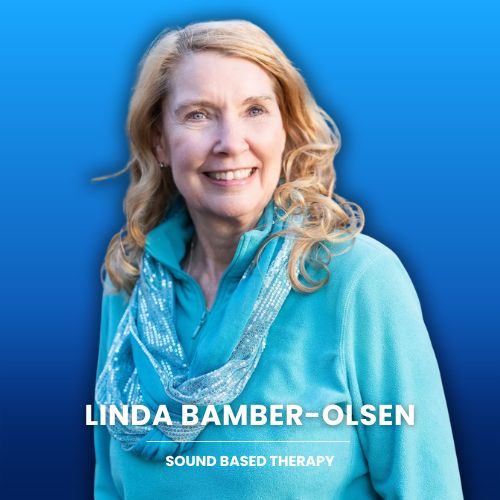
Linda Bamber-Olsen is the creator of the WAVwatch, a wearable sound frequency device loaded with 24,000+ targeted frequency programs. Born deaf in one ear, she spent 35 years as a drummer before channeling her lifelong connection to sound into health technology. After her mother and sister both developed breast cancer, Linda left her teaching career to study holistic health and founded BRAS (Breast Research Awareness & Support), where she spent 18 years working with women’s breast health. Her prototype testing with hundreds of participants demonstrated rapid results across conditions ranging from breast lumps and kidney stones to essential tremors and neuropathy. Linda continues to share her insights on sound healing through speaking engagements, with a book about her health journey set for release.
Related Episodes & Articles
- Episode 108: Vibroacoustic Therapy & Sound Healing with inHarmony
- Episode 36: Infopathy Digital Drug Infoceuticals
- Episode 180: Vagus Nerve Electric Stimulation with Hoolest
- Episode 166: Vagus Nerve Stimulation with Pulsetto
- Episode 186: Roxiva Stroboscopic Light Therapy
- Episode 235: PEMF Therapy with Resona Health
- Article: Top Vibroacoustic Therapy Devices
Music by Alexander Tomashevsky
Full Episode Transcript
Linda Bamber-Olsen [00:00:00]: Every single thing has a frequency.
Nick Urban [00:00:04]: You’re listening to High Performance Longevity. The show exploring a better path to optimal health for those daring to live as an outlier in a world of averages. I’m your host, Nick Urban, bioharmonizer, performance coach, and lifelong student of both modern science and ancestral wisdom. Each week we decode the tools, tactics and timeless principles to help you optimize your mind, body and performance span things you won’t find on Google or in your AI tool of choice. From cutting edge biohacks to grounded lifestyle practices, you’ll walk away with actionable insights to look, feel and perform at your best across all of life’s domains. Linda, welcome to the podcast.
Linda Bamber-Olsen [00:00:56]: Well, thank you for having me. It’s a really. It’s really a delight, actually, because we’ve been working on getting it set up.
Nick Urban [00:01:03]: Yes. And we had a nice conversation a little while ago for context. Anyone listening in? I met Linda’s team at the Health Optimization Summit and then again the biohacking conference here in Austin, Texas earlier this year. Your booth was one of the more busy booths out of the whole event, and so I figured there’s something worth looking into there. And it wasn’t until about two months ago that I started testing out your frequency device and your frequency technology. And we’ll go on into that in a second. But how did you get to where you are?
Linda Bamber-Olsen [00:01:35]: With developing the product, you mean?
Nick Urban [00:01:38]: Yeah, with developing the product and your interest in this whole realm.
Linda Bamber-Olsen [00:01:42]: Well, so basically I should start at my birthman. I was born deaf, one ear. And they actually didn’t discover it until the third grade. So I was evidently really in tune to sounds and, you know, trying to make my world through or my way through a world when I was. Was half deaf and somehow fooling everybody, you know, so I’ve always been fascinated by frequencies. And then I think probably the biggest thing I was, I did a little bit of music, played some different musical instruments when I was in middle school and high school. But then when I started college, I started playing the drums, and I continued to play drums with a band for 35 years. And it was all about sound.
Linda Bamber-Olsen [00:02:27]: I didn’t even know it, you know, it just. It just fit me. But for some reason, the sound of those drums was really what I needed to maybe set my emotions or balance me or whatever, so that those are ways that I was really connected to sound for a long time.
Nick Urban [00:02:44]: Wow. And then where did you start looking at this as more of a therapeutic tool?
Linda Bamber-Olsen [00:02:48]: Well, I had the idea in about 2007 I believe to do this. And it really jumped up in my need to get something developed when both my mother and sister developed breast cancer about six months apart. And my. My doctors actually just suggested that I do a double mastectomy and forget about it, just go on with my life. Although they hadn’t done any tests and I didn’t have any cancer, they wanted me to be preventive. So a lot of women get that story, and I just could not handle that. So I quit my teaching job and I started studying all kinds of holistic health and things that I could do to help myself to prevent and protect rather than having surgeries. And so I started a business called Bras Breast Research, Awareness and Support.
Linda Bamber-Olsen [00:03:37]: So that’s pretty graphic there. That tells you everything you need to know. And so I have worked with women’s breast health for about the last 18 years and taught women how to protect themselves. But at the start of that, it was immediately obvious to me that there were so many things that caused problems with breast cancer that I could be selling women supplements all day long and teaching them things, and it was just an overload and not the path I wanted to go. So, I mean, just be simplistic. I’m going, God, you know, tell me what. And the answer just came back to me. Frequencies, you know, so that’s where I got my original idea, was to use frequencies.
Linda Bamber-Olsen [00:04:20]: And then as I started studying them more and more, there was a frequency for every single idea. Everything has a frequency. So even though it was new to me that women would come in and they would have eight teeth that could be connected to their breast problems. There are two up and two down on each side that could be draining into their breasts and causing problems. We’re never told that, you know, I found a frequency for that, though. We also have E. Coli that’s now connected with breast cancer. I found a frequency for that.
Linda Bamber-Olsen [00:04:53]: We have emotions that cause breast cancer and breast problems, and I found frequencies for those. And the list goes on and on. You know, detoxification. There’s hundreds of chemicals that cause our problems. And I should not just be talking about breast health because obviously so many other things are connected to our chemicals and our plastics and our inability to detoxify. So the simplest thing I found for all of these problems was frequencies. And actually, the cheapest. That’s a good way to say it, too.
Linda Bamber-Olsen [00:05:28]: So I wanted a tool that I could develop that would cover as many ideas as possible because I could kind of see into the future. This was again in 2007, and I could see that somebody would be developing a tool for this and tool for that and a tool for that. And of course, that’s really what happened. There are tools for a lot of things, and they might have one or two frequencies on them, where my tool has 1100 different frequencies, sets 150 some frequency ideas, and 24,000 frequencies altogether. So I powered it up, I loaded it up.
Nick Urban [00:06:04]: Yeah, I think what’s interesting here is that a lot of different modalities and schools of thought and everything, they come at issues from obviously different perspectives. You have like the Chinese medicine perspective with meridians, and then you have like the German new medicine and like trauma and like the way that shapes like manifestations of disease and like across all these different systems. And you have like a Western system that’s primarily biochemical imbalances. But, like, what you’re saying is that underneath all of those is an issue or an imbalance or something to do with frequency.
Linda Bamber-Olsen [00:06:35]: Definitely.
Nick Urban [00:06:36]: So let’s now rewind a little bit. For people who have never heard of frequency medicine or even the idea of frequencies, how would you describe what they are?
Linda Bamber-Olsen [00:06:44]: Well, it’s a law of the universe, basically, you know, the law of vibration. Every single thing has a frequency and they have been able to measure them. So a lot of the original measurements came in about the 1900s. And Tesla, Nikola Tesla, was involved in this. So I love it. And I think one of his best ideas that, you know, I talk about is the mortal oscillation rate. And so he phrased this, and he said that everything, when it meets a resonant frequency or a frequency that’s just the same, that’s what that means, resonance. The same identical frequency when those frequencies meet, that they will actually, you know, combine and self amplify and then distract or fall apart or blow up or however you’d like to say it.
Linda Bamber-Olsen [00:07:34]: So that was his phrasing to tell us that frequencies could be very helpful for many different pathogens. And, you know, so that. That was one way. So that’s why we seem to have. I should start that over. It seems as a nation, as a world, even more than that, that we’ve gone the way of medicine. We have forgotten how easy frequencies are, and we went the opposite way. So we don’t know anything about frequencies today in our generation and how everything has a frequency.
Linda Bamber-Olsen [00:08:13]: Everything has a resonant frequency that can be changed and the list goes on and on because that’s kind of been not in our wheelhouse. We do not understand frequencies when, wow, the law of Vibration is the most important, one of the most important things in the universe.
Nick Urban [00:08:33]: So I can see coming at this from a couple different perspectives, if you have something you don’t want in the body, say a pathogen, hitting it with the right frequency, the resonant frequency in which it dies or explodes or whatever you want to call it, that could be helpful in that case. But, like, what if the body is already healthy or doesn’t have an imbalance of certain microbes or pathogens that you don’t want? Like, if you’re already in a decent state of health without any of those overgrowths, would you still want to apply frequency? Because you wouldn’t want to explode a healthy body, right?
Linda Bamber-Olsen [00:09:02]: And so that’s why there are frequencies for everything. So they have frequencies for better, you know, very specific ideas that I had no idea about. I mean, honestly, there’s books this thick with frequencies, you know, for everything under the sun. So frequencies I can see can be changed, various things. So in women, which is, you know, kind of my forte with their breast health, when I was working on the prototype, I had nine women had breast lumps go away in about 30 minutes. So we had frequencies to detoxify the lymph nodes. You know, whatever was breaking down, whether it was calcifications or whatever, we were able to see that frequencies could change that and clean something out in just a short period of time. So frequencies can do more than just work with pathogens.
Linda Bamber-Olsen [00:09:54]: They seem to be able to rebalance, to realign, to, you know, readjust. So many different words in there that can be helpful along those lines. So people have another, you know, really great story is in my testing again, I had 30 people who came into my office, and they actually had problems with kidney stones. And some of them were in pain right then, not all of them, but they were the wave watch for about 30 minutes for kidney stones. And voila, when we did a urine sample. Now, this is just my testimony. This is my little test, you know, to see if I wanted to keep developing this product, you know, and how important it was. Was it really working? Well, when you see 30 people have kidney stones seem to go away in about 30 minutes, you’re pretty excited.
Linda Bamber-Olsen [00:10:43]: So their urine samples were full of all kinds of flak, and their pain went away. So that was really exciting. So, again, that was a frequency breaking something up, not necessarily killing something, but changing it.
Nick Urban [00:10:56]: To underscore what you said about the breast lumps, too, like, the conventional wisdom is that it takes years or decades to develop those lumps. And therefore, it must take years or decades for them to dissipate, to break down, if that’s even possible.
Linda Bamber-Olsen [00:11:10]: Yeah, you know, so we. We are just not in tune with frequencies. We’ve kind of went away from. From ancient knowledge. I think that’s pretty obvious when, you know, if we just pay attention to that again, we know that they use sound for so many things, but the evidence is hard to find. It’s a little bit harder to catch up on, but it’s there. They did use frequencies for a lot of things.
Nick Urban [00:11:39]: Yeah. So when you were doing your research, I’m gonna go back to the example that we keep talking about of the breast lumps. You found the frequency that causes the breast lumps to break down, and then you replay that frequency onto the body, into the body. Is the frequency specific to breaking down of breast lumps, or is it a frequency of general breast health that helps return the body into a state of homeostasis where everything that shouldn’t be there goes down? Everything that should be there is amplified, kind of like an adaptogenic effect?
Linda Bamber-Olsen [00:12:09]: It’s kind of all of those ideas. Great question, but because that’s what I discovered, I think some of our original frequencies from the 1900s were very, very specific. And what I found was that people didn’t know enough about their bodies today. You know, you don’t want to need to have a medical degree. I didn’t want people to have to have that in depth to be able to use this tool, a wearable tool. So I took the frequencies and put them all together in a set is the way to say it, so that we do have frequencies to try to break up that cyst or to break up calcifications. You know, if that’s what might be in the. In the breast lump, then we have frequencies to, you know, to dissolve it, to change it, to drain the lymph nodes, to drain the liver so that, you know, the liver doesn’t have problems.
Linda Bamber-Olsen [00:13:00]: And so we put also frequencies to heal the breast. So we have a combination of ideas all put together for women. So basically, they just had to touch one button and it cycled through all of those things.
Nick Urban [00:13:13]: Yeah, because when you have a catalog of thousands of frequencies, it’s like, okay, well, there’s about 25 to a couple hundred, maybe a thousand frequencies that could be relevant in this case. How do I know which ones to apply? So it’s nice that you actually combine them into a frequency set. So it’s like a track you’re playing kind of like a song where you have multiple instruments. You’re not just isolating one instrument out of the song and saying, this is the instrument I need. But also I kind of like all these other instruments over here. It’s like, no, no, this is the whole composed musical piece and it’s more enjoyable, more effective when you combine them into one.
Linda Bamber-Olsen [00:13:46]: You actually explained that brilliantly, but I’m going to explain it down to earth, you know, a little bit different way too, because I like to laugh and have fun. But I did put a set together that was called, you know, After Party Support, which is, duh, everybody laughs. I can see you laughing. Although people listening won’t see you laughing. But, you know, what do you immediately think of, you know, somebody’s got a hangover, so they got a headache, they need to detoxify, they might have to run the bathroom quite a bit, their liver is messed up and so on. So I put all of those frequency ideas together into a frequency set so that you don’t have to, you know. So that makes it a little bit of a fun way to describe it. It’s got a lot of different ideas that help you in one overarching.
Nick Urban [00:14:37]: Yeah. So what are some of the other effects or use cases people are seeing that, like, go beyond what you typically could attribute to the placebo effect? Like if you have a lump in your breast and it’s gone kind of hard to placebo that in the span of 30 minutes, perhaps over a longer period. Yeah, it’s possible. Not very likely, especially when you have a bunch of people with the same experience. Are there any other, like, anecdotes that come to mind of people having, like, big transformations?
Linda Bamber-Olsen [00:15:05]: It seems to me that nerves are amazing. So many people have given me testimonies on essential tremors and then I’ve been able to see some also. So one gentleman came and he had essential tremors for 12 years. And he actually, I think he took the weight watch home. It was still in the testing phases, development stages. And he videoed for me and he said that his percent better in about an hour. And he’d had them for 25 years. So I had a before and after picture that he was able to give me.
Linda Bamber-Olsen [00:15:42]: So it was totally amazing. And then those type of stories continued to pour in. Just a couple of months ago, it might have been at one of the conventions that you were at too. A lady came up and she had essential trimmers and she, you know, put out her hands and they were just jumping and, you know, and her sister’s going, yeah, she can’t even hold a glass of water. She’s been that way for three years, you know, do anything. So someone put the watch on her, and she immediately felt a, you know, something energetic go from her little finger up underneath the watch and up past her elbow, but not. Not quite to her shoulder, I don’t think. And within three minutes, her tremors were gone.
Linda Bamber-Olsen [00:16:28]: So don’t forget those stories. So I wasn’t at the booth at that exact time, but she came back the next day, and she’s running and she’s got her hands out so that I can see that they are just as steady as can be. And she’s going, you know, and so lots of excitement in that. But that continues. There are so many people who have tremors or neuropathy or numbness. That gives me testimonies. Another amazing testimony was a gentleman who called, just like you’re going to be. People are listening.
Linda Bamber-Olsen [00:17:03]: Somebody called me and said that they had ordered the wave watch for their wife with Parkinson’s. And then the person just kind of cleared his throat, and you could tell he was embarrassed. He was trying to figure out what to say. And finally he really blurted out again. And he goes, and we sleep really close together. So I kind of like, okay, and what do I say next? And then he blurts out one more time, and he says, well, I could feel her frequencies when she had the wave watch on. And I got up the next morning, and my feet didn’t hurt. And I’m going, well, that’s really neat, you know, trying to.
Linda Bamber-Olsen [00:17:41]: And he goes, oh, understand. He said, they’ve hurt for 15 years. I’ve been on meds for 15 years. So this gentleman snuggled with his wife for a couple more weeks, and he was off his medications. So I actually learned something from people like that sharing with me that they definitely were feeling, feeling, feeling, you know, feeling the frequencies. They were sharing the frequencies, you know, that you could touch someone who had the watch on and they would receive those frequencies also.
Linda Bamber-Olsen [00:18:16]: So, of course I’ve told this story. And now I just get people calling me all the time, and they say, well, that’s what happens to my dog. You know, my dog’s all nervous and anxious, and he comes up when I have the anxiety frequency on, and he’ll set up my feet. Or, you know, another story might be jump on my lap. Or another story was with cats. And this lady said that her five cats, who never had anything to do with her, just jumped up behind her on the couch and you know, around her and just cuddled for the first time when she had anxiety on the wave watch.
Nick Urban [00:18:49]: So interesting. It seems the pets are more intuitive around, like health optimizing practices. Whether it’s PEMF, which is another frequency I want to explore with you, like how it compares and contrasts, or it’s grounding, or it’s light therapy, or it’s just like tap water versus a cleaner water. Animals seem to gravitate towards things that are going to improve their health and they’re less affected by placebo effect because they have no idea what it is. They’re just doing what feels right to them.
Linda Bamber-Olsen [00:19:18]: So we actually run parasites for our dog. And we actually. I have pictures of my dog wearing a wave watch. We put two wristbands on her and she could, you know, put it around her neck, but we also just lay it on top of her kennel at night, you know, and just turn parasites on. And it, you know, will go all night long, it will circle through, repeat. And she’s hearing it a little bit, but we can’t hear it. It’s just really a soft noise. And so we have stayed away from giving her some of the medication that we’re kind of concerned about, you know, so.
Nick Urban [00:19:53]: So how are these frequencies working on a cellular level? Like, I know there’s the healing is voltage. Jerry Tennant, I think his name is Idea where it’s like cells have disrupted, like resting potentials and doing certain modalities can help restore that to what’s healthy. When you have like a body that’s functioning decently already, is there a change in like cell, cell charge or is there something else going on at like a deeper level?
Linda Bamber-Olsen [00:20:19]: Well, there can be. And this Information is from Dr. Candice Pert. And this is about the 1980s, I believe. She did her research and she said there’s actually 70 different receptors in every cell and that they feel vibration. Well, again, the whole world is about vibration. And so 24 hours a day we can feel those vibrations. And so when we are actually, you know, working for a specific vibration, having it on our wrist and our body is absorbing it through the speaker onto the wrist, it actually starts one cell to vibrate because those 70 receptors vibrate.
Linda Bamber-Olsen [00:21:01]: Then they will cause the next cell to vibrate and, and the next. And then literally it zips through your body faster than the speed of sound, you know, so to me, we just have so many changes that we may not even realize are going on in our body because we have so many intricate cells and the receptors behind them. That we have. Most of us haven’t even acknowledged, you know.
Nick Urban [00:21:26]: So, yeah, when I was studying the work of, I think his name is Luke Montagnier, he was mentioning how there’s like an alternate theory paradigm beyond, like, the traditional lock and key mechanism of how molecules dock under receptors. And it’s more of like a vibrational mechanism, like you’re describing. And, like, there’s certain things in the body, like the sense of smell. It doesn’t fit the classic paradigm. And so, like, that is a newer paradigm that hasn’t gave as much traction as it could and should, if indeed it actually is as effective as he was claiming. But it’s interesting to hear, like, here’s another application that might be that specifically, like maybe working through that vibratory mechanism.
Linda Bamber-Olsen [00:22:05]: And here’s another idea on it. Research from the Niels Bohr School of Physics in Denmark. It’s pretty specific. But you can look this up, and I tell people about it all the time because they’ve never heard of it, even though they are usually professionals, you know, kind of in this energy field. And they’ll look it up and they’ll go, oh, my goodness. The research is pointing out to us that our nerves are not electrical. Nerves are not electrical, and that our nerves are sound pulses. So the changes that we have seen in so many people with nerves and neuropathy, numbness, that whole category is just over the top and also points to that idea.
Linda Bamber-Olsen [00:22:55]: So there’s a lot of research, and they say this school and their research says that they have proven that sound is more sound pulses go through your body, not electrical, go through the nerves. And I think that’s really, really interesting. So that will take a long time for people to acknowledge that and for us to, you know, be able to accept that idea and maybe develop tools for that. Except the wave watch is way ahead, and we’re already. And, you know, I think I saw one time that it might take 50 years for everybody, you know, for a whole concept, you know, to change around. But at least at this point, this Niels Bohr school of physics is saying our nerves are sound pulses.
Nick Urban [00:23:46]: So are they saying that that’s like the more fundamental, like, communication mechanism between nerves, or are they saying that there’s no such thing as the electrical impulses that are sent and it’s actually sound?
Linda Bamber-Olsen [00:23:58]: Yes, that’s actually what they’re saying. It’s not electrical, it’s actually sound. And they did a lot of research. I’m not sure I can explain it very well, but they did research on anesthesia. That was their whole goal. They said that anesthesia, they still don’t know how it works. And, you know, none of the concepts are correct. But when you apply the concepts of the nerves being sound impulses, then, voila, it makes sense, you know? So that was kind of their experiment, and there’s a lot more to it than what I can actually explain.
Nick Urban [00:24:31]: Yeah. Okay. Wow. Something for me to look into.
Linda Bamber-Olsen [00:24:34]: Yes. Sometimes I can read things, but that doesn’t mean I can repeat them like I want to and make them clear. So I’ll let you do the research on that.
Nick Urban [00:24:43]: Very nice. Well, I have the watch on right now, and I will. I’m listening to the cognitive wellness track. I will turn up the volume. So people who are listening might be able to hear through a microphone that’s at full volume, but most of the time, you cannot hear it. I don’t hear it. Going about my day. How does it work? Like, if I, for example, was fully deaf, would I still be able to have and capitalize on the effects of this frequency technology, or do you need to be able to hear? And, like, even now when I’m wearing it, I turn the volume back down.
Nick Urban [00:25:15]: Is it still working?
Linda Bamber-Olsen [00:25:17]: Yes. You just don’t want to turn it on, off, you know, have no volume because there’d be no vibration. Your body is feeling those vibrations. It’s not really, quote. It doesn’t have to hear a sound. And that was so important to me because I’m deaf, you know, and I. I needed a tool that would work. Obviously, for me, it was the.
Linda Bamber-Olsen [00:25:36]: You know, some. Sometimes you design something for yourself, and it’s like, oh, yeah, this was work, you know, and think how many people have gotten deaf as they age. So I’m really glad I did take that into consideration. So, know, again, your body is absorbing, and basically it’s pulling those frequencies, or they’re moving through your bones and your skin. And again, we don’t realize that we do have bone conducting headphones now, so maybe people are a little bit more aware of it. But before that, people probably didn’t realize that our skin absorbs sound and that our bones. It just zooms through our bones. So they are very big conductors of sound.
Linda Bamber-Olsen [00:26:17]: And it’s so important to realize to me how important sound is, because there’s a lot of different things out there. There’s light, you know, and everything is good. But again, I settled on sound because sound is the first thing that we are aware of in the womb. You know, that’s the first sense that we have our faculties on. So they say it’s like a drum solo or, you know, drum core in. In the womb all the time with the sound that we’re hearing and adjusting to. And we don’t have any sense of light until what we’re born, you know, so sound has such a head start on shaping our bodies and, you know, our bodies reacting to sound. And then sound is the last thing that we hear usually before we pass to another world.
Linda Bamber-Olsen [00:27:05]: So we have sound our whole life, 24 hours a day, day and night, from, you know, I think it’s about eight weeks after inception is when we have the sound concept. So huge idea there that we can move or that sound moves through our bodies, through our bones and our skin, not just our ears.
Nick Urban [00:27:29]: Yeah. Do you know, is it working through the mechanoreceptors on the skin as well? Because I know certain technologies, they have, like, they vibrate and it’s more feelable. I notice the vibration, I feel it. And those are claimed to work through activating the mechanical receptors, kind of like a hug does. That’s part of the reason the whole biochemical cascade of oxytocin and that type of stuff happens. I would imagine that the vibration is doing something similar.
Linda Bamber-Olsen [00:27:55]: Yes. But again, I think ours is reaching cellular level to start with, and it’s starting those 70 receptors to vibrate. So most people don’t feel, you know, a shaking or a vibration, you know, like the lady did with the hands, she felt something, and once in a while somebody does, but it’s not something that everybody feels is a vibrational feel, you know, when they wear the wave watch. So it is a little bit more subtle going through your cells just very, very quickly.
Nick Urban [00:28:28]: Yeah. So your device plays entire frequency sets. Like, as we already mentioned, it’s kind of like an orchestra. If I was to go on to YouTube and find like a 432Hz and I played that, would that be like a really pared down version where it’s like, obviously only one note in the entire orchestra. But is that like the same idea? Like, are those the kinds of frequencies?
Linda Bamber-Olsen [00:28:47]: Yes, yes. I think I call it a pared down one, you know, because I. I mess with some of those sets. Like you say 432 energetics. 432 energetics is actually the name of my overall arching company, you know, so I really loved 432, you know, but as I looked more and more, I thought 432 would be in so many different frequency ideas that, again, were measured by usually Dr. Royal, Raymond Reif, he measured those. He’s known as the father of frequencies. And I was surprised that 432 was everywhere because they talk about it being the frequency of the world, but it is not.
Linda Bamber-Olsen [00:29:31]: And I don’t know that I could just pare down and say this was the main frequency that was measured in every single problem, health problem that they were measuring at that time. But 432 was not as popular as I thought it would be.
Nick Urban [00:29:47]: Do you ever. Maybe some of your tracks already include it, but like the Schumann resonance or 7.83 Hz is, like, considered the earth’s heartbeat, as people call it. Do any of your tracks include that?
Linda Bamber-Olsen [00:29:58]: No, That’s a really good question. It opens up a whole bunch of other ideas too. But the sounds on the wave watch are only acoustical. They’re within our hearing range. So they just go from, you know, 20 is really stretching it 20 hertz to 20,000. So anytime you’re talking about a range, the high range and the low range, some people can hear them, some people can’t. The same way with the watch, the speaker isn’t as adept at doing exactly those particular frequencies. So that is below, you know, what our ears can hear, and it does not include those lower range frequencies.
Nick Urban [00:30:39]: Interesting. Okay, I have a red light panel here, and one day I was measuring my brain waves and I decided I was going to change the mode it was on and bring it up to 30 hertz. So a rapidly flickering light. And to my surprise, the red light panel all of a sudden put my brain into a gamma state. And I wasn’t expecting light could actually have that effect that quickly. And since 30 Hz is in the audible range, would you be able to entrain the brain to different states using these frequencies?
Linda Bamber-Olsen [00:31:11]: Well, light frequencies. You’re saying use the light frequencies or doing, you know, so we do have so many frequencies that do train the brain and work with the brain because they are in that particular frequency range. They’re lower, but then they, you know, we also have octaves and we have all kinds of, you know, people who are musicians will understand. I’m. I’m a drummer. I’m not a musician, you know, really. So I don’t. But all of those different harmonies sometimes are included in different frequency measurements, again, that were derived from Rife’s work.
Nick Urban [00:31:47]: Okay, how are you seeing people use this to get the best effects? Because I was excited when I first got it. There are so many options, even though there are full sets now, I’m like, I want to run the first aid protocol. I want to run the brain health and brain support programs. I want to run the male support hormone or male support programs. There’s so many different options, like where do people begin with this type of technology?
Linda Bamber-Olsen [00:32:12]: So we kind of tell them in our little booklet to start with first wave. And that’s right in the booklet. And it’s, you know, we have a big arrow pointing there and going, start here, you know, and first wave is my idea, you know, of the things that are the most important that maybe people do not realize in their own health and what the world has subjected us to today. That’s. That’s my big take on it. So most people do not. Do not realize that Lyme disease is contagious. They’re not paying attention to that.
Linda Bamber-Olsen [00:32:46]: They haven’t told us that. And some people don’t even know about Lyme disease, and other people have been devastated by it. So one of the first things I put in first ways was Lyme disease. That’s because, you know, 15 years ago, they already had about 300 different diseases that were connected to Lyme disease. So so many people have come into my office that are carry Lyme disease and have no idea whatsoever. And they’ve been to doctors. So I could talk about this a whole hour. In fact, I do have two hours of information on Lyme disease, you know, and the wave watch.
Linda Bamber-Olsen [00:33:23]: Using the wave watch very specifically. So that’s why I put those frequencies on there. So you should play those first because that helps to clean out ideas that you may not even know you have in your body. Well, how easy is it to get Lyme disease? Well, I play Lyme disease when I’m on an airplane to protect me. Why? We’re breathing everybody’s air. It’s recycled air, right? As far as I’m, you know, so somebody could have Lyme disease on that plane and you might not even know it, and you could get off. And if your immune system isn’t working good, it’s going to settle in your system and take over. So that’s why that is so important.
Linda Bamber-Olsen [00:34:01]: So that’s one of the first things that people should do. And it’s amazing how people feel so much better. And they played Lyme disease and they had no idea anything that was going on.
Nick Urban [00:34:10]: Do people have herxheimer or die off or detox reactions if, say, they have Lyme disease or any other, like, overgrowths, and then all of a sudden they run a program, multiple programs.
Linda Bamber-Olsen [00:34:21]: I have not had tons of, you know, people Call me that. They’ve had Herxheimer reactions. I have had a couple of people, but you know, it was embarrassing. The lady played constipation for 12 hours and did she had diarrhea. That was her reaction, you know, but, but on the Lyme disease we have, you know, detoxification frequencies built into that set again. So you don’t have to go there and figure out it’s all there. So maybe that has been very helpful to minimize it. But there are so many co infections connected with Lyme disease that I want everybody to be covered for that.
Linda Bamber-Olsen [00:35:01]: I mean the people who there are whole families that have Lyme disease. I mean I actually worked with a lady who lived in Lyme, Connecticut where the disease was discovered and everybody in her family had Lyme disease. Surprise. You know, so it is contagious. Very, very contagious. So that’s why I even tell you that everything that’s in the pro, the area that we label first wave, I don’t know if you can see this here, that you should play it, you know, at least once a month, but maybe, you know, once every other week, you know, something like that. As, as your time goes. Then the next thing that I tell people to run is parasites.
Linda Bamber-Olsen [00:35:41]: Why? You know that’s made big news lately, right? It seems like it’s been out in the news more, you know, so again, everybody has parasites. They’re not paying attention. We travel around the world, we bring the world’s parasites back and that’s what people aren’t really realizing. You know, we work with our dogs for parasites, but we don’t take anything for parasites ourselves. You know, how, how dumb are we? You know, so that’s another thing that we’ve missed in our general caretaking self care is taking care of parasites. So I, you know, did a little bit of testing when I was developing it and I had a machine that would test for parasites. And out of a hundred people, 42 people had parasites as their worst problem. Didn’t even know it, you know, and so I actually taught them something called muscle testing.
Linda Bamber-Olsen [00:36:36]: And, and then they tested a, you know, a homeopathic, a supplement, something that I would suggest for parasites. And we put it aside. Then they wore the wave watch for 30 minutes. Some of them didn’t, most of them didn’t feel anything. But when they retested those supplements, their body didn’t need them. And then when we retested them on the biomeridian, they also didn’t seem to have parasites. Now I’d had that Same machine which, it’s called a biomeridian or an MSA. I’d had that machine for 15 years already and I’d never seen that happen before.
Linda Bamber-Olsen [00:37:14]: So all I can say was that was my little testing. But I did have a person who actually was a chiropractor. So it was very interesting who went home who you know, did that test for me. Then she went home and she took a picture of a foot long parasite that she had passed. That’s pretty interesting. You know, so that’s a really, really seems to be easy way to get parasites to move, to kill them, to drain them. So we have frequencies for on the.
Nick Urban [00:37:44]: Parasite topic also that’s one of those areas where modern medicine says that if you live in a developed world there’s no need. Like that’s an old issue. Only in underdeveloped countries we run into this and it seems that people who actually work with like the general public on this type of thing, of course there’s like a sample selection bias because that’s what they do. But like it’s very much an issue still in developed countries.
Linda Bamber-Olsen [00:38:08]: It definitely is. I’ve seen that over and over and over again. And so, you know, there are people who have parasites that can’t walk and you get rid of the parasites and all of a sudden they’re out of their wheelchair, you know, from some knee problem or whatever it is. So when you see that over and over again, you’re knowing that parasites are connected to our health. We just haven’t been taught that the medical community really doesn’t have good prescriptions, quote unquote for parasites. So of course they’re not going to teach us about it or tell us about it or help us on it.
Nick Urban [00:38:37]: You know, diagnoses too. It’s very hard to diagnose because of the life cycle of parasites and the fact that they don’t want to be excreted in the first place and they do what they can not to be. So it’s deceptively the numbers are under inflated.
Linda Bamber-Olsen [00:38:49]: Yes, that’s a big story is parasites and all the things and the cancer connected with them. And a lot of people now have seen, you know, somebody pull a worm out of somebody’s brain, you know, and it sticks in your mind. So then you start thinking about parasites. So again that’s why parasites are one of the first things that I tell people to play. Maybe they don’t know, they think they’re healthy. But it’s pretty interesting when they play lime and they play parasites okay, so the next thing that parasites. Go ahead.
Nick Urban [00:39:21]: Also have a heavy burden. They usually coexist with heavy metals. So does your frequency like help take care of the heavy metal, like mobile? I don’t even know if it would be mobilized, mobilization or neutralization, how that would work.
Linda Bamber-Olsen [00:39:35]: Yes, it does. And that’s. That was. That is one of the things on the list here that I tell you to play first, and that is first wave, because we’ve got one more category and then we tell you to detox. Okay, so first we’re trying to kill things in your body and then we’re trying to detox things. So one category specifically is heavy metals. And you’re so smart on that, Nick, because when I was, you know, first learning and working with people years ago, I gave a couple of gentlemen some actually frequency medicine, some homeopathics and supplements for parasites. And they went home and they got all itchy.
Linda Bamber-Olsen [00:40:17]: You know, their whole body turned itchy. And so they came back. And what my machine picked up at that point in time was heavy metals. So as soon as we gave them something to clear out the heavy metals, their itchiness went away. So that was my learning experience. Oh my goodness. We have to make sure that we are detoxifying heavy metals because the parasites carry them. So it’s huge.
Linda Bamber-Olsen [00:40:41]: They connect with them in our body some way. So that’s perfect. Yeah. So we also have detoxification for heavy metals. We have it for EMFs, which is huge. And so, so many people are saying that they are not as anxious, they’re not having as many troubles, you know, emotional wise when they play the EMF detox. Doesn’t that tell you something pretty interesting? And then the other area of detoxing is chemicals, you know, so chemical support. So very important that we cover all of those.
Linda Bamber-Olsen [00:41:16]: Now you could come back at a later time and play them individually, but when you first get the system, that’s. Those are the things that I tell you to cover. And then another thing that’s on this list, I mean you can just punch the top one and it’ll just play through them. You know, you don’t have to mess with them a lot. But another one is wave defense, and that’s a pretty big one. As I was studying again, back to breast health, but so many women had different kinds of pathogens that can cause breast cancer. So I’ve already mentioned E. Coli, there’s several different parasites.
Linda Bamber-Olsen [00:41:53]: There’s also Epstein Barr virus, there’s the cytomegalovirus, and all of these are Connected with cancer. So what I did was take all of the known pathogens that cause cancer and I put them into this particular folder right here, wave defense. So you should be playing that every once in a while to defend yourself against some known pathogens. Now, I used to have these listed for you to see, but the FDA didn’t like that. They said I needed to have a double blind study for every little word that I said, you know, so I couldn’t say Epstein Barr virus necessarily. So it is in the, you know, wave defense. So that is a defense for you against things that are known to cause that C word, you know, but very, very important. I mean, where do you get that? Where do you have anybody that says, hey, these things could be in your body? Let’s just have a, you know, a program to play every once in a while that could keep them at bay, keep them out, that kind of thing.
Linda Bamber-Olsen [00:42:57]: And just a personal story on me. I was testing this idea and I was walking around the house, and all of a sudden I felt this stabbing sensation in my thumb and finger, you know, kind of up to my wrist. And I’m going. And I looked on my watch and it was actually playing through the Epstein Barr virus. Now it does. It’s not as plain. You know, on my latest watch, I cannot, you know, you can, could not see. But I learned so that I could help you.
Linda Bamber-Olsen [00:43:30]: And I’m going, well, that’s interesting. I don’t need Epstein Barr virus in my body, you know, so I. But the pain went away in about eight seconds. It was just, you know, fleeting here and there. But then the next morning I woke up and all of my arthritis was gone. And I haven’t had a return. You know, I was having some problems with arthritis in my hands and stiffness and that kind of thing. And so basically playing through eight minutes of Epstein Barr virus and my arthritis was gone.
Linda Bamber-Olsen [00:44:01]: So I can’t say that on everybody, but I do have an 8 minute frequency code for Epstein Barr virus built into this wave default fence, you know, so everybody that plays it will get that kind of protection. And then other women in my office that played through it, they definitely felt something. One woman had already had breast cancer in both sides, which is extremely rare. And when she played the Epstein Barr virus folder that I had put together for my prototype, she was just jumping all over and she could feel it, and then she could feel it in both breasts. So that was pretty interesting. So that it may have cleared out something. Can’t say, you know, what’s your proof I mean, I don’t know, just that her body changed and she felt something, you know, so. And then, you know, maybe I’m talking too long on this, but you asked me what could people do, where could they start? But see, what I’ve tried to do is give you a tool that is helpful for the ages, for everybody, for everything.
Linda Bamber-Olsen [00:44:59]: And so the last idea on here is wave relief. And sometimes it’s listed at the beginning, sometimes it’s listed at the end in the little booklet because we’ve had different prints. But wave relief is basically for, you know, different types of pain and inflammation and trauma even. Because I figured out from watching clients who were helping me experiment with it that those three actually were huge frequencies that needed to be played a lot. So sometimes people will play these and their pain goes right away on inflammation, pain and trauma. But it is listed as wave relief. So that’s a huge one. So those are the ones that I tell you to start with.
Linda Bamber-Olsen [00:45:41]: If I answered your question in a long roundabout way there, Nick. Sorry.
Nick Urban [00:45:45]: Yeah, that’s it. No, that’s perfect. And I’m also curious for some of these things you already mentioned, there isn’t as much of a detox effect as some of the other modalities that can hopefully get to the same endpoint of like helping with the underlying issue do. But like, for things like trauma, it’s generally recommended to like integrate after a session that stirs up that trauma and like, perhaps like invigorates it and then like change the context, the association, like a NLP, like style reframing of it. Do you find that that kind of stuff is helpful for these types of things? Like if someone experiences an EB issue, can they just safely push through it or should they be doing other things in conjunction with this to make sure it’s not actually going to like, like harm them on their way out.
Linda Bamber-Olsen [00:46:28]: Well, that’s a really interesting one. I do something called thermography, which is a camera system that uses, you know, there’s no pain or pressure, you know, it’s just taking pictures that show inflammation. And so the picture, the images come out in, you know, red, yellow, blue, green and different inflammation points or different colors in different areas of the body are what medical doctors look for, for, for, you know, to give you some ideas about your health. And I’ve had several women come in who were actually told me that they had PTSD. And so you’re looking at an 84 year old woman and you’re going, oh, why do you think you have PTSD? Where did you get that from? You know, and this lady says, well, it’s for my great grandchildren. You know, I mean, I believe my clients. That’s what she thought she had. She had extreme tension and pain in her head.
Linda Bamber-Olsen [00:47:29]: And when I took pictures of her with a thermography, we could see that extreme pain and tension and redness. Her whole face was just inflamed. And then. Or more down the sides, you know, her head and down the sides of her neck this way. So then we put the wave watch on for that particular idea, for her emotions, for, you know, getting rid of some of those. And I took a picture 30 minutes later and her pain was almost gone and the inflammation had changed drastically. And then we, you know, she wore it 30 more minutes and I took a third picture and it was almost all gone. And her written testimony to me was, was totally amazing.
Linda Bamber-Olsen [00:48:10]: So no, we didn’t use anything else. We just used the idea that she knew she probably had PTSD. That’s great. Or somebody else might know that they have, you know, a different problem. But it doesn’t necessarily mean that you have to do two or three different things with it. It seems like the emotions really work easily with it. You know, of course I’m always telling you that you should drink plenty of water. And then my other major thing is have lots of salt, unrefined sea salt.
Linda Bamber-Olsen [00:48:40]: You know, those always help with frequencies.
Nick Urban [00:48:43]: And yes, because you’re making the body more conductive. So anything you apply to it should in theory at least distribute it throughout the body more effectively.
Linda Bamber-Olsen [00:48:51]: So you have some really great questions here, and I hope I’m answering them because that was a great one because, you know, at the, at this point I wouldn’t have time to tell people that’s what I was experiencing before I had the wave watch that I would be working with people so long to say, oh, you could do this, you could do this. Oh, here’s another thing to do. And then they’d have 10 things to do to go home and do. Well, now I can just say, okay, if you got PTSD, press that button or if you have something else, press that button and just let it play. So that makes it very much easier. And that was my whole idea with developing the way watch was to simplify our self care.
Nick Urban [00:49:30]: I know you haven’t done clinical trials because they are super expensive and difficult to administer. Have you seen any other, like before and after transformations? You’ve already mentioned a couple. For example, like on blood work from using the wave watch, certain mode consistently for a period of time and then retesting and seeing a certain biomarker change or perhaps live blood analysis or HRV changes. Things that people can use themselves to verify.
Linda Bamber-Olsen [00:49:58]: Yes, to all of those, you know, and people are, you know, they’re wearing their sleep, you know, monitors and saying, hey, this is my number now, you know, or they’re wearing their Oura ring and saying, yes, XYZ has changed. So we’ve had all kinds of testimonies for everything that you could think of. I’m even a little overwhelmed myself because we do have 1100 different, different ideas, you know, inside those 150 frequency sets. And at one point in time I counted and literally we had over 500 different types of testimonies. So, yes, and. And you’re just kind of surprised. I mean, I guess one I haven’t even mentioned yet. And maybe a little bit different, but people know themselves, you know, maybe they don’t have to take a test.
Linda Bamber-Olsen [00:50:47]: When people hear I’m deaf, you know, that that kind of sinks in a little bit. But I’ve had seven people call me excitedly to say, Linda, I took off my hearing aid. I can hear now. Now, what kind of a test do they need for that? Yeah, does that, is that it? You know, so, yeah, those kinds of.
Nick Urban [00:51:08]: Things are pretty clear. I know you have a vision program on there as well. Have you heard any testimonies of people, like using the vision program? And then several like each there. Go ahead.
Linda Bamber-Olsen [00:51:18]: Several on cataracts, you know, several on just clarity. I’m not wearing my glasses as much anymore. And just, you know, some on just, you know, they had pink eye, you know, so a lot of different things with eyes, definitely.
Nick Urban [00:51:32]: Nice. So as soon as I came across this and I started using it, I’m the kind of person who once I try something, more is better and more often is better than less often. So I would just run it pretty much all day. And now I’m wondering, is there a, like, first of all, minimum effective dose and there is there also, like a law of diminishing returns or tolerance or desensitization where if you use it too much, you’re actually going to be getting either less effect or worse effects than if you just cut it down your usage a little bit?
Linda Bamber-Olsen [00:52:03]: You asked the hardest questions there. I have used this watch for six years, probably, and I still have new problems that come up, up, you know, And I wear it like you say, probably 24 hours a day because I have access to lots of them. I give them charge it up and keep them on. And my body is still reacting to change. Like right now I’m working on my, my gums for some reason, you know, and so I can feel, I can see some changes, you know, that kind of thing. There is not a double blind study on it. So I do not know definitively scientifically if that happens. But what I’m telling you, and I’ve kind of mentioned it in different ways before, sound is what we hear 24 hours a day, you know, So I think that we don’t have to do too much adaptation to it, that we’re safe that way.
Linda Bamber-Olsen [00:52:53]: Where other things, I mean, we’re not supposed to be out in the light 24 hours a day, you know, you’re not supposed to do, you know, we don’t do that, I mean, that kind of thing. But we can hear things all day and all night long. So I am not very concerned about our bodies doing that. And another reason is that people play different things. There is enough of a variety that, you know, one time they might be playing it for, you know, joint pain and the next time they’re playing it for eye pain. Now, personally, I really haven’t had an improvement in my eyesight. You know, I can be honest and say I haven’t. I’ve worn it for eyes.
Linda Bamber-Olsen [00:53:28]: Have not. I’m still wearing glasses. You know, I wish I’d like to throw my glasses away because I’ve had some people say that they did throw their glasses away or, you know, they don’t wear them anymore, but I haven’t had that. And so different people have different responses, different, different ideas that do happen. But I am not concerned about necessarily over wearing it Now. People will call up and say, can I wear two watches? And I do say, no, I don’t think I would. What’s enough, Let your body kind of ease into it.
Nick Urban [00:53:56]: Yeah, that makes sense. And then if I was like really wanting to focus on one particular goal, like say it’s the tooth health or eyes or liver gallbladder, you name it, would I run that program once or should I just keep looping it over and over again as much as possible?
Linda Bamber-Olsen [00:54:12]: I think that there is such a. So many testimonies. Some people have results within an hour. A lot of people. It’s hard to believe that. I mean, like I tested 30 people with the parasites and 30 minutes they had results. So I am of the belief that one to two hours, three hours is good, you know, very in there. If you have a severe problem and you want to make sure, yeah, loop it all night long, but then give your body a break and play something else, you know, and then maybe four or five days later, play it again if.
Linda Bamber-Olsen [00:54:51]: If you still have something that comes back. Now, one example is the gentleman that I mentioned that had the essential tremors, 25 years, and in about an hour he had a 90% improvement. And that was just my prototype. People were saying, well, how long did he, you know, how long did that last? Or whatever? And I said, well. Well, he did call and say that he went out after 11 days and used his weed eater in his left hand, his weak hand, he’s holding his weed eater and his trembles came back. So he just played the wave watch again and it went away. So sometimes things we could do or doing could be, you know, aggravating again. So of course, then you would utilize your wave watch and try to clear that up again.
Linda Bamber-Olsen [00:55:37]: But we don’t have a right or a wrong to say, yes, it did clear my liver up. You know, I do not know. But we have so many testimonies from improvement that, you know, a little bit of that is faith that I’m going to play this for set time to work on my liver and then I’ll come back to it at a later time.
Nick Urban [00:55:56]: You know, you might not know the answer to this, Linda, but if I use this for addressing whatever condition symptom it is, is, and it improves, am I addressing the root cause of the dysfunction by doing that, or am I taking care of the symptoms? I mean, both are great, but it’s nice to know if it’s also like, helping the underlying. Whatever it is, I think it’s helping.
Linda Bamber-Olsen [00:56:18]: The underlying, you know, definitely. Just like the kidney stones. You know, people can take all kinds of things for kidney stones, but the proof is in the pudding. When you see different flat, you know, flax come out. And so then. Then there’s also frequencies to continue to break those down and to make your liver function, excuse me, your kidney function better so that those don’t happen again or they happen less or they’re minimized, however that you’d like to say that. So I think there is a distinct possibility that, you know, that changes do happen.
Nick Urban [00:56:53]: Yeah. Okay. And then if someone, like, if I just have this in my, like, proverbial first aid kit, and someone has like a headache or something, maybe headaches are a difficult example because there’s so many different causes of headaches. There’s like a ton of them. But, like, if they have a different issue and I let them use it to see if it helps. Should they go through the whole First Wave protocol or can they go straight into like the mode, the program that’s going to address what it is that they’re dealing with?
Linda Bamber-Olsen [00:57:22]: Yes, I would in that instance, you know, and you have just a short time to let that person use it. I would definitely go right to head tension is what we call it because we didn’t have a double blind study, you know, so head tension and actually you mentioned there are so many kinds things that cause parasite or, excuse me, that cause headaches. And that’s what’s built into that frequency set. Did you know that parasites can cause headaches? So there’s a frequency that’s, you know, inside there. That Tesla. Excuse me, it was Rife. I get. Make sure I get the right inventor here.
Linda Bamber-Olsen [00:57:57]: Rife actually had labeled headaches from parasites. So that’s in there. Headaches from hormones is in there and a variety of different things. There’s eight different ideas that are known to cause headaches. So those are all in that folder. So that when you play head tension, you’re covering all of the bases that we can come up with that we could find interesting.
Nick Urban [00:58:18]: Okay, that makes sense. And it’s nice to not have to figure out pinpoint which of the eight or so types of headaches are there. It’s. You just push the one track and it handles all of them. And I’m guessing that same concept applies to the other programs as well. Like if I, it’s. I don’t know which one for overall, like cognition because there’s like cognitive wellness, which I’m actually running right now. And there’s a couple other like brain support and related sets I think they’re called.
Nick Urban [00:58:47]: How do you go about choosing them? I know you have, you have a frequency finder on your webpage that helps like translate to like what it’s called to like the use cases.
Linda Bamber-Olsen [00:58:56]: That’s kind of a harder one to answer because, you know, on our, I guess you were saying our mind, sometimes we don’t know exactly what, what we’re needing for our mind or brain. You know, unless you have a concussion, you know, that’s labeled, you know, athletic brain support is for concussion. But if you’re looking at some of the other brain ideas, brain support versus cognitive wellness, it’s kind of hard to know which one you might need. So in that instance, I. Muscle testing. Are you a muscle tester?
Nick Urban [00:59:27]: Yeah. Okay.
Linda Bamber-Olsen [00:59:28]: So I just tell people and I try to teach people. I’m a finger snapper that’s my muscle testing technique. When they come to my office to start with, to introduce them to the concept, I teach them a stand and sway concept because that’s the easiest one. But then as you get into it, I could just snap my fingers and tell you which idea I think would be the best for you. And if you can’t narrow it down that way, you might have to play a couple of them and kind of pay attention to say, oh, this, you know, this did go away. But our head is. It’s kind of hard to know when something improves in our brain a little bit. You know, I play recall, boost myself.
Linda Bamber-Olsen [01:00:06]: Sometimes my name recall isn’t what I want it to be, and I’ll play that. I can’t tell if it helped or not, you know, but I’m going through the basis and trying it. But what I do have is testimonies I have. We had a week on our zoom calls where we encourage people to share the wave watch, like you asked, you know, kind of with the head idea headache. And a lady shared her wave watch with her neighbor when she went on a trip. The neighbor got the wave watch and she’d had a stroke, and she’d gone through everything that the medical community, you know, told her to do and everything, and she was still, you know, having trouble. She, you know, one half of her body was incorrect. And after two and a half days on the wave watch, when the neighbor got back, the lady could lift her hand above her head.
Linda Bamber-Olsen [01:00:55]: She could unfurl her hand. She’d not been able to unfurl that. She could walk better. Her. Her language was a little bit better. It has improved since then, but it wasn’t. That wasn’t a huge thing. But then mostly when she slept at night, her urinary tract, you know, was better, and she didn’t have to get up to go to the bathroom all the time kind of thing.
Linda Bamber-Olsen [01:01:20]: So her family was so appreciative of that thing actually the most. And I hadn’t thought about that, you know, for stroke that, that much. I was more excited about the hands opening up. But that happened in two and a half days, you know, so that I think that’s kind of interesting that things do happen that we can’t even begin to fathom. And the speed that it does happen when she’d spent a year, year and a half doing everything medical.
Nick Urban [01:01:48]: Well, you have a lot of cool programs on here. You have a bunch of categories. We didn’t get into some of them because there’s so much energy and intention you put into creating these for different use cases and goals. Is there any for longevity or anti aging purposes where it’s perhaps combining a couple different things all into one?
Linda Bamber-Olsen [01:02:09]: I think that’s where the first wave comes in. Because we are letting ourselves get so overtaken with. I mean, it’s not. We are letting. We just don’t know that those things are bothering our body. So we are having more and more aging very quickly because we have Lyme disease that can cause 300 different diseases, because we’re carrying parasites, because we are not detoxifying, because we have lots of inflammation. That’s a huge word in the medical community today. Inflammation, inflammation, inflammation.
Linda Bamber-Olsen [01:02:41]: So, so when you run that folder, that’s what I call the anti aging folder. I don’t have anything at this point in time that’s specifically labeled anti aging. It hasn’t been measured as far as I could tell.
Nick Urban [01:02:55]: We’ll start to wind down. I guess one thing we haven’t covered yet is what is the difference between this technology and PEMF? Because I’ve talked about PEMF in a couple different episodes and from what I understand, they are different technologies.
Linda Bamber-Olsen [01:03:09]: Yes. Now, I’m not an expert at PEMF, which I believe is more electrical. That’s what I would, you know. So again, this is not electrical. This is vibrational. So everything has a vibration law of the universe. And there’s again 70 receptors in every cell that start to vibrate when they feel, you know, vibration. And then that zips through your body.
Linda Bamber-Olsen [01:03:32]: So that’s how it works differently. But another thing I can say is that, that they were able to measure specific vibrations for specific problems. So it’s very targeted. I don’t know if PEMF is targeted a lot less.
Nick Urban [01:03:49]: Is there any harm in combining the two or like using them at different times throughout the day?
Linda Bamber-Olsen [01:03:54]: Right, Alternating them, yes. And my husband and I have all these kind of tools and things too, you know, so you want to alternate. But still, I mean, it’s kind of a, you know, we’re trying not to be too over the top, but we keep saying, wow, this really still is the easiest thing to use. You know, like my, my husband hurt his neck the other day and you know, he used almost everything. He didn’t get the wave watch to work. He went to the chiropractor. He, you know, and nothing seemed to work. It was just a little bit of time, you know, that took some of those things away.
Linda Bamber-Olsen [01:04:26]: So he tried everything, you know. So again, I can’t say that, that everything works 100% of the time. Nothing does, you know, but if you have a couple different tools, feel free to use them and rotate them around. And then, you know, this one’s one you can wear. So you can take it with you, you know.
Nick Urban [01:04:42]: Yes, perfect. Well, Linda, thank you so much for joining the podcast. If people want to check out your work, your website, how do they find you?
Linda Bamber-Olsen [01:04:51]: So our website is just wavwatch.com or buy.wavwatch.com either way, to be clear, waves.
Nick Urban [01:04:59]: Spelled with no e, just W A.
Linda Bamber-Olsen [01:05:01]: V. And it stands for waves and vibrations, you know, so maybe that’ll help you clue that in. But wavwatch.com and that makes it very, very easy. And I think you have a discount code and that is just urban U, R, B, A, N. So you can put that in as a discount code or you can type in wavwatch.com urban. And that will also get you a hundred dollars discount. So that’s worth your remembering urban and putting it in there, saving you some money.
Nick Urban [01:05:34]: And the link to the website, Everything we discuss will be in the show notes for this episode. If people have made it this far, Linda, what is your final takeaway for them?
Linda Bamber-Olsen [01:05:42]: I just think people need to learn about frequencies. We’re silly if we don’t think that our ancestors and that our ancient cultures knew a lot. And sometimes I think they knew a lot more than we know now. They learned it differently and they knew how to harness different kinds of frequencies. And I’m seeing more and more that frequencies can put out fire. It’s just amazing. Some of the things that they are now realizing that frequencies can do, they can move things. They can, you know, lift you up.
Linda Bamber-Olsen [01:06:14]: It’s just amazing. So we need to open our eyes to frequencies and their uses.
Comments