

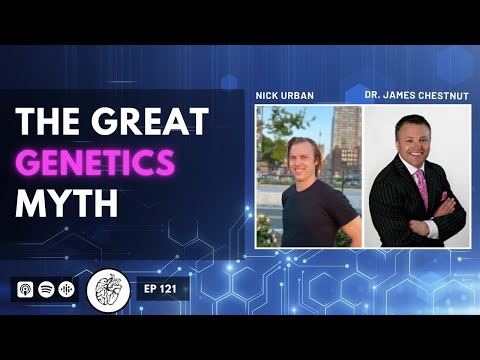
With Dr. James Chestnut of Innate Choice, Episode 121



What You’ll Learn
- Chronic illness is lifestyle-induced: 80% of the US workforce has at least one chronic illness, according to Dr. Chestnut. The cause is not genetic defects but an industrial habitat that changed how we eat, move, and think. [04:06]
- Species-type living: Every species thrives when its habitat matches its genome. Dr. Chestnut argues humans need the same essential nutrients regardless of ancestry, because any two humans on Earth can mate and produce healthy offspring. [09:12]
- Biochemical individuality is overstated: While organ size can vary up to 50-fold between individuals, Dr. Chestnut points out these differences don’t change the fundamental essential nutrient requirements shared by every member of the human species. [13:38]
- The multi-variable plant analogy: A wilting plant needs water, sunlight, nutrients, and toxin removal simultaneously. Fixing one variable and calling the others “useless” is how reductionist medicine fails. Health requires addressing all variables at once. [38:48]
- Exercise minimums for humans: Dr. Chestnut prescribes daily walking (building up to 1 hour), plus 2-3 strength sessions per week with maximal efforts. Even one day of rest causes measurable blood sugar and insulin sensitivity changes in Olympic athletes. [36:19]
- Allostatic load explained: Bruce McEwen’s model shows the body shifts blood pressure, cholesterol, and blood sugar in response to environmental demand. Medication lowers these numbers without reducing the load, which is why patients on pills never truly recover. [45:06]
- Life insurance actuaries know the truth: Genetically identical twins with identical lab values pay different life insurance premiums if one achieves those numbers with medication. Actuaries recognize that medicated “normal” is not the same as naturally healthy. [43:21]
- The 90/90/90 rule: 90% of people get 90% better in 90 days when they address eat well, move well, think well simultaneously. Dr. Chestnut starts every patient with these fundamentals before looking for rare or unusual causes. [34:30]
- Health insurance vs. lifestyle coverage: Ford Motor Company spends more on employee health insurance per car than on steel. If lifestyle interventions were funded at one-tenth of current pharmaceutical spending, hospitals would empty to 10% capacity. [26:30]
Why It Matters
Most people assume chronic illness stems from genetic bad luck, then spend decades cycling through medications that change lab numbers without restoring actual health. Dr. James Chestnut, a lifestyle-centric healthcare pioneer who became the first practitioner in history to receive a US O-Visa for his expertise, argues the real cause is a toxic industrial habitat. His eat well, move well, think well framework offers a simpler path: fix the environment your genes evolved for, and the body fixes itself.
Who Should Listen
- Health-conscious individuals who feel overwhelmed by conflicting diet, supplement, and biohacking advice and want a simpler framework.
- People managing chronic conditions with medication who wonder why they never actually feel better despite “normal” lab results.
- Practitioners and coaches who want a species-appropriate model for guiding clients back to foundational health behaviors.
Episode Overview
Dr. James Chestnut joins Nick Urban on the High Performance Longevity podcast to break down why chronic illness is a habitat problem, not a genetic one. Dr. Chestnut holds advanced degrees in physical education, exercise physiology, and chiropractic. He founded Innate Choice supplements and was the first healthcare practitioner awarded a US O-Visa for his expertise in lifestyle-centric health.
The conversation covers Dr. Chestnut’s species-type model: every species thrives when its diet, movement, and social patterns match its genome. He presents data showing 80% of the American workforce carries at least one chronic illness, argues that genetic variation between individuals is irrelevant to essential nutrient needs, and explains Bruce McEwen’s allostatic load concept to show why medication changes lab numbers without reducing disease burden. His plant analogy illustrates why health requires fixing all variables simultaneously, not testing one nutrient in isolation.
You’ll walk away with a practical framework for evaluating any health complaint through three lenses: eating right, moving right, and thinking right. Dr. Chestnut’s 90/90/90 rule (90% of people improve 90% in 90 days) gives a concrete timeline for testing the approach before chasing rare diagnoses.
Key Terms Quick Reference
Several specialized terms come up throughout this conversation. Here’s a quick reference.
[09:12] Species type: The specific genome that defines a species and determines its dietary, movement, and social requirements. Dr. Chestnut uses this concept to argue humans have a single set of essential nutrient needs regardless of ethnicity or geography.
[06:03] Essential nutrients: Substances the body requires for healthy cell structure and function but cannot synthesize internally. They must be ingested from the environment, and deficiency leads directly to disease and death (e.g., scurvy from zero vitamin C).
[45:06] Allostatic load: The cumulative physiological wear from chronic stress and environmental mismatch, as described by Bruce McEwen and colleagues. Unlike homeostasis, allostasis recognizes that set points shift adaptively, and medication that forces numbers down without removing the load actually increases total body stress.
[28:44] Eat well, move well, think well: Dr. Chestnut’s three-pillar framework for species-congruent living. Eating covers essential nutrient intake and toxin avoidance. Moving covers daily aerobic activity plus 2-3 weekly strength sessions. Thinking covers gratitude, social connection, and stress management.
[44:30] Presenteeism: Showing up for work while too sick or medicated to function productively. Dr. Chestnut cites 45-90 lost productivity days per year per chronically ill employee, a hidden cost that makes lifestyle intervention far cheaper than continued treatment.
[13:38] Biochemical individuality: The concept (from Roger Williams’ book) that organ sizes and metabolic rates vary significantly between individuals. Dr. Chestnut acknowledges these differences exist but argues they’re non-explanatory for chronic disease because every species shows similar internal variation without epidemic illness in natural habitats.
Can Bad Genes Cause Chronic Illness?
The short answer
True genetic diseases (like Down syndrome or cystic fibrosis) are rare, and you either have the gene or you don’t. The chronic illness epidemic that emerged after the 1950s cannot be genetic because the human genome hasn’t meaningfully changed in 10,000 years, while disease rates skyrocketed in decades.
What Chestnut found
Dr. Chestnut draws a clear distinction between true genetic illness and lifestyle-induced disease. A real genetic illness means “if you have the gene, you have the illness, no exceptions.” Cancer, diabetes, obesity, heart disease, depression, anxiety, ADHD, and autism all rose steeply after World War II. That timeline matches changes in how humans eat, move, and think, not changes in the genome. He also points out that genetically identical twins placed in different lifestyle environments will produce completely different lab work, proving environment trumps genetics for chronic conditions.
What to do about it
Stop accepting “genetic predisposition” as a reason to take medication indefinitely. Instead, address the three foundational variables: diet quality, daily movement, and mental-emotional health. Apply Dr. Chestnut’s 90/90/90 rule: commit to all three for 90 days. If a condition persists after fully optimizing these foundations, then investigate rarer causes from a healthier baseline.
“Clearly the reason we’re sick is because the chronic illness pandemic is a pandemic of self inflicted preventable illness.” – Dr. James Chestnut
Why Don’t Medications Fix Chronic Disease?
The short answer
Medications change lab numbers without reducing the environmental stress causing those numbers to shift. The body’s regulatory mechanisms are intact. What’s broken is the mismatch between the modern industrial habitat and what the human genome requires.
What Chestnut found
Dr. Chestnut uses Bruce McEwen’s allostatic load model to explain the failure. When medication forces blood pressure down artificially, the body releases more stress hormones to push it back up, because the environmental demand hasn’t changed. The drug becomes an additional toxin increasing total allostatic load. He points to 50 years of accumulated pharmaceutical research and spending: after 5 years of the best that system can offer, patients with chronic disease never become healthy. Life insurance actuaries confirm this by charging higher premiums to medicated patients with “normal” numbers than to naturally healthy individuals.
What to do about it
Recognize that “normal labs on medication” is not the same as health. Use the actuarial test: would an insurance company charge you more or less? If you’re achieving numbers through pills, the answer is more. Redirect effort toward reducing allostatic load through daily exercise, whole-food nutrition, and genuine stress reduction.
“They die with low blood pressure. They die with lower cholesterol. They die with lower blood sugar. They live the miserable life, and they’re dead.” – Dr. James Chestnut
How Much Exercise Do Humans Actually Need?
The short answer
Humans are genetically designed to exercise every day. The minimum effective dose is a daily walk building to one hour, plus 2-3 rigorous strength sessions per week that include maximal efforts.
What Chestnut found
Dr. Chestnut dismisses the “30 minutes of gardening” recommendation as grossly insufficient. The average hunter-gatherer was the equivalent of a modern Olympic athlete in terms of daily physical output. He notes that even a single day of rest produces measurable changes in blood sugar, insulin sensitivity, and hormonal profiles in trained athletes. The dose-response relationship means more exercise yields better health up to a reasonable ceiling, and anything below daily movement represents a deficit against our genetic design.
What to do about it
Start where you are. If 5 minutes is your current capacity, begin there and build toward an hour of daily walking, jogging, or cycling. Add 2-3 weekly strength sessions with sets taken to true failure. Outdoors is better than indoors. Pair exercise with the other two pillars: nutrition and mindset. One variable alone won’t produce full results.
“We are genetically designed to exercise every day. And if you’re less than that, you’re far less than your health potential.” – Dr. James Chestnut
Related: Best Biohacking Supplements
The Chestnut Eat Well, Move Well, Think Well Protocol
Use this framework to evaluate any health complaint before seeking complex interventions. Dr. Chestnut applies this same model to every patient regardless of diagnosis.
- Audit your essential nutrients: Ensure daily intake of omega-3 fatty acids, a quality probiotic, vitamin D, and a comprehensive multivitamin/mineral. These are non-negotiable because your body cannot produce them
- Walk daily, building to 1 hour: Start at 5 minutes if needed, but progress toward 60 minutes of outdoor walking, jogging, or cycling every single day
- Add 2-3 strength sessions per week: Include at least a couple of sets taken to true muscular failure. This maximal effort triggers critical hormonal and physiological adaptations
- Remove dietary toxins: Eliminate processed foods, industrial seed oils, and other substances your genome did not evolve to handle
- Cultivate gratitude and social connection: Practice daily gratitude, contribute to a community, and build honest relationships. These “think well” components are as essential as food and movement
- Get outside daily: Exposure to sunlight, tree pheromones, and grounding through Earth contact supports immunity, circadian rhythm, and mental health
- Apply the 90/90/90 test: Do all of the above simultaneously for 90 days. 90% of people see 90% improvement. Only then investigate rarer causes from a healthier baseline
Common lifestyle health mistakes
- Treating lab numbers instead of root causes: Lowering blood pressure or cholesterol with medication doesn’t remove the allostatic load causing those numbers to rise
- Fixing one variable and giving up: Taking vitamin D while ignoring exercise is like watering a plant that also needs sunlight, nutrients, and toxin removal
- Accepting “genetic predisposition” as a diagnosis: True genetic diseases are rare. Most chronic conditions labeled as genetic are actually lifestyle-induced and fully responsive to behavioral change
Source: Chestnut’s Eat Well, Move Well, Think Well Framework, Innate Choice
Frequently Asked Questions
What does eat well, move well, think well mean?
It is Dr. James Chestnut’s three-pillar framework for species-congruent living. Eating well means consuming the essential nutrients your genome requires and avoiding toxins. Moving well means daily aerobic exercise plus 2-3 weekly strength sessions. Thinking well means cultivating gratitude, social connection, and healthy self-esteem.
Can lifestyle changes really replace medication for chronic disease?
According to Dr. Chestnut, 90% of people with chronic conditions improve 90% within 90 days when they simultaneously fix diet, exercise, and mindset. Medication changes lab numbers without removing the environmental stress causing disease. He recommends working with a practitioner while making lifestyle changes.
What are the essential nutrients every human needs?
Essential nutrients are substances your cells require for healthy structure and function but cannot produce internally. Dr. Chestnut’s Innate Choice system focuses on omega-3 fatty acids, probiotics, vitamin D, and a comprehensive multivitamin-mineral as the ones most deficient in industrial populations.
How much exercise does the human body actually need?
Dr. Chestnut recommends daily walking or jogging building to one hour, plus 2-3 rigorous strength training sessions per week that include sets taken to muscular failure. He notes that even one day of complete rest produces measurable negative changes in blood sugar and insulin sensitivity.
What is allostatic load & why does it matter?
Allostatic load is the cumulative physiological wear from chronic stress and environmental mismatch, described by researchers Bruce McEwen and colleagues. It explains why medication that artificially lowers blood pressure or cholesterol doesn’t improve health outcomes. The body’s regulatory mechanisms are responding to real environmental demands that pills cannot change.
Is chronic illness caused by bad genes?
Dr. Chestnut argues no. True genetic diseases like Down syndrome and cystic fibrosis are rare and absolute: if you have the gene, you have the illness. The chronic illness epidemic rose steeply after the 1950s, while the human genome has not meaningfully changed in 10,000 years. The cause is lifestyle and habitat mismatch.
Why do life insurance companies charge more for medicated patients?
Actuaries with access to comprehensive health data recognize that achieving normal lab values through medication is not the same as being naturally healthy. A medicated person with normal blood pressure still carries higher mortality risk than someone who achieves the same numbers through lifestyle, which is why premiums differ.
Products, Tools, & Resources Mentioned
Outliyr independently evaluates all recommendations. We may get a small commission if you buy through our links (at no cost to you). Thanks for your support!
Supplements
Innate Choice Essential Nutrient System: Dr. Chestnut’s evidence-based supplement line covering the essential nutrients most deficient in industrial populations: omega-3s, probiotics, vitamin D, and a comprehensive multivitamin-mineral.
Books & references
Live Right for Your Species Type: Dr. Chestnut’s foundational book on why humans need to eat, move, and think according to their genome. Best for anyone wanting the full scientific framework behind his lifestyle model.
Biochemical Individuality by Roger Williams: The classic text cataloging organ and system variation between individuals. Referenced in the conversation as a counterpoint Dr. Chestnut addresses directly.
The Biology of Belief by Bruce H. Lipton: Explores how beliefs and environment control gene expression. Best for understanding epigenetics at a cellular level.
The Second Brain by Michael Gershon: A groundbreaking look at the enteric nervous system and how the gut independently regulates digestion, immunity, and mood.
The 7 Habits of Highly Effective People by Stephen Covey: One of three books Dr. Chestnut would save if all knowledge were lost. A foundational text on personal effectiveness and principled living.
Ishmael by Daniel Quinn: A novel exploring humanity’s relationship with nature and civilization. Dr. Chestnut named it as one of his three most important works.
The End of Stress As We Know It by Bruce McEwen: The definitive text on allostatic load theory. Dr. Chestnut’s second pick for essential teachers, McEwen’s work explains why medication fails to address chronic disease.
The Wisdom of Your Cells by Bruce H. Lipton: An audio program exploring how cellular biology supports the idea that environment and perception, not genes, control health outcomes.
About Dr. James Chestnut
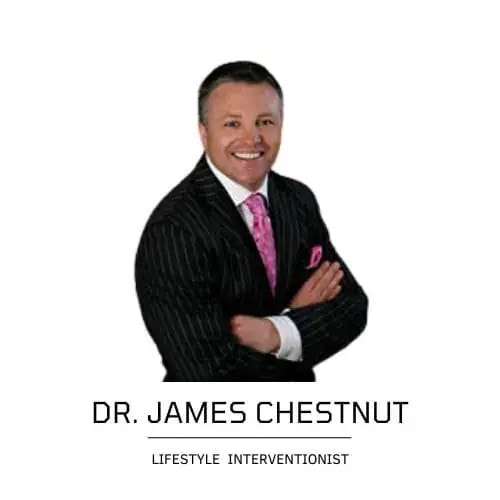
Dr. James L. Chestnut is a pioneer in lifestyle-centric healthcare with advanced degrees in physical education, exercise physiology, and chiropractic. His research on neuromuscular responses to strength training has significantly advanced the field, and his books and lectures on evidence-based lifestyle reach global audiences. He founded Innate Choice, an essential nutrient supplement company built on peer-reviewed science rather than marketing trends. Dr. Chestnut served in leadership roles within the International Chiropractors Association and as adjunct professor at the Barcelona College of Chiropractic. He became the first healthcare practitioner in history awarded a US O-Visa for his expertise. Follow his work below.
Related Episodes & Articles
- Episode 184: Everything Epigenetics with Hannah Went
- Episode 217: Toxic Seed Oils & Deep Nutrition with Dr. Cate Shanahan
- Episode 220: Longevity Drivers with Dr. Zain Hakeem
- Episode 206: Holistic School of Biohacking with Mark Atkinson
- Episode 109: Whole Food Nutrition with Autumn Smith
- Article: Biohacking Supplements
- Article: Longevity Podcasts
Full Episode Transcript
Nick Urban [00:00:05]: What if health and wellness and fitness What if these were all easy? What if we’re overcomplicating things and we can go back to basics and get better outcomes? That is the topic of today’s episode, and I had a good time recording this one with doctor James Chestnut. Hopefully, this episode will give you another frame, a different lens to look at health through. That way when you’re building your own protocols, your optimizing your own health or you’re helping others, you’ll have more tools in your toolbox. In this episode, we reduce health into its core components. This is the root cause of health. And by addressing and improving these, you might just notice that any nagging symptoms you’re feeling dissipate. A quote from this episode that I liked is this. Health is simple and sickness is complicated. There were a lot of other things that we didn’t unfortunately have the time to discuss in this episode, such as certain conditions, I wanted to push back a bit and hear his interpretation of those and how they fit into his model But like I said, we didn’t have enough time to really dig deep into too many specifics. One thing that we discussed off air that didn’t make it into the episode was how stress and sleep and other components that most people view as the foundations of health and wellness how those fit into his model. And his answer was simple. Those are the byproducts of doing his big three things right. So in the case of sleep, those in perfect health tend not to suffer from insomnia or frequent sleep disturbances, So, really, that falls under the umbrella of as he calls it, thinking right. Don’t worry. This will all make a lot more sense in a few minutes when I bring him on. So our guest this week is Doctor James Chestnut. He’s a pioneer in the world of lifestyle centric health care. And he has advanced degrees in physical education, exercise physiology, and chiropractics. His research in neuromuscular responses to strength training has significantly advanced the field. As an internationally recognized expert, his books and lectures on evidence based lifestyle in wellness have reached worldwide audiences in leadership roles within the International Chiropractors Association and as an adjunct professor at the Barcelona College of Chiropractic, he continues to shape the profession. Doctor Chestnut also founded Innate Choice, an evidence based supplement company, and he’s developed influential clinical intervention protocols, earning him the very first health care practitioner in history to be awarded an O visa by the United States immigration for his expertise. His mission is simple. To promote healthy lifestyle choices, to enhance physical and psychological well-being.
Dr. James Chestnut [00:03:48]: Thank you. Thanks for having me Nick.
Nick Urban [00:03:50]: So, James, let’s start off today with a controversial fact or belief you have around humanity, our upbringing, and where we’ve strayed from that. Over the last couple of millennia.
Dr. James Chestnut [00:04:06]: It’s hard for me to categorize it as controversial because it so based in the peer reviewed literature. So it might be uncommon. I guess, for me, because I’m a hardcore scientist that I find it difficult to categorize something that has so much evidence behind it as controversial, but it’s certainly an uncommon worldview you know, that clearly the reason we’re sick is because, the chronic illness pandemic is a pandemic of self inflicted preventable illness. I’m not blaming anybody for their illnesses. I always say, but really the leading cause of premature death and health care, the leading cause of hospitalization, the leading cause of death, the leading cause of reason for prescription drugs, the leading cause of low quality of life, the leading cause of low energy, the leading cause of heart disease, cancer, diabetes, obesity, the leading cause of all of these things, is lifestyle induced. It’s not that inborn genetic defect in human beings. Obviously, genes get better within a species over time, not worse. And so maybe perhaps to some people who have not yet who are unfamiliar with the literature or have just been listening to mainstream media and mainstream medicine, perhaps is controversial to those folks but it’s certainly not controversial in a basic science world.
Nick Urban [00:05:30]: Well, I will bookmark then. That is a good topic to discuss momentarily. But first before we do, let’s warm up today with the unusual or non negotiable as you’ve done so far this morning for your health your performance and your Bioharmony?
Dr. James Chestnut [00:05:47]: Well, I always exercise every day. You know, I always take my essential nutrient system, so I’ve always got my vitamin my omegas, my probiotic, and my multivitamin and mineral. That’s non negotiable.
Nick Urban [00:06:00]: How’d you settle on those specifically?
Dr. James Chestnut [00:06:03]: Well, through, again, through research. So I created Innate Choice based on the idea that I realized that the natural health care world had as much fraud and misinformation and predatory behavior as the pharmaceutical world did. So what I wanted to do was create a supplement line, which I knew everybody needed. The tagline is everybody, every day life. So essential nutrients means that your body must ingest them because your body cannot make them. And essential nutrient is classified in biochemistry and physiology is something that your body, that your cells require for in order to produce healthy structure and function of the entire body and brain. And it’s something that you cannot make yourself so that you must ingest from the environment. And then I created a system that was based on the ones that are most missing in industrial society. I would look at it that everything that you do that is congruent for your species type, is Bioharmony, but of course, I think it’s really important that everybody gets outside every day that somehow you’re exposed to the pheromones from trees that you ground yourself with some kind of contact with Earth. That’s really important too. And I think just being grateful.
Nick Urban [00:07:26]: When you were getting started on this journey, was there as much research around grounding or earthing and forest bathing and all these things are now becoming popular because the research is validating, and they were also like the way humans survived and thrived throughout history.
Dr. James Chestnut [00:07:42]: You know, my favorite expression probably is that our ancestors stole all our best ideas. So there’s a lot of cultures that have always done this. They didn’t have the research for it, but they’ve always done it. In Japan, as an example, it’s very common for hospitals to have gardens and trees where they take the patients outside every day. And then, of course, they were getting some interesting results. So the research is, I guess, on some of that is fairly new in our world. And so when we say new, what new means a lot of the times is new to us. And there’s such an enormous, very, very tight filter biased filter that keeps a lot of this stuff out of Western Medicine and Western Society. It gets in there, but it’s not easy. Because there is a model, a monopoly, a model that’s based on a monopoly, which says we don’t want anyone to think that health comes from anywhere except diagnosis and some kind of medical treatment. And so, I think a lot of these things are creeping in, but they’re certainly not mainstream, but they’ve been around for a long time.
Nick Urban [00:09:04]: You wrote a book called Live Right for your species type. What exactly does that mean? Like, what is the difference between, like, what is our species type that you’re referring to?
Dr. James Chestnut [00:09:12]: Humans are human beings. So there’s a human species and species are defined by their genome. Another way to look at it is species are really kind of defined as who they can mate with and make a healthy baby. So that’s a simple way to put it if you’re not really into genome and genes. Every species on earth is sort of defined literally. When we say what is a species what we really mean is what’s that specific genome that belongs to that? So Giraffes have the Giraffe genome. Humans have the human genome. And what happens is that over time, just the way natural selection works is that those genomes develop in concert with environment. Essentially, what happens is that over time, that species when it evolves or is formed, that species has certain requirements that it has to get from its environment. So giraffes have to eat specific foods for giraffes. If a giraffe starts to eat meat, it won’t do well. Giraffe has a giraffe diet. Alligators have an alligator diet. Lions have a lion diet. Humans have a human diet. And so all this nonsense about nutrition is really, you know, even the food groups, they were never based on biology. In biology, we already know that each species has to eat certain things. They have to move a certain way to be healthy. They have to socially interact a certain way. Some animals are very social. They live in packs. Some animals are very solitary, and they have to be alone. If you put the solitary animals in groups, they get stressed out. If you take a pack animal or social animal and make it live in isolation, it gets stressed out. And by the way, they’re going extinct, not because of bad genes. They’re going extinct because they’ve lost their habitat. We destroyed it. Therefore, they can’t eat, move, and think, or live according to their species type because in order to live according to your species type, you have to be able to eat, move, and think in ways that are congruent with your own genetic needs. The only way we’ve ever saved a species ever in the history of biology is by saving its habitat and allowing that species to live in a healthy habitat. And when we put a species in a healthy habitat, the species gets healthy. I’ve coined a term, which is as goes the habitat, so go the inhabitants. Every species needs to live in a congruent habitat in order to thrive and to be well. The industrial world that we’ve created is not a healthy habitat for humans, which is why we’re so chronically ill. It’s not because we have bad genes. It’s because we’ve created a living habitat for ourselves, which is polluted, toxic, our food sources have completely changed, how much we exercise has completely changed, how we socialize has completely changed. We’ve created a very sick habitat for ourselves, and lo and behold, we’ve become very sick.
Nick Urban [00:12:10]: The way I look at this is that if genes were responsible, we would see the rise in chronic degenerative diseases be a much slower gradual process, but if we look at the full data. It skyrocketed over the last decades, and genes don’t change that quickly.
Dr. James Chestnut [00:12:30]: No chance. The human genome hasn’t changed in basically 10,000 years, but the chronic illness plague has really been since the 1950s. That’s when it really ramped up, seventies really, but after World War 2. So you think, chronic illness changes, cancer, diabetes, obesity, heart disease, depression, anxiety, ADHD, autism, all of these things. Gene change is basically flat. Chronic illness, very steep slope. What else has been on a steep slope? How we eat, move, and think. What we’ve done to our habitat, what we’ve done to our dietary patterns, what we’ve done to our exercise patterns, what we’ve done to our socialization patterns, our amount of stress is skyrocketed.
Nick Urban [00:13:14]: Years ago, I read a book called Biochemical Individuality by Roger Williams, and he went on to catalog basically every organ and system throughout the body and how you look at both extremes, there’s a huge, sometimes up to like 50 fold difference between individuals. How does your model account for the tremendous differences between one person and the next.
Dr. James Chestnut [00:13:38]: And fifty fold difference in what? That organ, what that person should eat to make that organ healthy, or a fifty fold difference in some of the minute characteristics that are probably meaningless. I mean, how many different characteristics are there in height or skin color or eye color or hair tone or hairiness of an individual. Just because you can find differences doesn’t mean they’re significant. There’s all kinds of differences. We are individual physically. Physically, we’re all very individual, which allows us to mate and not have genetic issues when we mate. But in terms of what a species looks, I mean, do you ever run across somebody and go, I wonder if they’re human. Like, how many times have you ever said, I wonder if that person’s a human or a giraffe. So these things that people come up with, they’re just not sensible. They’re just ways of describing things that really don’t make any major differences in terms of well-being. So if you find any species on earth that doesn’t have all our chronic illnesses, do they have those same amount of differences in their organs? Do giraffes have that same amount of difference in their organs? Of course, they do. So again, what I would say is, so what? It’s just a non explanatory variable. That talks about something that we can find out because we have a stronger microscope or a better way to test something. But not everything that we can find that’s a difference is significant. That’s the problem that people have. So again, I’ll just ask everybody. Have you ever run across somebody and wondered if they were a member of the human species or a different species. That’s how recognizable we are.
Nick Urban [00:15:52]: Similar enough.
Dr. James Chestnut [00:15:53]: Not similar enough. So similar that you could take half a cell from somebody in Africa and half a cell from somebody from the Arctic, an Inuit, and put those 2 half cells together, and they’re so similar they make life. So let’s not get caught up in some of these things that aren’t relevant. But as we moved around the world, we had to find foods that met our essential nutrient needs or we perished. So there wasn’t a lot of citrus fruit in the Arctic. So they had to eat a lot of skin because it was full of collagen that could get vitamin C that way. There’s all kinds of things we can talk about. But everywhere humans went around the globe, even back as hunter gatherers, they all had to figure out how to get the foods they needed or they died. And they all had to figure what was toxic and avoid it, or they died. Trial and error. But if you look at it, they all ended up with the same nutrients.
Nick Urban [00:16:47]: Yeah, you’re focusing on the same essential nutrients and that composition of the diet will vary from location to location based on availability and seasons and all these other things, but ultimately, you need to get these certain nutrients. If you don’t get those, it doesn’t matter who you are, what your genetics are.
Dr. James Chestnut [00:17:05]: The essential ones are essential. What that means is if you don’t get them, you get sick and die. So if you don’t get any vitamin C, all your blood vessels are gonna get scurvy. You’re gonna die. If you don’t get vitamin D, you’re gonna have no immunity. You’re gonna have no bone density. You’re gonna have chronic inflammation all the time. If you don’t have omega 3 fatty acids, your brain just isn’t gonna work properly. You don’t get any probiotics. Your gut can’t work properly. Everybody’s trying to find differences because there’s a way to market that somehow, but that’s the wrong question in science. The question is, what are the similarities? Then one is looking for sickness and the other one is looking for health. Just find out what healthy people do and follow it. Instead of trying to find out what sick people look like and try to treat it.
Nick Urban [00:17:44]: Were you the one I heard say that the difference between biology and medicine is biology is a study of life and health and medicine is the study of pathology?
Dr. James Chestnut [00:17:55]: Very likely. I’m not sure. I’ve said it many times. Yeah. And so that’s what medicine is. Medicine looks for sickness. And so it’s a very different question. They ask a different question. They ask what’s wrong with this person. How do we treat it? Just think about it. If you get diagnosed with a sickness, I don’t care what it is. Diabetes, heart disease, obesity, indigestion, anxiety, some kind of emotional issue. And you go into that system. And you get all the best treatments that they have. In 5 years, are you healthy? After 5 years of all of the best that they can offer, and 5 years after your diagnosis, are you healthy? Now think about it for a second. That’s a bioaccumulation of the smartest minds money can buy. In the best labs money can buy, in the best schools money can fund, all from big pharma. And they’ve got millions of articles, studies going on every day, and they’ve got this accumulated intellect and money and resources for 50 years. They’ve been doing this and spending more every year. And with the 50 years of accumulated knowledge, when you go into that system, after 5 years of the best they can offer of those 50 years of billions of dollars and millions upon millions of hours from the best minds asking the wrong question. Do you get better? Now compare that to going for a walk every day, eating healthy foods, being grateful and doing the eat well, move well, think well stuff that I advocate. What would be better? Who would win in terms of outcomes for people?
Nick Urban [00:20:18]: We’ll have to talk about behavior change because that’s obviously the crux of this.
Dr. James Chestnut [00:20:23]: Taking a pill is behavior change too. Remember that. Taking a pill is behavior change. It’s all behavior change. It’s just about what behavior you put your faith in. Which behaviors have evidence that they’re gonna do you benefits instead of do you harm? Everything’s a behavior change. It just depends what you believe in. So they don’t believe in pills. They believe in the doctor who tells them about the pill because the doctor has had millions of dollars spent on his or her behalf from big pharma to buy cultural authority so that people have faith in the doctor. They don’t even like taking pills, but they do it. The pills don’t work, but they keep doing them. They don’t make them feel better. They feel worse, but they keep doing it. It’s because they have a belief in the authority.
Nick Urban [00:21:02]: How do you envision going about changing that system? Because no one’s gonna fund the same amount, the same volume of research, or quality of research on the benefits of going for a walk. I’m sure there’s been an uptick in interest around this kind of thing and a little more research, but it pales in comparison to pretty much any blockbuster drug.
Dr. James Chestnut [00:21:19]: Actually, the research is overwhelming, and there’s lots of it if you put your head into it, which I do. So there’s overwhelming evidence. There’s evidence that it works well. There’s evidence that it works better than pills. There’s evidence that it works better than surgeries. There’s evidence that it can prevent things. There’s no lack of evidence. There’s just a lack of will of people. It’s not necessarily mainstream. Medical doctors are not taught this in school, how to do it. All the focus is on diagnosis and treatment with drugs and surgery, that’s the entire focus. So they’re not equipped to do it. They think it’s not even part of medicine. They think it’s something that’s alternative. Just imagine if you could for a second, a world where you had to pay cash to get the pill, but lifestyle was covered. Every time you turn on the TV, people talk to you about the importance of lifestyle, all the research on lifestyle was put on TV all the time as much as the drug ads. That you’re encouraged to do lifestyle, that you went to a practitioner and the practitioner said, you gotta just change how you eat. You gotta go for a walk every day. In fact, we have programs where you can meet and go for a walk. We have personal trainers. We have people who help you go shopping because the money that you would spend on that would be literally about one tenth of what we spend on pills that don’t work right now. We would prevent things. The hospitals would empty. They’d be 10% from trauma and thank goodness they’re there for that. But the fact of the matter is just imagine a world where all the things that are pushing people toward drugs and surgery now, imagine if that was all pushing them towards lifestyle. And it was funded. And it was advocated on television by the practitioners themselves. Now ask yourself what would people do?
Nick Urban [00:23:43]: Yeah. So it sounds like the, I guess, it’s not a simple change, but if there was gonna be change, it would make the biggest impact. It would be working with health insurance companies to change what gets funded and what doesn’t. And of course, there’s lobbyists, and that’s never gonna actually happen.
Dr. James Chestnut [00:23:58]: It will happen if the people change. Think about dentistry. Dentistry became so important to people that people demanded insurance covered it, not the other way around. Dentists didn’t go whining to get covered. You’re never gonna beat big pharma in a monopoly about insurance. You can’t win now. They own it. They have trillions of dollars. First of all, people have to be educated and have the accurate beliefs. They have to have accurate beliefs and knowledge about their health, where it comes from and why they’re sick. Once that happens, whether it’s covered or not, people will make the changes because most people don’t like being sick. They go into that other system thinking they’re gonna get fixed, but they never get fixed. Never. Never. Unless they have an infection. They can sometimes get fixed if they get antibodies. But otherwise, chronic illnesses, they do not get fixed. They just become patients for life. Whereas if they go the other way, they actually get better. And so I always think working with an individual, people are gonna listen to this podcast. People will start to realize, and most people deep down kinda know that a pill’s not gonna fix a problem caused by lack of exercise or a crummy diet. And I think the other thing is in the private sector, what they’re starting to realize is no matter how much money they spend on that system, their employees are sicker and sicker, and they’re spending more money all the time.
Nick Urban [00:26:26]: Yeah. Monetary incentives is a big lever for change.
Dr. James Chestnut [00:26:30]: One of the nice things about flying a lot and doing well is that I get to ride in first class when I fly. So I’m very often sitting beside CEOs of companies. And I’ve had many conversations where they actually think that their health insurance costs, which are astronomical, motor car companies like Ford Motor spends more money on health insurance per car than they do steel. 80 percent of the workforce in America has one chronic illness. About 60% have at least 2. And so the health insurance is what the unions are bargaining for, health care, not for wages, most of the time. It’s just an astronomical expense, but they consider it a fixed cost. And so when I sit and talk to these people, I go, it’s not a fixed cost. It’s only a fixed cost if your employees don’t get any healthier. It’s only a fixed increasing cost if you use the system you’re using now, which is they get sick, they get diagnosed, they get pills, then they get another pill. That system is not a fixed cost. It’s a rising cost every year. And they’re like, yes. I said, but what if your employees didn’t get sick, or what if your sick ones got well? And they’re just like, oh. I’m like, why do people go overseas? It’s not just because the labor’s cheaper. It’s because when you go into a country like Taiwan, 80% of them aren’t obese. They’re not missing work. Presenteeism, which means you show up for work, but you’re so sick and medicated that you lose, on average, 45 to 90 days of productivity per year per person with a chronic illness. Imagine what the difference is if you have healthy employees.
Nick Urban [00:28:11]: So the phrase root cause medicine gets bandied around a lot in functional circles and the new age of optimal health. And in your model, if you were to look at certain things, behaviors, suboptimal labs, what would you say are like the root of everything to focus on. And, of course, there’s the behaviors at a higher level like eating right, thinking right, moving right, all those. But what would you say is the layer beneath everything that is the most important to start with.
Dr. James Chestnut [00:28:44]: I’m not gonna call it my model. It’s just my model applied to humans. But my model is the biological model. It’s the same model that we use for every other species. If you had an unhealthy species and you saw a whole bunch of a species getting sick, would you assume it was genes? You’d go, wait a minute. Let’s check their habitat. Let’s check are they eating, moving, and thinking in ways that are congruent with what their genome requires? So no matter what you’re dealing with, no matter what lab, all the lab is an effect. What’s it an effect of? Can labs change? Whatever test you’re gonna do, can it change? Of course, it can change. Therefore, it is not the cause. Something’s causing it. So keep just swimming upstream. And what do you get to every time? How people eat, how people move, and how people think. That’s it. I don’t care what your lab is. It might let you know that you’re doing something wrong, but don’t you already know you’re doing something wrong? I could take genetically identical twins. Meaning, they’re identical. Genetically identical. That means there’s no difference in the organs. That means there’s no difference in any of the biochemistry. They’re genetically identical. And I put one on a healthy diet, that exercises every day, that has a good social group. And I put the other genetically identical twin on a crappy diet that doesn’t exercise and doesn’t have a healthy social group or healthy self esteem. What would happen to their blood work? Any lab you wanna measure, what would happen to them? The one in the healthy habitat doing healthy things would have healthy numbers, the one doing the sick stuff would have sick numbers. Is that true or true?
Nick Urban [00:30:19]: A million?
Dr. James Chestnut [00:30:21]: The question is why is your blood work where your blood work is? Is high blood sugar an issue? Of course, it is. Why do you have high blood sugar? That’s the question. Not what kind of thing from a bottle you can take to monitor your blood sugar. You wanna have healthy blood sugar? Do it with exercise and healthy diet. And healthy attitude, get your cortisol levels down, then you’ll have healthy blood sugar. Yes or yes. I can give you healthy blood sugar, and you’ll still be sick. True? Yeah. It’s called Ozempic. I can give you healthy cholesterol level, and you’re still sick. Yeah. It’s called Lipitor.
Nick Urban [00:31:00]: And if you go the other direction, your healthy blood sugar is almost like a side effect of overall better health?
Dr. James Chestnut [00:31:09]: You would think that maybe the question you would ask is, does it work? Is it working? And it works. You know what it works for? To change the number on the test. And that’s what they define as working. Not someone getting healthier, or happy or having a longer better life. It’s does it work? Yeah. It changed the blood pressure. They have lower blood pressure. Yeah. They’re dead. But they die with low blood pressure. They die with lower cholesterol. They die with lower blood sugar. They live a miserable life, and they’re dead.
Nick Urban [00:31:39]: If someone comes to you with a condition that they’ve been labeled with, would you always 100% of the time look through those big three that you’ve mentioned several times now?
Dr. James Chestnut [00:31:49]: A 100% of the time.
Nick Urban [00:31:51]: And even if it’s some rare condition that few people have ever heard of, there’s a biological underpinning.
Dr. James Chestnut [00:31:57]: Is it a genetic condition?
Nick Urban [00:31:58]: No. No. No. In this case, it would not be.
Dr. James Chestnut [00:32:00]: What would you do with someone with a genetic condition? Let’s say you have a genetic condition. You have trisomy 21. You have Down syndrome. Is your life better if you eat, move, and think well than if you don’t?
Dr. James Chestnut [00:32:13]: But if you don’t have trisomy 21, is your life better and your health better if you eat, move, and think well? So what difference does it make? What label they have? Can you think of an example of a human being who had a poor diet and I improved their diet where I didn’t improve their life and their health? Can you think of an example of a human being who does not exercise and I get them exercising. Can you think of a human being regardless of any diagnosis they have or how rare this thing is that they wouldn’t do better exercising than not exercising. Can you think of anybody no matter how rare this illness is that they wouldn’t do better if they woke up every day with gratitude, they created social connections, contributed to some kind of community, and got something back from it. And they were more honest, more kind, more generous, more hardworking, and more egalitarian, meaning they looked at everybody as having equal rights.
Nick Urban [00:33:00]: Assuming that you’re looking at the population that from the outside looks like they’re doing everything right, at least they’re eating right and they’re moving right, and they have really optimized that side yet they still have a condition or are sick in some way, and they’re trying everything.
Dr. James Chestnut [00:33:15]: I haven’t seen one. Theoretically, do they exist? Usually, the people who are really quite good on their diet and exercise are suffering some kind of emotional trauma. That’s pretty common. But I’ve never found somebody so far who is suffering from something unless they had a genetic illness, and they do exist. Cystic fibrosis is a genetic illness. Down syndrome is a genetic illness. A genetic illness means this: if you have the gene, you have the illness. There’s no exceptions. That’s a real genetic illness. They’re rare, aren’t they? All this other stuff that they’re saying, well, you have the genetic predisposition. That’s garbage. That’s ridiculous. However, there are genetic illnesses. People don’t have illness for random chance. It’s not a fluke. There’s a reason for everything. So I just keep looking. And if it’s a gene, it’s a gene, but that would be rare.
Dr. James Chestnut [00:34:17]: And I’ve never met someone with a genetic illness who’s eating, moving, and thinking in ways that are maximized already. So I take people with genetic illnesses and I make their lives better and longer. I take people without genetic illnesses and I make their lives better and longer. And so I’m not so egotistical that if I’m searching for these things and there’s still something not going on, most of the time is because they say they’re doing something they’re not. But if it were something else, when I’m perplexed and can’t figure it out, I’m honest. I’m perplexed, I can’t figure it out. You need to go figure something out. But who do I refer them to? What are the options? If it’s not genetic and it’s not some kind of parasite, what’s left? I always go to the most obvious rocks in the backpack first. The ones that I know most people in industrial society are suffering from. And what I’ll tell you is removing those main rocks is pretty easy. It’s pretty obvious. And 90% of the time, 90% of the people get 90% better in 90 days. So I always start there. Don’t start with looking for these weird little specifics. Everybody’s way better off. Now whatever else we do is working from a better healthier foundation because they’ve listened to me for 90 days. And now if there’s still something weird going on, either it’s gonna just require more time, which is the usual case, or there’s something weird going on we can look for. But why start with the weird and the minuscule and the least likely? Why not start with the most obvious.
Nick Urban [00:36:00]: Are there benchmarks for these? Like, of course, for nutrition, getting the essential nutrients is one. For movement, I heard on another podcast, I think you mentioned that the average hunter gatherer was like the equivalent of a modern day Olympian. How do we know if we’re getting enough movement?
Dr. James Chestnut [00:36:19]: Yeah. Well, it’s dose responsive. So to a certain degree, obviously, you can over train if you’re an ultra marathoner and you’re doing one a day or something. But the reason I tell people that is because they think, well, I did my 30 minutes of gardening, and I’ve got my activity. No. That’s better than 0 minutes of activity. It’s better than sitting on the couch. But the truth is humans need to get out there, and they need to go for a walk every day. And if it’s 5 minutes, fantastic, if you’ve never done it, but you need to get up to an hour. You need to be outside walking or jogging or riding a bike. Even if it’s inside, it’s better outdoors. But you just gotta exercise. You just have to. And then you have to do some kind of rigorous physical strength activity, at least 2 but preferably three times a week. And there has to be a couple maximum efforts, meaning what’s max effort. It means that you had to stop because you couldn’t breathe. Like, you did push ups, but you had to stop at 20 because you couldn’t do 21. Those maximal effort kind of things are also very important for all kinds of physiological reasons, but that’s what genetically we’re designed for. So we’re hunter gatherers designed to hunt and gather. What were the physical requirements of that? And that’s what we’re designed to have. And without those things, we start to degenerate. You can take an Olympic athlete and in one day of rest, you can start to see changes in blood sugar, insulin sensitivity, all the hormones, everything. So we are meant to exercise every day. That’s what we’re genetically designed for. And if you’re less than that, you’re far less than your health potential. We’re designed to get these essential nutrients. If you don’t have those essential nutrients, or if you put any toxic things into your body, well, then obviously, you’re gonna be less than optimal. If you don’t have gratitude and joy in your life every day. And sadness is part of life too, but if you don’t have all these things together at the same time, I always talk about the plant analogy because it helps them understand science about this a little bit because in most science and health care it’s very reductionist. Imagine if you had a plant that was wilting. What do most people think of?
Nick Urban [00:38:26]: Too little or too much water.
Dr. James Chestnut [00:38:28]: There you go. So you wouldn’t go, it must have bad genes. You wouldn’t go, this plant needs a drug or some kind of injection or plastic surgery because the plant just isn’t designed to be healthy. There’s something defective with the plant. That’s never where you go first, is it? If your dog throws up, what do you think? Genetically defective, need some kind of pill like Tums? Or the dog ate something it shouldn’t have. So this is just biology. We’re innately meant to think properly. It’s just been, we’ve just been brainwashed. So you give the plant water. Let’s say the soil’s super dry, and you give the plant water. If the plant was deficient in water and you gave it water, is the plant better? Yes. But could it still be wilting?
Dr. James Chestnut [00:39:19]: Does that mean the water was useless? No. But that’s what they do. They go, oh, they took vitamin D, and they still got cancer. So therefore, vitamin D is useless. Wait a minute. Maybe they were also deficient in exercise. So they try to discredit this stuff. So now say your plant’s still wilting. You don’t say, well, it doesn’t need water. I’m gonna give up on that. You say, no, the water’s taken care of, maybe it’s deficient in sunlight. Maybe I put it in too much shade or it’s got too much sun. So if it had not enough sunlight and you gave it more sunlight, a sufficient amount for that plant, genetically that plant requires a certain amount of sunlight, that could be different from a genetically different plant. So you figured out what that plant needs based on its genome, and you figure out that it needs 6 hours of sun a day and you get it 6 hours of sun a day. Is that plant healthier?
Dr. James Chestnut [00:40:11]: But now it’s got proper amount of sun. It’s got the proper amount of water. Could it still be wilting? Would you suggest then that water and proper sun is useless? That’s a stupid intervention. There’s an alternative ridiculous natural intervention that doesn’t work because it didn’t fix the plant. No. In a randomized controlled trial, that’s what you’d have to conclude if you did a reductionist trial. So what if then you say, well, wait a minute. Maybe it’s not getting enough nutrients in the soil? Lo and behold, it was deficient in nutrients. So then you figure out based on the plant’s genome, what nutrients it needs, and you put the nutrients in. Is the plant healthier?
Dr. James Chestnut [00:40:46]: So now you got water, you got sunlight, you got nutrients. Is that plant better off than it was before it started seeing you as a practitioner?
Nick Urban [00:40:54]: Absolutely.
Dr. James Chestnut [00:40:55]: Could it still be wilting? What do you look for? Maybe somebody’s dumping something toxic. Maybe somebody’s dumping diesel fuel up the road or doing something else and the plant’s getting toxified. So you just keep working that way. But the idea that you would go, well, if someone’s deficient in vitamin D or the essential nutrient system that I created and we give them those essential nutrients and they don’t all of a sudden miraculously 100% better from all things. I go, well, that’s because it’s multi variable. But if you don’t address the hidden hunger of essential nutrient deficiencies, they can never be well. No matter what you did for that plant, if you didn’t get enough sunlight and you figured out the toxins and got rid of the toxic diesel fuel, you did the proper amount of nutrients in the soil, you gave it a proper amount of sun, but you didn’t give enough water. Would the plant ever be healthy? No. It has to eat well, move well, and think well, and be toxin free at the same time for a period of time in order to express health. That’s what humans do. That’s all I teach is that I teach people that it takes time, but you gotta make sure you’re addressing all the main variables. Eat well, move well, think well at the same time for a period of time to allow you to stop wilting.
Nick Urban [00:42:09]: So instead of going the reductionist route looking for one thing way downstream that may have this impact that we’re seeing, we start instead at the top level and say, these are the broad general interventions and we’ll improve these and we’ll look downstream to see what effect that’s having. And if it’s not resolving the symptom, then we’ll continue working up there until eventually we do fix it.
Dr. James Chestnut [00:42:33]: Right. And you’re just gonna see that it’s very, very rare that people don’t get better. But again, in medicine, you have the specialist who’s the soil specialist. And they do the soil. And they put the nutrients in the soil, and then they retest and go, oh, the nutrients in the soil are good. That plant’s good. Off you go. Plant’s still sick. They don’t care. They did their test and said it worked. Think about this way. When you go to apply for life insurance, you have to go through a battery of tests. Why?
Nick Urban [00:43:03]: To make sure you’re healthy.
Dr. James Chestnut [00:43:05]: Or how sick you are. Why? Because your premiums will change. If you have high blood pressure, high blood sugar, and you’re obese, do you pay more for life insurance than someone the same age who is not obese, has normal blood pressure, normal blood sugar? Yes?
Nick Urban [00:43:21]: Definitely. Yeah.
Dr. James Chestnut [00:43:21]: What if you and somebody else, your genetically identical twin, scored the same on the tests. Everything was the same. Your blood pressure was the same. Normal blood sugar. Normal cholesterol. Didn’t smoke, didn’t drink. Would you pay the same for life insurance? You would imagine so, but you’d be dead wrong if your genetically identical twin had normal blood pressure because they were on medication. And your genetically identical twin had normal cholesterol, but they were on medication. And normal blood sugar, but they were on medication. Who pays more?
Nick Urban [00:44:00]: The person on medication.
Dr. James Chestnut [00:44:05]: So why do all these actuaries who have all the data in the world, more so than anybody else? Why do they know to charge that person more when they have normal blood pressure? They’re considered healthy by the medical system, but they have normal blood pressure, normal cholesterol, normal blood sugar. Why do they pay more for life insurance? Because they know they’re sick. And they know they have an increased chance of costing them money and dying early. Yes or yes.
Nick Urban [00:44:27]: Yes. It seems that in general, if you look at what actuaries do and say, that’s a good bet in terms of what actually works for health and what might have long term consequences because ultimately they’re the ones who will foot the bill.
Dr. James Chestnut [00:44:41]: Of course. So in life insurance, you can charge more for unhealthy behaviors. You just can’t do it with health insurance. Only life insurance. It’s a joke.
Nick Urban [00:44:49]: We’re running low on time today. There’s so many different routes we can go here. I know that one of the things you mentioned is allostatic load or your stress bucket and that being full. I’ve heard you mentioned that previously about how important that is. Where does that fit into your living right?
Dr. James Chestnut [00:45:06]: Well, allostatic load. Bruce McEwen, Theresa Seaman, George Schulkin, Peter Sterling, these people came up with this concept, which is brilliant. Normally what medicine does is they use a homeostasis centric model. So they’ll say if your blood pressure is not 120 over 80, there’s something wrong with you. You need a drug. What these people discovered was that doesn’t make any sense because your blood pressure goes up when you’re on a treadmill. You look at an animal that’s hibernating. When’s the bear sick, when it’s hibernating and has super low blood pressure, or when it’s out in the spring and has much higher blood pressure? When is the bear sick, when it loses all its fur in spring and summer, or when it gains all this extra body fur and body weight and body fat to hibernate? The answer is it’s not sick in either one. It’s basically adapting to what its shifting its homeostatic set points for blood pressure, for body fat, for body hair, according to environmental demand, which is exactly normal. When we go to altitude, we make more red blood cells, which would be considered sick if you’re at sea level. So allostatic load is basically saying when we shift our physiology, when we shift our cholesterol levels, our blood pressure, our blood sugar, these things are not because we’re defective. Our internal regulatory mechanisms are intact. What’s changed is our environmental demand. We’re not eating, moving, or thinking well. We’re under stress all the time. And so that is a load, and they call it the allostatic load. That is a load on your system, which is very taxing and harmful, but it’s not because you’re defective. And simply taking a pill to get your blood pressure down doesn’t change all the load that’s on your body because the load being put on your body is being put on by your environment and your lifestyle choices. Not from a lack of pills. So what they’re saying is giving people these pills, they’ve explained in this allostatic model why giving pills doesn’t work. And why we spend more money on pills every year. And people are sicker and sicker and why they never get better when they take these pills. They stay sick. And the reason is because they’re still under a very high allostatic load. And in fact, the irony is giving a healthy person or a sick person medication adds to their allostatic load. It’s a toxin. Drugs are not healthy. And so although it might change your blood pressure, it made your blood pressure lower than what it needs to be for the environment you’re in. And so what does your body do? It releases more stress hormones. It wants to try and bump it up because it knows the demand is here. But now your blood pressure’s been artificially lowered because you’ve got an angiotensin converting enzyme blocker. And so they’ve explained it perfectly why modern medicine is failing. Fantastic model. And then they say, so where should we intervene? And the answer is, of course, lifestyle.
Nick Urban [00:47:49]: Well, you managed to put a bow on that nicely. Thank you for that. And James, if people wanna connect with you, find you online, grab one of your books, how do they go about that?
Dr. James Chestnut [00:48:00]: The public should go to EatWellMoveWellThinkWell.com. And then the books are there. The supplements are there. They can do the lifestyle health risk assessment online. They just do a questionnaire and it gives them a rating and tells them how to make it better. It’s really inexpensive, and it’s amazingly informative. There’s all kinds of other stuff. There are lots of people who wanna get on later and have a consult with me if they want, they can do that. We have a 90-day online lifestyle plan available. And then if you’re a practitioner and you wanna kind of start implementing this stuff into your practice, you can go to InnateLChoice.com. So that kind of covers it.
Nick Urban [00:48:40]: Perfect. And I will put the links to all those that you just mentioned in the show notes for this episode. I have a couple more questions for you before we part ways today. First of all, if there was a burning of the books and all knowledge on Earth was lost, you get to save the works of 3 teachers. Who would you choose and why?
Dr. James Chestnut [00:49:00]: Wow. That’s a good one. I would have to say I’d probably pick Stephen Covey. I really liked Stephen Covey’s work, Habits of Highly Effective People. It was very influential in my life. I would pick probably Bruce McEwen for health. And then another one of my favorites, I would have to say is Quinn, Daniel Quinn. Ishmael. It’s an amazing book.
Nick Urban [00:49:22]: Oh, yeah. I’ve read that book. What area of your own health, wellness, and performance are you currently working on?
Dr. James Chestnut [00:49:29]: All of it, all the time. I think it’s a lifelong endeavor. I don’t look at it as a burden. I look at it as something where if I want to live my best life, every day I have to learn how to enjoy the things that make me well. If I have a bad day at something, if I make a bad choice, I never hold it against myself or think that I failed. I just try and make up for it the next day. So it’s always kind of fun that way. And I’m always trying to be a better human being, more grateful, more honest, more kind, more generous.
Nick Urban [00:50:06]: What is one topic that you’re currently fascinated by, or you’re researching?
Dr. James Chestnut [00:50:12]: Every day I read something about lifestyle for sure. I did a graduate degree in science. So I’m just sort of trained to find an article every day to read, but I’m always generally reading something about eating, moving, or thinking every day.
Nick Urban [00:50:27]: And then finally, what is one thing that your tribe doesn’t know about you, James?
Dr. James Chestnut [00:50:33]: I’m a car buff. I never talk about that much. I like older cars. You know?
Nick Urban [00:50:41]: Do you have a collection?
Dr. James Chestnut [00:50:42]: Not really, but I’ve got a Jag and a Mustang and I like Range Rovers. I have a couple of those. Yeah, I like cars.
Nick Urban [00:50:52]: Any final thoughts, how would you like to conclude our episode together today?
Dr. James Chestnut [00:50:58]: I would just like to encourage everybody who’s listening to let you know that you are literally a genetic superstar, that all of your ancestors had to survive for you to be here. So if you think of natural selection, you have naturally been selected with the best genome in the history of your entire germline all throughout history, 10,000 years ago. You can think that you are the pinnacle of it. So you have this enormous potential inside of you to be healthy and happy and have a wonderful life, but your genes and your incredible naturally selected genetic potential cannot overcome an unhealthy lifestyle. That’s the one thing that a wonderful perfect genome cannot do. It cannot overcome a toxic, deficient lifestyle or habitat. So when you start tapping into that knowledge, what you will see is you’ll start to express your natural human innate self, which is a healthy, energetic, kind, generous, happy contributing, hardworking person who has a wonderful life. But you have all of that potential inside of you and never let anyone tell you otherwise.
Nick Urban [00:52:09]: Well, Doctor James Chestnut, you are a wealth of knowledge, and I appreciate you for taking some time today to come on and simplify what appears to be a really complex world of health and wellness. And through your model that we just learned today, that makes a lot of the decisions much easier and we can focus on the things that matter rather than getting pulled in a hundred different directions. So thank you for coming on. It’s been a pleasure chatting with you today.
Dr. James Chestnut [00:52:36]: Thank you. It’s my pleasure too. Thanks, Nick.

Comments