

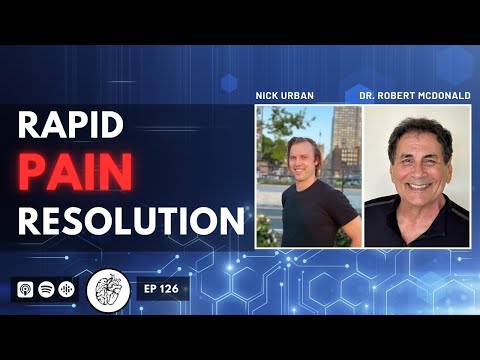
With Dr. Robert Dee McDonald of Telos Center, Episode 126



What You’ll Learn
- Morning alignment ritual: Dr. McDonald starts each day with prayer, meditation, stretching, and gratitude practice to ensure body, mind, and spirit are fully aligned before working with clients. [04:33]
- Alcoholic family origins: Growing up in a verbally abusive, alcoholic household with family secrets drove Dr. McDonald’s 50-year quest to understand the mind, eventually leading him to teach in 19 countries. [09:43]
- Mind structure defined: The mind is made of mental pictures, sounds, feelings, tastes, and smells. These representations create emotions and actions, which produce results. Change the representation, change the outcome. [16:02]
- Destination method framework: Unlike the medical model where the doctor is the authority, the Destination Method places the client as the authority. Resolution typically happens in 1 to 3 sessions, not months or years. [18:57]
- PTSD reframed: Post-traumatic stress disorder literally tells you the trauma is in the past. The suffering comes from the memory, not the event. Slightly altering how the memory is stored eliminates the distress. [23:36]
- Creative order hierarchy: Results come from actions, actions from thoughts, thoughts from beliefs, beliefs from identity, identity from soul. Changing a higher level automatically shifts everything below it. About 75% of issues resolve at the thought level alone. [30:38]
- 3 levels of listening: Most people either distract (talk about themselves), hear only data/facts, or hear feelings plus causes. Professional-level listening requires putting yourself in another person’s shoes while maintaining a positive judgment of their being. [01:00:59]
- Stories heal physiology: Thinking about eating a lemon produces saliva. Believing a tiger is behind the couch spikes adrenaline. Therapeutic metaphors leverage this mind-body connection to resolve rashes, fears, and grief in children and adults alike. [01:08:33]
- Forgiveness redefined: Forgiveness means letting go of the demand that the past be different than it was. It requires changing mental representations of the past so you no longer carry the weight of the original experience. [01:10:57]
Why It Matters
Most people assume resolving deep emotional pain requires years of talk therapy. Dr. Robert McDonald, who has worked with over 250,000 people across 19 countries over 50 years, consistently resolves grief, trauma, and limiting beliefs in 1 to 3 sessions using his Destination Method. His approach works because it targets the actual structure of the mind rather than endlessly discussing content.
Who Should Listen
- Coaches, therapists, or leaders who want professional-level listening skills that create genuine safety and rapport with clients.
- Anyone carrying unresolved grief, trauma, or limiting beliefs who feels stuck despite years of traditional therapy.
- Health-conscious people who know the right behaviors but struggle to implement lifestyle changes consistently.
Episode Overview
Dr. Robert Dee McDonald joins Nick Urban on the High Performance Longevity podcast to share 50 years of experience resolving grief, trauma, and limiting beliefs. As the creator of the Destination Method, an NLP master trainer, cofounder of the Telos Healing Center, and author of the best-selling NLP book “The New Technology of Achievement,” Dr. McDonald has worked with over 250,000 people across 19 countries.
The conversation covers his creative order hierarchy, where results flow from actions, emotions, thoughts, beliefs, and identity. Dr. McDonald explains how roughly 75% of emotional suffering resolves by changing thoughts alone, without needing to address deeper belief or identity levels. He breaks down 3 levels of listening, from distracted surface-level hearing to professional-level deep listening that requires genuine humility, positive judgment, and the ability to put yourself in another person’s shoes.
You’ll walk away understanding why the mind is made of mental pictures, sounds, feelings, tastes, and smells, and how altering these representations changes emotions, behaviors, and life outcomes. Dr. McDonald also reveals how therapeutic metaphors and healing stories can resolve physical symptoms like rashes and phantom pain by leveraging the same mind-body connection that makes you salivate when imagining a lemon.
Key Terms Quick Reference
Several specialized terms come up throughout this conversation. Here’s a quick reference.
[16:02] Mental representations: The pictures, sounds, feelings, tastes, and smells that compose the mind. Every emotion, motivation, and memory exists as a specific combination of these sensory components. Changing any component alters the emotional response.
[18:57] Destination Method: Dr. McDonald’s integration of compassion and technology for rapid change. Unlike the medical model where the doctor holds authority, the client is the authority. The coach acts like a taxi driver: “Where do you want to go?”
[30:38] Creative order: A hierarchy where spirit flows through soul, identity, beliefs, thoughts, emotions, actions, and results. Changing a higher level automatically cascades to all levels below it. Identity-level changes are the most pervasive.
[42:05] Codependence: A confusion of identity where a person cannot distinguish where they end and another person begins. Resolution requires an identity-level change, not just behavioral adjustment.
[43:42] Dynamic listening: Professional-level listening that requires suspending your own point of view, taking the other person’s perspective with humility, and giving back what they feel, want, and their reasons for feeling it.
[01:07:20] Therapeutic metaphors: Stories crafted to produce deep healing change. They work because stories teach the mind what is real and what is not, directly impacting physiology through the same mechanism that makes imagining a lemon produce saliva.
[01:10:57] Forgiveness (structural definition): Letting go of the demand that the past be different than it was. Requires changing the mental representations of past events so they no longer generate suffering in the present.
Can Decades of Grief Really Resolve in One Session?
The short answer
Yes. When you understand that grief is sustained by mental representations (not the actual event), changing those representations eliminates the suffering. The event remains in memory, but it no longer produces distress.
What McDonald found
Dr. McDonald worked with a woman in Holland who had been raped by a psychopathic serial killer and left for dead. For 20 years she suffered with terror, which worsened when her attacker was released from prison. After one session, her fears resolved. He also helped a Vietnam veteran with 38 years of phantom pain in his amputated legs. The veteran stopped taking 4 pain medications and no longer felt distressed by his memories. Both cases required understanding the structure of the mind, not years of reassurance.
What to do about it
Recognize that traumatic memory is a representation, not a replay of reality. Come home to the body and notice what you actually feel (tension, pressure, heat) rather than labeling it with abstract words like “anxiety.” Let the feeling intensify until the underlying image, sound, or memory surfaces. That specific sensory structure is what needs to change.
“Post traumatic stress disorder is telling you in the title that the trauma doesn’t exist anymore. It was 10 years, 20 years, 30 years ago, or last week. It’s in the past, the trauma is not happening at all. And so what is it that they’re upset about is not the trauma, what they’re upset about is the memory of the trauma.” – Dr. Robert McDonald
Why Do Most People Think They Listen Well?
The short answer
Because they confuse hearing data with genuine listening. True listening requires leaving your own point of view, taking the other person’s perspective, and reflecting back their feelings, causes, and responsibility, not just the facts.
What McDonald found
Dr. McDonald identifies distinct levels of listening. At the lowest level, a person distracts by changing the subject to themselves. The next level captures only data and facts. Deeper levels involve hearing the emotion behind the facts, the cause of the emotion, and whether the speaker takes responsibility. Without training, men and women are equally ineffective listeners. Effective listening requires humility: the willingness to suspend your own worldview entirely.
What to do about it
Practice the 3 perceptual positions: your own viewpoint, the other person’s viewpoint, and an observer’s viewpoint. When someone speaks, resist the urge to relate their experience back to yourself. Instead, reflect what they feel, why they feel it, and whether they’re taking ownership. When you listen well, people tell you more, not less.
“If I could teach the world one skill and I had no and I’m gonna die and nobody’s gonna know anything else, had to teach them how to listen. Because it’s what’s missing.” – Dr. Robert McDonald
How Do Stories Heal Physical Symptoms?
The short answer
Stories change mental representations, which directly alter the body’s chemical production. The same mechanism that creates saliva from imagining a lemon or adrenaline from imagining a threat can resolve rashes, phantom pain, and fear responses when the right story restructures the underlying thought.
What McDonald found
Dr. McDonald has used therapeutic stories to help children eliminate rashes, stop fearing the dark, and overcome bedwetting. He explains that thoughts create chemicals: imagining a lemon produces saliva, believing in a threat produces adrenaline. Sustained fearful thinking makes the body sick. Stories teach the mind new representations that replace the ones generating symptoms. The key is a step-by-step method for eliciting the current story that doesn’t work, then changing it to one that does.
What to do about it
Identify the story you currently tell yourself about a physical or emotional symptom. Notice the specific pictures, sounds, and feelings that compose it. Then alter those sensory elements: change the image, shift the internal voice, modify the physical sensation. The body must respond to the new representation.
“Stories teach children what’s real and what’s not real, what’s true and what’s not true, what’s healthy and what’s not healthy, stories impact the physiology.” – Dr. Robert McDonald
The Dr. Robert Dee McDonald Rapid Resolution Protocol
Dr. McDonald’s approach integrates compassion with precise mental technology. Here are the core steps he uses to help clients resolve issues in 1 to 3 sessions.
- Ask what they want, not what they don’t want: Most clients start by describing what they want to avoid. Redirect to a specific positive outcome, like a taxi driver asking for a destination.
- Come home to the body: Instead of labeling emotions with abstract words like “anxiety,” notice the actual bodily sensation: tension in the stomach, pressure in the chest, heat in the throat.
- Let the feeling intensify: Rather than trying to suppress the sensation, allow it to get stronger until it becomes a visible image, an audible voice, or a specific memory.
- Quote the internal voice exactly: Identify the precise sentence structure that produces the emotional reaction. “I’m worthless” creates a different response than “I’m uncertain.” The exact words matter.
- Alter the sensory representation: Change the mental picture, sound, or feeling. If the thought changes and the emotion resolves, the issue was at the thought level (roughly 75% of cases).
- Check for belief-level anchoring: If the emotion returns after altering the thought, the issue is held by a deeper belief. Move to belief-change methods rather than repeating thought-level interventions.
- Treat feedback, not failure: If an intervention doesn’t hold, it provides information about what level needs attention. There is no failure, only feedback about where to work next.
Common rapid resolution mistakes
- Confusing listening with agreeing: Listening well does not mean approving of what someone says. It means being present with them long enough to understand their experience from their perspective.
- Pursuing non-judgment instead of positive judgment: True non-judgment is impossible. What people actually want is to not be condemned. Walk in with the conviction that their being is good, even if their behavior is not.
- Staying at the wrong level of change: Trying to change thoughts when the issue is belief-anchored wastes time. Trying identity-level work when a simple thought shift would suffice overcomplicates the process.
Source: Dr. McDonald’s Destination Method, Telos Center
FAQ
What is the Destination Method?
The Destination Method is Dr. Robert McDonald’s integration of compassion and technology for resolving emotional suffering. Unlike traditional therapy where the practitioner diagnoses and prescribes, the client is the authority. The coach helps clients identify what they want (not what they don’t want) and assists them in achieving it, typically in 1 to 3 sessions.
How can grief or trauma be resolved in just one session?
Grief and trauma are sustained by mental representations, not by the original event. The event is in the past. By identifying the specific pictures, sounds, and feelings that compose the traumatic memory and slightly altering them, the emotional distress resolves. Dr. McDonald has demonstrated this with rape survivors, combat veterans, and people carrying decades of unresolved grief.
What is the creative order hierarchy?
The creative order is Dr. McDonald’s framework showing how results are produced. From highest to lowest: spirit, soul, identity, beliefs, thoughts, emotions and actions, results. Changing a higher level automatically shifts everything below it. Identity-level changes are the most pervasive, but roughly 75% of issues resolve at the thought level alone.
What does the mind consist of according to Dr. McDonald?
The mind is made of mental pictures, sounds, feelings, tastes, and smells. These sensory representations create emotions, which drive actions, which produce results. This structure is universal across all cultures. When you change a mental representation, you change the corresponding emotional and behavioral response.
What is the difference between dynamic listening & normal listening?
Normal listening typically captures only data and facts, or distracts by changing the subject. Dynamic listening requires suspending your own point of view, taking the other person’s perspective with humility, and reflecting back what they feel, the cause of their feelings, and whether they take responsibility. It requires training and a natural leaning toward compassion.
How do therapeutic stories heal physical symptoms?
Thoughts create chemicals in the body. Imagining a lemon produces saliva. Believing in a threat produces adrenaline. Therapeutic stories change the mental representations that generate symptoms like rashes, phantom pain, or chronic fear responses. By restructuring the internal narrative, the body’s chemical response changes accordingly.
Is it possible to be truly non-judgmental?
No. Dr. McDonald argues that judgment is inherent to being human. Even saying something is neutral is a judgment. What people actually want is to not be negatively judged or condemned. Effective listening requires a positive judgment that the person’s being is good, even when their behavior is problematic.
Products, Tools, & Resources Mentioned
Outliyr independently evaluates all recommendations. We may get a small commission if you buy through our links (at no cost to you). Thanks for your support!
Courses & programs
Dynamic Listening & Therapeutic Metaphors Course: Dr. McDonald’s professional-level training covering deep listening skills, belief change methods, and healing storytelling. Best for coaches, therapists, and anyone who wants to master compassionate communication.
Telos Healing Center: Dr. McDonald’s practice offering individual sessions, group trainings, and video demonstrations of the Destination Method in action. Best for seeing real examples of rapid grief and trauma resolution.
Books & references
The New Technology of Achievement: Co-authored by Dr. McDonald, this is the best-selling NLP book of all time. Covers the mental technologies and strategies for personal and professional achievement.
Tools of the Spirit: Dr. McDonald’s transpersonal coaching text exploring the intersection of spiritual practice, mental technology, and personal transformation.
How to Win Friends & Influence People: Dale Carnegie’s classic on communication and relationship building. Relevant to the episode’s themes of listening, empathy, and interpersonal effectiveness.
About Dr. Robert McDonald
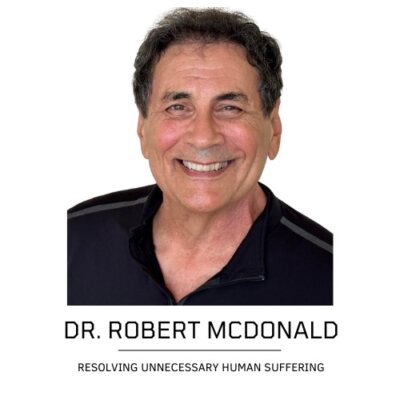
Dr. Robert Dee McDonald is the creator of the Destination Method and cofounder of the Telos Healing Center. He holds a Doctor of Divinity and a Master of Science in Counseling and Mental Health with an emphasis in marriage and family counseling. Over 50 years, he has worked with more than 250,000 people across 19 countries, specializing in the rapid resolution of grief, trauma, limiting beliefs, and codependence. He is the coauthor of Tools of the Spirit and the best-selling NLP book The New Technology of Achievement. Dr. McDonald is a former board member of the Institute of Transpersonal Psychology and former director of mental and spiritual wellness at the Center for New Medicine.
Related Episodes & Articles
- Episode 127: Ultimate Communication Skills with Dr. Robert McDonald
- Episode 226: Stress & Trauma Recovery with Mitch Webb
- Episode 59: Conflict Resolution Science with Doug Noll
- Episode 58: Words, Thoughts & Stories Create Reality
- Episode 32: Bliss Brain & EcoMeditation with Dawson Church
- Article: Biohacking Stress Tips
- Article: Nervous System Regulation
Full Episode Transcript
Nick Urban [00:00:05]: What if in 1 to 3 hours, you could resolve the biggest obstacles holding you back from your version of your perfect life, whether that’s intense grief, that’s limiting beliefs, restlessness, and even all kinds of different physical problems? Not only is this possible, but our guest this week has worked for 50 years with a quarter of a million people around the world to do exactly that. Now this might seem like a departure from our usual topics of health, wellness, and performance, especially of the mind body variety, but let me assure you, this is a foundational layer. And in this episode, you’ll learn one of the most important and powerful skills to your overall quality of life, something that can help you actually make those behavior changes at a much faster rate. We all know the basics of healthy lifestyle, but it’s in the implementation, actually making those changes, that trips us all up. Joining us this week is a personal teacher of mine who I’ve actually directly studied under and will be joining again in about a month for his upcoming course. He is Dr. Robert McDonald. Dr. Robert is the creator of the Destination Method, an author, an NLP master trainer, an internationally known speaker, cofounder of the Telos Healing Center, coauthor of Tools of the Spirit, a transpersonal coaching text, and author of the best selling NLP book of all time called The New Technology of Achievement. Dr. Robert has taught at universities and institutes in 19 countries around the world for decades. He holds a Doctor of Divinity, a Master of Science in Counseling and Mental Health, is a former board member of the Institute of Transpersonal Psychology, and former director of mental and spiritual wellness at the Center for New Medicine. This will be a 2 part episode. The first one, you can find all the links to everything we discuss and information about his upcoming course at outliyr.com/126. And then the 2nd part of this episode will be at outliyr.com/127. If you want to see some of his work and the transformations people are getting in as little as 1 session, you can find those at teloscenter.com. And if you want to reach out to Dr. Robert directly, he was nice enough to give out his email, and that is robert@teloscenter.com. Alright. Sit back, relax, and enjoy this essential conversation with Dr. Robert McDonald.
Dr. Robert McDonald [00:03:39]: Well, it’s good to be here. Thank you.
Nick Urban [00:03:42]: Yeah. So my partner, Navia, actually introduced me to your work a while back. And then earlier this year, I went to your Ultimate Communication Skills, and it really was the class on ultimate communication skills. I learned a lot from that and not only learned, but I actually implemented what I’ve learned in my relationships, both professional and personal, and I’ve seen a huge difference. Friends, others have noticed too and made comments. So I wanted to get you on the show today and discuss both that and then also the more pressing part, and that is what is coming up around the corner, about ultimate listening and dynamic listening and healing through storytelling. So let’s begin today with what you’ve done for your health and performance so far today.
Dr. Robert McDonald [00:04:33]: What I’ve done for myself today for health and performance, well, I’ve taken a nap, and it’s been very good. And I’m a big believer in naps. I made sure that once I felt a slight bit of tiredness, I thought, well, I’ll just make sure that I’m on top of my game here by making sure I’m clear, my mind is clear, my body feels good, I’m strong. I woke up this morning, of course, and I took care of my body, mind, and spirit, through prayer, meditation, deep meditation, I did exercises to stretch my body, particularly my hamstrings, and then I made sure that I was fully more and more fully aligned internally. And that’s of crucial importance. I do that actually not simply in the morning when I wake up, but before I work with someone. I see many, many clients and they come to me from all over the world. I see them online. I do a lot of work on Zoom, and I’m always at the time when I’m working with the people, as I did this morning, I worked for a couple of hours with somebody in India, I made sure that I was completely aligned body, mind, and spirit. So I opened myself to the good, which is part of what it is that I’m aware about. I look for the good, I find the good, praise the good, share the good. This is necessary as a conviction, the conviction of goodness in myself and my client. As a consequence of that, I was wide open. I was able to do work that she described as pretty astounding. So I’m very happy with the way that I organize my life to make sure that I’m at peak.
Nick Urban [00:06:20]: And how do you go about that? Because a lot of people say they check with themselves and they align before they go into their day or before they make a big decision, what does that process look like to you?
Dr. Robert McDonald [00:06:30]: Well, specifically, the process is prayer. I do and I meditate. So prayer is basically speaking with a positive attitude, making sure that I declare what it is that I want to be so, in order to produce something that’s very strange. It’s in order to produce a result that is the future becomes the past. So when the future is the past, it means that it’s already done. This is what people mean when they talk about manifesting in the world. They don’t usually know that they mean that, but that’s usually what they mean. To manifest requires that I know that what it is I want is already mine. Well, how could I possibly know that? Well, it would mean that the future that I want is now my past and I relate to it as the past. This is a big, unfortunately, unknown understanding in the manifesting world. I call it making sure that I’m aware that the future of the future, if I’m in the future of my future, then that means that the future that I wanted has already happened. And so what I do is I declare that. So declaration prayer is a lot like declaration. That kind of prayer, metaphysical prayer, is a kind of a declaration that it’s already done and give thanks for it.
Dr. Robert McDonald [00:07:53]: So a part of my getting prepared for the day is gratitude, and without gratitude, joy is impossible. The source of joy in human life is thankfulness. To be thankful and to be sure to pay attention to what is so that is worthy of gratitude. Well, my whole life is worthy of gratitude. I’m extremely thankful. And every day, I make a point of giving thanks. So some people will talk about it as they get kind of upset about, well, wait a minute. Doesn’t that mean that’s some sort of religion or God or something? And words like God, religion, Jesus, Mohammed, Buddha, things like that oftentimes will frighten people instead of just changing the word over to the good. They just, those words just mean the good. And when I, in the morning, what it looks like for me when I wake up is I’m invariably grateful and say that I’m grateful. I make a little prayer. I happen to be Christian, so I talk and say, thank you, God, thank you, Jesus, but it’s because of the way I was raised.
Dr. Robert McDonald [00:09:02]: If I were raised somewhere else, I wouldn’t be a Christian. So, my experience to be a follower of someone who believes so deeply in peace and love and joy and mercy and forgiveness. So I follow that, I feel real good about it, and I say thank you for that which other people think has not been done, but by giving thanks, it’s done in my mind, and therefore I reap the benefits now.
Nick Urban [00:09:27]: Okay. That makes perfect sense. So then tell us about your background. Like, what is, how’d you get involved in this work and why did you pursue this? Because this is not the typical coaching work that you see most people practicing.
Dr. Robert McDonald [00:09:43]: I got involved in this work as a consequence of my family upbringing. I was raised in an alcoholic and verbally abusive family, we loved each other as best as we possibly could. I know that my parents loved me. My brother and sister love me. I love them. But the family dynamic, many of the issues and energies that were going on in the family had to do with alcoholism and fear and secrets, lots of family secrets. And so, as a consequence of that, I wanted to find out what is there anything that could be done to heal myself and my friends, my family, and so on. And I became, I’m endlessly curious. I want to know what’s going on. So I decided to find out. And after going through the US Army during the Vietnam War, I realized while in there that I was deeply interested in learning. And so I studied everything I possibly could.
Dr. Robert McDonald [00:10:42]: I got out, and I decided to become, to go into psychology, and I got a bachelor’s degree, a BA in Psychology. And then I decided, well, I’ll just open a business. And I was very successful in the manufacturing and wholesale business, but it wasn’t enough, it didn’t touch me deeply. I wanted to be touched deeply. And while I was doing that, I learned that I was also counseling, coaching people, and having groups. I created the first communication skills groups that I ever was the leader of in 1970, so 53 years ago now, and I just kept doing that while I was in business. I’ve always been a self-employed businessman, and I did all the work necessary to then go on and get a Master of Science degree in Counseling and Mental Health with an emphasis in marriage and family counseling, because it seemed to me that that was of deep importance to find out what I could do and how I could improve my life. Well, it turns out that even with all that education and all that background and many, many workshops and teaching courses and clients and so on, it turns out that at no time did the university education teach me what I needed to learn. I needed to learn what the mind is. And the truth is, in the world of psychology, if anyone goes into a university, goes to the psychology department, and asks the people who are running the psychology department and the teachers, what are you studying? They’ll say psychology. And I say, well, what are you actually studying? What is psychology? And when that question is asked, it’s interesting that invariably in those departments and with those people, there are arguments. They don’t actually have an agreement as to what psychology is.
Dr. Robert McDonald [00:13:26]: So let’s say that all psychologists approve of self-esteem and self-worth and self-love and self-respect, in which they tend to say, so, okay, so what is that, and how do you get it? California many years ago produced, it cost $6,000,000, I think it was, for them to define self-esteem in California. But after the definition, so how does a person change? What changes so the person has greater self-esteem, self-worth, self-confidence? In business, self-confidence is crucial. Well, what is it that stops people from having that, and what is it that changes when a person changes from self-doubt into self-confidence? What changes? Well, the mind. But if we don’t have a definition of the mind, then we don’t know what changes.
Dr. Robert McDonald [00:14:30]: I have a doctorate in theology, because I went beyond the physical, the emotional, the mental, and went into the spiritual. I wanted to find out all about that I could on that. I’m very glad about that. That helped me tremendously. And I’ve taught people how to change their lives in the twinkling of an eye worldwide, and I’ve been doing that worldwide teaching since about 1980. So I’m very happy with that, but what I’m unhappy with, what I didn’t get, is an articulation and a conviction of what the mind is. Well, I happen to know precisely what the mind is, and as a consequence of that, I can ask people what they’re doing that’s producing the issue they have, the blockage they have, and then I can ask them to do a few things and find out if the mental form that creates it has been changed. And it’s pretty simple. I’m not special in my abilities. People talk about my work as being kind of miraculous. It’s really just, I happen to know what the mind is and how it works, and I can teach people how to do it.
Dr. Robert McDonald [00:16:02]: The mind is made of mental pictures, sounds, feelings, tastes, and smells, and those mental pictures, sounds, feelings, tastes, and smells actually create emotions and actions. And our emotions and actions produce the results in our life. Well, every business person wants to know and every athlete wants to know, how do I get the results I want? It’s all result oriented. Well, if a person doesn’t know how the mind works, they can be wasting a great deal of energy trying to get results that they could get more directly.
Nick Urban [00:16:31]: It’s really interesting when a whole field of study can’t even agree on what exactly it is that they’re studying. And of course, how can you get the results that you want if you can’t even agree what the whole process is?
Dr. Robert McDonald [00:16:44]: Well yeah. And it’s not the same, for example, in the medical model, which is not the psychology model and the counseling and coaching model. In the medical model, there is no disagreement. If you go to a medical department at a university and you say, hey, what are you studying? They’ll say medicine. You say, well, what do you mean? And then they’ll tell you. They’ll talk about chemicals and chemistry. They’ll talk about neurological structures, they’ll talk about the bodily structures of every sort. They’ll talk about the body. They’ll talk about medicine itself, the chemicals that are required.
Dr. Robert McDonald [00:17:15]: They know what they’re studying. They know what bones are, and they know what laryngitis is. They know, and this is what we’re studying, and our intent is to help resolve physical suffering by helping people with medicine and other forms of intervention. So the medical model actually knows what it’s studying. But it’s not true in the world of psychology, and that’s unfortunate. And what’s even more unfortunate than that is that in the world of psychology, counseling, coaching, mental health, there’s an attempt to be like the medical model. Which is really unfortunate because in the medical model, the medical doctor says to the patient, I’m your doctor, you’re the patient, you don’t know anything about this, you need penicillin, and whether you argue with me or not is silly, and if you argue and you don’t want penicillin and I give you penicillin anyway, the penicillin will work. You really don’t have any choice in the matter. Penicillin does what penicillin does, and I know and you don’t know and so there’s no point in talking to me, so just be quiet and accept my authority. Well, that’s the medical model. There’s one authority and it’s not the patient.
Dr. Robert McDonald [00:18:57]: Well, that’s not the case in the Destination Method. The Destination Method is, what do you want? And then I, as a Destination Method coach, assist the client in getting exactly what they want, not what I think they should want. I don’t tell people, this is what you should want. I don’t do any diagnosis. I don’t do psychotherapy where it’s required to be a psychiatrist or psychologist. I find out what they want and help them to get it. And typically, they get it about 1 to 3 sessions, they get exactly what it is that they want.
Nick Urban [00:19:27]: Yeah. A big part of that is change. And I’m guessing from knowing your background that a lot of that has to do with suffering and resolving that suffering. And I think that the general perception is that this type of thing takes many months or years or even decades through the traditional talk therapy. And how is it that you’re able to go in in 1 to 3 sessions on average and clear this stuff? Like, what are people coming in with and what is it you’re able to help them with that causes that change?
Dr. Robert McDonald [00:20:00]: Great question. Well, what people come to me with is, they’re wanting. They usually come and say what is unhelpful. They say what they don’t want. But I expect that, people are trained to say what they don’t want. So I say, what do you want? And they say, well, I don’t want to be unhappy anymore. Well, that’s what they don’t want. So I remind them that in the Destination Method, I’m like a taxi driver. Even if somebody gets into a taxi somewhere, anywhere in the world, the taxi driver says, where do you want to go? And if the passenger says, don’t turn left, don’t turn right, don’t go there, don’t go, then the taxi driver says, I know what you don’t want, but what do you want? Where do you want to go? What is the result that you want? Is very precise in the taxi world. So when I say to a client, what do you want? And they say, well, I no longer want to have such low self-esteem. I feel kind of like an imposter.
Dr. Robert McDonald [00:20:52]: I keep talking to myself and telling myself that I’m no good. I don’t want that. Well, then I know what they don’t want, but I don’t know what they want. So when I stay with them a little longer, I said, what do you want? And they eventually say, well, if I no longer had that, I don’t want to continue doing what I’m doing. What I do want instead is self-worth, self-respect. I want to feel confident. I want to be able to speak in public without being afraid. I want to eliminate my fear of the dark, my fear of public speaking, my fear of writing a grant, my fear, whatever it might be. They want to eliminate the fear. And what do you want as a result of that? Well, I want to have confidence and self-respect and self-esteem. This is quite clearly more about what they want than what they don’t want, and then I find out, well, what’s stopping you? And what’s stopping them is invariably within. It’s not externally.
Dr. Robert McDonald [00:22:05]: Intelligent people in business recognize this, that businesses don’t fail because there’s not enough money. They fail because there’s lousy communication within the business. What people need are improved communication skills so that people know what each other is talking about, and trust. If there isn’t trust and safety, a sense of comfort, real trust, like I can rely on you, you’ve got my back, I’ve got yours, we’re not going to be able to do business well together. So there needs to be an internal change in order for me to sort out, do I want to work with this person? Do I trust this person? Am I trustworthy? Yes, I am. And then they need skills, how to talk, how to express themselves, what they feel, what they want, what they think. They need to be able to assert. Assertiveness training is of tremendous importance in business to be able to assert, not be aggressive, but also not be passive, to tell the truth.
Dr. Robert McDonald [00:23:36]: So when people will bring to me typical things like that or something serious like what they call post-traumatic stress disorder, which is very popular now, a person says, well, I’ve had this trauma. Well, if we define trauma loosely enough, there isn’t anyone in the world who’s not traumatized by something. So everybody is underneath this diagnosis, which makes the diagnosis kind of silly. But the person says, okay, whenever I think about driving over a bridge, I get afraid. And I can’t because I remember when I was in a car accident near a bridge a long time ago. And they go, oh, so what stops you is the memory. Well, post-traumatic stress disorder is a language. Post means after. After there was a painful event, I have stress. And it’s a disorder because whenever I remember it, I have stress. So the thing that’s hard for people to understand about trauma is, post-traumatic stress disorder is telling you in the title that the trauma doesn’t exist anymore. It was 10 years, 20 years, 30 years ago, or last week. It’s in the past, the trauma is not happening at all. And so what is it that they’re upset about is not the trauma, what they’re upset about is the memory of the trauma. And if they pay attention to the memory of the trauma and if they want my assistance, I can help them to remember it just slightly differently. And that slight difference in the way they remember it, they no longer are upset when they remember it.
Dr. Robert McDonald [00:25:21]: So I don’t diagnose people, and I don’t cure PTSD. I just assist people so that they are able to think about the events that they previously were unable to think about comfortably. Now they can think comfortably. I’ve worked with veterans, one time I worked with a black ops veteran. I happened to have been around during the Vietnam War, so I was very lucky to work with a man who had spent quite a long time in Vietnam, and unfortunately his legs were blown off there. And he trusted me to help him with what had happened to him 38 years before I met him, because he was struggling. He couldn’t sleep at night. He had to take 4 different kinds of pain medications to stop the pain in the legs that he no longer had. His legs were gone. So he had what’s called phantom pain. He had to wake up many times at night. He was trying to feel comfortable about those memories, he couldn’t. So I worked with him. I even videotaped that, and assisted him so that he stopped taking his medication, he no longer felt bad about what happened, the traumatic memory no longer was painful at all, the memory didn’t bother him at all.
Dr. Robert McDonald [00:26:54]: Well, that meant that I had to know the structure of the mind. If I don’t know the structure of the mind, I could have talked to him for years and reassured him that he was okay and tell him, look, pay attention, you’re not there now. It wouldn’t make any difference. His mind has to change, and I knew that, so I help them do that. I’ve had those kinds of experiences with trauma. I’ve worked with countless women who’ve been raped or molested worldwide. I worked with a woman out in Holland who became relatively well known as a consequence of being on television there, and she had been raped by a serial killer, a psychopathic serial killer had raped her and left her for dead. He thought she was dead, she wasn’t, and she had to deal with this 20 years later. And for 20 years she suffered with a terror, a horrible memory, and then it got even worse when he was let out of prison. So I worked with her once and she no longer had those kinds of fears, was okay. And she still to this day she lets me know how happy she is that we met.
Nick Urban [00:27:22]: So what I’m thinking I’m hearing you say is that all suffering has a memory at its core, and it’s the relation to that memory that we have that causes the ongoing suffering?
Dr. Robert McDonald [00:27:34]: No. I’m not saying all suffering has memory at its core because some suffering is about something that hasn’t happened at all. With no memory, there’s an expectation. This is called anxiety. So traumatic memory is always about the past, so a trauma must be about the past. I got a painful memory about the past. But anxiety is never about the past, it’s never a memory. Anxiety is what might happen tomorrow, the next day, my business might fail, my marriage might fail. I might become a bag lady on the street. These are anxiety producing internal questions. So what all suffering has in common is the mind. So if we think about it this way, the mind, human mind, is made of representations.
Dr. Robert McDonald [00:29:11]: What I mean by representation is right now, if I say to you, what’s the Eiffel Tower look like? I’m not looking at the Eiffel Tower and neither are you, and yet I know what the Eiffel Tower looks like because I have a representation of it that I see in my mind’s eye. I don’t see it anywhere in the room and I’m not in Paris, I don’t see the Eiffel Tower anywhere physically, but I see it mentally. Well, the mind is made of mental pictures like that. That’s an image. Mental pictures and sounds, what I say to myself in my mind’s ear. Mental pictures, sounds, feelings, what I kinesthetically feel, bodily feel, and what I smell and what I taste. Mental representations are the mind. So if I alter my mental representation, what else is altered? Well, if I change what I see in my mind’s eye, it will change my emotional life. Anytime there’s a mental change, it has the power to change emotional experience.
Dr. Robert McDonald [00:30:38]: Motivation. Most business people are profoundly interested in motivation, and they don’t know what the mind is. So how are they going to assist somebody in being motivated? So motivation means that I have mental representations that move me toward what I want and away from what I don’t want. Well, those representations will come in the form of pictures, sounds, feelings, tastes, and smells, just as memories, painful memories, come in the form of pictures, sounds, feelings, taste, and smells. Anxiety comes in the form of pictures, sounds, feelings, taste, and smells. All emotions, doesn’t matter what they are, they come, and emotional suffering comes from the mind. Change the mind, you’ll change your emotional life, change your emotional life, you’ll change the results you get in your life. So if we think about it as hierarchically arranged, results are the bottom, the thing that I want, the measurable results that I want.
Dr. Robert McDonald [00:31:28]: Well, I want more money in my life, I want a new house, I want a car, I want a relationship, I want whatever it might be, finish the university, that comes from actions. Actions give me results, and actions are colored by emotions. Well, both actions and emotions are caused by thoughts. Thoughts create actions and emotions, which then create results. And they go, well, is it that simple? Yeah. It is that simple, but a person has to study to know what’s a thought made of, and then when we have enough thoughts, when we organize thoughts, organized thoughts create beliefs. So beliefs at a higher level. Beliefs contain organized thoughts. Beliefs, if you change your belief, you’ll change your thoughts, you change your thoughts, you change your actions, change your actions, change your results.
Dr. Robert McDonald [00:32:10]: So if I believe that I’m worthless, then I’ll act in accordance and I’ll produce those results in life. And beyond beliefs is identity. Who do I think I am? What have I learned in my life? What do I feel? What do I want? What do I think? So if I’m up here in this place of identity and make a change about who I think I am, everything below that changes. It’s a very pervasive change. So identity is a very high level of change, and can be addressed. And I do it. I help people make whatever level change they want to make.
Dr. Robert McDonald [00:33:15]: These kinds of things I’m talking about, I take for granted. The hierarchy that I just created, that I’ve always called the creative order. Creative order is that there’s an order to creation. So if I want to create something, I need to understand that I want results. Results come from actions. Actions come from my thoughts. Thoughts come from my beliefs. Beliefs come from my identity. Identity is linked to soul or that which is between the infinite and the finite, and then soul is linked to that which is infinite and beyond knowing, the unimaginable. Well, from the spirit, through soul, through identity, through beliefs, through thoughts, through actions and emotions, come results. So the higher up I go in the creative order, the more powerful the change is.
Dr. Robert McDonald [00:34:28]: When I’m working with clients, I don’t explain all that stuff because they don’t need to know all that stuff. I just help them because I know that’s how it works. I know the path. I’m like a taxi driver. They say they want to go, they want to change something. I know how to change it, and I just help them to go to the level that needs the change. And typically, it’s just a thought level, but it might be a belief level, in which case I have many ways to help people change their beliefs about themselves. In fact, that’s what’s coming up, I’m teaching the Dynamic Listening Training. It’s a professional-level training for professional-level listening skills. It’s not fly by night training. It’s an actual training. It’s for people who really want to know professional-level listening skills because they want to be able to create safety and rapport at the deepest level, and then they also want to know about therapeutic metaphors, that means the stories that produce deep change, healing change, healing stories. They need to know about that, I teach that and how that works and they do it in the class. And then finally, I teach them how to change beliefs, core limiting beliefs.
Nick Urban [00:35:04]: Dr. Robert, I want to continue on dynamic listening in one second because that’s a very fascinating topic, and I’m sure most people listening right now already think that they’re a great listener. I personally believed that I was a great listener, and pretty much everyone I talk to tells me the same thing, that they’re one of the best listeners out there they’ve come across. And that’s not often the case. But back on the previous topic of your creative order, of course it’s tempting to want to change identity immediately because of all the downstream effects that can have. But are there any exercises or things we can do to notice our thoughts that are not serving us the way we want or go about working on the lowest level right there?
Dr. Robert McDonald [00:35:49]: No. It’s just a question of oneself. What I do to find out what’s going on is that I go, oh, wow. I don’t feel quite right. When I think about going to that party, I don’t feel quite right. When I think about asking that person to pay me the money they owe me, I don’t feel quite right. What does that mean, don’t feel quite right? It doesn’t say what I do feel. That sentence, I don’t feel quite right, does not say anything about what I do feel, and that’s what people have been trained to do. What’s needed is to come down, this is what I do, I feel what? I feel some tension, bodily tension in my stomach or in my heart area. Come home to the body, notice what’s there, as opposed to say, I feel anxiety. Well, nobody in the world knows what the word anxiety means to you.
Dr. Robert McDonald [00:36:37]: What does anxiety mean? Well, I feel tension in my heart, and I call that anxiety. The label doesn’t matter. I know I feel the tension in my heart, and say, oh, when do I feel tension in the heart? When I think about asking, let’s say I’m a closer or let’s say I need to close a sale or something or whatever it might be, whether it’s in business or personal transformation, and I get this feeling, well then I go, well, this feeling does not come from the air. Where does it come from? And so an intelligent way to address one’s understanding about thought creating emotions is to pay attention to the result of the thought, and that is going to be felt bodily experience. Let that feeling be stronger instead of trying to get rid of it. I don’t have to look into my identity to do that. I just notice, okay, let it get stronger until it gets strong enough until it becomes an image I can see or a sound I can hear or a memory. And when memories are made of pictures, sounds, feelings, tastes, and smells, so what is it I’m looking at? What is it I’m hearing? And I go, oh, this feeling, I got it. I’m saying to myself, I’m stupid, or I’ll never succeed, or I’m a bad person, or whatever it might be. Well, when I hear it, I need to quote it. I need to actually hear the sound and quote it. When I quote it, I go, that’s exactly the sentence structure that produces this.
Dr. Robert McDonald [00:38:12]: If I hear some other sentence structure, it doesn’t produce that. It has to be that sentence structure. And then I alter that sound. If I alter that sound, the emotional reaction, which is in the felt, in the body, will and must change. Unless it’s held together by a belief. If it’s held together by a belief, then it will find a new way to do itself. But typically, about 75% or so, it’s not held together by a belief. If it’s held together by beliefs, then we have to know how to work with beliefs. So when I teach people how to do what I do, and that’s my course Healing the Wounded Heart, I go deeply into what methods work for what. I teach 8 of the most powerful interventions there are, and I point out to them, well, yeah, you can change thoughts very easily. You can change words like, I’m no good, I’m worthless, I’m helpless, I’m hopeless. I can change those words very easily and have a change because the thought changes. But if in fact afterward that is there, it’s still there, it’s not a failure, it’s feedback. There’s no such thing as failure, actually.
Dr. Robert McDonald [00:39:28]: There’s just feedback. We get information about what doesn’t work, and we start then looking for what does work. And then we go, okay, so it’s not changing the thought that needs to be done. It’s going to the level of belief. And once we’ve discovered that the person has been holding a belief that is essentially organized thought, then we need to change the belief. And there are many, many methods for changing belief, they’re much too complicated to explain here today, but essentially, the essence of changing belief is changing the way in which I see and hear my experience. Change my attitude, change the way that I hold the world, so that there’s a new way to hold it.
Dr. Robert McDonald [00:40:54]: And identity will change beliefs. Identity level changes will change beliefs. So, what’s an example of an identity level change? Well, I don’t know if there are many people who remember Muhammad Ali, whose name was Cassius Clay. Muhammad Ali, who was a champion of the world in boxing, heavyweight champion, his birth name was Cassius Clay and he decided to change that. He decided to change his identity, who he was. Now that’s one way to think of identity as the name. So he changed from Cassius Clay to Muhammad Ali. When he changed this and came into complete adoption of the meaning behind that change, everything else changed. His identity changed, his beliefs about the world and himself changed, his thoughts about the world and himself and behavior changed, everything changed. So identity level change is very high, and can be addressed.
Dr. Robert McDonald [00:42:05]: In codependence, when people are codependent, it used to be called co-alcoholism back in the day. Codependence is simply a confusion of identity. A person doesn’t know where they end and another person begins, and so they’ve confused their identity with their mother’s or father’s or sister’s or brother’s or husband or wife. They’ve confused their identity with somebody else, and the consequence of that confusion is that they think their pain is my pain. When in fact, if they knew their identity, they’d go, no, it’s not. They’d be able to separate out. And so relieving people of codependence is an identity level change, and I happen to have created the means by which that occurs, and I’ve taught it worldwide for a long time.
Dr. Robert McDonald [00:43:08]: They might come in saying, I heard you can work with identity, change my identity. I said, well, to what? I have no idea. What, is there a problem? What do you want? So the first question to ask a client is, do you want to continue to have the problem you have? And if they say yes, they want to continue to have the problem, well then we don’t do any work together.
Nick Urban [00:43:28]: Let’s talk more about dynamic listening. What it is, what it looks like, how that fits into storytelling. If you think men need more work at this than women on average. Let’s dig into this now.
Dr. Robert McDonald [00:43:42]: Okay. Well, in terms of men and women, it’s oftentimes thought that women are better listeners than men or the other way around. In fact, unless a person’s been trained in how to listen, they’re equally ineffective. Listening requires a suspension of knowing. Or another way to say that is humility. So to listen well I must be able to leave my point of view. So there are 3 points of view: my point of view, another person’s point of view, and an observer point of view. I must be able to leave my point of view, take the point of view of the other person, which is my client, and suspend my way of seeing the world, and find out what’s their way of seeing the world. That suspension requires humility. In fact, the virtue of humility comes when I’m able to take another person’s point of view. Most people are stuck in their own point of view.
Dr. Robert McDonald [00:44:52]: People get stuck in their own point of view or another person’s point of view. If they’re stuck in another person’s point of view, they become codependent. So health, emotional health, is defined in the Destination Method as easy access to the 3 points of view. And in order to listen well, I must be able to put myself in another person’s point of view and then ask questions humbly until I actually want to know, and then I listen without a negative judgment. Now I purposely put the adjective negative judgment. I do not listen judgmentless. There’s no such thing as being without judgment. This is the most popular thing I see in popular culture. They go, you know what I want? I just want, I don’t want to be judged at all. No judgment. No. I think you’re wonderful, so there’s no judgment here. No. That’s not true.
Dr. Robert McDonald [00:45:47]: It’s just patently false. If you think I’m wonderful, you’ve made a judgment. And to say there’s no judgment is a judgment. There is no way to avoid judgment and be a human being at the same time. So what do people mean when they say, don’t judge me? They don’t mean don’t judge me, they mean don’t condemn me, don’t negatively judge me. That’s what they really want. I want it and everybody I meet wants it. Look, don’t judge me negatively, judge me positively, look at me and go, you’re worthy of talking to. You don’t have to praise me and think I’m wonderful. You don’t have to say I’m the best person in the world, but that I’m worthy of talking to. That’s a judgment. There is no possibility of escaping judgment and being a human being at the same time.
Dr. Robert McDonald [00:46:37]: It cannot be done. Try it. And if you disagree with me, that’s a result of a judgment. So judgment is always part of being a human being. Judgment is necessary to tell the difference between a swimming pool and a baseball diamond. We have to be able to determine the difference between one thing and another. So what happens in effective and deep and professional-level listening skills is I carry a judgment. I carry a judgment into the work, and the judgment is that the person I’m talking to is good, their being is good, their behavior might not be good, behavior might be terrible. I talk with people who’ve engaged in such terrible behaviors that make you want to vomit. But their behavior can be terrible, but the being is good, and so I walk in with a conviction, a judgment that they’re good, and then I say, okay. Let me find out what is it they’re doing.
Dr. Robert McDonald [00:47:48]: In order for me to find that out, I must listen well. I must find out. And the person says, well, I’m telling you what I’m saying. I feel really bad. And so if I hear that and I say, well, what are you talking about? And they say, well, my dog’s dead, and that’s so terrible, and then I think I’m being compassionate and I bring out a picture of my dog and I say, I got a dog. It means I haven’t put myself in their shoes to realize that talking about my dog is not exactly what they want to do. What they’re interested in doing is sharing with me the grief that they have over their dog being dead. So I need to be able to hear them and be with them in their pain, not be afraid of their pain or my own, but be with them and notice that they want to be free of it and they need to be heard.
Dr. Robert McDonald [00:50:23]: I can’t tell you how many people I talk to who are stunned to be in the presence of someone who can listen. It’s a shock. I often say this. If I could teach the world one skill and I had no, and I’m going to die and nobody’s going to know anything else, it would be to teach them how to listen. Because it’s what’s missing. Take a look at what’s going on in our world and throughout the USA and the rest of the world, the gigantic, horrible kinds of contentions and the fighting, the unending fighting. It’s based on the inability to listen, to listen well. Listening doesn’t mean that I approve of what the other person is saying. It means I’ve taken long enough time to hear them out, to be present with them, put myself in their shoes. Because everybody, all the time, is doing the best they can given the givens of their life.
Dr. Robert McDonald [00:52:03]: If I talk to somebody who’s harmed, like, I’ve worked with many people who harm their children. So I work with them. If I say, well, this person’s not worth listening to, then I won’t listen to them and no one will. And then there reduces the chance of the person having some kind of relationship that allows them to look a little more deeply into themselves. Listening is fundamental for civilization. If I can’t put myself in the shoes of another, we don’t have civilization.
Dr. Robert McDonald [00:52:33]: What’s happened in the nation is this confusion of the word ego and evil. People say, well, that’s your ego, and they say it in a tone of voice like somehow it’s horrible. Well, guess what happened if you didn’t have an ego? You wouldn’t be able to know what to buy at the grocery store. You wouldn’t go to the grocery store. You wouldn’t be an I. Ego simply means I am. So when people start thinking ego is somehow evil or devilish or satanic or something, they just haven’t been paying attention. What we need is to move away from cynicism, cynicism is a presumption of the negative, and presume the good. So I say to people, look for the good, find the good, praise the good, whatever it might be.
Dr. Robert McDonald [00:53:47]: Looking for the negative will produce terrible consequences in individual lives and in collective lives and societal lives, community. So it’s like, look for the positive on purpose, deliberately, but to teach this runs smack into people going, that’s not this and that’s not that. So I have to spend some time asking questions. I don’t do what I’m doing now. I’m talking without listening. I don’t do that when I’m assisting somebody in awakening to a new level. Here’s the reason why depth is not as prized as it used to be. When we have every one second the scene changes on television, movies are like that now, we have rapid social media, there’s no pull toward depth. Well, depth means slow down. That’s what it requires, in-depth understanding, in-depth heartfelt feelings. Well, that’s not as popular as it used to be, unfortunately.
Dr. Robert McDonald [00:55:18]: So listening is of profound importance. It’s made of the ability to put myself in the shoes of another person, and I teach people how to do that and how to get out again. Because if you get in the shoes of another person to listen well and you can’t get out again, this will be very painful to you eventually. It’s called codependence.
Dr. Robert McDonald [00:57:31]: I’m in the process of doing that with myself all the time. I make mistakes all the time. I need to find out. Do I regret that mistake? Yes. Well, then apologize. And then I do. Why I apologize? Because I want things clean between myself and someone else where I made a mistake that might have hurt that person. And what I go, oh yeah. I did that. I’m sorry about that.
Dr. Robert McDonald [00:57:54]: I really, yeah, I didn’t want to, I really regret my behavior. A real apology. There are very few real apologies I hear in social media. Apologies are usually false apologies in social media such as, I’m sorry you feel that way. That’s not an apology at all. That’s kind of sympathy. It’s too bad that you feel that way. An apology is regret.
Dr. Robert McDonald [00:58:16]: I regret that I spilled the coffee on your new clothes. I’m sorry. Okay? That’s, I regret. It’s not, I’m sorry you feel bad that your clothes are ruined. That’s just kind of sympathy. So to really apologize requires, I notice my behavior is one that’s less than I’d like it to be. In fact, I wouldn’t like to be treated the way I just treated you. And so I noticed that, and I’m sorry that I treated you because I wouldn’t want you to do that with me. It’s a standard. So I’m telling you I have a standard that you can rely on in the future. That’s an apology.
Dr. Robert McDonald [00:58:58]: We don’t have much of that now. And this is my experience. I watch a fair bit of the media, and it seems to me that it’s like pulling teeth for people to just take responsibility. Okay. If I did that, I did that. If I care about myself and about you, I’m going to want to clean up my communication. Tell the truth.
Dr. Robert McDonald [00:59:38]: People want to be independent and they want to be dependent at the same time. Big, big time struggle. People are going, I want to be independent, but at the same time, they want to be able to rest their head and let somebody else do it. They want to be dependent. Well, independence and dependence is a profound struggle. There are ways to resolve that particular conflict, which I teach people how to do, but independence is exactly the same thing as honesty. So to the degree that I’m honest, it’s a degree to which I’m independent. And if I can’t be honest because I’m afraid of it, well then I’m not independent.
Nick Urban [01:00:13]: Dr. Robert, in this very first part of our show together today and next week, I want to put a wrap on this part, and we’ll talk about 2 other things, and then we’ll go on to the 2nd part. And before we go on to that, I know when I was in your last course in July, you mentioned that there are 3 stages of listening and it made it easy for me to conceptualize the difference between very simplistic listening that most people are doing on a daily basis versus what you called level 3 listening, which is different and much more profound than the first level.
Dr. Robert McDonald [01:00:59]: I don’t usually think of those levels of listening. I certainly can listen at a level where I distract. A person talks to me and they say, hey listen, I ran over my dog today, and I distract by talking about my dog. And that’s a serious problem in relationship in that the person hasn’t been heard at all. I change the subject. So the words come in, I know the words. The person did tell me that their dog died. They told me that they themselves drove, ran over their own dog, and they feel guilty about it, and I just say, well, I got a dog. And I’m on the same topic, dogs, but I haven’t noticed what they’re saying about their actual experience and their feelings for the experience. So that moves people away from listening well, and it distracts from what the person has said.
Dr. Robert McDonald [01:01:34]: There’s another level of listening where the person would, I respond to just the data, which is, oh, so your dog’s dead. And that’s just hearing data, and many people, it seems to me, most people think that listening is purely that. Somebody talks and tells them their life story or whatever it might be, and the listener just notices the facts, the data, the step by step stuff, and says, okay, so you were born here and you went there and that happened, and just get content. That’s another level of listening, which is just content, just data. But what if they talk to me about the feelings that they have? The dog is dead and they feel really bad about it. So what they’re saying is they’re not only telling me the facts, the data, the content, which is the dog is dead, but that they have an emotional experience. And if I hear just the feeling, that’s a certain level. When I hear somebody who tells me the feeling that they have and the reason for the feeling, so that they say it’s causal, once I get that, then I’m listening at a very deep level.
Dr. Robert McDonald [01:05:29]: And then there’s a deeper level, which is whether or not they’re responsible for the emotion. So I must be able to identify with some precision at what level the person is speaking to me. And then I must be able to join that level, give back that level of listening, so that the person feels profoundly heard. What happens when people feel heard is they’ll tell you more. That’s one of the reasons why people actually don’t want to listen, because they don’t want the other person to talk anymore. They want them to shut up. So they go, well, they know better than to listen well because if they listen well, the other person will say, wow, I’m being heard, and they’ll start telling more. But my work is the resolution of unnecessary human suffering. And because that’s my work, I want to hear the person at the deepest possible level that they’re capable of accessing and then I go there with them. I go right there with them to the deepest level of what they’re feeling, the reason for their feeling, whether or not they take responsibility for it. I’m with them, like dolphins in the water.
Dr. Robert McDonald [01:06:11]: I’m with them so that, or birds, a flock of birds that fly together and then change direction. I’m right there with them. And this can be taught. What can’t be taught is the leaning in the direction where the person enjoys that, the leaning toward compassion, the leaning toward understanding. That can’t be taught. Some people are geniuses at making a lot of money, they’re not geniuses at listening, and they don’t care. Well, that’s great. God bless them. Do what you’re leaning at. But many people want to be heard, and they want to know how to hear.
Dr. Robert McDonald [01:07:20]: They lean toward compassion, they lean toward understanding, and they just need tools. And so I teach them. The metaphors that we use, the storytelling that I teach in this class, if people are interested, they can just email me at robert@teloscenter.com. Just tell me you’re interested, and I’ll get back to you. But if people want to know how to be a better and better listener, they can go by getting trained in that, and then if they want to learn storytelling tools, stories are astonishingly powerful for helping children and adults.
Dr. Robert McDonald [01:08:33]: I’ve worked with so many kids, and it’s so wonderful because their lives are obviously made of stories, and I just help them to embellish the stories they currently have, to make stories that are better and better for them, that reduce their fear. So they’re not afraid of the dark anymore. They’re not afraid of getting sick. They’re not afraid of their parents dying. They’re not afraid of wetting the bed. How does that come about? Stories. Stories teach children what’s real and what’s not real, what’s true and what’s not true, what’s healthy and what’s not healthy. Stories impact the physiology. Now a lot of people say, well, that can’t be true. The mind can’t create chemicals, but it’s not true. The mind does create chemicals, and anybody knows that who thinks about it for a minute. If you think about eating a lemon that doesn’t exist, I don’t have a lemon in my hands, but if I think about eating a lemon right now, and I am, I can feel already saliva coming into my mouth that wasn’t there prior to my thinking about eating a lemon. The saliva is chemical. My body has created chemicals as a consequence of my thoughts.
Dr. Robert McDonald [01:09:31]: Well, do you think that might have something to do with physical health? Adrenaline is created by thought. If I’m convinced that there’s a tiger behind my couch here, my heart rate will go up, my blood pressure will go up, adrenaline will shoot through my body. And if that’s sustained over a period of time, my body will get sick. Thoughts can cause sickness. And I’ve worked with children who’ve had bodily symptoms like rashes. They talk to them about story, with a story, and the rash is gone. Well, that’s impossible, isn’t it? It can’t be done. No one would agree with that if they hear me talking about it, and I don’t want to blame them. It sounds crazy. Then the best thing they can do is try it. Just try it.
Dr. Robert McDonald [01:10:37]: And if they don’t try it, well then they don’t know whether or not it’s so. In other words, be scientific about it. If you help somebody resolve an issue with their father or mother by forgiving the father or mother, that forgiveness becomes a profound intervention. But if I don’t know the nature and structure of forgiveness, if I don’t know what the mind is, I can talk to them. I can tell them, hey, why don’t you go over there and forgive them? Forgive your father. They go, yeah, what a, why didn’t I think of that? But they don’t know what to do. It requires understanding what the mind is. The mind must change. Forgiveness means to let go of the demand that the past is different than it was.
Dr. Robert McDonald [01:10:57]: Well, how do I do that? Well, all I know that I can tell you now is the past is a result of what you’re thinking now. So we must change our thoughts about the past. Suddenly, I no longer demand that the past be different. When I do that, I’m free of the past for the first time. Well, that can be done. And I do that all the time.
Nick Urban [01:11:19]: And also, I’ve heard plenty of interviews with big celebrities, business people, you name it. A lot of them mentioned storytelling as one of the most important skills they’ve developed over their lifetimes because it helps you build relationships faster and deeper, it helps you retain information, it helps you change and transform in ways that other scientific lingo and jargon can’t.
Dr. Robert McDonald [01:11:44]: What I’ve developed is a step by step means by which we can elicit stories, the current story that doesn’t work, and then change that current story to one that works.
Nick Urban [01:11:55]: Perfect note to wrap our first part of the interview. If any of you guys decide to take up Robert on his offer, his email will be in the show notes.
Dr. Robert McDonald [01:12:08]: Put it in there and make sure everybody sees my email address because you can email me, and I will respond. Look at my website and you can see the handout or the flyer.
Nick Urban [01:12:25]: I have it. Yes. And I’ll also put in the show notes links to some of the other interviews that I’ve seen you on and you working with clients if those are publicly available. In that way, people can look at and actually see your method in practice and see real life examples of the results people are getting. And I can speak from personal experience that Robert is the real deal. And if you guys decide to show up, I will be there also, and we will learn a lot in the 6 days we have together.
Dr. Robert McDonald [01:12:59]: Those videos are, many of them, if not most of them, are on the first page of my website. They can click on there and see several interviews that I did with Carolyn Lovewell. They just click, they just watch the video working with shock, trauma, and grief. Click on it, and you’ll see me resolve shock, trauma, and grief with the woman who found her mother dead in the tub. So, yeah, all of that’s possible.
Nick Urban [01:13:22]: Alright, Dr. Robert. Thank you for joining me on the podcast. Stay tuned for the 2nd part of this episode. I hope that this has been helpful for you. If you enjoyed it, subscribe and hit the thumbs up. I love knowing who’s in the 1% committed to reaching their full potential. For all the resources and links, meet me on my website at outliyr.com. I appreciate you and look forward to connecting with you.

Comments