

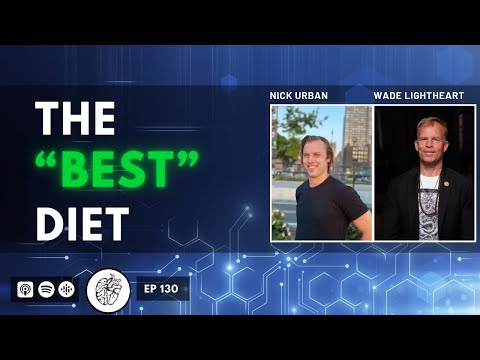
With Wade Lightheart of BiOptimizers, Episode 130



What You’ll Learn
- Protein vs amino acids: Wade reduced his protein intake from 250g to 85g per day while competing at the world championship level by optimizing his digestive system, proving that absorption matters more than total grams consumed. [14:28]
- Digestive enzyme categories: Four main enzyme classes (proteases, amylases, lipases, cellulases) govern how efficiently your body converts food into usable building blocks, and deficiencies in each produce distinct symptoms beyond simple bloating. [29:34]
- Pottenger’s cat study implications: By the 3rd generation on enzyme-deficient cooked food, cats lost the ability to reproduce and developed strange genetic diseases, paralleling modern human fertility and chronic illness trends. [39:49]
- Biological optimization casino analogy: Just as casinos stack every variable in their favor to extract money, you can invert that model to stack health inputs (NAD, resistance training, organic food, fasting) in your favor for maximum biospan. [41:40]
- Reverse dieting protocol: 97% of dieters regain all lost weight within 3 years. The fix: spend as much time gradually adding calories back as you spent cutting, resetting your metabolic set point instead of triggering rebound weight gain. [01:01:22]
- Calorie deficit sweet spot: For men, 500-1,000 calories daily (split between diet restriction and exercise burn) produces 1-2 lbs of fat loss per week. For women, 250-500 calories is the safe ceiling to avoid hormonal disruption. [01:03:49]
- Fiber as a satiety tool: Wade uses fiber rather than excess protein to manage appetite, which is particularly effective for those with suboptimal satiety genes who struggle to feel full before overeating. [24:24]
- kApex neutralizes seed oils: BiOptimizers’ lab demonstrated that their lipase enzyme blend (kApex) completely eliminates the negative components of seed oils when taken before a meal containing them. [01:22:43]
- Accountability network design: Sustainable body transformation requires matching your accountability system to your psychology, whether that’s public declarations, financial stakes, group culture, or a demanding coach. [01:13:57]
Why It Matters
Most people assume that eating protein equals absorbing amino acids, but the real bottleneck is digestive efficiency. Wade Lightheart, a 3-time natural bodybuilding champion and BiOptimizers cofounder with over 30 years of nutrition research, proved this by cutting his protein intake by 66% while maintaining world-championship physique. This episode breaks down how to optimize what your body actually extracts from food, choose the right diet for your genetics and psychology, and avoid the metabolic crash that causes 97% of dieters to regain every pound.
Who Should Listen
- Anyone frustrated by digestive issues, bloating, or poor results despite eating “enough protein” who wants to understand why absorption trumps intake.
- Dieters who’ve lost weight only to regain it and want to learn the reverse dieting strategy that bodybuilders use to lock in results permanently.
- Health-conscious people tired of diet wars who want a framework for choosing the right nutritional strategy based on their genetics, goals, and psychology.
Personalized Nutrition, Reverse Dieting & Digestive Optimization
In this episode of the High Performance Longevity podcast, Nick Urban sits down with Wade Lightheart, certified sports nutritionist, 3-time national natural bodybuilding champion, and cofounder of BiOptimizers. Wade competed at the IFBB Mr. Universe and PNBA Natural Olympia, then ran his first marathon at age 50. He and cofounder Matt Gallant spent years developing The Ultimate Nutrition Bible, a comprehensive system for personalizing diet strategy based on genetics, psychology, and individual digestive capacity.
The conversation covers Wade’s journey from consuming 250g of protein daily to proving he could maintain championship muscle on just 85g by optimizing enzyme function, hydrochloric acid, and probiotic balance. He explains the four main digestive enzyme categories (proteases, amylases, lipases, cellulases), why deficiencies in each produce symptoms far beyond digestion, and how the Pottenger’s cat study predicted modern fertility and chronic illness trends. Wade introduces his pyramid of nutritional decisions, placing spiritual, cultural, and psychological factors at the base, not macros.
You’ll walk away understanding how to choose a calorie deficit that doesn’t crash your metabolism (500-1,000 for men, 250-500 for women), why reverse dieting after hitting your goal weight is more important than the cut itself, and how BiOptimizers products like MasZymes, kApex, Blood Sugar Breakthrough, and P3OM address specific digestive bottlenecks. Wade also shares how kApex was lab-proven to neutralize seed oil damage.
Key Terms Quick Reference
Several specialized terms come up throughout this conversation. Here’s a quick reference.
[14:28] Proteases: Enzymes that break down protein into amino acids. Different proteases work at different pH levels, so a broad-spectrum enzyme formula covers the full range of digestive conditions from the upper stomach through the intestines.
[29:34] Cellulases: Enzymes that break down plant fiber. Humans don’t produce cellulase naturally, making supplementation valuable for anyone eating a vegetable-heavy diet who experiences bloating or poor plant food digestion.
[39:49] Pottenger’s cat study: A multi-generational experiment showing that cats fed exclusively cooked, enzyme-deficient food lost reproductive ability and developed genetic diseases by the 3rd generation, paralleling modern human health trends.
[47:40] Nutrigenomics: The study of how food compounds interact with and influence gene expression. Goes beyond genetics to examine how specific dietary choices activate or suppress beneficial phenotypes through epigenetic signaling.
[01:01:22] Reverse dieting: The practice of gradually increasing calories after a fat loss phase to reset your metabolic set point. Spending as much time in the reverse phase as the cutting phase prevents the rebound weight gain that affects 97% of dieters.
[41:40] Biospan: BiOptimizers’ term for the total years of healthy, functional living. Distinct from lifespan, biospan measures how long you maintain physical and cognitive vitality rather than simply how long you survive.
[26:14] Pyramid of nutritional decisions: Wade’s framework placing spiritual, cultural, emotional, and psychological factors at the base of dietary choices, with macros and calories higher up. Ignoring the base layers undermines any diet strategy.
Do You Really Need 200+ Grams of Protein Per Day?
The short answer
No. Most people dramatically overestimate their protein needs because they confuse protein intake with amino acid delivery. Optimizing your digestive system lets you get more from less.
What Lightheart found
Wade consumed 250g of protein daily while competing at Mr. Universe, then gained 42 lbs of fat and water in 11 weeks post-competition because his digestive system was wrecked. After 4 years of optimizing his enzymes, probiotics, hydrochloric acid, and amino acid intake under the guidance of Dr. Michael O’Brien, he returned to world championships eating only 85g of protein per day. His body didn’t need more protein. It needed better absorption. At age 50, he competed again on roughly 120g daily and still placed at the PNBA Natural Olympia.
What to do about it
Start by adding digestive enzymes (particularly proteases) with each meal to increase amino acid extraction from the protein you already eat. If you’re consuming over 200g per day without a hormonally augmented training program, experiment with reducing intake by 25% while supplementing with a broad-spectrum enzyme formula. Track body composition with DEXA scans rather than the scale to see whether you’re maintaining lean mass on lower protein.
“Everybody in the nutrition industry was making a common fallacious assessment. They think if you put a gram of protein in your body, that you’re getting a gram of amino acids delivered to your muscles. It’s not true.” – Wade Lightheart
Related: Essential Amino Acids Guide
Why Do Digestive Enzymes Improve More Than Digestion?
The short answer
Enzymes not used during digestion appear to be reabsorbed and redeployed throughout the body, improving blood sugar, mood, skin conditions, and joint health depending on which enzyme class you supplement.
What Lightheart found
Wade observed that adding amylase enzymes to meals improved blood glucose levels even without dietary changes. Protease supplementation improved mood and neurotransmitter function. Lipase supplementation resolved skin conditions. He’s personally taken up to 1,000 enzyme capsules in a single day as an experiment and notes that enzymes never appear in stool, suggesting complete reabsorption. His father, with only 20% cardiac blood flow, survived chopping trees because daily enzyme supplementation kept his blood thin enough to deliver oxygen.
What to do about it
Match your enzyme supplementation to your symptoms. If you struggle with blood sugar, prioritize amylase. If protein-heavy meals cause distress or you have joint achiness, try protease. For fat intolerance or skin issues, lipase may be the missing piece. Take enzymes before meals for digestive support or between meals for systemic benefits.
“We give people protease and they start their mood starts to improve. We give people amylase and their blood sugar improves. So you’re giving him a digestive enzyme, but I believe that any enzyme that’s not being used becomes reabsorbed and deployed in the system.” – Wade Lightheart
Related: BiOptimizers Supplements Review
How Do You Keep Weight Off After a Successful Diet?
The short answer
Reverse diet. Gradually increase calories at the same rate you decreased them, spending as much time transitioning out of the deficit as you spent in it. This resets your metabolic set point and prevents rebound weight gain.
What Lightheart found
After his first Mr. Universe, Wade gained 42 lbs in 11 weeks because he had no reverse dieting plan. His starvation response activated so aggressively that he couldn’t stop eating while his metabolism remained suppressed. He later learned from coach Scott Abel’s Slingshot Diet methodology that strategically cycling refeeds (starting around the 12-week mark of a diet) helps maintain metabolic rate. For most people, Wade recommends starting with one refeed meal per week, progressing to a full refeed day once dietary habits are stable.
What to do about it
Before starting a fat loss phase, set a maintenance goal for after you reach target weight. Plan to spend equal time gradually adding calories back. Wait 6-12 weeks before introducing refeeds to break addictive eating patterns first. Use DEXA scans to track body composition changes rather than relying on scale weight alone.
“It’s not about just getting to the weight. It’s what you do when you get there is more important than the how you got there.” – Wade Lightheart
Related: Rapid Weight Loss Tips
The Lightheart Nutrition Optimization Protocol
Wade’s system for building a sustainable, personalized nutrition strategy that accounts for digestive health, metabolic rate, and individual psychology.
- Establish your nutritional pyramid base: Identify your spiritual, cultural, emotional, and psychological dietary constraints before choosing any macro strategy.
- Take a genetic test: Identify suboptimal genes around satiety, fat metabolism, and nutrient processing so you can supplement strategically rather than guessing.
- Optimize digestive capacity first: Add broad-spectrum enzymes, probiotics (particularly proteolytic strains like P3OM), and assess hydrochloric acid levels before increasing protein intake.
- Set a moderate calorie deficit: Men should target 500-1,000 calories daily (split between diet and exercise), women 250-500 calories, to avoid metabolic down-regulation.
- Build an accountability network: Match your support system to your psychology: public declarations, financial stakes, group culture, or a demanding coach.
- Plan the reverse diet before you start cutting: Allocate equal time for gradually adding calories back to reset your metabolic set point after reaching goal weight.
- Track body composition, not scale weight: Use DEXA scans or BIA to monitor fat, muscle, and bone density changes rather than relying on total weight alone.
Common nutrition optimization mistakes
- Assuming protein intake equals amino acid delivery: Your digestive system determines how much you actually absorb, not how much you eat.
- Skipping the reverse diet phase: Going straight from calorie restriction to normal eating triggers the starvation response that causes 97% of dieters to regain all lost weight.
- Applying genetic outlier protocols to average genetics: Copying the diet of a hormonally augmented athlete with elite genetics produces suboptimal results for natural trainees.
Source: Lightheart’s Nutrition Optimization Protocol, BiOptimizers
FAQ
How much protein do you actually need to build muscle?
It depends on your digestive efficiency. Wade Lightheart maintained world-championship muscle on 85-120g of protein per day by optimizing his enzyme, probiotic, and hydrochloric acid levels. Most people fall somewhere between 85g and 250g, but improving digestion lets you get better results from less protein.
What are digestive enzymes & why do they matter?
Digestive enzymes are catalysts that convert food into usable building blocks. The four main categories are proteases (protein), amylases (carbohydrates), lipases (fats), and cellulases (plant matter). Deficiencies in each category produce distinct symptoms beyond simple bloating, including blood sugar issues, mood problems, skin conditions, and joint pain.
What is reverse dieting & how does it prevent weight regain?
Reverse dieting is the practice of gradually increasing calories after a fat loss phase at the same rate you decreased them. This resets your metabolic set point and prevents the rebound weight gain that affects 97% of dieters. Wade recommends spending as much time in the reverse phase as you spent cutting.
Can you build muscle on a plant-based diet?
Yes. Wade Lightheart has been plant-based for over 2 decades and competed at Mr. Universe, won 3 national natural bodybuilding titles, and placed at the Natural Olympia at age 50. The key is optimizing digestive health and supplementing with essential amino acids, particularly before hard training sessions.
How do you choose the right diet for your body?
Wade recommends starting with your spiritual, cultural, emotional, and psychological constraints (the base of his nutritional pyramid), then layering on a genetic test to identify suboptimal genes. From there, choose a macro strategy that fits your goals and supplement to offset genetic weaknesses.
Can kApex enzymes really neutralize seed oils?
According to BiOptimizers lab testing, their kApex lipase enzyme blend was shown to completely eliminate the negative components of seed oils when taken before a meal. This does not remove seed oils already stored in tissues but can prevent new damage from dietary exposure.
What calorie deficit is safe for fat loss?
For men, Wade recommends 500-1,000 calories daily split between diet restriction and exercise burn, producing 1-2 lbs of fat loss per week. For women, 250-500 calories is the safe ceiling to avoid hormonal disruption. Going beyond these ranges triggers metabolic down-regulation and defense mechanisms.
Products, Tools, & Resources Mentioned
Outliyr independently evaluates all recommendations. We may get a small commission if you buy through our links (at no cost to you). Thanks for your support!
Supplements
MasZymes: BiOptimizers’ flagship broad-spectrum digestive enzyme formula covering proteases, amylases, lipases, and cellulases across multiple pH ranges. Best for anyone wanting comprehensive digestive support.
kApex: Ketogenic-optimized lipase enzyme blend with 4 different lipolytic enzymes. Lab-proven to neutralize the negative components of seed oils when taken before meals. Best for keto dieters and restaurant meals.
Blood Sugar Breakthrough: Glucose disposal agent that helps manage blood sugar response to carbohydrate-heavy meals. Compatible with training days for enhanced pumps and nutrient partitioning.
P3OM: Proteolytic probiotic that breaks down undigested protein in the intestinal tract. Effective against food poisoning when taken in high doses (a handful immediately, then again 30 minutes later). US patent-backed.
Gluten Guardian: Enzyme formula containing DPP-IV (Dipeptidyl Peptidase 4) designed to break down gluten. Ideal before meals that may contain gluten, like pizza nights.
Magnesium Breakthrough: Full-spectrum magnesium supplement containing multiple forms for comprehensive coverage. BiOptimizers’ most popular product.
Stress Guardian: Adaptogenic blend formulated by a Chinese master herbalist. Designed to counterbalance nootropics, caffeine, and stimulant use later in the day.
Microbiome Breakthrough: Gut lining repair formula that rebuilds intestinal biofilm. Best for those dealing with leaky gut symptoms.
Sleep Breakthrough: BiOptimizers’ sleep optimization formula for those with trouble falling or staying asleep.
Collagenius: Nootopia’s mushroom blend using 100:1 concentration extracts, delivering the equivalent of 1.5 lbs of mushrooms per serving for BDNF support.
Protein Breakthrough: BiOptimizers’ plant-based protein powder that Wade mixes with Microbiome Breakthrough, Collagenius, and enzymes for his morning pudding stack.
Books & references
The Ultimate Nutrition Bible: Wade Lightheart and Matt Gallant’s comprehensive nutrition system including the main book, 200-page supplement guide, 875-study research compendium, 3 diet-specific cookbooks, and a tracking app.
Pottenger’s Cats: A Study in Nutrition: The foundational multi-generational cat study showing the effects of enzyme-deficient cooked food on fertility, genetics, and behavior.
Power vs. Force by Dr. David Hawkins: Wade’s top book recommendation. A system of consciousness calibration through kinesiological testing that he considers one of the most profound works of our era.
The Cycle Diet by Scott Abel: Wade’s former coach’s book on metabolic cycling, refeeds, and the Slingshot Diet methodology for maintaining single-digit body fat.
Tools & websites
BiOptimizers: Wade’s supplement company specializing in digestive health, sleep, and cognitive performance products. Use code URBAN.
About Wade Lightheart
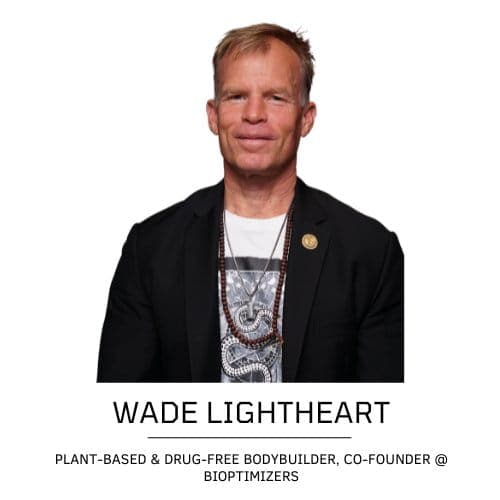
Wade Lightheart is a certified sports nutritionist adviser, 3-time Canadian natural bodybuilding champion, and cofounder of BiOptimizers. He competed at both the IFBB Mr. Universe and INBA Natural Olympiad by age 31, then came out of retirement at 50 to win the Open Men’s and Grand Masters categories at the INBA Ironman International before competing at the PNBA Natural Olympia. Six months after his last competition, he completed his first marathon in 4 hours. As president and director of education at BiOptimizers, Wade has spent over 30 years researching digestive optimization, enzyme therapy, and personalized nutrition strategies, culminating in The Ultimate Nutrition Bible with cofounder Matt Gallant.
Instagram | Facebook | X (Twitter) | LinkedIn
Related Episodes & Articles
- Episode 92: Recovery Secrets From $45K Spent Optimizing Sleep
- Episode 109: Whole Food Nutrition with PaleoValley
- Episode 104: Nootopia Nootropic Brain Supplements
- Article: BiOptimizers Supplements Review
- Article: Essential Amino Acids Guide
- Article: Biohacking Diet Guide
- Article: Gut Health Tips
Full Episode Transcript
Nick Urban [00:00:05]:
What if there was an all in one way to burn your body fat, to build muscle, to optimize your health, your productivity, your energy, your stress, your sleep, and a whole lot more? What if there was a way of customizing the latest and fanciest and best protocols to your unique biochemistry and, more importantly, to the constraints of your lifestyle and your specific goals? Well, I’m pleased to say that that system now exists. And in today’s episode, we will be diving deep into exactly what it is and some of the often overlooked principles when it comes to diet, nutrition, and overall health optimization. Hi. I’m Nick Urban, host of the Mindbody Peak Performance podcast. Today, I’m thrilled to be joined by Wade Lightheart.
Nick Urban [00:02:20]:
If you want to check out the previous episode I recorded with his cofounder, Matt, check out episode 92. In the show notes, you’ll find the links to the resources of everything we discuss.
Nick Urban [00:03:22]:
And if you wanna check out any of the other products that BioOptimizers carries, you can use the code urban. Alright. Ladies and gentlemen, sit back, relax, and enjoy my conversation with Wade Lightheart. Wade, welcome to Mindbody Peak Performance.
Wade Lightheart [00:04:08]:
Excited to get into it.
Nick Urban [00:04:10]:
Alright. Let’s start off with the unusuals or nonnegotiables you’ve done for your health, your performance, and your bioharmony.
Wade Lightheart [00:04:18]:
Okay. Great question. So, this morning, I got up, did my energization exercises, which would be kinda like a chi energy kinda thing. I did a neurovisor treatment. I did a nano v with a Cloud Pimp machine to kinda get my electromagnetics in the right space. Then, went down to the gym. I walked to the gym, weight training workout, walked back, and then had a really nice protein shake and some fruit this morning for breakfast.
Nick Urban [00:05:07]:
Yeah. And you’ve pulled out all the fancy biohacks and also done some of the basics. I love that you also just walk to and from the gym. Tell me about your background a bit.
Wade Lightheart [00:05:30]:
Yeah. So, I’m a kid that grew up in rural Canada, hunting, fishing, all that sort of stuff. I started training in a barn with old school York dumbbells and cement sets. I read about Arnold Schwarzenegger and wanted to live in California and have a great body and go to Mr. Universe myself.
Wade Lightheart [00:06:24]:
From there, I went to exercise physiology at the University of New Brunswick. In my 4th year, I asked my exercise physiologist about why high intensity training had dropped my resting heart rate by 10 beats per minute over 3 months. He couldn’t tell me. And I was like, I’m in the wrong place.
Nick Urban [00:07:58]:
Optimizing not just the longevity or the years you have on this planet, but the quality of that, which you guys call biospan?
Wade Lightheart [00:08:05]:
Biospan. Yes. In other words, how healthy can you live as you age? I had a life expectancy in the 1960s of about 67 years old, and it’s about 80 from there. I believe that if you start using some of the technologies and strategies, leveraging epigenetics, nutrigenomics, we can probably extend life expectancy into the mid nineties and a healthy version of that.
Nick Urban [00:10:26]:
One of the core principles of all the old systems is digestion. I know that you guys have focused on that heavily. Why did you focus on digestion, and why does it matter?
Wade Lightheart [00:10:49]:
When I came out of my 1st Mr. Universe contest in 2003, I gained 42 pounds of fat and water in 11 weeks. I met a doctor, Dr. Michael O’Brien, and he changed my life. He said, Wade, you’ve learned to build the body from the outside in. I’m gonna teach you to build the body from the inside out. He introduced me to the concept of digestive health, particularly around enzymes, probiotics, hydrochloric acid, amino acids, minerals.
Wade Lightheart [00:14:28]:
At that time, I was taking 250 grams of protein a day. I realized that everybody in the nutrition industry was making a common fallacious assessment. They think if you put a gram of protein in your body, that you’re getting a gram of amino acids delivered to your muscles. It’s not true.
Wade Lightheart [00:16:14]:
It took me 4 years to figure that out. I optimized my digestion first. Four years later, I went back to the world championships eating only 85 grams of protein a day.
Wade Lightheart [00:29:34]:
Enzymes and probiotics are essentially the only 2 things in your body that does any work. There’s over 25,000 different enzymes in the body. When it comes to digestion, you have 4 main categories: proteases for protein, amylases for carbohydrates, lipases for fats, and cellulases for plant matter.
Wade Lightheart [00:33:10]:
If you take a person with suboptimal blood sugar on a glucose monitor and I don’t change anything in their diet but add amylase enzymes before every meal, their blood glucose levels improve. We give people protease and their mood starts to improve. We give people amylase and their blood sugar improves.
Wade Lightheart [00:34:27]:
I’ve taken up to a 1,000 enzyme capsules in a day as an experiment. You never find the enzymes in the stool. So what is not being used becomes reabsorbed and redeployed in the system.
Wade Lightheart [00:39:49]:
Pottenger was talking about these cats. He basically tested cats and fed them enzymatic deficient food. By 3rd generation, the cats lost the ability to procreate, had strange genetic diseases, and exhibited strange sociological behavior. Doctor Howell predicted that we would end up in the same problem in 3 generations of humans, and here we are.
Wade Lightheart [00:41:40]:
If you go into a casino, they’ve optimized the place to extract as much money from you as possible. Biological optimization is the inversion of that mindset. I wanna live as long and as strong and as healthy as possible so that I can maximize my experience of life.
Wade Lightheart [00:45:42]:
In order for you to sustain a healthy, vibrant weight for your life, you have to pick the diet that’s right for you genetically, spiritually, culturally, emotionally, and psychologically, and correlates with your goals.
Nick Urban [00:59:48]:
What would you say are your top takeaways for losing weight and building muscle?
Wade Lightheart [00:59:48]:
All diets work for a while. The weight loss industry has done the world a disservice because it’s focused on calories in versus calories out. That works for a while, but the problem is your metabolism starts to adjust. Bodybuilders focus on boosting their metabolism while in a calorie restricted environment.
Wade Lightheart [01:01:22]:
When I came out of my 2003 Universe story, 42 pounds of fat and water in 11 weeks. My starvation response activated so high that I couldn’t stop eating. Most people who follow diets lose all the weight, but then they go back. We believe in setting a goal immediately after your final form. 97% of people who start a diet will end up gaining all the weight back within 3 years.
Wade Lightheart [01:03:49]:
For men, 500 to a 1,000 calorie deficit a day in combination between diet and exercise is optimal. That’s about 1-2 pounds of body fat a week. For women, about 250 to 500 calories is sufficient.
Wade Lightheart [01:08:07]:
12 weeks is sufficient enough for initial dieting. Then refeeds once a week provide a great psychological break and metabolic benefits.
Wade Lightheart [01:17:59]:
Blood Sugar Breakthrough is truly a breakthrough product. kApex, we were able to demonstrate in the lab that we completely knocked out all the negative components of seed oils if kApex is taken with it.
Wade Lightheart [01:19:02]:
We have MasZymes, the all encompassing super enzyme formula. Gluten Guardian is really great. P3OM is the best probiotic out there. Stress Guardian is a new product. Microbiome Breakthrough helps repair the intestinal lining. Magnesium Breakthrough. And Collagenius, a blend of mushrooms at 100 to 1 concentrations.
Nick Urban [01:27:08]:
If people wanna connect with you to try some BiOptimizer’s products, to grab your latest and greatest book, how can they go about that?
Wade Lightheart [01:27:19]:
Go to ultimatenutritionsystem.com/nickurban, you’ll get a discount. You can follow us on BiOptimizers on all the social media.
Wade Lightheart [01:28:03]:
My top 3 books: Doctor David Hawkins, who wrote Power versus Force. The complete works of the Buddha. And the essential teachings of Christ.
Nick Urban [01:29:25]:
We will wrap this one up today with a fun fact that the BiOptimizers tribe does not know about you?
Wade Lightheart [01:29:35]:
Maybe that I was an exotic dancer at one time.
Nick Urban [01:29:40]:
Wade Lightheart, thank you for joining me on the Mindbody Peak Performance Podcast.
Nick Urban [01:29:58]:
I hope that this has been helpful for you. If you enjoyed it, subscribe and hit the thumbs up. I love knowing who’s in the 1% committed to reaching their full potential. Comment 1% below so that I know who you are. For all the resources and links, meet me on my website at outliyr.com.

Comments