

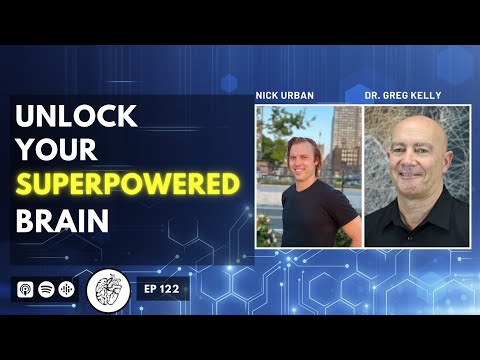
With Dr. Greg Kelly of Neurohacker Collective, Episode 122



What You’ll Learn
- How nootropics actually work: Dr. Kelly explains that nootropics provide the brain with resources to use energy more efficiently, improve neuroplasticity, and function at a higher level. [02:00]
- Caffeine & theanine synergy: Caffeine reliably improves attention, reaction time, and processing speed, while L-theanine smooths out jitteriness. Together they form the foundation of any quality nootropic stack. [09:00]
- Choline gap in the average diet: Most people fall 100-150 mg short of optimal choline intake daily. Citicoline (Cognizin) serves as a five-star precursor for acetylcholine, the neurotransmitter critical for working memory. [13:00]
- Ashwagandha’s motivation trade-off: A subset of users find ashwagandha too relaxing, sapping their drive. Neurohacker sources Nugandha, a cognitive-specific extract that preserves focus without over-sedating. [38:00]
- Tyrosine dose sensitivity: N-Acetyl L-Tyrosine (NALT) at 400-800 mg supports dopamine production, but people with high-protein diets may already have adequate tyrosine and experience overstimulation at standard doses. [45:08]
- Bell curve optimization strategy: Neurohacker’s co-founder Daniel Schmachtenberger set the goal of shifting the responder bell curve so more users become super responders while eliminating negative responders entirely. [39:36]
- Inverted-U dose principle: Like exercise, nootropic benefits follow an inverted-U curve. Staying conservative with doses and building in 2-day weekly “mind vacations” keeps users on the benefit side long-term. [55:00]
- Brain energy as the real test: The best measure of nootropic effectiveness is whether you still show up as a good version of yourself at the end of a demanding day, not just how you feel 1-2 hours after dosing. [43:00]
- 5-on-2-off cycling protocol: Dr. Kelly recommends 5 days on, 2 days off weekly, plus a full deload week every 2 months. This mirrors exercise periodization and prevents receptor desensitization. [57:00]
Why It Matters
Most people either overdose nootropics chasing a peak or dismiss them entirely after reading one skeptical WebMD article. Dr. Greg Kelly, a naturopathic physician with 30+ PubMed-indexed journal articles and Director of Product Development at Neurohacker Collective, explains exactly how to match ingredients to your neurochemistry, dose conservatively, and cycle strategically so your brain performs better at 6 PM than it does without supplementation.
Who Should Listen
- Professionals who rely on sustained focus for demanding cognitive work and want to eliminate the afternoon brain energy crash.
- Biohackers experimenting with nootropic stacks who need a formulator’s framework for choosing ingredients, doses, and cycling protocols.
- Health-conscious individuals skeptical of nootropics who want to understand the science from a credentialed naturopathic physician.
Nootropic Stack Design From a Neurohacker Formulator
Dr. Greg Kelly, Director of Product Development at Neurohacker Collective and a naturopathic physician with 30+ PubMed-indexed journal articles, joins the High Performance Longevity podcast to break down how nootropic supplements actually work. With expertise spanning nootropics, anti-aging medicine, sleep, and chronobiology, Dr. Kelly brings a formulator’s perspective rarely heard outside the lab.
The conversation covers the science of ingredient stacking: why caffeine reliably boosts attention but inconsistently helps working memory, how citicoline fills the choline gap most diets create, and why ashwagandha extracts differ dramatically depending on how they’re processed. Dr. Kelly shares Neurohacker’s bell curve optimization strategy, pioneered by co-founder Daniel Schmachtenberger, which aims to shift more users into the super-responder category while eliminating negative responses entirely.
You’ll walk away with a practical nootropic evaluation framework: how to determine your ideal dose through conservative self-experimentation, why cycling 5 days on with 2 off prevents diminishing returns, and how to use end-of-day cognitive performance as your single best biomarker for whether a stack is working. Dr. Kelly also troubleshoots a real-time example of NALT sensitivity, demonstrating how a formulator thinks through individual ingredient reactions.
Key Terms Quick Reference
- [13:00] Cognizin (citicoline): A patented form of CDP-choline that serves as a precursor for the neurotransmitter acetylcholine. Rated a five-star ingredient by Dr. Kelly for its reliable effects on focus and memory.
- [20:00] Inverted-U curve: A dose-response model where benefits increase up to an optimal point, then decline with further increases. Dr. Kelly applies this framework to both exercise and nootropic dosing.
- [30:00] N-Acetyl L-Tyrosine (NALT): An acetylated form of the amino acid tyrosine that supports dopamine and norepinephrine production. Effective at 400-800 mg, though some individuals with high-protein diets may not need additional precursors.
- [38:00] Nugandha: A specialized ashwagandha extract formulated by removing the more sedating GABA-active compounds. Used in Qualia Resilience to provide stress support without sacrificing motivation.
- [39:36] Bell curve optimization: Neurohacker’s formulation philosophy, coined by co-founder Daniel Schmachtenberger. The goal is to shift the normal distribution of user responses toward more super responders and fewer non-responders.
- [01:02:00] Phosphatidylserine: A phospholipid that makes up a significant portion of neuronal cell membranes. Classified by Dr. Kelly as a “brain essential nutrient” that won’t show up as a flashy study result but is critical for long-term neuronal health.
- [01:04:00] Rhodiola rosea: A Balkan-origin adaptogenic herb that provides more energizing stress support compared to ashwagandha. Recommended by Dr. Kelly as a beginner-friendly nootropic stack addition.
How Do You Build an Effective Nootropic Stack?
The short answer
Start with caffeine, L-theanine, and a choline source as your foundation, then layer in complementary ingredients based on whether your cognitive bottleneck is motivation (dopaminergic) or calm focus (GABAergic).
What Kelly found
Dr. Kelly rates caffeine, L-theanine, and Cognizin (citicoline) as his three clear five-star ingredients. Caffeine reliably moves the needle on attention and reaction time across studies. However, its effects on working memory are mixed, depending heavily on the user’s habituation level and sleep status. This is where stacking becomes critical: pairing caffeine with a choline precursor addresses the cognitive domains caffeine alone misses. Dr. Kelly also highlights the overlooked importance of phosphatidylserine and DHA as structural components that neurons depend on for membrane health.
What to do about it
Begin with caffeine and L-theanine, then add 100-150 mg of supplemental choline if you don’t eat eggs regularly. From there, identify your weak link: if you struggle with motivation and lethargy, consider dopamine-supporting additions like tyrosine or mucuna. If you’re more on the frantic, anxious end, look at GABAergic support like Nugandha ashwagandha or rhodiola. Always start at the lowest dose and work upward.
“Caffeine in studies just does a really robust job at attention and processing speed. Working memory, caffeine is much more mixed. So then for me, it’s like, what’s an ingredient that might stack with caffeine that’s much more predictably going to work on that piece?” – Dr. Greg Kelly
Related: Brain Supplements for Adults
Why Does Ashwagandha Kill Motivation in Some People?
The short answer
Standard ashwagandha extracts like KSM-66 and Sensoril contain GABA-active compounds that make a small subset of users feel over-relaxed, reducing their drive to get things done.
What Kelly found
Dr. Kelly observes that while most people respond well to ashwagandha, a thin sliver of users report it feels like “kryptonite for motivation.” This shows up in Reddit comments and clinical feedback. The issue comes from compounds in the extract that act on the GABA system, promoting relaxation at the expense of alertness. Neurohacker deliberately chose KSM-66 for Qualia Night (where relaxation is the goal) but opted for Nugandha in Qualia Resilience. The Nugandha extraction process specifically removes the more sedating GABA-active compounds while retaining the stress-adaptive benefits.
What to do about it
If ashwagandha saps your motivation, try a product like Qualia Resilience that uses a cognitive-specific extract, or skip ashwagandha entirely and use rhodiola rosea for adaptogenic support. Rhodiola provides a more energizing profile. You can also experiment with Qualia Focus, which achieves nootropic effects through a different ingredient pathway. The key insight: be attached to how you’re responding now, not how you responded before.
“It almost feels like they’re not as motivated. Like it’s kryptonite for motivation for them. And that doesn’t mean ashwagandha is bad for everyone, but for those people, it’s not the motivating thing.” – Dr. Greg Kelly
Related: Nootropics Beginners Guide
How Should You Dose & Cycle Nootropics Safely?
The short answer
Use conservative doses, cycle 5 days on with 2 days off, and take a full deload week every 2 months to stay on the upward slope of the inverted-U curve.
What Kelly found
Dr. Kelly uses the inverted-U dose-response curve as his primary safety framework. The x-axis represents intensity (dose), and the y-axis represents benefit. Just as running a marathon every two weeks would wreck your body, pushing nootropic doses too high or using them without breaks risks moving past the peak into diminishing returns. He compares safe nootropic use to walking 20 minutes daily: conservative intensity over a long time period maximizes benefit. His personal Qualia Mind dose is 4 capsules rather than the standard 7, because through self-experimentation he found that sufficient.
What to do about it
Start with fewer capsules than recommended and work upward only if needed. Build in 2 off-days per week and take a full break every 2 months. Nick adds that he cycles off caffeine for 2 weeks every quarter and rotates off other nootropics for a separate 2-week period. This resensitizes your neurotransmitter systems and lets you achieve better results from smaller doses over time.
“Whenever you’re concerned about safety, do less and then take many vacations more.” – Dr. Greg Kelly
Related: Nootropic Vendors Review
The Kelly Nootropic Optimization Protocol
Use this framework to design, dose, and evaluate any nootropic stack based on Dr. Kelly’s formulation principles.
- Establish your foundation: Start with caffeine, L-theanine, and a choline source (citicoline or alpha-GPC). These three ingredients cover attention, calm focus, and working memory.
- Identify your cognitive bottleneck: If you lack motivation and feel lethargic, lean toward dopamine precursors (tyrosine, mucuna). If you’re anxious or mentally frantic, prioritize GABAergic support (ashwagandha, rhodiola).
- Start with the minimum effective dose: Dr. Kelly uses 4 capsules of Qualia Mind instead of the standard 7. Begin low and increase only if benefits plateau.
- Account for dietary overlap: High-protein eaters likely get adequate tyrosine already. Egg consumers may not need supplemental choline. Audit your diet before adding precursors.
- Cycle strategically: Take 5 days on, 2 days off weekly. Every 2 months, take a full deload week. This mirrors exercise periodization and prevents receptor downregulation.
- Measure end-of-day performance: The real test is whether you’re still a good version of yourself at 6 PM. Morning energy is easy. Sustained cognitive bandwidth is the meaningful biomarker.
- Rotate products periodically: Swap between different stacks (Qualia Mind, Qualia Focus, Qualia Resilience) to address different cognitive needs and avoid adaptation.
Common nootropic mistakes
- Maxing out doses from day one: More is not better. Conservative dosing keeps you on the upward slope of the inverted-U curve.
- Never cycling off: Taking nootropics 7 days a week indefinitely risks diminishing returns and receptor desensitization.
- Ignoring context: Your response to a compound when sleep-deprived differs from when well-rested. What worked before may not work now.
Source: Dr. Kelly’s Nootropic Optimization Protocol, Neurohacker Collective
FAQ
Are nootropic supplements safe to take daily?
Nootropics as a category vary widely. Dr. Kelly recommends conservative dosing and cycling 5 days on, 2 days off weekly. He also suggests a full deload week every 2 months. Staying at the lower end of dose ranges and building in breaks keeps you on the benefit side of the inverted-U dose-response curve.
What are the best beginner nootropic ingredients?
Dr. Kelly recommends starting with caffeine, L-theanine, and a choline source like citicoline. Add an adaptogenic herb like rhodiola for energizing stress support. A little magnesium and B vitamins round out the foundation. These ingredients appear in products like Qualia Focus and Qualia Resilience.
Why does ashwagandha reduce motivation in some people?
Standard ashwagandha extracts like KSM-66 and Sensoril contain GABA-active compounds that promote relaxation. A small subset of users find this over-sedating, describing it as kryptonite for motivation. Neurohacker addresses this with Nugandha, a cognitive-specific ashwagandha extract that removes the most sedating compounds.
How much choline do most people need from supplements?
Most people fall about 100-150 mg short of optimal choline intake through diet alone. Dr. Kelly considers citicoline (branded as Cognizin) a five-star ingredient for bridging this gap. People who eat eggs regularly may already get sufficient choline and need less or no supplementation.
What is the best way to test if a nootropic is working?
Dr. Kelly says the real test is end-of-day cognitive performance. Notice whether you still show up as a good version of yourself at 6 PM after a demanding day. Morning energy is easy to achieve. Sustained brain bandwidth through the afternoon and evening is the meaningful biomarker.
How does Qualia Mind differ from Qualia Focus & Qualia Resilience?
Qualia Mind is designed to overcome lethargy with dopamine-forward ingredients like NALT and mucuna. Qualia Focus is a simpler two-capsule formula without those precursors. Qualia Resilience targets people whose focus problem stems from mental frantic-ness and stress, using a cognitive-specific ashwagandha extract.
Can you take too much tyrosine from diet & supplements combined?
Yes. People with high-protein diets already get adequate tyrosine, which is a precursor to dopamine and norepinephrine. Adding supplemental NALT on top of a protein-rich diet may cause overstimulation or a robotic feeling. Dr. Kelly recommends reducing protein intake or lowering the supplement dose to find the right balance.
Products, Tools, & Resources Mentioned
Outliyr independently evaluates all recommendations. We may get a small commission if you buy through our links (at no cost to you). Thanks for your support!
Supplements
Qualia Mind: Neurohacker’s flagship nootropic stack with 28 ingredients including caffeine, L-theanine, Cognizin, NALT, and mucuna. Best for people who need motivation and sustained focus. Use code URBAN.
Qualia Resilience: A stress-focused nootropic with Nugandha ashwagandha, designed for people whose focus problems stem from mental frantic-ness rather than lethargy.
Qualia Night: Neurohacker’s sleep-targeted formula featuring KSM-66 ashwagandha. Promotes deep relaxation for nighttime use.
Qualia Life: Neurohacker’s mitochondrial and cellular energy support formula for comprehensive daily vitality.
Neurohacker Collective: The parent company behind the Qualia line. Follow them on Instagram for new study breakdowns and community content. Use code URBAN.
Books & references
Antifragile by Nassim Nicholas Taleb: Dr. Kelly’s top pick for models on thinking about uncertainty in health. Also recommends Fooled by Randomness and Skin in the Game from the same author.
The Prophet by Kahlil Gibran: Short vignettes Dr. Kelly values for timeless wisdom that holds up over decades of rereading.
The Lord of the Rings by J.R.R. Tolkien: Dr. Kelly’s most re-read book series, valued for its lessons on noble perseverance through obstacles.
Thinking, Fast and Slow by Daniel Kahneman: Referenced during the conversation about cognitive biases and how context shapes our interpretation of study results.
Molecules of Emotion by Candace Pert: Mentioned in the context of understanding how neurochemistry influences mood, motivation, and cognition.
Reversing Alzheimer’s by Heather Sandison: Referenced in the context of brain health optimization and neurodegenerative disease prevention.
People & organizations
Daniel Schmachtenberger: Co-founder of Neurohacker Collective who originated the bell curve optimization formulation philosophy.
About Dr. Greg Kelly
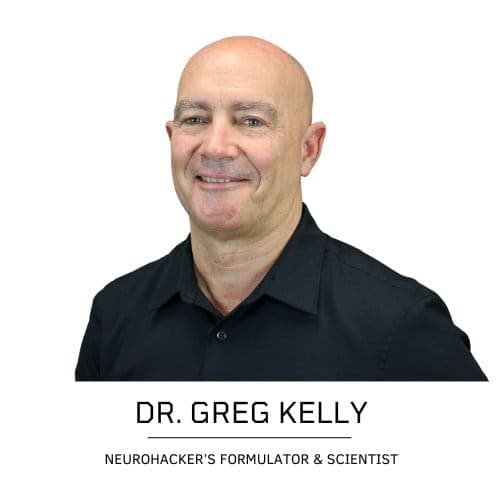
Dr. Greg Kelly is the Director of Product Development at Neurohacker Collective, the company behind the Qualia line of nootropic and longevity supplements. He’s a naturopathic physician and author of the book Shapeshift. Dr. Kelly served as editor of the journal Alternative Medicine Review and has published 30+ journal articles indexed on PubMed. He taught advanced clinical nutrition at the University of Bridgeport College of Naturopathic Medicine. His expertise spans nootropics, anti-aging medicine, weight management, sleep, and chronobiology of performance. Follow Neurohacker on Instagram for study breakdowns and product science.
Instagram | YouTube | X (Twitter) | Facebook | LinkedIn
Related Episodes & Articles
- Episode 119: Neurohacker Qualia Synbiotic Supplement
- Episode 80: Ayurveda, Modern Longevity Science & Neurohacker Qualia Senolytics
- Episode 104: Nootopia Nootropic Brain Supplements
- Episode 116: Biohacking Supplements, Polyphenols, NAD & Nootropics
- Article: Brain Supplements for Adults
- Article: Nootropics Beginners Guide
- Article: Nootopia Nootropics Review
Full Episode Transcript
Nick Urban [00:00:06]: What are brain boosting nootropic supplements, and do they actually work? In this week’s episode of the Mind Body Peak Performance podcast, that is exactly the topic that we are going to explore together. You’ll learn about how nootropics work, the benefits, the risks and side effects, common ingredients, how to optimally combine ingredients to get a synergistic effect, the one single most important factor you can use to determine if your biology is currently responding well or poorly to a nootropic, and then how to design your own nootropics experiments.
Nick Urban [00:00:42]: Later in the episode, we discussed one particular ingredient that does not do well in my system for whatever reason, and our guest broke down how he would evaluate the issue, and we got sidetracked before we could really elucidate the actual process. So you can use this methodology or framework later in your own experiments to make sure that everything goes well and you find the source of any particular possible problems.
Nick Urban [00:01:06]: Our guest this week is Dr. Greg Kelly. He’s the Director of Product development at Neurohacker Collective, a Naturopathic physician, and author of the book Shapeshift. He was the editor of the journal Alternative Medicine Review and has been an instructor at the University of Bridgeport in the College of Naturopathic Medicine, where he taught classes in advanced clinical nutrition, counseling skills, and doctor patient relationships. Dr. Kelly has published hundreds of articles on natural medicine and nutrition, contributed three chapters to the textbook of natural medicine, and has more than 30 journal articles indexed on PubMed. His areas of expertise include nootropics, antiaging and regenerative medicine, weight management, sleep, and the chronobiology of performance and health.
Nick Urban [00:01:53]: This is the third episode I’ve recorded with the folks at Neurohacker Collective. You can find the previous episodes at outliyr.com. If you haven’t yet, hit the subscribe button to make sure you get every future episode.
Nick Urban [00:02:06]: Dr. Greg Kelly, welcome to the podcast.
Dr. Greg Kelly [00:02:09]: Thanks for having me, Nick. I’m excited to be here.
Nick Urban [00:02:11]: I’m really excited to chat with you. Let’s start with what are nootropics and how do they actually work?
Dr. Greg Kelly [00:02:19]: So nootropics, the word was coined by this Romanian scientist back in the 1970s. He created a drug called piracetam, and the word roughly translates to mind bending or mind turning. And in his idea of what a nootropic was, it had to enhance cognition, but it also had to have basically no side effects and be super safe. So that was his sort of original parameters. Now the word’s been applied much more broadly, right, where it’s more like anything that might help you think more clearly, be more focused, have more mental energy. I tend to think of nootropics as resources for the brain to use energy more efficiently, improve neuroplasticity, and function at a higher level.
Nick Urban [00:03:05]: And what are the main categories of nootropics? Because there’s a wide range of them.
Dr. Greg Kelly [00:03:11]: Yeah, so I think of them in a few buckets. The first would be, and caffeine is, you know, the world’s most common nootropic, right? So it’s stimulants, things that are going to give you more energy, more alertness. The second bucket would be what I think of as building blocks. So these are precursors, amino acids like tyrosine, things like choline that the brain needs to make neurotransmitters. And then the third would be adaptogens and herbs. So things like ashwagandha, rhodiola, ginkgo that have been used traditionally and now have clinical research. And the fourth, I would say, is more the pharmaceutical end. So racetams, modafinil, things like that. And then there’s this whole new category emerging around things like peptides. So it keeps getting broader.
Nick Urban [00:04:02]: That is a wide range. So let’s focus specifically on the more natural side. When you’re designing a nootropic formula at Neurohacker, what’s your thought process? Like, how do you decide which ingredients go together?
Dr. Greg Kelly [00:04:18]: So Daniel Schmachtenberger, who is one of our co-founders, has this philosophy around complex systems science. And one of the things that resonated with me when he first shared it is that the brain is this super complex system, and if you just hit one pathway really hard, you might get a short-term benefit, but you’re going to create imbalances. So our philosophy is more like, let’s support many pathways at lower doses. And that’s why Qualia Mind has 28 ingredients. Some people look at that and think, that’s a lot. But the idea is each one is at a dose that’s enough to move the needle but not so much that you’re hammering one system. So we’re trying to upregulate across multiple systems simultaneously.
Nick Urban [00:05:10]: And how do you know if those ingredients are actually synergizing or potentially canceling each other out?
Dr. Greg Kelly [00:05:18]: Great question. So we do our own clinical trials, usually pilot studies, where we’re testing the formula on real people and measuring cognitive outcomes. And we’ve done quite a few of these now. But even before that, it starts with the research. Like, I’ll look at what each ingredient does individually, then look at what’s known about combinations. Caffeine and theanine is a classic example. Individually they both do things, but together theanine takes the edge off caffeine’s jitteriness while preserving the focus benefits. So that’s a synergy you can see in studies. And then there are things where you have to reason from mechanism. Like, if I know this ingredient supports choline production and this one supports acetylcholine release, they should work together because they’re hitting different parts of the same pathway.
Nick Urban [00:06:08]: Makes sense. So speaking of caffeine, it’s in Qualia Mind. A lot of people are sensitive to caffeine. How do you handle that?
Dr. Greg Kelly [00:06:17]: So we make a caffeine-free version of Qualia Mind for exactly that reason. But I think caffeine is one of those things where the dose really matters. We use 90 milligrams in Qualia Mind, which is roughly a cup of coffee. And the research is pretty clear that in that range, most people get benefits without significant downsides. Where caffeine becomes problematic is when people are consuming 400, 500, 600 milligrams a day. And then you add a supplement with more caffeine on top. So context matters. If someone’s already drinking three cups of coffee, they probably want the caffeine-free version. But for someone who’s maybe a one-cup-of-coffee person, adding 90 milligrams isn’t going to push them over that edge.
Nick Urban [00:07:05]: What role does choline play in all of this? Because I see it in a lot of nootropic formulas.
Dr. Greg Kelly [00:07:12]: So choline is essential for making acetylcholine, which is the neurotransmitter most associated with memory and learning. And the reality is most people don’t get enough choline in their diet. The recommended intake is around 550 milligrams for men, and the average person gets maybe 300 to 400. So there’s this gap. And when you’re asking your brain to do more, to be more focused, more creative, you’re burning through more acetylcholine. So providing additional choline helps ensure the brain has what it needs. We use Cognizin, which is a branded form of citicoline, and it’s one of my favorite ingredients. I’d put it as a five-star ingredient for sure. It’s been well studied, and it provides both choline and cytidine, which has its own brain benefits.
Nick Urban [00:08:02]: But is there a point where too much choline becomes a problem?
Dr. Greg Kelly [00:08:07]: Absolutely. And this gets back to that inverted U curve I think about a lot. So imagine an upside-down U. On the left side, as you increase the dose, you get more benefit. At the top, you’re at the sweet spot. And then on the right side, more actually starts making things worse. With choline, some people who take too much can feel sort of depressed or foggy or just off. And the thing is, your diet matters here. If you’re eating four eggs a day, you’re probably getting plenty of choline from food. So adding a big dose on top could push you past that sweet spot. That’s why we try to formulate for the average person’s gap, not for the maximum possible dose.
Nick Urban [00:08:52]: That’s a great point. And I think a lot of the nootropics community misses that context-dependent piece. What about some of the other key ingredients? You mentioned adaptogens earlier.
Dr. Greg Kelly [00:09:03]: Yeah, so adaptogens are fascinating because they work bidirectionally, meaning they can help your body adapt in either direction. If you’re too wired, they help calm you. If you’re too tired, they help energize you. But different adaptogens have different tendencies. Ashwagandha tends to lean more toward the calming side. Rhodiola tends to lean more toward the energizing side. And within ashwagandha, different extracts can be quite different. KSM-66 and Sensoril are the two most well-known standardized extracts, and they’re both great, but they tend to have more of those GABA-active compounds that promote relaxation.
Nick Urban [00:09:52]: So when I look at the tyrosine research, I see these military studies where they give really high doses. Can you talk about that context?
Dr. Greg Kelly [00:10:01]: Yeah, I think understanding how systems interact together may change. Like a three star from its human study on it to like, oh, this is a core thing, we need to make sure it’s supported. And the other thing, quite often, again, you’ll see with a lot of building block types of things, like these are your amino acids. The studies often will be really high doses and that’s used alone. So, like Tyrosine as an example. One of my favorite studies on Tyrosine was I don’t know if they were special Forces or just regular pilots going through search and rescue training, but as part of that, they get captured and interrogated. And in that particular study, they gave a high dose of Tyrosine and then put these people through this intense interrogation. And the ability to sustain anger was a lot better. Like, you should be angry. Right. When getting beaten up and mentally harassed, it gave them more resources to sustain that. And Tyrosine is a building block. For something like dopamine, but also for epinephrine. And it was funny. I saw then some influencers misunderstand that study, like, oh, don’t take high amounts of Tyrosine. It’ll make you angry. It’s like, no, it allowed you to be more angry when that was the right thing to be under the circumstances, which is very different than taking it and make you angry. So that’s the other piece, too, when I read studies is, what’s the context? Because often I see that piece missed a lot.
Nick Urban [00:32:41]: Unfortunately, there’s a lot of those studies where it’s like, I’ve looked through them, like, oh, this is so promising, so cool. Then I’ll look at the subjects that they’re studying, like, I don’t know if that applies to me, and it may.
Dr. Greg Kelly [00:32:52]: Yeah, and then that’s exactly the thing. If you’re already, again, let’s just use tyrosine and dopamine. If your dopamine system is in a good place and you take something that gives your dopamine system way more precursor than it needs, it can go either way, right? It may like, oh, that was good. Or it may be like, no, that was too much. It gave me too much. I got too amped up or too robotic feeling. And that’s, I think, a really important point. Where are you starting from? Changes, what’s going to happen for you.
Nick Urban [00:34:24]: A couple of minutes ago, you mentioned that when you’re designing studies, you look at certain endpoints and you decide if the formula makes sense based on what you’re seeing. As a result, there like, say, reaction time or memory, like working memory. How do you decide those? And are you ever worried that you might miss something that’s important?
Dr. Greg Kelly [00:34:55]: There are certain things, like caffeine, since we mentioned that, like caffeine where it’s most, I would say most reliable in terms of where it’s going to move the needle is in and think of, again, go back to that attention domain. Right. So this is your ability to get focused and avoid distractions and to have quicker or faster reaction times and processing speed. Like caffeine in studies just does a really robust job at that you just see study after study, it does well, working memory. Caffeine is much more like mixed would be the fairest way. Like in some studies it improved it, others it did nothing. And then you start to think, okay, well, why? And then the general thought is, again, that idea. There’s a range. If someone’s really habituated to caffeine versus new to caffeine, that makes a difference. Caffeine is much more likely to do positives on executive function when you’re sleep deprived than if you’re rested. Like, that contextual. And so then for me, it’s like, okay, well, I can rely on caffeine to do these things, but not so much the working memory. What’s an ingredient that might stack with caffeine that’s much more predictably going to work on that piece? Because caffeine may, but it may not. It’s more context.
Dr. Greg Kelly [00:36:18]: And so that’s how I’ll think of these different cognitive skills and be looking to see if an ingredient is good at a certain thing and then, okay, is it like ashwagandha as an example? I love ashwagandha. We have it in a couple of products, but there’s a subset of people that ashwagandha over time is almost too relaxing. So what you’ll see in comments sometimes on reddit, and this isn’t most people, but it is some people, is that it almost feels like they’re not as motivated. Like it’s kryptonite for motivation for them is a way to think about it. And that doesn’t mean ashwagandha is bad for everyone, but for those people, it’s not the motivating thing.
Dr. Greg Kelly [00:37:02]: So I think of Ashwagandha. We have it in Qualia Night as an example. We have it in our stress product Qualia Resilience. But even in Qualia Resilience we sourced it’s called Nugandha, and it was an ashwagandha made to be a cognitive ashwagandha. So what they did is when they made the extract, they extracted it in a way so that the more common things, the things that work on more of the GABA system were things they extracted out. Like they wanted those other things that help with stress, but not those things that were too relaxing.
Dr. Greg Kelly [00:37:38]: So we think of Qualia Resilience as an example, as a nootropic for stress, right? Like I’ve taken at the beginning of the day, every day for a month, instead of Qualia Mind, I’m still productive alert all day, right? It helps with stress. But we didn’t want to sacrifice focus to get more stress relief. We wanted our cake and to eat it too, right? So that caused us to go for a different ashwagandha, where Sensoril and KSM 66 are great ashwagandha, but they would be much more the ones that an individual, and again, this isn’t most individual, it’s a thin sliver would take and feel like, oh, it’s sapped my motivation to get things done.
Dr. Greg Kelly [00:38:16]: So, like I said, we use KSM 66 at night because that’s for nighttime, right, where you want relaxation. We don’t really care if someone’s crazy willpower motivated at night. We want what little they have just to be turned into getting enough sleep. Daniel Schmachtenberger is one of our founders, and he was the one that said this to me at the get go when he hired me. What I want is that I think that there’s always super responders or potentially super responders, responders, non responders, and negative responders. And what you’d see in most things is a bell curve with most people as regular responders and non responders. And what I want to do is shift the bell curve. So I want way more super responders than you’d normally see. I don’t want the negative responders and I’m okay if we get like one out of five people that are non responders, as long as we shift things in that direction. So that’s always our goal.
Nick Urban [00:39:36]: So two things here. How do you guys go about shifting the curve to get more super responders? And then also on a personal level, are there ways besides trial and error, which is what I primarily do to determine if you’re going to be a super responder to any particular ingredient or to any class of ingredients? I’ve previously used something called the Braverman test, which is like a long questionnaire and assesses your neurotransmitter dominances and deficiencies. And lo and behold, I do very well with Gabaergics, the compounds that increase GABA. And they tend to work great for me, just as the questionnaire predicted. But I get that it doesn’t work perfectly for everyone. Are there any tools or ways that you like to look at it?
Dr. Greg Kelly [00:40:21]: So there was two questions in there. Let’s go to the Braverman first. So I think of things like that as useful. They’re not perfect, right, but they might give us an insight that we can build off. And genetics potentially, right? But that’s a lot of that still being sorted out. And then the other piece again, I go back to context. So I spent most of my time in the Navy, fairly sleep deprived, not by choice, but just by shift work. There was about a two year period. I stood a watch in engineering that only two of us could stand. So when our ship had its boilers lit off, which was a fair amount of time, we called it Port and Starboard. About 6 hours on, 6 hours off watch. And then you still had to do your job, you still had to exercise, eat, you name it, right? So you never even got like a full six hour window in 24 hours to sleep.
Dr. Greg Kelly [00:41:18]: The Greg that might respond to something as a super responder in that context may be different than the Greg that’s getting enough sleep and that pays attention to circadian rhythms and other things. So context always matters and what I’ve seen fairly routinely in my life. So one of my mentors was of the opinion that there can be a big difference between a diet that takes you from the diet you are on to healthier and a diet that will then keep you at healthier, right? And so I always try to think in terms of let’s not get too attached to the tool, right, to the thing that we’re using to get better health. Because our response to that may change. Let’s pay attention to how we’re responding.
Dr. Greg Kelly [00:42:05]: And so I know, like for nootropics, for me, when I first started as an example on Qualia Mind, there was a few things I paid attention to every day. But one was that tendency that many people have to that post lunch mid afternoon slump, right? Like that almost feeling like oh, my brain is a little bit like running in slow motion, right? Maybe even needing a nap. And so I paid a lot of attention to that. What happens when I take Qualia mind? And to this day still, if I take Qualia Mind, I just power right through. I never have personally, I don’t experience that.
Dr. Greg Kelly [00:42:40]: I think most nootropics, you would feel something fairly shortly, right? Like an hour, two hours, like, oh, I’m ready to go, right? So I pay attention to that. But we talked about brain energy earlier in the day and a story that I like to share is about my dad. So my dad, I grew up in about 35 miles outside of Boston near Plymouth, Mass. Little beach town. But my dad had a crazy commute to Boston, 35 miles, but probably two hour drive each way. And was an executive, was in charge of a 5000 person engineering company. So demanding job.
Dr. Greg Kelly [00:43:10]: And my recollection of my dad, he’d come home and be like, we’d be on eggshells. Because sometimes, like, best case, it would be neutral. He’d just do his own thing. But other times he would just be more irritable, right? So something that we would do would be upsetting to him, right? We’d get yelled at or told to quiet down, whatever. And the way I think of that now with what I know about the brain is my dad’s brain had just depleted most of the resources, right, that would allow him to be that better version of himself that he was at the beginning of the day.
Dr. Greg Kelly [00:43:42]: And that if he was given an opportunity to rest and recover, the brain does a good job of then moving things from where they weren’t used to where they’re more needed, right? So if my dad was given that space to shine his shoes and tinker, my dad liked to do things with his hands, like leather work and things like that, then he would get into that better space. So, long story short, one of the things I think is a great test for nootropics, like Qualia Mind, is at the end of our day, are we still able to be a better version of ourselves, right? Because that’s the test, right? Did the brain have more resources to get through the day and still at the end, when we show up for our significant others, instead of them getting the worst version of ourselves for an hour or two, are they still getting a decent version? So those are the things I pay attention to.
Nick Urban [00:45:08]: I have a question for you about how you would approach this. And it’s going to be, I’m sure, unique to me, but hopefully your thinking, your methodology will help people. So there’s an ingredient in Qualia Mind called N acetyl L-tyrosine, or NALT for short. And I first used that probably about ten or so years ago, and I bought like a 50 grams bag of it and used a normal dose and used it one time and felt like a robot and never touched it again after that. And I’ve noticed when I take Qualia Mind, every once in a while, I’ll feel that same robotic feeling, but for the most part I don’t. And I’m curious how you would approach this and figure out what about that compound is causing this effect.
Dr. Greg Kelly [00:46:08]: So not just for the audience. So N-acetyl tyrosine is a form of tyrosine, and tyrosine is mostly thought of as the building block for Dopamine and for norepinephrine. So it could be either of those systems, right? Those are pretty important systems for especially daytime brain performance. And then NALT doesn’t have many human studies, very few, even relatively few animal studies. So most studies are just plain tyrosine, not the acetylated NALT version. And like, I guess NALT versus tyrosine mostly that’s the end of one. Like the self experimented people, like nootropic communities that people will oh, for some reason, NALT at lower doses, I seem to feel more dopaminergic than I do with tyrosine. So usually you think of NALT as something that 400, 800 milligrams is sufficient.
Dr. Greg Kelly [00:47:02]: But like I mentioned, with choline, we try to be in the sweet spot for choline, making up for that gap that the average person isn’t getting their diet. But if someone was eating, say, like a lot of eggs every day, the chances that they need choline are lower. Right. So my first thing is your diet high in protein?
Nick Urban [00:47:35]: Yeah.
Dr. Greg Kelly [00:47:36]: In which case you’re probably more than adequate in tyrosine because tyrosine is relatively high. And so you maybe don’t need any of that precursor tyrosine. Then I would think, oh, if they’re getting this once in a while then. Are you taking a break from Qualia Mind periodically, like I said earlier? Like five days on, two off? And then one of the things with Qualia we often do ourselves is every about two months I cycle off it just like I would do a deloading week for exercise and just take a break from it.
Dr. Greg Kelly [00:48:08]: And then the last is often our recommendation is seven capsules a day. And that’s the most common dose that customers take. But my most common dose is four because through trial and error, I found, like, oh, four is sufficient for me to have a really productive day. So, I mean, I could take seven. I don’t need seven. But if, you know, driving to Las Vegas for something or had to do a trade show or something much more demanding for my brain, then I’ll do seven those days. So the way if I was working with you as a patient back when I was in practice, my first thing would be, okay, let’s do less. You probably don’t need as much of this. So instead of seven capsules, I often like to err on the conservative side. So let’s just go to two and see how you do on two capsules.
Nick Urban [00:49:22]: Based on all this, what I’m imagining is I think I have tried the non-acetylated version of Tyrosine, just normal L-tyrosine in Alpha Brain or something. And it had the same effect. So it’s probably not just the acetylated version, it’s both versions. So for me, I guess the first thing I would try is to, I guess, the day before and the day of consume a little less protein in my diet and make sure I’m not getting too much of any one amino acid, like L-tyrosine from diet. And then to see how I react to that. My sweet spot tends to be around two to three capsules anyway.
Dr. Greg Kelly [00:50:07]: And then the other thing, too is so Qualia Focus, as an example, is another one of our nootropic stacks. And I am like, almost 100% certain that has no NALT in it. Right. That was just built in a different way to be a two capsule thing, right. And a precursor like NALT you need enough of to make a difference. So that would be a different experiment. Try Qualia Focus. Maybe that works. It’s a simpler nootropic, but it works great.
Dr. Greg Kelly [00:50:38]: And then the other one would be when I think of what prevents most people from getting into that flow state that focus and this oversimplifies it. But think of one group, the challenge is that they don’t have the motivation, right? They’re almost like a little lethargic, right? It’s just not that exciting to get into. Another group, what’s causing them from getting focus is their brain is too frantic, there’s almost too much going on. Right?
Dr. Greg Kelly [00:51:05]: So Qualia Mind helps move people towards focus from either end, but it was more created to overcome that lethargy to actually think of adding motivation and willpower in with Nootropics, right? Like the NALT and the mucuna and things like that that are more like dopamine forward. Where Qualia Resilience, our stress product, was more designed for helping people that were on that frantic end come to balance.
Dr. Greg Kelly [00:51:32]: So Qualia Resilience acts as a nootropic, it’s our stress product, but it will help with focus for a lot of people because for that end they actually don’t need those things that would help to overcome lethargy. They need something that’s going to somewhat, and this is oversimplifying, but quiet that frantic activity of the brain. And so for me, I’ve done like a month straight of only Qualia Resilience instead of Qualia Mind or Qualia Focus. And it still works, right? I still am productive.
Nick Urban [00:52:47]: Yeah, I found that. And I still really like the effects I get from Qualia Mind when I don’t have the side effect. But when I have the side effect, it tints the way I see things. All right, so I’ve gotten some questions from my audience about the side effects and safety of nootropics and particularly of the Qualia line. They were just curious about how this fares and how you make sure that this is a safe product.
Dr. Greg Kelly [00:53:39]: So Nootropics is a category as opposed to a thing, right? And I think of it as a category primarily. Focus, motivation, memory would be the things people usually want when they’re talking about a nootropic. But like racetams, which are more drug-like compounds would be a very different nootropic than caffeine, which would be different than ginkgo or L-theanine, right? So, like an analogy that I tend to use, I mentioned that upside down U curve earlier. And when I think of that curve, the bottom I always think of is like a duration of time.
Dr. Greg Kelly [00:54:15]: So exercise, we start exercising today, we’re going to improve. We’re going to go up that beginning of the hill, right? Keep doing the same exercise. We may at some point plateau, right? So we’re not getting worse, but we may not be getting improvement anymore. And then if we keep doing that same thing, we run the risk of maybe overtraining, right. Performance starts to suffer. So I tend to think of most things as having the potential to go through that curve.
Dr. Greg Kelly [00:54:45]: So I know when I create formulas, the goal is let’s keep people on the walking side of things when we choose the amount of something. So one of the things that I think allows things like nootropics to be safer is when we’re not trying to go to the extreme top end of a dose range for something. Right. We’re more conservative when we do things like, oh, don’t take this every day. Like, let’s build in mind vacations once a week for two days, right. Those things, instead of that time period being crunched down like it would be in a marathon, it spreads that time out longer.
Dr. Greg Kelly [00:55:20]: So when nootropics, what I would say for your listener or the person that asked that is whenever you’re concerned about safety, do less and then take many vacations more.
Nick Urban [00:57:00]: Yeah, I think that’s a very safe and prudent strategy. I personally take two weeks off of caffeine every quarter, and then I will also rotate off all of my nootropics for a different two weeks, because sometimes the non-caffeine nootropics are nice to have when you’re going through the two weeks with no caffeine. And it seems that it resensitizes my body, my neurotransmitters, to the effects of these compounds.
Dr. Greg Kelly [00:57:27]: Absolutely. And I think that’s the best advice I could give. Exactly what you’re doing.
Nick Urban [00:57:42]: Well, first of all, if people are interested in connecting with you and checking out the neurohacker line of nootropics and other products, how do they go about that?
Dr. Greg Kelly [00:57:51]: So our website’s neurohacker.com, we’re biggest on social media on Instagram. That’s where we put the most content and do the most for our community. And a lot of what’s put there would be things like new studies and details on those or cool things. So I would say follow us on Instagram would be number one. But check out neurohacker.com. Like you, we have our own podcast that we do things to try to educate the community. And then whenever we do have a product, I’ll blog about that product. So for something like Qualia Mind, the title will be something like Qualia Mind, the formulator’s view of the ingredients.
Nick Urban [00:58:41]: And if people are interested in trying out Qualia Mind or Focus or Resilience, I believe we have the code Urban. So the link to that will be in the show notes below. All right, Greg, if there was a burning of the books and all knowledge on Earth was lost, but you got to save the works of three teachers, what would you pick and why?
Dr. Greg Kelly [00:59:10]: Taleb, for sure. Antifragile. I mean, all his books. Antifragile, Skin in the Game, Fooled by Randomness. I think his models for thinking about uncertainty, and we all want more certainty in life, but health is an uncertain thing. Right. It’s much more like investing in stocks than it is black or white. And I think he’s the best, in my experience at giving useful models for that. So him for sure. I’ve always been a huge fan of The Prophet by Kahlil Gibran, just a little like vignettes, right. I think there’s so much wisdom in that, and I think wisdom holds up. And then I think something enjoyable. So for me, it’d be Lord of the Rings. I think different things for different people, but something like it’s the one book or book series that I’ve read the most times in my life.
Nick Urban [01:00:43]: Nice balance. All right, Rapid Fire Round. In your Qualia Mind product, which would you say are the five star ingredients and what are the most essential supporting ingredients?
Dr. Greg Kelly [01:00:56]: So I think for me, caffeine and theanine, clearly five stars. Cognizin, which is citicoline, which is a choline precursor, another five star. There’s others, but those three for sure, those are fundamental for a good stack. Complementary ingredients, so I think like the NALT that you mentioned, the mucuna, things that are supportive for the dopamine system all fall in that range. But I think things that get overlooked a lot is a huge amount of the health of our neurons and the health of the supporting cells. The glial cells in our brain is the health of their membranes. And things like phosphatidylserine and the omega three DHA fatty acid just make up such a high percentage of those and that I think of them as brain essential nutrients. Meaning if we don’t get enough in our diet, our brain is going to be starved for them.
Nick Urban [01:01:58]: Phosphatidylserine is pretty interesting. I was looking into the anticortisol effects for that, like post-workout. That’s a great one. Okay, what ingredient or substance are you currently researching these days?
Dr. Greg Kelly [01:02:12]: So I’ve mostly been focused on joint health, but the one that I most recently read, it’s a combination of boswellia extract and terminalia shibuya, which they’re both Ayurvedic. But boswellia usually think of more for either gut health or for joint health and terminalia in Ayurvedic, you often see it combined with amla fruit, it’s triphala. But that stack, part of the reason it grabbed my attention is they just released a cognitive study. It’s actually now in the process of being published, so they’re only sharing a little bit of the information. But what they shared was really exciting because I read a lot of studies on cognitive ingredients and mostly I come away unimpressed. And this one is like, wow.
Nick Urban [01:03:35]: So we’ve talked a lot about the more advanced stacks. Can you rattle off a few essential beginner nootropics that you recommend?
Dr. Greg Kelly [01:03:54]: Yeah, so I think choline, like some source of choline. So, again, a lot of biohackers eat eggs, right. They’re getting enough choline, but an average person no. Right. So it doesn’t mean they’re getting none. But there’s usually somewhere like about 100 milligram, 150 milligram gap between what would be ideal and what they’re getting in their diet. So something that’s going to supply some choline for a lot of people is a good thing to consider. I tend to like adaptogen herbs a lot. And rhodiola is a different adaptogen. We talked about ashwagandha, which can be almost too calming for a small subset of people. Rhodiola is from the Balkan area, right. Northern Europe. And that tends to be more energizing, for lack of a better word. So that can be a good addition to a nootropic stack. So even like a simple stack like that could be a really nice place to start. And then often like, a little magnesium. B vitamins are the foundation. Right. So you’ll see those in Qualia Focus, you’ll see those in Qualia Resilience.
Nick Urban [01:05:27]: Well, Greg, this has been great. What is one thing that the Neurohacker tribe does not know about you?
Dr. Greg Kelly [01:05:34]: I don’t know. I’m pretty much an open book. Well, no one on Neurohacker’s tribe has ever seen me with hair, but that’s too easy. Long story short, I went through alcohol rehab my last beginning of my last year in the Navy, and one of the things I came out of that able to drink again, this was 1988, so a long time ago. Right. Like, if I was delusional, it would have shown up by now, but I’m by nature a teetotaler now. But part of what changed is things that I was in my closet, right. Afraid that other people might know or found out about me. I just revealed it all.
Nick Urban [01:06:21]: Well, are there any conclusions, any takeaways you want to leave listeners with today?
Dr. Greg Kelly [01:06:25]: So I would say do your own experiments. So don’t rely on the experts. Like, see how you respond. Be attached to how you’re responding, not how you’ve responded. Right. So be flexible. What may have worked great for you may not continue to. Right. And it’s why you and I have figured out our own dose for Qualia Mind and our own ways to rotate it in and out to get the best for it. And then the last piece would be that bandwidth piece. So I think many of us, our brains aren’t performing the best that they can because there’s lots that we are ruminating on, right? Like our bandwidth is being consumed. So the last piece of advice would be if that’s you, if your brain is ruminating on things most of the time, there’s something we can do that will cause that rumination to quiet, to not take up so many resources.
Nick Urban [01:08:05]: Well, Dr. Greg Kelly, it has been a pleasure chatting with you and hosting you on the High Performance Longevity podcast.
Dr. Greg Kelly [01:08:12]: Well, thanks for having me today. It’s been my pleasure.
Nick Urban [01:08:15]: Until next time, I’m Nick Urban here with Dr. Greg Kelly, signing out from outliyr.com. Have a great week and be an outlier.

Comments