
With Forrest Smith of Kineon, Episode 128



What You’ll Learn
- Laser vs LED light therapy: LEDs emit in 120 degrees and treat surface tissue, while lasers collimate light for deeper penetration into joints, gut, and brain tissue. [25:23]
- Thyroid optimization with laser: Two recent human trials show laser therapy paired with supplements improves Hashimoto’s thyroid function more substantially than supplements alone. [07:52]
- Post-workout recovery: Laser therapy reduces muscle inflammatory markers like CRP and creatine kinase by 60 to 80%, accelerating return to training without blunting hypertrophy or strength gains. [11:08]
- Biphasic dose curve: The Arndt-Schulz model shows benefits increase up to 15 minutes per session then plateau, but never drop below baseline because the light is non-ablative and non-ionizing. [21:36]
- NSAID cardiovascular risk: Chronic NSAID use increases cardiovascular disease risk 30 to 50% across all age groups by stiffening blood vessel endothelium, plus damages liver and gut lining. [39:05]
- Cartilage regrowth protocol: Laser therapy increases chondroblast proliferation while reducing chronic inflammation, rebalancing the cartilage degradation-regrowth cycle over 3 to 9 months. [52:15]
- Methylene blue stacking: Methylene blue enhances complexes 1-3 of the oxidative phosphorylation chain while laser therapy targets complex 4, creating a synergistic mitochondrial boost. [01:00:00]
- BFR as “poor man’s PRP”: Blood flow restriction cuffs pool platelets and hemoglobin upstream, amplifying laser dose delivery to injured tissue as a cost-effective alternative to platelet rich plasma injections. [01:01:41]
- Glymphatic waste clearance: Applying laser therapy to the prefrontal cortex increases glymphatic system processing of brain waste, partially compensating for insufficient sleep. [58:08]
Why It Matters
Most people dismiss small, portable light therapy devices as underpowered gimmicks, assuming you need a full-body LED panel to get results. Forrest Smith, CEO of Kineon with 20 years building tech hardware companies, explains why laser diodes targeting specific photo acceptor reservoirs at calculated tissue depths outperform large LED arrays for internal structures like joints, gut, and thyroid. His physiology-first dosing model, validated by serum nitric oxide measurements and 6,000+ published photobiomodulation studies, offers a drug-free path to managing chronic pain and inflammation.
Who Should Listen
- Athletes who want to recover faster between training sessions without blunting strength or hypertrophy adaptations.
- Anyone relying on NSAIDs for chronic joint pain who wants a safer alternative that addresses the root cause instead of masking symptoms.
- Biohackers exploring targeted light therapy for gut health, thyroid optimization, or cognitive performance beyond standard LED panels.
Inside the Science of Portable Laser Therapy
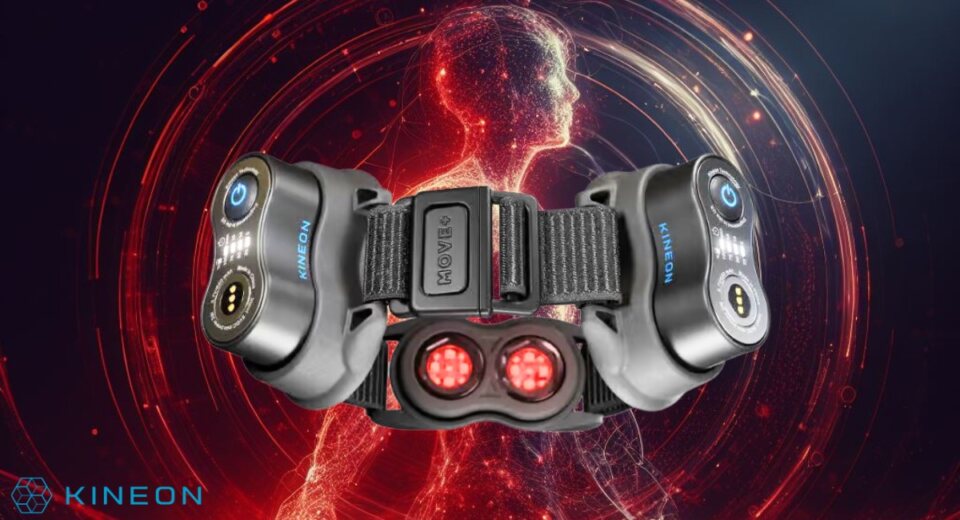
In this episode of the High Performance Longevity podcast, Nick Urban sits down with Forrest Smith, CEO of Kineon, to break down how their MOVE+ Pro device uses laser diodes rather than LEDs to deliver targeted photobiomodulation to internal tissue. Forrest brings 20 years of tech hardware startup experience and a physiology-first approach to device design that works backward from cellular photo acceptor reservoirs rather than raw optical power specs.
The conversation covers how laser light reduces muscle inflammatory markers by 60 to 80% without blunting training adaptations, why splitting power across 10 smaller lasers per module outperforms 2 stronger ones, and how Kineon’s dosing model uses serum nitric oxide as a measurable proxy for outcomes. Forrest shares clinical feedback from orthopedic surgeons seeing accelerated post-surgery healing, data on cartilage regrowth through chondroblast proliferation over 3 to 9 months, and recent human trials pairing laser therapy with supplements for Hashimoto’s thyroid improvement.
You’ll walk away understanding the practical differences between LED panels and laser devices, optimal dosing protocols (15 minutes, twice daily), and how to stack laser therapy with methylene blue, blood flow restriction, and PRP for compounding benefits. Forrest also explains why chronic NSAID use carries a 30 to 50% increased cardiovascular risk, positioning photobiomodulation as a safer long-term alternative.
Key Terms Quick Reference
Several specialized terms come up throughout this conversation. Here’s a quick reference.
[15:24] Photobiomodulation (PBM): The use of non-ionizing, non-ablative light to trigger cellular signaling through photo acceptors. Over 6,000 published studies support its effects on pain, inflammation, and tissue repair.
[21:36] Arndt-Schulz curve: A biphasic dose-response model showing that photobiomodulation benefits increase with exposure time up to a peak, then plateau. Outcomes never drop below baseline because the light is non-ablative.
[25:23] Collimated light: Laser output where all photons travel in parallel beams rather than dispersing like LED light. This allows deeper penetration to internal tissue such as joints, gut lining, and brain structures.
[17:25] Serum nitric oxide: A measurable blood marker that spikes when photobiomodulation reduces hemoglobin’s binding affinity for nitric oxide. Kineon uses it as an intermediate heuristic to validate dosing models against predicted outcomes.
[51:35] Chondroblasts: Fast-growing cells at the edge of cartilage growth zones. Laser therapy increases their proliferation rate and the quality of the extracellular collagen matrix they produce, enabling cartilage regrowth over months.
[36:00] Reactive hyperemia: A reperfusion test where a limb is occluded and muscle oxygen drops to zero, then released. The speed of tissue reperfusion correlates highly with cardiopulmonary health and can track recovery from long COVID.
[48:13] HILT (High Intensity Laser Therapy): A distinct approach from PBM that uses stronger lasers to reduce pain signal transmission through nerve tissue, rather than promoting healing. Not what consumer devices like the MOVE+ use.
Why Do Lasers Outperform LED Panels for Joint Therapy?
The short answer
Lasers produce collimated light that penetrates to internal tissue like cartilage and joint structures, while LEDs disperse at 120 degrees and primarily affect surface tissue. This targeting difference makes lasers far more effective for deep tissue applications.
What Smith found
Kineon tested splitting 150 to 200 milliwatts across 10 smaller lasers per module versus 2 stronger ones at the same total optical power. The multi-laser configuration delivered substantially better physiological outcomes because it distributed photons across a wider treatment area without hot spotting. Their mathematical models calculate the optimal number of photons needed at specific tissue depths to trigger photo acceptor reservoirs, working backward from physiology rather than engineering specs. This approach lets a battery-powered device deliver targeted therapeutic doses that large LED panels cannot match for internal structures.
What to do about it
For joint pain, wrap the MOVE+ around the affected area and run 15-minute sessions twice daily. The device combines near-infrared lasers for deep tissue penetration with red LEDs controlled to 30 degrees for surface tissue healing. Full-body LED panels still work well for surface applications like skin health and collagen, but targeted laser devices are better suited for joints, gut, and thyroid.
“We wanted to work backwards from the outcomes we’re trying to trigger. And so what triggers these outcomes are different signaling molecules, from photo acceptors that you can impact.” – Forrest Smith
Related: Best Home Red Light Therapy Devices
Can Light Therapy Replace NSAIDs for Chronic Pain?
The short answer
Yes, for chronic pain and inflammation. Laser therapy addresses the root cause by balancing oxidative stress and reducing chronic inflammation, while NSAIDs mask symptoms and carry serious cardiovascular, liver, and gut lining risks with long-term use.
What Smith found
Chronic NSAID use increases cardiovascular disease risk by 30 to 50% regardless of age, stiffens blood vessel endothelium, and damages the stomach lining. Smith compares NSAIDs to “taking the batteries out of the fire alarm while the fire is still burning in the kitchen.” Laser therapy studies show it outperforms NSAIDs on visual assessment pain scales for chronic conditions. Professional sports teams and special forces physiologists who review the science adopt it quickly once presented in a functional framework.
What to do about it
If you currently rely on NSAIDs for chronic pain, consider transitioning to daily photobiomodulation sessions (15 minutes, up to twice daily). For acute emergencies, aspirin has the lowest cytotoxicity profile among NSAIDs. Stack laser therapy with anti-inflammatory lifestyle practices like exercise, which Smith notes is more effective than many pharmaceuticals for neurological conditions.
“You’re essentially taking the batteries out of the fire alarm. The fire is still burning in the kitchen, and so you really need to deal with the fire more than the fire alarm.” – Forrest Smith
Does Laser Therapy Actually Regrow Cartilage?
The short answer
Yes, over a 3 to 9 month timeline. Laser therapy rebalances the cartilage equation by reducing chronic inflammation that accelerates degradation while simultaneously increasing chondroblast proliferation rates, leading to measurably thicker and healthier joint tissue.
What Smith found
Chronic joint inflammation creates an imbalance where cartilage dies off faster than it regrows. Laser therapy works both sides of this equation: it removes chronic inflammation (stopping accelerated degradation) and increases the proliferation rate of chondroblasts at the growth edge of cartilage tissue. These chondroblasts produce a healthier extracellular collagen matrix that arranges more like normal tissue rather than matted scar tissue. Microscopy studies over the past 3 to 5 years confirm measurably thicker, healthier tissue after 3 to 9 months of consistent use.
What to do about it
Continue daily laser therapy on joints even after pain resolves to maintain the cartilage regrowth trajectory. Stack with glucosamine, chondroitin, and type 2 collagen supplements for enhanced results. Expect pain and inflammation improvements within weeks, but cartilage structural changes take 3 to 9 months to manifest on imaging.
“You have a negative side which is this inflammation is wearing down my cartilage and you have this positive side of how fast do my chondroblast proliferate and you’re positively impacting both sides of the equation.” – Forrest Smith
Related: Biohacking Fast Workout Recovery
The Smith Laser Therapy Protocol
A practical framework for integrating the MOVE+ into your daily routine based on Forrest Smith’s recommendations and clinical feedback.
- Start with 15-minute sessions: Use the full 3-chime cycle for optimal dosing on the Arndt-Schulz curve. If compliance is an issue, even 5 minutes daily beats 15 minutes twice a week.
- Treat twice daily for chronic conditions: Morning and evening sessions are optimal. The targeted molecules remain activated long enough that more than 2 sessions per day offers diminishing returns.
- Habit stack for consistency: Pair device use with an existing daily habit (work, Netflix, commute) rather than aspirational habits like meditation that you skip.
- Continue treating after pain resolves: Cartilage and soft tissue regrowth happens on month-scale timelines. Stopping at pain relief leaves structural improvements incomplete.
- Stack with complementary protocols: Pair with type 2 collagen, glucosamine, and chondroitin for joint repair. Combine with methylene blue for mitochondrial synergy. Use BFR cuffs upstream for a “poor man’s PRP” effect.
- Target beyond pain points: Apply to gut (FB ratio balancing, dopamine), thyroid (especially with Hashimoto’s supplements), and prefrontal cortex (glymphatic waste clearance after poor sleep).
Common laser therapy mistakes
- Assuming higher laser class means better results: Class 3 and 4 devices cause surface hot spotting. Kineon’s split-laser design at lower class delivers superior physiological outcomes.
- Judging device power by irradiance alone: Irradiance measures light at the skin surface, not photons reaching target tissue depth. Physiology-based dosing outperforms engineering-spec comparisons.
- Stopping treatment when symptoms improve: Pain relief happens in days to weeks, but structural tissue repair (cartilage, ligaments) takes 3 to 9 months of consistent use.
Source: Smith’s Physiology-First Dosing Model, Kineon
Frequently Asked Questions
What is the difference between laser therapy & LED red light therapy?
LEDs emit light in 120 degrees and primarily treat surface tissue like skin. Lasers produce collimated light that penetrates deeper into internal tissue such as joints, gut, and brain. Both use similar wavelengths, but laser delivery targets specific photo acceptor reservoirs at calculated tissue depths for more effective dosing.
Can the Kineon MOVE+ help with post-surgery recovery?
Yes. Orthopedic surgeons report accelerated healing timelines in post-surgery patients. The device reduces chronic inflammation and increases the rate of healthy tissue proliferation, including improved scar tissue quality with better collagen arrangement. It works for both arthroscopic procedures and larger surgeries like knee replacements.
Does laser therapy reduce muscle gains from exercise?
No. Laser therapy reduces muscle inflammatory markers like CRP and creatine kinase by 60 to 80%, but inflammation is not what drives hypertrophy or strength gains. Separate mechanisms control muscle adaptation. By reducing soreness, athletes can return to training faster and progress through strength curves sooner.
How long should each laser therapy session last?
Fifteen minutes per session is optimal based on the biphasic Arndt-Schulz dose curve. The device offers 5, 10, and 15 minute settings. Even 5 minutes daily is more effective than 15 minutes twice weekly. Optimal protocol is 15 minutes twice daily for chronic conditions.
Is the MOVE+ safe to use on the head & face?
Yes. The device is non-ablative and non-ionizing, so it cannot damage tissue. Forrest Smith uses it on his prefrontal cortex and around his eyes to support glymphatic waste clearance after short sleep and for sinus relief.
Can laser therapy help with thyroid conditions like Hashimoto’s?
Recent human trials show that laser therapy paired with supplements improves thyroid function in Hashimoto’s patients more substantially than supplements alone. The two approaches are synergistic. Research on optimizing thyroid function in non-pathological individuals is still emerging.
What is the best way to stack laser therapy with other treatments?
Methylene blue enhances mitochondrial complexes 1-3 while laser therapy targets complex 4 for synergistic energy production. Blood flow restriction cuffs upstream from the treatment area pool platelets and hemoglobin for enhanced dose delivery. Type 2 collagen, glucosamine, and chondroitin supplements support the cartilage regrowth that laser therapy accelerates.
Products, Tools, & Resources Mentioned
Outliyr independently evaluates all recommendations. We may get a small commission if you buy through our links (at no cost to you). Thanks for your support!
Devices & tools
Kineon MOVE+ Pro: Portable laser therapy device combining near-infrared lasers with red LEDs for targeted pain, inflammation, and tissue repair. Use code URBAN for a discount.
KAATSU BFR Bands: Blood flow restriction cuffs that pool platelets upstream, stacking with laser therapy as a cost-effective alternative to PRP injections.
Aerofit: Respiratory resistance training device that adds resistance to breathing for cardiopulmonary improvement. Used in studies alongside laser therapy for long COVID recovery.
Supplements & compounds
Methylene Blue: Enhances mitochondrial complexes 1-3 of the oxidative phosphorylation chain. Synergistic with laser therapy, which targets complex 4. Best used with light exposure.
Type 2 Collagen, Glucosamine & Chondroitin: Joint support supplements that stack with laser therapy to accelerate cartilage regrowth by supporting chondroblast extracellular matrix production.
Books & references
Douglas Hofstadter (Godel, Escher, Bach): Forrest’s top recommended author on recursive self-measuring systems, logic, and early AI concepts. A formative influence on how he approaches engineering problems.
Guest website
Kineon.io: Official website for the MOVE+ Pro and upcoming Kineon devices. Use code URBAN for a discount. Forrest can be reached directly at forrest@kineon.io.
About Forrest Smith
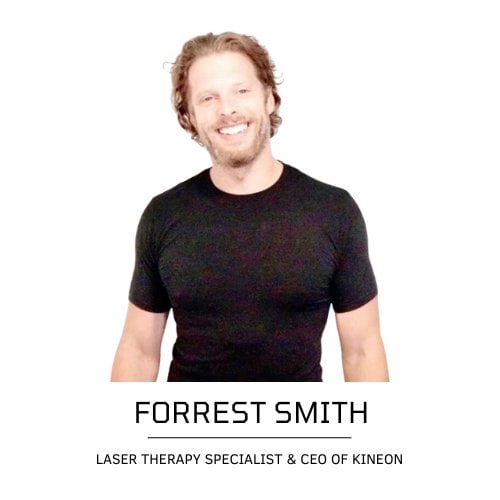
Forrest Smith is the CEO of Kineon, a health technology company developing portable laser therapy devices for pain, inflammation, and tissue repair. With over 20 years building successful startups in the tech hardware space, he brings a physiology-first approach to device design that works backward from cellular outcomes rather than engineering specs. Forrest speaks, reads, and writes fluent Chinese, having run his first two businesses entirely in the language. An avid rugby player and CrossFit practitioner based in Atlanta, his own athletic injuries led him to develop the MOVE+ Pro. Under his leadership, Kineon has earned FDA clearance, partnered with US Olympic teams and special forces physiologists, and raised community-backed funding to expand their product line.
Related Episodes & Articles
- Episode 115: Pulsed Red Light Therapy Benefits & Tips
- Episode 236: Benefits of Full Light Exposure
- Episode 101: SaunaSpace Near Infrared Light Therapy
- Episode 68: Methylene Blue Benefits Ultimate Guide
- Article: Best Home Red Light Therapy Devices
- Article: Red Light Therapy Benefits
- Article: BFR Training
Full Episode Transcript
Nick Urban [00:00:05]: What if there was a way to recover faster from your workouts, to address pain, and to help modulate bodily systems back into balance? Hi. I’m Nick Urban, host of the Mindbody Peak Performance podcast. And today, we’re talking all things red and infrared light therapy, specifically in this little form factor of a device I have here for those listening on audio. It’s a band that contains several little units. You click a button, and it emits a mix of red and near infrared using laser technology rather than the industry standard of LEDs. In this episode, you’ll learn why that’s important, the unique use cases you can do with this system, such as applying it to the gut to improve gut health, to potentially address headaches, to use it to improve cognition, to modulate the thyroid, and a whole lot more. We also cover the myths and misconceptions around red light therapy, near infrared light, and how this little device is able to deliver the equivalent targeted power of a full body system.
Nick Urban [00:02:56]: Although I don’t have any thyroid issues, I’ve been also using it on my thyroid in the mornings as I did previously and, again, on my gut just to see what I noticed. And I mentioned it in the episode, but I still don’t notice a huge effect from those. But it would be really interesting to do a bioassay and see how my enzyme levels change, my digestion improves, and how my endocrine system improves also.
Forrest Smith [00:04:10]: Thank you. So excited to be here. I can’t wait to dive in on this with you.
Nick Urban [00:04:13]: Yes. And we were just talking offline. Congrats on the recent round of funding that you guys just raised.
Forrest Smith [00:04:19]: Thank you very much. It’s an exciting time. It’s a lot of work to get it done, but our community has really supported us well for it. And it’s one of the basis of why we’ve taken so much time and really spent it with our community is that we’d also like them to see the benefits of what we’re doing, not just from a pain reduction, inflammation reduction, but also, we can now be a community owned company, which is really exciting for us as well.
Nick Urban [00:04:44]: Yeah. And part of the reason we’ve covered red light therapy, and we’ve talked about infrared light on the show several times, but I wanted to have you on today because you guys are doing something different, and there are a lot of different use cases and applications with your system that I’ve been using. But we will dive into that in a moment. Let’s warm up first with the unusual or nonnegotiable things you’ve done so far today for your health, your performance, and your bioharmony.
Forrest Smith [00:05:18]: As an individual, meditation. I do kind of a more general meditation in the mornings. And I do one that’s more focused on rest and recovery in the afternoons and evenings. I do some kind of exercise every morning, some kind of high intensity exercise. Right now, it’s burpees with my kids. We started off at 10 and then added 1 per day, and we’re at 115 right now, which is a great way to just kind of add a bit of work in the mornings. But I do that every morning before I have anything to eat or drink or coffee or anything like this. Just get in, get the blood moving, and that’s definitely nonnegotiable. I started wearing these blue blocker glasses that were given to me within the last 3 months, which is really nice. It actually helps from a melatonin suppression standpoint, and getting better sleep because of those and really committing in the right time to be able to get sleep.
Forrest Smith [00:06:21]: So that’s my core number of things. On a daily basis, I’m also using the laser therapy, and I use it on injuries, but I also use it for gut health. So I use it on kind of soft tissue issues. I have an old torn meniscus that flares up and it’s actually flared up right now, so I’m using it 15 minutes a day on that. And then on my gut, to increase or to balance that FB ratio, which is 2 different classes of bacteria that you have in your stomach, that when the ratio is balanced, you feel better. Increasing dopamine and I just feel generally better when I’m treating my stomach on a daily basis with laser therapy.
Nick Urban [00:07:14]: Yeah. That’s a well optimized routine. Actually, I came across your product a while back, and I got some questions on it. Hadn’t tried it. Then you guys were gracious enough to send me one to test out, and I put it through the paces. But unfortunately, I didn’t have any injuries to test it on.
Forrest Smith [00:07:52]: It is. It’s more of a cumulative effect. The nice thing about it is one of the reasons why we feel it’s so important to kind of get this education piece out to people is this is one of the few ways that gives you an opportunity to improve the underlying tissue. Even though it’s kind of marginal from a daily standpoint. One of the things that we’ve seen recently, and our dosing from our device actually covers very well, is Hashimoto. So you start seeing these thyroid based issues. Even up until about 3 or 4 years ago, we were seeing things like thyroid treatment with lasers be contraindicated. And the dosing had just not been tested. Even though there’s 6, 7000 papers out there, a number of the different pathologies that you can treat with the device are still coming to light.
Forrest Smith [00:09:15]: What they did for these trials was, they paired the supplements with a laser therapy device and both of them had an impact. The laser therapy device was a positive impact and even more substantially a positive impact than the supplements, but they were also stackable so that they’re synergistic. So for thyroid, kind of especially when there’s an underlying pathology like Hashimoto’s, but for thyroid function in general, there’s definitely a positive impact.
Nick Urban [00:11:08]: The other way I was using it is on my major muscle groups after a workout, like 5 minutes, 10 minutes after workout, immediately after. And I have to say that I did notice that I wasn’t as sore the next day.
Forrest Smith [00:11:28]: It’s amazing. A couple of the things that we’ve seen are better objective measures for delayed onset muscle soreness. What’s been more powerful for us is seeing these muscle inflammatory markers, like C reactive proteins and creatinine kinase. The reduction in these muscle inflammatory markers isn’t marginal. It’s 60 to 80%.
Forrest Smith [00:12:26]: One of the things that was very important for professional athletes to understand and validate is that in reducing these muscle inflammatory markers, am I also going to reduce my muscle adaptations? And you don’t. You reduce kind of the bad stuff, but these muscle adaptations that you’re trying to trigger from a hypertrophy standpoint, you’re actually putting yourself on a faster route to those because you can go back to training faster.
Forrest Smith [00:15:24]: A lot of the existing products on the market, what’s quoted from a dosing standpoint are measurements like irradiance and total optical power density that talk about what light is coming out of the device, what light is landing at the skin level. What we try to do is work backwards from the outcomes we’re trying to trigger. And so what triggers these outcomes are different signaling molecules, from photo acceptors that you can impact. Our models are more based around how we’re delivering the optimal number of photons to these photo acceptors to trigger the signaling we want for the adaptations we’d like to see.
Nick Urban [00:19:12]: Let’s back up, rewind a bit. We’re 15 minutes in, and people don’t even know what it is that your device is. So I have the system in the box right here. It consists of a bunch of different little modules and then a band, and you put those, you wrap them around the body part, click a button, and then there’s an interval for about 5 minutes that it sends out the light, the red and the infrared. And then at the end, you hear a little chime and that is one dose.
Forrest Smith [00:19:44]: That’s right. And we’ve made it based on our community feedback, adjustable. From 5 to 10 to 15 minutes. 15 minutes is optimal, but we didn’t want to set the entire time at 15 minutes because the higher the amount of time you’re asking for per day, the less likely people are to maintain the therapy. Better to do 5 minutes every day than 15 minutes twice a week.
Forrest Smith [00:21:36]: So dosing works on what they call an Arndt-Schulz or biphasic dose curve, which is essentially as you increase the dose, the outcomes keep increasing up to a certain point. And then after that point, they come back down. But you don’t really ever see it go back below 0. So you’re never going to be worse off than you were originally. And the reason for that is we’re using power levels that are non-ablative and non-ionizing.
Nick Urban [00:25:15]: What is the difference between an LED based light therapy panel and then also a laser?
Forrest Smith [00:25:23]: LEDs, when they emit, they emit in 360 degrees. Usually that gets brought back to 120 degrees. With lasers, there’s a chamber with 2 mirrors that more or less guarantees that the light bounces until it hits the correct 90 degree angle to go out. This means everything coming out of the laser is collimated and it doesn’t spread. It makes it much easier to target and reach internal tissue. We use LEDs for deep red wavelength that really should treat more of the surface tissue. For the internal tissue, like in your joints or in your gut or in your brain, the infrared near infrared actually penetrates more effectively into the body.
Nick Urban [00:30:36]: I often hear that in order to deliver a therapeutic amount of light, you need a certain power. You can’t have a handheld battery operated device because it would die in 10 seconds of use. But then again, if you think about a 1 watt light bulb, you’re going to barely see anything versus a 1 watt laser that can pop a balloon and has a lot more power because it’s so concentrated.
Forrest Smith [00:31:01]: That’s exactly right. It’s more concentrated. And we also found that people take the class 3 and class 4 and think that this is a better dose because of the different classes. But we tested splitting roughly 150 to 200 milliwatts per admission area into 5 on each side, 10 per module versus 2, keeping the same level of optical power. The effects on the physiology were much better when we split these into multiple lasers.
Nick Urban [00:33:56]: Let’s dig into the use cases now. Post surgery, maybe even presurgery, injury rehab. How would someone use the Kineon MOVE+ device for those circumstances?
Forrest Smith [00:34:24]: You can actually do it optimally twice a day, morning and evening. The molecules that you’re impacting stay impacted for a reasonable amount of time. Doing it 5 times a day is really not going to move the needle much more than twice a day. We’ve seen unbelievable results from a post surgery standpoint. One of the spaces that we’ve seen the most results is in orthopedic surgeons. When people are having post surgery processes, they have a ton of inflammation.
Forrest Smith [00:36:02]: What we don’t like to see is those tick over into chronic inflammation, which is something that we deal with very directly. So we reduce that oxidative stress level and that reduces the ongoing chronic inflammation. Being able to reduce that chronic inflammation in many cases for these patients gets them through that healing process in almost unbelievably fast timeframes.
Forrest Smith [00:38:07]: With NSAIDs, the increase in cardiovascular disease risk is 30 to 50% across the board whether you’re 6 or 60. A lot of our chronic users of NSAIDs are older. Their doctors told them to take this. They’re unaware of the impact it’s going to have on their cardiovascular endothelium. You’re essentially taking the batteries out of the fire alarm. The fire is still burning in the kitchen.
Nick Urban [00:40:16]: The only one that I’ll use on great occasion if I really need to is aspirin. It looks to have the least amount of cytotoxicity and downstream consequences.
Forrest Smith [00:42:49]: A lot of these things have come about from a study standpoint to be better understood as metabolically based. Exercise, as an example, is more effective than a lot of existing pharmaceutical treatments for a number of different pathologies. With the fact that we’re addressing mitochondrial function, at least the oxidative phosphorylation section, it’s not really a question as to the impacts that it’s having.
Forrest Smith [00:43:58]: One of the things that’s really an anchor point is this improvement of the metabolic function in your body. No matter what cells we’re trying to treat, that metabolic function is such an anchor point for function in general that you see a number of different knock on effects, whether it’s increased brain derived neurotrophic factor in your brain, whether it’s balancing your FB ratio in your gut, increased dopamine in the gut.
Nick Urban [00:48:12]: What about something like a headache? That seems like it’s more acute and this probably wouldn’t work as well against a headache.
Forrest Smith [00:48:33]: Headaches is a multivariate cause. There are certain types of stress headaches that this will help with, increasing nitric oxide, increasing blood flow. The most common ones, we actually help with. But it’s a lot of those are overstrained tissue. Your brain, you can’t really sense your brain. So it’s the tissue around your head, where you have stress and tightening from a muscular and myofascial standpoint. Being able to release additional nitric oxide helps to release and relieve some of that pressure.
Forrest Smith [00:49:50]: We treat tissue edema around the sprained ankle. We get more blood flow to the area. By dumping more nitric oxide into the blood flow, it’s a dilator of these blood vessels. It helps deliver more healthy blood into the area. That’s essentially what we do, reduce the chronic, introduce more acute inflammatory markers and help the tissue to heal a lot faster.
Forrest Smith [00:51:35]: It also increases the soft tissue proliferation rates. With soft tissue specifically, you’re looking at an increase in the rate of proliferation for chondroblasts, and these are fast growing cells that kind of live at the edge of your growth path for new cartilage or ligaments. When you have more of them, they grow faster and they grow healthier.
Nick Urban [00:53:52]: That’s really promising. You can actually regrow cartilage as long as you fix the underlying imbalance of inflammation.
Forrest Smith [00:53:57]: That’s exactly it. You’re working on both sides of that problem. You have a negative side which is this inflammation is wearing down my cartilage and you have this positive side of how fast do my chondroblasts proliferate. And you’re positively impacting both sides of the equation. Over a 6 month period, the microscopy is very clear. You see much thicker and healthier tissue based on the ongoing use.
Nick Urban [00:55:50]: To go back to the thyroid example, if I had hypo or hyperthyroid, would this modulate it and bring it back into balance, or is it going to always stimulate my thyroid?
Forrest Smith [00:56:08]: My gut would be that there’s also some level of modulation back to center based on the signaling molecules. If your oxidative stress is super low or super high, it’s not great for you. And we see that photobiomodulation can help to bring it to center versus just reduce it. This would be similar, but I need to dig into it and find the actual answer.
Forrest Smith [00:57:22]: My kids love it. They’re 2, 4, and 7. They’re falling down and cutting up on a daily basis. The first thing they come back in for, and they feel like Wolverine. My wife actually just did box jumps, just scraped across the shins and lost a bunch of skin there. And the same thing, you just see it close up, not overnight, but very fast.
Forrest Smith [00:58:08]: One of the things I actually use it for is if I don’t sleep enough. One of the things that happens with your brain is that it will increase and stack up the amount of waste, because your lymphatic system can’t process that all. This can increase the rate of that processing. So I treat kind of prefrontal cortex and then above the eyes and then below the eyes for sinuses.
Forrest Smith [01:00:00]: One of the ones that people have done from a testing standpoint for the brain is methylene blue. Essentially with the oxidative phosphorylation chain, there are 4 kind of processes in that energy production process. We essentially work on the 3rd and 4th, and the methylene blue can actually increase 1 through 3. So you get more feedstock and can turn more energy out of your mitochondria.
Forrest Smith [01:01:41]: Platelet rich plasma. Even for people who PRP has not worked for, who have been non-responders, there were 2 great studies. PRP plus laser works extremely well. One of the things that our users asked was, is there a way to do something similar that would aggregate more platelets and hemoglobin to the area? And so we’re doing testing with blood flow restriction cuffs. If you have BFR upstream, put that on, let it pull some of those platelets and hemoglobin into the area, and then treat it for 15 minutes with the device while you have the BFR cuff on.
Nick Urban [01:03:06]: I’ve done that exact test with your tool and KAATSU, they’re the original BFR, the best. That’s an incredible combo. And I also use methylene blue twice per week on average.
Nick Urban [01:03:55]: Forrest, this has been a blast. If people want to connect with you to try one of the Kineon devices, how do they find you on the internet?
Forrest Smith [01:04:10]: We are at kineon.io. And you can reach me specifically at forrest@kineon.io. That’s 2 r’s for Forrest. We love to work with our community and our users.
Nick Urban [01:05:02]: I think your team set up a code too. I believe it’s URBAN that’ll save them on their order if they want to grab a MOVE+.
Forrest Smith [01:05:08]: Absolutely. You have a 30 day risk free trial for it. Get in and use your URBAN code and try it out.
Nick Urban [01:05:55]: If there is a worldwide burning of the books and all knowledge on earth is lost, but you get to save the works of 3 teachers, who would you choose and why?
Forrest Smith [01:06:11]: One of the guys I really like from a conceptual standpoint is Douglas Hofstadter, who wrote a book called Godel, Escher, Bach. I read it at a formative age. It had a really big impact on how I think about kind of logic and AI. It’s essentially about recursive self-measuring systems, which is essentially how life generates.
Nick Urban [01:07:18]: How would you like to close our episode together today?
Forrest Smith [01:07:25]: I would just like to close out with a little gratitude, for yourself for having me on today, and really appreciate the time and focus and attention that you’ve given this topic. And just for the ability to do this work. I’m super happy to be in a seat where I am trying to create something that I feel like is going to positively impact so many people.
Nick Urban [01:08:01]: Thank you for bringing another bioharmonious treatment option to the forefront for everyone who has potential nagging injuries or more acute injuries and giving us another tool in the toolbox.
Nick Urban [01:08:25]: I’m Nick Urban here with Forrest Smith of Kineon, signing out from outliyr.com. Have a great week, and be an outlier.

Comments