

Here’s the sad truth…
Sunscreen does not thoroughly shield you from the aging effects of heavy sun exposure. Some of the many flaws:
- Lab SPF ratings don’t reflect real-world protection
- People under-apply by 50% or more
- Sunscreen degrades in UV light
- Even “broad-spectrum” formulas are rated only on UVB protection and offer minimal UVA coverage
Luckily, there’s a better approach.
This article explains a biohacker’s layered system that targets three mechanisms to help you harness the benefits of sun exposure without the damage: burn threshold (minimal erythema dose or MED), damage per unit UV exposure, and repair accelerators.
I still use sunscreen (the right kind) situationally, but not daily.
Let’s get started.
Real sun protection comes from understanding biology (burn threshold, damage control, repair), behavior, and situational tools, and not relying on SPF alone
Minimal Erythema Dose (MED) is the metric that matters to protect your body from UV damage. Raising your burn threshold lowers acute damage whenever you’re exposed to the sun, but it never makes UV harmless or eliminates cumulative risk
Outliyr points out that you can increase sun tolerance from the inside out.
Supplements like astaxanthin, nicotinamide, and polypodium leucotomos raise MED, while antioxidants & NAD+ support reduce damage per UV unit
Outliyr recommends tools like red light therapy, sleep-aligned melatonin rhythms, collagen support, and autophagy enhancers to influence how well skin recovers after exposure
Sunscreen still has a role, but shouldn’t be used alone. Mineral SPF makes sense for water activities, high altitude exposure, snow sports, long midday exposure, or compromised skin & not as a daily crutch
The Metric That Matters: Minimal Erythema Dose (M.E.D)
MED is the lowest UV dose that causes visible redness 16-24 hours after exposure. Your MED changes based on skin pigmentation, skin (epidermal) thickness, antioxidant status, inflammation levels, fatty acid profile, and repair capacity.
Plus, MED is rapidly modifiable.
Supplements can raise it. Progressive sun exposure (the “solar callus”) can raise it. Some topicals reduce erythema without carrying an SPF rating.
Higher MED reduces burn risk and lowers certain damage markers. It does not eliminate cumulative UV risk.
Increasing melanin reduces both sensitivity and damage (but never to zero).
The Layered UV Defense Model
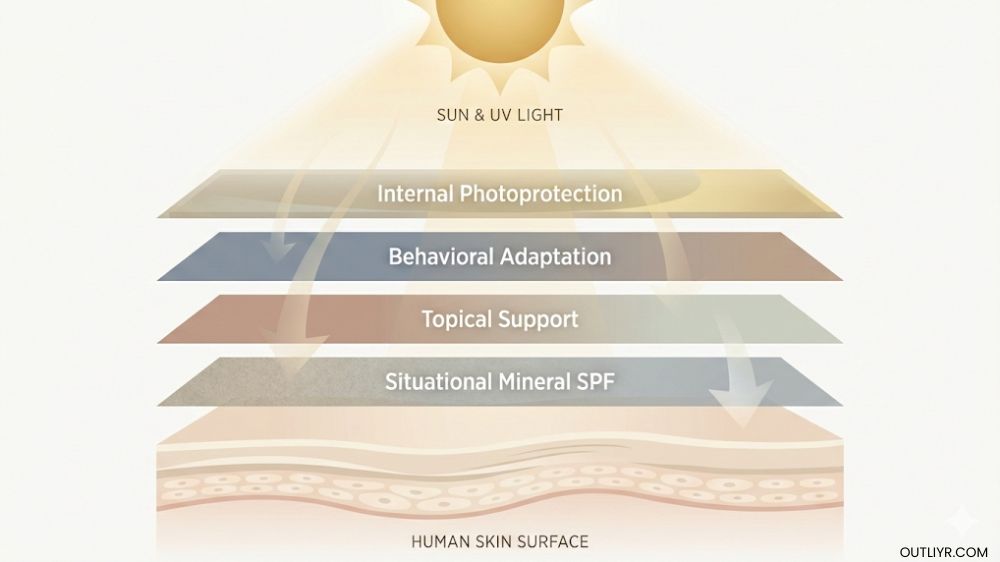
This strategy is organized around 4 pillars:
- Internal photoprotection: Supplements that raise MED, reduce oxidative damage, or accelerate repair
- Behavioral protection: Progressive melanin adaptation, exposure timing, strict no-burn discipline
- Topical protection: Antioxidants, barrier support, repair signaling
- Situational SPF: Mineral filters for high-risk contexts only
Each layer compounds the others. We’ll start with some of my favorites.
Tools that speed UV recovery
Here are some things you can use to improve recovery after overexposure to sunlight.
Red Light Therapy (Tier 1): Activates cytochrome c oxidase, increases ATP, and triggers collagen synthesis. Works as pre-conditioning and post-exposure repair. Very helpful, I even travel with one of these quality red + infrared light therapy panels.
Melatonin (Tier 1): Direct and indirect antioxidant supporting nighttime DNA repair. Dose: 0.3-100mg before bed. High-dose melatonin is likely most helpful here.
Vitamin C + E + Ferulic Acid (Topical): Reduces erythema and sunburn cells. Dose: Apply during the mornings using formulas with 10% L-ascorbic acid, 1% alpha-tocopherol, 0.5% ferulic acid.
Take active steps to help the body repair faster and minimize long-term skin damage.
Supplements that increase burn threshold (MED movers)
These supplements work best when taken regularly to build up levels in the skin, not just on the day of exposure.
Astaxanthin (Tier 1): Stabilizes membranes and quenches singlet oxygen. Human trials show increased MED after 8 to 10 weeks. Dose: 4-12mg daily with fat. As detailed in my astaxanthin supplement review, I take 12mg daily.
Nicotinamide (Tier 1): Supports ATP and DNA repair during UV stress. Reduces UV immunosuppression. Dose: 500mg 2X daily. Best for fair skin and actinic risk.
Cocoa Flavanols (Tier 1): Reduces erythema. Dose: 300-600 mg daily.
Polypodium Leucotomos (Tier 2): Antioxidant phenolics that preserve immune function. Dose: 240-480mg daily.
Tomato Complex (Tier 2): Whole tomato matrix outperforms isolated lycopene. Requires 10-12 weeks to build up. Dose: 10-16mg lycopene equivalent daily.
Pycnogenol (Tier 2): Reduces inflammation and melanin dysregulation. Dose: 40-100mg daily.
Use these to support your biology and as an extra boost for your burn threshold before you are even exposed to too much sun.
Supplements that reduce UV damage
Supplements can also act from the inside out to scavenge free radicals, reduce inflammation, and repair DNA, offering a supplementary, hard-to-miss layer of defense.
NAD+ Precursors (Tier 1): Support PARP enzymes for DNA repair. Dose: NMN 100-500mg or NR 300mg daily.
Ergothioneine (Tier 2): Concentrates in mitochondria via OCTN1 transporter. Relevant for UVA and pollution. Check out this ergothioneine supplementation guide to learn more.
Collagen Peptides (Tier 2): Support hydration and barrier resilience. Best combined with vitamin C. Dose: 2.5-15g daily. There are also many other ways to increase collagen naturally.
Green Tea Polyphenols (Tier 1-2): Suppress NF-kB and MAPK pathways. Dose: 200-400mg EGCG daily with food.
Glutathione + Precursors (Tier 2): Glycine and NAC drive endogenous glutathione synthesis. Dose: glycine 3-5g plus NAC 600-1,200mg daily.
Again, supplements are most effective not when used by themselves but in conjunction with other protocols.
Behavioral strategies
Your daily routine will naturally have an impact on how your body reacts to overexposure as well.
Progressive Melanin Adaptation (Tier 1): UVB-driven tanning raises burn threshold and reduces DNA damage. Never burn. Start at 10 to 20% of your estimated MED and progress slowly.
Vitamin D Targets (Tier 1): Aim for 40-80ng/mL through cautious UVB or supplementation.
Sleep and Circadian Timing (Tier 1): Melatonin rhythm supports overnight repair. Minimize artificial light at night. Here’s a guide to get perfect sleep each night.
Sauna (Tier 2): Heat shock proteins support repair. Use 2 to 4 times weekly. Learn more about the benefits of infrared saunas.
Make lifestyle adjustments, especially if you’re at a time when you don’t spend most of your day outside.
Advanced sun exposure biohacks
If you’re more experienced with supplements and different compounds, there are also tried & tested protocols to try.
Melanotan peptides (Tier 1): Increase eumelanin, the darker pigment that raises your burn threshold and shifts you toward a deeper, more “Mediterranean” tan. They’re powerful tools for very fair or burn-prone people, but they’re not a free pass to ignore UV intensity, timing, or exposure length. Side effects can include nausea, appetite and libido changes, and concerns about melanocyte overstimulation, so they belong in the “advanced, eyes-wide-open” category.
GHK-Cu (Tier 1): Copper peptide that signals collagen synthesis and beneficial gene expression in skin. Topically, it’s used to improve texture, firmness, and post-UV recovery. Injectable GHK-Cu shows up in peptide protocols when people want systemic effects layered on top of topical work. I dive deep into this topic in my interview with Dr. Jon Harmon on GHK-Cu copper peptide benefits, protocols, and more.
BPC-157 and TB-500 (Tier 1): Strong systemic repair logic from gut, tendon, and soft tissue models. They’re interesting add-ons for periods of heavy training plus sun, where whole-body repair demand is high. UV-specific data is limited, so I treat them as background recovery support, not core photoprotection.
Methylene blue (Tier 1): Absorbs light across parts of the UV–visible spectrum and supports mitochondrial electron transport. In skin, that combination can reduce oxidative stress and help cells handle hits more cleanly. Dose: Topical use is preferred; oral methylene blue is systemic pharmacology with more contraindications and complexity. Be careful when buying though! Here are some of the best methylene blue supplements I recommend.
Urolithin A (Tier 1): Triggers mitophagy, the cleanup of damaged mitochondria. Healthier mitochondrial networks mean better energy handling and more efficient repair after UV and environmental stress. Dose: Most human work uses 500mg daily, which pairs well with longevity and performance goals. I also explain in the best Urolithin A supplements guide how it compares to other health supplements.
Spermidine (Tier 1): Induces autophagy, your cell’s internal recycling program. You’re not blocking UV directly; you’re upgrading how cells process damage and maintain clean internal machinery. Dose: usually land between 1 and 10mg daily, from wheat germ extracts or synthetic sources. Here’s a roundup of the best spermidine supplements.
Multi-ingredient blends (Tier 2): Roll several levers into one scoop, spray, or capsule. Good formulas combine polyphenols, NAD+ precursors, and carotenoids like astaxanthin to cover oxidation, mitochondria, and membranes in one move. You trade some precision for convenience and compliance, which is often worth it in real life.
Sample Sunscreen-Free Sun Protection Stacks
I’ve discovered and tested many different protocols for healthy sun protection. It’ll be different depending on your goals and daily routine, of course. Here are some examples:
Fair-skin outdoor athlete
Your goal is to train outside, build a tan slowly, and avoid getting roasted every weekend.
The outdoor athlete sun protection protocol could look like:
- Astaxanthin (Tier 1): For membrane protection. Dose: 8mg with your fattiest meal.
- Nicotinamide (Tier 1): Support DNA repair and UV immunoprotection. Dose: 500mg twice daily.
- Polypodium leucotomos (Tier 1): Get acute MED support. Dose: 480mg before big sun days.
- Red light therapy (Tier 1): Most days for mitochondrial and collagen support.
- Collagen peptides (Tier 2): Support skin structure and hydration. Dose: 5g daily.
- Mineral sunscreen (Tier 2): Only when sessions are long, at altitude, on water, or in snow.
- Progressive adaptation: Start at 10-20% of your usual “pink” time and add minutes slowly.
You’re making it harder to burn, easier to recover, and less likely to accumulate obvious damage.
Melasma & hyperpigmentation
Here, the priority is calming overactive pigment responses, not just avoiding a burn.
The skin appearance sun protection protocol could look like:
- Polypodium leucotomos (Tier 1): Stabilize the overactive pigment response. Dose: 480mg daily during high UV seasons.
- Pycnogenol (Tier 1): Reduce inflammation and abnormal pigmentation signaling. Dose: 100mg daily
- Nicotinamide (Tier 1): Barrier support and pigment regulation. Dose: 500mg twice daily.
- Vitamin C + E + ferulic (Tier 2): Support antioxidant and brightening effects. Dose: Topical each morning.
- Behavior: Avoid long, unbroken midday exposure and high-heat facials on peak UV days.
You’re asking your skin to react more predictably and less aggressively every time it sees UV.
Photoaging reversal
This stack targets texture, fine lines, and general “photo-aged” appearance while you still live a normal life.
The skin, longevity, and beauty sun protection protocol could look like:
- Collagen peptides (Tier 1): Support dermal collagen and elasticity. Dose: 10g daily.
- Red light therapy (Tier 1): Support collagen, microcirculation, and repair. Dose: 5-7 days per week.
- Vitamin C + E + ferulic (Tier 1): Get daily oxidative defense. Dose: Topical in the morning.
- Urolithin A (Tier 1): Clean up damaged mitochondria and improve cellular resilience. Dose: 500mg daily.
- Spermidine (Tier 1): Upregulate autophagy and long-term tissue quality. Dose: 5mg daily.
Run this for at least 12-16 weeks, take honest before/after photos, and adjust based on what you see and feel.
When Sunscreen Still Makes Sense
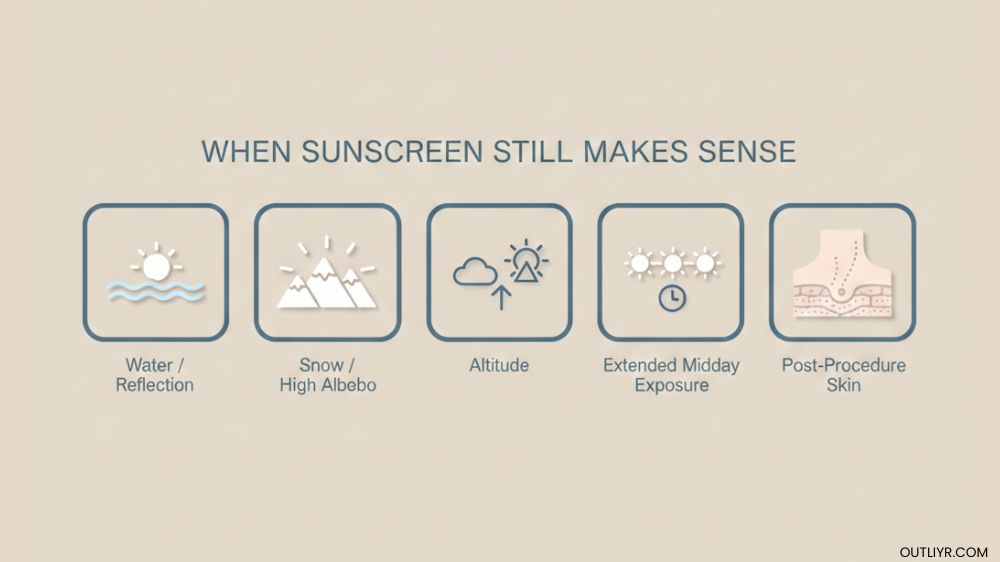
Use mineral sunscreen for water, snow, altitude, extended midday exposure, or post-procedure skin protection.
To get into more specifics for these situations:
- Water activities where reflective surfaces intensify UV exposure
- Snow sports, where UV radiation can be 80% stronger due to reflection
- High-altitude adventures where UV intensity increases approximately 10% per 1,000 feet of elevation
- Extended midday exposure, whether you’re at an outdoor event, working outside, or caught without shade during peak sun hours (around 10 AM to 4 PM)
- If you’ve recently had cosmetic procedures, chemical peels, or laser treatments, your skin needs extra protection during the healing period
Apply generously and reapply every 90 minutes. UV defense is one slice of the picture, and the rest of it, collagen, topicals, and repair, lives in my skin health and beauty articles.
Frequently Asked Questions
We’re used to using sunscreen anytime we know we’re getting exposed to the sun for a long period. Naturally, protection without sunscreen raises many questions. Here are the common ones:
Can you get real sun protection without sunscreen?
Yes, through layered protection. Internal photoprotection raises burn threshold. Behavioral strategies increase melanin. Repair tools accelerate recovery. Sunscreen remains useful for high-risk contexts.
What supplements increase MED the most?
Astaxanthin, nicotinamide, and Polypodium leucotomos show the strongest human evidence. Astaxanthin requires 8 to 10 weeks. Nicotinamide works faster. Polypodium works acutely.
How long does astaxanthin sun protection take to work?
8 to 10 weeks at 4 to 12 mg taken daily with a source of fat for optimal absorption.
Does nicotinamide protect against skin cancer?
It reduces UV immunosuppression and supports DNA repair. A large trial showed 23% reduction in non-melanoma skin cancers at 500 mg twice daily.
Does tanning actually protect skin?
UVB-driven melanin increases protection and reduces damage per UV unit. Never burn during adaptation. Melanin provides modest protection (SPF 2-4), not invincibility.
Can melatonin reduce UV damage?
It’s a direct and indirect antioxidant supporting DNA repair during sleep. It improves recovery, but doesn’t prevent damage.
Can red light repair sun damage?
Yes. It activates mitochondrial function and triggers collagen synthesis. Effective for acute recovery and photoaging reversal.
Do melanotan peptides increase sun tolerance safely?
They increase eumelanin and raise burn threshold but carry risks: nausea, appetite suppression, libido changes, and melanocyte overstimulation. Not a license to overexpose yourself to the sun.
Protecting Your Body From UV (Without Sunscreen): Final Thoughts
The sun makes life on Earth possible. It’s one of the most neglected drivers of human health (lack of sunlight contributes to disease).
Yet large doses of UV exposure also accelerate aging and biological damage.
You don’t need to choose between the two. You can enjoy the benefits and reduce the potential harm.
Here’s the simple plan:
- Raise your internal burn threshold
- Clean up damage
- Refuse to burn
- Use single-ingredient mineral sunscreen in intense circumstances
Now, let’s talk about implementation.
Practically speaking, start with one:
- Tier 1 MED mover (astaxanthin, nicotinamide, or Polypodium)
- Damage reducer (collagen, green tea, or NAD+ precursor)
- One repair tool (red light or vitamin C + E + ferulic acid).
That alone will put you ahead of 99% of the world. Optimize your biology, live a better life.
What about you? How do you lower the damage of excess sunlight exposure? Drop a comment below and let me know!

Comments