

I’ve spent $3,000+ testing portable red light therapy devices. Full panels don’t travel. I’m on the road 30% of the year.
Portable red light therapy devices are compact photobiomodulation tools delivering red (620-660nm) and near-infrared (830-850nm) wavelengths. They weigh under 2 pounds, run on batteries or USB, and come as wearables, handhelds, or foldable mini-panels.
Wearable therapy: Kineon MOVE+ Pro
Under $300: Vital Red Light Vital Charge
Muscle recovery: FlexBeam
Handheld panel: Mito Red MitoPRO Mobile
Travel: Rouge Nano
Light + supplements: BioLight
Budget handheld: Red Light Man Infrared Device
Most recognized portable: Joovv Go 2.0
The Kineon MOVE+ Pro is the best portable red light device overall, combining red LEDs with medical-grade lasers in a hands-free wearable design that delivers clinical-level irradiance directly to joints and muscles
FlexBeam is the top pick for on-the-go recovery, offering a flexible wearable that wraps around nearly any body part with a rechargeable battery lasting multiple sessions
For the best portable panel experience, the Mito Red MitoPRO Mobile delivers the highest irradiance of any battery-powered handheld unit I’ve tested, making it the closest thing to a full panel you can take on the road
Does Portable Red Light Therapy Actually Work?
Portable red light therapy works for pain relief, muscle recovery, and skin health when the device delivers adequate energy. The threshold is energy density: research shows 4-30 J/cm² per session triggers therapeutic effects. Any portable producing 60+ mW/cm² at contact hits that range within a standard 10-15 minute session.
Cheaper devices often fall short of this output. A Cochrane review found moderate evidence supporting photobiomodulation for knee osteoarthritis pain reduction. A Lancet meta-analysis showed red and near-infrared light reduces delayed-onset muscle soreness by roughly 20% when applied within 6 hours of exercise.
These studies used clinical-grade equipment, but the physics applies to any portable delivering sufficient irradiance.
Those photons of light activate the mitochondria. They increase the blood circulation. They decrease inflammation.
Dr. Alan Bauman, board-certified hair restoration physician, on the High Performance Longevity podcast
Portable devices follow the same biological constraints as larger panels. A 2018 mechanisms review describes the responsive wavelengths, while a 2012 review explains the biphasic dose response.
A 2018 systematic review and meta-analysis found that dosing choices materially shaped exercise-related photobiomodulation outcomes.
Compare portable picks with the home-device roundup, then use the dosage guide, buyer’s guide, and testing methodology to narrow the choice.
How Do We Test Portable Red Light Therapy Devices?
Testing portables requires different metrics than full panels. Irradiance matters, but so do battery life, weight, treatment area, and whether the thing actually fits in your luggage.
I measure irradiance at contact and at 6 inches using my Hopoocolor OHSP350IR spectroradiometer after a 15-minute warmup. That’s a spectroradiometer, not a solar power meter (which inflates readings by capturing ambient light). Most manufacturer specs are inflated 40-70% versus actual tested output.
For wearables, I test fit across multiple joint sizes and body parts. Battery life gets tested over real-world sessions, not marketing claims. Weight includes all accessories you’d actually bring while traveling.
Every device goes through my standardized red light testing protocol. You can compare specs side-by-side in the light therapy comparison database.
The key difference with portables: I prioritize irradiance-per-pound and treatment consistency over raw output. A 1-pound device delivering 80 mW/cm² at contact beats an 8-pound device at 150 mW/cm² when you’re on the road.
Which Portable Red Light Therapy Devices Are Best in 2026?
Here’s how these devices stack up across the specs that matter most for portable use.
Kineon MOVE+ Pro: Best Wearable Red Light Therapy Device

Is Kineon MOVE+ Pro worth it?
Wraps joints with red, near-infrared, and an 808nm medical-grade laser (plus 660 and 850nm LEDs) for hands-free, portable pain and recovery work. Fits chronic joint issues. It treats one area at a time, and results can take weeks of consistent use.
- Wavelengths
- 660nm LED, 808nm laser, 850nm LED
- Type
- Wearable (LED + medical-grade laser)
- Design
- Hands-free wrap
Best For
- You deal with chronic joint pain or stiffness
- You want a hands-free light therapy option for active recovery
- You prefer targeted treatment over full-body panels
Skip If
- You need full-body red light coverage
- You're looking for a budget light therapy option
- You don't have specific joint or muscle issues
Pros
- Wearable design wraps around knees, elbows, and other joints
- Combines red, near-infrared, and laser light therapy
- Portable and rechargeable for use anywhere
- Clinical studies suggest benefits for joint pain and recovery
- Hands-free operation during treatment
Cons
- Only treats one area at a time
- Higher price than basic red light panels
- Results may take weeks of consistent use
Your rating helps others choose
Tap to rate
URBAN for 10% offThe Kineon MOVE+ Pro stands apart because it combines LED and medical-grade laser technology in one wearable unit. Most portables use LEDs only. Lasers deliver coherent, focused light that penetrates deeper into tissue.
You strap it around a knee, elbow, shoulder, or wrist and let it run hands-free. That’s the real advantage.
I use mine during calls, reading, even cooking. Zero active time required.
Clinical studies on this specific device show benefits for joint pain, stiffness, and recovery. That’s rare.
Most portable companies cite general photobiomodulation research. Kineon has device-specific data.
The trade-off is treatment area. You’re targeting one joint at a time.
If you need broad coverage, look elsewhere. For targeted joint and muscle therapy while traveling or working, nothing else comes close.
FlexBeam: Best Portable Red Light for Muscle Recovery
Is FlexBeam worth it?
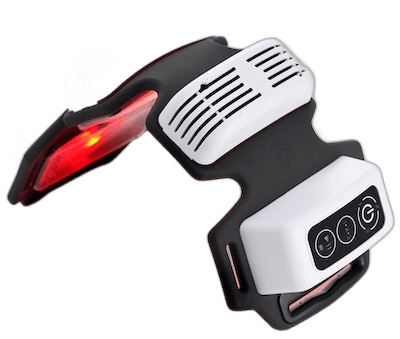
Flexible, wearable wrap (630nm and 850nm) that straps to knees, shoulders, or back for hands-free targeted therapy, rechargeable and under 500g for travel. It covers specific pain points, not full-body, and battery life caps how long each session runs.
- Wavelengths
- 630nm, 850nm
- Modules
- 3 (can target 3 areas)
- Weight
- Under 500g, rechargeable
Best For
- You want a portable red light device you can wear during activities
- You need targeted therapy for specific pain points or injuries
- You travel frequently and want light therapy on the go
Skip If
- You want full-body red light coverage
- You prefer a stationary panel for longer sessions
- You're looking for the most affordable red light option
Pros
- Flexible, wearable red light therapy device that wraps around body parts
- Portable and rechargeable for on-the-go use
- Targets specific areas like back, shoulders, knees, and neck
- Combines red and near-infrared wavelengths
- Hands-free design lets you move during treatment
Cons
- Only covers a small treatment area per session
- Higher price than basic panels
- Battery life limits session length
Your rating helps others choose
Tap to rate
URBAN for 10% offFlexBeam takes a different approach. It’s a flexible, bendable device that wraps around virtually any body part.
Knee, lower back, shoulder, neck, calf. That flexibility gives it versatility rigid devices can’t match.
Battery life sits at roughly 3 hours per charge. That’s multiple full sessions before you need to plug in. Compact enough for a backpack side pocket.
I’ve used mine at airports, in hotel rooms, and strapped to my knee during long drives. The 630nm and 850nm wavelength combo covers both superficial tissue (skin, surface muscles) and deeper targets (joints, tendons).
At $549, it’s not cheap. But the build quality justifies the price.
This thing has survived two years of rough travel with zero issues. Worth it.
Mito Red MitoPRO Mobile: Best Handheld Red Light Panel
Is Mito Red Light MitoPRO Mobile worth it?
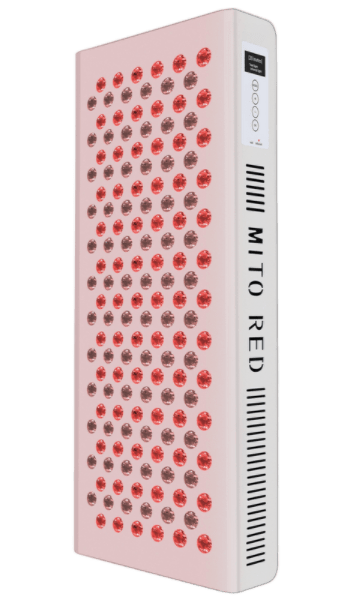
Foldable, battery-powered panel from Mito Red running red and near-infrared without an outlet, light enough for genuine travel and targeted face or joint work. Coverage is far smaller than a full panel, and battery life caps session length.
- Wavelengths
- 630nm, 660nm (Red) and 810nm, 830nm, 850nm (NIR)
- LEDs
- 12 lenses (dual chip = 12 red and 12 NIR)
- Irradiance
- 100 mW/cm2 at 3 inches (solar meter)
- Dimensions
- 5.25 inches x 3.75 inches x 1.5 inches
- Weight
- 1.5 pounds
- Power
- 3000mAh rechargeable battery, runs 2.5-3 hours on a single charge
- Warranty
- 2 Years
Best For
- You travel frequently and want red light therapy on the go
- You need a targeted device for face, joints, or small areas
- You want a rechargeable option that doesn't need a wall outlet
Skip If
- You need full-body coverage from a single device
- You want maximum irradiance for deep tissue treatment
Pros
- Portable, foldable design makes it genuinely travel-friendly
- Delivers red and near-infrared wavelengths in a compact form
- Rechargeable battery, so no outlet needed during sessions
- Lightweight compared to standard panels
- Good for targeted treatment of face, joints, or smaller areas
Cons
- Much smaller treatment area than full-size panels
- Battery life limits session length on a single charge
- Lower total irradiance output compared to wall-mounted units
Your rating helps others choose
Tap to rate
The MitoPRO Mobile is Mito Red Light’s answer to a portable panel. It folds down for travel and runs on a rechargeable battery. One of the only true “panel” form factors you can bring in luggage.
What sets it apart is wavelength range. Four wavelengths (630nm, 660nm, 830nm, 850nm) cover red and near-infrared more completely than most portables. Irradiance at contact competes with some entry-level wall-mounted panels.
The downside is battery life. Roughly 90 minutes per charge limits you to a couple sessions before recharging.
At $700, it sits at a premium price point. But if you want the closest thing to a full panel while traveling, this is it.
Treatment area far exceeds wearable devices. You can cover an entire back, chest, or face in one session. That broad coverage in a portable package is the MitoPRO Mobile’s strongest argument.
Vital Red Light Vital Charge: Best Portable Red Light Panel Under $300
Is Vital Charge worth it?
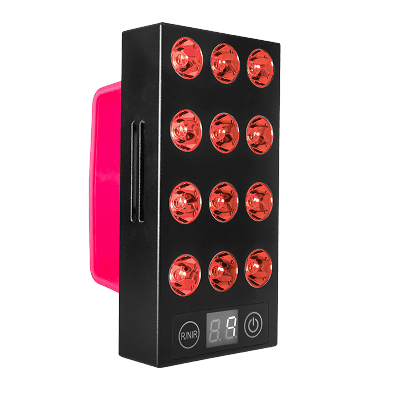
Portable handheld red light with four wavelengths (630, 660, 830, 850nm), zero EMF, and a battery lasting 4+ hours. A fit for travel and targeted face or joint work. Just 12 LEDs, so full-body sessions are out, and it weighs 2.2 lbs despite the portable branding.
- Wavelengths
- 630, 660, 810, 850nm
- LEDs
- 12
- Battery
- 4+ hours rechargeable
Best For
- You want a portable red light device for travel or on-the-go use
- You need targeted treatment for face, joints, or small areas
- You want an affordable entry point into red light therapy
Skip If
- You need full-body red light coverage
- You want a panel you can mount on a wall or door
- You prioritize maximum irradiance for deep tissue penetration
Pros
- Truly portable with rechargeable battery lasting 4+ hours
- Four wavelengths (630, 660, 830, 850nm) in a handheld form factor
- Zero EMF output for safe close-range use
- Non-flicker LEDs
- Affordable entry point
- 10-minute auto shut-off timer prevents overuse
Cons
- Only 12 LEDs limit treatment area to targeted spots
- Not suitable for full-body sessions
- Heavier than a phone at 2.2 lbs despite portable branding
- Lacks the pulsing modes and dose-adjustment of larger panels
Your rating helps others choose
Tap to rate
URBAN for 11% offThe Vital Charge punches above its weight class. At $299, it’s the most affordable multi-wavelength portable on this list. Four wavelengths (630nm, 660nm, 830nm, 850nm) match devices costing twice as much.
Battery life is the standout spec. Over 4 hours per charge means you can run multiple sessions across several days without hunting for an outlet. For travelers, that’s a game-changer.
I’ve got a test unit incoming. I’ll update this section with detailed irradiance measurements, real-world battery testing, and build quality assessment. Vital Red Light’s full-size Elite panel tested well in my home panel roundup, so expectations are high.
At 0.6 pounds with 12 LEDs, you won’t get full-body coverage. This is a targeted device.
But four wavelengths under $300 with 4+ hour battery life? Compelling value for anyone building a travel recovery kit.
Rouge Nano: Best Red Light Therapy Device for Travel

Is Rouge Nano worth it?
Ultra-compact travel panel (660nm and 850nm, 12 LEDs) that makes a budget entry point for treating the face, joints, or an injury, with solid build for the price. The small area means multiple sessions for anything broad, so it won’t serve as a heavy user’s only device.
- Wavelengths
- 660nm, 850nm
- LEDs
- 12
- Size
- Ultra-compact travel panel
Best For
- You want to try red light therapy without a big investment
- You need a portable device for travel or small spaces
- You're targeting specific areas like face, joints, or injuries
Skip If
- You want full-body red light coverage in one session
- You're already experienced and need a larger panel
- You need clinical-grade irradiance levels
Pros
- Compact and portable red light therapy panel
- Affordable entry point into light therapy
- Combines red and near-infrared wavelengths
- Good build quality for the price
- Easy to use with no setup required
Cons
- Small treatment area limits full-body coverage
- You'll need multiple sessions for broader areas
- Not ideal as a sole device for serious users
Your rating helps others choose
Tap to rate
The Rouge Nano is the most compact dedicated red light device I’ve tested. Small enough to toss in a toiletry bag and forget about. USB-powered, so any laptop or power bank runs it.
Dual wavelengths (660nm and 850nm) cover the core red and near-infrared spectrum. Irradiance at contact is respectable for the size.
You won’t match a full panel. But you’ll get meaningful photon delivery to targeted areas.
The plug-in design is both a strength and limitation. No battery means no dead device after a long travel day.
You do need a USB power source. In practice, between laptops and phone chargers, I’ve never struggled to find one.
At $295, it’s an accessible entry point. Best for someone who wants to maintain a basic protocol while traveling without adding bulk or weight to their bag.
BioLight: Best Portable Light Therapy with Supplements
BioLight takes a unique approach. They combine light therapy devices with a supplement line designed to enhance photobiomodulation outcomes. Their BioBlue device uses specific blue light wavelengths alongside their BioC60 supplement, a C60 carbon antioxidant.
The device itself is impressively compact at 0.3 pounds. Lightest option on this list by a wide margin. The rechargeable battery and pocket-friendly size make it easy to use anywhere.
Where BioLight gets interesting is the synergy angle. C60 and astaxanthin (in their supplement line) are potent antioxidants with evidence supporting mitochondrial function.
Stacking supplementation with light therapy has merit. Device-specific clinical data on this combo is still limited, though.
The trade-off: you’re investing in a supplement ecosystem on top of the device. That adds ongoing cost. If you’re already taking antioxidants and doing light therapy, combining them from one brand simplifies the stack.
Red Light Man Infrared Device: Best Budget Handheld Red Light
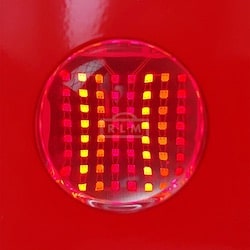
Is Red Light Man Device worth it?
One of the original red light brands, offering single-wavelength devices with strong irradiance and multiple sizes for people who know exactly which wavelength they want. Branding and the website feel dated, and overseas shipping can be slow.
- Wavelengths
- 830nm near-infrared (spectrum spans the 800-900nm range) – Infrared Mini 830 variant
- LEDs
- 12 x 3W near-infrared power LEDs (36W rating)
- Irradiance
- 200 mW/cm2 at 10cm; 20 mW/cm2 at 70cm
- Dimensions
- 12 cm x 14 cm
- Coverage
- Circular area up to 45cm diameter at maximum range; 30 degree beam angle
- Power
- AC 85-265V (worldwide), 50/60Hz
- Warranty
- 3 year warranty
Best For
- You want a no-frills red light device focused on raw output
- You're experienced with light therapy and know which wavelengths you need
- You value brand expertise and track record over aesthetics
Skip If
- You want a sleek, modern device with a polished app
- You prefer dual-wavelength panels for versatility
- You need fast domestic shipping
Pros
- One of the original red light therapy brands with deep expertise
- Offers single-wavelength devices for precise therapeutic targeting
- Strong irradiance output for the price
- Multiple device sizes and wavelength options available
- No-frills design focused on performance over aesthetics
Cons
- Website and branding feel dated compared to competitors
- Less polished customer experience than mainstream brands
- Shipping from overseas can be slow
Your rating helps others choose
Tap to rate
URBAN for 10% offRed Light Man is one of the original brands in red light therapy. They’ve been building devices since before most competitors existed. That experience shows in the raw output numbers.
Their approach is deliberately no-frills. Single-wavelength options let you choose exactly the spectrum you want.
No predetermined manufacturer mix. For experienced users who know which wavelength they need, that precision has real value.
The branding and website feel dated compared to flashier competitors. Customer experience is utilitarian. But if you care about photons per dollar more than packaging, Red Light Man consistently delivers.
Their handheld infrared devices start around $150. That makes them the most affordable dedicated single-wavelength option here. Focusing on one wavelength means higher irradiance at that frequency versus multi-wavelength devices splitting power across the spectrum.
You sacrifice versatility for raw output. Depending on your goals, that’s a smart trade.
Joovv Go 2.0: Most Recognized Portable Brand
Is Go 2.0 worth it?
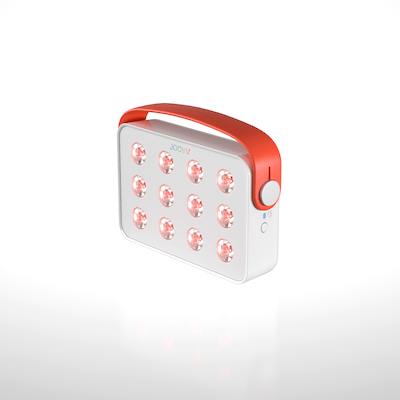
Premium portable from the most recognized RLT brand, with dual-wavelength LEDs (660 and 850nm), Bluetooth app modes, and a charging dock. Made for current Joovv owners wanting ecosystem consistency. Coverage is small for the price, and battery life caps longer sessions.
- Wavelengths
- 660 nm red and 850 nm near-infrared
- LEDs
- Dual Chip LEDs with both red and near-infrared wavelengths within the same lens
- Weight
- About 1.32 pounds
- Dimensions
- Less than 6 inches long and 4 inches wide
- Battery
- Up to 2 hours of wireless use (depending on light mode)
- Certifications
- Class II Medical Device, certified by Intertek to IEC 60601, HSA/FSA eligible
- Warranty
- 1 Year Warranty
Best For
- You want a premium portable from the most recognized brand
- You value app integration and guided protocols
- You already own Joovv panels and want ecosystem consistency
Skip If
- You want the best specs per dollar in a portable device
- You need larger treatment area coverage
- You're budget-conscious
Pros
- Most recognized portable red light brand
- Dual wavelength LEDs delivering both red and NIR simultaneously
- Bluetooth app with Recovery+ and Alarm Clock modes
- Premium build quality and design
- HSA/FSA eligible
- ISO 13485 certified
Cons
- Expensive for the treatment area delivered
- Smaller coverage area than competitors at similar price
- Battery life limits extended sessions
- Brand premium inflates the price significantly
Your rating helps others choose
Tap to rate
Joovv is the most recognizable name in red light therapy. Their Go 2.0 is a handheld with a rechargeable battery, delivering 660nm and 850nm wavelengths in a compact form factor.
Build quality is premium. Joovv’s devices feel solid, well-engineered, and polished. The companion app adds session tracking and guided protocols newer users may appreciate.
At $699, the Go 2.0 sits at the high end for its treatment area and output. Competitors deliver comparable or better specs for less. You’re paying partly for brand recognition and ecosystem integration with Joovv’s larger panels.
Battery life at roughly 1 hour per charge is the weakest in this roundup. For travel, that means daily charging and limited flexibility. The handheld design also requires active holding during treatment, unlike wearables.
I don’t have an affiliate relationship with Joovv. I’m including them purely on merit. They make good devices, but the value proposition doesn’t hold up against other options at this price.
Buyer’s Guide: How to Choose a Portable Red Light Device
Choosing the right portable comes down to how you’ll actually use it. Here’s what to evaluate.
Battery vs. plug-in: which do you need?
Battery-powered devices give you total flexibility. Planes, cars, the gym. The trade-off is limited session time and eventual battery degradation.
Plug-in devices (like the Rouge Nano via USB) never die but tether you to a power source. For pure travel, battery wins. For desk use, plug-in is simpler.
What wavelengths matter most in a portable device?
The two most research-backed wavelengths are 660nm (red) and 850nm (near-infrared). Red light at 660nm penetrates roughly 8-10mm, reaching skin and superficial muscles. Near-infrared at 850nm reaches 30-40mm deep, accessing joints, tendons, and dense muscle.
Multi-wavelength devices combining both deliver broader coverage per session. Some premium portables add 630nm and 830nm for slightly different absorption peaks, though clinical differences between 630nm and 660nm are minimal. For joint pain, prioritize strong 850nm output.
That depth is what reaches synovial tissue. For skin health or surface recovery, 660nm alone works. Avoid devices advertising wavelengths outside the 620-880nm window unless they cite specific peer-reviewed research justifying the inclusion.
Treatment area vs. portability
This is the core trade-off. Larger treatment areas mean bigger, heavier devices.
Wearables like the Kineon and FlexBeam solve this by conforming to your body. They cover one area at a time.
The MitoPRO Mobile offers the largest portable treatment area but is also the heaviest.
Decide what you’ll treat most often. Joint-specific issues favor wearables. Broader recovery (back, chest, face) favors handheld panels.
Should you choose a wearable or handheld red light device?
Wearables free your hands. Strap them on and continue with your day.
That hands-free treatment time is genuinely valuable if you’re busy. Handhelds require active holding but offer more flexibility in targeting different areas during a single session.
Can you take red light therapy devices through airport security?
Red light devices are TSA-friendly. I’ve never had one flagged or confiscated.
Keep lithium batteries in your carry-on per airline regulations. Detach external batteries during flights.
Pack wearables in the main compartment. Smaller handhelds fit in laptop bags or toiletry kits. The Rouge Nano’s USB power means one fewer battery to worry about.
Irradiance expectations
Portable devices deliver lower irradiance than full panels. That’s physics, not a flaw.
Smaller LED arrays in lighter housings simply produce less total output. Compensate by treating at contact distance rather than 6-12 inches, and extend session times slightly.
Anything above 60 mW/cm² at contact delivers therapeutic benefit. The Kineon’s laser component pushes effective penetration higher than LED-only numbers suggest. Laser light maintains coherence deeper into tissue.
Are There Side Effects or Risks With Portable Red Light Therapy?
Portable red light therapy carries minimal risk for most people. Wavelengths in the 620-880nm range don’t cause DNA damage or raise skin cancer risk, unlike UV light. The most common side effect is mild warmth at the treatment site, which is harmless.
Eye safety is the main precaution. Never stare into LEDs or laser diodes during a session. Devices with laser components require extra caution.
People on photosensitizing medications, those with active cancer at the treatment site, or pregnant women treating the abdomen should consult a doctor first. Overdoing it is possible. Exceeding 60 J/cm² per session can trigger a biphasic dose response, where benefits plateau or reverse.
I’ve used portable devices daily for over two years with zero adverse effects.
Frequently Asked Questions
Can you use portable red light therapy on a plane?
Yes. Portable red light therapy devices are TSA-approved and can be used during flights. Battery-powered devices like the Kineon MOVE+ Pro and FlexBeam work without any power source. I’ve used wearable devices on flights without issues. Keep the brightness pointed toward your body, and avoid devices with fans that make noise. USB-powered options like the Rouge Nano work if your seat has a USB port.
Are portable red light devices as effective as panels?
Portable devices deliver less total irradiance than full-body panels, but they can be equally effective for targeted treatment. A wearable delivering 100+ mW/cm² directly to a knee provides comparable photon density at the tissue level to a full panel at treatment distance. The difference is coverage area. Portables treat one area at a time, so full-body protocols take longer. For specific joint pain, muscle recovery, or skin therapy, portables perform on par with panels at the treatment site.
How long do portable red light sessions take?
Most portable red light sessions last 10 to 20 minutes per treatment area. At contact distance with devices delivering 60+ mW/cm², 10 minutes provides sufficient energy density. Wearable devices allow multitasking during treatment, so effective time cost is near zero. If you’re treating multiple areas, plan 10 to 15 minutes per site. Battery-powered devices with 2+ hour battery life handle 6 to 8 targeted sessions per charge.
What’s the difference between wearable & handheld red light?
Wearable red light devices (like the Kineon MOVE+ Pro and FlexBeam) strap onto your body for hands-free therapy. They conform to joints and limbs, maintaining consistent contact distance automatically. Handheld devices (like the MitoPRO Mobile and Vital Charge) require you to hold them against the treatment area. Wearables excel for joint-specific therapy and multitasking. Handhelds offer more flexibility to target different regions in a single session and typically cover a larger treatment area per use.
Picking The Right Portable Red Light Therapy For Your Goals
The right portable red light device depends on your use case.
For targeted joint therapy with hands-free convenience, the Kineon MOVE+ Pro is the clear winner. Its LED and laser combo in a wearable design delivers clinical-grade treatment anywhere.
For broader recovery and maximum versatility, the FlexBeam earns runner-up. Its flexible design wraps around any body part, and it handles rough travel well.
Neither replaces a full-body panel for whole-body protocols.
Natural sun always comes first, and a full panel fills in the gaps at home. If you’re building a complete setup, check my full-body panel guide.
Dealing specifically with joint issues? The joint pain red light guide goes deeper.
Portable red light therapy works best as a complement to your existing protocol. Every device on this list delivers therapeutic value in a travel-friendly package. Start with the one that matches your primary use case and build from there.
If this guide helped, share it with someone building their own travel recovery kit.

0 reader comments