
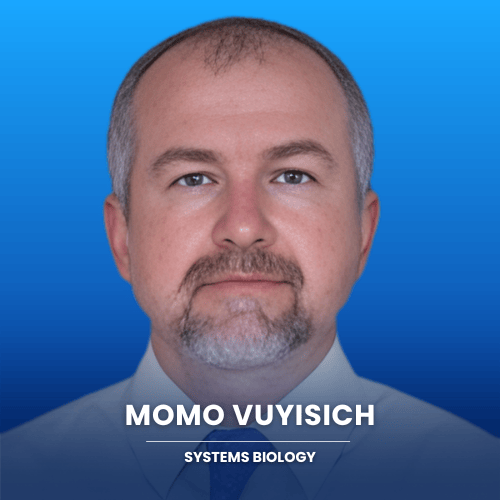
With Dr. Momo Vuyisich of Viome, Episode 257




What You’ll Learn
- From biodefense to personalized health: Dr. Vuyisich spent 12 years at Los Alamos National Laboratory before realizing neither academia nor pharma focused on actually keeping people healthy, leading him to co-found Viome. [01:14]
- Why RNA beats DNA for health data: DNA plays a minor role in chronic diseases per large twin studies. RNA reveals which of a bacterium’s roughly 3,000 genes are actually active, not just which genes exist. [02:44]
- 16S sequencing is nearly useless: Standard 16S microbiome tests cannot distinguish pathogenic bacteria from beneficial ones. Even shotgun DNA sequencing misses functional data entirely. [08:02]
- Akkermansia’s 3,000 functions: The popular probiotic has roughly 3,000 genes. Depending on diet, it either produces beneficial acetate from fiber or destroys your gut lining by consuming mucin. DNA tests see no difference. [11:02]
- Carnitine to cardiovascular disease pathway: Gut microbes can convert carnitine into trimethylamine oxide (TMAO), a cardiovascular risk factor. Viome’s system identifies this risk and adjusts recommendations to prevent it. [19:53]
- 500,000 Americans with alpha-gal allergy: Lone star tick bites cause mammalian meat allergy. Dr. Vuyisich’s own NEU5GC sensitivity makes him sick for a month from a single portion of mammalian food. [23:20]
- Glycemic index is an average, not your truth: CGM data confirms that two people eating the same food can have vastly different blood sugar responses. Personalized data replaces population averages. [33:33]
- Keto & paleo dieters age faster: Viome’s biological aging clock, trained on 100,000+ people, shows keto and paleo populations have higher biological age than chronological age. Vegetarians and vegans trend younger. [41:07]
- 100,000 biochemical reactions power you: Viome currently measures 25,000 of them (25% of human biology) across stool, blood, and saliva. About 10,000 are actionable today. Three randomized controlled trials validate the approach. [52:07]
Why It Matters
Most gut microbiome tests rely on DNA sequencing, which tells you what bacteria are present but nothing about what they’re actually doing. Dr. Momo Vuyisich, who spent 16 years developing RNA-based metatranscriptomic technology at Los Alamos National Laboratory and Viome, explains why this distinction determines whether a “healthy” microbe like Akkermansia is helping you or destroying your gut lining. His data-driven approach replaces opinion-based nutrition with machine learning on 500,000+ customers.
Who Should Listen
- Anyone who has taken a gut microbiome DNA test and wants to understand why the results may be misleading or incomplete.
- Biohackers considering Akkermansia supplements, probiotics, or restrictive diets who want to understand the risks of supplementing without personalized data.
- Health-conscious people frustrated by conflicting nutrition advice who want a data-driven, systems biology approach to food choices.
RNA Microbiome Testing & Personalized Nutrition With Viome’s Chief Scientist
On the High Performance Longevity podcast, Nick Urban sits down with Dr. Momchilo (Momo) Vuyisich, Co-founder and Chief Science Officer of Viome. A former senior scientist at Los Alamos National Laboratory who spent 12 years in biodefense and biosurveillance, Dr. Vuyisich reset his entire scientific career in 2010 to develop RNA-based technology for digitizing human biology. His personal autoimmune condition, caused by NEU5GC sensitivity to mammalian food, drove him to prove that personalized nutrition could work.
The conversation covers why DNA microbiome tests (including 16S and shotgun sequencing) miss critical functional data, how Akkermansia’s 3,000 genes can either protect or destroy your gut lining depending on diet, and why carnitine supplementation may cause cardiovascular disease in certain individuals via the TMAO pathway. Dr. Vuyisich also shares Viome’s biological aging clock data from 100,000+ people showing that keto and paleo dieters age faster on average, while vegetarians and vegans trend younger.
You’ll understand why RNA expression data changes the game for personalized health, how Viome’s machine learning identifies metabolic bottlenecks unique to your biology, and why the concept of universally “good” or “bad” foods is fundamentally flawed. Dr. Vuyisich provides a clear framework for thinking about food as personalized biochemistry rather than following population-level dietary guidelines.
Key Terms Quick Reference
Several specialized terms come up throughout this conversation. Here’s a quick reference.
[02:44] Metatranscriptomics: RNA sequencing of all organisms in a sample simultaneously. Unlike DNA sequencing, it reveals which genes are actively expressed, connecting microbial composition to real-time biochemical function.
[08:02] 16S rRNA sequencing: A DNA-based method that sequences a single conserved gene to identify bacteria at the genus level. Resolution is too poor to distinguish pathogenic strains from beneficial ones of the same species.
[09:32] Porphyromonas gingivalis: An oral pathobiont that can produce toxins called gingipains. DNA testing detects the genes for toxin production but cannot determine whether those toxins are actually being made. Associated with Alzheimer’s and diabetes.
[19:53] TMAO (trimethylamine N-oxide): A metabolite produced when gut bacteria convert carnitine or choline into trimethylamine, which the liver then oxidizes. Elevated TMAO is a cardiovascular disease risk factor.
[23:20] NEU5GC (N-glycolylneuraminic acid): A sugar molecule found in all mammalian meat and dairy except human tissue. Some people’s immune systems recognize it as foreign, triggering chronic inflammation or autoimmune reactions.
[25:50] IgG vs IgE antibodies: IgE mediates acute food allergies (anaphylaxis within hours). IgG mediates food sensitivities with slower onset (hours to days), causing subtler symptoms like eczema, headaches, or depression.
[41:07] Biological aging clock: A machine learning model trained on molecular data from 100,000+ people that estimates biological age independent of chronological age. Viome’s version uses gut microbiome RNA expression patterns.
Why Is RNA Testing Superior to DNA for Microbiome Analysis?
The short answer
DNA tells you which organisms are present and what they could theoretically do. RNA tells you what those organisms are actually doing right now. Since gene expression is reversible and actionable, RNA data leads to recommendations that can change your health outcomes.
What Vuyisich found
After implementing 16S DNA sequencing at Los Alamos in 2011, Dr. Vuyisich immediately recognized its limitations. The method cannot distinguish pathogenic E. coli from beneficial strains. Even shotgun DNA sequencing, which identifies strain-level composition, provides zero data on whether an organism is producing toxins or beneficial metabolites. He spent six years developing metatranscriptomic technology that quantifies RNA expression across all organisms simultaneously. Viome now holds exclusive licenses to those Los Alamos patents, and no other lab has replicated this approach at scale 15 years later.
What to do about it
If you’ve only had DNA-based microbiome testing (16S or shotgun), understand that your results show composition only, not function. Consider RNA-based testing through Viome’s stool, blood, and saliva panels to get actionable data on what your microbiome is actually doing. Test every six months, since the gut microbiome remains stable for roughly 5-6 months on average without major perturbations.
“If you detect it by DNA, you have zero data. And I don’t mean you have some data, but you have zero data to tell you whether that Porphyromonas gingivalis in that person’s mouth is producing those toxins or not.” – Dr. Momo Vuyisich
Related: Biological Age Tests Compared
Can Akkermansia Supplements Help or Harm Your Gut?
The short answer
It depends entirely on what Akkermansia’s 3,000 genes are actively doing in your gut. Fed the right fiber, it produces beneficial acetate. Starved of fiber, it consumes your protective mucin layer, causing leaky gut and autoimmune symptoms. DNA tests cannot distinguish between these two states.
What Vuyisich found
Mouse studies show that fiber-deprived Akkermansia strips the mucin protecting the gut lining, leading to leaky gut and autoimmune disease. With adequate fiber, the same organism produces acetate that feeds other bacteria to produce butyrate. The metabolic benefits attributed to Akkermansia have been shown to be equally effective with inactivated (dead) Akkermansia. Recent research also reveals that specific Akkermansia genes can encode peptides that trigger autoimmune disorders through molecular mimicry.
What to do about it
If you choose to supplement with Akkermansia, Dr. Vuyisich recommends the inactivated (postbiotic) form over live bacteria until more data is available. If you already have Akkermansia in your gut, focus on feeding it adequate fiber rather than adding more. Get RNA-based testing to understand whether your existing Akkermansia is expressing beneficial or harmful genes before introducing supplements.
“A microorganism, let’s say Akkermansia, it doesn’t do one thing. It has 3,000 genes, which means that it can do 3,000 functions. It can, but you don’t know which ones it’s actually performing.” – Dr. Momo Vuyisich
Related: Biohacking Gut Health Tips
Does Your Diet Affect How Fast You Age?
The short answer
Yes. Viome’s biological aging clock, built from machine learning on 100,000+ diverse individuals, shows statistically significant differences in biological aging rates across dietary patterns. Keto and paleo dieters age faster on average. Vegetarians and vegans age slower.
What Vuyisich found
The aging clock model was trained on gut microbiome RNA data from a super-diverse population across all ages and demographics. The machines were not told which participants followed which diet. Independently validated on blinded samples, the model found that keto and paleo populations had biological ages higher than their chronological ages, while vegetarians and vegans trended lower. Dr. Vuyisich notes that confounders are possible (people may adopt keto/paleo because they already have health issues), but the dataset is large and diverse enough that this is unlikely to explain the full effect.
What to do about it
Dr. Vuyisich recommends an omnivorous diet as the healthiest default, supporting a diverse microbiome and production of known beneficial metabolites. Fiber is essential for short-chain fatty acid production, though ketone bodies may partially substitute. Test your biological age through RNA-based analysis every six months and adjust your diet based on personalized data rather than following population-level dietary guidelines.
“People who are on the ketogenic diet and paleo diet, they age faster. So their biological age as a population is higher than their chronological age. Whereas people who are vegetarians and vegans, their biological age on average is lower than their chronological age.” – Dr. Momo Vuyisich
Related: Rotation Diet Guide
The Vuyisich Personalized Nutrition Protocol
Use this framework when evaluating microbiome tests and personalized nutrition approaches. Dr. Vuyisich developed these principles across 16 years of systems biology research.
- Choose RNA over DNA testing: DNA tests show composition only. RNA reveals which genes are active and whether they’re producing beneficial or harmful metabolites
- Reject universal food rules: No whole food is universally good or bad. Coffee, honey, or hemp may be a superfood for one person and on the avoid list for another
- Address metabolic bottlenecks first: Superfoods in your results target specific rate-limiting steps in your biochemistry. Boosting other nutrients won’t help until bottlenecks are resolved
- Consider food sensitivity testing: IgG-mediated food intolerances cause delayed symptoms (eczema, headaches, depression) that are hard to identify without testing. Combine with microbiome data for complete picture
- Retest every six months: The gut microbiome remains stable for 5-6 months on average. Semi-annual testing catches meaningful shifts without unnecessary frequency
- Protect your microbiome from preservatives: Food preservatives kill bacteria by design. Non-organic restaurant meals, antibiotics, and processed foods progressively diminish microbial diversity
- Favor inactivated probiotics when uncertain: Until RNA data confirms what a live probiotic will do in your gut, the inactivated (postbiotic) form delivers metabolic benefits without the risk of unpredictable gene expression
Common personalized nutrition mistakes
- Trusting DNA-only microbiome tests: Composition data without functional context is like photographing a plane instead of inspecting every system before flight
- Following population-level dietary guidelines: The glycemic index, blanket probiotic recommendations, and “superfoods” lists apply to the statistical average, not to you specifically
- Supplementing without data: Taking carnitine without knowing your TMAO risk, or Akkermansia without knowing its gene expression profile, turns health optimization into a shot in the dark
Source: Vuyisich’s Systems Biology Framework, Viome
Frequently Asked Questions
How stable is the gut microbiome over time?
On average, the gut microbiome does not change significantly for 5-6 months without major perturbations like antibiotics or dramatic dietary shifts. In controlled conditions with stable diets and no preservative exposure, two study subjects maintained statistically identical microbiomes for 2.5 years. Viome recommends testing every six months.
What is TMAO? Why is carnitine a concern?
TMAO (trimethylamine N-oxide) is a metabolite linked to cardiovascular disease. Certain gut bacteria convert carnitine into trimethylamine, which the liver oxidizes to TMAO. Whether this happens depends on your specific microbiome composition and gene expression. RNA testing can identify this risk before you supplement with carnitine.
Can food sensitivities cause symptoms beyond digestive issues?
Yes. IgG-mediated food sensitivities have been linked to eczema, headaches, migraines, depression, IBS, and IBD in both anecdotal reports and randomized controlled trials. Symptoms appear hours to days after eating, making them difficult to identify without testing. Viome is developing food sensitivity and allergy tests to complement their existing panels.
Why does Viome recommend an omnivorous diet over restrictive diets?
An omnivorous diet supports a more diverse and robust microbiome by providing a wider range of micronutrients. Restrictive diets remove entire food categories, which also removes the unique nutrients those foods provide. Viome’s computers do not recognize any named diet. They compute personalized food recommendations based solely on molecular data, and the resulting plans are omnivorous by design.
Can preservatives in restaurant food damage your microbiome?
Yes. Food preservatives work by killing bacteria, which is how they prevent spoilage. When you eat preserved food, those same antimicrobial compounds can diminish your gut microbial diversity over time. Non-organic restaurant meats may also contain antibiotics. Dr. Vuyisich notes that these small repeated exposures progressively erode the microbiome.
What are Viome superfoods? How are they different from generic superfood lists?
Viome superfoods are foods whose specific micronutrients address your personal metabolic bottlenecks, identified through RNA analysis. Unlike generic superfood lists that apply to everyone, your Viome superfoods target rate-limiting steps in your unique biochemistry. Eating more of other nutrients will not help until these specific bottlenecks are resolved. Each person gets a different superfood list based on their molecular data.
Products, Tools, & Resources Mentioned
Outliyr independently evaluates all recommendations. We may get a small commission if you buy through our links (at no cost to you). Thanks for your support!
Testing & services
Viome: RNA-based microbiome, blood, and saliva testing platform founded by Dr. Vuyisich. Provides personalized food and supplement recommendations based on metatranscriptomic analysis of 25,000+ biochemical pathways.
Viome tests: Browse Viome’s testing options with exclusive pricing through our shop.
Supplements & compounds
Akkermansia muciniphila (inactivated/postbiotic): Dr. Vuyisich recommends the inactivated form over live supplements. Metabolic benefits have been shown to be comparable to or better than live Akkermansia without the risk of unpredictable gene expression.
Carnitine: Important for beta-oxidation of fatty acids, but supplementation carries TMAO cardiovascular risk in individuals whose gut bacteria convert it to trimethylamine. RNA testing can identify this risk beforehand.
Tools & devices
Continuous glucose monitor (CGM): Wearable sensor that tracks real-time blood sugar responses to food. Demonstrates that glycemic response is highly individual, confirming that the standard glycemic index does not apply to everyone.
AI & research
ChatGPT: Dr. Vuyisich recommends it as the best current synthesizer of health knowledge, with the caveat to verify claims against peer-reviewed literature before acting on them.
About Dr. Momo Vuyisich
Dr. Momchilo (Momo) Vuyisich is the Co-founder and Chief Science Officer of Viome, a company that has tested over 500,000 customers across 100+ countries using proprietary RNA-based metatranscriptomic technology. Before Viome, he spent 12 years at Los Alamos National Laboratory as a senior scientist specializing in biodefense and biosurveillance, where he developed the foundational patents that Viome now holds exclusive licenses to. His personal journey with an autoimmune condition caused by NEU5GC sensitivity drove him to prove that personalized nutrition based on gene expression data could replace opinion-based dietary advice. Under his scientific leadership, Viome has published a biological aging clock validated on 100,000+ people and completed three randomized controlled trials demonstrating clinically significant health improvements from their personalized recommendations.
Related Episodes & Articles
- Episode 194: The #1 Reason Your Diet Doesn’t Work: Metabolic Typing Explained
- Episode 119: Synbiotics vs Probiotics: Gut Optimization Guide
- Episode 221: Inside The Revolutionary Epigenetic Cellular Health Test
- Episode 222: Biohack Your Gut & Restore Your Microbiome For Ultimate Wellness
- Episode 243: Improve Gut Health to Protect Your Brain, Metabolism & Longevity
- Article: Biological Age Tests Compared
- Article: Best Probiotic Alternatives
- Article: Best Epigenetic Age Tests
Full Episode Transcript
Nick Urban [00:01]: You’re listening to High Performance Longevity. The show exploring a better path to optimal health for those daring to live as an outlier in a world of averages. I’m your host, Nick Urban, bioharmonizer, performance coach, and lifelong student of both modern science and ancestral wisdom. Each week we decode the tools, tactics and timeless principles to help you optimize your mind, body and personal performance span. Things you won’t find on Google or in your AI tool of choice. From cutting edge biohacks to grounded lifestyle practices, you’ll walk away with actionable insights to look, feel and perform at your best across all of life’s domains. Hey, Momo, welcome to the podcast.
Momo Vuyisich [00:52]: Thank you, Nick. Happy to be here.
Nick Urban [00:54]: You have quite the background. We’re going to be talking all things systems biology, as you were just describing a minute ago before we started rolling. But tell me how you went from 12 years of work in Los Alamos National Laboratories studying biodefense and biosurveillance to where you are now.
Momo Vuyisich [01:14]: Long story. But to make it short, I had an undiagnosed autoimmune condition that was one thing that I was able to solve completely with nutrition. So I completely cured myself, which if you ask a hundred doctors, they would say that’s not possible. Second is that I came to a realization that neither academia nor pharma are actually focused on improving our health and increasing our health span. Academia are very focused on publishing papers and getting grants, and they have to do that because that’s how they’re judged. And pharma is not interested in curing any diseases. Their business model is to manage your illness for decades, not to cure you and let you go. Right.
Momo Vuyisich [01:57]: That business model is starting to emerge from some genetic diseases, but it’s a very tricky one. And so once you realize that there really isn’t an entity in the world whose absolute mission and focus is to maintain your health and keep you healthy and fully functional into your 90s. Then you realize, wait a minute, I want to do this and I don’t want to talk about it. I don’t want to spend the next 40 years talking about how that’s needed, which most people like to talk about. All the problems. They don’t want to roll up their sleeves and focus on it. I’ve been at it now full time, seven days a week for 16 years, and I am happy to do it for another 16 if needed. Right.
Momo Vuyisich [02:35]: Until we eradicate chronic diseases and cancers.
Nick Urban [02:39]: So what was your secret? What was your methodology to arrive there?
Momo Vuyisich [02:44]: I think that patience is the number one thing in that in 2010, I basically reset my scientific career. And for the next six years, I fully focused at Los Alamos National Laboratory on developing the technology needed to digitize the human body with the data that are relevant to human health. If you look at all the other technologies, they’re focused on DNA. And we now know, based on very large twin studies, that DNA plays a very minor role in chronic diseases and cancers. And so why are we focusing all these efforts on DNA when it plays a minor role? And so I realized that it’s not DNA, it’s really downstream of DNA, which is rna, proteins and molecules that are actually determining whether we’re healthy or not. And then I realized that proteins and small molecules are simply not going to provide us with the technology needed. The technology is simply not mature enough to actually implement it in a scalable process. And they do not get back to, they don’t have some information that RNA holds.
Momo Vuyisich [03:49]: So I think figured out in 2010, RNA is the single best molecule to study because it connects the composition of any sample. So, meaning which microbes are present to the functions of those microbes, which is what are they doing biochemically and which of those biochemistries are healthy for us and which ones are harmful to us. And at the same time, if you profile, using that same methodology, human blood or any human tissue, you get to understand what that tissue is doing, whether it’s healthy or not. And so I then spent six years optimizing that technology and developing it to the point where it’s actually useful for this kind of a scalable approach. And at that time, I didn’t know whether I was going to create a research institute or a foundation or a for profit entity. And in 2016, Naveen Jain, who’s our CEO, he came in with a great idea to turn this into a business. And we started Viome in 2016. So that’s sort of the background and what enabled this and what I was able to do, that I think most people don’t do in an academic setting, is that I basically rejected the old.
Momo Vuyisich [05:01]: Not the old, but the standards, the current standards, which is that you need to focus on your quarterly reports and your papers and making your sponsors happy. What I focused on is solving a problem. And we kept solving problems that no one has solved. And the patents that we filed at Los Alamos national laboratory, even now, 10 years later, no one has solved those problems 10 years later. So we were way ahead of our time. And now VIOME holds exclusive licenses to those technologies from Los Alamos National Lab.
Nick Urban [05:30]: Interesting. So it sounds like you’re describing not DNA as the explainer of life, but rna. And then why has no one done that? Why has no one seen this also and gone through and actually just like connected the dots where RNA connects to more than the DNA does?
Momo Vuyisich [05:49]: Great question. I’m just going to make it brief because it’s kind of a big topic. But the main factors are that we didn’t know the DNA wasn’t the major contributing factor in life. The Human Genome Project was sold as once we sequence the human genome, we will cure all diseases and cancers. Right. That was how it was sold. And an entire generation of scientists bought into that and they were convinced of that. And so that’s one thing.
Momo Vuyisich [06:16]: The second thing is the technologies that developed were developed all for sequencing. So both laboratory and bioinformatic technologies developed for genomic sequencing for DNA. And another factor is the DNA is stable. You can find DNA in the environment that’s 10,000 years old and you can sequence it. RNA stability is minutes to hours. RNA is naturally made to be unstable because you do not want it around for a long time because there’s a energetic penalty to converting RNA into proteins continuously. And so there is an evolutionary advantage to just keeping the RNA for a short time. So RNA is unstable.
Momo Vuyisich [06:51]: It’s very challenging to study, to preserve, to quantify, and the tools are not so developed. And so even today. So remember I started doing this in 2010. Now in 2026, 16 years later, there are just a few labs in the world, a few academic labs in the world that are using RNA sequencing to study the human body and in bulk meta transcriptomic way that we do. They do some specialized types of RNA sequencing, but nothing like what we do, unbiased RNA sequencing. And that’s because it’s a very challenging process to implement even in a very controlled small study in academia, scaling this to where we’ve done it, where we have more than half a million customers in more than 100 countries, scaling this to this level of robustness is a huge challenge. And it took six years to work it out. And I was very focused on making it to this level.
Momo Vuyisich [07:43]: Those are kind of the main reasons.
Nick Urban [07:45]: Is that why people look down, some practitioners look down upon gut microbiome DNA tests because they like don’t give you a good sample, a good picture of what’s going on. And like I’ve heard of 16s sequencing versus like the shotgun, so called shotgun approach versus others.
Momo Vuyisich [08:02]: Yeah, yeah. So there are two main sequencing methods for DNA sequencing of microbiome 16s is nearly useless because the resolution is so poor that it cannot distinguish violently pathogenic bacteria from super healthy bacteria. It cannot distinguish those. Right. So that’s kind of really pointless. But it was a method that was used early on to at least generate preliminary data that microbiome had a diversity and it was important in human health, so it played a role. But I implemented that as a senior scientist at Los Alamos National Laboratory. I implemented that on my team in 2011.
Momo Vuyisich [08:40]: And immediately the very first data sets that came through showed me, without reading any literature or anything else showed me that it was a useless method. And we can dive into nearly useless, not fully useless. We can dive into that if needed. But that is too much geeking out. Metagenomics or shotgun sequencing is much better in that it can identify strain levels. So it can distinguish, for example, pathogenic E. Coli from very healthy E. Coli.
Momo Vuyisich [09:07]: So that’s where it becomes useful. And. But it still does not have any data about the functional aspects of that microbiome. And I’ll give you some examples that are now emerging. So there’s a microorganism in the mouth called Porphyromonas gingivalis. And that microbe is considered to be a bad microbe. It’s not necessarily considered a pathogen by most people. It’s called a pathobion.
Momo Vuyisich [09:32]: But it can produce toxins called ginger pains that have been associated with, with Alzheimer’s and diabetes. And so it’s a very serious potential pathogen. Right. If you detect it by DNA, you have zero data. And I don’t mean you have some data, but you have zero data to tell you whether that Porphyromonas gingivalis in that person’s mouth is producing those toxins or not. All you can say with DNA sequencing is that it contains genes that allow it to produce those toxins. Whether it’s producing any toxins or it’s producing massive amount of toxins, you have zero information with any DNA sequencing. It doesn’t matter how much you do of it.
Momo Vuyisich [10:12]: It doesn’t matter how good the quality is, it doesn’t matter how many times, it doesn’t matter how many times you do it. That technology is foundationally limited to compositional information. Meaning I found this microorganism in your mouth, in the stool. There’s a sort of a very famous microorganism called Achernantium eosinophila. And it used to be very well known as a beneficial microbe. It used to be celebrated for that until when it was discovered that it can actually, it might cause multiple sclerosis and Parkinson’s and some immune disorders. And so that’s because it’s a typical setup in any bacterium or almost any bacteria. What I would like your audience to understand is that a microorganism, let’s say Akkermansia, it doesn’t do one thing.
Momo Vuyisich [11:02]: It has 3,000 genes, which means that it can do 3,000 functions. It can, but you don’t know which ones it’s actually performing. And some of those functions may be very beneficial for us, in fact, for Ekkermansia, that is known, other functions may be very detrimental to our health. And which ones are expressed at any point in time in any person. By just saying that you have that microorganism, you have zero data to tell you that. Whereas with viome, we actually quantified the activity or the expression level of specific genes, so we know what genes are actually active, and we can associate those expression of those genes with specific diseases and health states. So that’s a fundamental, like a quantum leap in technology. And that is why I took six years of really hard work that I could spend an hour of podcasts just highlighting how hard the work was to just develop the technology that was ready for spinning out into a company.
Momo Vuyisich [12:01]: But we still didn’t generate any health data at that point in time. And now it’s taken, you know, almost 10 years at Viome to where we have data that nobody else in the world has, which is we can now quantify disease risk based on RNA expression or gene expression profile in stool, blood, and saliva for 10 diseases. And all the findings that we find are actionable, meaning gene expression is reversible, unlike DNA. And so there are two main advantages. We know which genes, when expressed, are associated with health and disease, and we think we know, and for the most part, we do know how to control the expression level of those genes. And I can dive into that if you think that’s of interest to your audience.
Nick Urban [12:45]: Yeah, yeah. There’s a lot of different places to explore here. But before we even go into that, to rewind to what you’re saying back about Akkermansia, that was, like, a big topic last year and the year before in, like, the biohacking industry, specifically, people taking supplements that either directly contain Akkermansia, and those are very difficult to produce because of the things. They’re anaerobic, but then. But then also, like, precursors that supposedly increase levels of Akkermansia. But it sounds like what you’re saying Here is that those might not always work the way we’re expecting, because Akkermansia has 3,000 genes or it controls 3,000 genes. So therefore, you don’t know what you’re activating by taking that.
Momo Vuyisich [13:23]: Yep, exactly. It’s an unknown. It’s a shot in the dark. And specifically for Akkermansia, the metabolic benefits that have been described very well in the past have been shown to be as good, if not better, with inactivated Akkermansia. So if I were to take Akkermansia, I would, for now, definitely take the inactivated one, not the live one. Because once you bring in the live Akkermansia or once you give it lots of prebiotics to increase its amounts, you just don’t know what it might do. And you cannot just say, one day, oh, whoops, it’s causing Parkinson’s. Let me wipe it out.
Momo Vuyisich [14:01]: You just cannot go back. So I think it’s safer to be for now without, you know, additional. Until we get better data, it’s safer to take the inactivated probiotic, or so called postbiotic. Right.
Nick Urban [14:15]: Is that true across the board with probiotics? Because, you know, I’m sure this is your industry, so you’re well aware of it. But there’s also been a lot of controversy whether or not probiotics work the way they. They’re expected to work. Like, why do the ones that are dead tend to work even though they’re dead? And then, like, if you don’t know what is going to happen downstream, how do you know what to take?
Momo Vuyisich [14:35]: Yeah, I would say that nothing in human physiology, especially related to the microbiome, can be generalizable because the diversity is so vast. I mean, every microbe has 3,000 genes. It’s not every microbe has 3,000 genes. But on average, a bacterium has 3,000 genes. An average bacterium has 3,000. They range from like 2,000 to like 4,000, something like that. And we haven’t even discovered what all those genes are actually doing. Like these discoveries recently where specific genes coded by Akkermansia, when expressed, encode peptides that via mimicry, molecular mimicry, can trigger the immune autoimmune disorder.
Momo Vuyisich [15:14]: We didn’t know about those two years ago. Right. And so there are active discoveries on almost on a daily basis about what’s harmful, what’s not. And at viome, we’re making a huge progress in discovering those things. And there are associative studies even for something like Lactobacilli, showing that they can, for example, impede cancer therapy. And so yeah, even the generally, generally acceptable sort of healthy microbes may not always be healthy under certain circumstances. I would say that if you have a very wild, natural and, you know, rich microbe microbial system, I would say in general, bifidobacteria and lactobacilli are probably in general very healthy for most people, but it may not always be the case.
Nick Urban [16:01]: Yeah, that’s interesting. I didn’t realize even like the classes that are typically considered healthy still might have issues in certain people. And these are also gonna be present, naturally present some strains of them in things that we consume or that some people consume on a regular basis. Like yogurt. Right.
Momo Vuyisich [16:16]: Of any yogurt or fermented fruits of any vegetables or. Yeah, things like that.
Nick Urban [16:23]: If you work on shaping the terrain of your body and you do think you get your body healthy, your gut healthy, whatever that means, and then you add in these supplemental, I don’t know, like what the overarching category would be, like life forms, essentially. Are you going to be helping push that towards the expression of optimal genetics, or can you not even say, even if you’re like moving your body towards a healthier state, what’s going to happen when you introduce them?
Momo Vuyisich [16:46]: Well, I would say that if you already have Akkermansia and you’re already feeding it the right substrates and it’s healthy for you, adding more Akkermansia probiotic to that environment is not going to do any harm. It’s very unlikely to do any harm because it’s a very dynamic environment that self adjusts. It’s not like you add two capsules of probiotic and all of a sudden you disturb the ecosystem. There’s trillions of bacteria down there, and so if you add a few billion, that’s still nothing. And so, yeah, I think that the absolute key to remember is that the microbiome, gut microbiome, oral microbiome, vaginal microbiome, they’re all dynamic ecosystems. They all work together to survive together. They try to reject newcomers so that they don’t cause any disturbance and our immune system tolerates them. We grew up with it and they’re our best friends.
Momo Vuyisich [17:37]: And if you feed them the right set of substrates, which is micronutrients, they will produce metabolites which I call micro poop. For the general public. That is healthy for us and we have evolved to depend on it. And that’s really a very, very key thing that we should discuss. And if you feed them the wrong things, then they can be harmful to you. And let’s Go back to the achromansia, for example. So the, in the Akkermansia example, they’ve teased this apart in mice that if you starve mice of fiber, Akkermansia is going to basically resort to eating the mucin that protects your gut lining from the intestinal, you know, lumen. And so it, once it strips too much of that mucin, the mice get leaky gut and they get autoimmune diseases and they get all kinds of symptoms.
Momo Vuyisich [18:30]: Right. But in that same setup, if you just provide the right fiber to Akkermansia, then it will be very happy consuming that fiber. It’ll produce acetate and thrive off that. And that acetate will be then used as a cross feeding mechanism for other bacteria to produce butyrate. And all of a sudden, the exact same composition of the microbiome went from harming you to being beneficial without changing the composition. Meaning the DNA test would have shown the same thing, but the RNA test shows very big differences because you’ve now the Akkermansia has shifted its active genes from those consuming mucin to those consuming fiber, and other bacteria have shifted from doing something else to consuming acetate that’s produced by Akkermansia to produce butyrate, which is healthy for us. And so those are the kinds of things that we can, we can basically control gene expression of bacteria by controlling the micronutrients that we put in.
Nick Urban [19:30]: Yeah. So it’s no longer enough just to look at, okay, I want to increase this or that because it. I read research around Akkermansia being beneficial or healthy or maybe even like a postbiotic. Like, I want to just focus on getting more urolithin A from ellagitannins and pomegranate or something like that. Like, that’s no longer enough because it’s, it’s not helping us understand, like, the full implications of what’s going on, like around the production.
Momo Vuyisich [19:53]: Exactly. And I’ll give one example that I’m really excited about at viome in that carnitine, for example, is a very important supplement. And I think most of your audience will understand the importance of it in beta oxidation of fatty acids. But if you consume too much carnitine and if you feed your microbiome the wrong way, they will actually, your microbiome may convert that carnitine into trimethylamine, which gets converted to trimethylamine oxide, which can cause cardiovascular vascular disease. So you might be consuming carnitine thinking it’s healthy for you, but it may actually literally be causing cardiovascular disease. On the other hand, you can distract those microbes with other foods and they will preferentially eat and consume those other foods instead of carnitine. And now you can actually take more carnitine, which will directly affect your physiology in a positive way without providing any microbial functions that are going to harm you. So how cool is that?
Nick Urban [20:54]: Based on all of your experience and research, would you say that there’s one particular food group that you would either emphasize in the diet or that you would avoid entirely? Like, are you comfortable just cutting out an entire class of food or micro macronutrients, I guess for long periods of time for your average person? Of course it’s going to vary from one person to the next, but in
Momo Vuyisich [21:15]: general, yeah, I mean that’s kind of, that goes against our entire platform. Our entire platform is based on, we don’t, we don’t tell the computers about any diet or any class of com foods. We, we don’t, we literally. Our computers do not understand ketogenic diet, do not understand Mediterranean diet or anything. Our, our computers are 100 objective in that they take the data from the laboratory that we generate. So our customers will provide stool or stool blood and saliva samples to us. We will quantify all of these biochemical activities and then the computer will understand which biochemical activities need to be supported and which ones need to be slowed down. And it’ll compute exactly what micronutrients this person needs to consume and what micronutrients this person needs to avoid or minimize.
Momo Vuyisich [22:02]: And then it’ll map those micronutrients to all the foods available and tell the person, eat more of these foods, eat less of these foods. That’s all it is. It’s not going to say avoid these 300 foods, right? So our diets are by design omnivorous and very, very comprehensive, right? So that everyone has an opportunity to establish a very positive experience and relationship with food instead of I have to go on a diet and I now hate it, right? So that’s our default mechanism. And in fact we don’t have any foods in our system that are either provided or recommended to everyone or that they’re avoid for everyone. We don’t have any foods, but our database doesn’t have any ultra processed foods. Our database has whole foods, right? So we, our database has things that you can find on trees or that are on grown on animals, right? You, you, there is no processed foods. So now if you get into processing, of course we can describe classes of foods that everyone is familiar with should be removed. But in terms of actual whole foods and whole meats, there isn’t universally anything bad or good.
Nick Urban [23:10]: Yeah, I mean, in your own case, didn’t you find something around your ability to process meat that caused you to realize the importance of, like, bio individual nutrition?
Momo Vuyisich [23:20]: Yeah, that’s exactly one of the major drivers behind my switching my scientific career and starting this whole journey. So I have potentially a rare condition, but we don’t really know because it’s not been quantified in humans. But my immune system is sensitive to NEU5GC and that’s a molecule that’s found in mammalian food. So any mammal produces that neu5gc, except for homo sapiens. So Homo sapiens lost the ability to produce that molecule about 2 million years ago. But all other mammals, so beef, pork, lamb, all contain lots of that. Any dairy product contains lots of that. And we still have the mechanisms to integrate it into our body.
Momo Vuyisich [24:00]: But my immune system recognizes it as foreign, not as self. And that’s why my immune system reacts to it. Now, now there is a very, very important modern parallel. There’s an alpha gal allergy that just basically became sort of not famous, but infamous kind of a few years ago. Based on the lone star tick bites, and based on the newest statistics, there are 500,000 people in the United States who are allergic to mammalian products because they have this molecule called alpha gal. And so now there are a bunch of people who cannot eat mammalian food products. If I eat them, I’ll be gently sick for about a month. If I eat a single portion of a mammalian food product, I’ll be sort of gently, not deathly ill for like a month until all that molecule is degraded from my cells.
Momo Vuyisich [24:52]: But if someone with alpha gal allergy consumes it, they can end up in a hospital or die because it’s an anaphylactic reaction. So there are tests such as food sensitivity and food allergy tests that people need to use. And, you know, I’ve been recommending food allergy, food sensitivity and food allergy tests along as a complement to viome for 10 to 10 years. And my family has been taking those regularly. And not only do I believe those so much, I mean, I believe in those so much that we are now actually developing them at Biome. So this year we’re gonna start offering food sensitivity and food allergy tests because they’re a great complement to our existing tests. And they’ve now been proven in randomized controlled trials from extremely reputable academic groups that test results actually work and improve human health. And so you Cannot ignore that when
Nick Urban [25:40]: you say you differentiate food allergies and food intolerances. For people who aren’t familiar with food intolerances, I’m sure everyone knows what a food allergy is, but what are food intolerances specifically?
Momo Vuyisich [25:50]: Yeah, so food tolerances are mediated via a different kind of an antibody. It’s called IgG instead of IgE. So that’s a bit of a geeky technical jargon, but the main difference in what people feel is the symptoms. So typically, food allergies will. Mild ones will lead to, like, tingling in the tongue or the mouth or the throat, and then more severe ones lead to anaphylactic shock, which people are very familiar with. Like, you know, peanut allergies typically go for an anaphylactic all the way to an anaphylactic shock. Food sensitivities have a much slower reaction time, so not hours like food allergies. They have much longer reaction time, like many hours or days, and they’re typically gentler.
Momo Vuyisich [26:32]: And so people and the science of food sensitivities and food intolerances is very much in its infancy. We still don’t understand some basic principles and mechanisms. But if you read the blogosphere, if you read, like, food sensitivity tests about them and their reviews, you will see that people have had eczema for 20 years and they didn’t know what was going on. And then all of a sudden they’re like, oh, I’m intolerant to egg yolks. They stop eating egg yolks and their skin clears up and it doesn’t come back. And then three months later, they eat one egg yolk and boom, exonoma comes back. Right?
Nick Urban [27:06]: Yeah.
Momo Vuyisich [27:06]: That’s anecdotal evidence, and doctors will dismiss that. But when you read a thousand such reports of different things, you have to raise your eyebrows. And like I said, now there are randomized controlled trials showing that. So, yeah, so food intolerances and or sensitivities are sort of much broader impact on the human body. They can lead to depression, they can lead to headaches and migraines. That has been shown. Ibs, ibd, all kinds of different things that we’re just literally scratching the surface. We’re not at the tip of the iceberg.
Momo Vuyisich [27:38]: We’re on the surface of the tip of the iceberg. So there’s a lot more science to be discovered there. And we are very, very eager to untangle that science at viome because we have a very robust scientific platform in addition to the consumer products.
Nick Urban [27:52]: When people go and they get Their battery of tests for food intolerances, food allergies. I’m not sure what’s more common. I’m guessing food allergies is and or they take a test like viome. I know that a lot of times the results come back and they say stop. You have an intolerance to this particular food. And by the way, you’re, that’s probably the food that you’re eating every single day. So it seems like there’s a bias towards the things that you’re consuming regularly. And on the other side it’s like, hey know you, you should probably consume more of this over here.
Nick Urban [28:18]: And there are things that people have never consumed. How often do you see that? Do you see that like the tests skew towards the foods that you either never eat on the positive side or that you always eat on the negative side.
Momo Vuyisich [28:31]: It’s never always. Remember, systems biology is so complex. It’s a spectrum. And so there are people who have food sensitivities because they have a leaky gut and so food physically goes into the bloodstream and their immune system freaks out. Right? There are people who have food sensitivities not because they have a leaky gut, but the interaction between the gut microbiome and their immune system. In the gut, which is like 70% of the entire body’s immune system, those interactions are actually not in balance. And so their immune system doesn’t learn how to tolerate food and they develop food sensitivity. Right.
Momo Vuyisich [29:09]: There are other things. So you know, I want everyone to understand that a tomato and a sensitivity to tomato. Tomato has thousands of proteins and every protein in tomato has a surface that’s very complex. That antibody can bind to any part of that surface. And, and so it is very possible that your immune system reacts to bell pepper and that’s what caused the immune sensitivity. But those same antibodies that are, that are, that were caused by bell Pe, they actually combine some surface of a tomato and the test comes back and says you’re sensitive to tomato, but in fact you’re not. Right? That’s not the root cause, but your antibodies still bind to it. And if, if that tomato protein makes it into your bloodstream, it could cause problem.
Momo Vuyisich [29:55]: So I would say just like everything else in the body, it’s not like one simple thing. What we are trying to do at VIOME is first we’re trying to seal any intestinal barrier leakage. Second, we’re trying to get the microbiome to produce anti inflammatory signals, not pro inflammatory signals so that we don’t invigorate the immune system and become. To become so sensitized that the moment it sees something, it freaks out. And then third, what we’re going to do with, well, what we’ve been doing with when people report food allergy and sensitivity, we’ve been integrating that into our food recommendations. Now we’re going to integrate our own results. And so the benefit is, for example, going back to that egg yolk example. If someone is sensitive to egg yolk, but they need carnitine because their mitochondrial function is not optimal, then we at VIOME have an opportunity to say, we know you need carnitine.
Momo Vuyisich [30:47]: We measured your mitochondrial function in our blood test. We know you need it. You cannot just skip egg yolks. And then we can either find carnitine in other foods, not we, our computers will find carnitine source in other foods. Or if the, if the computer cannot do that, it’ll port it over to the supplements and say, you need to take carnitine as a supplement. All of those algorithms are already built at viome, and AI is aware of all those things. So that with other food sensitivity tests, if you’re just told, stop eating these three foods, you now also miss out on the benefits of those three foods. Whereas with viome, we’re going to find what those benefits are and we’re going to move them to other foods or supplements whenever possible.
Momo Vuyisich [31:24]: I cannot say that it’s always possible, but whenever possible, we will do that. Our computers will do that.
Nick Urban [31:29]: That’s one of the big issues with restrictive diets in general, is that, yes, you’re taking out things that are potentially deleterious, but at the same time, you’re losing out on the unique nutrient profile that you would get in those foods. And a lot of times it’s very hard to mimic or replicate the full nutrient profile, let alone certain ones. But if you know the person’s RNA profile, VIOME profile, then you’re able to figure out, okay, your mitochondria function’s suffering a little bit. How else can we get this function back up without introducing a substance that’s difficult for your body to process? That seems like a much more elegant approach.
Momo Vuyisich [32:05]: It’s all data driven. Right. So from the moment that a customer drops off their samples in the mail until they get their recommendations, 100% of the process is objective and clinically validated. Meaning there’s no human intervention. And none of the recommendations are based on anyone’s opinion or experience or anecdotal evidence. It’s all based on the data. Right. And so that’s really the quantum leap in nutritional sciences that I wanted to bring.
Momo Vuyisich [32:31]: Because when I needed nutritional advice and I walk into three different nutritionists offices and I give them the exact same symptoms, I can play the same tape. You get three vastly different sets of recommendations. And if I walked into three mathematicians offices and gave them three and ask them, how much is two plus two? And I get three vastly different answers, I wouldn’t trust math. So why. So why are we trusting current nutritional science, where you have very solid papers saying coffee is good for you and we have very solid papers saying coffee is bad for you? Why are we trusting that there’s something fundamentally wrong with that science? And what’s fundamentally wrong is that the question they were asking was, is coffee good for all humanity or is it bad for all humanity? They didn’t think, well, wait a minute, maybe coffee is good for some people, but it’s bad for others. They didn’t test that hypothesis. And our entire platform at VIOME is based on knowing that two humans are not going to respond the same way to the same food. And by the way, when we started viome, that was like a novel concept.
Momo Vuyisich [33:33]: And everyone’s like, no, get out of town, right? But now there are so many publications showing that a very simple thing like glycemic response to the same food can be vastly different in different people. And so the glycemic index, which has been followed for 40 years, is actually, for the average person. It doesn’t apply to you or me, unless we are the average, which we’re not.
Nick Urban [33:55]: I think that’s one really powerful use of CGMs, continuous glucose monitors. Not necessarily to say, okay, like, how high does my blood sugar spike after I eat cake? But it’s more like, hey, I just ate green beans. Why did my blood sugar spike? They were steamed green beans. I wouldn’t expect that. But then you might be able to find like, okay, my body is having a hard time processing this because I get a glucose spike for some from something that wouldn’t and shouldn’t cause a glucose spike.
Momo Vuyisich [34:18]: Yep, Persimmon’s here with me. It’s crazy. It’s crazy. Anyways, you have to have your personal data in order to make personalized choices. Otherwise, without your personal data, you’re making choices based on some averages. And that average may be completely misleading you and leading you down a wrong path and may actually be harmful to you because you’re not the average.
Nick Urban [34:42]: Yeah, I say that all the time when it comes to just, like, looking at the headlines. Or even digging into new scientific research and just seeing what the conclusion was and being, okay, based on this conclusion, I should now take this, implement this, reduce this. And it’s like, well, yeah, if you’re average, but it’s entirely possible that you have, you’re on either end of the extreme. And so it’s either going to work really well for you, but much better than in a study, or much worse. And you don’t know until you actually have data on yourself that you can apply it to.
Momo Vuyisich [35:09]: Also, whenever they’re studying one micronutrient in isolation or one metabolite in isolation, it’s in isolation. Whereas our systems biology has, we have about 100,000 molecules floating through our body that are dynamically made all the time. And so you cannot just isolate one thing. You have to look at it in the context. And we all present different contexts because of our different genetics, our different microbiome, our different diets, our different environments. And so, so even if they found in a study that everyone benefits from something, it still doesn’t mean that you will, because you may not be one of the 12 people that they recruited in the study because they recruited based on some inclusion criteria that you may not fall into.
Nick Urban [35:52]: And even if you do fall into it based on your own unique profile, you might have other drawbacks or consequences the people in the study didn’t have as well.
Momo Vuyisich [36:01]: Absolutely, absolutely. It’s all about personalization. And any personalization must be done based on the data. There is no other way to do it accurately. You can do trial and error, but been there, done that, not fun.
Nick Urban [36:15]: So with personalization like that alone, it makes things exponentially more complicated because all of a sudden it’s like, okay, I need to take this or that, I need to do this. All of a sudden it’s like, no, no, no, you need to do what’s right for you. But like, we don’t know unless you have a thorough picture of all of the data. How do you go about like, evaluating in the early stages? Because even if I was to take a viral test today or in a week, my profile will have changed by the time I get the results of that test.
Momo Vuyisich [36:42]: No, no, good question. Stability of the human physiology and microbiome. So we just submitted a preprint, it should be visible today or tomorrow, and we submitted the paper for peer review. But basically we show now we have now so much data from thousands of people. In fact, this, this paper includes data from almost 6,000 people showing that on average. And let’s, let’s Be careful about saying, let’s be explicit about that. On average, the microbiome does not change. The gut microbiome does not change until about five to six months, on average.
Momo Vuyisich [37:19]: Now, what are the extremes? The extremes which we didn’t have in this paper, but we do have the data that we may publish another paper is the extreme is if you take antibiotics after you do one test, it’s very likely that two weeks later your microbiome will be different. Right. Because you will have wiped out some members of the community, depending on which antibiotics, how long you took them and what kind of a shape your microbiome was in and what you were eating and all those things. But that’s one extreme. The other extreme is in that paper we have two people who are on a stable diet and who do not introduce any preservatives or antibiotics into their bodies. And after two and a half years, they still didn’t have a statistically different microbiome. Gut microbiome, after two and a half years. Okay, so we show that in mathematical terms, this is not like Momo looked at the data, gazed at the graphs and said, yeah, that looks good, right? No, this is mathematically shown that their microbiome did not change for two and a half years, statistically speaking.
Momo Vuyisich [38:18]: And so that’s really, really important, that if you really do a good job of taking care of your microbiome, which takes like these two people don’t go out. Like they cook all their food. Even when they’re on travel, they cook their food. Right. How many people will do that? Very, very few. Right. If a doctor tells you to take antibiotics, you’re pretty likely to take antibiotics, Right. You’re eating probably non organic food, like non organic meats at restaurants.
Momo Vuyisich [38:45]: Right. They’re not going to be all, all the time organic, unless you’re like really, really picky about where you eat. And those non organic meats are going to have antibiotics in them. And when you eat at a restaurant, they’re going to have preservatives all over the place. And what are preservatives? Preservatives kill bacteria. That’s they preserve food by preventing bacterial growth, so they kill bacteria. So anytime you eat any food that’s prepared, it’s likely going to have preservatives and you’re going to diminish your microbiome over time. So any of those little practices will in fact change your microbiome, of course, but you could be super OCD and just be super steady, and it will still not change for two and A half years now, of course it’ll change eventually.
Momo Vuyisich [39:27]: Even if you’re absolutely the best you can be after five to 10 years, of course it’s going to change. But let’s go back to the average. I think it’s a very safe thing to do is to simply test your microbiome and your blood, meaning your mitochondria and your gene functions, every six months. That’s a very reasonable thing to do. And keep fine tuning your physiology every six months. If you can afford that, why wouldn’t you? Right. It’s just like measuring your apob in blood. Like why would you do it every five years if you can do it every six months? I do it every six months.
Nick Urban [39:58]: Do we know for sure that having a stable microbiome is a good thing? Like, for example, if I change my diet seasonally, based on what’s available to me in my region, I would imagine that my microbiome would change pretty dramatically over each season.
Momo Vuyisich [40:12]: Not dramatically. Not dramatically. I mean, I would say the only dramatic difference we’ve ever seen is when people shifted from a Mediterranean diet, which is very carb heavy, to a strict ketogenic diet. That’s the only time we’ve seen like a very dramatic change. But if you go from omnivorous to omnivorous diet, I mean, just because you changed what you’re consuming in terms of the way it looks, it doesn’t mean that the micronutrients are that different. Right? You’re still consuming your lots of fiber, you’re still consuming your Omega 6s, Omega 3s, you’re still consuming your protein. And so it’s not going to be that different in terms of macros. So yeah, I think those are perfectly fine.
Nick Urban [40:50]: I’m sure you’ve gotten this question before. But when you look at the aggregate level, which is the opposite we’ve been talking about this whole time, are you seeing in general that people on the carnivore side or the vegan side have overall healthier, more balanced gut microbiomes?
Momo Vuyisich [41:07]: Okay, so we published a paper on this, so I don’t need to describe anything, but we published a biological aging clock based on mostly the human microbiome, oral and stool. Actually, that publication is just stool, gut microbiome. And what we show in there is that people who are on the ketogenic diet and paleo diet, they age faster. So their biological age as a population is higher than their chronological age. Whereas people who are vegetarians and vegans, their biological age on average is lower than their chronological age. So that’s a the reason I bring that up is because we’re talking about a machine learning on a hundred thousand people, super diverse population of all ages, all just everything you can imagine. So it’s a very robust model. And then we validated it independently on like blinded.
Momo Vuyisich [42:04]: So like we told the machines, we didn’t tell the machines what it is, Right? We just gave it the samples, the molecular data and told it compute the biological age. We didn’t tell it whether someone is vegan or not. And so I really trust those data that people are on. Paleo and keto are aging faster. But you know, that’s one data point that I personally trust because it’s very robust. But you know, we need more data
Nick Urban [42:29]: and would you attribute that to a lack of fiber in the diet or a combination of things?
Momo Vuyisich [42:34]: So let’s just be very super honest here. We did not do any confounder analysis. This gets a little geeky here. But the simplest possible explanation could be that by random chance, which is very unlikely, but by random chance that the several thousand people who we had as paleo and keto, they already suffered from something and that’s why they switched to those. Right? But vegans will make an argument that, well, you can do the same thing with vegans and vegetarians. People become vegans and vegetarians not because they hate meat, but because they have some kind of an ailment. Right. So you can argue all you want.
Momo Vuyisich [43:11]: The data set is very large and diverse, so it’s very unlikely to be driven by, you know, confounders. But it’s possible. So we don’t know. And, and so let’s just wait for that. I would say that we still don’t know a lot of human physiology, like most, like more than 50% of the human physiology is not understood and therefore we cannot make any sweeping conclusions yet. And so, for example, fiber is extremely important for human health. Like we have teased apart mechanisms where fiber stimulated production of the of short chain fatty acids are essential for our physiology. But it’s very possible that ketone bodies can perform similar functions, maybe not to the same degree, but maybe partially cover for them.
Momo Vuyisich [43:58]: So it is possible that people on ketogenic diets can in fact get some of those benefits. We need more data and so we shouldn’t jump the gun yet. But in general, I definitely think that the healthiest diet is omnivorous because you’re supporting a very diverse, very rich microbiome. You’re supporting production of known beneficial molecules by the gut microbiome that we have evolved to depend on. And you can establish a very positive relationship with food, which to me is the single most important thing in the entire nutritional space. If you hate eating, if you hate cooking, if you hate the thought of, I’m going to have to eat and deal with this. Right. Life is like, who cares about the health span? Like, the fun span is socks, right? So let’s have, like, I love food and cooking and anything that has to do with food.
Momo Vuyisich [44:51]: And so my, my, my lifespan is a, is a fun span. And so let’s go with that. That’s my, my strong belief.
Nick Urban [44:59]: Yeah, yeah, yeah. Are there things that you add to food or whenever you’re cooking for other people, you just like, sprinkle a little bit on the food in general because you know it’s going to generally, across the board, be more beneficial than harmful. For example, perhaps a source of fiber, perhaps polyphenols and some kind of.
Momo Vuyisich [45:15]: Nope. Okay. No, because if you give someone the wrong fiber, they can, it can actually backfire. It can give them bloating, it can give them constipation. Even some fiber can give people constipation because it can dehydrate them. No, there isn’t anything universally good. You just need to look up your biomap. So whenever we have guests, like from viome who have done viome tests, we can just ask them, hey, what are your avoid foods? And then we can cook without them.
Momo Vuyisich [45:39]: We typically, when we cook with friends, we typically have potlucks. Very rarely do we cook for a large group of people. And so everyone’s going to bring, you know, foods that are definitely suitable for them, and then they can choose other foods from the party that are suitable for them and so on.
Nick Urban [45:53]: So the general sequence of events that it does sound consistent across people is that if someone has any kind of gut dysbiosis or they have intestinal permeability, leaky gut, if you want. If we call it that. The first step is going to be to help restore the lining of the gut before you go on to other more fancy, flashy things.
Momo Vuyisich [46:12]: No, you can do a bunch of things in parallel. If you do viome tests, you are given a bunch of different things in parallel. You are told exactly which foods to eat and what amounts and why. So everything in the biomap justifies and shows you it goes all the way to what micronutrient you. Why are, why are you, why are we saying. Why do the computers say to avoid that food or eat that food? It says, it calls out specific micronutrients. And then you can actually drill further into literature. It’s peer reviewed literature that says that backs up that statement.
Momo Vuyisich [46:44]: And it’s either our papers from VIOME or broader literature. So everything is evidence based. So you don’t. And yes, you can do everything in parallel. You don’t need to do it stepwise.
Nick Urban [46:53]: I did a VIOME test last year after a three day dry fast. And I wouldn’t have done it right after the dry fast, but I was already taking a bunch of different tests to see how the results compared. Otherwise I would have waited weeks, if not a month or two after to get a better snapshot of where I currently was. And would you say that certain major lifestyle perturbations that are gonna influence the results and probably if after traveling or something, a dry fast, something along those lines, it makes sense to wait a little longer.
Momo Vuyisich [47:26]: The real answer is we don’t know. Right? We don’t have data, we don’t have data on a people who have done a dry fast for three days to see what the effects of that on the microbiome are. And so we just don’t know. I can totally make up a story if you’d like, but we don’t know.
Nick Urban [47:44]: With the people that you’re seeing. Are you seeing any particular areas of the biological age score that you guys are calculating being areas that are low hanging fruit to optimize?
Momo Vuyisich [47:54]: It’s all personalized. There is really no common. No. I mean we looked many times when we build machine learning models, we looked how common, any of the factors that factor into the machine learning model, how common they are, what their prevalence is, and we’ve never found anything like magic formula. Whoa. If everyone ate this or everyone avoided this, we would all live longer. It just doesn’t exist because our microbiomes are so diverse and food nutrients are so diverse. And you know, even if you could do that for a very homogeneous group of people, like they live together and they are genetically similar, you just go to the next town, it’s very different.
Momo Vuyisich [48:35]: You go to a different country and it’s completely different. So it’s, it has to be personalized.
Nick Urban [48:40]: I’m looking at my energy production scores from 2022 and then again in 2025 and it went from a 79 in 2022 down to a 38 in 2025. Right before or right right after I did a dry fast and then under like how I can improve that score. It lists a bunch of different foods and like teas and minerals and nutrients I can consume. Like what specifically when you come up with these, like, markers, is it corresponding to if there’s like a non, A non biome correlate?
Momo Vuyisich [49:13]: Well, the energy production score is based on mitochondrial function, right? So it’s the glycolysis. Glycolysis, it’s TCA cycle, and it’s beta oxidation and its electron transport chain functions. All of those functions. And so, wow, you really shut down your mitochondria. You were doing some major, major repair. That’s great. So, yeah, you’re just showing us data that are telling you that dry fast really slowed down your metabolism a lot. But it may have been temporary.
Momo Vuyisich [49:44]: As soon as you had some meal, it probably, as soon as you had some food, it probably restored itself within, you know, a few days. But to answer your question, there is no human that can explain to you the entire network of gene expression analysis, pathway analysis, inputs in terms of substrates from foods, inputs in terms of metabolites from the microbes. Right. Because there are direct metabolites from foods that are affecting your mitochondrial function and there are metabolites that are produced by bacteria that are affecting mitochondrial functions. And it’s a combination of all of those. And then the computer looks at everything else in your life, like we discussed earlier. If you want to boost mitochondria, you may want more carnitine, but more carnitine in you may cause you to have more trimethylamine oxide. And so the computer has to find a way to prevent that from happening.
Momo Vuyisich [50:43]: And if it’s not successful, it will tone down your carnitine input, even if it’s not going to give you the maximum benefit. Because every single factor is weighted. Every single factor has a weight attached to it that was computed by machines so that it knows how important it is for your health. And so if something is very important, that it’ll be taken more seriously. And cardiovascular disease onset via trimethylamine production is a very serious problem. And so that’s going to be taken seriously. If your mitochondria are not running at full, optimal, you know, rate. But we’re preventing cardiovascular disease, that’s probably better for you.
Momo Vuyisich [51:20]: Those are the kinds of decisions that we make based on data driven. These are all data driven. How strongly does something correlate with a particular disease? That’s basically what it is. So we don’t, we don’t, like, I’ve never, nor has any person in life ever at viome manually adjusted the coefficient of anything, because, I mean, how would I know that, right? We use a hundred thousand people to do machine learning. And that’s what the data tell us.
Nick Urban [51:45]: I see. So it’s, it’s the machine learning algorithms are weighting like essentially your longevity and survival. Like how important are each of these factors? And like it might be nice to have a little bit extra mitochondrial function, little extra mitochondrial throughput versus like preventing an early death from TMAO buildup or something. That’s probably gonna be a little more important. So we’ll weight that accordingly.
Momo Vuyisich [52:07]: And you also have to look at mitochondrial function is not supported by carnitine only. It’s supported by like a hundred different factors. If, if we determine, if the computer determines that you have a different limiting factor like Coq 10. Right. Why would you boost your carnitine if that’s not going to have any effect unless you supplement with more CoQ10. Right. And so the computer’s job is also to find bottlenecks and address bottlenecks. And that’s addressed with superfoods.
Momo Vuyisich [52:34]: Like superfoods are there. And the definition of superfoods is that you must eat a lot of them because the nutrients in those superfoods are what takes care of your bottlenecks. And if you don’t take care of those, you can take everything else. It’s not going to help at all. Right. It’s, I mean, you understand the concept of a bottleneck. Like if you have a hose that has different, you know, different inner diameters at different places, if you have one bottleneck that’s narrow, it doesn’t matter how wide your hose is elsewhere, that’s where the pressure is going to have the limiting step. And so our computers are great at identifying those and first taking care of those.
Momo Vuyisich [53:13]: Those go to superfoods or supplements to make sure you boost those because those are going to be the ones that are critical. How cool is that?
Nick Urban [53:20]: First of all, it’s really cool.
Momo Vuyisich [53:22]: Sixteen years later and we’re doing it. And when I first proposed this, every person around me said I was crazy. Like, that’s science fiction. That’s never going to happen in our lifetime. And you’re 16 years later looking at machine learned algorithms with statistics. That’s amazing. And randomized controlled trials that work. And you’re like, wow, this is amazing.
Nick Urban [53:41]: Yeah. I mean, even just looking at my own superfoods list, like some of them are, a lot of them are the foods that I naturally gravitate towards, like artichoke and berries and certain fruits and celery. But then also like there’s in cacao, unsweetened cacao. There’s also Things like coffee. Like, I’m pretty pleased to see coffee and moss.
Momo Vuyisich [54:00]: You’re a rare person. Wow. Congratulations. Wow.
Nick Urban [54:05]: So that would mean that, like, the constituents within the coffee itself are uniquely beneficial to my particular profile and, and
Momo Vuyisich [54:13]: so essential because they are going to basically move up the bottlenecks that you cannot unplug Using any other method. You can add a thousand times more of something else if that is the bottleneck in the metabolic pathway. Unless you add more of it, that metabolic pathway is not gonna run faster.
Nick Urban [54:33]: Some of them I’m curious about. Like, for example, tuna is listed as one of my superfoods. And I’ve generally avoided consuming much tuna because of the environmental problems of like, heavy metal accumulation and microplastics and stuff like that. How do I go about holding the tension of those opposing forces?
Momo Vuyisich [54:51]: Well, first of all, if you read the literature, eating some tuna is okay. But. But if it’s a superfood, that’s your choice, I guess. What does it say in terms of what are the micronutrients in tuna that are needed for you that is causing it to be superfood? What does it say?
Nick Urban [55:08]: Oh, I didn’t know. You can click into that. Okay. It says vascular oxidative stress pathway.
Momo Vuyisich [55:12]: Okay. And if you drill down, it should show you micronutrients in tuna. Like it says, why the superfood right below. Oh, you have an app from 2023. It’s not going to show you the micro.
Nick Urban [55:23]: This one’s from 2025.
Momo Vuyisich [55:25]: Oh, from 2025. So right below tuna, the very first section below that, it should say, why tuna is your superfood.
Nick Urban [55:32]: Yeah, yeah. It says vessel vitalizer. And then vascular oxidative stress pathway is a 38. Attention. And then it says the composition of protein, omega 3 fatty acids, vitamin D and selenium.
Momo Vuyisich [55:44]: Oh, okay. Okay. So that’s why. So you need, you need high protein omega 3s from, from tuna. So if you look at that list, you can either choose yourself that you’re going to take vitamin D3 and omega 3s and protein from a different source. So if you find. Let’s say lamb is your enjoy food, meaning you can eat all of it. You can shift that protein to lamb, and then you can take omega 3 and vitamin D3 supplements instead of eating tuna.
Momo Vuyisich [56:12]: So you can, you can do that a little bit yourself. We don’t have yet the ability to say in the app, I don’t want to eat tuna, shift my beneficial micronutrients from tuna to something else. We don’t have that but you know what, ChatGPT can do that for you. You can upload that into ChatGPT and say here’s the list of foods that I should eat and that I can eat. Shift these three micronutrients from tuna to others and it’ll tell you what it is.
Nick Urban [56:38]: And there’s certain foods. So you have the superfood list, you have the enjoy list, the minimize and avoid list. In my avoid list I see certain things that are sometimes considered healthy like for example hemp powder, hemp hearts, honey, lime, pecans, lemon and for the average person.
Momo Vuyisich [56:55]: Yes. And which paper? Depending on which paper you read. Yeah, they could be considered healthy.
Nick Urban [57:00]: This is on. Yeah, yeah, exactly. This is on my list. And so it’s interesting to see like the, the this for me this matches what Ayurveda says like about like my constitution, body type and like that I shouldn’t be having honey as a sweetener because it’s heating and I’m already generally very. And a lot of these also follow that. I don’t know if you’ve looked into any of the old systems of like medicine and how they correspond.
Momo Vuyisich [57:23]: If it’s not in clinical trials and peer reviewed literature and our machine learned algorithms. Unfortunately we do not integrate those data yet. But you know, with all of our data and expansion globally we will learn eventually those, but we just can’t, can’t integrate that yet until there is good evidence for it. But I’m glad things are jiving for you.
Nick Urban [57:43]: Yeah. And I’m excited to see how my next score after I have not been dry fasting, how that compares hopefully quite a bit better.
Momo Vuyisich [57:49]: I mean your mitochondrial function should go straight back up.
Nick Urban [57:52]: Are there any big surprises for you in building VIOME and in your research of this? Has anything stood out?
Momo Vuyisich [58:01]: No, I mean I was a pretty well read scientist and, and like I, you know, when I reset my scientific career I had already gained enough knowledge and understanding of the human physiology and microbial physiology and all that to understand how things are going to work. And it’s just turning out to be that. And so yeah, I haven’t, you know the biggest surprise I guess if I had to isolate it is that we still don’t understand the majority of human physiology. That is driving me nuts first of all. Second of all we have all the technology to do it now we just need to do it and we’re obviously doing it in a big way at viome, but it’s an incredibly complex system and so anyone who’s trying to, you know, simplify the human body with like taking a picture of your face or doing like a 10 panel, you know, 10 biomarker panel and saying that’s all you need. That’s like a tiny, tiny representation of your, of your physiology, like a tiny little sliver. It’s like it’s, you know, I, I ask people this metaphor. If you were to board a plane to fly across the country and the only maintenance that was done is someone took a picture of that plane with an app up and it said, yep, that plane checks out, it’s ready to go.
Momo Vuyisich [59:10]: Do you think, do you, would you believe that every single screw, every single hose, every single line, every single hydraulic system in that plane which has like 4 million parts, is actually functioning? Would you believe that based on a picture? So then why would you believe that for humans, right. We are as complex as one of those big jet airliners. And if a tiny little screw breaks or wears out somewhere in the tail section, that plane may go down. You’re never going to find that out unless you. Someone opens a panel and gets a caliper out and measures that screw and makes sure that it’s not, you know, 3.8 millimeters instead of 3.7. You know, if that, if you don’t do that, you’re not going to know if that plane is safe to fly. Which is why planes are safe to fly. And they used to not be safe to fly when you just did, like the walk around.
Nick Urban [59:59]: Yeah. And I guess you guys are one of the few companies in the space that are also incorporating multiple different sample types. You’re not trying to do everything through a, like a couple drops of blood and then just say that this is representative of the whole body. And would you say with the samples you’re able to collect, you’re able to get like a good snapshot of like, this. These three samples are indicative of, like, what’s going on in the body. And there’s not like any big areas that we’re just totally not looking at.
Momo Vuyisich [01:00:23]: Okay, well, I mean, let’s break that down. So it’s my estimate. So this is kind of a little bit of hand waving, but it’s my estimate based on understanding the human of biology, that we are powered by about 100,000 chemical reactions. About 100,000 roughly. And about 50,000 of those are run by our own genes, and 50,000 are run by microbial genes. And that’s a conservative estimate, meaning that it’s more likely 30% on the human side, 70% on the microbial side. But again, there’s some uncertainty there, but let’s just call it roughly half and half. Right.
Momo Vuyisich [01:00:57]: And so what we measure today at viome is 25,000 of those biochemical reactions with our three tests. So we measure a quarter of the human biology, roughly. But what is actionable, what we understand how to modulate, is just over 10,000. So we can quantify a quarter of the human biology, but we can only affect in a meaningful way a tenth. Right. That’s where we are. But this is a quantum leap over anything else out there. Like a quantum leap, Right.
Momo Vuyisich [01:01:33]: This is like 100x over anyone else that can do it. So we’re still ahead and we’re like on the cutting edge, but there’s still a lot more to be discovered. And so this is one of the reasons that we’re implementing additional tests right now in our laboratories, developing them, so that we can actually provide additional data that cannot be captured by the data we’re collecting today. So, so just give you some examples, data that we can capture would be hormones that are not produced in blood, but they’re produced elsewhere, but released in the bloodstream. Proteins that are produced elsewhere in other tissues, but are released in the bloodstream. Like everyone’s familiar with hscrp, like high sensitivity CRP test. It tests for crp, which is a protein that’s produced in liver. You can never get it at the RNA level unless you biopsy a liver, which we’re not going to ask our customers to biopsy their own livers, but you can measure it in bloodstream.
Momo Vuyisich [01:02:24]: So there is an additional layer of molecules that we can capture in blood that are not produced in blood. With these new tests, including many antibodies, so food sensitivities, food allergies and many other autoimmune antibodies and so on, we will capture those. What we will not be able to do in the current model is proteins that are expressed in the central nervous system. Right. You just cannot, you cannot quantify those unless you drill into someone’s brain, which obviously it’s not a direct to consumer product and that’s not like a regularly monitoring product. Right. So at some point in time we’re going to hit a hard stop. And I would say that hard stop is probably about 50,000 of those biochemical reactions you can probe and understand really, really well, or maybe more because of the microbial functions that are relatively easy to probe.
Momo Vuyisich [01:03:17]: Right. There are some microbial functions that are hidden in the gums and that are in the small intestine, as we discussed earlier, and maybe some other hidden corners but yeah, so I think we can get to 50%. But even today, with us understanding 25% of the human physiology and having access to actionable 10%, we have three randomized control trials that show that this approach improves people’s symptoms in a randomized blinded placebo, controlled trials relative to the placebo in a clinically and statistically significant manner. And so it’s already working. It’s going to work better in the future, it’s going to work for more conditions in the future. But you have to start somewhere. And I’m really excited about where we are today, but also excited for the future.
Nick Urban [01:04:05]: Yeah, yeah. If you can make. People can make significant progress from simply getting a blood test that currently has or measures a hundred, give or take biomarkers. Obviously if you have a lot more data on like the intricacies of the body, you should be able to do and make bigger, more impactful and more directionally accurate changes as well. Cool. Well, Momo, thank you for joining me on the podcast today. If people have made it this far in the conversation, where do you want to send them?
Momo Vuyisich [01:04:34]: I would say ChatGPT is currently the best synth synthesizer of knowledge. Like there isn’t any other single source that’s as comprehensive and as good. I do want to say that whenever ChatGPT tells you something that is so new to you and it’s so different potentially, and that you’re going to potentially make any sort of actionable, any actions in your life, you should verify that information. So we are still not at the stage where we can trust ChatGPT fully. So go ahead and ask it to give you the sources of that information. And if the source is someone’s book, I wouldn’t trust it. If the source is scientific literature, I would read into it and then decide if I trust it or not. You know, if it’s some small mouse studying a specific strain and it’s never been replicated, then you take that with a grain of salt.
Momo Vuyisich [01:05:24]: It also depends on what the intervention is. If you’re going to go buy a peptide that’s not FDA approved, that could could completely wreck your body, you probably should have a little more scrutiny than if it says you should eat more Siri. Right? I mean, buying Syrian off Amazon and incorporate into your diet, like, that’s definitely not going to kill you and it’s probably not going to cause you any kind of harm in any way. So it depends on a lot of these things. But I would say go to ChatGPT and ask it a bazillion questions about everything perfect.
Nick Urban [01:05:57]: And if you want to check out ChatGPT viome anything we discussed, they will all be in the show notes for this episode. So I’ll put those in the description for you guys. And until next time, be an outlier. Thanks for tuning in to high performance longevity. If you got value today, the best way to support the show is to leave a review or share it with someone who’s ready to upgrade their health span. You can find all the episodes, show notes and resources mentioned@outlier.com until next time, stay energized, stay bioharmonized, and be an outlier.

Comments