

Full-body red light therapy panels are large LED arrays designed to treat your entire body in a single session. I’ve spent over $3,000 on testing equipment to answer one question: which panels actually deliver the irradiance they claim?
New to red light therapy? Start with our best red light therapy devices guide for the top picks across every category, then come back here for full-body panels specifically.
After testing 8+ panels with a Hopoocolor spectroradiometer, flicker analyzer, and EMF meters, most panels don’t deliver what they claim. Manufacturers measure irradiance at the LED surface, not at your actual treatment distance.
I measured every panel at 12 inches, checking wavelength accuracy, flicker, EMF, and dirty electricity. Some budget panels outperformed premium ones.
Total wavelength coverage: RLT Home Total Spectrum ELITE
Under $1,000: Vital Red Elite
Third-party tested: PlatinumLED BioMax 900
Build quality: LightPath Diesel
5-wavelength value: Mito Red MitoPRO 750+
Affordable full-body: Kala Red Light Elite
European buyers: Red Light Rising Advantage 900
Pulsed light: Red Therapy Co RedRush 840 Pulse
Modular expandable: Rojo Light Therapy Refine 900
8-wavelength coverage: Rouge Pro G4
Most recognized: Joovv Solo 3.0
RLT Home Total Spectrum ELITE: Best full-body panel for total wavelength coverage with 7 wavelengths and 864 LEDs
Vital Red Elite: Best red light therapy panel under $1,000 with anti-flicker LEDs and strong build quality
PlatinumLED BioMax 900: Best third-party tested red light panel with published independent lab results
How Do I Test Red Light Therapy Panels?
Every panel goes through the same independent testing protocol. I warm each unit for 15 minutes before measuring because cold LEDs read 10-20% higher than stabilized output.
That’s how some brands inflate their specs. My HOPOOCOLOR OHSP350IR spectroradiometer measures actual irradiance at 12 inches from the panel center.
I also run a HPCS330P flicker analyzer on every panel. Several panels I’ve tested exceed the 3% flicker threshold that triggers neurological stress below conscious awareness.
For EMF and dirty electricity, I use a Cornet ED88T meter and Satic Shield EMI meter at 6 inches. At 12 inches, every panel’s EMF drops to near zero.
You can see my full testing methodology and raw side-by-side data in the light therapy comparison database.
Panel size cannot compensate for the wrong wavelength or dose. A 2018 mechanisms review maps the responsive spectrum, while a 2012 review explains why excessive exposure can reduce the response.
A 2018 systematic review and meta-analysis also shows why protocol design matters when light is used around exercise.
On the High Performance Longevity Podcast, Brian Richards explained that photobiomodulation operates across the 600 to 1,000 nanometer band absorbed by cytochrome c oxidase.
Use the home-device roundup, dosage guide, buyer’s guide, and testing methodology alongside these rankings.
Best Full-Body Red Light Panels Ranked
Here’s how every panel stacks up on the specs that actually matter.
Here’s a closer look at each panel, including what it does best, who should skip it, and key specs from my independent testing.
RLT Home: Best for Total Wavelength Coverage

Is RLT Home TotalSpectrum Elite 7-Band worth it?
Professional 864-LED panel spanning 7 wavelengths from 480 to 850nm with an electric stand, FDA-registered and HSA/FSA eligible, backed by a 3-year warranty and 60-day trial. Built for full-body use in homes or clinics. The unit is large and needs dedicated space.
- LEDs
- 864
- Wavelengths
- 7 (480/610/630/660/810/830/850nm)
- Coverage
- Full body
- Certifications
- FDA-registered, CE, RoHS
- Warranty
- 3 years + 60-day trial
- Stand
- Electric stand included
Best For
- Anyone wanting a professional-grade full-body red light therapy panel with multi-spectrum coverage
- Clinics, coaches, wellness studios wanting to integrate customizable light therapy
Skip If
- You want a compact/portable panel, are on a tight budget, or only need targeted (not full-body) treatment
Pros
- 864 LEDs for full-body coverage
- 7 wavelengths for comprehensive spectrum
- Electric stand included
- FDA/CE/RoHS certified
- HSA/FSA eligible
- 60-day trial + 3-year warranty
Cons
- Premium price point
- Large unit requires dedicated space
Rate your experience
Tap to rate
URBAN for 8% offSee every current discount code and sale →
The RLT Home TotalSpectrum ELITE is the only panel on this list that’s FDA-registered. That distinction matters more than most people realize.
FDA registration means the manufacturer submitted documentation proving the device meets safety and performance standards. It’s not the same as FDA “approval,” but it’s a level of regulatory accountability most red light companies skip entirely.
This panel packs 864 LEDs across 7 wavelengths, including blue (480nm) and amber (610nm) alongside the standard red and near-infrared range. Seven wavelengths means you’re covering more biological pathways per session. Most panels top out at 2-5.
I use this as my primary panel. The electronic timer and modular design let you build a full-body setup if you want wraparound coverage.
Build quality feels clinical, not consumer-grade. The price tag reflects that: $4,995 is steep.
But for anyone building a home clinic or wanting the most comprehensive spectrum available, it has the widest spectrum coverage available.
Skip this if you’re on a budget under $2,000 or only need targeted treatment for a specific area.
PlatinumLED BioMax 900: Best Third-Party Tested Panel
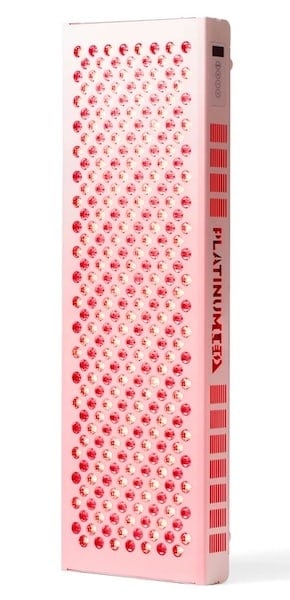
Is PlatinumLED Therapy BioMax 900 worth it?
Five wavelengths (630, 660, 810, 830, 850nm) with third-party-published irradiance data and independently verified low EMF, across a large area suited to full-body sessions and modular expansion. It prices above same-size rivals, and the fan is audible.
- Wavelengths
- 480, 630, 660, 810, 830, 850, 1060 nm (7-wave R+/NIR+ spectrum, current BioMax 900)
- LEDs
- 300
- Dimensions
- 36 in x 12 in x 3 in
- Weight
- 33 lbs
- EMF Emission
- 0.0 microtesla at 4 in (no readable EMF at 4 in or further)
- Warranty
- 3 years
- Certifications
- FDA Class II Medical Device, ETL/UL, CE, ROHS
Best For
- You want a red light panel with third-party tested performance data
- You value having five wavelengths for versatile treatment options
- You're building a serious home light therapy setup
Skip If
- You're looking for a budget-friendly first panel
- You need something quiet for use in shared living spaces
Pros
- Delivers five wavelengths (630, 660, 810, 830, 850nm) for comprehensive coverage
- Third-party tested with published irradiance data
- Low EMF emissions verified by independent testing
- Large treatment area suitable for full-body sessions
- Modular design lets you connect multiple units
Cons
- Higher price point than many competitors in the same size class
- Fan noise can be noticeable during sessions
- Heavy panel requires a sturdy mount or stand
Your rating helps others choose
Tap to rate
PlatinumLED has been in the red light game longer than most competitors. The BioMax 900 delivers five wavelengths (630, 660, 810, 830, 850nm) in a full-body format with third-party tested performance data.
That last part is rare. Most brands cite internal testing.
PlatinumLED publishes independent lab results.
I have not run the BioMax 900 on my own spectrometer. Its case rests on PlatinumLED’s published third-party lab results, which is the reason it takes the third-party-tested slot here.
Judge its irradiance and flicker on those independent numbers, not on a bench claim of mine.
The fan is louder than I’d prefer for meditation sessions, but that’s the trade-off for active cooling that protects LED longevity.
At $1,234, it sits in the mid-range for full-body panels. The 3-year warranty adds confidence. If you want a proven panel from a brand with actual third-party verification and you don’t need 7+ wavelengths, this is a solid choice.
Skip this if you’re looking for the absolute lowest price or need something whisper-quiet for meditation sessions.
LightPath Diesel: Best for Practitioner-Grade Build Quality
The LightPath Diesel uses triple-chip LEDs that push more photons per diode than single-chip designs used by most competitors. The build quality feels sturdier than anything else I’ve handled in this price range.
Here’s the catch: the control button labeling is confusing. Instead of intuitive labels like R/NIR/Both, you get 0/1/2. Minor gripe, but worth mentioning when you’re spending $1,624.
LightPath requires a consultation before purchase. Some people find that annoying.
I think it shows they care about matching the right panel to the right person. The company also has a direct relationship with practitioners, which means the product gets feedback from clinical use alongside consumer reviews.
If practitioner-grade construction and a consultation-based buying process appeal to you, the Diesel delivers. If you want the widest wavelength selection, look at RLT Home instead.
Mito Red MitoPRO 750+: Best Value Full-Body Panel
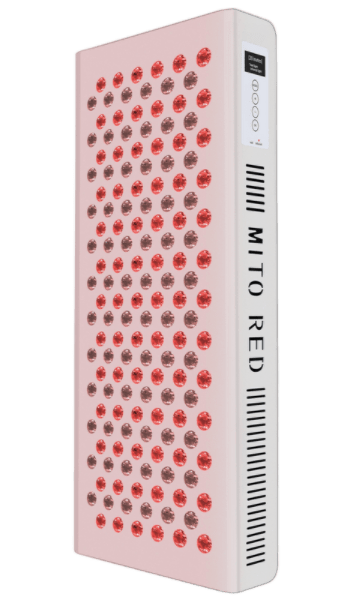
Is Mito Red Light Mito Red MitoPRO 750+ worth it?
Five wavelengths (630, 660, 810, 830, 850nm) with higher irradiance than the original line, third-party tested for irradiance, EMF, and flicker, and modular with other MitoPRO panels. Fits a serious home setup. The fan is audible, and it’s large enough to need a mount.
- Wavelengths
- 630, 660, 810, 830, 850nm
- LEDs
- High-count panel
- Coverage
- Multiple joints simultaneously
Best For
- You want a well-tested panel from a reputable red light brand
- You prefer five wavelengths over basic dual-wavelength panels
- You're building a modular home light therapy setup
Skip If
- You're looking for a budget red light panel under $500
- You need something portable or travel-friendly
Pros
- Enhanced MitoPRO+ series delivers higher irradiance than the original line
- Five wavelengths (630, 660, 810, 830, 850nm) for comprehensive treatment
- Third-party tested for irradiance, EMF, and flicker
- Modular design connects with other MitoPRO panels
- Strong reputation and active user community
Cons
- Premium price for the 750 size
- Fan can be audible during sessions
- Large and heavy, needs a dedicated space or mount
Your rating helps others choose
Tap to rate
I sometimes travel with a smaller Mito Red panel for hotel sessions. Their upgraded MitoPRO+ series delivers higher irradiance than the original line while keeping the price competitive.
Five wavelengths (630, 660, 810, 830, 850nm) at $1,295 puts it in a sweet spot. You get the same wavelength coverage as PlatinumLED’s BioMax 900 for a modest premium, with enhanced output.
The MitoPRO 750+ has become one of the more popular mid-range panels for good reason: solid irradiance, reasonable EMF levels, and a brand that’s been steadily improving their product line rather than relying on marketing hype.
I’d like to see the warranty match PlatinumLED’s 3-year coverage. The fan is audible. And at this size, you’ll want a stand or wall mount for full-body sessions.
Best for anyone who wants five-wavelength coverage without paying premium prices.
Vital Red Elite: Best Red Light Panel Under $1,000

Is Vital Red Light Elite 2.0 worth it?
Full-body panel spanning 9 wavelengths from 480 to 1060nm, including blue for skin and deep near-infrared, across 192 LEDs with a touchscreen and 6 presets. Fits people wanting the broadest range with quiet operation. At 15-plus lbs it needs mounting hardware and runs premium.
- Wavelengths
- 480, 590, 630, 660, 670, 810, 830, 850, 1060 nm (9 wavelengths)
- LEDs
- 216 premium 5-watt anti-flicker LEDs
- Power
- 1080W rated power
- Dimensions
- 36.6 x 8.5 x 2.3 inches
- Weight
- 15 pounds
- Warranty
- 3 years
Best For
- You want a reliable full-body panel from a trusted brand at a fair price
- You prioritize quiet operation for relaxing sessions
- You need large treatment area coverage for back and torso
Skip If
- You want app control and smart preset features
- You need the widest wavelength spectrum available
- You prefer a portable or travel-friendly device
Pros
- 9 wavelengths covering 480-1060nm for broadest therapeutic range
- 192 premium 5W anti-flicker LEDs for full-body coverage
- Touchscreen with 6 preset modes and app connectivity
- Quiet operation with 5 high-speed cooling fans
- 2-year warranty backs build quality
Cons
- Premium price
- Larger unit requires dedicated wall space
- Heavier at 15+ lbs needs mounting hardware
- Smart features may be overkill for simple daily sessions
Your rating helps others choose
Tap to rate
URBAN for 11% offVital Red backs the Elite with a 2-year warranty and a build quality that suggests it will last well beyond that. The anti-flicker LED design and solid construction signal that the company prioritizes durability over cost-cutting.
The panel uses 192 premium 5W anti-flicker LEDs across four wavelengths (630, 660, 810, 850nm). The anti-flicker spec matters.
Flicker-induced stress is one of those invisible downsides most buyers never think about. Vital Red addresses it at the hardware level.
At $999 (currently on sale for $889), it’s also one of the more affordable full-body options. Four wavelengths instead of five means you’re missing 830nm, which some research suggests hits a slightly different absorption peak in cytochrome c oxidase. Whether that matters clinically for home use is debatable.
No app connectivity or smart features. If you want a straightforward, well-built panel at a price that undercuts most competitors, the Elite delivers.
At the current sale price, this is one of the most affordable full-body panels on this list from a reputable brand. For first-time buyers who want peace of mind, the combination of anti-flicker LEDs and a sale price under $1,000 removes a lot of the risk from investing in red light therapy.
Kala Red Light Elite: Best Affordable Full-Body Panel
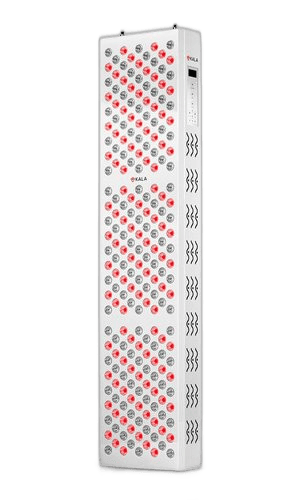
Is Kala Red Light Elite worth it?
Full-body panel with strong 660nm and 850nm irradiance, a sturdy sleek build, and low EMF at the recommended distance for daily heavy use. Priced at the premium end, it’s heavy enough to need a mount, and the brand has a shorter track record than rivals.
- Wavelengths
- 660nm (Red) and 850nm (Near-Infrared), 1:1 ratio
- LEDs
- 231 LED lights, 5W each
- Irradiance
- 161 mW/cm2 at 6 inches
- Dimensions
- L220 x W96 x H900 mm
- Weight
- 30 lbs
- Power
- 100-240V AC, 50/60 Hz; 385W total output
- Warranty
- 2 years
Best For
- You want a powerful full-body red light panel for daily use
- You prioritize low EMF emissions in your light therapy devices
- You're willing to invest in a premium setup for long-term use
Skip If
- You're on a tight budget and need a more affordable entry point
- You want a portable panel for travel or small targeted treatments
Pros
- Full-body panel with strong irradiance at both 660nm and 850nm
- Sturdy build quality and sleek design
- Low EMF emissions at recommended treatment distance
- Includes both red and near-infrared wavelengths for versatile use
Cons
- Premium price limits accessibility
- Heavy unit requires wall mounting or a stand
- Newer brand with less long-term track record than some competitors
Your rating helps others choose
Tap to rate
Kala targets the sweet spot between quality and affordability. The Red Light Elite delivers strong irradiance at both 660nm and 850nm with a sturdy build that feels more expensive than its competitors at this range.
At $1,499, “budget” is relative in the full-body panel world. But the discount through our link undercuts several panels with fewer features.
The panel focuses on two wavelengths rather than five or seven. For most home users, 660nm (red) and 850nm (near-infrared) cover the two most researched and clinically relevant wavelengths. Adding more wavelengths increases versatility, but the core therapeutic effects come from these two.
Low EMF emissions and solid construction make this a reliable daily driver. Skip this if you want the widest wavelength coverage or need a panel from a brand with decades of track record.
Red Light Rising Advantage 900: Best for European Buyers

Is Red Light Rising Advantage 900 2.0 worth it?
Five wavelengths, 300 LEDs, and 75 mW/cm2 average irradiance make this UK panel a full-body option, with touchscreen presets and a 3-year warranty. Best for whole-body sessions. It ships from the UK, so US buyers face longer delivery, possible customs, and no app.
- Wavelengths
- 630nm, 660nm (red) + 810nm, 830nm, 850nm (near infrared)
- LEDs
- 300 x 3W (630nm x30, 660nm x120, 810nm x20, 830nm x20, 850nm x110)
- Irradiance
- 86.4 mW/cm2 at 15cm (measured with Hopoocolor OHSP-350F meter)
- Power
- Rated 900W, real power 430W
- Dimensions
- 91 x 30 x 6.5cm
- Weight
- 11kg
- Warranty
- 3 years (covers manufacturing faults only)
Best For
- You want a multi-wavelength full-body panel with proven UK engineering
- You value a long warranty and generous return policy
- You prefer touchscreen controls with preset therapy modes
Skip If
- You need fast US-based shipping and support
- You want app-controlled smart features
- You need the highest possible irradiance numbers
Pros
- Five wavelengths covering both red and near-infrared spectrum
- High average irradiance of 75 mW/cm2 across the panel
- 300 LEDs provide solid full-body coverage at 91cm tall
- Flicker-free LEDs with low EMF output
- Touchscreen and remote control with 6 preset therapy modes
- 3-year warranty and 100-day return window
Cons
- Ships from UK: longer delivery and potential customs fees for US buyers
- Slightly lower irradiance than some US-based competitors
- No app connectivity for remote control
- Panel width of 30cm may require repositioning for full torso coverage
Your rating helps others choose
Tap to rate
URBAN for 10% offRed Light Rising builds their panels in the UK, and the Advantage 900 2.0 delivers five wavelengths with high average irradiance. For European buyers, this eliminates the import headaches, customs fees, and 3-week shipping times that come with US-based brands.
At $1,220 (sale price $1,098), it’s competitively priced. The five-wavelength configuration (630, 660, 810, 830, 850nm) matches PlatinumLED and Mito Red on spectrum coverage.
The downside for US buyers: shipping from the UK means longer delivery times and potential customs duties. If you’re in the US, you have faster options at similar prices. But if you’re in Europe, the Middle East, or anywhere closer to the UK than the US, this becomes one of the best value propositions available.
The 2.0 version improved on the original with better thermal management and higher irradiance consistency across the panel surface. Red Light Rising has been in the space since the early days of consumer RLT. They’re not the flashiest brand, but they’ve built a loyal following through steady product improvements rather than marketing blitzes.
Red Therapy Co RedRush 840 Pulse: Best for Pulse Mode Therapy
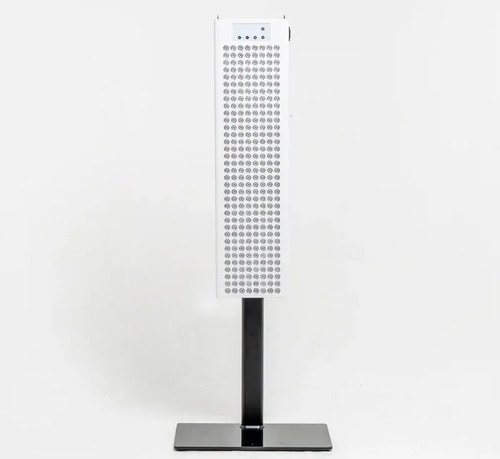
Is Red Therapy Co RedRush 840 Pulse worth it?
Adds a pulsed mode on top of continuous 660nm and 850nm output across a large 840-LED panel with a built-in timer, priced competitively for its size. Fits people curious about pulsed protocols. Pulsed-light research is still emerging, and the fan is noticeably loud.
- Wavelengths
- 660nm red and 850nm near-infrared
- LEDs
- 280 x 3W LEDs (140 at 660nm / 140 at 850nm)
- Irradiance
- 160 mW/cm2 at 6 inches; 250 mW/cm2 max
- Pulse Modes
- Selectable 10Hz Alpha, 20Hz Beta, 40Hz Gamma, plus Continuous Wave
- Dimensions
- 10.25 in wide x 38.5 in tall x 3.5 in thick
- Weight
- 22 lbs
- Warranty
- 2 years
Best For
- You want to experiment with pulsed red light therapy protocols
- You need a large panel for full-body or multi-area treatments
- You want both continuous and pulsed modes in one device
Skip If
- You prefer sticking to well-established continuous-mode panels only
- You need a quiet device for use in shared spaces
Pros
- Pulsed mode may enhance cellular response compared to continuous-only panels
- Large 840-LED panel covers a wide treatment area
- Delivers both 660nm red and 850nm near-infrared wavelengths
- Built-in timer for consistent session lengths
- Competitive pricing for a pulsed panel of this size
Cons
- Pulsed light therapy research is still emerging
- Fan noise is noticeable during operation
- Heavier unit that requires wall mounting
Your rating helps others choose
Tap to rate
URBAN for $100 offThe RedRush 840 Pulse stands out for one reason: pulsed light mode. Most panels run continuous-wave only. This one lets you switch between continuous and pulsed delivery.
Why does that matter? Pulsed red light therapy research is still emerging, but early studies suggest pulsing at specific frequencies enhances cellular response compared to continuous exposure. The theory involves cellular recovery time between pulses, allowing mitochondria to reset between photon bursts.
With 840 LEDs at 660nm and 850nm, the treatment area covers full-body sessions. The pulse mode feature sets it apart from most competitors at this price point.
The fan noise makes it harder to use during breathwork or meditation. And pulsed mode research, while promising, doesn’t yet match the continuous-wave evidence base. This panel is best for experimenters who want to explore pulsed protocols alongside standard continuous treatment.
Rojo Light Therapy Refine 900: Best Modular Expandable Panel
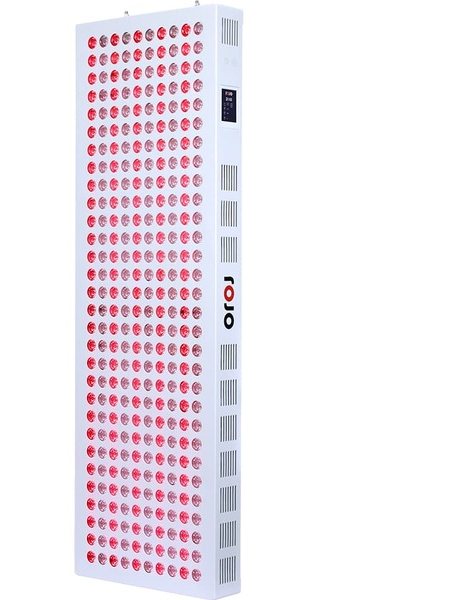
Is Rojo Light Therapy Refine 900 worth it?
Large 900-size panel (660nm and 850nm) that undercuts bigger brands on price while keeping low flicker and EMF, and links into a modular multi-panel setup. Brand recognition trails Joovv and PlatinumLED, support reviews are mixed, and it needs wall mounting.
- Wavelengths
- 630 / 660 / 810 / 830 / 850 nm
- LEDs
- 300 dual-chip LEDs
- Irradiance
- 73 mW/cm2 at 6 inches (spectrometer-tested for dosing)
- Dimensions
- 35.8 x 11.8 x 2.6 inches
- Weight
- 22.5 lbs
- Power
- 483W (4.39A at 110V)
- Warranty
- 3-year warranty
Best For
- You want a large red light panel at a competitive price
- You plan to build a modular multi-panel setup over time
- You prioritize low EMF and low flicker in your devices
Skip If
- You want the most established brand with the largest user community
- You need a compact, portable unit for travel
Pros
- Large 900-size panel covers a wide treatment area
- Delivers both red (660nm) and near-infrared (850nm) wavelengths
- Competitive pricing compared to similar full-body panels
- Low flicker and low EMF design
- Modular, so you can link multiple panels together
Cons
- Less brand recognition than Joovv or PlatinumLED
- Customer support reviews are mixed
- Heavier unit that needs wall mounting for best results
Your rating helps others choose
Tap to rate
URBAN for 10% offRojo markets the Refine 900 as a medical-class device, and the build quality supports that claim. Large treatment area, both 660nm and 850nm wavelengths, and a modular design that lets you expand coverage by adding panels.
At $1,295, it competes directly with Mito Red and Red Therapy Co on price. Rojo has less brand recognition than PlatinumLED or Joovv, which means less peer review and fewer user testimonials to draw from.
Customer support reviews are mixed. Some users report excellent service.
Others describe slower response times. For a $1,000+ purchase, responsive support matters if something goes wrong.
Best for practitioners or serious home users who want medical-class build quality at a competitive price. Skip this if brand recognition and community support are priorities.
Rouge Pro G4: Best for 8-Wavelength Coverage

Is Rouge Pro G4 worth it?
Eight wavelengths including the rare 1060nm, app and touchscreen control, and independent dimming and pulsing across 288 dual-chip LEDs. For buyers who prize smart features and range. Average irradiance (59 mW/cm2) trails some rivals, and custom app presets won’t save.
- Wavelengths
- 630, 650, 660, 670, 810, 830, 850, 1060 nm (8 wavelengths)
- LEDs
- 288 5W dual-chip no-flicker LEDs, 50,000 hour expected lifetime
- Irradiance
- 164 mW/cm2 by solar meter and 90 mW/cm2 by spectrometer, both at 6 inches
- Dimensions
- 36.22 in long x 11.81 in wide x 2.56 in deep
- Controls
- Touchscreen, remote, and app control; 7 smart presets; per-wavelength dimming; pulsing 1-10,000 Hz
- Certifications
- FDA Registered, Health Canada Registered, RoHS, CE, and FCC
- Warranty
- 3 years
Best For
- You want the most advanced smart features and app control in a red light panel
- You value having 8 wavelengths including 1060nm
- You want independent wavelength customization and pulsing
Skip If
- You prioritize raw irradiance power over smart features
- You want a budget-friendly panel under $800
- You need full-body coverage from a single panel
Pros
- Eight wavelengths including rare 1060nm for deeper tissue penetration
- App integration with touchscreen and remote control
- Independent dimming and pulsing for each wavelength
- 288 dual-chip 5W LEDs in a compact form factor
- Quiet operation at 47.5 dB
- 3-year warranty
Cons
- Irradiance of 59 mW/cm² average is lower than some competitors at this price
- Small touchscreen can be fiddly to navigate
- No printed manual included
- Cannot save custom presets in the app
- Energy weighting skews toward near-infrared
Your rating helps others choose
Tap to rate
Rouge’s Pro G4 takes the wavelength game further than most. Eight wavelengths, including a rare 1060nm option for deeper tissue penetration. App integration adds smart features like session tracking and preset protocols.
More wavelengths don’t automatically mean more therapeutic value if the power density behind each wavelength is diluted. Check the individual irradiance per wavelength, not just the total output.
At $1,196, the price is reasonable for the feature set. The 3-year warranty matches PlatinumLED.
The mid-body size means it’s not a true full-body panel. You’ll need to reposition during sessions or invest in a second unit for complete coverage.
This is a Canadian company, and Rouge has built a solid reputation in the RLT space. Best for tech-forward users who want app control, the widest wavelength variety, and don’t mind moderate irradiance levels.
Joovv Solo 3.0: Most Recognized Brand

Is Joovv Solo 3.0 worth it?
The most recognized RLT brand delivers 660nm and 850nm across 150 LEDs, with Bluetooth app modes and a modular, expandable design. For buyers who value brand, resale, and guided protocols. Only two wavelengths, and you pay a premium over the specs.
- Wavelengths
- 660 nm (Red) and 850 nm (Near-Infrared)
- LEDs
- 150 total (76 red, 74 near-infrared)
- Dimensions
- Length 36 in x Width 8.75 in x Height 2.34 in
- Weight
- About 14 lb (6.35 kg)
- Power
- Light output up to 88 Watts; electrical input 100-240VAC 50/60Hz
- Connectivity
- Bluetooth 5.0 with Joovv app (iOS and Android)
- Warranty
- 2 years; 60-day return period
Best For
- You prioritize brand recognition and resale value
- You want a modular system you can expand over time
- You value app integration and guided protocols
Skip If
- You want the best irradiance per dollar
- You prefer more wavelength diversity
- You're budget-conscious and care about specs over brand name
Pros
- Most recognized brand in red light therapy with strong resale value
- 150 LEDs delivering both 660nm and 850nm wavelengths
- Bluetooth 5.0 app with Recovery+ and Ambient modes
- Modular system expandable into larger setups
- 60-day return period
- HSA/FSA eligible
Cons
- Overpriced for the specs delivered
- Only 2 wavelengths vs 5-8 on similarly priced competitors
- Brand premium accounts for significant portion of price
- 2-year warranty is standard, not exceptional at this price
Your rating helps others choose
Tap to rate
Joovv is the name most people associate with red light therapy. They pioneered direct-to-consumer marketing in this space and built a massive brand presence through influencer partnerships and aggressive advertising.
I’m including Joovv because any honest full-body panel roundup has to address them. But I don’t have an affiliate partnership with Joovv, and I won’t pretend otherwise.
The Solo 3.0 delivers red and near-infrared wavelengths in a full-body format at approximately $1,699. The build quality is solid.
The app ecosystem is polished. The brand recognition means strong resale value if you upgrade later.
Here’s my issue: you’re paying a premium for the brand name. PlatinumLED’s BioMax 900 delivers comparable performance with published third-party testing for $465 less.
Vital Red’s Elite costs $700 less with better anti-flicker hardware. And RLT Home’s TotalSpectrum ELITE crushes it on wavelength coverage for users willing to invest at the top end.
If brand familiarity and resale value matter most, Joovv is fine. If verified performance per dollar matters, the panels above offer better value.
One note: if your primary goal is brain health or cognitive optimization rather than full-body treatment, a full-body panel isn’t the most efficient tool. Check out the transcranial photobiomodulation guide for devices specifically designed to deliver light to neural tissue.
What Should You Look for in a Full-Body Red Light Panel?
Choosing a full-body panel comes down to five factors. Get these right, and you’ll avoid the most common buying mistakes.
Irradiance Per Dollar Is the Real Metric
Raw irradiance numbers mean nothing without context. A panel claiming 200 mW/cm2 at the LED surface might deliver 40 mW/cm2 at your skin.
I’ve measured discrepancies of up to 40% between claimed and actual output using my HOPOOCOLOR spectroradiometer at 12 inches. The real comparison metric is irradiance per dollar: divide the irradiance at your treatment distance by the price.
My testing confirms some $1,200 panels outperform $2,000 panels on irradiance per dollar. When brands refuse to share third-party data, ask what they’re hiding.
PlatinumLED and LightPath publish independent lab results. Check the light therapy comparison database for verified numbers.
Treatment Area Coverage Determines Session Efficiency
A “full-body” panel should cover you from shoulders to knees in a single position. Smaller panels require repositioning, which doubles or triples your session time.
If you’re treating your whole body daily, a true full-body panel saves 15-20 minutes per session. Over a year, that’s 90+ hours.
Better to do 5 minutes every day than 15 minutes twice a week.
Forrest Smith, CEO of Kineon, in his High Performance Longevity podcast episode
Check the actual dimensions rather than the marketing label. Some “full-body” panels are barely torso-sized.
Wavelength Count vs. Wavelength Quality
More wavelengths aren’t automatically better. The two most researched wavelengths are 660nm (red) and 850nm (near-infrared).
Every credible full-body panel includes these. Beyond that, 630nm, 810nm, and 830nm add incremental value.
Seven-wavelength panels like RLT Home’s ELITE cover more biological pathways but cost more.
For most home users, a 2-wavelength panel (660/850) covers 80% of the therapeutic benefit. Five wavelengths covers 95%. Seven wavelengths is for people who want comprehensive coverage and don’t mind paying for it.
Warranty Signals Build Confidence
A 2-year warranty is standard. Three years is good. LEDs degrade over time.
Drivers fail. Fans wear out. The warranty tells you how long the manufacturer expects their own product to last.
A short warranty on an expensive panel is a red flag.
Also read the warranty terms carefully. Some warranties cover parts but not labor.
Others exclude “cosmetic damage” in ways that let them deny claims for housing cracks. The best warranties cover the full unit, no questions asked, for the stated period.
Look for warranties that cover the full unit with minimal exclusions.
Third-Party Testing Is Non-Negotiable
If a brand doesn’t publish third-party irradiance testing, you’re trusting their marketing department. My own testing with a $1,000+ spectroradiometer has shown discrepancies between claimed and actual irradiance of up to 40% on some panels.
Always prioritize brands that share independent lab data. Check the full comparison database for verified numbers.
Frequently Asked Questions About Full-Body Red Light Panels
These are the questions I get asked most about full-body red light therapy panels.
How long should you use a full-body red light panel?
Most manufacturers recommend 10-20 minutes per session for full-body treatment. Clinical research typically uses 10-15 minute sessions at treatment distances of 12-18 inches.
Longer isn’t always better. Photobiomodulation follows a biphasic dose response. Too much light can actually reduce the therapeutic effect. Start with 10 minutes and adjust based on how you feel. I personally use 15-minute sessions 4-5 times per week.
How far should you stand from a red light panel?
Six to eighteen inches from the panel surface is the typical treatment range. I test all panels at 12 inches (see methodology above), but 12-18 inches is the therapeutic sweet spot for actual sessions.
Manufacturers sometimes quote irradiance at the LED surface, which inflates numbers dramatically. At a real treatment distance, the light spreads over a zone that covers your body naturally. Check the comparison database for verified measurements at real treatment distances.
Do full-body red light panels emit EMF?
Yes, all electronic devices emit some level of electromagnetic fields. The question is how much. I test every panel with a Cornet ED88T EMF meter and Satic Shield EMI meter.
Some panels produce concerning levels of dirty electricity and magnetic field emissions. Others stay well within safe ranges. Panels with quality drivers and proper shielding minimize EMF exposure. If you’re sensitive to EMF, check individual panel EMF readings before buying.
Are full-body red light panels FDA approved?
Most red light therapy panels are NOT FDA approved. FDA “approval” requires clinical trials proving a specific therapeutic claim. What some panels have is FDA “registration” or “clearance,” which means the manufacturer has registered the device and it meets basic safety standards. The RLT Home TotalSpectrum ELITE is FDA-registered, which is the highest regulatory status among panels in this roundup. Don’t confuse marketing language with actual regulatory status.
How many watts do you need for full-body coverage?
For effective full-body red light therapy, look for panels with at least 200-300 watts of actual power draw (not “equivalent” wattage). Higher wattage generally means higher irradiance across a larger treatment area. The RLT Home ELITE and PlatinumLED BioMax 900 both exceed 300 watts. More important than total wattage is irradiance at your treatment distance. A 500-watt panel with poor optics might deliver less therapeutic light than a 300-watt panel with precision-designed lenses. Always prioritize verified irradiance data over raw wattage claims.
Which Full-Body Panel Should You Actually Buy?
After testing 8+ panels with $3,000 in laboratory equipment, two panel brands stand above the rest.
The RLT Home TotalSpectrum ELITE is my top pick for anyone who wants the most comprehensive full-body red light therapy panel available. Seven wavelengths, FDA registration, 864 LEDs, and clinical-grade build quality. It’s the most expensive panel on this list, and it earns that price.
For the best balance of build quality and value, the Vital Red Elite stands out. Anti-flicker LEDs, solid build quality, and a sale price under $1,000 make it the strongest entry point for serious red light therapy. If you want a dependable panel without paying premium prices, the Elite delivers.
If you travel frequently, see our portable red light therapy picks.
If joint pain is your primary concern, the joint pain-specific guide narrows the field to panels optimized for that use case.
Know someone shopping for a red light panel? Send them this guide. It might save them from overpaying for inflated specs.

Comments