

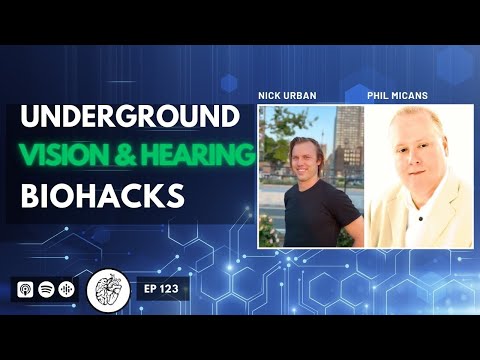
With Phil Micans of IAS Group, Episode 123



What You’ll Learn
- Hidden medical research: An estimated 50 million medical publications exist, yet only 15-20% are indexed online. The rest sits in libraries worldwide, often in non-English languages, making groundbreaking discoveries virtually invisible. [05:00]
- Peptide bioregulators explained: Soviet-era short-chain peptides (2-4 amino acids) act as gene switches found naturally in food. They work orally, have been dosed over 100 million times with zero serious side effects reported across 40+ years. [11:02]
- Macular degeneration reversal: A 2005 New York Academy of Sciences study gave 100 patients 3 mg melatonin, 50 mg zinc, and 50 mcg selenium nightly. After six months, 90% showed complete resolution of wet or dry macular degeneration. [22:36]
- MZS melatonin timing protocol: Walter Pierpaoli’s MZS formulation must be taken between 9 PM and 11 PM to match the natural melatonin peak window of 1-3 AM, rather than using slow-release or sublingual forms that miss this critical window. [30:07]
- Can-C eye drops for cataracts: N-acetylcarnosine drops combat glycation in the lens. Three human clinical studies show 89% of users improve their eyesight within 5-6 months, with some achieving complete cataract eradication. [35:00]
- Glycation as root cause: Glycated proteins block the Schlemm canal (raising intraocular pressure, contributing to glaucoma) and the lacrimal ducts (causing dry eyes). Can-C’s antiglycation action addresses all three conditions simultaneously. [37:30]
- Aldosterone for hearing loss: 1940s research rediscovered by Dr. Jonathan Wright shows that 125 mcg oral aldosterone can restore hearing within days for patients with low aldosterone levels and no physical ear damage. [42:18]
- BEC5 Curaderm for skin cancer: Dr. Bill Cham’s cream containing solasodin glycosides removes squamous cell and basal cell carcinomas with 100% effectiveness across 80,000 documented patient cases by stripping the rhamnose coating that hides cancer cells from the immune system. [48:19]
- Stairstep approach to aging: Bill Faloon’s framework targets multiple biochemical pathways (mTOR, autophagy, AMPK, senescence, NAD) simultaneously, treating biological age control as a multifactorial problem rather than addressing single pathways in isolation. [53:14]
Why It Matters
Most people assume that if a health intervention worked, their doctor would know about it. In reality, over 80% of the world’s medical literature isn’t indexed online, and much of it exists only in non-English languages. Phil Micans, who’s spent 30+ years researching international antiaging medicine as editor of Aging Matters magazine, reveals proven interventions for vision, hearing, and skin that remain largely unknown in Western medicine. The solutions he presents cost a fraction of conventional treatments and carry safety profiles that most pharmaceuticals can’t match.
Who Should Listen
- Anyone experiencing early vision decline, cataracts, or macular degeneration who wants alternatives beyond surgery or expensive injections.
- Longevity enthusiasts interested in peptide bioregulators, precision melatonin timing, and overlooked antiaging compounds from international research.
- People dealing with age-related hearing loss who haven’t explored hormonal signaling as a potential root cause.
Overlooked Antiaging Remedies for Eyes, Ears & Skin
Phil Micans returns to the High Performance Longevity podcast to share health interventions that have been hiding in plain sight for decades. As the founder of International Antiaging Systems (IAS Group) and editor of Aging Matters magazine, Phil has spent over 30 years tracking down international research that never reached mainstream Western medicine. His work spans peptide bioregulators, chronobiology, and precision supplementation strategies backed by clinical evidence from Russia, China, Italy, and Australia.
The conversation covers three major intervention categories. For vision: a mineral-melatonin protocol that reversed macular degeneration in 90% of patients within six months (published in the New York Academy of Sciences), and Can-C eye drops that improve cataracts in 89% of users through antiglycation action. For hearing: aldosterone restoration that returns hearing within days. For skin: BEC5 Curaderm cream with 80,000 documented cases of squamous and basal cell carcinoma removal. Phil also explains Walter Pierpaoli’s MZS melatonin timing protocol designed to match the body’s natural 1-3 AM peak.
Listeners will come away with specific dosages, timing protocols, and a framework for evaluating overlooked international research. Whether you’re exploring peptide bioregulators for organ support or considering low-cost alternatives for age-related sensory decline, this episode delivers actionable protocols backed by decades of clinical data.
Key Terms Quick Reference
- [11:02] Peptide bioregulators: Short-chain peptides of 2-4 amino acids discovered by Soviet researchers that act as gene switches. They can activate or silence specific genes depending on the body’s needs, functioning like adaptogens at the genetic level.
- [35:00] Glycation: A process where proteins, sugars, and oxygen cross-link, damaging proteins throughout the body. In the eye, glycation clouds the lens (cataracts), blocks drainage canals (glaucoma risk), and impairs tear ducts (dry eyes).
- [35:30] N-acetylcarnosine (NAC): A dipeptide used in Can-C eye drops that acts primarily as an antiglycation agent in the eye. It prevents and reverses the cross-linking of crystallin proteins in the lens that causes cataracts.
- [30:07] MZS: Walter Pierpaoli’s melatonin formulation designed to replicate the body’s natural pulsatile melatonin release pattern, peaking between 1-3 AM when taken at 9-11 PM. Named for its melatonin, zinc, and selenium components.
- [42:18] Aldosterone: An adrenal hormone primarily involved in salt balance. Dr. Jonathan Wright’s research shows it also functions as a signaling molecule for hearing, with low levels correlating to age-related hearing loss.
- [48:19] Solasodin glycosides (BEC): Compounds found in the “devil’s apple” plant (related to eggplant) that strip the rhamnose coating from skin cancer cells, exposing them to immune system detection and triggering apoptosis.
- [53:14] Stairstep approach: Bill Faloon’s framework for biological age control targeting multiple biochemical pathways (mTOR, autophagy, AMPK, senescence, NAD) simultaneously rather than optimizing a single pathway.
Can You Reverse Macular Degeneration Naturally?
The short answer
A combination of melatonin, zinc, and selenium taken nightly reversed both wet and dry macular degeneration in 90% of patients within six months, according to a study published in the New York Academy of Sciences.
What Micans found
Phil explains that conventional macular degeneration treatment involves injections directly into the eyeball every 2-3 months, costing over $1,000 per injection for the drug alone. After two years of this regimen, the clinical success rate sits at roughly 50-50. Most NHS and public health systems won’t even treat dry macular degeneration, telling patients to return when it progresses to the more dangerous wet form. The 2005 Chinese study changed this calculus dramatically: 100 patients with 110 affected eyes received 3 mg melatonin, 50 mg zinc, and 50 mcg selenium nightly. Within three months, significant improvements were already visible on fundus imaging. The only side effects reported were better sleep, more energy, and reduced depression.
What to do about it
Take 3 mg melatonin, 50 mg zinc, and 50 mcg selenium together each night. Phil recommends continuing long-term as a preventative measure, especially for anyone over 50. The estimated annual cost comes to roughly $100 compared to $15,000-$25,000 for conventional treatment. Walter Pierpaoli’s MZS formulation combines all three in one tablet with proper timing built in.
“99% of the people no longer had wet or dry macular degeneration. The other 10% had made improvements but perhaps hadn’t eradicated it. What side effects were there? People had better sleep, more energy, and felt less depressed.” – Phil Micans
Related: Best Bioregulator Peptides
Do Can-C Eye Drops Actually Work for Cataracts?
The short answer
Yes. Three human clinical studies show that N-acetylcarnosine drops (Can-C) improved eyesight in 89% of cataract patients within 5-6 months by targeting glycation, the root cause of lens clouding.
What Micans found
Researchers at the Helmholtz Institute in Moscow developed Can-C after recognizing that global cataract surgery demand would outpace the supply of trained surgeons by 2050. They discovered that carnosine, a dipeptide naturally present in the eye, acts as an antiglycation agent. When glycated proteins accumulate in the lens, the crystallin proteins become clouded, progressing from white to yellow to brown. Can-C works by preventing new glycation and helping break down existing cross-linked proteins. The dosing protocol is simple: two drops, twice daily. Beyond cataracts, Phil reports that patients have also experienced reduced intraocular pressure (relevant to glaucoma) and lasting resolution of dry eyes, suggesting the antiglycation effect extends to the Schlemm canal and lacrimal ducts.
What to do about it
Apply Can-C drops (two drops per eye, twice daily) consistently for 5-6 months before evaluating results. Blood sugar management is equally important, as high-sugar meals visibly impair vision within hours through acute glycation. If you have early-stage cataracts, this is worth trying before committing to surgery. For dry eyes, many users reported permanent resolution after 6 months of use.
“I’ve used it for six months. I don’t have dry eyes anymore. I don’t use it anymore.” – Phil Micans, quoting patient feedback
Related: Megadosing Melatonin
Can Aldosterone Restore Age-Related Hearing Loss?
The short answer
For people with low aldosterone levels and no physical ear damage, supplemental aldosterone (125 mcg orally) has restored hearing within days by acting as a signaling molecule between the inner ear hair cells and the auditory cortex.
What Micans found
Dr. Jonathan Wright’s team at the Tahoma Clinic in Washington state rediscovered 1940s research linking aldosterone to hearing function. Phil explains that aldosterone, an adrenal hormone primarily known for salt balance, also serves as a critical signaling molecule for the hair cells in the inner ear. Dr. Rich Lippman’s work suggests two hormones drive hearing: aldosterone controls volume, while IGF-1 handles detail. A diagnostic test now exists to identify patients whose aldosterone levels fall below the threshold where hearing loss becomes likely. When these patients receive approximately 125 mcg of aldosterone orally, hearing returns to near-normal within days. A liquid form called Aldo-Pro, developed partly through Phil’s involvement, can also be applied as ear drops for faster local effect.
What to do about it
Get your aldosterone levels tested first. If levels are low and you have hearing loss with no physical ear damage, aldosterone supplementation may help. Supporting adrenal glands through nutrition is also beneficial. Phil specifically mentions licorice as a food that supports aldosterone production. Adrenal peptide bioregulators may also help the body produce more aldosterone naturally over time.
“They gave these patients some aldosterone, approximately 125 micrograms orally, that within a few days, their hearings returned to a near normal state.” – Phil Micans
The Micans Sensory Restoration Protocol
Phil Micans outlines a systematic approach to addressing age-related vision, hearing, and skin concerns using overlooked international research. Start with the lowest-cost, highest-safety interventions first.
- Address macular degeneration risk first: Take 3 mg melatonin, 50 mg zinc, and 50 mcg selenium nightly. Allow six months to evaluate results. Estimated annual cost under $100.
- Use timed melatonin, not generic forms: Take MZS between 9-11 PM to match the natural 1-3 AM peak. Avoid slow-release forms that persist past 6 AM and sublingual forms that clear in 30 minutes.
- Apply Can-C for cataracts or dry eyes: Two drops per eye, twice daily, for a minimum of five months. Also manage blood sugar aggressively, as glycation drives all three eye conditions (cataracts, glaucoma risk, dry eyes).
- Test aldosterone if hearing declines: Rule out physical ear damage first. If aldosterone levels are low, try Aldo-Pro drops or 125 mcg oral aldosterone. Hearing improvement can occur within days.
- Consider BEC5 Curaderm for skin lesions: Apply twice daily to suspected squamous cell or basal cell carcinomas. Not effective on wet or mucosal surfaces. Keratoses (sunspots) typically resolve within days.
- Support organ function with peptide bioregulators: Match the specific peptide to the organ you want to support (thyroid, adrenal, pineal, etc.). These work epigenetically, are orally bioavailable, and bioregulate rather than force changes in one direction.
- Adopt a multifactorial aging strategy: Use Bill Faloon’s stairstep approach to audit each biochemical pathway (mTOR, autophagy, AMPK, senescence, NAD) rather than optimizing only one.
Common sensory health mistakes
- Waiting for dry macular degeneration to become wet before acting. Most health systems won’t treat dry AMD. The mineral-melatonin protocol works on both forms and costs under $100 per year.
- Taking melatonin at the wrong time or in the wrong form. Sublingual melatonin clears in 30 minutes. Extended-release may still be active at 6 AM. Neither matches the body’s natural 1-3 AM peak.
- Treating hearing loss only with hearing aids. Hearing aids address the symptom. If the cause is low aldosterone, restoring the hormone can return hearing to near-normal.
Source: Micans’ International Antiaging Research Framework, IAS Group
FAQ
What are peptide bioregulators & how do they work?
Peptide bioregulators are short-chain peptides made up of 2-4 amino acids discovered by Soviet researchers. They act as gene switches that can activate or silence specific genes depending on the body’s needs. They work orally, are found naturally in food, and have been used over 100 million times across 40+ years with no serious side effects reported. Professor Vladimir Khavinson leads the research behind 21 commercially available bioregulators targeting organs like the heart, liver, kidney, pineal, thyroid, and reproductive system.
Can melatonin, zinc & selenium reverse macular degeneration?
A 2005 study published in the New York Academy of Sciences showed that 100 patients taking 3 mg melatonin, 50 mg zinc, and 50 mcg selenium nightly experienced significant improvement within three months. After six months, 90% had complete resolution of both wet and dry macular degeneration. The only reported side effects were better sleep, more energy, and reduced depression.
What time should you take MZS melatonin?
MZS should be taken between 9 PM and 11 PM. This timing ensures the melatonin reaches peak blood levels between 1-3 AM, matching the body’s natural pulsatile melatonin release pattern. You do not need to go to bed immediately after taking it. Light exposure will not destroy exogenously consumed melatonin, only endogenously produced melatonin.
How do Can-C eye drops treat cataracts?
Can-C eye drops contain N-acetylcarnosine, which acts as an antiglycation agent in the eye. Glycation causes proteins in the lens to cross-link and become cloudy. The drops are applied twice daily (two drops per eye) and three clinical studies show 89% of users improve their eyesight within 5-6 months. Some patients achieve complete cataract eradication.
Can aldosterone help with age-related hearing loss?
Yes, for people with low aldosterone levels and no physical ear damage. Research rediscovered by Dr. Jonathan Wright from the 1940s shows that approximately 125 mcg of oral aldosterone can restore hearing within days. Aldosterone acts as a signaling molecule between the inner ear hair cells and the brain’s hearing center. A liquid form called Aldo-Pro can be applied as ear drops for faster effect.
What is BEC5 Curaderm & what skin conditions does it treat?
BEC5 Curaderm is a cream developed by Dr. Bill Cham containing solasodin glycosides derived from the devil’s apple plant (related to eggplant). It removes squamous cell carcinomas and basal cell carcinomas by stripping the rhamnose coating that hides cancer cells from the immune system. With 80,000 documented patient cases, it shows 100% effectiveness on these skin cancers. It also clears keratoses (sunspots) within days. It does not work on wet or mucosal surfaces.
Why is glycation so damaging to eye health?
Glycation occurs when proteins, sugars, and oxygen cross-link, impairing protein function. In the eye, glycated proteins cloud the lens (cataracts), block the Schlemm canal (raising intraocular pressure and contributing to glaucoma), and clog lacrimal ducts (causing dry eyes). Diabetics are especially vulnerable because elevated blood sugar accelerates glycation throughout the body. Even a single high-sugar meal can cause temporary vision impairment within hours.
Products, Tools & Resources Mentioned
Outliyr independently evaluates all recommendations. We may get a small commission if you buy through our links (at no cost to you). Thanks for your support!
Supplements & health products
Profound Health Bioregulators: Full line of oral peptide bioregulators sourced from IAS Group. Save 15% with code URBAN.
Can-C Eye Drops: N-acetylcarnosine drops for cataracts, dry eyes, and intraocular pressure. Two drops per eye, twice daily. Save 15% with code URBAN.
BEC5 Curaderm Skin Cream: Solasodin glycoside cream for squamous cell and basal cell carcinomas. 80,000 documented patient cases. Save 15% with code URBAN.
MZS Melatonin: Walter Pierpaoli’s timed-release melatonin, zinc, and selenium formula designed for the 1-3 AM natural peak window. Take between 9-11 PM.
Aldo-Pro: Liquid aldosterone formula designed for sublingual or ear drop use. Helps restore hearing in patients with low aldosterone levels.
Books & references
Curaderm BEC5 by Dr. Bill Cham: The complete science behind solasodin glycosides and their application for non-melanoma skin cancers.
Gerontological Aspects of Genome Peptide Regulation by Prof. Vladimir Khavinson: The foundational scientific text on peptide bioregulators and gene expression.
Nutrition and Physical Degeneration by Weston A. Price: Landmark study of native tribes and their dietary practices, including organ meat consumption and thyroid health.
Pharmocracy by William Faloon: Exposes how pharmaceutical regulations prevent access to proven health interventions.
Lifespan by David Sinclair: Explores NAD and other biochemical pathways central to the stairstep approach to aging discussed in this episode.
Dr. Wright’s Guide to Healing with Nutrition by Jonathan Wright: Covers mineral therapies and the chronogeriatric principles referenced throughout the episode.
Websites & organizations
Antiaging-Systems.com: IAS Group’s main website with research references, product information, and video content. Online since 1996.
Aging-Matters.com: Free digital magazine covering the topics discussed in this episode. Print copies available for $10.
About Phil Micans
Phil Micans is the founder of International Antiaging Systems (IAS Group) and editor of Aging Matters magazine. He has dedicated over 30 years to researching and distributing antiaging, preventative, and regenerative medicine products sourced from international research. Phil has helped bring peptide bioregulators, chronobiological melatonin formulations, and other overlooked health interventions to the English-speaking world. His work spans collaborations with researchers including Professor Vladimir Khavinson, Dr. Jonathan Wright, and Dr. Walter Pierpaoli. He frequently speaks at international antiaging conferences and has authored numerous articles for Aging Matters covering topics from vision restoration to biological age control.
Related Episodes & Articles
- Episode 106: Bioregulator Peptide Science, Benefits & Uses
- Episode 118: Advanced Medicine Bioregulators
- Episode 75: Longevity Antiaging Supplements
- Article: Bioregulator Peptides
- Article: Megadosing Melatonin
- Article: Peptides for Longevity
Episode Transcript
Nick Urban [00:00:05]: What if some of the most incredible health transformation tools are actually staring us right in the face? And they’ve been around for years, decades, or in some cases even centuries, yet for some reason have largely been forgotten today. Welcome to body peak performance. I’m your host, Nick Urban, and today that is exactly what we are discussing. Our guest this week is Phil Micans. Phil has been dedicated to antiaging, preventative, and regenerative medicine for more than 30 years. He helps spread the latest international lifespan information to the public by being editor to the Aging Matters magazine. Plus he assists with many other publications and conferences. He also established the IAS group, which is an organization dedicated to finding hard to obtain supplements and health products, some of which we discuss today.
Nick Urban [00:02:08]: Ladies and gentlemen, Phil Micans.
Nick Urban [00:02:12]: Phil Micans, welcome back to the High Performance Longevity podcast.
Phil Micans [00:02:16]: Thanks, Nick. Great pleasure to be here again.
Nick Urban [00:02:19]: Yeah, we recorded an episode together. I think it was number 106 and that was a big hit. We talked about peptide bioregulators. We will reference that again in this show. But there are a lot of things we’ve discussed, just you and I offline when the cameras were not rolling and a lot of really cool stuff that I’m going to guess most people have never heard of. And will you share how that is possible, that there’s such cool things out there, such cool inventions and medical health interventions? How can these work if no one’s heard of them?
Phil Micans [00:02:58]: Right? Well, the bottom line is some people have heard of them, some countries have approved them. But if you talk about mass knowledge, like the world knows Viagra or Prozac or something like that, no, they’re nowhere near that level. And we can certainly get into some of the reasons why. In fact, I think all the things I want to mention today are effectively natural agents, and that’s one of the major stumbling blocks to getting anything promoted.
Phil Micans [00:03:48]: There are not many doctors, practicing doctors, medical doctors, what we call GPS in the UK, general practitioner who have enough time to look up the research and all the rest. Let’s be honest, most of them might go along to a few medical conferences sponsored probably by pharmaceutical companies, and then wait for the pharmaceutical reps to come in and tell them what’s new. So how can we put it that makes the world rather tainted and rather slanted into one direction. Meanwhile, there can be the most wonderful research that’s been done in different places, some of it being decades old, many decades old.
Nick Urban [00:04:55]: Are there any in particular that you like to start out with?
Phil Micans [00:05:00]: From one perspective, I’m looking at this, they reckon that presently online, and I’m just talking medicine here. I’m not talking general health, general nutrition or clinical and personal experiences, of which there’d be far, far more. But in the medical literature, it’s estimated that today, 50 million publications, 50 million articles are online, 1 million are added every year. Okay, that’s the present level, but probably somewhere between 15 and 20% is online. The rest is in the libraries of the world. And of course, that could also mean it’s different languages. It’s not all going to be English.
Phil Micans [00:06:45]: And to use a line that I’m rather proud of because I’m writing an article on this, imagine if we did that, we’d actually learn what we’ve already discovered.
Phil Micans [00:07:24]: There is one example I can give here. A man I have great respect for, Dr. Jonathan Wright, he runs a clinic in Tahoma in Washington, very big clinic. He actually found a combination of things which I’ll also come to separately, that reverse macular degeneration in people’s eyes. And it’s a combination of basically minerals and melatonin as well. At one point he actually advertised, come to my clinic and I will reverse your wet or dry macular degeneration or I’ll give you your money back. Now, that’s not a phrase you hear a lot in doctors’ offices and clinics, is it?
Phil Micans [00:08:28]: And he said, you can’t do this, you cannot give a money back guarantee. And he said, Why? And they told him it was unfair to the doctors who couldn’t.
Nick Urban [00:09:06]: When I was writing a simple article on the basics of peptide bioregulators, I read two books on it. I looked through PubMed, I looked through other sites that had research, and a lot of it was in Russian. Then I discovered there was an argument over whether or not they translated the dosages properly when they were translating the language.
Phil Micans [00:09:53]: And as you correctly say, there are nuances within languages that don’t translate well into our native languages. The word nootropics, which I think a lot of people are aware of, which generally speaking means towards the mind. But my good friend Marius Croazis, who’s a doctor and has written various books, he was saying it’s like saying the tree and the woods at the same time.
Nick Urban [00:10:40]: Can you give a quick summary of what peptide bioregulators are?
Phil Micans [00:11:02]: Indeed, Nick, and I would say this is one of the wow factors. The Soviets discovered that short chain peptides, these are very small links of amino acids. A peptide is made up of amino acids and a bioregulator, which is a term that’s been given by Professor Vladimir Khavinson, who’s the lead researcher behind all of this. And they are basically peptides made up of two, three or four amino acids. So they’re particularly small, but they’re not all bioregulators. What they discovered was that commercially available today there are 21, although actually if you look at the literature, it was probably approaching 50. They are gene switches. So if you stop and think about that for a moment, it’s a hidden message within food.
Phil Micans [00:12:38]: And the Russians and the Soviets, originally it was a Soviet military secret. They reserved it for their troops, their cosmonauts and their Olympic teams. But since Perestroika, this stuff has been in the open and today the oral versions, and they work orally. Anybody that knows about peptides knows that most of them don’t work well orally because their chains are too long. But these ones work orally and with all the evidence, all the backup, their food supplements in the Russian countries. They’re sold as food supplements. They’re incredibly safe. There are various, it’s a long list, 21, but you’ve got things like heart and liver and kidney and pineal and testes and ovaries.
Phil Micans [00:14:14]: And the incredible thing that most people can’t get their heads around is the word bioregulator, because what the same peptide can do with that specific gene is activate it or silence it. So, for example, let’s take the thyroid gland in the neck. A lot of people, they have a weak thyroid. If you take the thyroid peptide, it will actually, through the gene, encourage the thyroid. But here’s the crazy thing. If you were one of the rarer persons who is producing too much thyroid hormones, it will silence the gene. And it bioregulates. Think of it like an adaptogen.
Phil Micans [00:15:45]: And it may also help to explain why in Russia, Professor Khavinson has spoken of this openly, saying it’s been dosed over 100 million times in millions of people. Because remember, folks, this has been happening over 40 years. This wasn’t discovered last week. They haven’t seen any serious side effects. And it could help to explain that you don’t appear to be able to overdose.
Nick Urban [00:16:18]: And I think that normal peptides tend to be among the safer class of therapeutics. But then bioregulators are even a notch above that.
Nick Urban [00:17:10]: And I think a natural source of some of these bioregulators, again in much smaller doses than if you took a dedicated supplement, would be in the respective organ. So say if I ate liver then I’d be getting a small dose of the liver bioregulators in some form.
Phil Micans [00:17:25]: Absolutely. It goes back even to the work of people like Weston Price, who made discoveries in native tribes around the world. And they ate the necks of the animals. In fact our forebears would have wasted nothing. You’d had the meat and of course it wasn’t that long ago when people ate the organ meats. And Weston Price in his studies showed that the tribes who are eating the necks of animals didn’t have any thyroid problems.
Nick Urban [00:19:36]: Well, let’s talk more about the visual system now because you briefly mentioned to me about some of these cool products and the information behind them. I’m interested to hear what they are, how they work and if there is any research or anecdotes that you’ve heard about each of them.
Phil Micans [00:19:56]: I’ve got two visuals to talk about today. I’ll mention the one first that I’ve already alluded to, which is for macular degeneration. Macular degeneration is basically a breakdown on the retina in the eye, the back of the eye. And there are two forms. One is called dry, which is much more prevalent. Probably 80% of the people who have macular degeneration are dry. And generally it starts dry, which kind of means it’s not bleeding, literally, it’s dry and then you get wet. Where is a bigger problem.
Phil Micans [00:22:36]: So in this study in China, 100 patients, 110 eyes, some had dry, some had wet. What they gave everybody was very simple. They gave them, every night, three milligrams of melatonin, 50 milligrams of zinc, and 50 micrograms of selenium. It was actually all put into one pill. Nothing else. Within three months, there were already significant improvements in both wet and dry. They did it for six months. At the end of six months, 99% of the people no longer had wet or dry macular degeneration. The other 10% had made improvements. What side effects were there? People had better sleep, more energy, and felt less depressed.
Nick Urban [00:25:47]: Would you stick with that long term after the six months, or would you do it and then stop?
Phil Micans [00:25:53]: I see no reason not to. In fact, there is a strong argument for us older people, because if we start now talking about antiaging, or shall we call it preventative medicine, I’m a strong advocate for melatonin.
Nick Urban [00:26:22]: Melatonin is very misunderstood. There are some people who experience a paradoxical melatonin effect where after three or 5 hours, they wake up wide awake, and it doesn’t work the way it does for most people.
Phil Micans [00:26:44]: You’ve hit the nail right on the head. This is where we get into what used to be called chrono geriatrics, which is the timing of things. And again, coming back to Dr. Jonathan Wright, he always says if things are going wrong and we’re not copying nature, we’re either using the wrong molecule, the wrong dose, or the wrong timing.
Phil Micans [00:28:28]: So, coming back to melatonin, one of the great things that Walter and his team did was they looked at the natural pulsatile release of melatonin. Now, melatonin is very unique because it’s not in us in daylight, but it comes out in us when we go into darkness. Walter once described the pineal gland to me, which is the primary source of melatonin. He once said to me, consider it the conductor of the endocrine system.
Phil Micans [00:30:07]: What Walter and his team realized is the natural night peak of melatonin is between 1 AM and 3 AM. That’s probably why it’s there. The most important hours to be asleep. So by taking MZS between 9 PM and 11 PM, you are putting that melatonin into your blood between 1 AM and 3 AM.
Phil Micans [00:31:07]: You do not need to go to bed. It is not necessary to go to bed. A lot of people say light entering the eye destroys melatonin. That’s true, that’s absolutely true. But it only destroys endogenously produced, in other words, naturally produced melatonin. If you’ve just thrown a tablet into your stomach, it will not stop that at all.
Nick Urban [00:31:46]: And then the other question I had with that is the decision to only include a couple of minerals, zinc and selenium. What about copper to balance the zinc to copper ratio?
Phil Micans [00:31:59]: There are many other things you can get into, but on a simplistic level, Jonathan Wright used to give a multitude of different minerals by injection. But he found that the patients who were already suffering with macular degeneration were in the bottom quartile of mineral balance. So he found in many cases they needed that boost that could only be provided by injections.
Phil Micans [00:33:10]: If we stay in the visual field, there’s another big one. And really weirdly, this is going to be Russian research again. And it originated in the early, very early 2000s from a place called the Helmholtz Institute in Moscow, who gave the world cataract surgery all those years ago. They realized back in the 90s that with the world getting older, although cataract surgery is very effective and also is the safest form of surgery known, in 2% of cases, there are complications. They were not going to have enough trained surgeons by 2050 to deal with the numbers of people.
Phil Micans [00:35:00]: And the bottom line was, they found that another dipeptide, two amino acids called carnosine, seems to be a natural protectant within the eye. Specifically, it is an antiglycation agent. What happens, you imagine the lens is in the middle of your eye and it’s surrounded by this liquid, which is called the aqueous humor. With glycation, the crystallines within the lens become impaired and they become clouded, and they can go from white to yellow to even brown. So the main product, the original product, was called Can C. And it’s two drops twice a day. And the human clinical studies, the biggest one was 48 people, have shown that if used over five to six months, 89% of the people will improve their eyesight.
Phil Micans [00:37:04]: It can lower intraocular pressure of the eye. So what happens is these glycated proteins, they exist in other parts of the eye. One is called the Schlemm canal, and it’s literally the valve that puts things back into the blood. The theory is that these glycated proteins can also block the Schlemm canal. Think of it as a clogged drain. That can lead to the pressure of the eye building up because the wastes are not being removed properly, which could be part of glaucoma.
Phil Micans [00:38:36]: More dramatically than that are people who suffer with dry eyes. Dry eyes is literally where the tears, because we think, well, I’m not crying. They’re happening all the time. The eye is putting a fluid on itself all the time. You got lacrimal ducts. We think the same thing’s happening. They get blocked by these glycated proteins. So when they’re reduced and removed, more fluid comes back on the eye.
Nick Urban [00:39:34]: The way Can-C works is it helps prevent glycation, which, to summarize, when you spike your blood sugar, you cause a lot of downstream issues. The stickiness of the sugar wreaks havoc around the body and especially in the eyes. You can actually see this yourself. If you go out and eat a really sugary meal and you try and do something later that requires very precise vision, you can actually see your vision get worse an hour, 2 hours after a high sugar meal.
Nick Urban [00:42:07]: That’s fairly comprehensive for the visual system. We got two different things to look into there. And then on the auditory side for hearing, I know there’s another wow factor there.
Phil Micans [00:42:18]: Again, this is one from my favorite doc, Dr. Jonathan Wright. 1940s research rediscovered by his university students. And what it was is a hormone called aldosterone, and it’s produced in the adrenal glands. The normal use for it is to help with salt balance in the blood. And even sometimes it has a role in people’s balance.
Phil Micans [00:43:31]: They discovered from 1940s research that patients who were having trouble hearing, who had no physical damage to their ear were given aldosterone, regained their hearing. One interesting side note, covered by a guy called Dr. Rich Lippman, he thinks there are two hormones that are very predominant in hearing. One is aldosterone for the volume, and the other is IGF one or insulin like growth factor for the detail.
Phil Micans [00:44:43]: When they gave these patients some aldosterone, they were giving them approximately 125 micrograms orally, that within a few days, their hearings returned to a near normal state. There has been a liquid aldosterone made. It’s called Aldo-Pro. Originally designed for sublingual use until a bunch of docs say, what if it’s eardrops? What happens is over several hours, the hearing is improved.
Phil Micans [00:45:54]: It turns out it’s a signaling molecule. So the little hairs inside our inner ears are obviously vibrating with the air movements. But it’s the signal from those to the hearing center in the brain, and aldosterone appears to be part of that signaling.
Nick Urban [00:46:20]: How would you recommend going about addressing this deficiency? Are there things we can do so that we produce more aldosterone on our own?
Phil Micans [00:46:47]: The one thing I remember was licorice. He was saying there were ingredients in licorice that were very good. I would look at melatonin as a general addresser. I think it would be worth thinking about the adrenal peptide bioregulators. And of course, there is aldosterone itself.
Phil Micans [00:48:10]: This last one I’d like to tell you about. His name is Dr. Bill Cham. When he was a young man, he walked around his island and he noticed that horses and cows would sometimes rub themselves up against this local plant, which they call the devil’s apple, but is actually a relation to eggplant. He asked the local farmers, why do the animals do this? And their reply was, they get lesions on their skin, and they instinctively rub themselves up against this plant.
Phil Micans [00:49:00]: He spent 20 years researching and what he discovered was an ingredient within this plant called solasodin glycosides. Those lesions were cancer, skin cancer. They are what’s known as squamous cell carcinomas and basal cell carcinomas. It’s 100% effective in removing basal cell and squamous cell carcinomas. It’s a cream, and you put it on twice a day.
Phil Micans [00:50:02]: They can start as what’s known as keratosis, which is called a sunspot. It gets rid of those in days. 80,000 patient cases documented. They know exactly how it works. What it does, turns out that cancer cells coat themselves with a rhamnose coating that is not present on a healthy cell. It removes this rhamnose coating. And the moment it removes that coating, the immune system says, ah, you’re a non-self cell, and the natural process of apoptosis takes place. The cream is called BEC5 Curaderm, named after the inventor Bill Edward Cham.
Nick Urban [00:50:56]: Phil, this has been a blast. If people want to connect with you to follow your work, to subscribe to your magazine, how can they get a hold of you?
Phil Micans [00:51:25]: The magazine, we have published all these stories I’ve spoken about today, and folks can download them for free, or they can pay us $10 and have one delivered to their door. And that website is called AgingMatters.com. And if you want even more detail on even more subjects, our main website which has existed since 1996 is Antiaging-Systems.com.
Nick Urban [00:52:10]: Phil, a couple more rapid fire questions for you before we part ways today. First of all, what unusual substance or nootropic or vitamin or supplement have you used today or recently?
Phil Micans [00:52:25]: I’m just about to start experimenting with a supplement that increases stem cell activity. I’m pretty focused on the work of Bill Faloon, who’s the owner of the Life Extension Foundation. He has the Age Reversal Network. He’s got this idea which he calls the Stairstep approach to biological age control. And each step is a biochemical pathway. So we’ve got things like mTOR, autophagy, AMPK, senescence. And then how do you address that?
Nick Urban [00:54:09]: What’s your system for discovering some of these wow factors?
Phil Micans [00:54:24]: Really old fashioned. There’s only a handful of us that actually do the R and D. It’s mainly connections. Imagine after 30 years, I have got to know a lot of people. Standing on the shoulders of giants is very true. So it’s talking and knowing some really interesting people and meeting with them and sharing with them.
Nick Urban [00:55:15]: Are there any other parting words or thoughts you’d like to leave listeners with today?
Phil Micans [00:55:23]: Be happy. And one thing I found as I got older is don’t worry.
Nick Urban [00:55:37]: Well, Phil, it’s been a pleasure hosting you again for round two today. Thanks for spending the time today and sharing these different breakthroughs with us.
Phil Micans [00:55:51]: You’re welcome, Nick. Always a pleasure. Look forward to the next one.
Nick Urban [00:55:54]: Until next time. I’m Nick Urban here with Phil Micans signing out from the High Performance Longevity podcast. Have a great week and be an outlier.

Comments