

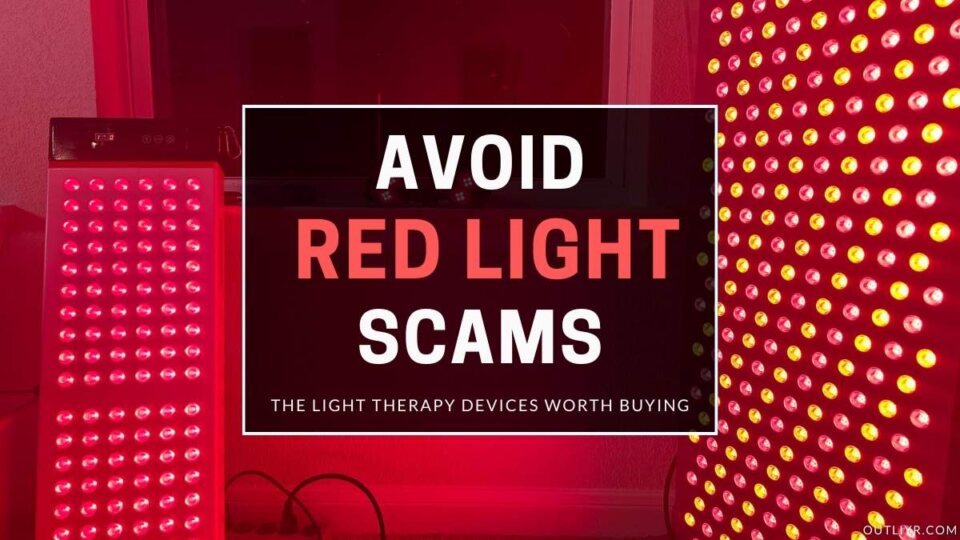
Red light therapy is a form of photobiomodulation that uses specific wavelengths of red and near-infrared light (typically 630-850nm) to stimulate cellular energy production. In 2018, I got fed up with panel prices.
Once you know what to look for, see our best red light therapy devices roundup and the best full-body panels for our tested picks.
$1,200 for some LEDs mounted in an aluminum housing?
I figured I could build one myself for a fraction of the cost. So I ordered high-power 3-watt 660nm and 850nm LEDs, constant-current drivers, aluminum heatsinks, and thermal adhesive. Three weeks and hundreds of dollars later, I had a half-finished panel that flickered, ran dangerously hot, and produced uneven coverage.
I scrapped the project. Safe, reliable panel engineering turned out to be far more complex than I expected.
Red light therapy uses specific wavelengths of light (typically 600-900nm) to stimulate cellular energy production. A buyer’s guide built on independent spectrometer testing cuts through manufacturer marketing to reveal which panels actually deliver therapeutic doses at real-world treatment distances.
Most manufacturer specs overstate real performance by 40-70% due to measurement tricks
660nm and 850nm wavelengths cover the vast majority of clinical evidence
ETL/UL electrical safety listing is non-negotiable. Skip panels without it
The $200-500 price range delivers the best value per mW/cm² for most people
Multi-wavelength panels (5+ wavelengths) are mostly marketing. Two wavelengths cover the evidence base
Always verify claims with third-party testing data when available
How Do Brands Inflate Their Red Light Specs?
Most red light therapy companies overstate their panel’s output, and they do it through four common measurement tricks that sound technical enough to fool even informed buyers. Understanding these tactics protects you from overpaying for underperforming hardware.
The solar meter problem
The most widespread trick involves using a solar power meter to measure irradiance. These meters detect ALL wavelengths of light, including wavelengths far outside the therapeutic red and near-infrared bands your panel emits.
When pointed at a narrow-band LED source, a solar meter inflates readings by 40-70%. A panel showing 200 mW/cm² on a solar meter may only deliver 80-120 mW/cm² of actual therapeutic wavelengths.
Proper measurement requires a spectrometer or spectroradiometer that isolates specific wavelength bands.
Contact versus distance measurements
Some brands measure irradiance at 0 inches, with the sensor pressed directly against the LEDs. Nobody uses a panel that way.
You stand 6-12 inches away during a real session. At that distance, output drops significantly following the inverse square law. A panel claiming 300 mW/cm² at contact might deliver under 100 mW/cm² where you’re actually standing.
Always check what distance the manufacturer used for their specs. If they don’t disclose it, assume the worst.
Peak versus average readings
A panel’s irradiance varies across its surface. The center runs hotter than the edges.
Some companies report the single highest point rather than the average across the treatment area. This “peak” number can exceed the real-world average by 30-50%.
Cold-panel measurements
LEDs lose output as they heat up. Taking readings immediately after turning on a panel, before thermal equilibrium, inflates numbers by 10-20%.
Honest measurements come after 15-20 minutes of operation when the panel reaches stable temperature. Since your treatment sessions last 10-20 minutes, the warm-panel reading reflects what your body actually receives.
I discovered these tricks firsthand when a panel I received underperformed its claimed specs by a wide margin. Instead of publishing an exposé, I contacted the founder directly.
That conversation led to more transparent spec reporting from that brand and deepened my commitment to independent testing.
You can read my full testing methodology for the exact equipment and protocols I use.
Here’s a self-contained summary for quick reference: red light therapy brands commonly inflate specs using four tricks. They use solar meters that read all wavelengths (inflating by 40-70%), measure at 0-inch contact distance instead of realistic 6-12 inches, report peak hotspot readings instead of surface averages, and take measurements on cold panels before thermal drop-off reduces output by 10-20%.
Independent spectrometer testing at treatment distance, after thermal equilibrium, reveals actual performance. Always look for third-party verified data before trusting manufacturer claims.
What Wavelengths Should You Look for in a Panel?
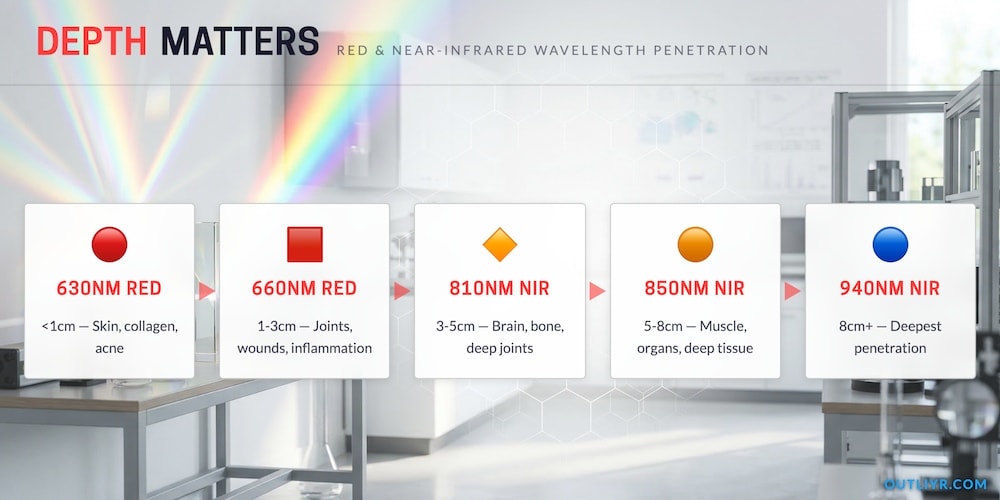
The two wavelengths with the strongest clinical evidence are 660nm (visible red) and 850nm (near-infrared). These target the primary absorption peaks of cytochrome c oxidase, the enzyme in your mitochondria that drives the cellular energy response. A panel combining both wavelengths covers the vast majority of published research on photobiomodulation.
Do multi-wavelength panels offer more benefit?
Multi-wavelength panels often confer slightly more benefit but at a premium price that’s often not worth it for most people.
Panels advertising 5+ wavelengths (like 630, 660, 810, 830, 850nm) sometimes still cut corners. Other wavelengths like 810nm and 830nm have some clinical support.
Nothing beats 660nm and 850nm. These two primary peaks are well-proven.
My spectroradiometer reveals something more concerning. Some panels claiming a 660nm peak actually emit closer to 620-630nm.
That 30nm shift matters because it moves away from the optimal absorption peak. Wavelength accuracy matters more than wavelength count.
There was this thought that only lasers were gonna be effective and LEDs were not. So what’s most important is the wavelength that they produce.
Scott Kennedy, on the High Performance Longevity podcast episode
Stacking with other protocols
I pair red light sessions with GHK-Cu peptides for skin and wound healing. The wavelength determines which tissues respond.
660nm penetrates superficial tissues (skin, surface wounds), while 850nm reaches deeper structures (joints, muscle, bone). Choosing the right wavelength for your goal matters more than chasing a spec sheet full of numbers.
The best red light therapy panels combine 660nm visible red and 850nm near-infrared wavelengths. These target the primary absorption peaks of cytochrome c oxidase, the mitochondrial enzyme that drives photobiomodulation.
660nm penetrates skin and superficial tissue for anti-aging and wound healing. 850nm reaches deeper into joints, muscles, and bone for pain relief and recovery. Multi-wavelength panels (5+ wavelengths) cost more but rarely outperform a quality dual-wavelength panel.
My spectroradiometer testing reveals some ‘660nm’ panels actually peak closer to 620-630nm. That 30-40nm shift reduces absorption efficiency. Wavelength accuracy matters more than wavelength count.
For a deeper dive into the cytochrome c oxidase mechanism and the photobiomodulation research, check out my guide to how red light therapy works.
Pro Tip: A quality dual-wavelength panel (660nm + 850nm) covers the clinical evidence base at a lower price point than multi-wavelength panels.
The useful specifications connect hardware to biology. A 2018 mechanisms review maps the wavelength window, a 2016 review explains the cellular pathways, and a 2012 review covers dose response.
The 2009 dose-response review reinforces the risk of overexposure, while a 2018 systematic review and meta-analysis shows how protocol choices affect exercise outcomes.
On the High Performance Longevity Podcast, Brian Richards explained that photobiomodulation operates across the 600 to 1,000 nanometer band absorbed by cytochrome c oxidase.
See how those criteria affect the home-device rankings and full-body panel rankings. My testing methodology explains how I collect the measurements.
Which Certifications Actually Matter?
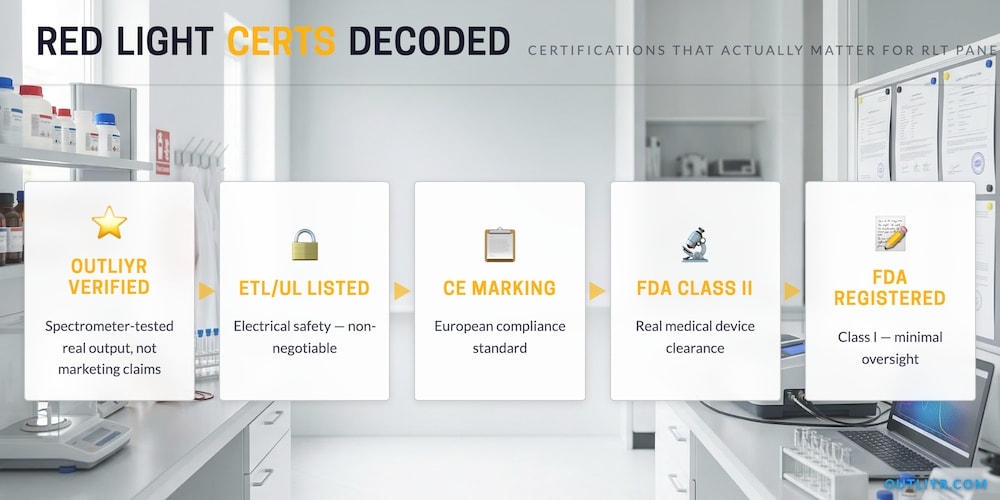
The most important certification for any red light therapy panel is ETL or UL electrical safety listing. These third-party organizations test for fire risk, shock hazard, and component quality. CE marking is self-declared in most cases and unreliable on its own.
FDA Class II clearance requires clinical evidence, but FDA Class I ‘registered’ only means a company filled out a form. I won’t recommend any panel lacking ETL or UL listing, regardless of performance. You can verify listings directly on the ETL or UL websites using the manufacturer’s name.
Skip panels that can’t provide this basic proof of electrical safety.
ETL or UL listing
This is non-negotiable. ETL and UL are third-party testing organizations that verify electrical safety.
A panel with ETL or UL listing has passed standardized tests for fire risk, shock hazard, and component quality. If a panel doesn’t carry one of these marks, don’t buy it.
Verify listings directly on the ETL or UL websites using the manufacturer’s name.
CE marking
CE indicates European compliance with health, safety, and environmental standards. However, it’s largely self-declared.
Brands can apply CE marking without independent verification. Legitimate when backed by real testing, but not trustworthy on its own.
FDA clearance versus FDA registered
This distinction trips up most buyers. FDA Class II clearance requires clinical evidence and a formal review process.
It’s meaningful. FDA Class I “registered” means the company filled out a form and paid a fee.
Almost meaningless for evaluating panel quality or safety.
ISO 13485
This quality management standard applies to medical device manufacturing. Few consumer red light panels carry it. When present, it signals a higher level of manufacturing oversight and process control.
IEC 62471
This photobiological safety standard evaluates potential eye and skin hazards from optical radiation. Good to have, but uncommon in the consumer panel market.
The following table compares these certifications at a glance.
| Certification | What It Means | Importance | How to Verify |
|---|---|---|---|
| ETL/UL Listing | Third-party electrical safety testing | Critical (non-negotiable) | Check ETL or UL online databases |
| CE Marking | European health/safety compliance | Moderate (often self-declared) | Ask for test reports from notified body |
| FDA Class II Clearance | Clinical evidence reviewed by FDA | High (real regulatory review) | Search FDA 510(k) database |
| FDA Class I Registered | Company registered with FDA | Low (just a form and fee) | Search FDA establishment database |
| ISO 13485 | Medical device quality management | High (manufacturing oversight) | Request certificate from manufacturer |
| IEC 62471 | Photobiological safety assessment | Moderate (eye/skin safety) | Ask for test report from accredited lab |
What Are the Red Flags When Buying a Panel?
Beyond inflated specs and meaningless certifications, several warning signs indicate a panel you should avoid. Spotting these early saves you money and potential safety issues.
No wavelength specifications listed. A legitimate panel manufacturer always discloses the wavelengths their LEDs emit. Missing this basic spec suggests the company either doesn’t know or doesn’t want you to know.
Amazon-only brands with no independent website. These are almost always white-label Chinese panels with zero quality control oversight, no customer support infrastructure, and no accountability if something goes wrong.
Absurd irradiance claims. I’ve seen panels claiming 10,000 mW/cm². Physically impossible for LEDs at any realistic treatment distance.
Claims above 200-300 mW/cm² at 6 inches deserve heavy skepticism. Anything above 500 mW/cm² at treatment distance is almost certainly measured with a solar meter or at contact distance.
No return policy or extremely short return windows. Reputable brands offer 30-60 day return policies.
A 7-day window or no returns signals low confidence in the product. You need at least 2-3 weeks of consistent use to evaluate whether a panel delivers on its claims.
Stock photos instead of actual product images. Real manufacturers show their actual panels from multiple angles. Stock imagery suggests a dropshipper selling rebranded generic hardware.
Claims to cure specific diseases. This violates FDA regulations. Any panel marketed as curing cancer, diabetes, or other specific conditions breaks federal law.
Legitimate companies discuss mechanisms and research without making disease-cure claims.
Influencer-only marketing with no technical specs. If a brand’s entire marketing strategy relies on sponsored posts without publishing wavelength data, irradiance measurements, or certification information, the product likely can’t withstand technical scrutiny.
Real performance data builds trust. Glossy influencer photos don’t.
No third-party testing or certifications. A panel with zero independent verification of any kind represents a gamble with your money and your safety.
Pro Tip: Before buying any panel, search for its brand name plus “spectrometer test” or “independent review.” If nobody outside the company has measured it, proceed with extreme caution. The red light therapy community on forums and social media often shares real-world testing data.
Do Expensive Red Light Panels Perform Better?
Price doesn’t reliably predict red light therapy panel performance. My spectroradiometer testing shows some panels in the $200-300 range deliver higher verified irradiance per dollar than competitors costing $600-800. Premium panels sometimes justify their cost through tighter spectral accuracy, lower electrical flicker, better coverage uniformity, and longer warranties.
For most home users, the $200-500 range delivers the best value per mW/cm2 of verified therapeutic output. Below $200, compromises in LED binning, driver quality, and thermal management stack up. Above $500, you’re paying for full-body coverage or medical-grade certifications most people don’t need.
Where budget panels compromise
Cheaper panels typically use lower-bin LEDs with wider wavelength tolerances and faster degradation rates. Driver quality suffers too, which directly affects flicker.
High flicker rates can cause headaches and eye strain during longer sessions. Some budget panels I’ve tested produce visible flicker that you can detect with a smartphone slow-motion camera.
Build quality, thermal management, and coverage uniformity also take hits at lower price points. You might get strong output in the center but weak coverage at the edges. Poor thermal management accelerates LED degradation, meaning the panel loses output faster over its lifespan.
Where premium panels earn their price
The best panels deliver tighter spectral accuracy (emitting closer to the target wavelength), lower electrical flicker, more uniform coverage across the treatment area, longer warranties, and responsive customer support. These factors don’t always show up in a spec sheet comparison, but they affect your experience and results over years of use.
The value sweet spot
For most people, the $200-500 range delivers the best value per mW/cm² of verified therapeutic output. Below $200, compromises stack up quickly. Above $500, you’re paying for full-body coverage, premium build materials, or medical-grade certifications that casual users may not need.
Panels I’ve tested and evaluated
Across the panels I’ve measured with my spectroradiometer, several stand out for different reasons:
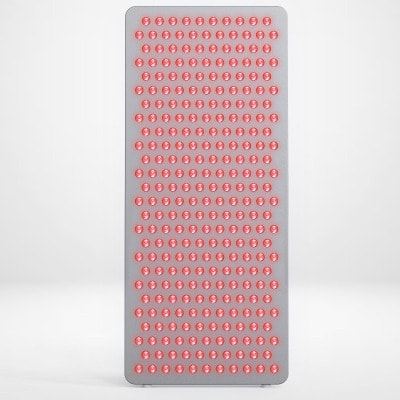
RLT Home Total Spectrum ELITE delivers verified full-spectrum coverage with consistently honest specs. My top recommendation for dedicated full-body red light therapy.
LightPath LED Diesel Shortie provides a compact form factor with respectable output. Good pulsing panel, especially when on sale.
EMR-TEK Krypton Mini competes well in the portable/travel category with verified specs that hold up under testing.
Vital Red Elite targets the premium full-body segment with strong coverage uniformity and verified wavelength accuracy.
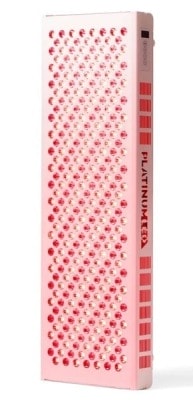
PlatinumLED BIO series delivers solid value-to-performance across their range. One of the longer-running brands in the space with consistent quality.
Mitolux BTS2 occupies a unique position as a multipurpose light device combining red/NIR therapy with vitamin D spectrum output. Versatile, but not a dedicated full-body RLT panel.
I previously used a JOOVV panel before acquiring testing equipment, so I can’t speak to its verified specs from that period. It got me into the practice, but I moved on once I started measuring panels objectively.
In my experience, the panels that perform best relative to their price point tend to come from companies willing to share independent test data. That transparency usually correlates with honest engineering.
How Do You Choose the Right Panel for Your Goals?
Choosing the right panel comes down to three variables: your budget, your primary use case, and your target wavelength ratio. This framework simplifies the decision.
By budget tier
Under $200 (entry level). Expect compromises in build quality, LED binning, and coverage uniformity.
Viable for beginners who want to test whether red light therapy works for them before investing more. Verify that any panel in this range still carries ETL/UL certification.
$200-500 (sweet spot). This range covers most people’s needs. You’ll find panels with verified performance, decent coverage, reasonable build quality, and adequate warranties.
Best value per dollar for home users.
$500+ (full-body and medical-grade). Large panels for full-body coverage, multi-panel setups, or devices with medical-grade certifications.
Worth it if you’re treating large areas or need clinical-level documentation. At this price point, you should expect verified third-party testing data, strong warranty terms, and responsive customer support.
By use case
Your treatment target determines the ideal form factor.
Face and skin treatments work best with smaller, targeted panels rich in 660nm red light. You don’t need a massive full-body panel to treat your face.
Deep tissue pain and joint issues benefit from NIR-heavy panels (850nm) positioned close to the affected area.
Full-body recovery and general wellness call for large panels or multi-panel arrays.
Frequent travelers should prioritize compact, portable options that still carry proper safety certifications. Specific joint therapy (knees, elbows, shoulders) suits targeted wearable devices like the Kineon Move Pro+.
By primary goal
Your goal also shifts the ideal wavelength balance. The table below maps common goals to practical recommendations.
| Goal | Wavelength Priority | Budget Range | Panel Size | Best Option |
|---|---|---|---|---|
| Anti-aging/skin | 660nm heavy (red) | $200-400 | Small to mid panel | Targeted panel close to face |
| Deep tissue/pain | 850nm heavy (NIR) | $300-500 | Mid panel | NIR-dominant panel at 6 inches |
| General wellness | 50/50 red and NIR | $200-500 | Mid to large panel | Combo panel for versatility |
| Travel | 50/50 red and NIR | $150-300 | Compact/portable | Smallest panel with ETL listing |
| Full-body recovery | 50/50 red and NIR | $500+ | Large panel | Full-body panel or multi-panel array |
Frequently Asked Questions
These questions cover the most common concerns I hear from readers evaluating their first (or next) red light therapy panel.
How Do I Choose a Red Light Therapy Panel?
Start with your budget and primary use case. For most home users, a dual-wavelength panel (660nm + 850nm) in the $200-500 range delivers the best value. Verify that the panel carries ETL or UL electrical safety certification. Check whether the manufacturer publishes third-party tested irradiance data at realistic treatment distances (6-12 inches). Avoid panels that only show solar meter readings or contact-distance measurements, as these inflate real-world output by 40-70%.
Are Expensive Red Light Panels Worth It?
Not always. Price doesn’t reliably predict performance. In my spectrometer testing, some mid-range panels outperform premium competitors. Expensive panels may justify their cost through better coverage uniformity, lower flicker, tighter wavelength accuracy, and longer warranties. But a $200-500 panel from a transparent manufacturer often delivers comparable therapeutic output to panels costing twice as much. Focus on verified specs, not price tags.
What’s the Best Red Light Therapy Panel for Home Use?
The best panel depends on your goals. For general wellness and recovery, a mid-sized combo panel with 660nm and 850nm wavelengths in the $200-500 range covers most needs. Based on my testing, the RLT Home Total Spectrum ELITE delivers the best full-body coverage with verified specs. For value-focused buyers, PlatinumLED and LightPath LED both offer strong performance per dollar. Always prioritize panels with ETL/UL certification and independently verified output data.
How Do I Know if a Red Light Panel Is Safe?
Check for ETL or UL electrical safety listing first. This confirms the panel has passed third-party testing for fire risk, shock hazard, and component quality. Verify the listing on the ETL or UL website using the manufacturer’s name. Avoid panels without any third-party safety certification. Additional certifications like IEC 62471 (photobiological safety) and FDA Class II clearance add confidence but aren’t common in the consumer market. Red flags include missing safety certifications, no return policy, and disease-cure marketing claims that violate FDA regulations.
Which Panels Have Verified Spectrometer Data?
Based on spectrometer testing and hands-on evaluation, here are my current top picks. For detailed spectral data on each panel, check the independent comparison database.
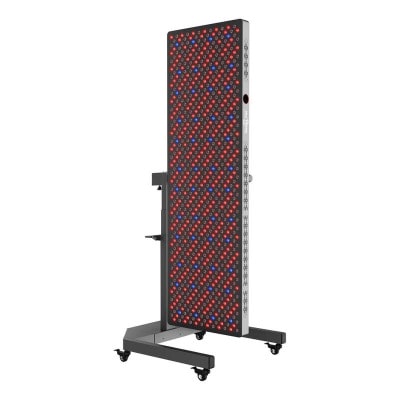 Clinic-Grade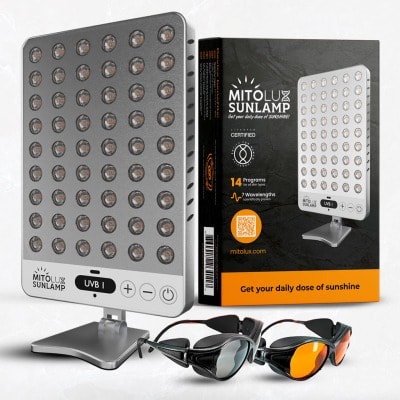
See every current discount code and sale →
Additional panels have individual reviews in progress. Check out the full light therapy device database to see how each compares.
Stop Trusting & Start Measuring
The red light therapy market rewards informed buyers and punishes everyone else. Brands that inflate specs, skip safety certifications, and hide behind influencer marketing count on you not knowing the difference.
Now you do.
Before buying any panel:
- Check the wavelengths (should include 660nm and 850nm)
- Verify ETL/UL certification
- Demand third-party irradiance data at real treatment distances.
- Compare panels using actual spectrometer measurements.
These four steps eliminate 90% of bad purchases.
For the science behind why these wavelengths work, read how red light therapy works. For dosing protocols, check the dosage guide.
And for the full breakdown of what red light therapy can (and can’t) do, see the benefits guide. For hands-on impressions of specific panels, read my reviews of Joovv, LightpathLED, and Mitolux.
Know someone shopping for a red light panel? Send them this guide before they overpay for inflated specs.

Comments