

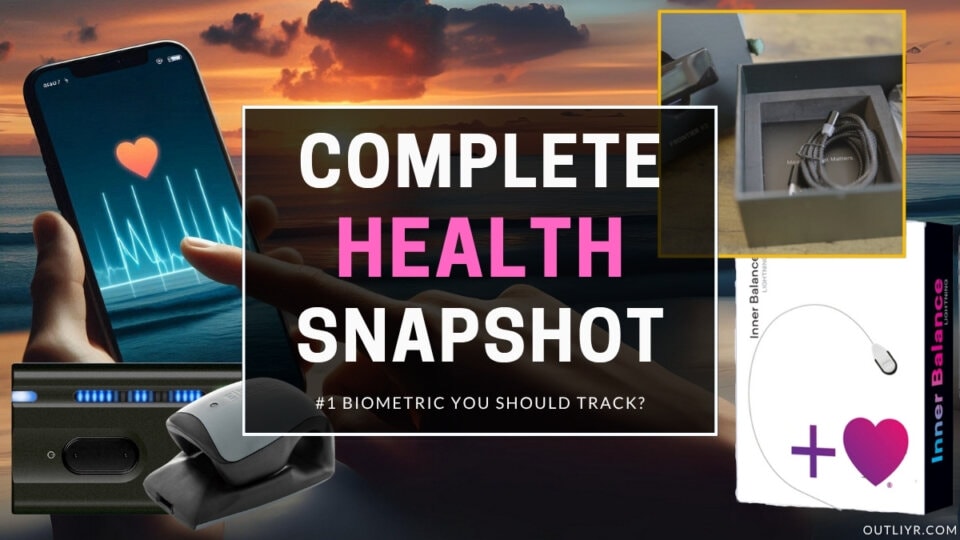
I scoured the web seeking the best HRV biofeedback device on the planet. Why?
Want to learn to drop into a hyper-focused flow state on command? To tame stress without losing your edge?
To stay centered and maintain your composure in the most unruly environments?
Heart rate variability (HRV) therapy gives you control over subconscious roadblocks. Real-time biofeedback coaching keeps you performing at your peak. Only then can you shift into the brain state of elite performance.
Or maybe you just want to better understand how your heart rate fluctuates throughout the day.
Either way, I researched the best heart rate variability biofeedback devices so that you don’t have to. In this review, I’ll share everything you should know before choosing one of the many training systems.
The Best HRV Monitors & Biofeedback Systems of 2026
Overall: HeartMath InnerBalance
Value: Muse
Premium: Sens.ai
App-free: HeartMath emWave 2
Continuous: Lief Therapeutics
The global biofeedback market is projected to grow rapidly from $2.3B in 2024 to $5.8B by 2032 at a CAGR of 14%
Primary uses of HRV biofeedback include non-invasive stress management, mental health, decision making, sleep enhancement, athletic performance and recovery, and cardiac health
Wearables like Garmin, Apple Watch, Whoop, Oura, and others do track HRV but cannot perform true biofeedback
Top devices include HeartMath InnerBalance 2, HeartMath emWave 2, Sens.ai, and Muse Athena
Sensor-free camera-based HRV apps are growing rapidly and making this technology far more accessible to the world
How to Choose the Right Heart Rate Variability Wearable
Each wearable in this list is backed by large contingents of raving fans.
Your ideal choice depends on your lifestyle:
- Budget
- Phone type
- Preferred device form
- Expected use case
To make comparison easier, I’ll break down the following for each device:
Since it will come up…
ANT+ is an old wireless protocol commonly used in wearables before BlueTooth. Few modern phones support it, so you’ll need to either:
- Buy an adapter for your ANT+ device
- Choose a more modern device
Before we get started, there’s one final thing you must know.
HRV Monitoring vs HRV Biofeedback Training
HRV devices fall into two distinct categories, based upon how they work:
- Passive
- Active
HRV monitoring is more popular, but it doesn’t work as well (passive). HRV trainers are far more effective (active).
In other words:
- Passive monitors show you the past
- Active training device show you the present
This tiny detail makes a serious difference.
Training shows you in real-time how lifestyle habits (breathing, moving, thinking, etc) impact your HRV scores. Only trainers help you spot the cause and effect so that you can visualize and unlearn bad habits.
That’s what makes these the next generation of HRV monitoring devices. I listed the best of each category separately below.
Top HRV Biofeedback Devices (Active)
HeartMath Inner Balance Coherence Plus

Is HeartMath InnerBalance Coherence Plus worth it?
HeartMath protocol: 15 minutes in the morning with the ear-clip device plus two 5-minute sessions throughout the day, working from level 1 up to level 4 difficulty, breathing until the device registers a sustained high-coherence (green) state. [Cameron Benton]
- Sensor
- Ear-clip PPG
- Type
- Coherence training
- Connectivity
- Bluetooth app
Best For
- App-first users who want structured coherence training programs, session history, and guided practices, essentially a digital meditation coach powered by your own HRV data.
Skip If
- You want a standalone device that works without a phone, or you need continuous passive monitoring throughout the day.
Pros
- High-resolution PPG sensor with auto gain control: reads even weak pulse signals accurately
- Rich companion app with guided courses, learning journeys, and progressive difficulty levels
- Bluetooth + USB-C connectivity for both iPhone and Android
- Clinically acceptable accuracy validated for home and clinic use
- Builds on decades of HeartMath coherence research
Cons
- Bluetooth connection can be unreliable, dropping mid-session
- Sensor registers readings even when not attached to your body, no auto-detect
- Only 1-year warranty despite the premium price
Your rating helps others choose
Tap to rate
For many years, HeartMath’s emWave 2 has been the best HRV device. Now, HeartMath has released another upgrade that is InnerBalance. It features the same high-tech sensors, but with two advantages: portability and price.
Instead of a built-in breath and heart rate gauge, InnerBalance displays the information on your phone. Which is a double-edged sword. The device is more compact, but requires a phone connection.
They offer both a Bluetooth and a wired version of the product.
If you’re new to this world and want great value, the InnerBalance is the best dedicated HRV biofeedback device. It does this one thing well. HeartMath products are even used by NASA, Kaiser, Intel, Stanford, and medical researchers everywhere.
Muse S Athena

Is InteraXon Muse S Athena worth it?
Most polished consumer EEG headband tracks brain, heart, breath, and body with real-time audio neurofeedback plus overnight sleep tracking through a mature app. Full features need a subscription after the trial, and exporting the EEG data takes workarounds.
- Sensor
- EEG + PPG
- Type
- Meditation + HRV headband
- Connectivity
- Bluetooth
Best For
- You want guided meditation with real-time brainwave feedback
- You're interested in tracking sleep quality with EEG data
- You prefer a polished app experience over raw data access
Skip If
- You want raw EEG data export for research or custom apps
- You don't want to pay a recurring subscription for full features
Pros
- Most polished consumer EEG headband with a mature app ecosystem
- Tracks brain, heart, body, and breath during meditation sessions
- Comfortable fabric design you can wear overnight for sleep tracking
- Guided meditations with real-time audio feedback
- Large user community and strong customer support
Cons
- Subscription required for full app features after trial period
- EEG data isn't exportable for custom analysis without workarounds
- Battery life could be better for extended sleep tracking sessions
Your rating helps others choose
Tap to rate
URBAN for 15% offSee every current discount code and sale →
Both the Muse 2 and the Muse S Athena are next-generation biofeedback devices that combines EEG, PPG sensors, and other technologies to provide real-time insights into brain activity and blood flow. This multi-sensor approach allows you to monitor and train your cognitive performance, focus, and emotional regulation.
The Athena is more expensive, but also includes a fNIRS sensor that measures your brain oxygenation levels in the prefrontal cortex. Both devices can perform actively heart rate variability training.
The built-in gyroscope enables posture detection, and the accelerometers allow for breath analysis.
Plus, they have one of the most extensive libraries of programs in their app. The Muse app also lets you easily track your progress and sessions. Or, you can use it with third-party apps.
The Muse Athena is their latest model which contains more sensors and has more uses, but costs more. The Muse 2 is more affordable and also great for HRV biofeedback. Over the last 2 decades, Muse has established themselves as a trusted choices of clinicians and at-home users alike.
Sens.ai Brain Trainer
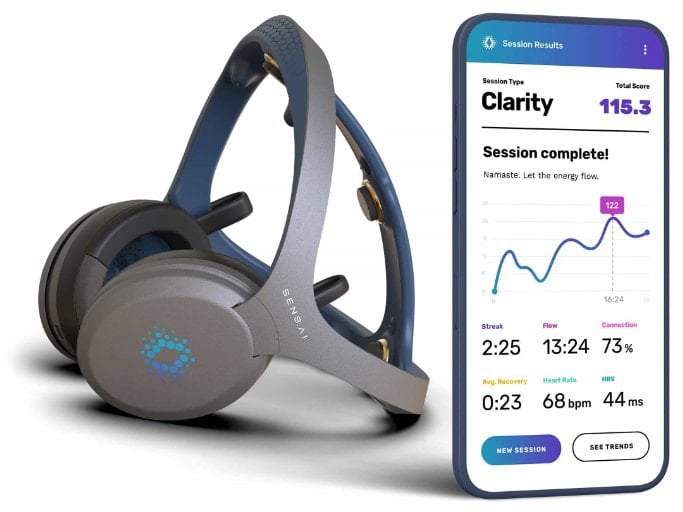
Is Sens.ai Ultimate Brain Trainer worth it?
Combines five brain technologies (neurofeedback, near-infrared light, HRV, meditation, assessment) into one headset that gives objective brain-state data at home instead of a clinic. The upfront cost is steep, and the hardware locks fully into the Sens.ai app ecosystem.
- Sensor
- EEG + HRV
- Type
- Brain training + biofeedback
- Sessions
- Guided neurofeedback
Best For
- You want to train your brain for better focus, calm, and sleep
- You're interested in objective neurofeedback data on your brain states
- You want a home-based alternative to expensive neurofeedback clinics
Skip If
- You're not willing to commit to regular training sessions
- You have epilepsy or seizure disorders (consult your neurologist)
- You prefer simpler meditation or mindfulness practices
Pros
- Combines 5 brain technologies in one device (neurofeedback, tPBM, HRV, meditation, assessment)
- Real-time objective data on your brain states
- Home alternative to neurofeedback clinics
- Nick's daily driver with 850+ sessions logged
Cons
- Steep upfront investment
- Requires consistent daily commitment to see results
- Learning curve with the app and training modes
- Headset can feel bulky during longer sessions
- Hardware is completely locked into the Sens.ai ecosystem
Your rating helps others choose
Tap to rate
URBAN for $75 offSens.ai is one of the newest brain training systems available. Not only does it excel at a potent form of biofeedback that specifically targets the brain (neurofeedback), but it also has a high-quality HRV biofeedback training mode (called Heart Coherence training).
In fact, this brain training system actually contains the equivalent of five devices in one. I use it daily, combining neurofeedback training with HRV training. Plus, I take advantage of the stimulation technologies built-in. Learn more in my new Sensai brain trainer review.
This system also has a clinical-grade module to assess and track your cognitive performance over time. No more wondering if your training works or was a waste of money.
The main downside? It’s pricey. You get state-of-the-art tech all in one headset. But if you want the absolute very best, premium multi-modality biofeedback system, Sens.ai is the clear winner.
HeartMath emWave2

Is HeartMath emWave2 worth it?
HeartMath protocol: 15 minutes in the morning with the ear-clip device plus two 5-minute sessions throughout the day, working from level 1 up to level 4 difficulty, breathing until the device registers a sustained high-coherence (green) state. [Cameron Benton]
- Sensor
- Thumb/ear PPG
- Type
- Handheld coherence trainer
- Display
- On-device + app
Best For
- Stress-prone individuals who want a simple, science-backed biofeedback tool they can pull out anywhere to regain composure, no phone required.
Skip If
- You prefer app-based tracking with data history and trends, the InnerBalance sensor or Lief offers better digital integration.
Pros
- Portable handheld design: use anywhere anxiety or stress hits
- Real-time color/tone feedback with built-in breathing pacer
- Decades of scientific validation behind HeartMath coherence training
- Best value entry point for dedicated HRV biofeedback hardware
- Proven therapeutic results for anxiety, PTSD, and emotional regulation
Cons
- Build quality feels cheap for the price
- Plastic ear clip prone to breaking after extended use
- No smartphone app integration: limited to on-device display
Your rating helps others choose
Tap to rate
The emWave2 is a state-of-the-art HRV biofeedback trainer at an affordable price. It generates clear feedback via color and tone. It has a breathing coach built-in that automatically tracks your sessions and provides feedback along the way.
Difference levels continue to challenge you as you improve. Perfect for getting into the zone, falling asleep quickly, or before stressful meetings. For many years this was the best overall device. Granted, it’s also still the best value device you can get today.
If that’s not enough, emWave2 is scientifically validated by decades of research and thousands of glowing customer reviews.
The emWave2 is your ideal choice if you’re looking for a pocket sized, cord-free device with clinical backing and at an affordable price.
Lief Therapeutics

- Sensor
- ECG patch
- Type
- All-day passive HRV
- Wear
- Chest patch
Best For
- Anxiety sufferers and high-stress professionals who need passive, all-day biofeedback that catches stress in real time, not just during dedicated meditation sessions.
Skip If
- You only want session-based coherence training, or you find wearable patches uncomfortable for daily wear.
Pros
- Continuous all-day wear with ECG-based HRV measurement: clinical-grade accuracy
- In-the-moment biofeedback intervenes during actual stress, not just during sessions
- Pilot study showed anxiety scores dropped from 4.6 to 1.7 out of 6
- Includes remote coaching and a web dashboard for longitudinal tracking
- May be covered by health insurance depending on your plan
Cons
- Adhesive patches can lose stickiness during workouts and need regular replacement
- Haptic nudges during tense moments can feel intrusive rather than calming
- Limited context around what the HRV numbers actually mean for non-clinical users
Your rating helps others choose
Tap to rate
Lief Therapeutics is a newcomer that’s rapidly becoming the choice of clinicians, researchers, coaches, and health professionals. Lief is one of the few companies whose products use true HRV biofeedback.
But instead of a cumbersome wearable or wired sensors, Lief gathers data via sensors embedded into minimalist adhesive patches. These sensors can hide under clothing and provide continuous medical-grade ECG monitoring.
Unlike other devices, Lief logs HRV trends throughout the day and vibrates in real-time to help you discover and reverse triggers. They’re also the only company to offer personal HRV coaches that help turn your data into value.
HRV Monitoring Devices (Passive)
These devices track your HRV passively but do not deliver active biofeedback training. They are worth knowing if you mainly want to monitor trends rather than train coherence:
- WHOOP: 24/7 recovery band with continuous HRV and sleep tracking.
- Oura Ring: titanium smart ring with nightly HRV, sleep, and readiness.
- Polar H10: gold-standard ECG chest strap for raw heart rate and HRV data.
- Polar H9: budget-friendly Bluetooth chest strap alternative.
- 4iiii Viiiiva V100: chest strap that bridges ANT+ sensors to Bluetooth.
Heart Rate Variability Smartwatches & Apps
Virtually every smartwatch and wearable manufacturer (Apple Watch, Whoop, Oura, Fitbit, Garmin, etc) now directly or indirectly through third-party apps tracks HRV.
Some of the popular HRV tracking apps include:
- Welltory
- Elite HRV
- HRV4Training
- HRV4Biofeedback
- Optimal HRV
- MindBreath
And many others. Some don’t require any hardware sensors and simply use your phones camera. Others integrate with chest straps (listed above) and other hardware to visualize your real-time data.
Many of the other devices have major accuracy issues. For example, a 2023 study concluded the following,
“However, it is important to acknowledge the limitations of HRV data obtained from smartwatches, such as accuracy, individual variability, contextual interpretation, and the subjective nature of stress perception.”
The Future of Stress Management: Integration of Smartwatches and HRV Technology
Smartwatches and apps can certainly be helpful and highlight longer-term trends.
The primary issue with most HRV apps is that they don’t provide real-time data, so it is not true biofeedback.
Q & A of Heart Rate Variability Therapy Devices
Are there any FDA approved HRV devices?
Currently, the only FDA-cleared device is the Inmedix CloudHRV System which the FDA cleared in 2025. It is not available direct to consumers, however. Another company called DeepWell DTx is pioneering gaming biofeedback therapy, but that too isn’t available yet.
Can Garmin smartwatches perform HRV training?
No. While Garmin watches do feature a “HRV Status” biomarker, it is passive and does not allow you to train HRV actively. I have a newer Garmin Fenix watch, and I still haven’t found any third party apps that let you actively trian HRV either.
Do the new Apples Watches have active HRV biofeedback training?
No, the latest Apple Watches do passively measure HRV (especially when paired with third-party apps), but they will not work for real-time HRV biofeedback training. This is because they do not share live data via standard protocols.
What’s the most accurate HRV wearable for stress management in 2025?
The best HRV biofeedback device to manage stress are the HeartMath Inner Balance 2 or the emWave 2. The three top non-biofeedback devices to improve HRV are the Apollo Neuro, the VeRelief Prime, and the Sensate.
Are there HRV biofeedback devices suitable for meditation and breathwork?
Most true HRV biofeedback devices work well for meditation but some of the top products include Sens.ai, Muse, Inner Balance 2, and the emWave 2.
Choosing The Best Heart Rate Variability Device
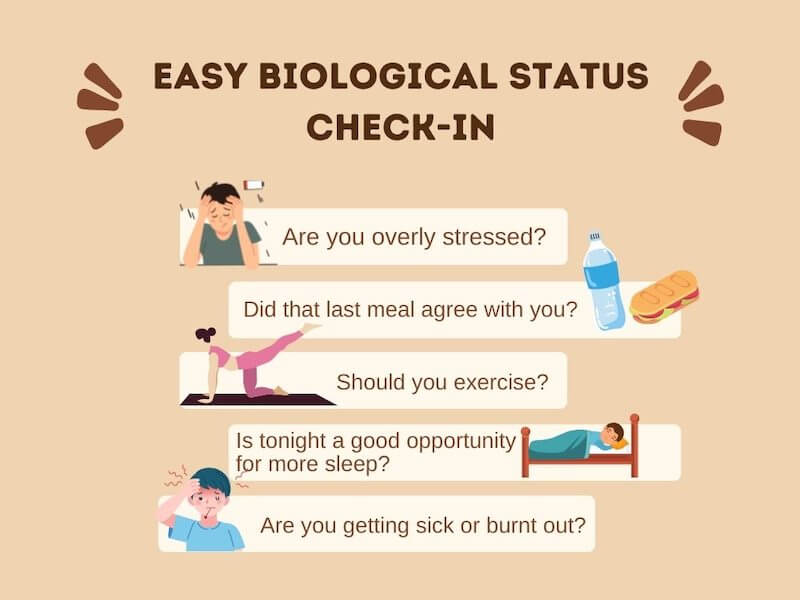
The changing intervals between each heartbeat contains a trove of information.
HRV data is among the first and easiest (of 43+ biomarkers) self-quantification data new biohackers collect.

While you can use most smartwatches today or even iPhone/Android apps, accurately picking up these subtle cues for HRV training takes specially designed gear.
There are two types of HRV devices, and your optimal choice depends on your goal:
- Active biofeedback
- Passive monitoring
Active biofeedback gives you real-time coaching to crush stress while maximizing focus, attention, cognition, idea generation, and general brainpower. Making it one of the best biohacking tools to upgrade your health. Pair it with something that actively drives that same vagal tone, like the options in my vagus nerve stimulation device roundup.
If you have the budget, the Sens.ai headset contains the equivalent technologies of five devices all in one. You can’t go wrong with it.
But nothing has more scientific validation than the HeartMath emWave 2 and Inner Balance 2.
Or you can go completely old-school. With enough meditation, you can train yourself to enter the same state of optimal performance. I’m impatient. I’d prefer to use technology to shave 40 years off that learning curve.
What’s your favorite HRV biofeedback device? Drop a comment below and let you know your experience. And if you found this article helpful, please send it to a friend or share it on social media.
Thanks!

Haha
Knowing your HRV will give you data but not the clue to improving it. Meditation will… and patience is also the key 😉
True! The experimentation is up to you. Sleep, meditation, relaxation, certain forms of breathwork, singing, humming, cold exposure – lots of options.
Hi, I want to monitor my HRV 24 hours in a day to understand my stress level changes. Also I want to see its graph/chart/diagram in mobile app. What gears should I choose? What app?
Should I wait for Oura Ring Gen3?
Hey Alex. The only real device I’ve found with continuous HRV monitoring is Lief. Not sure that the Oura 3 will deliver on that promise. Plus, the new model will have a monthly subscription.
CorSense is no longer available.
Thanks for letting me know! I will update the article
Hi Nick, I’m surprised you haven’t included Firstbeat Life and their bodyguard 3 device in your review. They have one of the longest research history behind their algorithm with continuous HRV monitoring, app connected via Bluetooth, Health coaches, totally affordable too. A finish company, check them out.
Hi Timea, thanks for commenting and pointing them out! I will have to check out Firstbeat Life’s bodyguard 3 system. Do you use this one?
You haven’t included the Biostrap wristband. Do you think it’s clearly inferior to the chest strap or other options for tracking passive HRV?
Hey Chris. For HRV, yes. Wrist-based measurements are usually less accurate due to the proximity to bone in the wrist. Although I do like the Biostrap wrist band too, it’s just not quite as accurate for HRV. It’s certainly not bad though and I thoroughly reviewed Biostrap a while back.
Hello, is the upper arm, finger, lower arm, good places to monitor HRV? Where is the best?
Hey Mark,
The best places to measure HRV (from best to worst):
Hi,
Which device do you recommend if one absolutely wants to read HRV parameters during sleep as well?
Hi Marcel, great question. I’m not sure of any devices that do a great job capturing HRV in real-time throughout both the day and night. Perhaps the Apple Watch will integrate that soon. I personally wear the Hanu for the daytime and Oura ring at night. Then I get HRV from both. Biostrap and WHOOP also do a good job of capturing data at night.
Thanks for the comparison! I’m really interested in diving deeper into HRV biofeedback and how these monitors can enhance performance. The reviews were super helpful, especially the comparisons between models. Looking forward to trying one out!
Great insights on the latest HRV biofeedback monitors! I’m especially intrigued by the features of the top models and how they can enhance both personal and professional performance. Looking forward to trying out some of these recommendations!